

B1935 on 2007-2014 Chevrolet Suburban: Heated Seat and Airbag System Fault Guide
On a 2007-2014 Suburban, code B1935 most often points to a problem with the heated seat system, usually caused by a wiring issue under the passenger seat. While it may only affect seat heating, this wiring is near the airbag's Passenger Presence System, so a 'Service Airbag' light is possible and requires immediate attention.
- B1935 on a 2007-2014 Suburban is most authoritatively linked to a fault in the heated seat system by GM's own service bulletins.
- The most common cause is a wiring issue (chafing, loose connector) under the front passenger seat.
- Even if only the heated seat is malfunctioning, this issue is a safety concern because the same area contains wiring for the passenger airbag system.
- If a 'Service Airbag' light accompanies this code, professional diagnosis is strongly recommended as the passenger airbag may be disabled.
- Before replacing any parts, a thorough visual inspection of the under-seat wiring is the most critical first step.
What's Unique About the 2007-2014 Chevrolet SUBURBAN
On the GMT900 platform, which includes the 2007-2014 Suburban, the wiring for heated seats and the airbag's Passenger Presence System (PPS) are routed together under the passenger seat. This makes them vulnerable to similar issues, such as chafing or loose connectors from items stored under the seat or from occupant movement. While other manufacturers may use B1935 for different airbag circuit faults, on this specific Suburban, it is authoritatively linked to the heated seat system via a specific TSB. Owners on forums frequently report that movement of the passenger seat back and forth can eventually slice through the wiring loom and cut a wire, leading to this fault.
Diagnostic Flowchart
Tap your situation to follow the diagnostic path that matches what you're seeing on this vehicle.
Symptoms You May Notice
- Heated seat is inoperative (no heat)
- Heated seat indicator lights are on, but the seat does not get warm
- Heated seat turns off by itself after about 30 seconds
- Service Airbag warning message on the instrument cluster
- Heated seat switch light flickers on then immediately turns off
- Replacing the heated seat switch on the dash. 🎬 Watch: How to replace the heated seat dash switch. This is rarely the cause, as the switch indicators usually still light up or flicker.
- Replacing the Body Control Module (BCM) without first thoroughly inspecting the under-seat wiring.
- Replacing the Passenger Presence System (PPS) module without first confirming connectors are fully seated and wiring is intact, as warned in TSB 17-NA-010.
Most Likely Causes
- Damaged or Improperly Routed Heated Seat Wiring Harness 🔴 High Probability The wiring harness under the passenger seat for the heated seat module and Passenger Presence System can get chafed, pinched, or disconnected. This is a known issue addressed in GM TSBs and frequently discussed by owners. The seat rail mechanism can slice through the wiring loom over time.
How to confirm: Visually inspect the wiring and connectors under the passenger seat. Move the seat all the way forward and up for better access. Look for any signs of damage, chafing against the seat frame, or loose connections at the modules. Pay close attention to the main connector for the seat control module, which can get burnt pins.
Typical fix: Repair the damaged section of the wire using butt connectors with heat shrink or by soldering. Secure the repaired harness away from the seat rails with zip ties to prevent future damage. If a connector is burnt, a replacement pigtail may be needed.
Est. part cost: $5-$50 for wiring repair supplies - Reversed Heated Seat Element Connectors 🟡 Medium Probability This specifically applies if GM accessory heated seats were installed. The connectors for the seat bottom and seat back heating elements are identical and can be easily swapped.
How to confirm: As per TSB #PIT5215A, inspect the two identical connectors from the harness. The longer lead (in convoluted tubing) should go to the seat back element, and the shorter lead (taped) goes to the seat bottom element.
Typical fix: Swap the connectors to their correct positions.
Est. part cost: $0 - Failed Heated Seat Element 🟡 Medium Probability The heating element inside the seat cushion or back is a grid of fine wires that can break over time with use, creating an open circuit. This is a very common failure point.
How to confirm: Disconnect the heating element and measure its resistance with a multimeter. An infinite resistance reading ('OL') indicates a broken element. A typical good element will have low resistance, often between 6 and 8 ohms, though some variation is possible. A user on a forum reported a bad element reading 13.1 ohms while the good one read 2.6 ohms, indicating a significant difference can point to the fault.
Typical fix: Replace the faulty seat heating element pad, which requires removing the seat upholstery. 🎬 See this walkthrough on testing and repairing seat heating elements. Many owners recommend replacing the seat bottom foam cushion at the same time, especially on the driver's side, as it is often worn out.
Est. part cost: $70-$150 - Faulty Passenger Presence System (PPS) Module ⚪ Low Probability The module itself can fail electronically, though wiring issues are far more common. TSB 17-NA-010 explicitly warns against replacing the PPS module for similar issues unless all wiring has been confirmed to be good.
How to confirm: This requires a professional scan tool that can communicate with the SRS and PPS modules to check for internal faults after confirming the wiring is intact.
Typical fix: Replace the Passenger Presence System module and perform the required system setup/calibration (PPS re-zero).
Est. part cost: $200-$600
Rare But Worth Checking
- Burnt Connector at Seat Control Module:
Diagnosis Steps
- Scan the vehicle's modules for stored Diagnostic Trouble Codes. Note B1935 and any other related codes, especially B0074 or B0081.
- Check for a 'Service Airbag' light. If present, prioritize diagnosis of the SRS system as its function may be compromised.
- Move the front passenger seat all the way forward, and raise it all the way up to gain maximum access to the wiring underneath.
- Using a flashlight, carefully inspect all wiring harnesses and connectors under the passenger seat. Look for chafed wires, wires caught in the seat mechanism, or connectors that are not fully seated. A common failure point is where the harness passes the seat track.
- If accessory heated seats were installed, verify the seat back and seat bottom element connectors are not reversed, per TSB PIT5215A. The longer lead goes to the seat back, the shorter lead to the seat bottom.
- If wiring appears intact, disconnect the connector for the seat bottom heating element and measure the element's resistance with a multimeter. A reading of 'OL' or infinite resistance indicates a broken element. A good element should read approximately 6-8 ohms.
- Repeat the resistance test for the seat back element. A large discrepancy in resistance between the two elements can also indicate a fault.
- If the elements are good, check for power and ground at the heated seat module connector with the key on and the switch activated. Inspect the connector itself for any burnt or melted pins. 🎬 Watch: How to diagnose and fix burnt seat module connectors.
- If all wiring and elements are confirmed good, the issue may be the heated seat module or the Passenger Presence System module, which requires advanced diagnostics with a professional scan tool.
Parts You'll Likely Need
- Seat Heater Element Pad (Bottom)
(OEM #25994243 (Varies by trim/year))— The internal wires of the heating element can break from wear and tear, causing an open circuit and triggering the code. The bottom cushion element fails most often.
Trusted brands: ACDelco, Dorman (e.g., 628-040 Universal Kit)
OEM price range: $120-$200
Aftermarket price range: $70-$150 - Seat Heater Element Pad (Back)
(OEM #25878888 (Varies by trim/year))— Less common to fail than the bottom pad, but can still break and cause the same code.
Trusted brands: ACDelco, Dorman
OEM price range: $100-$180
Aftermarket price range: $60-$120 - Heated/Cooled Seat Module Connector Pigtail
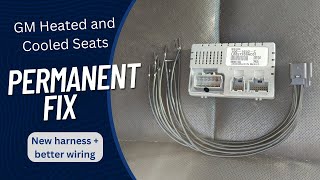
(OEM #WPT-928 (Ford part number, widely used for this GM repair))— The original connector, especially on heated/cooled seats, can burn the power and ground pins due to high current on a single pin. A replacement pigtail is needed to repair the connection.
Trusted brands: Motorcraft, Dorman
OEM price range: $30-$50
Aftermarket price range: $20-$40
Related Codes That Often Appear With This One
- B2180 — Also listed in TSB PIT5215A as a related heated seat fault code.
- B2425 — Also listed in TSB PIT5215A as a related heated seat fault code.
- B2430 — Also listed in TSB PIT5215A as a related heated seat fault code.
- B0074 — This code points to a fault in the Passenger Presence System sensor mat. A wiring issue that triggers B1935 could also trigger this code if the PPS sensor circuit is affected.
- B0081 — This code indicates a problem with the Passenger Presence System, often requiring recalibration. It can be set by the same under-seat wiring issues or if the PPS module connector is loose.
Technical Service Bulletins (TSBs) & Recalls
- PIT5215A: Addresses inoperative GM accessory heated seats with DTCs including B1935, often caused by reversed element connectors or wiring harness issues.
- 17-NA-010: Addresses 'Service Airbag' messages with DTCs B0081/B0074, warning against replacing the PPS module before checking for loose connectors and proper wire routing under the passenger seat.
Platform-Specific Known Issues
- A known issue on this platform is the improper routing of the Passenger Presence System (PPS) sensor mat pigtail harness, which can become trapped or strained, leading to loose connections or damaged wires under the passenger seat.
- Forum users on TahoeYukonForum.com frequently report that the wiring harness under the passenger seat gets sliced by the seat's own movement rail, which is a primary cause for this code and related airbag warnings.
Mechanic-Grade Diagnostic Values
- Heated Seat Element Resistance — expected: Approximately 5 - 7.5 ohms.. Failure: A reading of infinite resistance (OL) indicates an open circuit/broken element. A value significantly outside the expected range can also indicate a fault.
- Heated Seat Element Voltage (Duty Cycle) — expected: When back-probing the element connector with a voltmeter set to duty cycle: High setting should be ~90%, Medium ~40%, and Low ~10%.. Failure: No duty cycle reading or a static 0% or 100% reading indicates a problem with the control module or the circuit.
- Heated Seat Module Power Supply — expected: 12V (Battery Voltage) at the appropriate power supply pin on the module connector with the key on.. Failure: Low or no voltage indicates a problem with the fuse, relay, or wiring leading to the module.
- Heated Seat Module Ground Circuit — expected: Less than 10 ohms of resistance between the ground circuit terminal and a known good chassis ground.. Failure: High or infinite resistance indicates a bad ground connection (e.g., G301/G302).
Hidden / Shadow Codes Worth Checking
- B1935 Sym 0E: The '0E' is a manufacturer-specific symptom byte that accompanies the main DTC. TSB #PIT5215A directly links B1935 0E to a fault in the accessory heated seat system, such as reversed element connectors or a wiring issue. (see via A professional scan tool capable of reading GM-specific body codes and their symptom bytes, such as a GM Tech2 or GDS2.)
Scan Tool Commands That Help
- GM Tech2 / GDS2: Body Control Module > Special Functions > Output Control > Heated Seat — This command allows a technician to manually activate the heated seat relay/module to test the output side of the circuit. If the seat heats up using this command but not the switch, it points to a problem with the switch or the input circuit to the BCM.
- GM Tech2 / GDS2: Sensing and Diagnostic Module (SDM) > Special Functions > PPS Re-zero/Calibration — This function is mandatory if the Passenger Presence System (PPS) sensor, module, or the seat itself has been replaced or significantly disturbed. Failure to calibrate can result in the passenger airbag being disabled or deploying incorrectly.
Wiring & Ground Locations
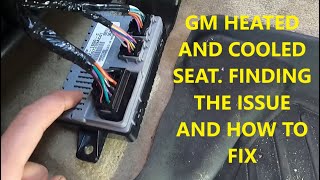
- Heated/Cooled Seat Control Module — Under the front passenger seat, typically held by two 10mm bolts.. This module controls the heated seat function. Its main connector is a common failure point, where the power and ground pins can burn, causing an open circuit and triggering B1935.
- G301 — Under the left side of the passenger seat, on the floor pan.. This is a primary ground point for components under the passenger seat. A loose or corroded connection here can cause intermittent issues with the heated seat module and Passenger Presence System.
- G302 — Under the right side of the passenger seat, on the floor pan.. This is another ground point for passenger-side components. Verifying its integrity is a key step in diagnosing electrical faults in this area.
- Heated Seat Module Connector (Large Connector) — Plugged into the Heated/Cooled Seat Control Module under the passenger seat.. The power pin (often Red/White) and ground pin (Black) are critical. On heated/cooled seat models, the single power pin can overheat and melt the connector, which is a well-documented cause of this code.
Real Owner Repair Stories
- FTP Speed Shop on YouTube (2011 Chevrolet Suburban with heated/cooled seats) — Heated and cooled seats were inoperative for several years.
❌ Tried (didn't work) The owner had lived with the problem, assuming a complex repair was needed.
✅ What actually fixed it The power pin on the main connector to the seat control module under the passenger seat was found to be completely burnt. The fix involved replacing the connector pigtail (using a Ford WPT-928) and modifying it to use two power and two ground wires, splitting the electrical load across the available pins in the module, which prevents future overheating. - YouTube user 'justa v' comment on a repair video (2010 Cadillac Escalade (same platform/system)) — Heated and cooled seats stopped working.
❌ Tried (didn't work) A temporary fix of cleaning the burnt pin worked for a while but the problem returned.
✅ What actually fixed it The permanent fix was replacing the connector pigtail and wiring it to use both power and both ground terminals on the module. The user confirmed this distributes the load and permanently solves the issue of the connector melting.
When the Usual Fixes Don't Work
- In some cases, a B1935 code may be stored in the system without the primary symptom of the heated seat being inoperative. A 2013 Silverado owner reported the code was present for the 'driver's seat back heater element,' but confirmed both upper and lower seat heaters were working fine. This suggests the fault can be intermittent or marginal, where the element's resistance is close enough to the threshold to trigger a code but not yet cause a complete failure of the heating function.
OEM Part Supersession History
15232559→20792748— Part revision or manufacturer change for the front seat lower heater element.15232560, 25911156→20792749— Part revision or manufacturer change for the front seat back heater element.
Model Year Variations Within This Range
- 2007-2014: Models with heated/cooled seats (typically LTZ, Denali) use a control module that is highly prone to the power pin burning out due to the high current draw from both heating elements and the seat's ventilation fan running through a single power pin. Models with only heated seats are less likely to experience this specific failure but are still susceptible to chafed wiring and failed elements.
Helpful Videos
We Have This Part in Stock




The information in this article is provided for general reference and educational purposes only. Vehicle specifications, procedures, and part compatibility can vary by production date, trim level, and region. Always consult your vehicle's factory service manual and verify part numbers before purchasing or performing repairs. Safety-critical components such as airbags, seat belts, and braking systems should be installed by a qualified professional.
- Chevrolet SUBURBAN:
- 🎬 Helpful Videos
- 🛍️ Shop This Part
- What's Unique About the 2007-2014 Chevrolet SUBURBAN
- Diagnostic Flowchart
- Symptoms You May Notice
- Most Likely Causes
- Rare But Worth Checking
- Diagnosis Steps
- Parts You'll Likely Need
- Related Codes That Often Appear With This One
- Technical Service Bulletins (TSBs) & Recalls
- Platform-Specific Known Issues
- Mechanic-Grade Diagnostic Values
- Hidden / Shadow Codes Worth Checking
- Scan Tool Commands That Help
- Wiring & Ground Locations
- Real Owner Repair Stories
- When the Usual Fixes Don't Work
- OEM Part Supersession History
- Model Year Variations Within This Range
- 🎟️ Get 5% Off