

OBD-II Code B1922: Airbag System Fault — The Ultimate 2026 Guide
What B1922 means, why it triggers, and how to fix it for good
- Code B1922 disables your entire airbag system, meaning airbags and seat belt pretensioners will not deploy in a crash.
- For Toyota and Lexus vehicles, code B1922 almost exclusively points to a failed rear right seat belt pretensioner, not a front impact sensor.
- Never probe yellow-sheathed airbag wiring with a multimeter without first disconnecting the negative battery terminal and waiting 15 minutes to prevent accidental deployment.
- Expect to pay a diagnostic fee of $100 to $185 to pinpoint the exact short circuit before authorizing expensive part replacements like a $500 airbag control module.
- Use a 2.0 to 2.5-ohm diagnostic resistor to safely bypass a suspected faulty sensor or pretensioner and verify the wiring harness is intact.
What Does B1922 Mean?

B1922 signifies the Airbag Control Module detected a critical electrical fault: a short circuit in the safing sensor's output wiring. A safing sensor is a secondary crash sensor that must activate alongside primary impact sensors to confirm a collision and prevent accidental deployment. The compromised signal forces the system to shut down as a precaution.
Technical definition: The SAE/OBD-II definition is "Air Bag Safing Sensor Output Circuit Short To Battery" or "Short to Ground". The SRS module detects abnormal voltage on the safing sensor's signal wire. For manufacturers like Toyota and Lexus, this code specifically indicates a short in a seat belt pretensioner circuit rather than a traditional safing sensor.
Can I Drive With B1922?
No — Do Not Drive. Driving is strongly discouraged. A B1922 code disables the entire Supplemental Restraint System (SRS). In a crash, airbags and seat belt pretensioners will not deploy, significantly increasing the risk of severe injury or fatality. The vehicle's basic drivability remains unaffected, but its core safety features are offline.
Common Causes

- Faulty Seat Belt Pretensioner (Toyota/Lexus) (Very Common) — On Toyota, Lexus, and related platforms, this code almost exclusively points to a short in the pyrotechnic 'squib' circuit of a seat belt pretensioner, most commonly the rear right-hand side. The pretensioner assembly or its immediate wiring is the fault.
- Damaged, Chafed, or Corroded Wiring (Very Common) — SRS wiring routes under seats, through the steering column, and near bumpers. It is highly vulnerable to being pinched, rubbed through, or damaged by water and road salt. This creates a short circuit where the wire touches the vehicle's metal frame or another power wire.
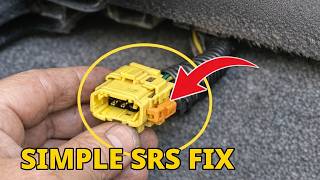
- Bad or Dirty Connector (Common) — The distinctive yellow SRS connectors become loose, contaminated with dirt, or suffer from backed-out pins. Connectors under the front seats are frequently disturbed by passengers or floor items, creating an intermittent short.
- Faulty Airbag Safing/Impact Sensor (Common) — The sensor fails internally from age, moisture intrusion, or physical damage, creating a permanent short. These sensors sit in crash-prone areas like behind the bumper, on the radiator support, or inside the B-pillars.
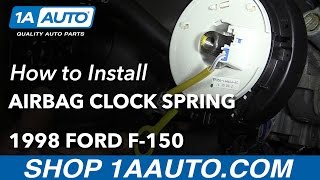
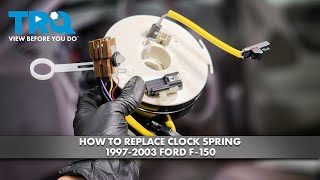
- Defective Clock Spring (Less Common) — The clock spring is a coiled ribbon of wires in the steering column. When it wears out, internal wires short together or to ground, triggering B1922 and simultaneously disabling steering wheel-mounted buttons like the horn or cruise control.
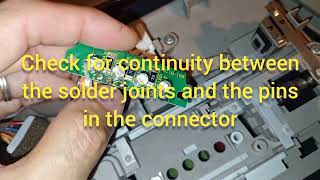
- Cracked Solder Joints (Subaru Specific) (Uncommon) — On 2007-2009 Subaru models, cracked solder joints on the passenger airbag indicator light circuit board (located in the overhead console) trigger this code. 🎬 See how to fix the Subaru overhead console airbag light. The SRS module misinterprets this board failure as a system short.
- Faulty Alternator (Ford Specific) (Rare) — On specific older models like the 1997 Ford Escort, a failing alternator with a bad diode back-feeds voltage into circuits sharing a common wiring path. This creates unexpected voltages at the airbag diagnostic monitor, triggering a safing sensor fault.
- Faulty Airbag Control Module (SRS Module) (Very Rare) — The control module is the 'brain' of the system. While it fails from water damage or voltage surges, it usually accurately reports a problem elsewhere. Always eliminate wiring and sensor faults before condemning the module.
Symptoms

- Airbag / SRS Warning Light is On — The primary symptom. The light illuminates on startup and remains solid, indicating the system is disabled.
- Airbags and Pretensioners Will Not Deploy — The control module enters a fail-safe mode. No airbags or seat belt pretensioners will fire in a collision.
- Failed State Safety Inspection — In jurisdictions requiring safety inspections, an illuminated airbag warning light triggers an automatic failure.
- Steering Wheel Controls Inoperative — If a failed clock spring causes the short, the horn, cruise control, and radio buttons on the steering wheel stop working.
- Audible Chime or Beep on Startup — Some vehicles sound a repetitive chime for the first minute of operation to alert the driver to the offline safety system.
Diagnostic Flowchart
Tap your situation to follow the diagnostic path that matches what you're seeing on this code.
Common Fixes & Costs
- Replace Seat Belt Pretensioner Assembly
— Parts: $150-$350, Labor: $150-$250, ~1.5 hr book time
(Intermediate)
Toyota Corolla (2009-2013, Rear Right): OEM 72137-02370-B0 (Alt: Dorman 701-001)
Toyota RAV4 (2006-2012, Rear Right): OEM 72137-42100-B0 (Alt: N/A (OEM required)) - Clean and Reseat Connectors — Parts: $0-$15, Labor: $100-$185, ~1.0 hr book time (Beginner)
- Repair Damaged Wiring — Parts: $10-$30, Labor: $150-$300, ~2.0 hr book time (Advanced)
- Replace Airbag Impact/Safing Sensor
— Parts: $80-$250, Labor: $100-$200, ~1.2 hr book time
(Intermediate)
Hyundai Sonata (2011-2015): OEM 95930-3Q000 (Alt: Dorman 601-230) - Replace Clock Spring
— Parts: $70-$300, Labor: $150-$350, ~1.5 hr book time
(Professional)
Hyundai Sonata (2011-2015): OEM 93490-3S110 (Alt: Dorman 525-164)
DIY vs Professional
- Clean and Reseat Connectors — Beginner:
Tools: 10mm Wrench, electrical contact cleaner. - Replace Airbag Impact/Safing Sensor — Beginner:
Tools: Socket set, trim removal tools, torque wrench. - Replace Seat Belt Pretensioner Assembly — Beginner:
Tools: Socket/Torx set, trim removal tools, torque wrench. - Repair Damaged Wiring — Beginner:
Tools: Soldering iron, heat shrink tubing, wire strippers, multimeter. - Replace Clock Spring — Beginner:
Tools: Steering wheel puller, torque wrench, socket set.
Used vs. New Parts: Buying Guide
When a used part is worth it: Buying used SRS components like sensors, clock springs, and pretensioners is strongly discouraged. These are single-use safety devices with unknown histories regarding moisture, impact, or stress.
Donor-vehicle mileage cap: roughly under 10000 miles for the part to have meaningful remaining life.
Donor quality checklist:
- Only consider New Old Stock (NOS) as an alternative to new.
- Never purchase a component active during a collision, even if it looks undamaged.
- Avoid parts from flood-damaged or high-humidity environments.
Decision logic:
- If The part is a sensor, clock spring, or seat belt pretensioner → Always buy new OEM or a certified aftermarket part. Never use a salvaged pyrotechnic part.
- If The budget is extremely tight → Use a professional SRS repair service that rebuilds components to OEM standards, which is cheaper than new OEM but safer than salvage.
- If The part is a simple plastic connector housing → A used connector in excellent condition is acceptable, provided the wiring repair is soldered and heat-shrunk to professional standards.
Warranty tradeoff: Salvage parts offer a 30-day warranty and carry massive liability risk. New aftermarket parts offer 1-year warranties. New OEM parts carry the manufacturer's 12-month standard warranty.
Worst-case if a used part fails: Complete failure of the safety system during a collision, leading to severe injury or death. The financial cost of repeat labor ($150-$300) is secondary.
What Happens If You Wait — Timeline
- Immediate (0 seconds): The SRS module detects the short circuit during its initial key-on self-test. The airbag warning light illuminates, and the entire SRS system is disabled. (MPG impact: 0%% · Added cost: $0)
- 1-6 months: The primary safety risk remains constant: no airbags in a crash. If moisture caused the fault, corrosion begins forming on connector pins, making the fault permanent. (MPG impact: 0%% · Added cost: $0 - $150 (A simple cleaning is no longer viable; the corroded connector pigtail requires replacement).)
- 6-18 months: Continued moisture exposure spreads corrosion from the initial fault location to other circuits within the harness, potentially damaging pins on the SRS control module. (MPG impact: 0%% · Added cost: $200 - $800 (Requires a new wiring harness or a replacement SRS control module).)
- 18+ months: Severe corrosion compromises other systems sharing a wiring harness or grounding point, leading to new, unrelated fault codes and electrical gremlins. (MPG impact: 0%% · Added cost: $1500+ (Multiple modules or a main body harness are damaged by long-term water intrusion).)
Cost of Not Fixing It
- Immediate: The entire Supplemental Restraint System is disabled. Airbags and seat belt pretensioners will not deploy in a collision. (Added cost: N/A)
- 0-12 months: Significantly increased risk of severe or fatal injury. The vehicle automatically fails mandatory state safety inspections. (Added cost: Incalculable personal safety risk.)
- 12+ months: Inability to legally register the vehicle due to inspection failures. Unresolved water intrusion causes spreading corrosion in the wiring harness. (Added cost: Fines, registration suspension, and $500+ in secondary electrical damage.)
Diagnosis Steps

- Read Codes and Research Manufacturer Definitions
Use an SRS-capable OBD-II scanner to confirm B1922. Immediately check a service manual for your vehicle's exact definition. For Toyota, it means 'Rear P/T Squib Short'. For Chevrolet, it means 'Driver's Seat Heater Malfunction'. This dictates the entire diagnostic path.
Tools: SRS-capable OBD-II Scanner, Vehicle service manual (Beginner) - CRITICAL SAFETY STEP: Depower the SRS System
Disconnect the negative battery terminal and wait exactly 15 minutes. This discharges the backup power capacitors within the airbag module, preventing accidental deployment while handling components.
Tools: 10mm Wrench (Intermediate) - Perform a Thorough Visual Inspection
Inspect the bright yellow SRS wiring at the suspected component location (e.g., under the rear right seat for Toyota). Look for pinched, frayed, or disconnected wires. Ensure all yellow connectors are fully seated with locking tabs engaged.
Tools: Flashlight, Mirror (Beginner) - Isolate the Suspected Component
Disconnect the yellow electrical connector at the suspected sensor or pretensioner. This separates the component from the wiring harness, allowing independent testing of each side.
Tools: Trim removal tools (Intermediate) - Pro-Tip: Test the Component with a Resistor
Plug a 2.0-2.5 Ohm airbag diagnostic resistor into the harness connector in place of the suspected component. Reconnect the battery, clear the codes, and cycle the ignition. If B1922 does not return, the component is definitively faulty. NEVER use a multimeter to measure the resistance of an airbag or pretensioner directly.
Tools: Airbag diagnostic resistor set (2.0-2.5 Ohms) (Professional) - Test the Wiring Harness for Shorts
If the code returns with the resistor installed, the harness is shorted. Depower the system again. Use a multimeter set to Ohms to test for continuity between the signal wire pin in the harness connector and a clean chassis ground. A reading near 0 Ohms confirms a short to ground in the wiring.
Tools: Digital Multimeter, Wiring diagram (Advanced) - Check Live Data for Voltage/Resistance PIDs
Use a professional scan tool to view live data from the SRS module. A 'short to battery' shows a fixed high voltage (~12V). A 'short to ground' shows 0V. A healthy circuit reads between 1.5 and 3.5 ohms. Readings below 1.0 ohm confirm a short.
Tools: Professional bi-directional scan tool (Advanced)
When This Code Triggers (Freeze-Frame Conditions)
- System State: Self-Test Active (The SRS module performs a complete self-test of all components each time the ignition turns to the 'ON' position.)
- Ignition Status: Key On, Engine Off (KOEO) (The fault is detected and the code sets within seconds of turning the key, before the engine cranks.)
- Circuit Voltage: 0V or >5V (abnormal) (A short to ground shows near 0V, while a short to power shows battery voltage (~12V). Normal signal voltage fluctuates between 0-5V.)
- Component Resistance: < 1.0 Ohms (A reading below the normal range (typically 1.5-3.5 ohms) indicates a direct short circuit.)
Related Codes
- B1921 — The direct opposite of B1922, indicating an 'open circuit' (a broken wire or unplugged connector). Seeing both codes intermittently points to a loose connector making poor contact.
- B1923 — Specifically indicates a 'Short to Battery'. While B1922 is a short to ground or power, B1923 confirms the signal wire is touching a 12V power source.
- B1920 — A generic 'Line Short' code. B1922 is more specific. If you have both, focus entirely on diagnosing the safing sensor or pretensioner circuit identified by B1922.
- B0092 — Relates to the passenger seat Occupant Classification System (OCS). Diagnose the more specific B1922 code first, as fixing the short often resolves the OCS fault.
Climate & Environmental Factors
- Winter Climates (Road Salt): De-icing salts are highly corrosive to copper wiring. Salty water splashes into the undercarriage, seeping into connectors and chafed insulation, creating a direct short to the chassis ground.
- High Humidity / Coastal Regions: Salt in the air acts as an electrolyte, accelerating corrosion on connector pins located behind the bumper or under the vehicle. This creates unwanted electrical paths.
- Extreme Cold: Freezing temperatures make older plastic wire insulation brittle. Vibration cracks the insulation, exposing the underlying wire and creating an opportunity for a short circuit.
How to Talk to a Mechanic About This Code
Say this: "My airbag warning light is on, and my scanner pulled code B1922. I need a diagnostic appointment to isolate the short circuit. Based on my vehicle make, I suspect it is related to the [insert likely part, e.g., rear seat belt pretensioner]."
This proves you are an informed consumer. It directs the technician to the most probable cause, saves diagnostic time, and prevents them from immediately quoting a $600 airbag control module replacement.
Avoid saying:
- 'My airbag light is on, just fix it.'
- 'I saw on YouTube it's the clock spring, replace it.'
- 'Do whatever you think is best.'
Questions to ask before authorizing the repair:
- Did you test the wiring harness separately from the component to isolate the short?
- Can you show me the multimeter or scan tool reading that confirms this specific part failed?
- Are you installing a new OEM part or a certified aftermarket part?
- Will the initial diagnostic fee apply toward the final repair cost?
Where to Take It: Dealer vs Independent vs Chain
- Dealer:
A strong, safe choice for newer cars or known manufacturer quirks. Dealer technicians possess the exact diagnostic tools required for complex SRS work.
Best for: Vehicles under warranty or with open SRS recalls., Complex, brand-specific issues like the Subaru overhead console fault., Guaranteed use of OEM safety parts and manufacturer-trained technicians.
Downsides: Labor rates are typically 50% to 100% higher than independent shops., Dealers default to replacing entire expensive wiring harnesses rather than repairing a single wire. (Typical cost: +50% vs. baseline) - Independent Shop:
The best fit for most out-of-warranty vehicles, provided you verify the shop employs ASE-certified technicians with specific airbag diagnostic experience.
Best for: Out-of-warranty vehicles where cost is a major factor., Common, well-documented B1922 causes like the Toyota pretensioner.
Downsides: Technician experience with pyrotechnic SRS systems varies widely., May lack the $5,000+ manufacturer-specific scan tools required for deep-level module programming. (Typical cost: +0% vs. baseline) - Chain Shop:
AVOID. Airbag system repair is a safety-critical task requiring specialized knowledge not found at quick-lube or general chain shops.
Best for: Routine maintenance like oil changes or tires.
Downsides: Technicians lack specialized training for complex SRS diagnostics., Many chain shops outright refuse to work on airbag systems due to liability. (Typical cost: -10% vs. baseline)
When to Walk Away From the Repair
If the total estimated repair cost for the B1922 code exceeds 50% of your car's current private-party market value, seriously consider selling or trading in the vehicle.
- Car worth $4000, fix is $2200: Walk away. The repair cost is over 50% of the car's value. Sell the car 'as-is' to a private party, fully disclosing the airbag light issue.
- Car worth $12000, fix is $600: Fix it. The repair cost is well under the threshold and restores a critical safety feature, preserving the vehicle's resale value.
- Car worth $3000, fix is $800: Borderline. The cost is 26% of the value. Get a second opinion to confirm the diagnosis before proceeding.
What Scan Tool You Need for This Code

Minimum: An OBD-II scanner that specifically reads and clears Supplemental Restraint System (SRS) / Airbag codes.
A standard $20 engine code reader cannot communicate with the airbag control module. It will report zero codes even while the airbag light is glaring at you.
Budget: BlueDriver Pro Bluetooth OBDII Scan Tool (~$100) — Connects to your smartphone to read and clear SRS codes for most major brands. It provides repair reports with possible causes from a database of verified mechanic fixes.
Mid-range: Autel MaxiLink ML629 / Foxwell NT630 Plus (~$150) — Dedicated handheld units that read and clear codes for Engine, ABS, SRS, and Transmission. They graph live data, helping diagnose intermittent shorts by watching circuit voltage fluctuate.
Professional: Autel MaxiCOM MK808 / XTOOL D7 (~$500-800) — Offers full bidirectional control to command modules and test components directly. Accesses deep-level manufacturer data and performs system resets that cheaper tools cannot.
Rent vs buy: Auto parts stores do not rent SRS-capable scanners due to liability. Pay a shop's $150 diagnostic fee for a one-time fix, or buy a $100 scanner if you perform your own maintenance.
How to Clear the Code After You Fix It
- Ensure all SRS components are correctly reconnected and bolted down.
- Reconnect the negative battery terminal.
- Use an SRS-capable OBD-II scan tool to access the Airbag Control Module.
- Select 'Clear Codes' or 'Reset SRS'. The dashboard light will turn off.
Drive cycle (~15 minutes): Start the vehicle and confirm the SRS light performs its 7-second self-check and stays off. Take a 15-minute test drive over varied terrain to ensure vibrations do not trigger an intermittent short.
Readiness monitors affected: None
Watch out for:
- Using a basic engine code reader that cannot communicate with the SRS module.
- Disconnecting the battery, which does not clear hard SRS fault codes from memory.
- The code returning immediately, proving the electrical short was not actually repaired.
Will This Fail Emissions / State Inspection?
No — by itself this code doesn't fail OBD inspection (but it can keep readiness monitors from setting, which causes a separate fail).
- California: Will NOT fail a smog check. California's emissions inspection only checks emissions-related codes and readiness monitors, ignoring SRS faults.
- New York: An illuminated airbag light is an ADVISORY item. The inspector notes it on the report, but the vehicle legally passes the inspection.
- Texas: WILL fail a safety inspection. In counties requiring safety checks, an illuminated airbag warning light is an automatic failure.
Most Commonly Affected Vehicles
- Toyota Corolla (2009-2018) — Code B1922 almost always indicates a 'Short in Rear P/T Squib (RH) Circuit'. The fault is the rear right-side seat belt pretensioner or its wiring.
- Lexus CT200h, GS, IS (2011-2022) — Shares the Toyota platform definition. The code points to a short circuit in the rear right seat belt pretensioner squib circuit.
- Toyota RAV4 (2006-2018) — Commonly associated with the rear seat belt pretensioner wiring or the sensor assembly itself.
- Ford Escort (1997-2003) — Defined as 'Airbag diagnostic monitor short to ground'. Check for a recall on 1997 models regarding water intrusion into the monitor.
- Hyundai Sonata, Elantra (2011-2019) — Sets B1922 for faults in the front or side impact sensor circuits. Wiring under the front seats is a frequent culprit due to seat movement.
- Subaru Outback, Legacy, Forester (2007-2009) — Triggered by cracked solder joints on the overhead console's passenger airbag indicator light circuit board. Subaru offered a 15-year warranty extension for this.
- Nissan Altima, Sentra (2013-2018) — Dirty or loose connectors under the driver or passenger seat are a frequent, simple cause for airbag faults on these models.
- Mazda 3, 6, CX-5 (2010-2020) — SRS codes trigger after minor collisions that don't deploy bags. The module stores 'crash data' that must be cleared professionally.
Manufacturer-Specific Notes
- Toyota / Lexus: B1922 almost always means 'Short in Rear P/T Squib (RH) Circuit'. The problem is the rear, right-side seat belt pretensioner, not a frontal safing sensor. This is the most critical manufacturer-specific knowledge for this code.
- Subaru: For 2007-2009 models, Subaru issued warranty extension 'ZEB' to 15 years/unlimited mileage for the passenger airbag indicator lamp assembly. Cracked solder joints on this board are a massive cause of airbag lights.
- Chevrolet / GM: On some models, B1922 means 'Driver's seat heater timer malfunction'. This highlights the absolute necessity of using a scan tool with manufacturer-specific definitions to avoid diagnosing the wrong system entirely.
- Ford: Ford's definition is a general 'Airbag diagnostic monitor short to ground'. Diagnosis requires checking for specific resistance values; anything outside the 1.5-3.5 ohm range triggers a fault.
Real Owner Stories
2011 Toyota Corolla at 115K miles with B1922
Airbag light stayed on. A basic scanner failed, but a pro scanner pulled B1922.
What they tried:
- Suspected a bad clock spring, but the horn and steering wheel controls worked fine.
- Researched online and found the code on Toyotas points to the rear right seat belt pretensioner.
- Visually inspected the yellow connector under the rear right seat and found no damage.
Outcome: An independent shop confirmed the fault in the rear right pretensioner circuit. They replaced the entire seat belt assembly for $450. The code cleared permanently.
Lesson: On a Toyota or Lexus, B1922 almost always means a fault with the rear right seat belt pretensioner. Don't waste money on front sensors or clock springs until ruling out the pretensioner.
2006 Ford F-150 at 150K miles with airbag light
Airbag light flashed a code. The horn and cruise control simultaneously stopped working.
What they tried:
- Based on the combined symptoms, the owner suspected the clock spring.
- Disconnected the battery, removed the steering wheel, and installed a new $75 Dorman clock spring.
Outcome: The DIY replacement resolved the issue completely. The horn and cruise control worked again, and the airbag light stayed off.
Lesson: If the airbag light appears alongside failing steering wheel-mounted functions (horn, cruise control), the clock spring is the definitive culprit.
2008 Subaru Outback with intermittent airbag light
The airbag light came on randomly, staying on for days before disappearing.
What they tried:
- A shop diagnosed a generic SRS fault and quoted $800 for a passenger seat occupancy sensor.
- The owner researched online and discovered a known issue with the overhead console indicator light on 2007-2009 Subarus.
- Found Subaru warranty extension 'ZEB' covering this exact part.
Outcome: The dealership acknowledged the warranty extension and repaired the overhead console circuit board at no charge, permanently resolving the light.
Lesson: Always check for Technical Service Bulletins (TSBs) and warranty extensions. Known quirks like the Subaru overhead console save you from $800 misdiagnoses.
2012 Nissan Altima after interior detailing
The SRS light came on immediately after professional interior detailing.
What they tried:
- Suspected aggressive seat movement pulled the yellow SRS connector under the passenger seat.
- Disconnected the battery, waited 15 minutes, and firmly re-plugged the under-seat connector until it clicked.
Outcome: The light remained on. The owner paid a shop $75 to clear the 'hard fault' with an SRS scanner. The light stayed off.
Lesson: If the light appears after cleaning under the seats, a loose connector is the culprit. However, you must have the code professionally cleared; it will not go away on its own.
How to Prevent This Code From Triggering
- Periodically inspect under-seat connectors (Every 1-2 years or after interior detailing) — Ensures main SRS connectors haven't been kicked or snagged by items stored under the seat. A secure connection prevents intermittent faults.
- Apply dielectric grease to connector seals (When a connector is disconnected for service) — A small amount applied to the rubber gasket seals out moisture, preventing pin corrosion. Do not fill the pin area with grease, as it is an insulator.
- Address water leaks immediately (As needed) — A leaking windshield or sunroof drain allows water to drip onto SRS modules, causing severe corrosion and short circuits over time.
- Secure loose items in the cabin (Daily habit) — Loose water bottles rolling under front seats snag and damage delicate yellow SRS wiring harnesses, leading to chafing and shorts.
Frequently Asked Questions
Can I reset the airbag light myself?
You can clear the code with an SRS-capable scan tool, but it returns instantly if the electrical fault remains. Disconnecting the battery does not reset the airbag light. SRS faults are stored in non-volatile memory.
Will the airbag light go off by itself after I fix the problem?
No. Unlike some check engine lights, an SRS fault code must be manually cleared. Use a compatible scan tool to erase the code from the airbag control module's memory after completing the repair.
How much does it cost to diagnose a B1922 code?
Expect to pay a diagnostic fee of $100 to $185 at a repair shop. This fee covers reading the code with a professional scanner and performing initial circuit checks. It pinpoints the exact fault location before replacing parts.
What is the most common misdiagnosis for B1922?
The most costly mistake is replacing the airbag control module without testing the wiring and sensors first. The module rarely fails. Always test the wiring, connectors, and the specific sensor or pretensioner before condemning the computer.
Can a low car battery cause code B1922?
A low battery triggers random electrical codes, but B1922 points to a specific short circuit unrelated to system voltage. However, a faulty alternator with a bad diode causes this code on specific older models like the 1997 Ford Escort.
What is a 'squib'?
A 'squib' is the small pyrotechnic initiator used to deploy an airbag or fire a seat belt pretensioner. Toyota and Lexus documentation refers to a 'P/T Squib Circuit' when identifying the wiring and electrical initiator for the seat belt pretensioner.
Why are airbag connectors always yellow?
The bright yellow color is a universal safety standard for all SRS components and wiring. It serves as a clear visual warning to technicians. You must exercise extreme caution and follow proper depowering procedures before touching these parts.
Does a used airbag module need to be reprogrammed?
Yes. A replacement airbag module must be reprogrammed to match your vehicle's VIN and specific configuration. Resetting your original module after a collision to clear crash data is often a better, safer option.
Key Takeaways
- Code B1922 disables your entire airbag system, meaning airbags and seat belt pretensioners will not deploy in a crash.
- For Toyota and Lexus vehicles, code B1922 almost exclusively points to a failed rear right seat belt pretensioner, not a front impact sensor.
- Never probe yellow-sheathed airbag wiring with a multimeter without first disconnecting the negative battery terminal and waiting 15 minutes to prevent accidental deployment.
- Expect to pay a diagnostic fee of $100 to $185 to pinpoint the exact short circuit before authorizing expensive part replacements like a $500 airbag control module.
- Use a 2.0 to 2.5-ohm diagnostic resistor to safely bypass a suspected faulty sensor or pretensioner and verify the wiring harness is intact.
Helpful Videos

The information in this article is provided for general reference and educational purposes only. Vehicle specifications, procedures, and part compatibility can vary by production date, trim level, and region. Always consult your vehicle's factory service manual and verify part numbers before purchasing or performing repairs. Safety-critical components such as airbags, seat belts, and braking systems should be installed by a qualified professional.
- 🎬 Helpful Videos
- What Does B1922 Mean?
- Can I Drive With B1922?
- Common Causes
- Symptoms
- Diagnostic Flowchart
- Common Fixes & Costs
- DIY vs Professional
- Used vs. New Parts: Buying Guide
- What Happens If You Wait — Timeline
- Cost of Not Fixing It
- Diagnosis Steps
- When This Code Triggers (Freeze-Frame Conditions)
- Related Codes
- Climate & Environmental Factors
- How to Talk to a Mechanic About This Code
- Where to Take It: Dealer vs Independent vs Chain
- When to Walk Away From the Repair
- What Scan Tool You Need for This Code
- How to Clear the Code After You Fix It
- Will This Fail Emissions / State Inspection?
- Most Commonly Affected Vehicles
- Manufacturer-Specific Notes
- Real Owner Stories
- 2011 Toyota Corolla at 115K miles with B1922
- 2006 Ford F-150 at 150K miles with airbag light
- 2008 Subaru Outback with intermittent airbag light
- 2012 Nissan Altima after interior detailing
- How to Prevent This Code From Triggering
- Frequently Asked Questions
- Can I reset the airbag light myself?
- Will the airbag light go off by itself after I fix the problem?
- How much does it cost to diagnose a B1922 code?
- What is the most common misdiagnosis for B1922?
- Can a low car battery cause code B1922?
- What is a 'squib'?
- Why are airbag connectors always yellow?
- Does a used airbag module need to be reprogrammed?
- Key Takeaways
- 🎟️ Get 5% Off