

OBD-II Code B1881: Passenger Seatbelt Pretensioner Circuit Fault
What B1881 means, why it triggers, and how to fix it
- Code B1881 disables the passenger seatbelt pretensioner and often deactivates the entire airbag system, leaving occupants unprotected in a crash.
- Over 80% of B1881 faults stem from a loose, damaged, or corroded yellow connector under the passenger seat, not a failed pretensioner assembly.
- Disconnect the negative battery terminal and wait 15 minutes before touching any yellow SRS wiring to prevent accidental airbag deployment.
- A standard $20 engine code reader cannot clear B1881; you must use an SRS-capable scan tool to erase the hard fault from the module's memory.
What Does B1881 Mean?

Code B1881 means the Restraints Control Module (RCM) detects a high-resistance or open circuit in the passenger-side seatbelt pretensioner. This circuit tightens the seatbelt an instant before an airbag deploys in a crash. The error indicates the electrical signal is failing to reach the pretensioner.
Technical definition: The formal OBD-II definition for B1881 is 'Passenger Pretensioner Circuit Open' or 'Passenger Pretensioner Circuit Resistance High'. The Restraints Control Module (RCM) continuously sends a low-voltage monitoring signal through the pretensioner deployment loop. If the returning signal encounters resistance above the normal 2.0-3.1 ohm range (typically exceeding 4.5 ohms), the RCM triggers the code.
Can I Drive With B1881?
Yes, But With Caution. Yes, but the passenger-side seatbelt pretensioner will not deploy in an accident. On many vehicles, this fault disables the entire Supplemental Restraint System (SRS), including all airbags, as a safety precaution. This significantly increases the risk of serious injury for all occupants in a collision.
Common Causes

- Damaged wiring or loose connector under the passenger seat (Very Common) — The wiring and connector for the pretensioner sit under the passenger seat. Frequent seat movement, stored items, or kicked-up moisture damage the wires or loosen the connector, causing an open circuit.
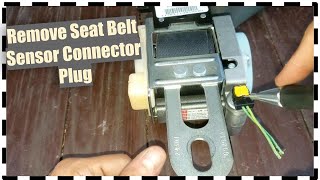
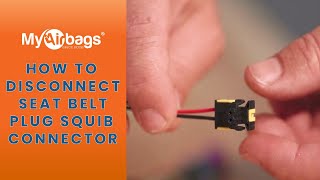
- Corroded or fretted connector terminals (Common) — The metal terminals inside the yellow pretensioner connector 🎬 See how to safely remove the yellow sensor plug develop fretting corrosion—micro-vibrations from driving that wear away the protective coating, leading to oxidation. This increases resistance and disrupts the signal.
- Faulty passenger seatbelt pretensioner assembly (Common) — The pretensioner itself, which contains a small pyrotechnic charge and an internal resistor, fails internally. This failure pushes its electrical resistance outside the normal range, triggering the code.
- Previously deployed pretensioner (Less Common) — Seatbelt pretensioners are one-time use devices. If the vehicle was in a prior accident that caused the pretensioner to fire, it must be replaced. The system reports a fault until a new one is installed.
- Water intrusion and corrosion (Uncommon) — Water leaks from clogged sunroof drains or window seals pool on the vehicle floor. This corrodes connectors or splice points in the SRS harness, causing a high resistance fault.
- Rodent or pest damage to wiring harness (Uncommon) — Rodents nest inside vehicles and chew through wiring. The soy-based insulation used in modern wiring harnesses is particularly attractive. A chewed wire in the SRS harness causes an immediate open circuit.
- Faulty Restraints Control Module (RCM) (Very Rare) — The control module that monitors the airbag system fails internally. It incorrectly reports a problem with the pretensioner circuit when the issue lies within the module's own circuitry. This is a last-resort diagnosis.
Symptoms

- Airbag warning light is on — The most common and often only symptom is the illumination of the airbag warning light on the instrument panel. 🎬 Watch: How to get and erase airbag trouble codes
- Flashing airbag light (on some models) — Some vehicles, particularly Fords, flash a two-digit Lamp Fault Code (LFC) via the airbag light before it stays solid. An LFC of 34 corresponds to a B1881 or B1886 fault.
- Passenger seatbelt fails to tighten in a crash — The primary function of the pretensioner is disabled, meaning the passenger's seatbelt will not automatically tighten during a collision.
- Entire airbag system disabled — On many vehicles, a fault in any part of the Supplemental Restraint System (SRS) causes the entire system, including all airbags, to deactivate as a safety precaution.
- High resistance value on scanner live data (scan-tool only — no driver-felt sign) — A professional scan tool shows live data for the passenger pretensioner circuit. A normal value is ~2-3 ohms, while a B1881 fault shows a very high or out-of-range reading, such as 25.5 ohms.
Diagnostic Flowchart
Tap your situation to follow the diagnostic path that matches what you're seeing on this code.
Common Fixes & Costs
- Cleaning connector terminals and applying dielectric grease — Parts: $10-$30, Labor: $100-$150, ~1 hr book time (DIY)
- Securing or repairing the under-seat wiring harness — Parts: $5-$20, Labor: $150-$300, ~1.5 hr book time (Intermediate)
- Replacing the passenger seatbelt pretensioner assembly — Parts: $150-$400, Labor: $150-$250, ~1.5 hr book time (Professional)
- Replacing a section of the SRS wiring harness — Parts: $50-$150, Labor: $200-$400, ~2.5 hr book time (Professional)
- Replacing the Restraints Control Module (RCM) — Parts: $200-$700, Labor: $250-$450, ~2 hr book time (Professional)
Used vs. New Parts: Buying Guide
When a used part is worth it: Never buy a used seatbelt pretensioner. It is a safety-critical pyrotechnic device with an unverifiable history. The only time used parts make sense is for an attached wiring pigtail if it is professionally spliced far from the device.
Donor-vehicle mileage cap: roughly under 10000 miles for the part to have meaningful remaining life.
Donor quality checklist:
- Never buy a used pretensioner, retractor, or airbag. These are one-time use safety devices.
- If buying a related part like a seat track, ensure it is from a vehicle with no signs of collision or water damage.
- Verify the part number exactly. SRS components are highly specific to year, make, and model.
Decision logic:
- If The faulty part is the pyrotechnic pretensioner assembly. → Always buy new OEM or a professionally remanufactured unit from a reputable specialist.
- If The faulty part is the wiring connector. → Buy a new OEM pigtail connector for the repair. Do not use a brittle connector from a junkyard car.
- If Budget is the absolute primary concern. → Consider a professional rebuilding service for your existing pretensioner. They replace the spent components, ensuring OEM fitment.
Warranty tradeoff: Used parts typically have no warranty. Professional remanufacturing services often offer a lifetime warranty. New OEM parts carry a manufacturer's warranty, typically 12 months.
Worst-case if a used part fails: $500-$1000+ plus extreme safety risk. If a used part fails, you pay for the part and labor again, and the system fails to protect an occupant in a crash.
What Happens If You Wait — Timeline
- 0 seconds: The Restraints Control Module (RCM) detects high resistance during its key-on self-test. The airbag warning light immediately illuminates, and the B1881 code is stored as a hard fault. (MPG impact: 0%% · Added cost: $0. The primary cost is an immediate loss of safety.)
- 0+ days (Driving with light on): The passenger seatbelt pretensioner is disabled. In many vehicles, the entire SRS system (all airbags) deactivates as a fail-safe. The risk of serious injury in a crash dramatically increases. (MPG impact: 0%% · Added cost: $0 in vehicle damage, but the potential cost to human life is immeasurable.)
- At next state safety inspection: The vehicle automatically fails its safety inspection in states requiring a functional SRS system. You cannot legally register the vehicle until the fault is repaired. (MPG impact: 0%% · Added cost: $50-$200 for the failed inspection, re-inspection fees, and the mandatory repair.)
- 6+ months: The driver becomes accustomed to the warning light, potentially ignoring a new, different SRS fault if one occurs. The primary cost remains the constant safety risk. (MPG impact: 0%% · Added cost: $150-$500+. The cost of the original repair remains, plus the risk of a more expensive repair if a shop replaces the wrong parts due to poor diagnosis.)
Cost of Not Fixing It
- Immediate (0+ days): Passenger seatbelt pretensioner is disabled. On many vehicles, the entire SRS system (all airbags) is also disabled as a safety precaution. (Added cost: $0 in immediate repair costs, but an immeasurable cost in compromised passenger safety.)
- At Next State Inspection: The vehicle automatically fails safety inspections in states that check for an illuminated airbag warning light. (Added cost: Cost of the failed inspection fee plus the eventual cost of the required repair to pass re-inspection.)
- Long-Term: Ignoring the fault creates a false sense of security. The primary cost is the persistent, severe safety risk to all occupants. (Added cost: No direct escalating financial cost, but the liability and risk of severe injury in an accident are constant.)
Diagnosis Steps

- Read Fault Codes and Live Data
Use an OBD-II scanner that reads SRS/airbag codes to confirm B1881. Pull up the live data stream for the passenger pretensioner resistance. Note the exact ohm reading to establish a baseline.
Tools: OBD-II Scanner (SRS compatible) (Beginner) - Disconnect Battery and Reseat the Connector
CRITICAL SAFETY STEP: Disconnect the negative battery terminal and wait 15 minutes for the SRS system to discharge. Locate the yellow pretensioner connector under the passenger seat, disconnect it, inspect the pins for corrosion, and reconnect it securely until it clicks.
Tools: Wrench set (for battery terminal) (Intermediate) - Visually Inspect Under the Passenger Seat
Look for obvious issues with the wiring harness leading to the seatbelt buckle. Check for broken wires, chafing against the seat frame, or items stored under the seat that snagged the wiring.
Tools: Flashlight (Beginner) - Perform a 'Wiggle Test' while Monitoring Live Data
With the scanner displaying the live data PID for passenger pretensioner resistance, gently wiggle the under-seat connector and wiring harness. Watch for the resistance value to drop back into the normal range (~2.0-3.0 ohms). This confirms a poor connection.
Tools: Professional OBD-II Scanner with Live Data (Advanced) - Measure Pretensioner Resistance
With the battery disconnected and the pretensioner unplugged, use a multimeter to measure the resistance across the two pins on the pretensioner assembly itself. A normal reading is 1.5 to 3.1 ohms. A reading of infinity (OL) indicates a blown pretensioner.
Tools: Multimeter, T-pins (to avoid damaging terminals) (Advanced) - Test the Wiring Harness for Continuity
With the battery disconnected and both the pretensioner and RCM unplugged, check for continuity in the two wires running between the RCM and the pretensioner. There should be less than 1 ohm of resistance on each wire.
Tools: Multimeter, Vehicle Wiring Diagram (Professional) - Substitute with a Resistor (Professional Only)
Temporarily plug a 2.0-3.0 ohm resistor into the harness-side connector in place of the pretensioner. Reconnect the battery and clear codes. If B1881 does not return, the pretensioner is faulty. If the code remains, the fault is in the wiring or the RCM.
Tools: 2-3 Ohm Resistor, Professional Scanner (Professional)
When This Code Triggers (Freeze-Frame Conditions)
- System State: Key-On Self-Test (The Restraints Control Module (RCM) performs a complete system self-check every time the ignition is turned to the 'ON' or 'RUN' position.)
- Fault Detection Time: Milliseconds (The RCM continuously sends a low-voltage monitoring signal. If the expected resistance (2-3 ohms) is not detected instantly, the code is set.)
- Vehicle Speed: 0 mph (The fault is most often detected and stored before the vehicle is put into gear, during the initial startup sequence.)
- Engine RPM: 0 or Idle RPM (Unlike emissions codes, SRS faults are not dependent on engine operating conditions. The check is purely electrical and happens at startup.)
Related Codes
- B1877 — This is the equivalent code for the driver's side seatbelt pretensioner circuit ('Driver Pretensioner Circuit Resistance High'). They often appear together if there is a common wiring issue or after a frontal collision.
- B1886 — Indicates the passenger pretensioner circuit resistance is too low ('Passenger Pretensioner Circuit Short to Ground'). B1881 is caused by a broken wire (high ohms), while B1886 is caused by wires touching each other (low ohms).
- B1882 — Indicates a 'Passenger Pretensioner Circuit Short to Battery'. The signal wire is touching a power source, which is a different electrical fault than the high resistance indicated by B1881.
- B1998 — Indicates an open circuit for the passenger side airbag module itself, not the pretensioner. B1881 relates to the seatbelt system, while B1998 relates to the inflatable airbag cushion.
Climate & Environmental Factors
- High Humidity / Water Intrusion: High ambient humidity accelerates fretting corrosion on connector terminals. Direct water intrusion from leaks (sunroof drains, window seals) pools on the floor and directly corrodes the pretensioner connector or harness, causing a high resistance fault.
- Extreme Temperature Cycles (Hot to Cold): Repeated cycles of heating and cooling cause the metal pins within electrical connectors to expand and contract at different rates than the plastic housing. Over time, this loosens the connection and increases the chance of fretting corrosion.
- Road Salt (in Cold Climates): Moisture and salt kicked up into the under-seat area wicks into the wires if the harness has compromised insulation. This salty moisture causes severe corrosion far from the initial entry point.
How to Talk to a Mechanic About This Code
Say this: "I have an airbag light on and my scanner shows a B1881 code for the passenger pretensioner circuit. Before we assume the pretensioner needs replacement, I'd like you to diagnose the circuit itself. Please inspect the connector and wiring under the passenger seat for damage or corrosion, and perform a wiggle test while watching live data for resistance changes."
This signals you know the most common cause is a simple wiring or connector issue, not a failed pretensioner. It directs the technician to perform the cheapest diagnostic steps first, preventing an immediate quote for an expensive part replacement.
Avoid saying:
- My airbag light is on, can you fix it?
- Just replace the passenger seatbelt part.
- I have a B1881 code, how much for a new pretensioner?
Questions to ask before authorizing the repair:
- What resistance reading did you get from the pretensioner circuit on the scanner's live data?
- Did you find any visible damage, corrosion, or looseness in the under-seat connector and wiring?
- If you are recommending a pretensioner replacement, how did you rule out a wiring fault between the connector and the control module?
- Is the recommended part a new OEM part, and what is the warranty on the part and your labor?
Where to Take It: Dealer vs Independent vs Chain
- Dealer:
Best for: Vehicles under warranty., Repairs covered by a specific Technical Service Bulletin (TSB)., Complex cases where the Restraints Control Module (RCM) requires replacement and programming.
Downsides: Highest labor rates., May be quicker to replace an entire assembly rather than perform a nuanced wiring repair. (Typical cost: +50% vs. baseline) - Independent Shop:
Best fit. A qualified independent shop easily handles the most common causes of B1881 (wiring, connectors) at a lower cost than the dealer. Ensure they have SRS diagnostic experience.
Best for: Out-of-warranty vehicles where cost is a factor., Diagnosing common wiring and connector faults, which cause most B1881 codes., Second opinions on a high-cost dealer quote.
Downsides: Shop must have an SRS-capable scan tool and technicians experienced with airbag system diagnosis., Quality varies, so vet the shop based on reviews and ASE certifications. (Typical cost: +0% vs. baseline) - Chain Shop:
AVOID. Airbag system repairs require specific expertise and carry significant safety liability. Generalist chain shops lack the specialized diagnostic equipment.
Best for: Not recommended for SRS/airbag system repairs.
Downsides: Technician skill and diagnostic equipment for safety systems is inconsistent., The risk of an improper repair on a critical safety system is too high. (Typical cost: -10% vs. baseline)
When to Walk Away From the Repair
If the total estimated repair cost exceeds 50% of your car's private-party value, and the car has other pending issues, seriously consider selling it as-is. For a safety-related fault like B1881 that prevents passing inspection, the decision to repair is mandatory if you intend to keep driving it.
- Car worth $4000, fix is $750: Fix it. The repair cost is well within the threshold and is necessary to pass a safety inspection and restore critical safety features.
- Car worth $2500, fix is $1800: Walk away. The repair cost is over 70% of the car's value. It is not economically sensible to proceed.
What Scan Tool You Need for This Code

Minimum: An OBD-II scanner that reads and clears Supplemental Restraint System (SRS) or airbag codes (B-codes).
A standard $20 engine code reader cannot see SRS faults. It shows 'no codes' even when the airbag light is on. You need a tool specifically advertised with SRS/ABS capability to diagnose B1881.
Budget: Autel AutoLink AL619 (~$85) — Reads and clears SRS (airbag) and ABS codes, shows code definitions, and displays live data streams, which is helpful for diagnosis.
Mid-range: Foxwell NT510 Elite (~$180) — Provides full-system diagnostics, including SRS. It shows live data graphs and offers bi-directional controls (active tests) to help pinpoint faults without swapping parts.
Professional: Autel MaxiCOM MK808BT (~$550) — Offers full bi-directional control, all OEM-level diagnostic functions, and comprehensive live data graphing. It is professional-grade equipment for complex diagnostics and RCM programming.
Rent vs buy: Most auto parts stores' free loaner tools are basic engine code readers and CANNOT read SRS codes. If this is a one-time fix, it is more cost-effective to pay a shop's diagnostic fee ($125-$200) than to buy a capable scanner. Buy a scanner only if you plan to do your own diagnostics regularly.
How to Clear the Code After You Fix It
- Ensure the physical fault (e.g., wiring, pretensioner) has been properly repaired.
- Reconnect the negative battery terminal if it was disconnected for the repair.
- Use an SRS-compatible OBD-II scan tool to access the Restraints Control Module (RCM).
- Select the function to 'Clear DTCs' or 'Erase Fault Codes'.
- Cycle the ignition off, wait 10 seconds, then turn it back on. The airbag light should perform its self-check and remain off.
Drive cycle: No specific drive cycle is required for an SRS code. The system resets and confirms the repair's success during the next key-on self-test.
Readiness monitors affected: None. SRS codes do not affect emissions readiness monitors.
Watch out for:
- Using a standard engine code reader, which cannot access or clear SRS/airbag codes.
- Simply clearing the code without fixing the underlying physical problem; the code returns immediately on the next startup.
- Disconnecting the battery will NOT clear a B1881 code. The fault is stored in the RCM's non-volatile memory.
Will This Fail Emissions / State Inspection?
No — by itself this code doesn't fail OBD inspection (but it can keep readiness monitors from setting, which causes a separate fail).
- California: An airbag light does not cause a failure of the emissions-only smog check. However, it is a significant safety defect.
- New York: According to NYS DMV inspection regulations (CR-79.21), an illuminated airbag warning light is an advisory item. The inspector must inform the owner, but the vehicle passes the safety inspection.
- Texas: An airbag warning light is not on the Texas vehicle safety inspection checklist and does not cause a failure. Some shops refuse to pass it citing general safety concerns.
- Virginia, Pennsylvania, and others: In states with comprehensive safety inspections, an illuminated airbag light is an automatic failure because a critical safety system is inoperative.
Most Commonly Affected Vehicles
- Ford Focus (2000-2011) — Extremely common due to the design of the under-seat wiring and connectors. Often appears with code B1877 for the driver's side. The repair involves securing the harness or cleaning the connector pins.
- Ford Ranger (2001-2003) — Ford issued Technical Service Bulletin (TSB 04-2-4) for this issue, caused by fretting corrosion in the C303 connector terminals under the passenger seat. The fix involves cleaning the terminals.
- Mazda Mazda3 (2004-2005) — TSB 08-001/07 addresses high resistance in the pretensioner connector caused by frequent seat movement. The fix is replacing the buckle assembly and securing the harness.
- Ford F-150 (2001-2008) — Wiring under the seat and along the floor is susceptible to damage from moisture, corrosion, or rodents.
- Mazda B-Series (B3000, B4000) (2001-2003) — As a rebadged Ford Ranger, it shares the same wiring and connector design, making it prone to the same pretensioner circuit faults outlined in Ford's TSBs.
- BMW 3-Series (E46, E90), 5-Series (E60) (2000-2013) — While many airbag faults on these models are due to the passenger seat occupancy mat, issues with the seatbelt buckle and pretensioner wiring are also common. A diagnostic scan differentiates between mat and pretensioner faults.
- Honda Odyssey, Civic (2001-2007) — A common cause for the SRS light is a faulty driver or passenger seat belt buckle switch. Cleaning the buckle mechanism and checking under-seat connectors is the first step.
- Nissan Altima (2013-2018) — Owners report issues with the SRS light traced back to faulty wiring or dirty connectors under the passenger seat, which are often misdiagnosed as requiring expensive part replacements.
Manufacturer-Specific Notes
- Ford: Ford issued multiple TSBs (like TSB 04-2-4 for the Ranger) acknowledging this code is caused by fretting corrosion in the under-seat connector. The fix involves cleaning the terminals and applying specific electrical grease.
- Mazda: On models like the Mazda3, the code is triggered by repeated use of the seat slider, which strains the pretensioner connector. TSB 08-001/07 recommends securing the wiring harness with tape and a corrugated tube.
- General Motors (GM): On many GM vehicles, any fault within the SRS system, including a B1881 code, disables the entire airbag system for safety. The system is designed to fail safely by deactivating.
- BMW: Airbag lights on BMWs are often attributed to the passenger seat occupancy mat sensor. A failure here is sometimes confused with pretensioner issues.
- Honda: The SRS light is often triggered by a faulty passenger airbag 'OFF' indicator light assembly or a faulty seat belt buckle switch. In the US, Honda provides a lifetime warranty on seat belts that fail during normal use.
Real Owner Stories
2001 Ford F-150 with airbag light
Owner purchased a used work truck with the airbag light on. A scanner showed code B1881 and live data revealed passenger pretensioner circuit resistance was 25.5 ohms, far above the 2.4 ohms on the working driver's side.
What they tried:
- Visually inspected the under-seat connector, which looked fine.
- Traced the wiring harness from the pretensioner back towards the Restraints Control Module (RCM).
- Discovered a chewed wire (red with yellow stripe) near the RCM, likely from a rodent.
Outcome: Repaired the single broken wire with a butt connector and electrical tape. After clearing the code, the fault was gone and the live data for the passenger pretensioner dropped to a normal 2.2 ohms. The total cost was less than a dollar in supplies.
Lesson: Do not assume the fault is the expensive pretensioner itself. Use a scanner with live data to confirm high resistance and visually inspect the entire wiring path for damage.
2002 Ford Ranger with B1881 and B1877
Airbag warning light came on. A scan revealed both B1881 (passenger side) and B1877 (driver side) codes, indicating high resistance in both pretensioner circuits.
What they tried:
- Owner took the vehicle to a dealer aware of Ford's Technical Service Bulletin (TSB 04-2-4) for this exact issue.
- The technician disconnected the battery, accessed the connectors under both seats (C303 and C3014), and sprayed the connector pins with DeoxIT D5S-6 electrical contact cleaner.
- The technician secured the wiring harness with tape to relieve stress on the connector, per the TSB.
Outcome: After cleaning the terminals and reconnecting everything, the codes cleared and did not return. The repair was covered under warranty but typically carries a 0.6-hour labor charge.
Lesson: For Ford Rangers and Mazda B-Series trucks of this era, this is a known issue caused by fretting corrosion. The fix is cleaning the connector terminals, not replacing the pretensioners.
2007 Honda Odyssey with intermittent SRS light
The SRS airbag light came on intermittently. The owner found that moving the driver's or passenger's seat all the way forward or back triggered the light.
What they tried:
- Checked the yellow connectors under both front seats. Disconnected and reconnected them to ensure a secure fit.
- When the light returned, the owner sprayed WD-40 Electrical Contact Cleaner directly into the slot of the seatbelt buckle to clean the internal contacts.
Outcome: After reseating the under-seat connectors securely, the light went off and stayed off. This simple DIY fix prevented a costly trip to the dealer.
Lesson: Always perform the simplest checks first. A loose connector from items stored under the seat or from extreme seat movement is a very common cause. Reseating the connector until it 'clicks' often solves the problem.
Ford Focus with B1881 after seat replacement/detailing
The airbag light appeared immediately after the owner had the interior detailed and the front seats moved aggressively.
What they tried:
- Disconnected the battery and waited 15 minutes for the system to discharge.
- Located the yellow SRS connector, unplugged it, inspected the pins for moisture, and reconnected it firmly until it clicked.
Outcome: The physical connection was restored, but the airbag light remained on. The owner used an SRS-capable OBD-II scanner to access the Restraints Control Module and erase the stored B1881 code. The light then stayed off.
Lesson: Even after fixing the physical problem, the airbag light will not go off by itself. You must clear the code from the SRS module's memory using a capable scan tool. A standard engine code reader cannot do this.
How to Prevent This Code From Triggering
- Avoid storing items under the front seats (Daily habit) — Objects sliding around snag, stretch, or unplug the delicate SRS wiring harness and its yellow connector, causing an open circuit.
- Apply dielectric grease or corrosion inhibitor to connector pins (Once, or during other under-seat maintenance) — Seals the electrical contacts from air and moisture, preventing the fretting corrosion and oxidation that causes high resistance. Ford TSB 04-2-4 specifically recommends Deoxit contact cleaner for this.
- Secure the under-seat wiring harness with zip ties (Once) — Prevents the harness from stretching when the seat moves to its limits. This reduces strain on the connector pins, a known issue on models like the Mazda3.
- Use rodent deterrents if parking outdoors for long periods (As needed) — Rodents are attracted to the soy-based insulation on modern wiring. Using peppermint oil sprays or rodent tape prevents them from chewing through critical SRS wires.
Frequently Asked Questions
Can I just clear the B1881 code to turn off the airbag light?
You can clear the code with an SRS-capable scanner, but the RCM will detect the fault on the next startup and trigger the code immediately. You must repair the physical fault first.
Is it safe to work on the airbag system myself?
It is dangerous because the system contains explosive pyrotechnic devices. Always disconnect the negative battery cable and wait 15 minutes before working on any SRS component. This allows the system's capacitors to discharge and prevents accidental deployment.
Will a B1881 code cause my car to fail a safety inspection?
Yes, in states with comprehensive safety inspections (like Virginia or Pennsylvania), an illuminated airbag warning light is an automatic failure. However, states like New York and Texas note it as an advisory item but will still pass the vehicle.
Why is the connector for the airbag system usually yellow?
Automakers use bright yellow for SRS connectors and wire looms as a universal visual warning. This indicates the wiring belongs to the safety restraint system and requires special handling procedures.
What are the most common mistakes when diagnosing B1881?
The most common mistake is immediately replacing the expensive pretensioner assembly without testing the circuit. The fault is almost always in the inexpensive wiring or connector under the seat. Overlooking a loose plug or corroded pin guarantees a wasted repair.
My car was in a minor accident and now has this code. Why?
Seatbelt pretensioners fire even in minor collisions where the main airbags do not deploy. Once deployed, the pretensioner is spent and creates an open electrical circuit. The RCM detects this and stores code B1881 until you install a new pretensioner.
What does 'fretting corrosion' on the connector mean?
Fretting is wear caused by micro-vibrations between the metal pins in a connector. This movement rubs off the protective plating, exposing the base metal to air and moisture. The resulting oxidation creates high electrical resistance, triggering the B1881 code.
Can I use a resistor to bypass the pretensioner permanently?
Using a resistor permanently is a severe safety risk and creates legal liability. It turns off the airbag light, but the passenger seatbelt will not tighten in an accident. Only use a resistor temporarily for diagnostic testing.
Key Takeaways
- Code B1881 disables the passenger seatbelt pretensioner and often deactivates the entire airbag system, leaving occupants unprotected in a crash.
- Over 80% of B1881 faults stem from a loose, damaged, or corroded yellow connector under the passenger seat, not a failed pretensioner assembly.
- Disconnect the negative battery terminal and wait 15 minutes before touching any yellow SRS wiring to prevent accidental airbag deployment.
- A standard $20 engine code reader cannot clear B1881; you must use an SRS-capable scan tool to erase the hard fault from the module's memory.
Helpful Videos


The information in this article is provided for general reference and educational purposes only. Vehicle specifications, procedures, and part compatibility can vary by production date, trim level, and region. Always consult your vehicle's factory service manual and verify part numbers before purchasing or performing repairs. Safety-critical components such as airbags, seat belts, and braking systems should be installed by a qualified professional.
- 🎬 Helpful Videos
- What Does B1881 Mean?
- Can I Drive With B1881?
- Common Causes
- Symptoms
- Diagnostic Flowchart
- Common Fixes & Costs
- Used vs. New Parts: Buying Guide
- What Happens If You Wait — Timeline
- Cost of Not Fixing It
- Diagnosis Steps
- When This Code Triggers (Freeze-Frame Conditions)
- Related Codes
- Climate & Environmental Factors
- How to Talk to a Mechanic About This Code
- Where to Take It: Dealer vs Independent vs Chain
- When to Walk Away From the Repair
- What Scan Tool You Need for This Code
- How to Clear the Code After You Fix It
- Will This Fail Emissions / State Inspection?
- Most Commonly Affected Vehicles
- Manufacturer-Specific Notes
- Real Owner Stories
- 2001 Ford F-150 with airbag light
- 2002 Ford Ranger with B1881 and B1877
- 2007 Honda Odyssey with intermittent SRS light
- Ford Focus with B1881 after seat replacement/detailing
- How to Prevent This Code From Triggering
- Frequently Asked Questions
- Can I just clear the B1881 code to turn off the airbag light?
- Is it safe to work on the airbag system myself?
- Will a B1881 code cause my car to fail a safety inspection?
- Why is the connector for the airbag system usually yellow?
- What are the most common mistakes when diagnosing B1881?
- My car was in a minor accident and now has this code. Why?
- What does 'fretting corrosion' on the connector mean?
- Can I use a resistor to bypass the pretensioner permanently?
- Key Takeaways
- 🎟️ Get 5% Off