

OBD-II Code B1869: Airbag Warning Light Circuit Problem
The Ultimate Guide to What B1869 Means, Why It Triggers, and How to Fix It
- Code B1869 deactivates your entire airbag system because the Restraints Control Module detects a broken warning light circuit.
- Over 70% of B1869 codes stem from a simple $5 burnt-out bulb in either the main instrument cluster or the 'Passenger Airbag Off' indicator.
- Driving with a B1869 code guarantees your airbags and seatbelt pretensioners will not deploy during a collision.
- Hearing 5 sets of 5 beeps in a Ford or Mazda indicates you have a B1869 code masking a second, hidden airbag fault.
- This code triggers an automatic safety inspection failure in states like New York and Virginia, requiring immediate repair for legal registration.
What Does B1869 Mean?

B1869 indicates the Restraints Control Module (RCM) detects an open circuit in the dashboard airbag warning light. The computer expects a complete electrical circuit; an 'open' means a physical break exists. The system disables the airbags as a precaution because it cannot warn you of other critical faults.
Technical definition: The SAE/ISO definition for B1869 is "Lamp Air Bag Warning Indicator Circuit Open". The Restraints Control Module (RCM) continuously monitors the resistance of this circuit. If resistance falls outside the specified range (typically expecting a few ohms from a healthy bulb filament), the module sets this code and disables the Supplemental Restraint System (SRS).
Can I Drive With B1869?
Yes, But With Caution. Yes, the vehicle operates mechanically, but the safety module disables the entire airbag system as a fail-safe. Airbags will not deploy in a crash. Driving with this light on causes automatic safety inspection failures in states like New York, Virginia, and Texas, preventing legal registration or sale.
Common Causes

- Burnt-out main airbag warning light bulb (Very Common) — The most frequent cause in older vehicles is the incandescent bulb in the instrument cluster burning out. The broken filament creates an open circuit. On many Ford Super Duty trucks, this is a standard #54 bulb.
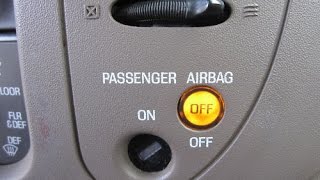
- Burnt-out passenger airbag 'OFF' indicator bulb (Very Common) — On many Ford and Mazda vehicles, the separate 'Passenger Airbag Off' indicator light shares the monitored circuit. This bulb stays on when there is no passenger, leading to a shorter lifespan. Its failure triggers 🎬 Watch: How to diagnose and fix the passenger airbag light a B1869 code even if the main cluster light works.
- Damaged wiring, connectors, or loose grounds (Common) — Wires leading to the instrument cluster or RCM get frayed, corroded, or disconnected. This happens frequently under seats, in the steering column, or behind the dashboard after heater core repairs. A loose RCM ground wire under the center console is a known trigger for 2002-2005 Ford Explorers.
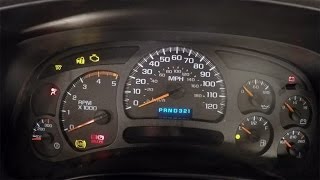
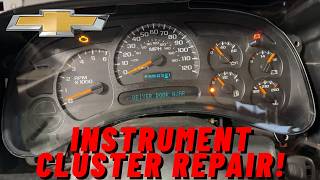
- Faulty instrument cluster (Less Common) — The problem originates inside the instrument cluster itself, such as a broken solder joint on the circuit board, a failed LED, or a faulty lamp driver circuit. On 2003-2007 GM trucks, the entire cluster is a notorious failure point. 🎬 See this walkthrough for repairing GM instrument cluster electronics
- Low vehicle battery voltage (Rare) — A depleted main car battery drains the airbag system's backup battery, leading to erratic module behavior and falsely stored fault codes, including B1869.
- Faulty Restraints Control Module (RCM) (Rare) — The RCM controls the airbag system. It fails internally and incorrectly reports a circuit problem. Consider this only after ruling out all bulbs and wiring.
Symptoms

- Airbag warning light does not turn on at startup — When you turn the key to 'ON', all dashboard lights briefly illuminate for a self-test. If the airbag light never comes on, it confirms an open circuit.
- Audible chiming or beeping (the '5x5' chime) — Ford and Mazda vehicles sound a repetitive chime (five sets of five beeps) to alert you to a serious airbag fault when the warning light is broken. This means you have B1869 plus another active SRS fault.
- Airbag warning light stays on continuously — Some vehicle definitions for B1869 include a 'short to ground'. A short completes the circuit unexpectedly, causing the light to remain illuminated at all times.
- Other instrument cluster lights or gauges malfunction — Seeing B1869 alongside erratic speedometers or tachometers strongly suggests a failing instrument cluster, particularly on early 2000s GM trucks and SUVs.
- No other noticeable driving issues — This code isolates to the Supplemental Restraint System (SRS). It does not affect engine performance, braking, or transmission shifting.
Diagnostic Flowchart
Tap your situation to follow the diagnostic path that matches what you're seeing on this code.
Common Fixes & Costs
- Replacing the instrument cluster or passenger 'OFF' light bulb — Parts: $2-$15, Labor: $100-$300, ~1.5 hr book time (DIY)
- Repairing a broken wire or cleaning a ground connection — Parts: $5-$25, Labor: $125-$400, ~2 hr book time (Intermediate)
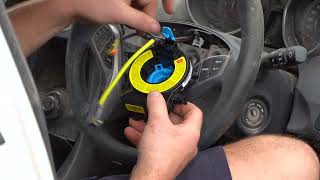
- Replacing the clock spring — Parts: $60-$400, Labor: $100-$200, ~1.5 hr book time (Professional)
- Repairing or replacing the instrument cluster — Parts: $200-$800, Labor: $100-$200, ~1 hr book time (Professional)
- Replacing the Restraints Control Module (RCM) — Parts: $550-$1300, Labor: $160-$235, ~1.5 hr book time (Professional)
Used vs. New Parts: Buying Guide
When a used part is worth it: For a simple instrument cluster on a vehicle older than 15 years, a used part from a reputable salvage yard is cost-effective if the part number is an exact match. For clock springs, a used OEM part is often more reliable than a cheap new aftermarket knockoff.
Donor-vehicle mileage cap: roughly under 100000 miles for the part to have meaningful remaining life.
Donor quality checklist:
- Verify the donor vehicle's VIN to ensure compatibility, especially for parts requiring programming.
- For instrument clusters, check if the donor vehicle had similar options (e.g., tachometer, transmission type).
- Avoid parts from flood or heavy-impact vehicles, as hidden damage is likely.
- Ask for a functional warranty (30-90 days is typical for salvage parts).
Decision logic:
- If The failed part is a clock spring → New OEM is best for safety, but a used OEM part is a viable budget option. Avoid the cheapest online knockoffs, as quality is highly variable.
- If The failed part is an instrument cluster on a modern vehicle (less than 10 years old) → Buy a new/remanufactured unit or use a professional mail-in repair service. A used cluster requires dealer programming for VIN and mileage, negating cost savings.
- If The failed part is the Restraints Control Module (RCM) → Buy new only. A used RCM contains crash data from the donor vehicle and will not function correctly. This part is critical to safety and must be programmed by a professional.
Warranty tradeoff: Used parts typically have a 30-90 day warranty covering the part only. New aftermarket parts carry a 1-year to limited lifetime warranty. New OEM parts have a 1-2 year warranty, often contingent on dealer installation.
Worst-case if a used part fails: $300-$800 if a used electronic part is faulty or incompatible, requiring repeat labor costs and the purchase of another part.
What Happens If You Wait — Timeline
- Immediate (First Key-On): Code B1869 sets. The RCM disables the entire Supplemental Restraint System (SRS) as a fail-safe. The airbag warning light fails its startup self-test. (MPG impact: 0%% · Added cost: $0 (Safety Risk: Infinite))
- 0-6 Months: A second, unrelated SRS fault occurs. Because the warning light is inoperative, the driver receives no visual alert. On Ford/Mazda vehicles, the '5x5' chime begins. (MPG impact: 0%% · Added cost: $200 - $600 (Cost of the masked secondary repair, like a clock spring or seat sensor).)
- At Next State Inspection: Vehicle automatically fails its safety inspection because the airbag light does not perform the required self-test. The vehicle cannot be legally registered. (MPG impact: 0%% · Added cost: $50 - $200 (Fines, re-inspection fees, and lost time).)
- At Time of Sale: The vehicle's value drops significantly. Selling a car with a known safety defect is illegal in many jurisdictions and deters buyers. (MPG impact: 0%% · Added cost: $500 - $2500+ (Diminished vehicle value and potential legal liability).)
Cost of Not Fixing It
- Immediate: Complete deactivation of the Supplemental Restraint System (SRS). Airbags and seatbelt pretensioners will NOT deploy in a crash, significantly increasing the risk of serious injury or death. (Added cost: N/A (Safety Risk))
- At next state inspection: Guaranteed failure of the vehicle's safety inspection in many states. This results in fines, inability to legally register the vehicle, or forced immediate repairs. (Added cost: $50 - $200+ (Fines and re-inspection fees))
- When trying to sell: Significantly reduced vehicle value and a smaller pool of potential buyers. It is illegal to sell a vehicle with a known safety defect in many jurisdictions. (Added cost: $500 - $2500+ (Diminished value))
Diagnosis Steps

- Observe the Airbag Light at Startup
Turn the ignition key to the 'ON' position (without starting the engine). Note if the airbag warning light comes on for a few seconds and turns off, stays on, or never comes on at all. This observation is your most critical clue.
Tools: Eyes and ignition key (Beginner) - Inspect the Passenger 'OFF' Indicator Bulb
On Ford and Mazda vehicles, verify if the separate 'Passenger Airbag Off' light illuminates during startup. If it does not, this bulb is likely burnt out and triggering the B1869 code.
Tools: Eyes and ignition key (Beginner) - Check the Fuses
Locate the fuse box and identify fuses for the 'Instrument Cluster,' 'SRS,' 'RCM,' or 'Airbag.' Visually inspect the fuse for a broken strip. Use a multimeter on the continuity setting to confirm it functions.
Tools: Owner's manual, fuse puller, multimeter (Beginner) - Visually Inspect Key Wiring Connectors and Grounds
Look for disconnected yellow plugs, pinched wires, or corrosion under the seats and in the steering column. Locate the main ground wire for the RCM (often under the center console) and ensure the screw is tight and rust-free.
Tools: Flashlight, screwdrivers, socket set, wire brush (Intermediate) - Inspect the Main Instrument Cluster Bulb
Remove the instrument cluster on older vehicles with incandescent bulbs. Twist the bulb out and visually inspect for a broken filament. Newer cars use soldered LEDs requiring professional repair.
Tools: Screwdrivers, trim removal tools, replacement bulb (Intermediate) - Test the Warning Light Circuit with a Multimeter
Disconnect the RCM and the instrument cluster. Set your multimeter to resistance (Ω). Probe the warning light signal wire at the RCM connector and the corresponding pin at the cluster. An 'OL' reading confirms a broken wire. A healthy wire shows under 5 ohms.
Tools: Multimeter, vehicle-specific wiring diagram, pin-out charts (Advanced) - Voltage Test at the Cluster
With the ignition on (KOEO), check for voltage at the instrument cluster connector pin that powers the airbag light. You should see battery voltage (~12V). The absence of voltage points to a power supply issue, while voltage with a non-working bulb points to a bad bulb or faulty RCM driver.
Tools: Multimeter, vehicle-specific wiring diagram (Advanced) - Live Data Stream Analysis for Intermittent Faults
For intermittent issues, use an advanced scan tool to monitor 'Driver Airbag Resistance'. Slowly turn the steering wheel lock to lock. If the resistance value jumps to 'OL' or fluctuates wildly, you have a failing clock spring.
Tools: Advanced scan tool with live data capability (Professional) - The Paperclip Test for Clock Spring vs. Airbag Faults
Disconnect the battery and wait 30 minutes. Disconnect the airbag module. Insert a 2-ohm resistor into the two pins of the vehicle-side connector. Clear codes and re-scan. If the resistance code disappears, the clock spring is good, pointing to a faulty airbag module.
Tools: Paperclip or 2-ohm resistor, advanced scan tool (Professional)
When This Code Triggers (Freeze-Frame Conditions)
- System State: KOEO or KOER (The Restraints Control Module (RCM) performs a self-test of the warning light circuit immediately upon ignition-on.)
- Circuit Resistance: Infinite / OL (The RCM expects to see the low resistance of a healthy bulb filament. An 'Open' or out-of-limit high resistance reading during the self-test sets the code.)
- System Voltage: 9V - 16V (The test is performed at normal vehicle operating voltage. Severely low battery voltage causes erratic SRS module behavior and stores codes.)
- Fault Type: Open Circuit (This specific code sets when the RCM detects an open in the warning lamp circuit, distinguishing it from short-to-ground or short-to-power faults.)
Related Codes
- B1868 — Means 'Lamp Air Bag Warning Indicator Circuit Failure.' B1868 is a general circuit fault, while B1869 specifically points to an open. They share root causes.
- B1870 — Indicates a 'Lamp Air Bag Warning Indicator Circuit Short To Battery,' the opposite of an open circuit. A multimeter test shows battery voltage for B1870, whereas B1869 shows near-zero voltage.
- B2293 — Points to a fault in the passenger side airbag system. It appears with B1869 on Fords because the system sounds the '5x5' chime only when there is a primary airbag fault AND the warning light is broken.
- B1871 — Means 'Passenger Air Bag Disable Module Fault'. On Fords, the passenger airbag deactivation switch and its indicator light cause B1869. If you see B1871, the fault is in the switch assembly or wiring.
Climate & Environmental Factors
- High Humidity / Water Intrusion: Moisture from heavy rain or windshield leaks causes corrosion on wiring connectors, ground points, and internal airbag module circuit boards. This corrosion creates an open circuit, triggering code B1869.
- Road Salt: Salt spray gets into the cabin and under the vehicle, accelerating corrosion on exposed connectors and ground points for the SRS system.
- Extreme Temperature Cycles: Significant swings between hot and cold cause electrical connectors to expand and contract. This leads to loose pin connections, creating an intermittent open circuit.
How to Talk to a Mechanic About This Code
Say this: "I have an airbag code B1869, and the main symptom is the airbag light does not come on at all during startup. I'd like a diagnostic to confirm the cause. Please check for a burnt-out bulb in both the instrument cluster and the passenger 'off' indicator before investigating more complex wiring or module faults."
This signals you are an informed customer who understands the common, inexpensive causes of this specific code. It directs the technician to perform the simplest checks first, preventing them from immediately quoting a costly module replacement.
Avoid saying:
- 'My airbag light is on, can you look at it?'
- 'Just fix whatever's wrong'
- 'Whatever you recommend'
Questions to ask before authorizing the repair:
- Did you check both the main cluster bulb and the passenger airbag indicator bulb?
- If you are recommending a wiring repair, can you show me the multimeter reading that confirms the open circuit?
- If you believe the Restraints Control Module (RCM) is faulty, what specific tests did you perform to rule out everything else in the circuit?
- What is your warranty on this repair, including parts and labor?
Where to Take It: Dealer vs Independent vs Chain
- Dealer:
Best for: Vehicles under warranty (e.g., Hyundai clock spring recall), Complex diagnostics requiring manufacturer-specific tools, Repairs requiring programming of a new Restraints Control Module (RCM)
Downsides: Highest labor rates and parts costs., Defaults to replacing an entire assembly (e.g., passenger light switch) instead of a component-level repair (soldering a new bulb). (Typical cost: +50% vs. baseline) - Independent Shop:
Best overall fit. A reputable independent shop, especially one specializing in auto electrics, offers the best balance of expertise and cost for the most common B1869 repairs.
Best for: Out-of-warranty vehicles where cost is a factor., Diagnosing and fixing common B1869 causes like bulbs, grounds, and wiring., Clock spring replacement on most common vehicles.
Downsides: Quality and expertise vary; seek a shop with good reviews for electrical or diagnostic work., Lacks the tools to program a new RCM if needed. (Typical cost: +0% vs. baseline) - Chain Shop:
AVOID. SRS diagnostics are a safety-critical task outside the core competency of most chain repair shops. The risk of misdiagnosis is high.
Best for: Simple maintenance like oil changes and tires.
Downsides: Technicians lack specialized training in SRS (airbag) systems., Diagnostic tools cannot properly read SRS codes., High pressure to meet sales quotas leads to misdiagnosis or unnecessary repairs. (Typical cost: -10% vs. baseline)
When to Walk Away From the Repair
If the estimated repair cost for this safety-critical system exceeds 50% of the car's private-party value, and the car has other significant issues, consider selling or scrapping it.
- Car worth $4000, fix is $350: Fix it. This is a relatively inexpensive repair that restores a critical safety feature and makes the car legally sellable and inspectable.
- Car worth $8000, fix is $700: Fix it. The repair cost is well below the threshold and is necessary for safe operation.
- Car worth $3000, fix is $1600: Walk away. The repair cost is over half the car's value. It is not economical to proceed unless the car is otherwise in perfect condition.
What Scan Tool You Need for This Code

Minimum: A scanner that reads and clears Supplemental Restraint System (SRS) / Airbag codes (often designated as 'B' codes).
A standard $20 'Check Engine' light reader only accesses Powertrain (P) codes and cannot communicate with the airbag module. Free scanning services at auto parts stores use these basic readers and cannot diagnose a B1869 code.
Budget: BlueDriver Pro Scan Tool (~$119) — Reads and clears SRS/airbag codes on many major brands (GM, Ford, Toyota, etc.). Connects via Bluetooth to a smartphone app.
Mid-range: Autel ML629 / Foxwell NT809 (~$150-400) — Provides full-system diagnostics, including SRS. Views live data streams, which is critical for diagnosing intermittent faults like a failing clock spring by watching resistance values change as the steering wheel turns.
Professional: Autel MaxiCOM MK808 / MK906BT (~$500-1200) — Offers full bidirectional control, component testing, and programming capabilities needed for replacing and configuring a new Restraints Control Module (RCM).
Rent vs buy: Buy or pay for a diagnostic. Free loaner tools from parts stores typically cannot read SRS codes. If you plan to do future work, buying a mid-range scanner is a worthwhile investment; otherwise, pay the diagnostic fee at a trusted shop.
How to Clear the Code After You Fix It
- Complete the physical repair (e.g., replace bulb, fix wiring).
- Reconnect the battery if it was disconnected for safety.
- Use an SRS-capable OBD-II scan tool to erase the B1869 code from the Restraints Control Module.
- Cycle the ignition to 'ON' and verify the airbag light performs its self-test: illuminates for a few seconds, then turns off.
Drive cycle: No specific drive cycle is required for the SRS system. The code clears with a scan tool, and the system self-tests at every startup. A short test drive confirms the light stays off.
Readiness monitors affected: None directly by the B1869 code. However, disconnecting the battery during repair resets all OBD-II emissions readiness monitors, preventing you from passing an emissions test until driven.
Before emissions retest: drive at least 100 miles to fully set monitors.
Watch out for:
- Using a basic code reader that only accesses the Powertrain Control Module (PCM); it cannot see or clear SRS codes.
- Disconnecting the battery will not clear 'hard codes' from the SRS module on modern vehicles.
- Not fixing the root cause. If the open circuit still exists, the code returns instantly upon the next startup self-test.
Will This Fail Emissions / State Inspection?
No — by itself this code doesn't fail OBD inspection (but it can keep readiness monitors from setting, which causes a separate fail).
- California: An airbag light will NOT cause a failure of the California smog check, which is only concerned with emissions. However, the vehicle is not legally safe to operate.
- New York: An illuminated or malfunctioning airbag light is grounds for a safety inspection failure. The inspector must check that the light comes on during the self-test and then goes out.
- Texas: The airbag light is officially NOT an inspected item for the Texas safety inspection. However, some shops refuse to pass a vehicle with the light on, so call the inspection station beforehand.
Most Commonly Affected Vehicles
- Ford F-150 (1999-2008) — Extremely common. Caused by the passenger airbag 'OFF' indicator bulb burning out. Its failure triggers B1869 and the '5x5' chime if another SRS fault exists.
- Ford Explorer (2002-2005) — Frequently caused by a loose RCM ground wire located under the center console. Tightening the ground screw is often the only fix needed.
- Ford Mustang (2000-2008) — Triggered by internal instrument cluster faults, such as bad solder joints causing an inoperative airbag light, or wiring issues in the column.
- Ford F-250/F-350 Super Duty (1999-2007) — Causes point to the main instrument cluster bulb (a #54 bulb in some years), the passenger 'OFF' light, or wiring faults.
- Ford Windstar (1997-2003) — Appears due to burnt-out indicator bulbs and intermittent wiring or ground problems.
- Chevrolet/GMC Silverado, Sierra, Tahoe, Suburban (2003-2007) — B1869 is a secondary symptom of widespread instrument cluster failure. Bad solder joints and faulty stepper motors are very common. Mail-in cluster repair services are a popular fix.
- Mazda B-Series Trucks (1998-2009) — Shares Ford's SRS logic. A B1869 code triggers the same '5x5' audible chime as in Ford vehicles.
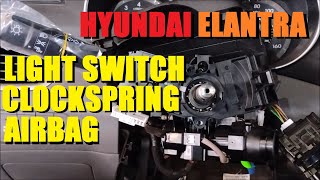
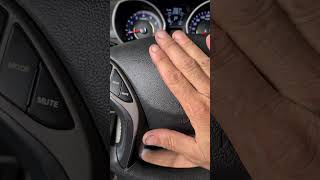
- Hyundai Sonata, Elantra (2007-2014) — A very common point of failure is the clock spring in the steering column. This is covered by an extended warranty on many models.
Manufacturer-Specific Notes
- Ford: The '5x5 Chime' is a hallmark of Ford SRS diagnostics. The RCM commands five sets of five audible beeps if it detects an inoperative warning light (B1869) AND another active SRS fault.
- General Motors (GM): On early 2000s trucks and SUVs, a B1869 code is a canary in the coal mine for total instrument cluster failure. Due to faulty stepper motors and bad solder joints, other gauges will soon die completely.
- Mazda: During its partnership with Ford, early 2000s Mazda vehicles inherited Ford's SRS diagnostic logic, including the '5x5' audible tone burst to alert the driver of an indicator failure combined with another SRS code.
- Hyundai/Kia: Hyundai issued an extended warranty (TSB 21-BE-003H-1) for the clock spring on many 2007-2014 models, extending coverage to 15 years/unlimited miles. If the clock spring causes the light, the dealer repair is free.
Real Owner Stories
2005 Ford F-150 with 5x5 Chime
Owner experienced the '5x5' chime (five sets of five beeps) intermittently. A scanner revealed codes B1869 and B2293. The main airbag light did not illuminate at startup.
What they tried:
- Cleaned airbag wiring harnesses under the seats.
- Opened the instrument cluster to inspect the airbag warning light.
Outcome: The primary airbag warning light was a soldered LED, confirming an open circuit. The beeping resulted from a separate passenger-side fault (B2293) that the system could not display via the broken light.
Lesson: The '5x5' chime means you have at least two problems: the warning light is broken (B1869), and there is another active SRS fault. Diagnose both codes.
2003 Ford F-150 After Heater Core Replacement
Immediately after a heater core replacement, the airbag light came on with code B1869.
What they tried:
- Suspected shaking the dashboard broke the main cluster's airbag bulb.
- Traced the issue to the separate 'Passenger Airbag Off' indicator light assembly.
Outcome: The small bulb on the circuit board for the 'Passenger Airbag Off' switch burned out. The jostling from the dash repair broke its aged filament. The mechanic soldered in a $5 replacement bulb, avoiding a $120 dealer assembly.
Lesson: Check the 'Passenger Airbag Off' light first. It shares the monitored circuit. If B1869 appears after dash work, check both bulbs before assuming complex wiring damage.
2002 Ford Explorer with Airbag Light Stuck On
The airbag warning light continuously illuminated, and a scan showed only code B1869. This confused the owner, as B1869 usually means an open circuit (light off).
What they tried:
- Obtained the factory service manual diagnostic procedure.
- Removed the center console to access the Restraints Control Module (RCM).
Outcome: Discovered a loose ground wire for the RCM under the center console. Tightening the ground screw cleared the code. On this vehicle, B1869 includes a 'short to ground' definition, which caused the light to stay on.
Lesson: If the light is stuck on, suspect a shorted wire or a loose module ground connection before replacing expensive components.
How to Prevent This Code From Triggering
- Apply Dielectric Grease to Key Connectors (During any related repair) — Applying dielectric grease to the rubber seals of SRS connectors seals out moisture, preventing corrosion that leads to open circuits. Do not pack the pin terminals, as the grease is an insulator.
- Inspect and Clean Battery Terminals (Every 12 months) — Corroded battery terminals cause low system voltage, leading to erratic behavior and fault codes from sensitive modules like the RCM. Clean terminals ensure stable voltage.
- Repair Water Leaks Immediately (As needed) — Water intrusion from a leaking windshield seal drips onto under-dash modules and connectors, causing corrosion and shorts. Fixing leaks protects all vehicle electronics.
- Keep Under-Seat Areas Clear (Daily habit) — Items shoved under front seats snag and disconnect the yellow airbag connectors for seat position sensors or side airbags, creating an open circuit fault.
Frequently Asked Questions
What is the '5x5 chime' I keep hearing in my Ford?
This is a backup warning system. It means the airbag computer found a fault, but knows the dashboard warning light is broken. To ensure you are alerted, it triggers five sets of five beeps, indicating at least two stored codes.
What is a common misdiagnosis with code B1869?
A frequent mistake is only checking the main 'Airbag' warning light. On many vehicles, the separate 'Passenger Airbag Off' indicator light shares the same circuit. If that bulb burns out, it triggers a B1869 code.
Can I pass a state inspection with code B1869?
No, not in states with comprehensive safety inspections. States like New York, Pennsylvania, and Virginia automatically fail a vehicle if the airbag warning light malfunctions during the initial self-test. This makes the vehicle illegal to register until repaired.
Is it safe to use WD-40 on airbag connectors?
Absolutely not. Penetrating lubricants like WD-40 leave a residue that interferes with the sensitive, low-resistance readings of the SRS. Always use a dedicated electronics cleaner and apply a small amount of dielectric grease to protect the connection.
If the airbag light is off, does that mean my airbags will work?
No. With code B1869, the light is off because the circuit is broken, which is the fault itself. The Restraints Control Module recognizes it cannot illuminate the lamp and disables the entire airbag system as a safety precaution.
Can I just remove the airbag light bulb to pass inspection?
No, this exact action causes the B1869 code. The system performs a self-test at startup and requires the bulb to illuminate. State inspections require the light to come on and then go off.
My scanner can't read this code, why?
B1869 is a Body (B) code, part of the Supplemental Restraint System (SRS). Basic, inexpensive code readers are limited to Powertrain (P) codes for the check engine light. You need an advanced scanner that specifically reads SRS/Airbag modules.
Is it safe to work on the airbag system myself?
Extreme caution is required. Disconnect the negative battery terminal and wait 30 minutes before touching any yellow-sheathed airbag wiring to prevent accidental deployment. Leave complex tasks like replacing an RCM or clock spring to professionals.
Key Takeaways
- Code B1869 deactivates your entire airbag system because the Restraints Control Module detects a broken warning light circuit.
- Over 70% of B1869 codes stem from a simple $5 burnt-out bulb in either the main instrument cluster or the 'Passenger Airbag Off' indicator.
- Driving with a B1869 code guarantees your airbags and seatbelt pretensioners will not deploy during a collision.
- Hearing 5 sets of 5 beeps in a Ford or Mazda indicates you have a B1869 code masking a second, hidden airbag fault.
- This code triggers an automatic safety inspection failure in states like New York and Virginia, requiring immediate repair for legal registration.
Helpful Videos


The information in this article is provided for general reference and educational purposes only. Vehicle specifications, procedures, and part compatibility can vary by production date, trim level, and region. Always consult your vehicle's factory service manual and verify part numbers before purchasing or performing repairs. Safety-critical components such as airbags, seat belts, and braking systems should be installed by a qualified professional.
- 🎬 Helpful Videos
- What Does B1869 Mean?
- Can I Drive With B1869?
- Common Causes
- Symptoms
- Diagnostic Flowchart
- Common Fixes & Costs
- Used vs. New Parts: Buying Guide
- What Happens If You Wait — Timeline
- Cost of Not Fixing It
- Diagnosis Steps
- When This Code Triggers (Freeze-Frame Conditions)
- Related Codes
- Climate & Environmental Factors
- How to Talk to a Mechanic About This Code
- Where to Take It: Dealer vs Independent vs Chain
- When to Walk Away From the Repair
- What Scan Tool You Need for This Code
- How to Clear the Code After You Fix It
- Will This Fail Emissions / State Inspection?
- Most Commonly Affected Vehicles
- Manufacturer-Specific Notes
- Real Owner Stories
- 2005 Ford F-150 with 5x5 Chime
- 2003 Ford F-150 After Heater Core Replacement
- 2002 Ford Explorer with Airbag Light Stuck On
- How to Prevent This Code From Triggering
- Frequently Asked Questions
- What is the '5x5 chime' I keep hearing in my Ford?
- What is a common misdiagnosis with code B1869?
- Can I pass a state inspection with code B1869?
- Is it safe to use WD-40 on airbag connectors?
- If the airbag light is off, does that mean my airbags will work?
- Can I just remove the airbag light bulb to pass inspection?
- My scanner can't read this code, why?
- Is it safe to work on the airbag system myself?
- Key Takeaways
- 🎟️ Get 5% Off