

OBD-II Code B1866: A Comprehensive Guide to Airbag Circuit Faults
The Ultimate Resource for Understanding, Diagnosing, and Fixing B1866
- Code B1866 disables your entire Supplemental Restraint System, meaning 0 airbags will deploy in a collision.
- Check the bright yellow connectors under the front seats and dashboard first; a loose connection causes over 50% of these faults and costs $0 to fix.
- If your horn or steering wheel buttons fail simultaneously with the airbag light, you have a broken clock spring requiring a $250-$550 replacement.
- Never probe an airbag module with a standard multimeter, and always disconnect the negative battery terminal for 30 minutes before touching any SRS component to prevent accidental deployment.
What Does B1866 Mean?

Code B1866 signifies the Airbag Control Module detected an 'open' circuit—an electrical break—in an airbag squib circuit. The squib is the explosive charge that deploys the airbag. When the system identifies infinite resistance or a complete loss of continuity, it illuminates the airbag warning light and disables the system to prevent accidental deployment.
Technical definition: The SAE/ISO definition for B1866 is "Open in Knee Airbag (P Side) Squib Circuit". This points to a broken wire or disconnected plug for the passenger-side knee airbag. However, manufacturers often use this code broadly for open circuits across various airbag zones, requiring model-specific diagnosis.
Can I Drive With B1866?
Yes, But With Caution. You can physically drive the vehicle, but the entire Supplemental Restraint System (SRS) is disabled. In a collision, 0 airbags will deploy and seatbelt pretensioners remain inactive. An active airbag warning light also causes an automatic failure of mandatory vehicle safety inspections in states like NY and VA, rendering the car illegal to operate on public roads.
Common Causes

- Loose, Corroded, or Improperly Seated Connector (Very Common) — Airbag system connectors (always bright yellow) easily become loose 🎬 Watch: How to quickly fix common airbag connector issues. or corroded. A pothole, aggressive seat adjustment, or a technician failing to reseat a plug during a previous repair breaks the circuit and triggers the code.
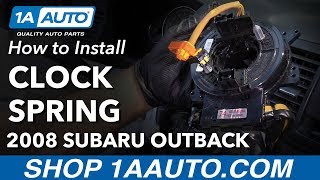
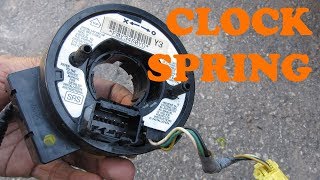
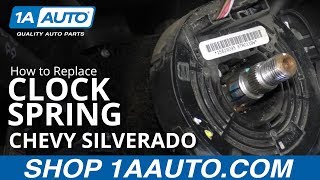
- Faulty Airbag Clock Spring (Very Common) — The clock spring is a coiled ribbon of wires behind the steering wheel. Constant turning fatigues and snaps these delicate internal wires, creating an open circuit.
- Damaged Wiring Harness (Common) — The wiring harness leading to an airbag module suffers chafing, pinching, or stretching. This damage happens during unrelated dashboard repairs, from objects shoved under seats, or from rodent activity.
- Low Vehicle Battery Voltage (Less Common) — A weak battery causes severe voltage drops during engine cranking. The SRS module interprets this low voltage as a system fault, triggering a hard code that requires a scanner to clear even after replacing the battery. 🎬 Watch: How to read and clear SRS codes with a scanner.
- Faulty Airbag Module (Squib) (Less Common) — The internal squib component inside the airbag module fails and creates an open circuit. Suspect this only after exhaustively ruling out wiring and connector faults.
- Water Intrusion / Corrosion (Rare) — Leaks from windshield seals or clogged sunroof drains pool water on the floor, directly soaking the Airbag Control Module. This moisture corrodes pins and circuit boards, causing erratic SRS faults.
- Failed Airbag Control Module (SRS Module) (Rare) — The central computer governing the airbag system fails internally. This is a last-resort diagnosis.
Symptoms

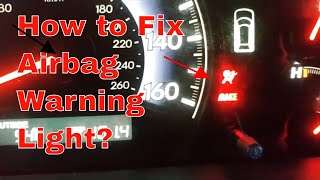
- Airbag Warning Light On — The primary symptom. The light on the instrument cluster remains steadily illuminated as long as the fault is active.
- Horn, Cruise, or Steering Wheel Buttons Inoperative — If the clock spring fails, other functions relying on its wiring—such as the horn and radio volume buttons—fail simultaneously.
- Noise When Turning Steering Wheel — A distinct grinding, scraping, or clicking sound corresponding with steering wheel rotation indicates a mechanically broken clock spring.
- Airbag System Fails State Inspection — Vehicles with an illuminated airbag warning light automatically fail mandatory safety inspections, preventing legal registration.
- Service Airbag Message on Driver Information Center — Modern vehicles display a text message such as 'Service Airbag' or 'Check SRS System' alongside the warning light.
Diagnostic Flowchart
Tap your situation to follow the diagnostic path that matches what you're seeing on this code.
Common Fixes & Costs
- Reseating or Cleaning Connector — Parts: $0-$15, Labor: $50-$200, ~1.0 hr book time (DIY)
- Replace Airbag Clock Spring
— Parts: $70-$450, Labor: $150-$500, ~1.5 hr book time
(Intermediate)
Ford F-150 (2004-2008): OEM 8L3T-14A664-AA (Alt: Dorman 525-217)
Toyota Corolla (2009-2013): OEM 84306-22010 (Alt: Standard Motor Products CSP358)
Hyundai/Kia (various models): OEM 93490-3Q120 (Alt: Dorman 525-164) - Repair Damaged Wiring Harness — Parts: $10-$50, Labor: $150-$400, ~3.0 hr book time (Professional)
- Replace Airbag Module (e.g., Knee Airbag)
— Parts: $400-$1,000, Labor: $100-$300, ~1.5 hr book time
(Professional)
Lexus IS250 / IS350 (2006-2013): OEM 73990-53020-C0 (Alt: N/A (OEM only recommended)) - Replace Airbag Control Module (SRS Module) — Parts: $400-$1,200, Labor: $150-$300, ~2.0 hr book time (Professional)
Used vs. New Parts: Buying Guide
When a used part is worth it: For a clock spring, a used OEM part from a low-mileage, non-accident vehicle is a cost-effective alternative. Never buy used airbag modules due to safety and liability risks.
Donor-vehicle mileage cap: roughly under 60000 miles for the part to have meaningful remaining life.
Donor quality checklist:
- Verify the donor vehicle was not in an accident.
- Match the part number exactly; clock springs are specific to steering wheel features.
- Avoid parts from flood-damaged environments to prevent corrosion.
Decision logic:
- If The part is a pyrotechnic device (airbag module, seatbelt pretensioner) → Always buy new OEM.
- If The part is a clock spring for a vehicle < 10 years old → A new OEM or high-quality aftermarket part is recommended.
- If Budget is the primary concern and the part is a clock spring → A used OEM part from a reputable salvage yard is a viable option.
Warranty tradeoff: Used parts typically have a 30-90 day warranty. Aftermarket new parts offer 1-year to limited lifetime warranties. New OEM parts carry a 12-month/12,000-mile warranty.
Worst-case if a used part fails: $200-$600 if a used clock spring fails prematurely, requiring repeat labor costs.
What Happens If You Wait — Timeline
- Immediate (First Key-On After Fault): Code B1866 is stored, the airbag light illuminates, and the entire SRS system is disabled as a fail-safe. Airbags will not deploy in a crash. (MPG impact: 0%% · Added cost: $0)
- At Next Mandatory Safety Inspection: The vehicle automatically fails the safety inspection in jurisdictions requiring one. The car is illegal to operate on public roads until repaired. (MPG impact: 0%% · Added cost: $20-$50 in a failed inspection fee, plus the repair cost.)
- During a Collision: Because the airbags and seatbelt pretensioners are disabled, the occupant's body is not properly restrained, leading to severe injury that the SRS would have prevented. (MPG impact: 0%% · Added cost: Catastrophic personal injury and increased liability.)
- At Time of Resale or Trade-In: The vehicle's value drops significantly. Dealers lower trade-in offers by the cost of the most expensive potential repair, and private buyers avoid cars with critical safety faults. (MPG impact: 0%% · Added cost: $1,500 - $4,000+ in lost vehicle value.)
Cost of Not Fixing It
- Immediate: Complete deactivation of the entire Supplemental Restraint System. Airbags will not deploy in a collision. (Added cost: N/A)
- At Next State Inspection: Automatic failure of the vehicle's safety inspection, preventing legal registration renewal. (Added cost: $20-$50 (Failed inspection fee) + cost of eventual repair.)
- At Time of Sale: Significant reduction in vehicle resale or trade-in value. Dealers lower offers by at least the cost of the repair. (Added cost: $1,000 - $4,000+ (Lost vehicle value))
Diagnosis Steps

- Read the Specific SRS Fault Code
Use an OBD-II scanner that accesses the SRS/Airbag module. Confirm B1866 is the active code and note its exact definition (e.g., 'Passenger Knee Airbag').
Tools: SRS-capable OBD-II Scanner (Beginner) - Check Steering Wheel Functions
Test the horn, cruise control, and all steering wheel-mounted buttons. If any are inoperative, the clock spring is the primary suspect.
Tools: None (Beginner) - Visually Inspect Connectors
Locate the bright yellow airbag connectors under the dashboard and front seats. Check for obvious damage or disconnection. Ensure they are fully seated.
Tools: Flashlight (Beginner) - Disconnect Battery and Inspect Connector Pins
CRITICAL SAFETY STEP: Disconnect the negative battery terminal and wait 30 minutes. Disconnect the suspect yellow connector and inspect the pins for corrosion or bending.
Tools: Socket Set, Flashlight (Intermediate) - Perform a 'Wiggle Test'
With a scanner displaying live resistance data, carefully wiggle the related wiring harness. If resistance jumps to 'OL', you found the intermittent open circuit.
Tools: SRS-capable OBD-II Scanner with Live Data (Intermediate) - Isolate the Fault with an SRS Resistor Tool
With the battery disconnected, insert an SRS diagnostic resistor (2.0-3.3 ohms) into the harness connector. Reconnect the battery and clear codes. If B1866 stays away, the airbag module is faulty.
Tools: SRS Diagnostic Resistor Set (Advanced) - Measure Resistance at Harness Connector
With the battery disconnected and airbag unplugged, measure resistance between the two pins on the harness connector. A reading of 'OL' confirms a broken wire in the harness.
Tools: High-Impedance Digital Multimeter (Advanced) - Check for Short to Power at Harness
With the battery disconnected, unplug the airbag and SRS module. Reconnect the battery, turn ignition ON, and measure voltage between the harness pins and ground. 12V indicates a short to power.
Tools: High-Impedance Digital Multimeter (Advanced) - Analyze Live Data PIDs
Monitor live data PIDs for the specific airbag circuit. A reading of 'FAIL', 'OPEN', or a value over the threshold (e.g., >6.0 ohms) confirms the fault condition.
Tools: SRS-capable OBD-II Scanner with Live Data (Advanced) - Measure Squib Resistance Directly
NEVER use a standard multimeter. Use a specialized SRS-safe ohmmeter. Resistance outside 1.5-3.5 ohms indicates a faulty squib, condemning the airbag module.
Tools: Specialized SRS-safe Ohmmeter (Advanced)
When This Code Triggers (Freeze-Frame Conditions)
- SRS System Status: Fault Present (The code sets immediately upon the SRS module's self-test at key-on.)
- Battery Voltage: 11.5V - 14.5V (Low voltage during cranking triggers false codes.)
- Ignition Cycle Counter: Varies (Shows how many key cycles occurred since the fault was first detected.)
- Fault Type: Open/High Resistance (Confirms the specific electrical failure mode detected by the module.)
Related Codes
- B1861 — The direct counterpart to B1866, indicating an 'Open in Knee Airbag (D Side) Squib Circuit'. All checks are performed on the driver's side.
- B1865 — Indicates a 'Short Circuit' within the same passenger knee airbag squib circuit, meaning the two wires are touching.
- B1867 — Indicates the airbag circuit is 'Shorted to Ground'. Test for continuity between a squib circuit wire and the chassis ground.
- B1868 — Indicates the airbag circuit is 'Shorted to Power (B+)'. Check for voltage on the squib circuit wires with the airbag disconnected.
Climate & Environmental Factors
- High Humidity / Water Intrusion: Moisture accelerates corrosion on connector pins and circuit boards, especially for modules located under seats or on the vehicle floor. This corrosion increases resistance, leading to open circuit faults.
- Extreme Cold: In temperatures below freezing, metal contacts and plastic connectors contract. This physical shrinkage creates a temporary open connection in a marginal connector, causing the airbag light to illuminate on cold starts.
- Extreme Heat: Prolonged exposure to high heat accelerates the degradation of wiring insulation and plastic connectors, making them brittle and susceptible to damage.
How to Talk to a Mechanic About This Code
Say this: "I have an airbag warning light on, and my scanner shows code B1866. Based on my vehicle's symptoms, I suspect the issue is either the clock spring or a loose connector. I'd like to schedule a diagnostic to confirm the location of the open circuit."
This signals you are an informed consumer. It directs the technician toward the most likely repairs first, preventing an expensive 'shotgun' diagnostic approach.
Avoid saying:
- 'My airbag light is on, can you just fix it?'
- 'I think the airbag is broken.'
- 'Just do whatever you think is best.'
Questions to ask before authorizing the repair:
- Did you perform a wiggle test on the connectors and wiring harness to check for intermittent connections?
- If you are recommending a clock spring replacement, did you confirm the steering wheel buttons are also inoperative?
- Can you show me the faulty part or the resistance reading that confirms the open circuit?
- What is the warranty on both the parts and labor for this specific repair?
Where to Take It: Dealer vs Independent vs Chain
- Dealer:
Recommended only if your vehicle has a warranty extension for the clock spring.
Best for: Vehicles under warranty or covered by a specific recall/warranty extension., Complex, model-specific electrical issues., When you want guaranteed OEM parts.
Downsides: Significantly higher labor rates., Defaults to replacing entire assemblies rather than repairing wiring. (Typical cost: +75% vs. baseline) - Independent Shop:
Best fit for most situations. An experienced independent technician diagnoses and repairs common causes effectively at a lower cost.
Best for: Out-of-warranty vehicles where cost is a major factor., Common repairs like clock spring replacement or diagnosing loose connectors.
Downsides: Quality varies widely; vet shops based on ASE certifications., Lacks the latest diagnostic tools for brand-new vehicles. (Typical cost: +0% vs. baseline) - Chain Shop:
AVOID. Airbag system repair is a safety-critical task requiring specific expertise. Do not use a general-service chain shop.
Best for: Simple, routine maintenance like oil changes and tires.
Downsides: Technician skill is highly variable., High pressure to upsell services., Lacks specific expertise required for diagnosing safety-critical SRS systems. (Typical cost: -10% vs. baseline)
When to Walk Away From the Repair
If the estimated repair cost exceeds 50% of the car's private-party market value, consider selling the car as-is.
- Car worth $3500, fix is $1800: Walk away. The repair cost is over 50% of the car's value.
- Car worth $15000, fix is $800: Fix it. The repair cost is a small fraction of the vehicle's value and is necessary for safety.
- Car worth $5000, fix is $750: Fix it. This repair is well below the 50% threshold and restores a critical safety feature.
What Scan Tool You Need for This Code
Minimum: A scanner that reads and clears Supplemental Restraint System (SRS) codes. A basic engine-only OBD-II reader fails to read B codes.
A standard $20 scanner only reads 'P' (Powertrain) codes. B1866 is a 'B' (Body) code stored in the SRS module.
Budget: BlueDriver Pro (~$100) — Connects to your smartphone via Bluetooth. Reads and clears SRS codes for most major manufacturers.
Mid-range: Autel AL619 / ML629 (~$125) — A dedicated handheld unit that reads and clears Engine, ABS, and SRS codes without needing a smartphone.
Professional: Autel MaxiCOM MK808 / Foxwell NT604 Elite (~$150-500) — Advanced tablet-style scanners offering full-system diagnostics and live data graphing to see circuit resistance during a wiggle test.
Rent vs buy: Auto parts stores do NOT rent out SRS-capable scanners due to liability. You must purchase one.
How to Clear the Code After You Fix It
- Ensure the physical repair is complete.
- Reconnect the vehicle battery.
- Use an SRS-capable OBD-II scan tool to access the Supplemental Restraint System module.
- Select 'Clear Codes' or 'Reset DTCs'.
- Turn the ignition off, then back on. The airbag light illuminates for 7 seconds for a self-test and then turns off.
Drive cycle (~10 minutes): An SRS code does not require a drive cycle. After clearing the code, the system performs a self-test at every key-on. A short 10-minute drive confirms the fix is stable.
Readiness monitors affected: None. SRS faults do not affect emissions readiness monitors.
Watch out for:
- Using a basic OBD-II scanner that cannot access the SRS module fails to clear the code.
- Disconnecting the battery does not clear an active airbag fault code from memory.
- If the root cause is not fixed, the code returns immediately upon the next key-on self-test.
Will This Fail Emissions / State Inspection?

No — by itself this code doesn't fail OBD inspection (but it can keep readiness monitors from setting, which causes a separate fail).
- California: An airbag light will NOT cause a failure of the smog inspection, but it is a safety defect a shop notes.
- New York: An illuminated airbag warning light is grounds for failing the annual safety inspection.
- Texas: An airbag light does not cause a failure. Safety inspections are being eliminated for most vehicles in Texas in 2025.
Most Commonly Affected Vehicles
- Lexus IS250 / IS350 (2006-2013) — Extremely common issue where the passenger knee airbag connector becomes partially dislodged, triggering B1866. Reseating this connector is the fix.
- Ford F-150 / Mustang (2004-2014) — Clock spring failure is a widely documented problem. A 2023 recall was also issued for faulty clock spring welds on F-150 and Super Duty trucks.
- Toyota Corolla / Matrix (2005-2015) — Subject to Safety Recall 20TA03 / 20TB03 addressing an ECU that fails to deploy airbags correctly.
- Chevrolet / GMC Silverado, Tahoe, Suburban / Sierra, Yukon (2017-2017) — A known issue with loose airbag system connectors is addressed by TSB 16-NA-246, advising a 'push-push' test to ensure seating.
- Jeep Grand Cherokee / Liberty (2005-2010) — Known for wiring issues with the large yellow connectors under the front seats for the seat belt pre-tensioners.
- Honda Accord / Civic (2003-2012) — The clock spring is a very common failure item. If the horn and steering wheel buttons fail along with the airbag light, replace the clock spring.
- Volkswagen Jetta / Golf / Passat (2011-2018) — Clock spring failures are a frequent repair on this platform, leading to the airbag light and inoperative steering wheel controls.
- Hyundai / Kia Sonata, Elantra / Optima, Forte, Sorento (2011-2016) — Subject to a warranty extension for clock spring failures (Campaigns TXXJ, TXXA) extending coverage to 15 years/unlimited miles.
Manufacturer-Specific Notes
- Lexus / Toyota: The passenger knee airbag connector under the dash is a notorious weak point on IS models. Reseating this connector with a click is the definitive fix.
- Ford: Clock spring failure is exceptionally common. On an F-150 with an airbag light, if the horn or steering wheel controls are dead, replace the clock spring.
- Chevrolet / GMC: TSB 16-NA-246 addresses intermittent airbag lights on 2017 trucks due to poorly seated connectors. The fix is a 'push-push' test to confirm latching.
- Hyundai / Kia: A warranty extension to 15 years/unlimited mileage covers the clock spring on many 2011-2016 models. A dealer replaces it for free if it causes the light.
Real Owner Stories
2007 Lexus IS250 at 100K+ miles
Airbag light came on suddenly. A scan revealed code B1866 for the passenger knee airbag.
What they tried:
- Owner took the car back to the dealer, who suggested an expensive wiring harness replacement.
- Searched forums and found the common cause is a loose yellow connector under the passenger side dashboard.
Outcome: By reaching under the dash and firmly pushing on the yellow connector until it clicked, the connection was re-secured. After clearing the code with a scanner, the light stayed off. This is a free fix for this specific model.
Lesson: On a 2006-2013 Lexus IS, always check the passenger knee airbag connector under the dash first for B1866. A pothole knocks it loose easily.
2016 Ford F-150 with multiple steering wheel button failures
The airbag light illuminated, and simultaneously the radio controls, phone buttons, and cruise control stopped working.
What they tried:
- Suspected a clock spring failure and received a quote of over $400 from a dealership.
- Attempted a DIY replacement of just the clock spring part for $107, but this failed to solve the issue.
Outcome: The actual failure was in the larger Steering Column Control Module (SCCM), which houses the clock spring. The entire module assembly required replacement to restore function.
Lesson: On modern Ford trucks, if steering wheel controls fail with the airbag light, you must replace the entire SCCM, not just the clock spring.
2012 Hyundai Sonata with airbag light
The airbag warning light illuminated. The owner worried about a high repair cost for the clock spring.
What they tried:
- Checked online forums and learned about a warranty extension program from Hyundai.
- Contacted the local Hyundai dealership with their VIN.
Outcome: The dealership confirmed the vehicle fell under Hyundai's Clock Spring Warranty Extension (Campaigns TXXJ/TXXA), extending coverage to 15 years/unlimited miles. The dealer replaced the clock spring for $0.
Lesson: Before paying for a clock spring repair on a 2011-2016 Hyundai/Kia, check with a dealer for warranty extensions. This campaign covers millions of vehicles.
Volkswagen with intermittent airbag light in cold weather
Airbag light illuminated during cold winter starts but disappeared after the car's interior warmed up.
What they tried:
- A mechanic scanned the code, pointing to a high resistance fault in a seat-related airbag circuit.
- The mechanic disconnected the battery, unplugged the yellow connector under the seat, cleaned the pins with electronic contact cleaner, and applied dielectric grease.
Outcome: Cleaning the connector resolved the issue. Cold temperatures caused metal contacts to contract, and minor corrosion created an 'open circuit' fault.
Lesson: Intermittent airbag lights that change with temperature are caused by marginal connections, not failed parts. Cleaning connectors is the first diagnostic step.
How to Prevent This Code From Triggering
- Apply Dielectric Grease to Connectors During Service (Whenever an SRS connector is disconnected.) — Dielectric grease seals out moisture and oxygen, preventing the pin corrosion that leads to high resistance and open circuit faults.
- Fix All Water Leaks Immediately (As soon as noticed.) — Water intrusion from a bad windshield seal destroys the main SRS control module located on the vehicle's floor, causing catastrophic electrical damage.
- Keep Under-Seat Areas Clear (Daily habit.) — Shoving items under the front seats snags and disconnects the wiring harnesses for seat airbags and seatbelt pretensioners.
- Maintain a Healthy Battery (Every 3-5 years.) — A weak battery causes low voltage spikes during startup, which the sensitive SRS module misinterprets as a system fault.
- Never Spin a Disconnected Steering Wheel (During front-end service.) — Turning a disconnected steering wheel too many times violently snaps the delicate ribbon cable inside the clock spring, causing instant failure.
Frequently Asked Questions
Is it safe to drive my car with code B1866?
While the car operates mechanically, it is completely unsafe. Code B1866 disables the entire airbag system via the onboard computer. In an accident, 0 airbags will deploy.
Will my airbags deploy accidentally because of B1866?
No. An 'open circuit' fault means there is a physical break in the electrical connection. The system cannot complete the circuit required to fire the airbag, eliminating the risk of accidental deployment.
Can I fix code B1866 myself?
You can safely perform simple fixes like reseating a loose connector if you disconnect the negative battery terminal and wait 30 minutes first. Never use a standard multimeter to probe an airbag module directly, as the current triggers deployment. Stop DIY and take the vehicle to a certified SRS technician for anything beyond visual inspections.
My airbag light came on after hitting a pothole. What happened?
The physical jolt momentarily broke an electrical connection, triggering a permanent fault code. This strongly indicates a loose yellow connector, most commonly the passenger knee airbag plug on Lexus/Toyota models. Inspect and firmly reseat all yellow connectors under the dashboard and seats.
Can a low or dead battery cause the airbag light?
Yes. A weak battery causes a severe voltage drop during engine cranking that the SRS module interprets as a hard fault. You must use an SRS-capable scan tool to clear the code even after replacing the battery.
My airbag light came on right after a recall was performed. Is it related?
It is directly related. Technicians must disconnect SRS components during dashboard or steering column recalls, and frequently fail to fully reseat a connector during reassembly. Return to the dealership immediately for a free correction.
What is a clock spring and why does it break?
A clock spring is a flat, coiled ribbon of wires allowing your steering wheel to turn while keeping the driver's airbag connected. It fails from simple metal fatigue; after winding and unwinding thousands of times, the internal wires snap.
Is it illegal to drive with the airbag light on?
You will not get a moving violation ticket, but your vehicle automatically fails mandatory safety inspections in states like NY, MA, and VA. This prevents you from renewing your vehicle's registration until repaired.
Key Takeaways
- Code B1866 disables your entire Supplemental Restraint System, meaning 0 airbags will deploy in a collision.
- Check the bright yellow connectors under the front seats and dashboard first; a loose connection causes over 50% of these faults and costs $0 to fix.
- If your horn or steering wheel buttons fail simultaneously with the airbag light, you have a broken clock spring requiring a $250-$550 replacement.
- Never probe an airbag module with a standard multimeter, and always disconnect the negative battery terminal for 30 minutes before touching any SRS component to prevent accidental deployment.
Helpful Videos



The information in this article is provided for general reference and educational purposes only. Vehicle specifications, procedures, and part compatibility can vary by production date, trim level, and region. Always consult your vehicle's factory service manual and verify part numbers before purchasing or performing repairs. Safety-critical components such as airbags, seat belts, and braking systems should be installed by a qualified professional.
- 🎬 Helpful Videos
- What Does B1866 Mean?
- Can I Drive With B1866?
- Common Causes
- Symptoms
- Diagnostic Flowchart
- Common Fixes & Costs
- Used vs. New Parts: Buying Guide
- What Happens If You Wait — Timeline
- Cost of Not Fixing It
- Diagnosis Steps
- When This Code Triggers (Freeze-Frame Conditions)
- Related Codes
- Climate & Environmental Factors
- How to Talk to a Mechanic About This Code
- Where to Take It: Dealer vs Independent vs Chain
- When to Walk Away From the Repair
- What Scan Tool You Need for This Code
- How to Clear the Code After You Fix It
- Will This Fail Emissions / State Inspection?
- Most Commonly Affected Vehicles
- Manufacturer-Specific Notes
- Real Owner Stories
- 2007 Lexus IS250 at 100K+ miles
- 2016 Ford F-150 with multiple steering wheel button failures
- 2012 Hyundai Sonata with airbag light
- Volkswagen with intermittent airbag light in cold weather
- How to Prevent This Code From Triggering
- Frequently Asked Questions
- Is it safe to drive my car with code B1866?
- Will my airbags deploy accidentally because of B1866?
- Can I fix code B1866 myself?
- My airbag light came on after hitting a pothole. What happened?
- Can a low or dead battery cause the airbag light?
- My airbag light came on right after a recall was performed. Is it related?
- What is a clock spring and why does it break?
- Is it illegal to drive with the airbag light on?
- Key Takeaways
- 🎟️ Get 5% Off