

OBD-II Code B1837: Safety System Circuit Fault
What B1837 means, why it triggers, and how to fix it
- Code B1837 disables your entire Supplemental Restraint System (SRS), meaning 0 airbags will deploy in a crash until repaired.
- The definition of B1837 varies wildly by brand: it indicates a curtain airbag short on Toyotas, but a harmless memory seat timeout on Hondas.
- Inspect the yellow SRS connectors under the front seats first, as 1 loose wire or kicked connector is the most common trigger for this code.
- Disconnect the negative battery terminal and wait exactly 15 minutes before touching any yellow SRS connectors to prevent accidental airbag deployment.
- The airbag warning light requires a manual reset using an advanced OBD-II scanner capable of reading Body (B) codes; it will never turn off automatically.
What Does B1837 Mean?
Code B1837 indicates the Body Control Module (BCM) or Restraints Control Module (RCM) detected a fault in a safety system circuit. This usually points to a short or open circuit in an airbag or seatbelt pretensioner. The exact definition changes dramatically by manufacturer, making brand-specific diagnosis mandatory.
Technical definition: The SAE/ISO definition for B1837 is non-standardized. On Toyotas, it means 'Short in Curtain Shield Airbag Squib Circuit (to Ground)'. On Acura/Honda, it indicates a 'Driving Position Memory Recall Timeout'—a power seat error, not an airbag fault. General Motors uses similar codes for a 'Passenger Frontal Deployment Loop Short to Ground'.
Can I Drive With B1837?
No — Do Not Drive. No. The vehicle is mechanically operable, but driving with code B1837 is a severe safety risk. This fault disables the entire Supplemental Restraint System (SRS). In a crash, zero airbags or seatbelt pretensioners will deploy, drastically increasing the risk of fatal injury. Repair the vehicle immediately.
Common Causes
- Damaged or Loose Under-Seat Wiring (Very Common) — Items shoved under the front seats frequently snag and damage the yellow SRS wiring harnesses. Moving the seat back and forth severs or unseats these connectors, creating an open circuit.
- Faulty Curtain Airbag Assembly (Squib) (Common) — On Toyota vehicles, this code points directly to a short to ground within the curtain airbag's deployment mechanism (the squib). The squib is the explosive charge that ignites to deploy the airbag.
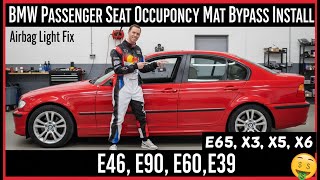
- Faulty Seat Occupancy Mat Sensor (Common) — Common in BMWs, the passenger seat contains a weight sensor mat to detect occupants. This delicate grid degrades and breaks over time 🎬 Watch: How to install a BMW seat occupancy mat bypass, creating an open circuit that triggers the airbag warning light.
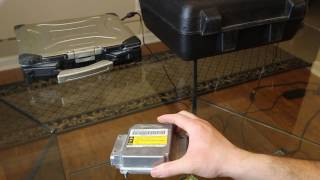
- Water Intrusion in Airbag Module (Common) — On GM trucks and SUVs, water leaks from the windshield or sunroof wick up the floor carpet, corroding the Airbag Control Module (SDM) 🎬 See this walkthrough for replacing a GM airbag control module mounted underneath. This shorts the data lines and triggers SRS codes.
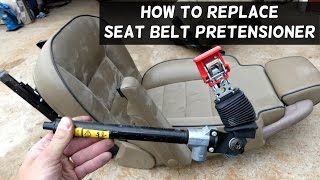
- Faulty Seat Belt Pretensioner (Common) — The seat belt pretensioner contains a small explosive charge to tighten the belt during a crash. The internal wiring degrades over time, causing a resistance fault.
- Faulty Airbag Control Module (SRS/ECU) (Less Common) — The main computer controlling the airbag system fails due to internal electronic degradation, water damage, or a previous collision.
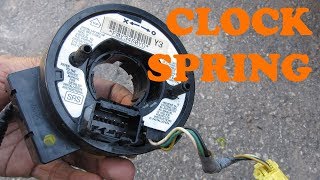
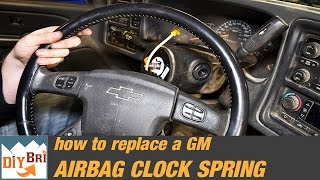
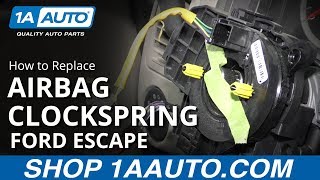
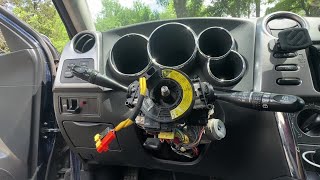
- Faulty Clock Spring (Less Common) — The clock spring is a rotary ribbon cable in the steering column that maintains the electrical connection to the driver's airbag. Snapped internal ribbons cause open or short circuits.
- Corroded Battery Safety Terminal (BST) (Less Common) — BMWs feature a positive battery terminal designed to disconnect in a crash. The small sensor wire attached to this terminal loosens or corrodes, triggering a main safety restraint fault.
Symptoms
- Airbag or SRS Warning Light On — The dashboard SRS light remains permanently illuminated, indicating an active fault in the safety system.
- Airbag System Disabled — The vehicle disables the entire airbag system as a fail-safe. No airbags or pretensioners will deploy in an accident.
- Memory Seat Functions Inoperative — On Acura and Honda models, this code disables the power memory seat recall functions.
- Failed State Safety Inspection — An illuminated airbag warning light results in an automatic failure during mandatory annual vehicle safety inspections.
Diagnostic Flowchart
Tap your situation to follow the diagnostic path that matches what you're seeing on this code.
Common Fixes & Costs
- Repairing Under-Seat Wiring or Cleaning Connectors — Parts: $0-$20, Labor: $100-$250, ~1 hr book time (DIY)
- Replacing a Curtain Airbag Assembly — Parts: $400-$800, Labor: $300-$450, ~3.0 hr book time (Professional)
- Replacing a Seat Occupancy Mat Sensor — Parts: $150-$300, Labor: $300-$600, ~4 hr book time (Professional)
- Replacing a Seat Belt Pretensioner — Parts: $200-$400, Labor: $100-$200, ~1.5 hr book time (Intermediate)
- Replacing the Airbag Control Module (SRS/ECU) — Parts: $300-$800, Labor: $200-$400, ~2.5 hr book time (Professional)
- Replacing the Clock Spring — Parts: $100-$400, Labor: $250-$450, ~2 hr book time (Professional)
DIY vs Professional
- Repairing Under-Seat Wiring or Cleaning Connectors — Beginner:
Tools: Wrench/socket set, flashlight, contact cleaner, zip ties. - Replacing a Seat Belt Pretensioner — Beginner:
Tools: Professional tools, torque wrench, trim removal tools. - Replacing a Curtain Airbag Assembly — Beginner:
Tools: Professional tools, trim removal tools, torque wrench. - Replacing the Clock Spring — Beginner:
Tools: Steering wheel puller, torque wrench, socket set, trim tools. - Replacing the Airbag Control Module (SRS/ECU) — Beginner:
Tools: Socket set, trim tools, advanced OBD-II scanner. - Replacing a Seat Occupancy Mat Sensor — Beginner:
Tools: Upholstery tools (hog ring pliers), socket set, trim tools.
Used vs. New Parts: Buying Guide
When a used part is worth it: Never buy used explosive SRS components (airbags, pretensioners). Only consider used parts for structural items or certified, reset control modules from reputable automotive recyclers.
Donor-vehicle mileage cap: roughly under 50000 miles for the part to have meaningful remaining life.
Donor quality checklist:
- Never buy a deployed airbag or pretensioner.
- Verify the used part is the exact OEM part number for your VIN.
- Avoid parts from flood-damaged vehicles.
- Ensure the seller guarantees the part is non-deployed and functional.
Decision logic:
- If The part is an airbag, seatbelt pretensioner, or clock spring → Buy new OEM parts to ensure safety and reliability.
- If The part is a non-explosive sensor and budget is tight → A used part from a low-mileage, non-accident vehicle is an option, but carries risk.
- If The part is an electronic control module (SRS ECU) → Buy new OEM or use a professional service to reset your original module. Used modules are often VIN-locked.
Warranty tradeoff: Used SRS parts typically have a 30-day warranty. New OEM parts carry a 1-year or longer warranty. The guaranteed function of a new safety part is worth the premium.
Worst-case if a used part fails: $1000-$7000+ in personal injury or death if a used part fails to deploy in a crash.
Cost of Not Fixing It
- Immediate: The entire SRS system is disabled. Zero airbags or seatbelt pretensioners will deploy in a crash, drastically increasing the risk of fatal injury. (Added cost: N/A (Safety Risk))
- At Next State Inspection: The vehicle automatically fails safety inspections in strict states, preventing legal registration renewal. (Added cost: $50-$200 in re-inspection fees and fines.)
- Ongoing: If caused by water intrusion, a corroded SRS module shorts out other data lines, leading to complex electronic failures. (Added cost: $500-$2000+ if water damage spreads to the Body Control Module.)
Diagnosis Steps
- Read the Manufacturer-Specific Code Definition
Use an advanced OBD-II scanner to pull the exact definition from the SRS module. A 'Short to Ground in Curtain Shield Squib' (Toyota) requires a completely different diagnostic path than 'Memory Position Calling Timeout' (Honda).
Tools: Advanced OBD-II Scanner (Beginner) - Perform a Visual Inspection
Look under the front seats for loose, snagged, or disconnected yellow connectors. On GM trucks, pull back the carpet near the center console to check the SRS module for water damage. On BMWs, inspect the Battery Safety Terminal wire in the trunk.
Tools: Flashlight, Trim removal tools (Beginner) - Perform a Hard Reset and Connector Re-seat
Disconnect the negative battery terminal and wait exactly 15 minutes to discharge the SRS backup capacitors. Disconnect, clean, and firmly reconnect the yellow connectors under the seats. Reconnect the battery.
Tools: Wrench/Socket for battery terminal, Electrical contact cleaner (Intermediate) - Clear Codes and Re-Scan
Use your scanner to clear the SRS codes. Start the car. If the airbag light returns immediately, you have a hard fault. If it stays off, the issue was a loose connection.
Tools: Advanced OBD-II Scanner (Intermediate) - Measure Harness Resistance to Ground
For Toyota 'Short to Ground' codes: With the battery disconnected and the airbag unplugged, use a multimeter to measure resistance between the squib circuit wires and a clean chassis ground. A reading near 0 ohms confirms a short in the wiring harness.
Tools: Multimeter, Service Manual (Advanced) - Isolate ECU vs. Wiring with a Squib Simulator
With the battery disconnected, unplug the suspect airbag and plug a 2.0-2.5 ohm squib simulator into the harness. Reconnect the battery and clear codes. If B1837 disappears, the airbag assembly is faulty. If it returns, the fault is in the wiring or ECU.
Tools: Squib Simulator/Airbag Test Resistor, Advanced OBD-II Scanner (Professional) - Check Live Data for Seat Occupancy Sensor (BMW)
For BMWs, use a compatible scanner to view live data from the SRS module. The passenger seat sensor PID should switch between 'Occupied' and 'Unoccupied' when someone sits down. A stuck value confirms a bad sensor mat.
Tools: BMW-specific Diagnostic Scanner (Advanced) - Check B-CAN Network (Honda/Acura)
For memory seat faults, use a Honda-compatible scanner to check for B-CAN network communication codes. Perform the power seat zero-point calibration procedure outlined in the service manual to reset learned positions.
Tools: Honda Diagnostic System (HDS) or equivalent, Service Manual (Professional) - Waveform Analysis with an Oscilloscope
Back-probe the signal wire at the SRS module. A 'short to ground' fault shows a flat line signal near 0 volts, visually confirming the electrical fault and distinguishing it from an open circuit.
Tools: Oscilloscope, Service Manual with wiring diagrams (Professional)
When This Code Triggers (Freeze-Frame Conditions)
- System State: Key-On, Engine Off (The SRS module performs a self-test every time the ignition turns on. Circuit faults like B1837 are detected during this initial check before the engine starts.)
- Battery Voltage: 11.8V - 12.5V (The fault logs during the pre-start system check when voltage is in the normal resting range.)
- Vehicle Speed: 0 mph (The vehicle is stationary during the startup self-diagnostic routine.)
- Fault Type: Permanent / Hard Fault (A short to ground is a constant electrical condition. The code sets every time the key cycles until the physical fault is repaired.)
Related Codes
- B1836 — Toyota's sister code to B1837, indicating an 'Open Circuit' in the curtain shield airbag squib rather than a short to ground.
- B1838 — Indicates a 'Short to B+' (battery positive) in the Toyota curtain shield airbag squib circuit, requiring a different diagnostic test.
- B1650 — Occupant Classification System (OCS) Malfunction. If present alongside B1837, fix B1650 first, as a faulty OCS triggers secondary SRS codes.
- B0024 — A GM code for 'Passenger Frontal Deployment Loop Short to Ground'. Diagnostically identical to Toyota's B1837 but points to the passenger dash airbag.
Climate & Environmental Factors
- Interior Water Leaks: Water leaks from clogged sunroof drains or bad window seals destroy floor-mounted SRS modules, particularly in GM trucks. Moisture wicks up into the module, causing internal corrosion that shorts circuits and triggers airbag codes.
- Extreme Temperatures: Extreme cold makes wires and plastic connectors brittle and prone to cracking. Repeated hot and cold cycles cause components to expand and contract, leading to intermittent connections over time.
- Road Salt: In winter climates, moisture carrying road salt severely accelerates corrosion. If this salty moisture enters the cabin, it rapidly destroys SRS module connectors and circuit boards.
How to Talk to a Mechanic About This Code
Say this: "I have an airbag light on and my scanner shows code B1837. My car is a [Make, Model, Year]. I need to schedule a diagnostic for the Supplemental Restraint System. Please make sure to get the manufacturer-specific definition for that code."
This signals you are an informed consumer. It specifies the exact system and highlights the critical need for a brand-specific definition, preventing wasted diagnostic time.
Avoid saying:
- 'My airbag light is on, can you fix it?'
- 'Just do whatever it takes to turn the light off.'
- 'I think I need a new airbag.'
Questions to ask before authorizing the repair:
- What is the specific definition of B1837 for my vehicle?
- What were the results of the visual inspection of the related wiring and connectors?
- How did you isolate the fault to the component versus the wiring? Did you use a test resistor or simulator?
- Will the replacement part be a new Original Equipment Manufacturer (OEM) part?
- Does the new part require programming or calibration after installation?
Where to Take It: Dealer vs Independent vs Chain
- Dealer:
Safest Choice. For a safety-critical system like SRS, the dealer's specialized tools provide the highest likelihood of a correct and safe repair.
Best for: Vehicles under warranty, Complex, brand-specific electrical issues (e.g., B1837 on a Honda or BMW), Repairs requiring manufacturer-specific software for programming new modules.
Downsides: Highest labor rates (1.5-2x independent shops), May default to replacing large, expensive assemblies. (Typical cost: +50% vs. baseline) - Independent Shop:
Good Alternative. A top-tier independent shop with ASE-certified technicians and brand-specific experience is a great option. Avoid general-purpose shops.
Best for: Out-of-warranty vehicles where the cause is well-known (e.g., B1837 on a Toyota), Shops that specialize in your vehicle's brand.
Downsides: Quality and expertise vary dramatically; must be vetted carefully., May lack the latest software for programming brand-new modules. (Typical cost: +0% vs. baseline) - Chain Shop:
AVOID. The risk of an incorrect or unsafe repair on a critical safety system is too high.
Best for: Simple, high-volume jobs like tires, oil changes, and brakes.
Downsides: Technician skill is highly inconsistent., Lack advanced diagnostic tools for complex SRS repairs., High pressure to upsell leads to incorrect diagnosis. (Typical cost: -10% vs. baseline)
When to Walk Away From the Repair
If the estimated repair cost for the SRS system exceeds 40-50% of the car's private-party value, consider selling the vehicle 'as-is' or trading it in.
- Car worth $4000, fix is $1800: Walk away. The repair cost is too high relative to the car's value. The 'as-is' value with a known airbag fault is significantly diminished.
- Car worth $15000, fix is $1200: Fix it. The repair cost is a small fraction of the vehicle's value and is necessary for safety and legal operation.
- Car worth $2500, fix is $900: Borderline. Get a second opinion. If the car is otherwise in excellent condition, fix it. If it has other pending issues, sell it as a 'mechanic's special'.
What Scan Tool You Need for This Code
Minimum: A scanner that can read and clear codes from the Supplemental Restraint System (SRS) module. It must access 'B' (Body) codes.
A standard $20 engine code reader cannot communicate with the SRS module. It shows 'No Codes' even when the airbag light is on, and it cannot clear the light after a repair.
Professional: Autel MaxiSys Series (e.g., MS906BT) (~$600-1500) — Offers full bidirectional control and special functions. Performs programming and calibration required when installing a new SRS control module.
Rent vs buy: AutoZone's standard loaner tools are basic engine readers that CANNOT read SRS codes. For a one-time repair, paying for a professional diagnosis ($100-$180) is more cost-effective than buying a capable scanner.
How to Clear the Code After You Fix It
- Ensure the physical fault is repaired.
- Reconnect the vehicle battery.
- Use an SRS-compatible OBD-II scan tool to access the Restraints Control Module.
- Select the function to 'Clear DTCs' or 'Reset Codes'.
- Cycle the ignition off, then on, and confirm the airbag warning light turns off after its initial self-check.
Drive cycle (~5 minutes): An extensive drive cycle is not required. The system confirms the repair's success during the key-on self-test. If the light stays off after clearing, the repair is successful.
Readiness monitors affected: None. SRS systems do not use emissions readiness monitors. The status is binary: it passes the self-test or it fails.
Watch out for:
- Using a basic engine-only code reader that cannot access the SRS module.
- Believing the airbag light turns off on its own after repair.
- Assuming disconnecting the battery clears hard SRS fault codes.
Will This Fail Emissions / State Inspection?
Yes — this code typically fails an OBD-II emissions inspection.
- California: An airbag light does NOT fail the emissions (smog) check, as the SRS system is separate from emissions controls.
- New York: An illuminated airbag warning lamp is an automatic failure for the safety inspection.
- Texas: An illuminated airbag light is NOT an item on the Texas vehicle safety inspection checklist and will not cause a failure.
Most Commonly Affected Vehicles
- Toyota RAV4 (2004-2012) — Indicates a short in the passenger side curtain shield airbag circuit.
- Toyota Prius (2004-2009) — Triggers for a short to ground in the passenger side curtain airbag squib circuit.
- Toyota Tacoma (2005-2015) — Points to a fault in the passenger or driver side curtain shield squib circuit.
- Honda Accord, Pilot (2008-2012) — Indicates a 'Memory Position Calling Timeout' error with the power seat system, not an airbag fault.
- Acura MDX, TL (2004-2008) — Points to a 'Driving Position Memory Recall Timeout' and not an airbag fault.
- General Motors Silverado, Sierra, Tahoe, Suburban (2003-2014) — Related 'short to ground' codes trigger due to water damage corroding the floor-mounted SRS module.
- BMW 3-Series, 5-Series, X-Series (2005-2015) — Related to a faulty passenger seat occupancy mat sensor or a loose Battery Safety Terminal (BST) connector.
- Ford F-150, Explorer (2015-2020) — Triggered by terminal fretting in the multi-contour seat module connector, causing seat function failure.
Manufacturer-Specific Notes
- Toyota/Lexus: This code specifically indicates a 'Short to Ground' in a curtain shield airbag squib circuit. Diagnostic procedures require a 2.0-2.5 ohm squib simulator to isolate the airbag from the wiring harness.
- Acura/Honda: Acura and Honda use this code for a timeout failure in the Driving Position Memory for the power seats. It is not an airbag-related fault, and SRS diagnosis is a waste of time.
- General Motors: On 2003-2014 GM trucks, airbag codes indicating a short to ground are frequently caused by water leaks soaking the carpet and corroding the floor-mounted SRS module.
- Ford/Lincoln: Related to multi-contour seating systems. TSB 19-2390 addresses fretting corrosion in the seat module connectors, causing loss of seat functions.
- BMW: Failures of the passenger seat occupancy mat sensor are notoriously common. BMW issued extended 10-to-15-year warranties for this component across various models; check your VIN before paying for repairs.
Frequently Asked Questions
Is it safe to drive with code B1837?
No. An active B1837 code means the airbag control module disabled the entire SRS system. In a collision, your airbags and seatbelt pretensioners will not deploy. Repair the vehicle immediately.
What is an airbag squib?
A squib is the igniter component inside an airbag module or seatbelt pretensioner. It consists of a thin wire coated in an explosive compound. When the SRS module detects a crash, it sends current through the wire, igniting the compound to deploy the safety device.
Why must I wait 15 minutes after disconnecting the battery before working on the airbag system?
The airbag control module contains powerful capacitors that store enough electricity to deploy airbags even if the battery is destroyed in a crash. Waiting 15 minutes allows these capacitors to fully discharge. This prevents accidental deployment that causes serious injury during repair.
I replaced the faulty part, why is the airbag light still on?
Unlike a check engine light, an SRS/airbag light never turns off on its own. Once a fault is detected, the code is stored as a 'hard code' in the SRS module's memory. You must manually clear the light using an advanced OBD-II scanner.
What is the most common misdiagnosis for B1837?
The most common misdiagnosis is assuming the code means the same thing across all manufacturers. A technician who sees B1837 on a Honda and starts testing the airbag system wastes time and money, as the code points to the memory seat system. Always use a scanner that provides the full manufacturer-specific definition.
Can I fix a B1837 code myself?
Amateurs can perform simple fixes like securing a loose under-seat connector, but working on the core SRS system is highly dangerous. The risk of accidental explosive deployment is significant. For anything beyond a visual inspection, take the vehicle to a professional.
Can a low battery cause code B1837?
It is highly unlikely. B1837 points to a specific circuit fault (like a short or timeout) that is not voltage-dependent. While a weak battery causes random electronic glitches, it does not create a persistent short to ground in a wiring harness.
Why are the connectors for airbag systems always yellow?
The bright yellow color is a universal safety standard for wiring and connectors related to the Supplemental Restraint System (SRS). It serves as a clear visual warning to technicians to exercise extreme caution. Always disconnect the battery and wait for capacitor discharge before servicing these components.
Key Takeaways
- Code B1837 disables your entire Supplemental Restraint System (SRS), meaning 0 airbags will deploy in a crash until repaired.
- The definition of B1837 varies wildly by brand: it indicates a curtain airbag short on Toyotas, but a harmless memory seat timeout on Hondas.
- Inspect the yellow SRS connectors under the front seats first, as 1 loose wire or kicked connector is the most common trigger for this code.
- Disconnect the negative battery terminal and wait exactly 15 minutes before touching any yellow SRS connectors to prevent accidental airbag deployment.
- The airbag warning light requires a manual reset using an advanced OBD-II scanner capable of reading Body (B) codes; it will never turn off automatically.
Helpful Videos

The information in this article is provided for general reference and educational purposes only. Vehicle specifications, procedures, and part compatibility can vary by production date, trim level, and region. Always consult your vehicle's factory service manual and verify part numbers before purchasing or performing repairs. Safety-critical components such as airbags, seat belts, and braking systems should be installed by a qualified professional.
- 🎬 Helpful Videos
- What Does B1837 Mean?
- Can I Drive With B1837?
- Common Causes
- Symptoms
- Diagnostic Flowchart
- Common Fixes & Costs
- DIY vs Professional
- Used vs. New Parts: Buying Guide
- Cost of Not Fixing It
- Diagnosis Steps
- When This Code Triggers (Freeze-Frame Conditions)
- Related Codes
- Climate & Environmental Factors
- How to Talk to a Mechanic About This Code
- Where to Take It: Dealer vs Independent vs Chain
- When to Walk Away From the Repair
- What Scan Tool You Need for This Code
- How to Clear the Code After You Fix It
- Will This Fail Emissions / State Inspection?
- Most Commonly Affected Vehicles
- Manufacturer-Specific Notes
- Frequently Asked Questions
- Is it safe to drive with code B1837?
- What is an airbag squib?
- Why must I wait 15 minutes after disconnecting the battery before working on the airbag system?
- I replaced the faulty part, why is the airbag light still on?
- What is the most common misdiagnosis for B1837?
- Can I fix a B1837 code myself?
- Can a low battery cause code B1837?
- Why are the connectors for airbag systems always yellow?
- Key Takeaways
- 🎟️ Get 5% Off