

OBD-II Code B1811: Driver-Side Airbag Circuit Problem
The Ultimate Guide to Diagnosing and Fixing B1811
- Code B1811 completely disables the driver's airbag, meaning it will not deploy in a crash.
- A broken clock spring (spiral cable) causes over 80% of B1811 codes.
- A dead horn or inoperative steering wheel buttons alongside the airbag light guarantee the clock spring has failed.
- Disconnect the negative battery terminal and wait 15 minutes before touching any yellow SRS connectors to prevent accidental airbag deployment.
- Never replace a $500+ airbag module without first using a 2.2-ohm diagnostic resistor to prove the clock spring is functioning.
What Does B1811 Mean?

Code B1811 indicates the Supplemental Restraint System (SRS) module detected an open circuit (a broken connection) in the driver's side airbag second-stage deployment circuit. This fault illuminates the airbag warning light and completely disables the driver's airbag.
Technical definition: The official SAE/ISO definition for code B1811 is "Open in D Squib (Dual Stage – 2nd Step) Circuit". This means the SRS module detects infinite resistance in the wiring loop for the second inflator stage of the driver's airbag. This circuit originates at the SRS module, passes through the spiral cable (clock spring), and terminates at the airbag inflator (squib).
Can I Drive With B1811?
No — Do Not Drive. An active B1811 code disables the entire Supplemental Restraint System (SRS) as a fail-safe. In a collision, the driver's airbag—and likely all other airbags—will not deploy, creating an unacceptable safety risk.
Common Causes

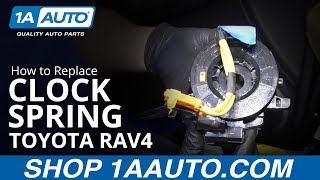
- Faulty Clock Spring (Spiral Cable) (Very Common) — The clock spring is a coiled ribbon of wires in the steering column that maintains electrical connections while the wheel turns. Over time, this ribbon fatigues, cracks, and breaks, severing the circuit. This causes over 80% of B1811 codes.
- Loose, Corroded, or Unseated Connectors (Common) — The distinctive yellow SRS connectors under the driver's seat, at the steering column, and at the airbag module can develop fretting (micro-corrosion) or vibrate loose. Unseated locking tabs—especially after recent dash work—increase resistance and trigger an open circuit.
- Damaged Wiring Harness (Less Common) — Wires in the airbag circuit can be pinched, stretched, or broken within the steering column or under seats, often as a result of improper repairs or accident damage.
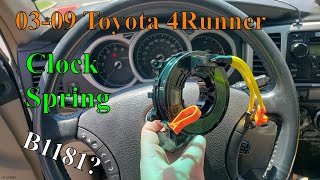
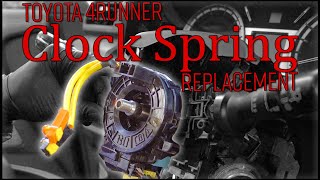
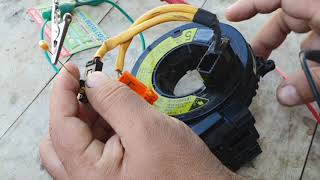
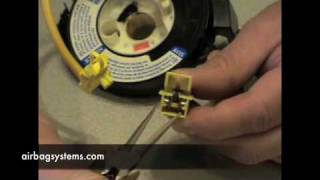
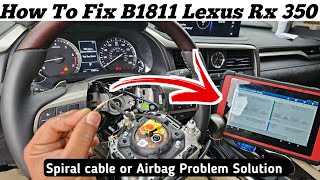
- Defective Driver's Airbag Module (Squib) (Less Common) — The airbag unit contains the inflator charge (squib). The internal wiring of the squib occasionally fails and creates an open circuit, though this is frequently misdiagnosed when the clock spring is the actual culprit. 🎬 Watch: Diagnosing B1811 and checking the spiral cable on a Lexus.
- Low System Voltage (Less Common) — A weak battery or failing alternator causes voltage fluctuations that force the sensitive SRS module to store erroneous codes, including B1811. Always verify battery health before replacing SRS parts.
- Faulty Airbag Control Module (SRS/ECU) (Rare) — Internal failure of the main airbag computer is highly unlikely. The module is often replaced unnecessarily when the true fault lies in the wiring or clock spring.
Symptoms

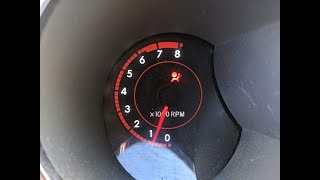
- Airbag Warning Light is On — The SRS light on the dashboard remains illuminated continuously while the engine is running.
- Horn and Steering Wheel Buttons Inoperative — The clock spring carries the circuits for the horn, cruise control, and audio buttons. A broken clock spring ribbon severs these connections simultaneously with the airbag circuit.
- Noise When Turning Steering Wheel — A physically broken clock spring creates a rubbing, grinding, or clicking sound from within the steering column as the wheel turns.
- Intermittent Warning Light with Steering Angle — In early failure stages, the airbag light illuminates only when the steering wheel turns to a specific angle where the cracked ribbon wire loses contact.
Diagnostic Flowchart

Tap your situation to follow the diagnostic path that matches what you're seeing on this code.
Common Fixes & Costs
- Replace Clock Spring (Spiral Cable)
— Parts: $75-$350, Labor: $150-$300, ~1.5 hr book time
(Intermediate)
: OEM 84306-0E010, 84306-04080, 84306-48030 (Alt: Dorman 525-165)
: OEM 84532291 (Alt: Dorman 525-036)
: OEM CV6Z-14A664-A (Alt: Dorman 525-221) - Clean and Secure Harness Connectors — Parts: $0-$20, Labor: $75-$150, ~0.8 hr book time (DIY)
- Replace Driver's Airbag Module — Parts: $400-$1000+, Labor: $100-$200, ~1 hr book time (Professional)
- Repair Damaged Wiring — Parts: $5-$50, Labor: $150-$400, ~2 hr book time (Professional)
- Replace Airbag Control Module (SRS/ECU) — Parts: $300-$800, Labor: $150-$300, ~1.8 hr book time (Professional)
DIY vs Professional
- Replace Clock Spring — Beginner:
- Clean and Secure Connectors — Beginner:
- Replace Airbag Module — Beginner:
Used vs. New Parts: Buying Guide
When a used part is worth it: A used OEM clock spring from a certified auto recycler is a cost-effective option for older vehicles and is generally safer than a cheap aftermarket part.
Donor-vehicle mileage cap: roughly under 100000 miles for the part to have meaningful remaining life.
Donor quality checklist:
- Verify the part is a genuine OEM component.
- Ensure the donor vehicle was not subjected to flood or fire damage.
- Check that connectors are intact and not cut or damaged during removal.
Decision logic:
- If The part is a pyrotechnic device (airbag module, seatbelt pretensioner) → Always buy new OEM. The risks of a used or counterfeit explosive device are too high.
- If Vehicle is newer and under warranty, or budget allows → Buy a new OEM clock spring for maximum reliability.
- If Budget is the primary concern and the vehicle is older → A certified, warrantied used OEM clock spring is a viable alternative to driving with no airbags.
Warranty tradeoff: Used parts typically have a 30-90 day warranty. New OEM parts offer the best guarantee of fit and function.
Worst-case if a used part fails: $200-$400 if a used clock spring fails after the warranty period, requiring repeat labor costs.
What Happens If You Wait — Timeline
- Immediate (First Key-On): The SRS module detects the open circuit during its self-test. The airbag warning light illuminates, and the entire SRS system is disabled as a fail-safe. (MPG impact: 0%% · Added cost: $0)
- 0-3 Months: Secondary symptoms from a failing clock spring (e.g., intermittent horn) become permanent. The car remains drivable, but with zero airbag protection. (MPG impact: 0%% · Added cost: $0 in mechanical costs, but carries the risk of failing a state safety inspection.)
- During a Collision: No airbags deploy. Occupants are exposed to a significantly higher risk of severe or fatal injury. (MPG impact: 0%% · Added cost: Catastrophic medical costs and potential denial of insurance claims due to negligent maintenance.)
Cost of Not Fixing It
- Immediate: Complete deactivation of the entire Supplemental Restraint System (SRS). No airbags will deploy in an accident. (Added cost: N/A)
- During a Collision: Increased risk of severe head and chest trauma due to non-deployment of the driver's airbag. (Added cost: Life-altering medical costs and personal injury.)
- During Ownership: Failure of state safety inspection and potential denial of insurance claims due to negligent maintenance. (Added cost: Cost of re-inspection, fines, or significant financial liability in an accident.)
Diagnosis Steps
- Confirm Codes with SRS-Capable Scanner
Use an OBD-II scanner that reads SRS codes to verify B1811. Note if B1801 (Stage 1 circuit open) is also present, which strongly points to the clock spring.
Tools: SRS-capable OBD-II Scanner (Beginner) - Perform Functional Check of Steering Wheel Components
Test the horn, cruise control, and steering wheel audio buttons. If these are malfunctioning, the clock spring is definitively the cause.
Tools: None (Beginner) - Visual Inspection of Connectors
Inspect all accessible yellow SRS connectors under the driver's seat and at the base of the steering column for damage, corrosion, or unseated locking tabs.
Tools: Flashlight (Beginner) - SAFETY: Depower the SRS System
Disconnect the negative battery terminal and wait exactly 15 minutes. This discharges the SRS module's backup capacitors, preventing accidental airbag deployment.
Tools: Wrench set (Intermediate) - Isolate Fault with Diagnostic Resistor at Clock Spring Input
Disconnect the vehicle harness from the clock spring input. Insert a 2.2-ohm diagnostic resistor into the harness pins for the Stage 2 circuit. Reconnect the battery and scan. If B1811 clears, the wiring to the SRS module is good; the fault is the clock spring or airbag.
Tools: Airbag circuit diagnostic resistor (e.g., 2.2 Ω), wiring diagram (Advanced) - Isolate Fault with Diagnostic Resistor at Airbag Connector
Depower the SRS system again. Move the 2.2-ohm resistor to the clock spring's output connector (where the airbag plugs in). Reconnect battery and scan. If B1811 clears, the clock spring is good, and the airbag module itself is defective.
Tools: Airbag circuit diagnostic resistor (Advanced) - Measure Clock Spring Resistance Under Rotation
Remove the steering wheel and clock spring. Use a multimeter to check continuity on each pin from the input to the output connector while slowly rotating the clock spring lock-to-lock. A reading of 'OL' (infinite resistance) or resistance spikes during rotation confirms a broken internal ribbon.
Tools: High-impedance multimeter, socket set, Torx bits, steering wheel puller (Advanced)
When This Code Triggers (Freeze-Frame Conditions)
- System State: Active/Monitored (The SRS module continuously monitors circuit resistance from the moment the ignition turns on.)
- Circuit Resistance: Out of Range (High) (The module detects resistance in the driver's airbag stage 2 circuit higher than the specified threshold, indicating an open circuit.)
Related Codes
- B1801 — Indicates 'Open in Driver Squib - 1st Stage Circuit'. When a clock spring fails, it breaks the connection to both stages. Seeing B1801 and B1811 together guarantees a clock spring failure.
- B1810 — Indicates a 'Short Circuit' in the driver's airbag second stage, whereas B1811 is an 'Open Circuit'. They point to different electrical faults within the exact same circuit.
- B1812 / B1813 — Indicate a 'Short to Ground' (B1812) or 'Short to Battery+' (B1813) in the Stage 2 circuit. Diagnosis involves checking for incorrect voltage rather than a broken wire.
Climate & Environmental Factors
- High Humidity / Moisture: Moisture penetrates weather seals and causes corrosion on yellow SRS connectors, increasing resistance and triggering an open circuit code.
- Extreme Cold: Electrical wiring and plastic connectors contract in freezing temperatures, causing marginal connections or hairline cracks in the clock spring to separate.
How to Talk to a Mechanic About This Code
Say this: "I have an airbag light on and a B1811 code. My horn and steering wheel buttons are also dead. I'd like an estimate to diagnose and replace the clock spring."
This points the mechanic to the most likely cause and shows you've done your research, framing the job as a specific replacement rather than an open-ended diagnostic.
Avoid saying:
- 'My airbag light is on, can you just fix it?'
- 'I think I need a new airbag.'
- 'Just do whatever it takes to turn the light off.'
Questions to ask before authorizing the repair:
- Does the estimate include diagnosing the clock spring or just replacing it?
- If the issue is NOT the clock spring, will you call me with a new diagnosis and estimate before proceeding?
- Are you using an OEM or aftermarket clock spring, and what is the warranty?
Where to Take It: Dealer vs Independent vs Chain
- Dealer:
Recommended only if the vehicle has a recall or if you demand an OEM-only repair and are willing to pay a premium.
Best for: Vehicles under warranty or with an open recall for the spiral cable., Owners who prioritize OEM parts and a manufacturer-backed warranty above all else.
Downsides: Highest labor rates and part costs, often 1.5-2x more than an independent shop., Unwilling to install customer-supplied or used parts. (Typical cost: +75% vs. baseline) - Independent Shop:
Best fit for most B1811 repairs. Clock spring replacement is a routine job for any competent, certified mechanic.
Best for: Most out-of-warranty vehicles., Cost-conscious owners., Cases where the diagnosis is straightforward (e.g., airbag light plus dead horn).
Downsides: Quality and expertise vary; look for ASE certification and good reviews. (Typical cost: +0% vs. baseline) - Chain Shop:
AVOID for SRS/airbag work. The safety-critical nature and potential for misdiagnosis make this a poor choice.
Best for: Simple jobs like oil changes and tires.
Downsides: Technician skill is highly variable., High pressure to upsell services., Lack the in-depth diagnostic expertise for SRS systems. (Typical cost: -10% vs. baseline)
When to Walk Away From the Repair
If the estimated repair cost exceeds 50% of the car's private-party value, and the car has other pending issues, consider selling it as-is.
- Car worth $4000, fix is $400: Fix it. The repair cost is a small fraction of the car's value and restores a critical safety feature.
- Car worth $2500, fix is $1800: Walk away. The repair cost (likely for a misdiagnosed airbag module) is nearly the entire value of the car. Sell as-is with full disclosure.
What Scan Tool You Need for This Code
Minimum: A scanner that reads and clears Supplemental Restraint System (SRS) codes. A basic engine-only code reader will NOT work.
A standard $20 OBD-II scanner only accesses the engine control unit (ECU). It cannot communicate with the SRS module to see or clear the B1811 code.
Budget: Autel AutoLink AL619 (~$90) — Reads and clears codes from the Engine, ABS, and SRS modules. It's an affordable tool for confirming and clearing the B1811 code.
Mid-range: Foxwell NT630 Plus (~$150) — Provides live data streaming for SRS components, helping confirm intermittent connections by watching data as the steering wheel turns.
Professional: Autel MaxiCOM MK808S (~$450) — Offers bidirectional control and OE-level diagnostics for complex SRS issues or multiple system faults.
Rent vs buy: Auto parts stores lend basic engine code readers for free, but these CANNOT read SRS codes. Buying a budget SRS scanner is often cheaper than paying a shop's diagnostic fee.
How to Clear the Code After You Fix It
- Ensure all SRS components are correctly reconnected.
- Reconnect the negative battery terminal.
- Use an SRS-capable OBD-II scan tool to read and clear the fault codes.
- Turn the ignition ON and wait 60 seconds for the system self-test; verify the airbag light turns off and stays off.
Drive cycle (~10 minutes): After clearing the code, perform a short test drive. Turn the steering wheel lock-to-lock to ensure the new clock spring maintains continuity and the light does not return.
Readiness monitors affected: Not applicable. SRS faults do not affect emissions readiness monitors.
Watch out for:
- Using a basic OBD-II scanner that cannot access the SRS module.
- Assuming disconnecting the battery will clear a hard SRS fault code.
- Failing to center a new clock spring, causing it to snap immediately upon turning the wheel.
Will This Fail Emissions / State Inspection?
No — by itself this code doesn't fail OBD inspection (but it can keep readiness monitors from setting, which causes a separate fail).
- California: An airbag light will NOT fail the emissions (smog) check, as the SRS system is unrelated to emissions.
- New York: An illuminated airbag warning lamp is noted as an advisory during the safety inspection but is NOT a cause for failure.
- Texas: An airbag warning light is NOT an inspected item and will not cause a failure of the state safety inspection.
- General Note: While it may not cause an inspection failure in all states, driving with a disabled airbag system carries significant legal and insurance liability in an accident.
Most Commonly Affected Vehicles
- Toyota Corolla, Matrix, Prius, Tacoma, Sienna, RAV4, Camry (2003-2016) — The clock spring (Toyota P/N 84306-0E010) is a known high-failure item, often triggering B1811 and B1801 simultaneously.
- Pontiac Vibe (2003-2008) — As a rebadged Toyota Matrix, the Vibe shares the exact same clock spring and exhibits the same high failure rate.
- Chevrolet / GM Equinox, Terrain (2010-2017) — The clock spring is a frequent failure point. The steering angle sensor is integrated and must be transferred to the new assembly.
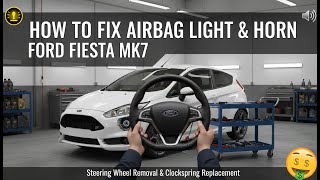
- Ford Focus, Fiesta, Mondeo, Kuga (2005-2015) — Frequently cited for B1811 related to the clock spring or associated wiring in the steering column.
- Chrysler / Dodge / Jeep Town & Country, Grand Caravan, Grand Cherokee, Charger (2006-2014) — Clock spring failures trigger B1811. The part is often referred to as the 'Steering Angle Sensor and Clockspring' assembly.
Manufacturer-Specific Notes
- Toyota/Lexus: Toyota refers to the clock spring as the 'spiral cable sub-assembly'. Toyota issued a safety recall in April 2014 for this exact issue on many models, replacing the spiral cable free of charge.
- General Motors (GM): On Equinox and Terrain models, the steering angle sensor is attached to the clock spring. You must carefully transfer the original sensor to the new clock spring to avoid stability control faults.
- Ford: Ford SRS modules are highly sensitive to aftermarket clock springs. Only an OEM part guarantees the module will clear the B1811 code.
Real Owner Stories
2009 Toyota Tacoma with B1811 & B1801
The airbag light illuminated. A scan revealed B1811 and B1801 codes. The horn and steering wheel controls were also dead.
Outcome: Replacing the clock spring with an OEM part restored all steering wheel functions and permanently cleared the airbag codes.
Lesson: When B1811 appears with B1801 and dead steering wheel buttons, the clock spring is guaranteed to be the culprit. You can confidently replace it without further teardown.
2005 Pontiac Vibe with intermittent B1811
The airbag light came on intermittently, often appearing after a few minutes of driving or during sharp turns. A shop scan confirmed a B1811 code.
Outcome: Replacing the clock spring (spiral cable) resolved the issue.
Lesson: An intermittent airbag light that triggers when turning the wheel is a classic sign of a clock spring in the early stages of failure.
2012 Toyota Camry with misdiagnosed airbag module
Airbag light was on with codes B1801 and B1811. A mechanic initially recommended a $900 airbag module replacement.
Outcome: This test definitively proved the fault was within the clock spring, saving the owner from an expensive and unnecessary airbag replacement.
Lesson: Never replace an expensive airbag module without first confirming the fault using a diagnostic resistor to isolate the clock spring.
2020 Subaru Ascent after minor accident
After a minor collision where the steering wheel airbag did not deploy, codes B1801 and B1811 appeared.
Outcome: The internal shock of the accident damaged the sensitive internal wiring of the squib. The airbag module required replacement.
Lesson: After any accident, even if an airbag doesn't deploy, it can suffer internal damage. Test the airbag unit directly if circuit codes appear post-collision.
How to Prevent This Code From Triggering
- Apply Dielectric Grease to Connectors (During any steering column or dash repair) — A small amount of dielectric grease on the pins of SRS connectors prevents moisture intrusion and fretting (micro-corrosion), which causes high resistance faults.
- Avoid Turning Steering to Full Lock Aggressively (Daily driving habit) — Repeatedly slamming the steering lock puts maximum mechanical stress on the clock spring's internal ribbon cable, accelerating fatigue and breakage.
- Ensure Proper Clock Spring Centering During Installation (During replacement) — A new clock spring must be perfectly centered before installing the steering wheel. An uncentered spring will over-rotate and snap immediately on the first full turn.
Frequently Asked Questions
Can I fix a B1811 code myself?
Replacing a clock spring is mechanically straightforward for an experienced DIYer, but involves handling a live explosive. If you are not 100% confident, leave it to a professional. Always disconnect the battery and wait 15 minutes before beginning SRS work.
Will my airbag work with a B1811 code?
No. The airbag warning light indicates a fault that disables the entire SRS system as a safety precaution. No airbags will deploy in an accident until the fault is repaired and the code is cleared.
My horn and cruise control stopped working when the airbag light came on. Is this related?
Yes, this is a definitive symptom of a failed clock spring. The clock spring connects the airbag, horn, and steering wheel buttons to the car's wiring. When its internal ribbon breaks, all these functions fail simultaneously.
How do I clear the B1811 code?
You must use an SRS-capable scan tool to clear the code after repairing the fault. Disconnecting the battery will not permanently clear an active SRS fault. The light will return immediately upon startup if the root cause remains.
Should I use a cheap aftermarket clock spring?
No. Professional mechanics report that aftermarket clock springs frequently fail prematurely or fail to communicate correctly with the SRS module. For a critical safety component, an OEM part is the only reliable choice.
How do I differentiate between a bad clock spring and a bad airbag?
Use a 2.2-ohm diagnostic resistor to isolate the fault. If the code clears with the resistor attached to the clock spring's output, the airbag is bad. If it clears at the input, the clock spring is bad.
Can a low car battery cause a B1811 code?
Yes. Low system voltage during startup causes the sensitive SRS module to log erroneous fault codes. Ensure your battery and charging system are healthy before beginning expensive SRS diagnostics.
Key Takeaways
- Code B1811 completely disables the driver's airbag, meaning it will not deploy in a crash.
- A broken clock spring (spiral cable) causes over 80% of B1811 codes.
- A dead horn or inoperative steering wheel buttons alongside the airbag light guarantee the clock spring has failed.
- Disconnect the negative battery terminal and wait 15 minutes before touching any yellow SRS connectors to prevent accidental airbag deployment.
- Never replace a $500+ airbag module without first using a 2.2-ohm diagnostic resistor to prove the clock spring is functioning.
Helpful Videos

The information in this article is provided for general reference and educational purposes only. Vehicle specifications, procedures, and part compatibility can vary by production date, trim level, and region. Always consult your vehicle's factory service manual and verify part numbers before purchasing or performing repairs. Safety-critical components such as airbags, seat belts, and braking systems should be installed by a qualified professional.
- 🎬 Helpful Videos
- What Does B1811 Mean?
- Can I Drive With B1811?
- Common Causes
- Symptoms
- Diagnostic Flowchart
- Common Fixes & Costs
- DIY vs Professional
- Used vs. New Parts: Buying Guide
- What Happens If You Wait — Timeline
- Cost of Not Fixing It
- Diagnosis Steps
- When This Code Triggers (Freeze-Frame Conditions)
- Related Codes
- Climate & Environmental Factors
- How to Talk to a Mechanic About This Code
- Where to Take It: Dealer vs Independent vs Chain
- When to Walk Away From the Repair
- What Scan Tool You Need for This Code
- How to Clear the Code After You Fix It
- Will This Fail Emissions / State Inspection?
- Most Commonly Affected Vehicles
- Manufacturer-Specific Notes
- Real Owner Stories
- 2009 Toyota Tacoma with B1811 & B1801
- 2005 Pontiac Vibe with intermittent B1811
- 2012 Toyota Camry with misdiagnosed airbag module
- 2020 Subaru Ascent after minor accident
- How to Prevent This Code From Triggering
- Frequently Asked Questions
- Can I fix a B1811 code myself?
- Will my airbag work with a B1811 code?
- My horn and cruise control stopped working when the airbag light came on. Is this related?
- How do I clear the B1811 code?
- Should I use a cheap aftermarket clock spring?
- How do I differentiate between a bad clock spring and a bad airbag?
- Can a low car battery cause a B1811 code?
- Key Takeaways
- 🎟️ Get 5% Off