

OBD-II Code B1806: Passenger Airbag Circuit Fault
A Comprehensive Guide to Diagnosing and Fixing an Open in the P Squib Circuit
- Code B1806 disables your vehicle's entire airbag system due to a severed electrical circuit on the passenger side, leaving occupants unprotected in a crash.
- Stop driving the vehicle immediately, as the 100% failure rate of the Supplemental Restraint System (SRS) during a collision dramatically increases the risk of fatal injury.
- Inspect the yellow wiring harnesses under the front passenger seat and behind the glove box first, as loose connectors or severed wires cause over 70% of B1806 codes.
- Disconnect the negative battery terminal and wait 15 minutes before touching any yellow SRS wiring to prevent accidental, potentially lethal airbag deployment.
What Does B1806 Mean?

B1806 indicates the Supplemental Restraint System (SRS) module detects a severed electrical connection in the passenger-side airbag system, known as the 'P Squib Circuit.' This fault forces the SRS module to disable all airbags as a safety precaution and illuminates the dashboard airbag warning light.
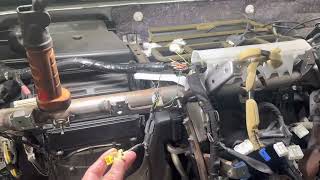
🎬 Watch: Diagnosing a B1806 P Squib circuit on a Toyota.Technical definition: The official SAE/OBD-II definition is "Open in P Squib Circuit". The 'P' stands for Passenger, and the 'squib' is the pyrotechnic initiator that inflates the airbag. An 'open' means a severed wire or unplugged connector creates infinite electrical resistance, triggering the code.
Can I Drive With B1806?

No — Do Not Drive. No. The vehicle operates mechanically, but this code disables the entire Supplemental Restraint System (SRS). In a collision, zero airbags will deploy and seatbelt pretensioners will not activate. This critical safety failure dramatically increases the risk of serious injury or death. Do not drive until repaired.
Common Causes

- Damaged Wiring or Loose Connectors (Very Common) — This is the most frequent cause. Wires under the passenger seat get kicked, pulled by stored items, or corroded. Rodents or cabin air filter replacements frequently damage wires behind the glove compartment.
- Faulty Passenger Airbag Assembly (Common) — The squib (detonator) inside the passenger airbag module fails, creating an open circuit. This requires replacing the entire dashboard airbag assembly.
- Faulty Passenger Seat Belt Pretensioner (Common) — The seat belt pretensioner, which tightens the belt during a crash, shares the airbag circuit. Internal failure of the pretensioner or its connector causes an open circuit.
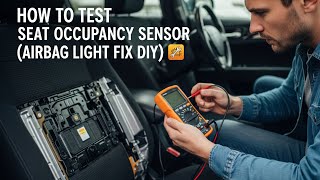
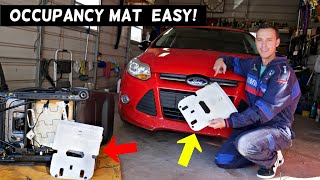
- Faulty Occupant Classification System (OCS) Sensor (Common) — The Occupant Classification System (OCS) uses a weight sensor mat in the passenger seat to activate or deactivate the airbag. Sensor mat or wiring failures interrupt the SRS circuit. 🎬 See how to test a seat occupancy sensor yourself.
- Water Intrusion and Corrosion (Uncommon) — Water leaking from a bad window seal or clogged sunroof drain pools under the carpet. This corrodes the under-seat connectors, creating infinite resistance.
- Faulty SRS Airbag Control Module (Rare) — The main airbag control computer fails internally. This happens after flood damage, major electrical surges, or if the module locks up after storing crash data.
Symptoms
- Airbag Warning Light is On — The light stays illuminated on the dashboard continuously while the fault is active.
- Passenger Airbag Off Light Stays On — The indicator light showing the passenger airbag is off remains lit constantly, regardless of seat occupancy.
- Failed State Safety Inspection — Jurisdictions with safety inspections automatically fail vehicles with an active airbag warning light.
- Airbag System is Disabled (also visible on scanner) — The B1806 code confirms the Supplemental Restraint System (SRS) is inactive and will not deploy in a crash.
Diagnostic Flowchart

Tap your situation to follow the diagnostic path that matches what you're seeing on this code.
Common Fixes & Costs
- Repairing Damaged Wiring or Connectors — Parts: $5-$30, Labor: $120-$300, ~1.5 hr book time (Intermediate)
- Replacing the Passenger Airbag Assembly — Parts: $600-$1800, Labor: $250-$450, ~2.5 hr book time (Professional)
- Replacing the Passenger Seat Belt Pretensioner — Parts: $250-$550, Labor: $150-$300, ~1.2 hr book time (Professional)
- Replacing the Occupant Classification System (OCS) Sensor Mat — Parts: $400-$900, Labor: $200-$400, ~3 hr book time (Professional)
- Resetting or Replacing the SRS Airbag Control Module — Parts: $50-$150 (Reset) or $450-$1200 (New), Labor: $150-$350, ~1.5 hr book time (Professional)
DIY vs Professional
- Repairing Damaged Wiring or Connectors — Beginner: Maybe
Tools: Flashlight, multimeter, wire strippers, butt connectors/soldering iron, heat shrink. - Replacing the Passenger Airbag Assembly — Beginner: No
Tools: Trim removal tools, socket set, SRS-capable scan tool, torque wrench. - Replacing the Passenger Seat Belt Pretensioner — Beginner: No
Tools: Socket set, trim removal tools, SRS-capable scan tool, torque wrench. - Replacing the OCS Sensor Mat — Beginner: No
Tools: Upholstery tools (hog ring pliers), socket set, SRS-capable scan tool. - Resetting or Replacing the SRS Airbag Control Module — Beginner: No
Tools: Socket set, SRS-capable scan tool with programming/coding functions.
Used vs. New Parts: Buying Guide
When a used part is worth it: Buying used SRS components is STRONGLY DISCOURAGED. The only exception is purchasing a wiring harness pigtail or connector from a certified auto recycler. Never purchase used airbag modules or seatbelt pretensioners.
Donor-vehicle mileage cap: roughly under 100000 miles for the part to have meaningful remaining life.
Donor quality checklist:
- Ensure wiring has no corrosion, cuts, or heat damage.
- Avoid parts from flood-damaged or high-humidity environments.
- Verify the part number exactly; SRS components are extremely vehicle-specific.
- Purchase only from a certified Automotive Recyclers Association (ARA) member.
Decision logic:
- If The part is an explosive component (airbag, pretensioner, squib). → Buy NEW OEM only. The risk of fatal malfunction is too high.
- If The part is an electronic module (SRS ECU). → A new OEM module is safest. Alternatively, send your original module to a professional service for a crash data reset.
- If The part is a wiring connector or pigtail. → A used part from a certified recycler is acceptable if a new part is unavailable.
Warranty tradeoff: Used SRS components have no warranty. New OEM parts carry a 12-month/12,000-mile warranty. The safety guarantee of a new part is invaluable.
Worst-case if a used part fails: $2,500 - $100,000+ if a used explosive component fails to deploy, resulting in severe injury or death.
What Happens If You Wait — Timeline
- Immediate (0 seconds): The SRS module detects the open circuit, illuminates the airbag warning light, and disables the entire supplemental restraint system. (MPG impact: 0%% · Added cost: $0)
- Ongoing: The vehicle is unsafe to drive. The vehicle fails state safety inspections in many jurisdictions. (MPG impact: 0%% · Added cost: $50-$200 in failed inspection fees or potential fines.)
- At time of sale or trade-in: The vehicle's resale value is significantly reduced. An active airbag light suggests potential hidden damage. (MPG impact: 0%% · Added cost: $1,000 - $4,000+ in diminished value.)
- During a collision: The safety systems fail to operate, leading to catastrophic financial consequences from medical bills and legal liability. (MPG impact: 0%% · Added cost: $10,000 - $1,000,000+)
Cost of Not Fixing It
- Immediate: The entire Supplemental Restraint System (SRS) is disabled. NO airbags will deploy and seatbelt pretensioners will not activate, dramatically increasing the risk of serious injury or death. (Added cost: N/A)
- During a Collision: Increased medical costs, long-term disability, or funeral expenses due to safety system failure. Increased legal liability for knowingly driving a vehicle with a disabled safety system. (Added cost: $10,000 - $1,000,000+)
- Vehicle Ownership: The vehicle automatically fails the safety portion of a state inspection, preventing registration. It also significantly reduces the vehicle's resale value. (Added cost: $50-$200 in failed inspection fees or fines.)
Diagnosis Steps
- Visually Inspect Under the Passenger Seat
Look for yellow connectors under the front passenger seat. Ensure they plug in securely. Check for pinched, frayed, or broken wires. Remove foreign objects like water bottles that dislodge connectors.
Tools: Flashlight (Beginner) - Inspect Passenger Airbag Wiring (Glove Box)
Remove the glove box and inspect the yellow-sheathed wires and connectors leading to the passenger airbag for damage or looseness.
Tools: Screwdriver/Trim Removal Tools, Flashlight (Intermediate) - Check Battery Voltage and Fuses
Use a multimeter to ensure the battery has at least 12.4 volts with the engine off. Check the fuse box for blown SRS or airbag system fuses.
Tools: Multimeter, Fuse Puller (Beginner) - Read and Clear the Code
If you secure a loose connector, use an SRS-capable OBD-II scanner to clear the code. If the code returns immediately, the open circuit persists.
Tools: OBD-II Scanner (with SRS function) (Beginner) - [ADVANCED] Monitor Live Data PIDs
Use an advanced scan tool to access SRS 'Live Data'. Monitor 'P Squib Circuit Resistance'. Normal resistance is 1.5 to 3.5 ohms. A reading of 'Open' or 'OL' confirms the fault location.
Tools: Advanced Bi-Directional Scan Tool (Advanced) - [PRO TIP] Harness Resistance Check
Disconnect the SRS module and the passenger airbag. Measure resistance on the two harness wires. A healthy wire shows less than 1.0 ohm. 'OL' indicates a severed wire. Wiggle the harness to expose intermittent breaks.
Tools: High-Quality Digital Multimeter (Professional) - Test the Passenger Airbag Circuit
WARNING: Disconnect the battery for 15 minutes. Disconnect the passenger airbag connector and insert a 2.0-2.2 ohm resistor to bypass the squib. If the code clears, the airbag assembly requires replacement.
Tools: OBD-II Scanner (SRS), 2.0-2.2-Ohm Airbag System Resistor, Trim Removal Tools (Advanced) - Test the Passenger Seatbelt Pretensioner Circuit
Disconnect the battery for 15 minutes. Disconnect the pretensioner and insert a 2.0-2.2 ohm resistor. If the code clears with the resistor in place, the pretensioner is faulty.
Tools: OBD-II Scanner (SRS), 2.0-2.2-Ohm Airbag System Resistor, Basic Hand Tools (Advanced) - [PRO TIP] Check for Short to Power or Ground
With components disconnected, measure resistance between each squib wire and chassis ground. It must read 'OL'. Reconnect the battery, turn the key 'ON', and measure voltage between each wire and ground. Any voltage indicates a short to power.
Tools: High-Quality Digital Multimeter (Professional)
When This Code Triggers (Freeze-Frame Conditions)
- SRS Module Voltage: 11-14 Volts (The code sets during the initial key-on self-test if circuit resistance is out of range.)
- Fault Status: Present / Active (The SRS module continuously monitors the squib circuit and sets the code if the open condition persists for more than a few seconds.)
- P Squib Resistance: Infinite / > 10 Ohms (A scan tool viewing live data shows 'Open' or a very high resistance reading, confirming the severed circuit.)
- Ignition Cycles Since Fault: 0 (This counter remains at zero when the fault is active, indicating detection in the current drive cycle.)
Related Codes
- B1805 — Indicates a 'Short in P Squib Circuit.' The two wires in the circuit touch each other, showing low resistance (less than 1 ohm) instead of infinite resistance.
- B1807 — Specifies a 'Short to Ground in P Squib Circuit.' A technician checks for continuity between a squib circuit wire and the vehicle's chassis ground.
- B1808 — Indicates a 'Short to B+ in P Squib Circuit,' meaning the squib wire touches a power source.
- B1801 — The equivalent code for the driver's side ('Open in D Squib Circuit'). If both B1801 and B1806 appear, suspect a central SRS control module failure.
Climate & Environmental Factors
- High Humidity / Water Intrusion: Moisture accelerates corrosion on connector pins and wiring under carpets. This corrosion creates high resistance or a complete open, triggering B1806.
- Extreme Cold: Cold temperatures cause plastic wiring insulation and connectors to become brittle and break. Cold weather also lowers battery output, causing the SRS module to generate false fault codes.
- Road Salt: Salt-laden moisture tracked into the vehicle seeps into the carpet, creating a highly corrosive environment for floor-mounted OCS modules or under-seat connectors.
How to Talk to a Mechanic About This Code
Say this: "I have an airbag light on and my scanner shows code B1806, for an 'Open in Passenger Squib Circuit.' I'd like to schedule a diagnostic appointment. Since the most common cause is wiring, please start by thoroughly inspecting the connectors and harness under the passenger seat and behind the glove box before quoting a price for new parts."
This directs the technician to the most likely and least expensive failure points first, preventing them from immediately quoting a costly component like a new airbag module.
Avoid saying:
- 'My airbag light is on, can you fix it?' (Too vague, invites a high quote.)
- 'Just replace the passenger airbag.' (Never diagnose the car for the mechanic.)
- 'Do whatever it takes to turn the light off.' (Invites an unsafe 'fix' like installing a resistor.)
Questions to ask before authorizing the repair:
- What specific diagnostic steps did you take to confirm the location of the open circuit?
- Did you test the circuit by bypassing the component with a 2-ohm resistor to confirm the fault is in the component itself?
- If the wiring is damaged, can it be repaired with a new pigtail, or does the entire harness need replacement?
- What is the warranty on this specific repair, including both parts and labor?
Where to Take It: Dealer vs Independent vs Chain
- Dealer:
A safe but expensive option. Recommended if you suspect a complex issue like a faulty SRS module or if a required calibration is beyond the capability of other shops.
Best for: Vehicles still under warranty, Complex manufacturer-specific issues (e.g., OCS recalibration, module programming), Customers who prioritize OEM parts and procedures over cost
Downsides: Highest labor rates, often 1.5-2x more than independent shops., May recommend replacing an entire assembly rather than attempting a nuanced repair. (Typical cost: +50% vs. baseline) - Independent Shop:
Best fit for most scenarios. An experienced independent technician efficiently diagnoses common wiring faults associated with B1806 at a much lower cost than a dealer.
Best for: Out-of-warranty vehicles where cost is a factor., Diagnosing and repairing common wiring or connector issues.
Downsides: Quality and expertise vary greatly. Must find a shop with ASE-certified technicians specializing in electrical systems., May not have the latest diagnostic software for all makes and models. (Typical cost: +0% vs. baseline) - Chain Shop:
AVOID. An SRS system fault requires specialized diagnostic knowledge to ensure safety and accuracy.
Best for: Simple, routine maintenance like oil changes, tires, and brakes.
Downsides: Technician skill and experience with complex electrical and safety systems are highly variable., Business model encourages upselling, leading to misdiagnosis of a sensitive SRS fault. (Typical cost: -10% vs. baseline)
When to Walk Away From the Repair
If the estimated repair cost for the B1806 code exceeds 50% of your car's private-party value, seriously consider selling the car as-is or trading it in.
- Car worth $3500, fix is $1800: Walk away. The repair cost is over 50% of the car's value. The money is better put toward a replacement vehicle.
- Car worth $10000, fix is $1800: Fix it. The repair cost is well under the threshold and is critical for the vehicle's safety and resale value.
- Car worth $4000, fix is $300: Fix it. A low-cost repair on a safety system is always a worthwhile investment.
What Scan Tool You Need for This Code
Minimum: A scanner that reads and clears codes from the SRS (Supplemental Restraint System) module. A basic engine-only code reader will not work.
A standard $20 code reader only communicates with the engine control module (ECU). It cannot see or clear codes in the SRS module.
Budget: Autel AutoLink AL619 / ML629 (~$90) — Reads and clears codes from the Engine, Transmission, ABS, and SRS. It allows you to see the B1806 code and clear it after fixing the wiring.
Mid-range: BlueDriver Pro or Foxwell NT630 Plus (~$120) — Reads and clears SRS codes and displays live data from SRS sensors. This helps you see real-time resistance readings to confirm a wiring fix.
Professional: Autel MaxiCOM MK808 / XTOOL D7 (~$450-600) — Provides full bi-directional control, OEM-level diagnostics, OCS recalibration, and detailed live data graphing. Essential for diagnosing complex SRS faults.
Rent vs buy: Buy. Free 'rental' scanners at auto parts stores are almost always basic engine-only readers and will not work for this code.
How to Clear the Code After You Fix It
- Ensure the physical fault (broken wire, faulty component) is repaired.
- Reconnect the negative battery terminal.
- Turn the ignition to the 'ON' position without starting the engine.
- Connect an SRS-capable OBD-II scan tool to the diagnostic port.
- Navigate to the Supplemental Restraint System (SRS) section.
- Select 'Clear DTCs' or 'Erase Fault Codes'.
- Cycle the ignition off, then on again, and confirm the airbag light performs its 6-second self-check and stays off.
Drive cycle: No specific drive cycle is required. The airbag system's self-test performs upon key-on. If the repair is successful and the code is cleared, the light stays off.
Readiness monitors affected: None. SRS faults do not affect engine emissions readiness monitors.
Watch out for:
- Using a standard engine code reader, which cannot access or clear SRS module codes.
- Failing to fix the root cause, causing the code to reappear instantly after clearing.
- Not waiting 60 seconds after reconnecting the battery and turning the key on for the system to stabilize before checking codes.
Will This Fail Emissions / State Inspection?
No — by itself this code doesn't fail OBD inspection (but it can keep readiness monitors from setting, which causes a separate fail).
- California: An illuminated airbag light is NOT part of the emissions (smog) inspection and will not cause a failure.
- New York: The airbag warning light is checked during the annual safety inspection. If illuminated, it is noted as an advisory but is NOT cause for rejection.
- Texas: An illuminated airbag light is a reason for failing the annual safety inspection.
- Virginia: An illuminated airbag warning light causes the vehicle to fail the state safety inspection.
Most Commonly Affected Vehicles
- Toyota Camry (2007-2017) — Frequently caused by a broken wire in the harness behind the glove box or a faulty airbag squib.
- Toyota Corolla (2006-2019) — Wiring issues and faulty passenger airbag squibs are common causes.
- Toyota Prius (2004-2015) — The fault often lies with the airbag assembly or the wiring harness connecting to it.
- Lexus ES / IS (2006-2013) — Shares SRS components with Toyota, making it prone to identical wiring and squib failures.
- Ford Focus / Fiesta (2005-2018) — Commonly related to Occupant Classification System (OCS) sensor failures in the passenger seat.
- Hyundai Sonata, Elantra (2011-2017) — Often related to issues with the Occupant Classification System (OCS) mat or its wiring harnesses.
- Subaru Outback, Forester (2009-2014) — Associated with a faulty Occupant Detection System (ODS). Subaru issued a warranty extension for some ODS components.
Manufacturer-Specific Notes

- Toyota/Lexus: The code frequently points to an open in the passenger airbag squib or the wiring behind the glove box. Technicians use a special service tool (SST 09843-18061), a 2.1-ohm resistor, to diagnose the circuit.
- Ford: Issues with the Occupant Classification System trigger B1806 due to problems with the wiring harness or sensor mat. OCS zero-weight recalibration is mandatory after repairs.
- Subaru: Subaru has an Occupant Detection System (ODS) Warranty Enhancement Program extending coverage for the ODS sensor mat and ECU on certain models.
Real Owner Stories
2017 Toyota Corolla with B1806
The airbag warning light illuminated. The owner regularly kept items under the passenger seat.
Outcome: The mechanic repaired the broken wires behind the glove box. The code was cleared with an SRS-capable scan tool, and the light stayed off.
Lesson: Thoroughly inspect all accessible wiring, especially under the passenger seat and behind the glove box, for physical damage or rodent activity before assuming a component failed.
2006 VW Passat with multiple SRS faults
Purchased a used vehicle with an active airbag light. Inspection revealed the previous owner cut all wiring under the driver's seat.
Outcome: The repair involved a technician meticulously re-connecting each wire at a standard rate of 0.3-0.5 hours per wire, plus the cost of new terminal pins.
Lesson: A simple-looking light hides major damage or malicious tampering. A professional pre-purchase inspection including an SRS scan is critical.
2018 Honda CR-V with flood damage
Water entered the cabin during a flood. Afterward, the airbag light illuminated and the car would not crank. Scans showed multiple 'loss of communication' errors.
Outcome: The only reliable fix is replacing any module and wiring harness touched by water. This extremely expensive repair often leads an insurance company to declare the vehicle a total loss.
Lesson: Water destroys modern car electronics. An airbag light after a major water leak indicates systemic problems exceeding the vehicle's value.
How to Prevent This Code From Triggering
- Keep the area under the front seats completely clear. (Always) — Items rolling under the seat snag, pinch, or disconnect the sensitive airbag wiring connectors.
- Address any cabin water leaks immediately. (As needed) — Water wicks into the carpet and corrodes the pins on under-seat connectors and floor-mounted SRS modules.
- Exercise caution during interior work. (During repairs) — Avoid damaging the yellow airbag harness behind the glove box when replacing a cabin air filter or running accessory wires.
- Apply dielectric grease to connectors during repairs. (During repairs) — Applying dielectric grease to the seal of an unplugged SRS connector blocks moisture and prevents corrosion.
- Move power seats slowly and check for obstructions. (When adjusting seats) — Moving the seat repeatedly stresses the wiring harness underneath. Ensure the path is clear to prevent stretching.
Frequently Asked Questions
Can I reset the airbag light myself?
Even if you fix the underlying problem, the airbag light will not turn off by itself. You need an OBD-II scanner with SRS capabilities to clear the code from the airbag control module. A standard $20 engine code reader cannot access the SRS module.
What does the 'P' in 'P Squib Circuit' mean?
The 'P' stands for 'Passenger.' The corresponding code for the driver's side is B1801, which stands for 'Open in D Squib Circuit,' where 'D' means 'Driver.'
Is it safe to work on the airbag system?
No, working on airbag systems is extremely dangerous for beginners. Airbag systems contain explosive charges that cause serious injury or death if deployed accidentally. Always disconnect the negative battery terminal and wait 15 minutes before touching any yellow airbag wiring.
Can I just bypass the airbag with a resistor permanently?
Installing a 2.0-2.2 ohm resistor tricks the SRS module into turning off the warning light, but ensures the airbag will NEVER deploy in a crash. This is extremely dangerous, illegal in many jurisdictions, and creates a massive liability risk. Never use a resistor as a permanent repair.
Is there a recall for code B1806?
There is no specific recall for code B1806, but many vehicles were part of the Takata airbag recall. Check your VIN on the NHTSA website to see if your vehicle requires a free inflator replacement. Additionally, manufacturers like Subaru offer extended warranties on related components like the Occupant Detection System (ODS).
My mechanic replaced the part but the light is still on. What now?
The mechanic likely misdiagnosed the root cause, replacing a component when the actual fault was damaged wiring. Alternatively, the SRS module still holds stored 'crash data' requiring a specialized reset, or the new component needs dealer-level recalibration. Return to the shop and request a live data circuit test.
Can a weak car battery cause the B1806 code?
Yes, a weak or failing battery causes low system voltage. This triggers a variety of false fault codes in sensitive electronic modules like the SRS computer.
Key Takeaways
- Code B1806 disables your vehicle's entire airbag system due to a severed electrical circuit on the passenger side, leaving occupants unprotected in a crash.
- Stop driving the vehicle immediately, as the 100% failure rate of the Supplemental Restraint System (SRS) during a collision dramatically increases the risk of fatal injury.
- Inspect the yellow wiring harnesses under the front passenger seat and behind the glove box first, as loose connectors or severed wires cause over 70% of B1806 codes.
- Disconnect the negative battery terminal and wait 15 minutes before touching any yellow SRS wiring to prevent accidental, potentially lethal airbag deployment.
Helpful Videos


The information in this article is provided for general reference and educational purposes only. Vehicle specifications, procedures, and part compatibility can vary by production date, trim level, and region. Always consult your vehicle's factory service manual and verify part numbers before purchasing or performing repairs. Safety-critical components such as airbags, seat belts, and braking systems should be installed by a qualified professional.
- 🎬 Helpful Videos
- What Does B1806 Mean?
- Can I Drive With B1806?
- Common Causes
- Symptoms
- Diagnostic Flowchart
- Common Fixes & Costs
- DIY vs Professional
- Used vs. New Parts: Buying Guide
- What Happens If You Wait — Timeline
- Cost of Not Fixing It
- Diagnosis Steps
- When This Code Triggers (Freeze-Frame Conditions)
- Related Codes
- Climate & Environmental Factors
- How to Talk to a Mechanic About This Code
- Where to Take It: Dealer vs Independent vs Chain
- When to Walk Away From the Repair
- What Scan Tool You Need for This Code
- How to Clear the Code After You Fix It
- Will This Fail Emissions / State Inspection?
- Most Commonly Affected Vehicles
- Manufacturer-Specific Notes
- Real Owner Stories
- 2017 Toyota Corolla with B1806
- 2006 VW Passat with multiple SRS faults
- 2018 Honda CR-V with flood damage
- How to Prevent This Code From Triggering
- Frequently Asked Questions
- Can I reset the airbag light myself?
- What does the 'P' in 'P Squib Circuit' mean?
- Is it safe to work on the airbag system?
- Can I just bypass the airbag with a resistor permanently?
- Is there a recall for code B1806?
- My mechanic replaced the part but the light is still on. What now?
- Can a weak car battery cause the B1806 code?
- Key Takeaways
- 🎟️ Get 5% Off