

B1795 Subaru Forester (2014-2018): Occupant Classification System Fault Guide
Code B1795 on a 2014-2018 Forester indicates a fault in the Occupant Classification System ECU, part of the passenger airbag system. It often appears with other codes like B1650. The cause is frequently a faulty wiring harness under the passenger seat, which was subject to a recall (WUM-98). If the harness is not the cause, the ECU integrated into the seat cushion is the likely culprit, requiring a costly replacement.
- B1795 means the passenger airbag computer (ECU) has a fault and is a serious safety issue.
- First, check if your 2015-2018 Forester is covered by recall WUM-98 for a faulty ODS wiring harness, as this is a very common cause and a free fix.
- Do not allow a mechanic to immediately replace the entire seat. Insist they follow Subaru's TSB 07-108-16R to properly diagnose the problem, which could be as simple as a loose wire or moisture.
- This is not a DIY-friendly repair. The SRS system requires specialized tools and knowledge to be serviced safely.
What's Unique About the 2014-2018 Subaru FORESTER
The fourth-generation (SJ) Forester is known for sensitivity in its Occupant Detection System (ODS). The issue became so prevalent that Subaru issued a recall (WUM-98) for 2015-2018 models with heated seats, targeting a faulty ODS sensor mat harness that could develop a loose connection. This recall affected 366,282 vehicles produced between January 20, 2015, and August 01, 2017. 🎬 See this breakdown of the Forester and Impreza recalls Additionally, Subaru released Technical Service Bulletin (TSB) 07-108-16R to guide technicians in diagnosing these issues correctly and to prevent the unnecessary, expensive replacement of the entire seat cushion assembly when a simpler fix might suffice.
Diagnostic Flowchart
Tap your situation to follow the diagnostic path that matches what you're seeing on this vehicle.
Symptoms You May Notice
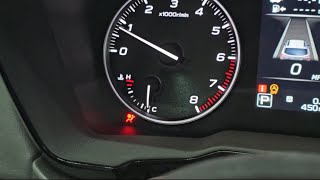
- Airbag warning light illuminated on the dashboard.
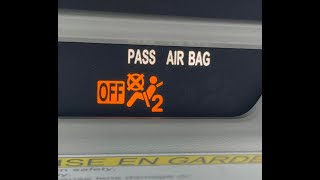
- "PASSENGER AIR BAG OFF" indicator is lit, even when an adult is seated in the passenger seat.
- Replacing the entire passenger seat cushion assembly without first following the diagnostic procedure in TSB 07-108-16R. The TSB was created specifically to avoid this costly misdiagnosis when a simpler fix, like addressing a harness, moisture, or connector issue, might be the solution.
Most Likely Causes
- Faulty Occupant Detection System (ODS) Sensor Mat Harness 🔴 High Probability A known issue with the terminals loosening over time, especially on models with heated seats. This was the subject of recall WUM-98 for 2015-2018 models.
How to confirm: Check vehicle VIN for recall applicability. A technician will inspect a label on the harness under the passenger seat. If the date code is 18074 or earlier AND has the supplier code 6578, it must be replaced.
Typical fix: Replacement of the ODS sensor mat harness. This is covered under the recall.
Est. part cost: $0 (if covered by recall) - Faulty Occupant Classification ECU 🟡 Medium Probability The code B1795 specifically points to a malfunction within the ECU itself. This can be an internal logic failure or a circuit malfunction detected by the ECU.
How to confirm: After ruling out wiring, moisture, and sensor issues per TSB 07-108-16R, a diagnostic scan tool is used to confirm the ECU has internal faults. This is the last step in the diagnostic chain before component replacement.
Typical fix: Replacement of the Occupant Classification ECU, which is integrated with the passenger seat cushion assembly. After replacement, a 'zero point calibration' is required using a Subaru Select Monitor (SSM) or equivalent scan tool.
Est. part cost: $800-$1500 (often part of the seat cushion) - Moisture or Liquid Intrusion in Seat Cushion ⚪ Low Probability Spilled liquids or high humidity can penetrate the seat and affect the sensor mat, leading to erratic readings and fault codes.
How to confirm: Physical inspection of the seat cushion for dampness or water stains. TSB 07-108-16R specifically calls out checking for this condition first when diagnosing ODS faults.
Typical fix: Thoroughly drying the seat cushion with fans or sunlight. If the sensor is permanently damaged by corrosion or the liquid, the seat cushion assembly may need replacement.
Est. part cost: $0 (if drying works) - $1500+ - Poor Connection or Damaged Wiring ⚪ Low Probability Items stored under the seat or passenger movement can damage the connectors and wiring for the ODS system. A user on a Topdon forum noted that cleaning the harness pins with contact cleaner and reseating the connectors resolved their issue.
How to confirm: Visually inspect all wiring and connectors under the passenger seat for damage, corrosion, or disconnection. The primary connectors for the ODS are often yellow. TSB 07-108-16R provides steps for checking continuity between connectors under the seat and the airbag control module.
Typical fix: Repairing the damaged wire or cleaning and securing the connector.
Est. part cost: $5-$50
Diagnosis Steps
- Verify the airbag warning light is on and the 'Passenger Airbag OFF' indicator is illuminated with an adult in the seat.
- Check for any objects under or on the passenger seat that could interfere with the sensor.
- Inspect the passenger seat cushion for any signs of moisture or liquid spills. If wet, dry it thoroughly before proceeding.
- Check your vehicle's VIN against Subaru's recall database for the WUM-98 campaign.
- Using a professional scan tool capable of reading SRS/ODS modules (Subaru Select Monitor III is specified in TSBs, as SM4 had limitations), read all current and stored codes from the Occupant Detection System.
- Follow the specific diagnostic flowchart provided in Subaru TSB 07-108-16R. This bulletin provides the official procedure for diagnosing these codes and avoiding unnecessary parts replacement.
- Inspect the wiring and connectors under the passenger seat for any visible damage, corrosion, or loose connections. Pay special attention to the main harness connectors (AB59) and (AB53).
- If all wiring and external factors are ruled out, the diagnostic procedure will likely point to a faulty Occupant Classification ECU, which is integrated with the seat cushion assembly.
- If the ECU or seat cushion is replaced, a 'rezeroing' or 'zero point calibration' procedure must be performed. This requires an empty vehicle on a level surface, with the seat adjusted all the way back and upright. The procedure is initiated via the scan tool and is mandatory for the new components to function correctly. 🎬 Watch: How to perform a passenger detection sensor calibration
Parts You'll Likely Need
- Occupant Detection System (ODS) Sensor Mat Harness — This harness is the subject of a major recall (WUM-98) for this vehicle range due to its tendency to develop a loose connection.
Trusted brands: Subaru (OEM)
OEM price range: $50-$100
Aftermarket price range: N/A - Passenger Seat Cushion Assembly
(OEM #64139SG002VH, 64139SG140VH (part numbers vary by trim and model year, always verify with VIN))— The Occupant Classification ECU and sensor mat are integrated into the seat cushion. If the ECU fails (as indicated by B1795) and cannot be repaired, the entire assembly must be replaced. A YouTuber was quoted part number 64139SG002VH 🎬 Watch: DIY diagnostic and troubleshooting steps for defective ODS parts for his 2018 Forester.
Trusted brands: Subaru (OEM)
OEM price range: $650-$1300
Aftermarket price range: N/A (Used/salvage parts may be available but are not recommended for safety systems)
Related Codes That Often Appear With This One
- B1650 — B1650 is a general 'Occupant Classification System Malfunction' code. B1795 is a more specific code indicating the ECU itself has a fault. They frequently appear together, and TSB 07-108-16R is the primary diagnostic guide for this pair.
- B1760 — This code points to a 'Sensor Mat Abnormal' fault, often caused by moisture. It can appear with B1795 if the ECU is failing to properly read the sensor mat.
- B1761 — Another related ODS code that can accompany B1795, as mentioned in TSB 07-108-16R.
- B1771 — Another related ODS code. Service manuals explicitly state to troubleshoot B1771 first if it appears with B1795.
Technical Service Bulletins (TSBs) & Recalls
- 07-108-16R: Provides revised diagnostic procedures for DTC B1650 and associated codes like B1795, B1760, B1761, and B1771 to avoid unnecessary seat cushion replacement.
Platform-Specific Known Issues
- Recall WUM-98: Affects 2015-2018 Foresters with heated seats (built Jan 2015 - Aug 2017) due to a faulty ODS sensor mat harness connection that can loosen over time, deactivating the passenger airbag.
- TSB 07-108-16R: Issued to provide a better diagnostic procedure for ODS codes (including B1795) to prevent unnecessary replacement of the entire seat cushion assembly. It emphasizes checking for moisture and using the correct scan tool (SSMIII).
- Moisture Sensitivity: The sensor mat within the seat cushion is sensitive to liquid spills and high humidity, which can trigger various ODS fault codes like B1760 and lead to misdiagnosis.
Mechanic-Grade Diagnostic Values
- Voltage at ODS harness power supply pin — expected: 10 V or more. Failure: Voltage below 10 V indicates a fault in the power supply circuit or RH rear body harness.
- Resistance of ODS harness signal wires — expected: Less than 10 Ω. Failure: Resistance greater than 10 Ω indicates an open circuit or poor connection within the harness.
- Resistance between ODS harness signal wires and chassis ground — expected: 1 MΩ or more. Failure: Resistance less than 1 MΩ indicates a short to ground in the harness.
Hidden / Shadow Codes Worth Checking
- B1760, B1761, B1771, B1795: These are specific fault codes stored in the Occupant Detection control module. The main Airbag Control Module may only show a general code like B1650. Accessing the ODS module directly is required to see these more detailed codes. (see via Subaru Select Monitor (SSM). TSB 07-108-16R specifically mandated the use of the SSMIII (not the SM4 until a Jan 2018 update) as the older software could not display these DTCs.)
Scan Tool Commands That Help
- Subaru Select Monitor (SSMIII / SSM4): Zero Point Adjustment (Rezeroing) — This calibration is mandatory after replacing the Occupant Classification ECU, the seat cushion assembly, or disassembling the passenger seat. It establishes a baseline for the empty seat. Failure to perform this will result in continued faults. The procedure requires the vehicle to be empty, on a level surface, with the seat all the way back and upright, and at a stable temperature (0-40°C).
Wiring & Ground Locations
- AB59 and AB53 — Under the front passenger seat.. These are the primary electrical connectors for the Occupant Detection System harness that runs from the seat cushion to the vehicle's body harness. They are the main point of failure addressed by recall WUM-98 and a common location for poor contact.
- AB6, AB17, AB18 — At the main Airbag Control Module.. These connectors link the body harness to the Airbag Control Module. Technicians disconnect these to isolate and test the harness running to the passenger seat for continuity and shorts.
- OBD-II Port — Under the driver's side dashboard, to the left of the steering column, sometimes recessed and attached to a metal bracket.. This is the connection point for the scan tool (e.g., Subaru Select Monitor) required to read the B1795 code and perform the mandatory 'Zero Point Adjustment' calibration.
Real Owner Repair Stories
- Reddit user on r/SubaruForester (2016 Subaru Forester) — Intermittent airbag light and ODS fault, even after the WUM-98 recall repair (seat bottom replacement) was performed a year prior.
❌ Tried (didn't work) Having the WUM-98 recall service performed., Taking it back to the dealer, who dismissed the issue and blamed water damage without proof.
✅ What actually fixed it The owner found that temporarily fixing the issue involved physically reaching under the seat and jiggling or unplugging and replugging the ODS wiring harness. This strongly suggests the replacement parts can fail again or the connection remains a weak point. - Reddit user carloliveira / TOPDON Community user (2016 Subaru Forester) — ODS Sensor DTC (likely B1650/B1795) and airbag light.
❌ Tried (didn't work) The vehicle had a prior service campaign for the ODS harness completed, but the issue returned.
✅ What actually fixed it The user cleaned the pins on the ODS harness connectors under the passenger seat with electrical contact cleaner and reseated them. The problem did not return for at least 11 months after this cleaning.
When the Usual Fixes Don't Work
- Multiple owner reports indicate that the WUM-98 recall, which involved replacing the ODS sensor mat harness, is not always a permanent solution. Owners have experienced the return of the airbag warning light and ODS fault codes a year or more after the recall service was completed. In these instances, Subaru dealers have reportedly been reluctant to cover the subsequent repair, often blaming the customer for issues like moisture in the seat and quoting a costly replacement of the entire seat cushion assembly for around $2,000. This suggests that either the replacement harness is also prone to failure or the true root cause lies within the seat cushion's integrated sensor/ECU, which the initial recall did not always address.
Model Year Variations Within This Range
- 2015-2018 (Jan 2015 - Aug 2017 build dates): These models were subject to recall WUM-98 for a faulty ODS sensor mat harness where terminals could loosen. The inspection procedure involves checking a date code and supplier code on a harness label.
- 2014: The 2014 model year is not included in the WUM-98 harness recall. While it can still suffer from ODS faults like B1795 due to other causes (moisture, ECU failure), it is not known for the specific harness terminal failure that prompted the recall.
Helpful Videos

We Have This Part in Stock


The information in this article is provided for general reference and educational purposes only. Vehicle specifications, procedures, and part compatibility can vary by production date, trim level, and region. Always consult your vehicle's factory service manual and verify part numbers before purchasing or performing repairs. Safety-critical components such as airbags, seat belts, and braking systems should be installed by a qualified professional.
- Subaru FORESTER:
- 🎬 Helpful Videos
- 🛍️ Shop This Part
- What's Unique About the 2014-2018 Subaru FORESTER
- Diagnostic Flowchart
- Symptoms You May Notice
- Most Likely Causes
- Diagnosis Steps
- Parts You'll Likely Need
- Related Codes That Often Appear With This One
- Technical Service Bulletins (TSBs) & Recalls
- Platform-Specific Known Issues
- Mechanic-Grade Diagnostic Values
- Hidden / Shadow Codes Worth Checking
- Scan Tool Commands That Help
- Wiring & Ground Locations
- Real Owner Repair Stories
- When the Usual Fixes Don't Work
- Model Year Variations Within This Range
- 🎟️ Get 5% Off