

OBD-II Code B1794: Occupant Classification System Power Failure
What B1794 means, why it triggers, and how to fix it
- Code B1794 disables the passenger airbag due to a power failure, creating an immediate safety risk that requires repair before allowing front-seat passengers.
- Inspect the wiring harness and connectors under the front passenger seat first, as snagged wires or a blown 10-amp ECU-B fuse cause the majority of these faults.
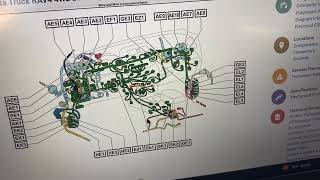
- Check floor-level connectors (like the EL3 connector on Toyota RAV4s) for green or white corrosion if the passenger-side carpet recently sustained water damage.
- Do not replace the Occupant Classification System (OCS) ECU yourself; the new module requires a mandatory Zero Point Calibration using a professional bidirectional scan tool to function.
What Does B1794 Mean?

Trouble code B1794 means the Supplemental Restraint System (SRS) computer has detected a loss of power to the Occupant Classification System (OCS) module. This module determines if a passenger is in the front seat and enables or disables the airbag based on their weight. When this code triggers, the passenger airbag disables as a fail-safe and will not deploy in a crash.
Technical definition: The official SAE/OBD-II definition for code B1794 is "Open in Occupant Classification ECU Battery Positive Line". This indicates the Occupant Classification System Electronic Control Unit (ECU) lost its connection to the vehicle's positive battery power supply circuit.
Can I Drive With B1794?
Yes, But With Caution. Yes, you can drive the vehicle, but it is unsafe to have a passenger in the front seat. This code means the passenger airbag system is disabled and the airbag WILL NOT deploy in a crash. The safety system remains compromised and non-functional until the fault is repaired.
Common Causes

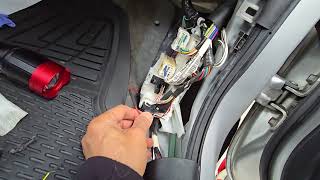
- Damaged or disconnected wiring under the passenger seat (Very Common) — The wiring harness and connectors under the front passenger seat are frequently disturbed by stored items or seat movement. This breaks wires or loosens connectors, cutting power to the OCS module.
- Internal corrosion or pushed-out pin within a connector (Common) — Moisture from spills or wet carpets enters floor-level connector housings, causing pins to corrode and fail. Tiny metal pins also physically break or push out of place inside the connector housing, causing a loss of contact.
- Blown fuse (Common) — A dedicated airbag or occupant classification system fuse blew. This is often the 10-amp 'ECU-B' fuse in Toyota and Lexus vehicles.
- Faulty Occupant Classification System (OCS) ECU (Common) — The electronic control module itself fails internally. This requires replacing the module, which is typically located inside or under the passenger seat cushion.
- Low battery voltage or a failing battery (Less Common) — The airbag system requires a steady 11-14 volts. A weak car battery provides inconsistent power, triggering this fault code during engine startup.
- Poor ground connection (Rare) — The OCS ECU requires a solid ground connection to the chassis. A loose or corroded ground wire causes a voltage drop and triggers the fault.
- Faulty main Airbag Control Unit (Rare) — If B1794 persists after replacing the OCS sensor and performing calibration, the failure lies within the main airbag control unit. Manufacturer service bulletins note this for specific models.
Symptoms

- Airbag warning light is on — The SRS (Supplemental Restraint System) or airbag warning light illuminates permanently on the dashboard.
- Passenger airbag "OFF" indicator is lit — The indicator light stating the passenger airbag is turned off stays on, even when an adult occupies the seat. 🎬 Watch a demonstration of how the occupant classification sensors function.
- Passenger presence not detected — The vehicle fails to recognize a seated passenger, and the passenger seatbelt reminder chime does not activate.
- Audible chime or alert on startup — Certain vehicles sound a recurring chime when started to alert the driver of an active SRS fault.
- Inability to clear related airbag codes (scan-tool only — no driver-felt sign) — B1794 and related codes like B1650 return immediately after clearing with a scan tool if the power issue remains unresolved.
Diagnostic Flowchart
Tap your situation to follow the diagnostic path that matches what you're seeing on this code.
Common Fixes & Costs
- Repairing wiring or re-connecting a loose connector under the passenger seat — Parts: $0-$25, Labor: $120-$250, ~1.5 hr book time (DIY)
- Replacing a blown fuse — Parts: $1-$10, Labor: $0-$150, ~0.1 hr book time (DIY)
- Replacing the Occupant Classification ECU — Parts: $300-$600, Labor: $150-$300, ~2.0 hr book time (Professional)
- Replacing the vehicle's battery — Parts: $150-$350, Labor: $50-$100, ~0.5 hr book time (DIY)
- Replacing the main Airbag Control Unit — Parts: $600-$1200, Labor: $200-$400, ~2.5 hr book time (Professional)
DIY vs Professional
- Repairing wiring or re-connecting a loose connector — Beginner: Yes, if the damage is obvious.
Tools: Flashlight, trim removal tools, wire strippers, butt connectors or soldering iron. - Replacing a blown fuse — Beginner: Yes.
Tools: Fuse puller or needle-nose pliers. - Replacing the Occupant Classification ECU — Beginner: No.
Tools: Socket set, trim removal tools, and a professional bidirectional scan tool with calibration functions. - Replacing the vehicle's battery — Beginner: Yes.
Tools: Socket/wrench set (typically 10mm, 12mm). - Replacing the main Airbag Control Unit — Beginner: No.
Tools: Socket set, trim removal tools, professional scan tool for VIN programming.
Used vs. New Parts: Buying Guide
When a used part is worth it: Buying a new OEM OCS ECU is strongly recommended for safety. A used ECU is a last resort for older, low-value vehicles where new part costs are prohibitive.
Donor-vehicle mileage cap: roughly under 80000 miles for the part to have meaningful remaining life.
Donor quality checklist:
- Verify the used part is a genuine OEM component.
- Obtain a vehicle history report to ensure the donor vehicle was not flood-damaged.
- The part number on the used ECU must EXACTLY match the original part number.
- Purchase from a reputable recycler offering a certification process for non-deployed SRS components.
Decision logic:
- If The part is a critical safety component like an ECU or sensor → buy new OEM. The safety risk of a used part is too high.
- If Vehicle is > 10 years old AND budget is extremely tight AND you accept the risk → a certified used OEM part from a reputable source is a possible alternative.
- If A new OEM part is discontinued → a used part is the only option, requiring extreme diligence in sourcing and professional calibration.
Warranty tradeoff: Used parts carry a 30-90 day parts-only warranty. New OEM parts installed by a dealer carry a 12-month/12,000-mile warranty on parts and labor.
Worst-case if a used part fails: $400-$800 if the used part is faulty, requiring repeat labor for installation and calibration.
What Happens If You Wait — Timeline
- Immediate: Code B1794 sets, the airbag warning light illuminates, and the passenger airbag disables. (MPG impact: 0%% · Added cost: $0)
- 0-12 months: The passenger airbag WILL NOT deploy in a crash. No further mechanical degradation occurs. (MPG impact: 0%% · Added cost: $20-$70 (Failed state safety inspection))
- 12+ months (if caused by moisture): Corrosion spreads to adjacent wiring harnesses, causing complex electrical faults in seat belt sensors or power seats. (MPG impact: 0%% · Added cost: $500-$1500 (Repairing additional corroded wiring))
- At the time of an accident: The passenger airbag fails to deploy, resulting in severe injuries to the front-seat passenger. (MPG impact: 0%% · Added cost: Thousands in increased medical costs and liability.)
Cost of Not Fixing It
- Immediate: The passenger airbag is disabled and will not deploy in a collision, creating a severe safety risk for front-seat passengers. (Added cost: N/A (Safety risk))
- Next State Inspection: The vehicle fails its annual state safety inspection in states that mandate functional airbag systems. (Added cost: $20-$70 (Failed inspection fee and re-test))
- Long-Term (6+ months): If caused by water intrusion, corrosion spreads to nearby connectors, causing complex electrical failures in seat belt sensors or power seats. (Added cost: $500-$2000 (Additional electrical repairs))
Diagnosis Steps

- Visually Inspect Under the Passenger Seat
Look under the front passenger seat for loose or disconnected electrical connectors. Check for pinched, stretched, or broken wires caused by items stored under the seat. Focus on the main connector routing to the OCS ECU.
Tools: Flashlight (Beginner) - Check the Fuses
Locate the vehicle's fuse boxes. Refer to the owner's manual to find the fuse for the 'SRS', 'Airbag', or 'ECU-B' systems. Pull the fuse and inspect the internal metal strip for breaks.
Tools: Fuse puller, Owner's manual (Beginner) - Inspect Connector Pins for Damage
Disconnect the OCS ECU connector and any intermediate floor connectors (like EL3 on RAV4s). Inspect male and female pins for green/white corrosion, bent pins, or pins pushed back into the housing.
Tools: Flashlight, Magnifying glass (Advanced) - Read SRS Codes with a Capable Scanner
Use an OBD-II scanner with SRS capabilities to confirm B1794 is the primary code. Note related codes like B1650, which points to a general OCS malfunction caused by the B1794 power loss.
Tools: OBD-II Scanner with SRS capability (Intermediate) - [PRO TIP] Test for Power at the OCS ECU Connector
Disconnect the negative battery terminal, then disconnect the OCS ECU connector. Reconnect the battery, turn the ignition ON, and use a multimeter to check for 11-14 volts at the specified power pins on the harness side. A 0V reading confirms an open circuit between the fuse box and the ECU.
Tools: Multimeter, Vehicle-specific wiring diagram (Advanced) - [PRO TIP] Test for Ground at the OCS ECU Connector
With the battery disconnected, set a multimeter to resistance (Ω). Test between the ground pin (GND) on the harness connector and a clean, unpainted chassis metal point. A healthy ground reads below 1.0 ohm.
Tools: Multimeter, Vehicle-specific wiring diagram (Advanced) - Test the Vehicle's Battery
Check battery voltage with a multimeter. A healthy battery reads 12.6 volts (engine off) and above 13.7 volts (engine running). Readings below 11 volts trigger SRS faults.
Tools: Multimeter or battery tester (Beginner) - [PRO TIP] Interpret Scan Tool Live Data
Use a professional scan tool to perform a 'Sensitivity Check'. This verifies the OCS sensor reads weight correctly by placing a standardized 30 kg (66 lbs) weight on the seat. This differentiates an ECU power fault from a sensor fault.
Tools: Advanced OBD-II Scan Tool, Standardized calibration weights (Professional) - Perform Zero Point Calibration
After replacing the OCS ECU or seat sensor, recalibrate the system. This 'Zero Point Calibration' requires a professional scan tool and teaches the system the empty weight of the seat. The code will not clear until this is completed.
Tools: Advanced OBD-II Scan Tool (like Toyota Techstream) (Professional)
When This Code Triggers (Freeze-Frame Conditions)
- Ignition Status: ON (The fault is detected during the SRS module's self-test, which runs every time the ignition turns on.)
- System Voltage: < 11V or Intermittent 0V (The code sets when the OCS ECU loses connection to battery positive via an open circuit or low system voltage.)
- Time After Ignition ON: 0-10 seconds (The SRS warning light illuminates for a 6-second bulb check at startup; if B1794 is present, the light remains on.)
- Passenger Seat Status: Any (The power failure triggers regardless of passenger presence, as it is a fault in the ECU's power supply circuit.)
Related Codes
- B1650 — Indicates an 'Occupant Classification System Malfunction' and almost always accompanies B1794. B1794 is the cause (power loss), and B1650 is the result (system malfunction).
- B1797 — Indicates 'Calibration Abnormal' and appears after a repair. It means the mandatory Zero Point Calibration was skipped or failed.
- B1826 — Indicates an 'Open in Passenger's Seat Belt Buckle Switch Circuit'. Seeing this alongside B1794 strongly suggests a severely damaged wiring harness under the seat affecting multiple circuits.
- B1784 — Indicates a 'Front Collision Sensor Communication Circuit Malfunction'. Paired with B1794, it suggests widespread wiring damage or corrosion affecting multiple SRS components.
Climate & Environmental Factors
- High Humidity / Moisture: Water intrusion from spills or leaks saturates the carpet and traps moisture in floor-level electrical connectors (like the EL3 connector in RAV4s). This corrodes pins and creates an open circuit.
- Extreme Cold: Cold temperatures increase battery internal resistance, dropping available voltage below the 11-volt threshold required by the SRS module during a cold start.
How to Talk to a Mechanic About This Code
Say this: "I have an airbag light on, and my scanner shows code B1794 for an 'Open in Occupant Classification ECU Battery Positive Line'. Please start by checking the wiring, connectors, and fuses under the passenger seat before quoting a new OCS ECU."
This directs the technician to perform the cheapest diagnostic steps first (checking wiring/fuses) before assuming the expensive ECU has failed, protecting you from premature parts replacement.
Avoid saying:
- My airbag light is on, can you just fix it?
- I need a new airbag sensor.
- Just clear the code.
Questions to ask before authorizing the repair:
- Did you find 12 volts at the OCS module connector? If not, where is the open circuit?
- Is the fuse for the SRS or ECU-B system good?
- If recommending an ECU replacement, have you confirmed it's not a wiring or ground issue?
- Does your estimate include the mandatory Zero Point Calibration?
- What is the warranty on both parts and labor?
Where to Take It: Dealer vs Independent vs Chain
- Dealer:
Recommended if calibration is needed or if you want a guaranteed fix for a critical safety system.
Best for: Vehicles under warranty or covered by a Customer Support Program., Complex cases requiring a guaranteed Zero Point Calibration., When manufacturer-specific tools like Toyota Techstream are mandatory.
Downsides: Highest labor rates., May default to replacing the entire OCS ECU rather than repairing a wire. (Typical cost: +50% vs. baseline) - Independent Shop:
Best fit for initial diagnosis and wiring repairs. Ask upfront if they can perform an OCS Zero Point Calibration before authorizing a module replacement.
Best for: Out-of-warranty vehicles where the cause is likely a wiring or fuse issue., Cost-conscious consumers with a trusted mechanic.
Downsides: May lack the expensive, manufacturer-specific scan tools needed for calibration. (Typical cost: +0% vs. baseline) - Chain Shop:
AVOID for this code. The risk of misdiagnosis is high, and they cannot perform the critical calibration.
Best for: Simple maintenance like oil changes or tires.
Downsides: Technicians lack specialized training for complex SRS diagnostics., Very unlikely to have the necessary tools for calibration. (Typical cost: -10% vs. baseline)
When to Walk Away From the Repair
If the estimated repair cost exceeds 40-50% of the car's private-party value, evaluate your options. Because this is a major safety issue, the threshold for walking away is higher than for non-critical repairs.
- Car worth $5000, fix is $450: Fix it. This is a small fraction of the car's value and essential for passenger safety.
- Car worth $4000, fix is $1800: Borderline. Get a second opinion to ensure a cheaper wiring repair isn't being overlooked.
- Car worth $2500, fix is $1800: Walk away. The repair cost is over 70% of the car's value.
What Scan Tool You Need for This Code

Minimum: A scanner that reads and clears SRS (Airbag) codes. Basic check engine light readers cannot access the airbag system.
Standard $20 OBD-II scanners only communicate with the engine control module. B1794 is stored in the SRS module, requiring an advanced scanner.
Budget: BlueDriver Pro (~$99) — Reads and clears SRS codes on most makes. It confirms B1794 exists but cannot perform the Zero Point Calibration.
Mid-range: Foxwell NT510 Elite (~$189) — Provides full SRS diagnostics and performs the OCS Zero Point Calibration required after replacing a module. Excellent DIY tool for this job.
Professional: Autel MaxiCOM MK808 / MK906BT (~$450-1200) — Offers OEM-level diagnostics, bidirectional tests, and robust support for advanced calibration and VIN programming.
Rent vs buy: Most auto parts stores offer free code reading, but their loaner tools are typically basic models that cannot read SRS codes. For this job, you must either buy a capable scanner or go to a professional shop. If you plan to do your own car maintenance, a mid-range scanner is a worthwhile investment.
How to Clear the Code After You Fix It
- Fix the root cause of the power loss (e.g., repair wire, replace fuse).
- Reconnect all connectors and the negative battery terminal.
- Use a professional scan tool to access the SRS system.
- Clear DTCs from the Occupant Classification ECU first.
- Clear DTCs from the main Airbag Control Unit second.
- Turn ignition OFF, wait 10 seconds, then turn ON and re-scan to confirm the code is gone.
- If the OCS ECU or sensor was replaced, perform Zero Point Calibration before attempting to clear codes.
Drive cycle (~10 minutes): A specific drive cycle is not required to clear the code. After clearing, perform several ignition cycles (OFF to ON) and a short 10-minute drive to ensure the warning light stays off.
Watch out for:
- Disconnecting the battery will not clear this SRS code.
- Using a generic OBD-II scanner that cannot access the OCS and main airbag ECUs separately.
- Skipping the mandatory Zero Point Calibration after replacing the OCS ECU or seat sensor.
- Clearing codes without fixing the underlying open circuit causes the code to return instantly.
Will This Fail Emissions / State Inspection?
Yes — this code typically fails an OBD-II emissions inspection.
- California: An airbag light will NOT fail a California smog inspection, as the test only checks emissions components.
- New York: An illuminated airbag warning light is an advisory item and does NOT cause a safety inspection failure.
- Texas: An airbag warning light is NOT an inspected item and will not cause a safety inspection failure.
- Virginia / Pennsylvania: In states with comprehensive safety inspections, an illuminated airbag light is an automatic failure.
Most Commonly Affected Vehicles
- Toyota RAV4 (2006-2018) — Extremely common. Reports frequently point to a pushed-out or corroded pin within the EL3 floor connector under the passenger-side carpet.
- Toyota Highlander (2003-2019) — Prone to this code due to faulty wiring, blown ECU-B fuses, or OCS ECU failure.
- Toyota Tundra (2005-2019) — Sensitive SRS system triggers this code from minor wiring snags under the seat.
- Lexus GX 470 / RX 350 (2008-2015) — Shares the OCS system with Toyota SUVs, making it susceptible to the same ECU-B fuse or wiring faults.
- Toyota Sienna (2005-2010) — If the ignition cycles 50 times while a power fault exists, the B1794 code becomes a hard fault requiring successful repair before clearing.
- Subaru Legacy & Outback (2020-2021) — Subject to TSB 18-224-24R. If the code persists after sensor replacement and calibration, the main Airbag Control Unit requires replacement.
- Scion Various (2004-2016) — On Scion vehicles, B1794 means 'Intake Air Flow System Performance', an engine management code unrelated to airbags.
- Audi/Volkswagen Various (2000-2024) — On VAG vehicles, code 01794 means 'Control Module: Incorrect Chassis (VIN) Number', indicating a data mismatch between modules.
Manufacturer-Specific Notes
- Toyota/Lexus/Scion: Vehicles shipped to US territories have a 'short pin' removed from the fuse box to save battery during transport. Improper reinstallation by the dealer causes code B1794.
- Toyota: Official repair procedures require the Techstream scan tool to read, clear, and calibrate the OCS. Generic scanners cannot perform the Zero Point Calibration.
- Toyota: Customer Support Program (CSP) ZKA extends the warranty for OCS ECU repairs on certain models. Check VIN eligibility with a dealer.
- Ford: On Ford vehicles, B1794 means 'Lamp Headlamp Low-Beam Circuit Failure', completely unrelated to the airbag system.
- Subaru: TSB 18-224-24R advises that if replacing the ODS sensor and calibrating does not resolve B1794, the main Airbag Control Unit must be replaced.
Real Owner Stories
2010 Toyota RAV4 with Airbag Light
The SRS airbag light illuminated alongside codes B1794 and B1650. The passenger airbag 'OFF' indicator remained permanently lit.
Outcome: The mechanic bypassed the corroded pin by splicing the wire directly, restoring 12V power to the OCS ECU. The airbag light turned off after clearing the codes. Repair cost was 1.5 hours of labor.
Lesson: On Toyota RAV4s, the root cause is frequently a corroded wire in a floor-level connector (EL3) due to moisture, not a failed ECU.
Gen 2 Toyota Prius with Multiple Airbag Codes
The airbag light appeared with codes B1650, B1794, and B1826. The passenger airbag indicated 'OFF'.
Outcome: The owner found the 15A 'ECU-B' fuse was blown. Replacing this $2 fuse immediately solved the problem, allowing all airbag codes to clear.
Lesson: Always check related fuses first. A single blown fuse triggers multiple, complex SRS error codes.
2020 Subaru Outback with Persistent B1794
The airbag warning light triggered code B1794 on a vehicle under warranty.
Outcome: Consulting TSB 18-224-24R, the technician replaced the main Airbag Control Unit. Programming the new unit successfully cleared the code.
Lesson: On newer models with specific TSBs, a persistent B1794 code is caused by a failure in the main airbag ECU, not the OCS module.
How to Prevent This Code From Triggering
- Prohibit storing items under the front passenger seat (Daily habit) — Prevents snagging or disconnecting the delicate wiring harness for the OCS module, the most common cause of code B1794.
- Use waterproof floor mats and clean up spills immediately (Always) — Prevents moisture from reaching floor-level electrical connectors, stopping corrosion and open circuits.
- Test your car battery annually (Annually) — SRS modules require stable voltage. A weak battery provides insufficient power during startup, triggering a B1794 code.
- Move the passenger seat slowly and check for resistance (As needed) — Prevents severing wires caught in the seat track.
Frequently Asked Questions
Is it safe to drive with code B1794?
You can physically drive the car, but it is unsafe for a front-seat passenger. The code disables the passenger airbag system, greatly increasing the risk of injury in an accident.
Can I fix code B1794 myself?
You can perform visual wiring checks and replace blown fuses. However, replacing the Occupant Classification ECU requires professional installation and calibration with a bidirectional scan tool.
Will clearing the code fix the problem?
No. Code B1794 is a hard fault that returns instantly after clearing if the underlying power supply issue remains unfixed.
Will disconnecting the battery reset the airbag light for a B1794 code?
No. SRS faults are stored in non-volatile memory and are not cleared by disconnecting the battery. The light remains on until the fault is repaired and cleared with a compatible SRS scan tool.
What is the difference between the OCS sensor and the OCS ECU?
The OCS sensor is a pressure-sensitive mat inside the seat cushion that detects weight. The OCS ECU is the computer module that reads the sensor data and controls the airbag. B1794 specifically points to a power problem with the ECU module.
I replaced the OCS sensor but the code is still there. What did I miss?
This is a common misdiagnosis because B1794 is a power supply code, meaning the fault lies in the wiring to the ECU rather than the sensor mat itself. Additionally, replacing any OCS component requires a mandatory Zero Point Calibration with a professional scan tool before the code will clear. In rare cases, a persistent code after calibration indicates a failed main Airbag Control Unit.
My scanner says B1794 is for the 'Intake Air Flow System'. Why is it different?
OBD-II code definitions are not universal across all car manufacturers. While B1794 refers to an OCS power failure on Toyota and Lexus vehicles, it indicates an engine intake issue on Scions and a headlamp circuit failure on Fords. Always verify the exact code definition for your specific make, model, and year.
Key Takeaways
- Code B1794 disables the passenger airbag due to a power failure, creating an immediate safety risk that requires repair before allowing front-seat passengers.
- Inspect the wiring harness and connectors under the front passenger seat first, as snagged wires or a blown 10-amp ECU-B fuse cause the majority of these faults.
- Check floor-level connectors (like the EL3 connector on Toyota RAV4s) for green or white corrosion if the passenger-side carpet recently sustained water damage.
- Do not replace the Occupant Classification System (OCS) ECU yourself; the new module requires a mandatory Zero Point Calibration using a professional bidirectional scan tool to function.
Helpful Videos


The information in this article is provided for general reference and educational purposes only. Vehicle specifications, procedures, and part compatibility can vary by production date, trim level, and region. Always consult your vehicle's factory service manual and verify part numbers before purchasing or performing repairs. Safety-critical components such as airbags, seat belts, and braking systems should be installed by a qualified professional.
- 🎬 Helpful Videos
- What Does B1794 Mean?
- Can I Drive With B1794?
- Common Causes
- Symptoms
- Diagnostic Flowchart
- Common Fixes & Costs
- DIY vs Professional
- Used vs. New Parts: Buying Guide
- What Happens If You Wait — Timeline
- Cost of Not Fixing It
- Diagnosis Steps
- When This Code Triggers (Freeze-Frame Conditions)
- Related Codes
- Climate & Environmental Factors
- How to Talk to a Mechanic About This Code
- Where to Take It: Dealer vs Independent vs Chain
- When to Walk Away From the Repair
- What Scan Tool You Need for This Code
- How to Clear the Code After You Fix It
- Will This Fail Emissions / State Inspection?
- Most Commonly Affected Vehicles
- Manufacturer-Specific Notes
- Real Owner Stories
- 2010 Toyota RAV4 with Airbag Light
- Gen 2 Toyota Prius with Multiple Airbag Codes
- 2020 Subaru Outback with Persistent B1794
- How to Prevent This Code From Triggering
- Frequently Asked Questions
- Is it safe to drive with code B1794?
- Can I fix code B1794 myself?
- Will clearing the code fix the problem?
- Will disconnecting the battery reset the airbag light for a B1794 code?
- What is the difference between the OCS sensor and the OCS ECU?
- I replaced the OCS sensor but the code is still there. What did I miss?
- My scanner says B1794 is for the 'Intake Air Flow System'. Why is it different?
- Key Takeaways
- 🎟️ Get 5% Off