

OBD-II Code B1783: Occupant Classification Sensor Circuit Malfunction
What B1783 means, why it triggers, and how to fix it
- Code B1783 disables the passenger airbag system, leaving front-seat occupants protected only by seatbelts in a crash.
- The most common cause is physical damage to the yellow wiring harness under the passenger seat, often caused by shoved objects or rear passengers' feet.
- On 2019-2020 Jeep Wranglers and Gladiators, B1783 indicates a brake light circuit failure triggered by aftermarket trailer controllers, fixed via a 1-hour dealership software update.
- Replacing any Occupant Classification System (OCS) component requires a mandatory 'Zero Point Calibration' using a professional bi-directional scan tool to clear the code.
- Owners of 2020-2022 Toyota and Lexus models should check NHTSA recall 23V-865, which provides free replacement for defective OCS sensors prone to short circuits.
What Does B1783 Mean?

Code B1783 indicates a circuit failure in the passenger seat Occupant Classification System (OCS). The OCS uses a weight-sensing mat to tell the airbag module if an adult, child, or car seat is present. When this circuit fails, the system disables the passenger airbag to prevent improper deployment. On 2019-2020 Jeep models, this code has a completely different meaning: a brake light circuit failure triggered by aftermarket accessories.
Technical definition: SAE J2012 defines B1783 as "Occupant Classification Sensor RH Circuit Malfunction". The Occupant Classification ECU has detected an open circuit, short to power, or short to ground in the right-hand seat weight sensor circuit for a continuous period of at least two seconds.
Can I Drive With B1783?
Yes, But With Caution. You can physically drive the vehicle, but the passenger airbag will NOT deploy in a crash, leaving front-seat occupants protected only by seatbelts. Driving with an active airbag light causes an automatic safety inspection failure in states like New York, Texas, and Virginia. On 2019-2020 Jeep models, this code disables the brake lights, requiring immediate attention to prevent rear-end collisions.
Common Causes

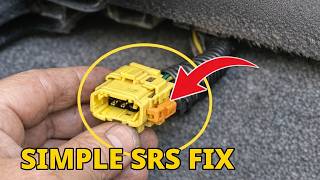
- Damaged or unplugged under-seat wiring (Very Common) — Items shoved under the seat or rear passengers' feet easily snag, stretch, or unplug the yellow 🎬 Watch: How to fix a loose under-seat SRS connector SRS wiring harness connected to the seat sensor mat. This is the primary cause of the fault.
- Failed Occupant Classification Sensor (Mat) (Common) — The pressure-sensitive mat integrated into the seat cushion fails from age, liquid spills, or the repeated physical stress of entering and exiting the vehicle.
- Aftermarket Trailer Brake Controller (Jeep Specific) (Common) — On 2019-2020 Jeep Wranglers and Gladiators, aftermarket trailer brake controllers send a 12V backfeed into the brake light circuit. The ABS module interprets this as a fault and triggers 🎬 See how to properly install the Jeep trailer brake controller code B1783.
- Mismatched Seat Components (Less Common) — Installing a used seat from a different model year creates a resistance mismatch. The ECU detects this calibration error as a hard circuit fault.
- Failed Occupant Classification ECU (Rare) — The dedicated module that processes the sensor's weight data and communicates with the main SRS computer electronically fails due to internal short circuits or water intrusion.
Symptoms

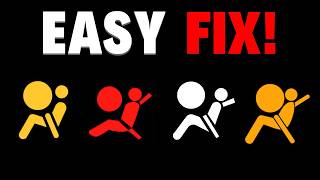
- Airbag warning light is permanently illuminated — The primary symptom is the constant illumination of the red airbag or SRS warning light on the dashboard.
- Passenger airbag status lights malfunction — The 'Passenger Airbag OFF' indicator stays lit even when an adult is seated, or the 'ON' light fails to illuminate, confirming the system is disabled.
- ESC/Traction Control lights illuminate (Jeep specific) — On affected Jeep models, this code triggers the Electronic Stability Control (ESC) and Traction Control warning lights because the fault disables the brake light circuit.
Diagnostic Flowchart
Tap your situation to follow the diagnostic path that matches what you're seeing on this code.
Common Fixes & Costs
- Repairing Damaged Under-Seat Wiring — Parts: $5-$20, Labor: $125-$250, ~1.5 hr book time (Intermediate)
- ABS Module Software Update (Jeep Specific) — Parts: $0, Labor: $150-$300, ~1.0 hr book time (Professional)
- Replacing Occupant Classification Sensor
— Parts: $250-$750, Labor: $200-$400, ~2.5 hr book time
(Professional)
: OEM
: OEM - Performing Zero Point Calibration — Parts: $0, Labor: $100-$250, ~1.0 hr book time (Professional)
- Replacing Occupant Classification ECU
— Parts: $300-$800, Labor: $100-$200, ~1.0 hr book time
(Intermediate)
: OEM
DIY vs Professional
- Repairing Damaged Under-Seat Wiring — Beginner: yes
Tools: Flashlight, wire strippers, butt connectors, heat shrink tubing. - Replacing Occupant Classification Sensor — Beginner: no
Tools: Socket set, trim removal tools, hog ring pliers, professional scan tool. - Replacing Occupant Classification ECU — Beginner: no
Tools: Socket set, professional scan tool.
Used vs. New Parts: Buying Guide
When a used part is worth it: For older vehicles, a used OCS sensor or ECU from a certified automotive recycler is a cost-effective alternative to expensive OEM parts. The part must be guaranteed non-deployed and be an exact part number match.
Donor-vehicle mileage cap: roughly under 100000 miles for the part to have meaningful remaining life.
Donor quality checklist:
- Buy only from certified auto recyclers who guarantee airbag components.
- Verify the part number is an exact match for the original part.
- Avoid parts from vehicles with flood damage or unknown history.
- Inspect the part for corrosion or damage to the wiring pigtail.
Decision logic:
- If Vehicle is under a known recall for the OCS sensor (e.g., 2020-2022 Toyotas) → Get a new part installed for free at the dealership.
- If Vehicle is high-value or budget is not the primary concern → Buy a new OEM part for maximum reliability and warranty.
- If Budget is tight and the new part cost is prohibitive → Purchase a guaranteed used part from a certified source.
Warranty tradeoff: New OEM parts carry a 12-month/12,000-mile warranty. Used parts typically have a 30-90 day functional warranty.
Worst-case if a used part fails: $300-$500. If the used part is faulty, you pay for repeat labor, another mandatory system calibration, and a replacement part.
What Happens If You Wait — Timeline
- Immediately: Code B1783 is stored as a hard fault. The airbag warning light illuminates, and the passenger airbag system is disabled as a fail-safe. (MPG impact: 0%% · Added cost: $0 (Safety Risk: High))
- 0-12 months (Next Inspection): The vehicle automatically fails its annual safety inspection in strict jurisdictions, preventing legal registration renewal. (MPG impact: 0%% · Added cost: $20-$50 (Failed inspection fee))
- The day of an accident: In a frontal collision, the passenger airbag does not inflate. The passenger relies solely on the seatbelt, dramatically increasing the risk of severe injury. (MPG impact: 0%% · Added cost: N/A (Medical costs and injury))
Cost of Not Fixing It
- Immediate: The passenger airbag system is disabled, significantly increasing the risk of severe injury in a frontal collision. (Added cost: N/A (Safety Risk))
- 0-12 months: The vehicle automatically fails the safety inspection portion of state vehicle inspections, preventing legal registration renewal. (Added cost: $20-$50 (Failed Inspection Fee))
Diagnosis Steps

- Clear Seat and Inspect Wiring
Remove all objects from the passenger seat and underneath it. Inspect the yellow connectors and wiring harness for snags, disconnected plugs, or pinched wires. Reconnect any loose plugs.
Tools: Flashlight (Beginner) - Read and Clear SRS Codes
Use a scanner capable of reading airbag modules to confirm B1783. Clear the code and cycle the ignition. If the code returns immediately, a hard electrical fault exists.
Tools: SRS-capable OBD-II Scanner (Beginner) - Inspect and Clean Connectors
Disconnect the negative battery terminal and wait 90 seconds. Unplug the yellow under-seat connectors, check for green or white corrosion, spray with contact cleaner, and reconnect securely.
Tools: Socket set, electronic contact cleaner (Intermediate) - Check Live Sensor Data
Navigate to the OCS module's live data using a bi-directional scanner. An empty seat should read 'Not Occupied' or 0 lbs. Have an adult sit down; if the status doesn't change to 'Occupied', the sensor mat or wiring is faulty.
Tools: Advanced Bi-Directional Scan Tool (Advanced) - Test Wiring Harness Voltage and Resistance
Back-probe the OCS ECU connector. Ground, power, and signal wires should read below 1V with the seat empty. Disconnect the battery and test for continuity (below 1 Ω) and shorts to ground (above 1 MΩ) between the ECU and sensor.
Tools: Multimeter, vehicle-specific wiring diagram (Advanced) - Perform Zero-Point Calibration
If replacing any OCS component, you must perform a zero-point calibration. This relearns the empty-seat weight and is mandatory to clear the B1783 code.
Tools: Professional Scan Tool (e.g., Toyota Techstream) (Professional)
When This Code Triggers (Freeze-Frame Conditions)
- System Self-Test: Active (The SRS module performs a self-test of all components, including the OCS sensor circuit, immediately after the ignition is turned to the 'ON' position.)
- Fault Detection Time: 2 seconds (The code is set if the ECU detects an open, short-to-ground, or short-to-power in the sensor circuit for a continuous period of two seconds.)
- SRS Warning Light: ON (As soon as the fault is logged, the SRS warning light illuminates and stays on until the fault is repaired and cleared.)
Related Codes
- B1650 — A generic Occupant Classification System Malfunction code. Basic scanners show B1650, while advanced tools reveal B1783 to pinpoint the right-side sensor circuit.
- B1782 — Indicates a 'Rear Occupant Classification Sensor LH Circuit Malfunction'. It is the identical fault as B1783, but for the left-hand sensor within the same seat cushion.
- B1795 — Indicates a fault with the Occupant Classification ECU itself. If B1783 and B1795 appear together, the ECU is the primary suspect.
Climate & Environmental Factors
- High Humidity and Liquid Spills: Moisture from spilled drinks, heavy rain, or high humidity penetrates the sensor mat or under-seat connectors, causing immediate short circuits and permanent corrosion.
- Extreme Temperature Cycles: Severe temperature fluctuations cause electrical connectors and circuit board solder joints to expand and contract, eventually cracking and triggering an open circuit fault.
How to Talk to a Mechanic About This Code
Say this: "My airbag light is on and I have a B1783 code, pointing to the passenger seat weight sensor circuit. Please start by inspecting the wiring under the passenger seat. Also, please confirm you have a scan tool that can perform an OCS zero-point calibration if a part needs replacement."
This directs the mechanic to the cheapest fix first (wiring) and confirms they have the mandatory calibration equipment before they start work, preventing incomplete repairs.
Avoid saying:
- 'My airbag light is on, can you look at it?'
- 'Just fix whatever's wrong'
- 'I think I need a new airbag'
Questions to ask before authorizing the repair:
- Did you find a specific failure in the wiring, the sensor mat, or the ECU?
- Does the labor estimate include performing the zero-point calibration after installation?
- If it's a Jeep, have you checked for TSB 08-019-21 or 08-102-20 regarding a software update?
- What is the warranty on this specific repair, including both parts and labor?
Where to Take It: Dealer vs Independent vs Chain
- Dealer:
Recommended for recalls, TSBs, or if you want absolute certainty the correct calibration tools are used.
Best for: Vehicles under warranty or covered by a recall (e.g., 2020-2022 Toyotas)., Manufacturer-specific quirks, like the software update required for 2019-2020 Jeeps., Guaranteed access to proprietary diagnostic and calibration tools.
Downsides: Highest labor rates, often 1.5-2x more than independent shops., May default to replacing an entire expensive seat assembly instead of a cheaper component. (Typical cost: +50% vs. baseline) - Independent Shop:
Best overall fit for out-of-warranty repairs, IF you verify they can perform an 'OCS' or 'airbag weight sensor' calibration.
Best for: Out-of-warranty vehicles where cost is a major factor., Simple, common fixes like repairing a damaged wire under the seat.
Downsides: You MUST verify they own a professional bi-directional scanner that can perform SRS calibrations., May not be aware of brand-specific TSBs or recalls. (Typical cost: +0% vs. baseline) - Chain Shop:
AVOID. This is a safety-critical repair requiring specialized knowledge and tools not standard at chain shops.
Best for: Simple maintenance like oil changes and tires.
Downsides: Technicians lack the training and specialized tools for SRS diagnostics and calibration., High risk of misdiagnosis, leading to unnecessary parts replacement. (Typical cost: -10% vs. baseline)
When to Walk Away From the Repair
If the total estimated repair cost for the B1783 fault exceeds 40-50% of your car's current private-party value, consider alternatives. However, because this is a critical safety issue, many owners choose to repair regardless of vehicle value.
- Car worth $4000, fix is $1200: Fix it. The cost is 30% of the car's value and restores a critical safety feature, making the car sellable.
- Car worth $3000, fix is $1800: Walk away. The repair cost is 60% of the car's value. It is not economically sensible to proceed.
What Scan Tool You Need for This Code
Minimum: A scanner that reads and clears codes from the SRS (Supplemental Restraint System) module. A basic engine-only code reader will NOT work.
A standard $20 OBD-II reader only communicates with the Engine Control Unit. Airbag codes are stored in a separate SRS module, requiring an advanced scanner to access.
Budget: Autel AutoLink AL619 (~$65) — Reads and clears SRS codes. It confirms the B1783 code and clears it after a wiring repair, but it cannot perform calibration.
Mid-range: Foxwell NT510 Elite (~$150) — Reads and clears SRS codes, shows live sensor data, and features bi-directional control to perform the OCS zero-point calibration for specific vehicle makes.
Professional: Autel MaxiCOM MK808 (~$450) — Provides full professional-level diagnostics. It reads codes, shows live data, and performs the mandatory OCS 'Zero Point Calibration' required after replacing a sensor or ECU.
Rent vs buy: For a one-time diagnosis, paying a shop's diagnostic fee ($100-$200) is more economical than buying a pro-level scanner. If you plan to diagnose multiple cars, buying a mid-range tool is a good investment.
How to Clear the Code After You Fix It
- Ensure the physical repair (wire fix or component replacement) is complete.
- Reconnect the battery if it was disconnected.
- Turn ignition to 'ON' (engine off).
- Use an SRS-capable OBD-II scan tool to erase fault codes from the SRS module.
- If the OCS sensor or ECU was replaced, perform a 'Zero Point Calibration' using the scan tool.
- Cycle ignition OFF, then ON, and verify the airbag light turns off after its initial self-check.
Drive cycle: No drive cycle is required to reset the airbag light. The light extinguishes immediately after the fault is repaired and the code is cleared with a proper scan tool.
Readiness monitors affected: None directly by the SRS fault., If the battery was disconnected, emissions monitors will reset and require a standard drive cycle to become 'Ready'.
Before emissions retest: drive at least 50 miles to fully set monitors.
Watch out for:
- Using a basic code reader that cannot access or clear SRS module faults.
- Replacing the OCS sensor without performing the mandatory Zero Point Calibration.
- Assuming a battery disconnect will clear a hard SRS fault code.
Will This Fail Emissions / State Inspection?
No — by itself this code doesn't fail OBD inspection (but it can keep readiness monitors from setting, which causes a separate fail).
- California: An airbag light will NOT cause a failure of the emissions-only smog check. However, revived salvage vehicles require a separate safety inspection which it will fail.
- New York: An illuminated airbag light is checked during the state safety inspection, but it is an ADVISORY only and is officially NOT a reason for failure.
- Texas: The airbag system is NOT a required inspection item. A vehicle with an airbag light on passes the Texas state safety inspection, though individual shops may refuse service.
Most Commonly Affected Vehicles
- Toyota Tundra (2007-2013) — Frequently cited for OCS sensor and wiring issues. The sensor is integrated into the seat cushion assembly.
- Toyota Sienna (2005-2010) — Highly prone to this fault. A related issue with the side airbag connector also triggers the airbag light on these models.
- Toyota RAV4, Camry, Highlander (2020-2022) — Covered under NHTSA Recall 23V-865 for defective OCS sensors that short circuit and disable the airbag.
- Jeep Wrangler (JL), Gladiator (JT) (2019-2020) — Code means 'Stop Lamp Control Failure'. Caused by voltage backfeed from trailer brake controllers. Fixed via TSB 08-019-21 or 08-102-20.
- Subaru Legacy, Outback (2020-2022) — Service bulletins redefine B1783 as 'Front Left Occupant Detection Sensor Collision Detection', indicating an internal sensor fault.
- Volkswagen Golf, Jetta, Passat (2010-2020) — On VW models, B1783 (or B178300) indicates an open circuit for the passenger side power mirror motor, unrelated to the airbag system.
Manufacturer-Specific Notes

- Jeep / Chrysler: On 2019-2020 Jeep Wrangler and Gladiator models, B1783 means 'Stop Lamp Control - General Electrical Failure'. It is triggered by installing a trailer brake controller. The fix is a dealership software update for the ABS module (TSB 08-019-21), not parts replacement.
- Toyota / Lexus: Toyota issued recall 23V-865 for ~1 million 2020-2022 models for a faulty OCS sensor that short circuits. Additionally, any OCS component replacement on a Toyota requires a mandatory 'Zero Point Calibration' using Techstream software.
- Volkswagen: For 2010-2020 VW models, B1783 does not refer to the airbag system. It indicates an 'open circuit' for the passenger side power mirror motor, requiring diagnostics on the door module and mirror wiring.
Real Owner Stories
2020 Jeep Gladiator with 15K miles
Airbag, ESC, and Traction Control lights illuminated immediately after the owner installed a Mopar trailer brake controller.
What they tried:
- Checked all connections and cleared codes with a basic scanner, but the lights returned instantly.
Outcome: The dealership performed a software update on the ABS module per TSB 08-102-20. The original software misinterpreted the controller's voltage backfeed as a hard fault.
Lesson: On 2019-2020 Jeeps, B1783 is a software issue related to aftermarket accessories. Do not replace hardware; get the dealership ABS software update.
2021 Toyota RAV4 with no apparent cause
Airbag light and 'Passenger Airbag OFF' indicator illuminated. Nothing was under the seat and no damage occurred.
What they tried:
- Took the vehicle to the dealer for diagnosis.
Outcome: The dealer identified a faulty OCS sensor covered under Toyota recall 23V-865. A capacitor on the sensor's circuit board cracked and short-circuited. The sensor was replaced for free.
Lesson: Always check the NHTSA website with your VIN for recall 23V-865 before paying for a B1783 repair on a 2020-2022 Toyota or Lexus.
2017 Toyota Camry with a puppy
The airbag light illuminated intermittently. Visual inspection revealed two chewed yellow wires under the passenger seat.
What they tried:
- Taping the wires, which failed to resolve the resistance issue.
Outcome: A dealership repaired the damaged wiring harness. The owner installed a flexible plastic barrier under the seat to prevent future pet access.
Lesson: The under-seat area is highly vulnerable. Protect exposed SRS wiring with split loom tubing or plastic shields if you transport pets.
2008 Honda Civic after seat swap
Owner installed front seats from a 2007 Civic into a 2008 model. The airbag light illuminated immediately.
What they tried:
- Disconnected the battery to reset the system, which failed.
Outcome: The OCS sensors required calibration to the 2008 vehicle's SRS module. A shop performed a zero-point calibration to resolve the mismatch.
Lesson: Swapping seats requires a professional system initialization. The airbag light stays on until the new components are calibrated to the vehicle's ECU.
How to Prevent This Code From Triggering
- Keep the area under the front passenger seat completely clear. (Daily habit) — Prevents water bottles or umbrellas from snagging and unplugging the delicate OCS sensor wiring harness.
- Use high-quality, form-fitting floor mats. (Always) — Floor liners with raised edges contain spills and snowmelt, preventing moisture from soaking into the carpet and corroding OCS connectors.
- Clean sunroof and A/C evaporator drains. (Annually) — Clogged drains cause water to overflow into the cabin and pool on the floor, destroying SRS components and wiring.
Frequently Asked Questions
What exactly is an Occupant Classification Sensor?
It is a pressure-sensitive mat built into the front passenger seat cushion. It detects the weight of the passenger to determine if they are an adult, child, or car seat. This allows the airbag system to make the safest deployment decision in a crash.
Is it safe to have a passenger in the front seat with the airbag light on?
No. When this fault is present, the system deactivates the passenger airbag as a fail-safe. In a frontal collision, the passenger relies entirely on the seatbelt, significantly increasing the risk of severe injury.
What are common misdiagnosis mistakes for B1783?
A major mistake is replacing hardware on 2019-2020 Jeeps when a software update is the actual fix. Another pitfall is replacing the entire expensive seat assembly when the fault is just a broken wire underneath. Finally, failing to perform the mandatory zero-point calibration after replacing a sensor prevents the code from clearing.
I replaced the sensor but the code is still there. What now?
You must perform a 'Zero Point Calibration' with a professional-grade scan tool after replacing any OCS component. The system will not recognize the new part, and the code will not clear, until this calibration is successfully completed.
Can I fix code B1783 myself?
You can fix it yourself if the cause is an unplugged connector or a visibly damaged wire under the seat. However, replacing the sensor or ECU requires a professional scan tool to perform the mandatory system calibration.
Will disconnecting the battery clear the B1783 code?
No. Airbag system faults are stored in the SRS module's non-volatile memory as hard codes. The fault must be properly repaired and then cleared with a compatible SRS scan tool.
Key Takeaways
- Code B1783 disables the passenger airbag system, leaving front-seat occupants protected only by seatbelts in a crash.
- The most common cause is physical damage to the yellow wiring harness under the passenger seat, often caused by shoved objects or rear passengers' feet.
- On 2019-2020 Jeep Wranglers and Gladiators, B1783 indicates a brake light circuit failure triggered by aftermarket trailer controllers, fixed via a 1-hour dealership software update.
- Replacing any Occupant Classification System (OCS) component requires a mandatory 'Zero Point Calibration' using a professional bi-directional scan tool to clear the code.
- Owners of 2020-2022 Toyota and Lexus models should check NHTSA recall 23V-865, which provides free replacement for defective OCS sensors prone to short circuits.
Helpful Videos


The information in this article is provided for general reference and educational purposes only. Vehicle specifications, procedures, and part compatibility can vary by production date, trim level, and region. Always consult your vehicle's factory service manual and verify part numbers before purchasing or performing repairs. Safety-critical components such as airbags, seat belts, and braking systems should be installed by a qualified professional.
- 🎬 Helpful Videos
- What Does B1783 Mean?
- Can I Drive With B1783?
- Common Causes
- Symptoms
- Diagnostic Flowchart
- Common Fixes & Costs
- DIY vs Professional
- Used vs. New Parts: Buying Guide
- What Happens If You Wait — Timeline
- Cost of Not Fixing It
- Diagnosis Steps
- When This Code Triggers (Freeze-Frame Conditions)
- Related Codes
- Climate & Environmental Factors
- How to Talk to a Mechanic About This Code
- Where to Take It: Dealer vs Independent vs Chain
- When to Walk Away From the Repair
- What Scan Tool You Need for This Code
- How to Clear the Code After You Fix It
- Will This Fail Emissions / State Inspection?
- Most Commonly Affected Vehicles
- Manufacturer-Specific Notes
- Real Owner Stories
- 2020 Jeep Gladiator with 15K miles
- 2021 Toyota RAV4 with no apparent cause
- 2017 Toyota Camry with a puppy
- 2008 Honda Civic after seat swap
- How to Prevent This Code From Triggering
- Frequently Asked Questions
- What exactly is an Occupant Classification Sensor?
- Is it safe to have a passenger in the front seat with the airbag light on?
- What are common misdiagnosis mistakes for B1783?
- I replaced the sensor but the code is still there. What now?
- Can I fix code B1783 myself?
- Will disconnecting the battery clear the B1783 code?
- Key Takeaways
- 🎟️ Get 5% Off