

OBD-II Code B1767: Power Seat Control Circuit Malfunction
What B1767 means, why it triggers, and how to fix it
- Code B1767 literally indicates a 12V short in the driver's power seat circuit, usually caused by chafed wiring under the seat track.
- On Hyundai, Kia, BMW, and Subaru models, B1767 is a misleading "ghost code" that actually flags a failed passenger Occupant Classification System (OCS) mat, disabling the entire airbag system.
- Driving with an active B1767-triggered airbag light guarantees your airbags will not deploy in a collision and causes an automatic failure during state safety inspections.
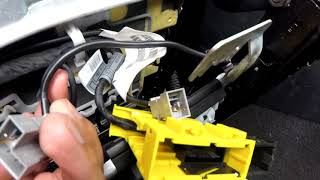
- Inspect the yellow SRS connectors and wiring harnesses under both front seats for physical damage or moisture before spending $800+ on a replacement OCS mat or seat motor.
- Check your VIN for manufacturer warranty extensions, such as Hyundai TSB 17-BE-002, which covers OCS mat replacements for 15 years or unlimited miles on affected models.
What Does B1767 Mean?

The B1767 code indicates the Body Control Module (BCM) detects a short to battery (excess voltage) in the driver's power seat forward circuit. However, in Hyundai, Kia, BMW, and Subaru vehicles, this definition is notoriously misleading; it actually flags a critical failure in the passenger seat's Occupant Classification System (OCS) mat, which disables the airbags.
Technical definition: The SAE/OBD-II definition for B1767 is "Seat Driver Forward Circuit Short To Battery". The control module detects that the voltage in the driver's seat forward motor circuit is consistently at battery voltage (approx. 12V) when it should be at 0V, indicating a short circuit. On specific Asian and European imports, this code is erroneously mapped to passenger OCS sensor faults.
Can I Drive With B1767?

Yes, But With Caution. Yes, you can physically drive the vehicle, but you take a severe safety risk if the airbag warning light is illuminated. An active airbag light means the entire Supplemental Restraint System (SRS)—including all airbags and seatbelt pretensioners—is disabled as a fail-safe. In a collision, your airbags will not deploy. Furthermore, a vehicle with an active airbag warning light automatically fails state safety inspections in strict jurisdictions like Virginia and Pennsylvania.
Common Causes

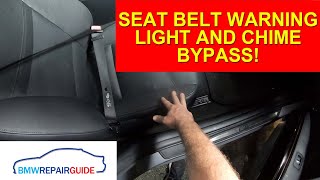
- Faulty Occupant Classification System (OCS) sensor mat (Hyundai/Kia/BMW/Subaru) (Very Common) — On these specific makes, B1767 is a "ghost code" that almost always points to a failed passenger seat weight sensor mat. This mat determines if the passenger airbag should deploy and is a highly documented failure point. 🎬 Watch: How to install a BMW seat occupancy mat bypass.
- Damaged or frayed under-seat wiring (Very Common) — Wires under the seats are frequently pinched, chafed, or severed by the seat moving along its track or by items shoved underneath. Exposed copper touching a live power source causes the "short to battery" condition.
- Spilled liquids or moisture intrusion (Common) — Spilling a drink on the passenger seat or leaving a window open in the rain destroys the sensitive electronics inside the OCS mat. Subaru and BMW have issued specific recalls regarding moisture causing this exact fault.
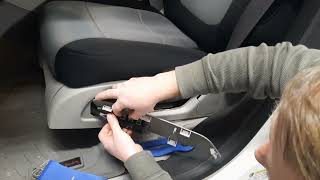
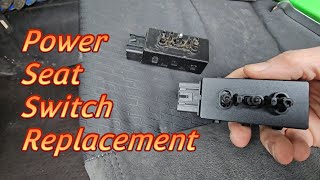
- Faulty power seat switch (Common) — The physical adjustment switch on the side of the seat wears out internally from frequent use or liquid damage, causing it to short out 🎬 See this easy DIY power seat switch replacement walkthrough. and send continuous 12V signals to the motor.
- Defective power seat motor (Less Common) — The electric motor that moves the seat can fail internally. A short within the motor's copper windings triggers this code, often accompanied by a clicking or grinding noise when the switch is pressed.
- Faulty Seat Track Position Sensor (GM/Dodge) (Less Common) — On GM and Dodge/Ram trucks, the airbag module uses a seat track position sensor to determine driver proximity to the steering wheel. A failure here triggers airbag codes without affecting seat movement.
- Defective Body Control Module (BCM) or Seat Control Module (Rare) — The control module itself can fail internally and misread circuit voltages. This is rare and should only be diagnosed after exhaustively ruling out wiring, switches, and sensors.
Symptoms
- Airbag warning light is illuminated — The most critical symptom. On Hyundai, Kia, BMW, and Subaru vehicles, B1767 links to a passenger OCS fault, which disables the entire airbag system as a safety precaution.
- Power driver's seat is unresponsive or moves erratically — The seat fails to adjust forward, backward, up, or down. Alternatively, a short circuit causes the seat to move intermittently or unexpectedly without pressing the switch.
- Passenger airbag 'OFF' indicator stays lit — The dashboard light indicating the passenger airbag is disabled remains illuminated even when an adult is sitting in the seat, confirming an OCS mat failure.
- Audible clicking or grinding from the seat — Pressing the adjustment switch produces noises from under the seat, indicating the motor is receiving power but failing to engage due to an internal short or mechanical bind.
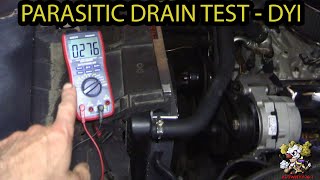
- Parasitic battery drain (also visible on scanner) — A short to power keeps the seat motor or control module energized when the vehicle is off. A continuous draw over 100 milliamps (mA) kills the battery 🎬 Watch: The easiest way to perform a parasitic draw test. overnight.
Diagnostic Flowchart
Tap your situation to follow the diagnostic path that matches what you're seeing on this code.
Common Fixes & Costs
- Replacing the passenger Occupant Classification System (OCS) mat — Parts: $300-$1000, Labor: $300-$600, ~3.5 hr book time (Professional)
- Repairing damaged wiring or connectors under the seat — Parts: $10-$50, Labor: $150-$350, ~2.0 hr book time (Intermediate)
- Replacing the power seat switch — Parts: $50-$250, Labor: $75-$150, ~1.0 hr book time (DIY)
- Replacing the power seat motor — Parts: $150-$500, Labor: $150-$250, ~1.8 hr book time (Advanced)
- Replacing a blown fuse — Parts: $1-$10, Labor: $0-$50, ~0.1 hr book time (Beginner)
DIY vs Professional
- Replacing a Blown Fuse — Beginner:
Tools: Fuse puller, owner's manual, replacement fuse. - Replacing Power Seat Switch — Beginner:
Tools: Trim removal tools, screwdriver set. - Repairing Damaged Wiring — Beginner:
Tools: Multimeter, wire strippers, soldering iron, heat shrink tubing. - Replacing Power Seat Motor — Beginner:
Tools: Socket set, torque wrench, Torx/E-Torx bits. - Replacing OCS Sensor Mat — Beginner:
Tools: Hog ring pliers, upholstery tools, professional scan tool.
Used vs. New Parts: Buying Guide
When a used part is worth it: Buying a used OCS sensor mat is highly discouraged due to safety risks and high failure rates. Used parts only make sense for non-safety items like seat motors or switches.
Donor-vehicle mileage cap: roughly under 60000 miles for the part to have meaningful remaining life.
Donor quality checklist:
- Verify the part is OEM and not a counterfeit aftermarket part.
- Ensure the donor vehicle has no history of flood or water damage.
- Match the part number exactly, as variations exist within the same model year.
- Purchase only from certified recyclers who guarantee the part was not deployed.
Decision logic:
- If The part is a critical safety component like an OCS sensor mat. → Buy a new OEM part from a dealership to guarantee safety and functionality.
- If The part is a non-safety item like a seat switch or motor. → A used part from a low-mileage vehicle is a smart cost-saving measure.
Warranty tradeoff: Used parts offer a 30-90 day warranty. New OEM parts installed at a dealer include a 12-month/12,000-mile warranty.
Worst-case if a used part fails: $800 if a used OCS mat fails prematurely, requiring you to pay for the repeat labor to disassemble the seat and recalibrate the system.
What Happens If You Wait — Timeline
- Immediate: Code B1767 sets and the airbag warning light illuminates. The entire Supplemental Restraint System (SRS) is disabled as a fail-safe. (MPG impact: 0%% · Added cost: $0 (The primary cost is an immediate and total loss of airbag safety function).)
- 1-4 weeks: The vehicle automatically fails state safety inspections. If the short causes a parasitic draw, the battery drains overnight, leaving you stranded. (MPG impact: 0%% · Added cost: $150-$350 (Cost of a new battery ruined by deep discharging).)
- 1-6 months: Repeatedly jump-starting a vehicle with a parasitic draw severely strains the alternator. The safety risk of driving without airbags remains constant. (MPG impact: 0%% · Added cost: $500-$800 (Cost to replace a stressed alternator).)
- 6+ months: Chafed wiring worsens, potentially shorting out other components in the shared harness. The primary consequence remains the high risk of severe injury in a collision. (MPG impact: 0%% · Added cost: Incalculable safety risk.)
Cost of Not Fixing It
- Immediate: The entire Supplemental Restraint System (SRS) is disabled. Airbags and seatbelt pretensioners will NOT function in a collision. (Added cost: $0 (mechanical), Incalculable (safety risk))
- 0-3 months: If the cause is a parasitic draw, the battery drains repeatedly, leading to premature failure. The vehicle fails state safety inspections. (Added cost: $150-$350 (new battery and inspection fees))
- 3+ months: Repeated jump-starts strain the alternator. The immense safety hazard of driving without airbags continues. (Added cost: $500-$800 (alternator replacement))
Diagnosis Steps

- Scan for All Codes and Check TSBs
Use a professional scan tool capable of reading SRS/Airbag codes. A basic engine reader will not work. Note all active codes. The presence of B1490 or B1764 alongside B1767 definitively confirms an OCS mat failure on Hyundai/Kia vehicles. Check your VIN for manufacturer Technical Service Bulletins (TSBs).
Tools: Professional OBD-II Scan Tool (Beginner) - Visually Inspect Under-Seat Wiring and Connectors
Look under both front seats with a flashlight. Remove any debris blocking the tracks. Carefully examine all wires, paying close attention to the large yellow SRS connectors. Look for pinched wires, melted insulation, or disconnected plugs. Re-seat all connectors firmly.
Tools: Flashlight (Beginner) - Inspect Power Seat and SRS Fuses
Locate the fuse boxes and pull the fuses for the power seats and SRS system. If the metal strip inside is broken, replace it with a fuse of the exact same amperage. If the new fuse blows immediately, you have a confirmed dead short in the wiring.
Tools: Fuse puller, replacement fuses (Beginner) - Diagnose the Occupant Classification System (OCS)
If the airbag light is on (especially in Asian/European imports), use a professional scan tool to view live data from the OCS module. The sensor's status should change from 'Not Occupied' to 'Occupied' when an adult sits down. If the status never changes, the OCS mat has failed.
Tools: Professional OBD-II Scan Tool with live data (Advanced) - Test the Seat Switch Circuit
Disconnect the power seat switch. Using a wiring diagram, identify the power input and 'forward' output pins. Set a multimeter to Continuity (Ohms). Press the 'forward' button; you should see near 0 Ω between the pins. No continuity means the switch is internally broken.
Tools: Multimeter, trim removal tools, wiring diagram (Advanced) - Test for a Short to Power
Disconnect the seat motor. Identify the 'forward' command wire. With the seat switch disconnected and ignition ON, probe this wire with a multimeter set to DC Volts. A reading of 1V or greater confirms the wire is chafed and touching a live power source (Short to Battery).
Tools: Multimeter, wiring diagram (Advanced) - Test the Power Seat Motor
If the switch and wiring test good, apply 12V and ground directly from the car battery to the motor's terminals using jumper wires. If the motor does not run, it has failed internally and must be replaced.
Tools: Jumper wires, 12V car battery (Advanced) - Perform a Parasitic Draw Test
If your battery dies overnight, disconnect the negative battery terminal on a sleeping vehicle. Place a multimeter (set to 10A) in series between the cable and the post. A reading over 100mA (0.10A) confirms a draw. Pull seat/SRS fuses one by one until the draw drops to isolate the circuit.
Tools: Multimeter with 10A capability (Advanced) - Perform OCS Recalibration (Zero Point Setting)
After replacing an OCS sensor mat, you must perform a 'PODS reset' or 'zeroing' procedure using a professional scan tool. This sets the empty seat as the zero-weight baseline. Failing to do this keeps the airbag light on permanently.
Tools: Professional OBD-II Scan Tool (Professional)
When This Code Triggers (Freeze-Frame Conditions)
- System State: Key-On, Self-Test (The SRS/BCM module runs a self-diagnostic check every time the ignition turns on. B1767 is usually set during this initial 5-second check.)
- Battery Voltage: 11.8V - 12.6V (The fault is logged with the engine off during the power-up sequence. Low voltage from a weak battery can trigger erroneous SRS codes.)
- Vehicle Speed: 0 mph (This is a stationary electrical fault detected before the vehicle is driven.)
- Component Monitored: Circuit Voltage (The module flags B1767 when voltage on the driver seat forward circuit is unexpectedly high (short to power).)
Related Codes
- B1490 / B1764 — On Hyundai and Kia, these indicate an 'OCS Mat Defect'. Seeing these alongside B1767 definitively confirms the passenger seat sensor is the culprit, not the driver's seat motor.
- B1768 — Indicates a 'Short To Ground' in the same circuit. B1767 means the wire is touching 12V power, while B1768 means the wire is touching bare metal, which instantly blows a fuse.
- B1766 — Indicates an 'Open' circuit. A wire is completely severed or a connector is unplugged, resulting in 0 volts and infinite resistance.
- B1765 / B1769 — Companion codes indicating a general failure in the forward or backward seat motor circuits, requiring identical diagnostic steps.
Climate & Environmental Factors
- Moisture Intrusion: Direct water exposure from spilled drinks, leaking sunroofs, or aggressive interior detailing is the number one killer of OCS sensor mats.
- High Humidity: Coastal regions with salty, humid air accelerate corrosion inside under-seat electrical connectors, leading to short circuits.
- Extreme Temperatures: Constant hot-to-cold cycles make wire insulation brittle over time, causing it to crack and expose copper wiring to the metal seat frame.
How to Talk to a Mechanic About This Code
Say this: "I have an airbag light on and a B1767 code. On my vehicle, I know this code often points to the passenger Occupant Classification System (OCS) mat, not the driver's seat. Can you please scan the SRS module for OCS codes like B1764 and check for relevant TSBs before diagnosing the driver's seat circuit?"
This proves you are an informed customer and directs the technician to the most probable cause for this specific code, preventing them from wasting diagnostic time on the misleading code definition.
Avoid saying:
- 'My airbag light is on, can you fix it?'
- 'The code says it's a driver's seat problem.'
- 'Just do whatever you think is best.'
Questions to ask before authorizing the repair:
- Did you find any other codes in the SRS module, like B1764 or B1490?
- If the OCS mat needs replacement, does your quote include the mandatory OCS zero-point recalibration?
- Before replacing the mat, did you confirm the wiring and connectors under the passenger seat are undamaged?
- Is this repair covered by a recall, TSB, or extended warranty for my VIN?
Where to Take It: Dealer vs Independent vs Chain
- Dealer:
Highly Recommended. They are most familiar with the misleading nature of this code and possess the required tools for mandatory OCS recalibration.
Best for: Vehicles under warranty or with a known TSB/recall (e.g., Hyundai, BMW, Subaru)., Complex SRS diagnostics requiring manufacturer software for OCS recalibration.
Downsides: Highest labor rates., May default to replacing an entire seat assembly instead of just the OCS mat. (Typical cost: +50% vs. baseline) - Independent Shop:
Good fit, provided they have advanced SRS-capable scan tools and experience with airbag systems. Vet them first.
Best for: Out-of-warranty vehicles with simpler wiring or switch issues., Shops specializing in your vehicle's brand (e.g., a German car specialist).
Downsides: General mechanics may be misled by the code definition., May lack the specific scan tool software to perform OCS recalibration. (Typical cost: +0% vs. baseline) - Chain Shop:
AVOID. This is a complex, safety-critical repair requiring specialized tools beyond the scope of chain shops.
Best for: Simple maintenance like oil changes or tires.
Downsides: Technicians lack specialized knowledge for complex SRS codes., High likelihood of misdiagnosis., Will not have OCS recalibration capabilities. (Typical cost: -10% vs. baseline)
When to Walk Away From the Repair
If the estimated repair cost exceeds 40-50% of the car's private-party value, and the repair is not covered by a warranty or recall, consider selling the car as-is.
- Car worth $4000, fix is $2000: Walk away. The repair is 50% of the vehicle's value. The safety risk makes it difficult to sell privately without a steep discount.
- Car worth $15000, fix is $1800: Fix it. The repair restores a critical safety feature, preserving the vehicle's value and safety.
- Car worth $2500, fix is $1500: Walk away. At 60% of the car's value, this repair is not economical.
What Scan Tool You Need for This Code
Minimum: A scan tool that reads and clears SRS/Airbag (B-prefix) codes.
A basic $20 engine code reader cannot access the SRS module. It will show 'No Codes' and leave you blind. You must be able to view live data from the Occupant Classification System (OCS).
Budget: BlueDriver Pro (~$100) — Reads and clears SRS codes, provides freeze-frame data, and graphs live data to help diagnose the OCS sensor.
Mid-range: Autel MaxiCOM MK808S (~$340) — Offers full-system diagnostics and includes the bidirectional 'Special Function' needed to perform the mandatory OCS recalibration.
Professional: Autel MaxiSYS MS906 (~$900) — Provides OEM-level bidirectional control, all special functions including OCS calibration, and detailed diagnostic information.
Rent vs buy: Buy. Auto parts stores typically only lend out basic engine code readers that cannot access SRS systems.
How to Clear the Code After You Fix It
- Fix the underlying mechanical or electrical fault (e.g., repair wire, replace sensor).
- Use an SRS-capable OBD-II scan tool to clear the fault code from the airbag module.
- If the OCS mat was replaced, perform a mandatory 'Zero Point Calibration' with a professional scan tool.
- Cycle the ignition off, then on, and verify the airbag light turns off after the initial 5-7 second self-check.
Drive cycle (~10 minutes): The SRS system does not require a specific drive cycle. A 10-minute test drive confirms the airbag light stays off. If the battery was disconnected, a 30-minute mixed drive cycle is needed to reset engine emissions monitors.
Readiness monitors affected: None directly. Disconnecting the battery clears all emissions readiness monitors, blocking an emissions test until a full drive cycle is completed.
Before emissions retest: drive at least 100 miles to fully set monitors.
Watch out for:
- Clearing the code without fixing the root cause results in the light returning immediately.
- Disconnecting the battery will not clear 'hard' SRS codes or crash data.
- Forgetting to perform the mandatory OCS sensor recalibration after replacing the mat guarantees the repair will fail.
Will This Fail Emissions / State Inspection?
Yes — this code typically fails an OBD-II emissions inspection.
- California: Will NOT fail. California's Smog Check is an emissions inspection only. The airbag system is not tested.
- New York: Will NOT fail. The NYS safety inspection notes the airbag light status for advisement only; it is not a cause for rejection.
- Texas: Will NOT fail. The airbag system is not a required inspection item for the Texas state safety inspection.
- Virginia / Pennsylvania: WILL FAIL. These states mandate a functioning SRS system. An illuminated airbag warning light is an automatic failure.
Most Commonly Affected Vehicles

- Hyundai Sonata, Elantra, Accent, Santa Fe (2006-2018) — B1767 almost always points to a faulty passenger OCS sensor mat. Hyundai extended the warranty for this part on some models (TSB 17-BE-002) to 15 years/unlimited miles.
- Kia Sorento, Optima, Soul, Sedona (2011-2018) — Frequently sets this code due to OCS mat failure, identical to Hyundai. Often accompanied by code B1764.
- BMW 3-Series, 5-Series, X3, X5 (2004-2010) — A notorious failure of the passenger seat occupancy sensor (OC3) mat. Covered by multiple recalls, including NHTSA 17V-605 for 2006-2010 X3 models.
- Subaru Forester, Outback, Legacy, Ascent (2015-2022) — Prone to OCS sensor and harness failures. Recall WRA-24 covers 2020-22 Outback/Legacy sensors due to moisture intrusion from a faulty capacitor.
- Chevrolet / GMC Silverado, Sierra, Tahoe, Yukon (2007-2019) — Commonly caused by a chafed Passenger Presence System (PPS) wire or a failed driver's seat track position sensor.
- Dodge / Ram Ram 1500/2500, Charger (2006-2018) — Often related to a faulty seat track position sensor or a stuck power seat switch causing a severe parasitic battery drain.
- Ford F-150, Explorer (2009-2015) — Prone to power seat switch failures and corrosion inside the large electrical connectors under the seat.
- Honda Civic, Accord (2001-2012) — Less common, but similar SRS issues are caused by a faulty driver's seat belt buckle switch or passenger OPDS sensor.
Manufacturer-Specific Notes
- Hyundai / Kia: B1767 is a misleading 'ghost code' triggered by a fault in the passenger seat's Occupant Classification System (OCS). Check for TSB 17-BE-002, which extends the OCS mat warranty to 15 years/unlimited mileage.
- BMW: The problem is nearly always the passenger seat occupancy sensor (OC3) mat. This is a well-documented failure covered by numerous recalls (e.g., NHTSA 17V-605) and extended warranties.
- Subaru: Suffers from OCS mat and wiring harness failures. Subaru issued recall WRA-24 for the 2020-22 Outback/Legacy sensor due to moisture intrusion. The OCS must be recalibrated after any repair.
- General Motors (Chevy/GMC): The wiring harness for the Passenger Presence System (PPS) frequently gets pinched between the seat frame and riser. The driver's seat track position sensor is also a frequent culprit.
- Ford: The issue is often the power seat switch itself or corrosion inside the large electrical connector under the seat. Inspect the main harness pass-through points for chafing.
Real Owner Stories
2013 Kia Sorento LX with 72,000 miles
The airbag warning light illuminated permanently. A dealer scan revealed codes B1767 and B1764.
Outcome: The dealer quoted $1,800 to replace the OCS sensor mat inside the passenger seat cushion. The owner declined the repair due to the high cost.
Lesson: On Kia and Hyundai vehicles, the combination of B1767 and B1764 definitively diagnoses a failed passenger OCS mat. Do not waste time troubleshooting the driver's seat motor.
2014 Hyundai Veloster with 110,000 miles
The airbag light turned on. A DIY scan showed B1767, B1764, B1490, and B1346.
Outcome: The owner faced two distinct, expensive SRS repairs. The primary issue causing the B1767 was confirmed as the OCS mat.
Lesson: A professional scan tool that reads SRS codes is mandatory. Multiple OCS-related codes appearing together confirm the mat itself has failed, ruling out a simple wiring fix.
2006 BMW 3-Series (E90)
The passenger airbag and seatbelt warning lights stayed on with an empty seat. The scanner showed BMW code 0093C3 (seat occupancy sensor mat).
Outcome: The OC3 sensor mat in the "new" used seat was also defective. The owner had to purchase a brand-new mat and disassemble the seat to fix it properly.
Lesson: Buying a used passenger seat to fix an OCS issue is a massive gamble, as the replacement likely suffers from the same common failure. Always buy a new OEM sensor mat.
2017 Hyundai Elantra after an interior detail
The airbag light illuminated immediately after a professional interior shampoo and vacuum.
Outcome: Moisture from the shampoo penetrated the passenger seat cushion and shorted the OCS sensor. A basic engine scanner cannot read SRS codes.
Lesson: Moisture destroys OCS sensors. If the airbag light appears after detailing, let the car dry for 48 hours. If it persists, the mat is permanently damaged or a vacuum dislodged a yellow SRS connector.
How to Prevent This Code From Triggering
- Keep the area under the front seats completely clear (Monthly) — Prevents water bottles or tools from wedging in the seat track, which pinches and severs the delicate wiring for the power seat motors and airbag sensors.
- Enforce a strict no-liquids policy on the passenger seat (Daily) — Spilled drinks seep into the seat cushion and instantly destroy the sensitive electronic OCS sensor mat, causing an $800+ repair.
- Warn car detailers about under-seat electronics (Before every interior cleaning) — Prevents detailers from soaking the passenger seat with shampoo or forcefully jamming vacuum nozzles under the seats, which dislodges critical yellow SRS connectors.
- Inspect under-seat connectors for security (Annually) — Ensures all electrical connectors (especially the large yellow SRS plugs) are fully seated and free of green corrosion. A loose connector is a common, free fix.
Frequently Asked Questions
What are the most common misdiagnosis mistakes for B1767?
The biggest mistake is trusting the literal "Driver Seat Forward Circuit" definition on Hyundai, Kia, or BMW vehicles, where the fault is almost always the passenger OCS mat. Another error is replacing an expensive OCS mat without checking under-seat wiring for damage first. Finally, failing to perform the mandatory system recalibration after replacing the mat guarantees the code will return.
Can I just replace the fuse to fix a B1767 code?
Replacing a blown fuse temporarily restores function, but it does not fix the underlying short circuit that caused the failure. If the new fuse blows immediately, you have a confirmed electrical short in the wiring, switch, or motor. You must trace and repair the damaged wire to permanently resolve the issue.
Why is my airbag light on with a power seat code?
In many modern vehicles, B1767 is triggered by a fault in the airbag system's Occupant Classification System (OCS) located in the passenger seat. This sensor mat determines occupant weight to safely deploy the airbag. A fault here disables the entire Supplemental Restraint System (SRS) and triggers the warning light.
Can I install a B1767 bypass emulator?
OCS emulators trick the computer into thinking an adult is always in the passenger seat, which turns off the airbag light. This is a dangerous safety compromise because the passenger airbag will deploy with full force in every crash, even if the seat is empty or holds a child. Never use an emulator; repair the system properly.
Is it safe to drive with code B1767?
If the code triggers the airbag warning light, it is not safe to drive. The illuminated light confirms the entire airbag and pretensioner system is disabled. In an accident, you and your passengers will not have airbag protection.
My seat works fine, but the code B1767 and my airbag light are on. What does that mean?
This confirms the fault lies within the Supplemental Restraint System (SRS) rather than the physical seat motors. On GM or Dodge vehicles, this points to a faulty seat track position sensor. On Hyundai, Kia, or BMW models, it indicates the passenger OCS mat has failed.
How can I tell the difference between a short to power and a short to ground?
A short to power (B1767) means a signal wire is unintentionally receiving 12V from another live wire. A short to ground (B1768) means a power wire is touching the vehicle's bare metal chassis, which instantly blows a fuse. Use a multimeter to test the circuit's voltage and continuity to differentiate them.
Can a weak car battery cause a B1767 code?
Yes, a failing battery causes low-voltage conditions that trigger a wide range of erroneous electronic and SRS codes. The airbag control module is highly sensitive to voltage drops during engine cranking. If you experience other electrical glitches alongside B1767, test your battery and alternator first.
Key Takeaways
- Code B1767 literally indicates a 12V short in the driver's power seat circuit, usually caused by chafed wiring under the seat track.
- On Hyundai, Kia, BMW, and Subaru models, B1767 is a misleading "ghost code" that actually flags a failed passenger Occupant Classification System (OCS) mat, disabling the entire airbag system.
- Driving with an active B1767-triggered airbag light guarantees your airbags will not deploy in a collision and causes an automatic failure during state safety inspections.
- Inspect the yellow SRS connectors and wiring harnesses under both front seats for physical damage or moisture before spending $800+ on a replacement OCS mat or seat motor.
- Check your VIN for manufacturer warranty extensions, such as Hyundai TSB 17-BE-002, which covers OCS mat replacements for 15 years or unlimited miles on affected models.
Helpful Videos


The information in this article is provided for general reference and educational purposes only. Vehicle specifications, procedures, and part compatibility can vary by production date, trim level, and region. Always consult your vehicle's factory service manual and verify part numbers before purchasing or performing repairs. Safety-critical components such as airbags, seat belts, and braking systems should be installed by a qualified professional.
- 🎬 Helpful Videos
- What Does B1767 Mean?
- Can I Drive With B1767?
- Common Causes
- Symptoms
- Diagnostic Flowchart
- Common Fixes & Costs
- DIY vs Professional
- Used vs. New Parts: Buying Guide
- What Happens If You Wait — Timeline
- Cost of Not Fixing It
- Diagnosis Steps
- When This Code Triggers (Freeze-Frame Conditions)
- Related Codes
- Climate & Environmental Factors
- How to Talk to a Mechanic About This Code
- Where to Take It: Dealer vs Independent vs Chain
- When to Walk Away From the Repair
- What Scan Tool You Need for This Code
- How to Clear the Code After You Fix It
- Will This Fail Emissions / State Inspection?
- Most Commonly Affected Vehicles
- Manufacturer-Specific Notes
- Real Owner Stories
- 2013 Kia Sorento LX with 72,000 miles
- 2014 Hyundai Veloster with 110,000 miles
- 2006 BMW 3-Series (E90)
- 2017 Hyundai Elantra after an interior detail
- How to Prevent This Code From Triggering
- Frequently Asked Questions
- What are the most common misdiagnosis mistakes for B1767?
- Can I just replace the fuse to fix a B1767 code?
- Why is my airbag light on with a power seat code?
- Can I install a B1767 bypass emulator?
- Is it safe to drive with code B1767?
- My seat works fine, but the code B1767 and my airbag light are on. What does that mean?
- How can I tell the difference between a short to power and a short to ground?
- Can a weak car battery cause a B1767 code?
- Key Takeaways
- 🎟️ Get 5% Off