

Ultimate Guide to OBD-II Code B1764: Passenger Seat Occupant Sensor Defect
The Most Comprehensive Resource on What B1764 Means, Why It Triggers, and How to Fix It for Good
- Code B1764 disables the passenger airbag entirely due to a fault in the seat's Occupant Classification System (OCS) weight sensor, leaving the seat 100% unprotected in a crash.
- Over 70% of B1764 codes stem from a broken wire or loose yellow SRS connector under the passenger seat, usually caused by snagged items like umbrellas.
- Repair costs range from $150 for a simple wire splice to over $1,600 for a full seat cushion replacement, though Kia and BMW offer free warranty repairs for specific models.
- You must use an SRS-capable OBD-II scanner to read, diagnose, and clear code B1764; a standard $20 engine code reader cannot access the airbag module.
- Never allow passengers to ride in the front seat while this code is active, as the airbag has a 0% chance of deploying during a frontal collision.
What Does B1764 Mean?

Code B1764 indicates the Supplemental Restraint System (SRS) module detected a critical defect in the passenger seat weight sensor. This sensor, known as the Occupant Classification System (OCS) mat, is a pressure-sensitive grid inside the seat cushion that detects passenger weight to enable or disable the airbag. When B1764 triggers, the system enters a fail-safe mode and turns the passenger airbag OFF completely.
Technical definition: The official SAE/ISO definition for B1764 is "Occupant Classification System (OCS) Mat Defect". The SRS control module detected a malfunction, open circuit, short circuit, or out-of-range reading from the passenger seat's pressure-sensitive mat. On General Motors vehicles, this code often indicates a 'Driver Seat Down Switch Circuit' fault affecting power seat controls, not the airbag. Always verify the definition with a manufacturer-specific scan tool.
Can I Drive With B1764?
Yes, But With Caution. Yes, but the front passenger's safety is severely compromised. This code disables the passenger airbag system, meaning it will NOT deploy in a crash. Do not allow passengers to occupy the front seat until repaired. Operating the vehicle with this code active significantly increases the risk of fatal injury during a frontal collision.
Common Causes

- Damaged or broken wiring harness under the passenger seat (Very Common) — Constant seat movement or items stowed under the seat (umbrellas, bags) snag, stretch, and break the delicate OCS wiring harness. This is the most frequent cause of the code.
- Defective Occupant Classification System (OCS) mat sensor (Common) — The pressure-sensitive mat embedded in the seat cushion fails internally due to age, material fatigue, spilled liquids shorting the electronics, or heavy concentrated loads damaging the sensor grid.
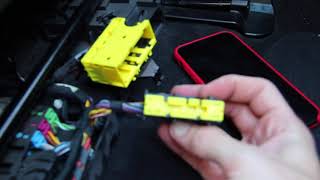
- Loose or corroded electrical connectors (Common) — The yellow SRS connectors under the seat loosen or develop pin corrosion, causing high electrical resistance and signal loss to the control module.
- Faulty Airbag or OCS Control Module (Less Common) — The computer module interpreting the sensor data fails. Technicians diagnose this only after ruling out wiring and sensor issues.
- Aftermarket Seat Covers or Excessive Cushioning (Rare) — Thick, non-compliant seat covers insulate the passenger's weight from the sensor, preventing accurate readings and triggering intermittent faults.
Symptoms

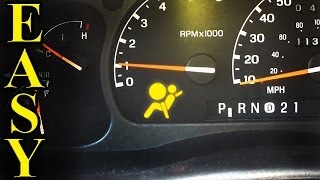
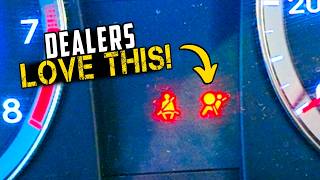
- Airbag warning light is illuminated — The red SRS, airbag, or passenger symbol illuminates steadily or intermittently on the dashboard, indicating disabled airbags.
- Passenger airbag 'OFF' light remains lit incorrectly — The 'PASS AIRBAG OFF' status light stays lit even when an adult occupies the seat.
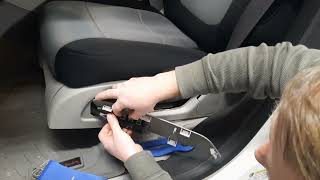
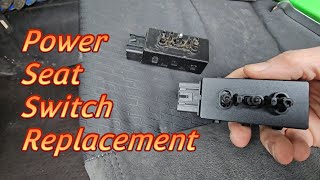
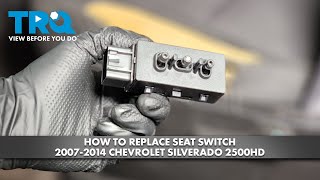
- Power seat malfunctions (GM vehicles only) — On specific General Motors models, this code points to a fault in the driver's power seat motor circuit, causing seat adjustment failures unrelated to the airbag system. 🎬 See how to replace a GM power seat switch.
Diagnostic Flowchart

Tap your situation to follow the diagnostic path that matches what you're seeing on this code.
Common Fixes & Costs
- Repairing broken wire(s) under the passenger seat — Parts: $5-$20, Labor: $120-$250, ~1 hr book time (Intermediate)
- Replacing the passenger seat cushion (with integrated OCS mat)
— Parts: $800-$1600, Labor: $300-$500, ~2.5 hr book time
(Professional)
: OEM
: OEM
: OEM - Replacing the OCS mat sensor only
— Parts: $150-$400, Labor: $500-$700, ~3.5 hr book time
(Advanced)
: OEM
: OEM
: OEM - Installing an OCS Emulator/Bypass Module (Use with Caution) — Parts: $20-$100, Labor: $50-$100, ~0.5 hr book time (Beginner)
- Replacing the Airbag/OCS Control Module — Parts: $300-$700, Labor: $200-$350, ~1.5 hr book time (Professional)
DIY vs Professional
- Repairing broken wire(s) under the passenger seat — Beginner: Yes, with caution.
Tools: Wire strippers, butt connectors or soldering iron, heat shrink tubing, digital multimeter, flashlight. - Replacing the passenger seat cushion (with integrated OCS mat) — Beginner: No.
Tools: Professional-grade scan tool for calibration, full socket set, torque wrench, trim removal tools. - Replacing the OCS mat sensor only — Beginner: No.
Tools: Upholstery tools (hog ring pliers), trim removal tools, socket set, torque wrench, professional scan tool. - Installing an OCS Emulator/Bypass Module — Beginner: Yes.
Tools: Basic hand tools, possibly wire strippers.
Used vs. New Parts: Buying Guide
When a used part is worth it: Do not buy a used seat cushion or OCS mat. The OCS mat is a known wear item and a used part may have limited life or be faulty already. A used part only makes sense if it is from a very low-mileage, verifiable wreck where the seat was undamaged.
Donor-vehicle mileage cap: roughly under 40000 miles for the part to have meaningful remaining life.
Donor quality checklist:
- Verify donor vehicle VIN to check for accident history and ensure it wasn't scrapped for a flood.
- Match the part number exactly; seats vary widely by trim level (heating, cooling, power functions).
- Avoid parts from regions with extreme heat, which degrades the sensor mat faster.
Decision logic:
- If The part is a safety component like an airbag or OCS sensor → Strongly favor new OEM parts. The risk and liability of a used part failing are too high.
- If Vehicle is under a manufacturer's extended warranty for the OCS mat (e.g., some BMWs) → Use the warranty for a free new OEM part from the dealer.
- If Budget is the absolute primary concern and the vehicle has low value → A used seat cushion is a gamble, but may be considered if the alternative is not repairing the vehicle at all.
Warranty tradeoff: Used parts from a salvage yard typically have a 30-90 day warranty. New OEM parts installed by a dealer carry a 12-month/12,000-mile warranty. Aftermarket sensors usually have a 1-year to limited lifetime warranty.
Worst-case if a used part fails: $400-$800 if a used seat cushion/sensor fails after the short warranty period, requiring repeat labor costs plus the cost of another part.
What Happens If You Wait — Timeline
- Immediate (First Key Cycle): The SRS module detects the OCS mat circuit fault, illuminates the airbag warning light, and disables the passenger airbag system. The 'PASS AIRBAG OFF' light remains on. (MPG impact: 0%% · Added cost: $0 (Safety risk is the immediate cost))
- Ongoing until repaired: The critical safety risk persists. The passenger airbag will NOT deploy in a collision. The fault remains isolated to the SRS system. (MPG impact: 0%% · Added cost: $0 (Increased liability in an accident))
- At the next state safety inspection: In states like New York and Virginia, an illuminated airbag light triggers an automatic failure of the safety inspection, preventing legal registration renewal. (MPG impact: 0%% · Added cost: $50-$200 (Potential tickets, inspection fees, and lost time))
- In the event of an accident: The passenger airbag fails to deploy, causing severe passenger injury or death. This leads to increased legal and financial liability for knowingly operating a vehicle with disabled safety systems. (MPG impact: 0%% · Added cost: Potentially thousands in medical bills and legal liability.)
Cost of Not Fixing It
- Immediate and Ongoing: The passenger airbag system is disabled. In a frontal collision, the passenger airbag will NOT deploy, significantly increasing the risk of serious or fatal injury. (Added cost: N/A (Safety Risk))
- Next State Inspection: The vehicle fails the safety portion of a state inspection in states like New York and Virginia due to the illuminated airbag warning light, preventing registration renewal. (Added cost: $0 (but prevents legal operation of vehicle))
- Long-Term: Ignoring this code causes no further mechanical damage. The fault is isolated to the SRS. The only cost is the persistent and critical safety risk. (Added cost: N/A)
Diagnosis Steps
- Read the Code with an SRS-Capable Scanner
Use an OBD-II scanner that reads SRS (airbag) 'B' codes to confirm B1764 is the active fault. Note any other codes present. A basic engine code reader will not work.
Tools: SRS-capable OBD-II Scanner (Beginner) - Visually Inspect Under the Passenger Seat
Move the passenger seat fully forward and upward. With a flashlight, meticulously inspect all visible wiring and connectors. Look for broken or stretched wires (especially brown ones on Kia/Hyundai), pinched harnesses, or snagged lines.
Tools: Flashlight (Beginner) - Check and Reseat Electrical Connectors
SAFETY FIRST: Disconnect the negative battery terminal and wait 15 minutes for the system's backup power to discharge. Locate the yellow airbag system connectors under the seat. Unplug them, inspect the pins for corrosion, and plug them back in securely until they click.
Tools: Wrench set (for battery), Flashlight (Intermediate) - Check for Technical Service Bulletins (TSBs)
Search online for your vehicle's make, model, year, and "B1764 TSB". Manufacturers release bulletins for known issues, such as Kia's TSB (SC175) for the Sedona, which saves significant diagnostic time.
Tools: Internet access (Beginner) - PRO TIP: Check OCS Live Data
Using an advanced bi-directional scan tool, navigate to the OCS module live data stream. With the seat empty, the reading should be 0 lbs. Place known weights (e.g., 50 lbs) on the seat. If the reading is erratic, doesn't change, or is wildly inaccurate, the OCS mat sensor failed.
Tools: Advanced Bi-Directional Scan Tool (Advanced) - Test the OCS Mat Sensor with a Multimeter
Disconnect the OCS mat connector. Following the service manual's pinout diagram, measure the resistance across the specified pins of the sensor mat. An open circuit (infinite resistance or 'OL') or a short (near zero resistance) indicates a failed mat.
Tools: Digital Multimeter, Vehicle-specific service manual (Advanced) - PRO TIP: Perform OCS Zero Point Calibration
After replacing an OCS sensor or seat cushion, the system MUST be calibrated. This procedure, performed with an advanced scan tool, teaches the module the baseline reading of the empty seat. Failure to perform this step causes the B1764 code to return immediately.
Tools: Advanced Bi-Directional Scan Tool (Professional) - Test the OCS Control Module
If the wiring and sensor mat test good, check for proper power (12V) and ground signals at the control module's connector with a multimeter. Verify communication lines (CAN bus) are active using an oscilloscope. Leave this step to a professional technician.
Tools: Advanced scan tool, Multimeter, Service manual, Oscilloscope (Professional)
When This Code Triggers (Freeze-Frame Conditions)
- System Status: KOEO (Key On, Engine Off) (The SRS module performs a self-test each time the ignition turns on. The B1764 code sets during this initial check if a circuit fault is detected.)
- Battery Voltage: 11-14V (The code sets during normal operating voltage. A low or high battery voltage sets other, more general SRS codes.)
- Occupant Status: Empty or Occupied (The fault is detected regardless of whether the seat is occupied. It is a circuit integrity test, not just a weight-reading test.)
- Fault Type: Open/Short to Ground/Short to Power (Freeze frame data on an advanced scanner specifies the exact nature of the electrical fault detected in the OCS mat circuit.)
Related Codes
- B1490 — This code for 'OCS Defect' frequently stores alongside B1764 on Hyundai and Kia vehicles. Seeing them together strongly confirms the issue is with the passenger seat mat or its wiring.
- B1763 — This code points to a specific type of circuit failure in the OCS mat sensor. Its presence alongside B1764 solidifies the diagnosis of a failed OCS mat.
- B1448 — Defined as 'Occupant Classification Sensor 2 Defect'. Seeing it with B1764 confirms the problem is with the passenger seat sensor system and indicates a failure in a specific zone of the sensor mat.
- B1765 — Appearing alongside other OCS codes on models like the Kia Sorento, B1765 points to a specific OCS mat circuit failure. A cluster of codes (B1763, B1764, B1765) means the OCS mat has failed internally.
Climate & Environmental Factors
- Extreme Cold/Heat Cycles: Extreme temperature fluctuations alter sensor resistance and make intermittent issues more frequent. Wires and connectors become brittle in the cold, making them susceptible to breaking when flexed.
- High Humidity: High humidity or moisture in the cabin accelerates corrosion on electrical connectors under the seat. It also allows moisture ingress into a cracked sensor mat, leading to a short circuit.
How to Talk to a Mechanic About This Code
Say this: "My scanner shows code B1764 for the passenger occupant sensor. I'd like to book a diagnostic appointment. Please start by inspecting the wiring and connectors under the passenger seat, as I understand that's a very common failure point. Please do not quote a full seat replacement until a broken wire or bad connector has been ruled out."
This signals you are an informed consumer. It directs the technician to the most likely and cheapest fix first, preventing them from immediately quoting a very expensive seat replacement. It establishes a clear diagnostic path.
Avoid saying:
- My airbag light is on, can you fix it?
- Just do whatever it takes to turn the light off.
- I think I need a new seat sensor.
Questions to ask before authorizing the repair:
- Did you find a broken wire or a corroded connector, or did you test the sensor mat itself?
- If the mat is bad, what were the resistance readings? Can you show me?
- If I need a new seat cushion or sensor, does your price include the mandatory OCS Zero Point Calibration?
- What is the warranty on this specific repair, for both parts and labor?
Where to Take It: Dealer vs Independent vs Chain
- Dealer:
Recommended only if the repair is covered by a warranty or recall. Otherwise, they are likely to be the most expensive option.
Best for: Vehicles under warranty, or with a recall or warranty extension for this specific part (common on Kia/BMW)., Complex cases where an independent shop has failed to diagnose the issue., When you want the guaranteed use of OEM parts and a manufacturer-backed warranty.
Downsides: Highest labor rates., Strong tendency to replace the entire seat cushion assembly ($1500+) rather than attempting a wiring repair ($250). (Typical cost: +50% vs. baseline) - Independent Shop:
Best fit for most out-of-warranty scenarios, especially for the initial diagnosis. A good independent shop starts with the simple wiring check, potentially saving you thousands.
Best for: Out-of-warranty vehicles where cost is a major concern., Diagnosing and repairing the most common cause: a broken wire under the seat., Getting a second opinion after a high dealership quote.
Downsides: Quality and experience with SRS systems vary greatly., May not own the expensive scan tool needed for OCS calibration if the sensor mat is replaced., Must be vetted for good reviews and ASE certifications in electrical systems. (Typical cost: +0% vs. baseline) - Chain Shop:
AVOID for this code. The risk of misdiagnosis, improper repair of a safety system, and being upsold is extremely high.
Best for: Simple, unrelated maintenance like oil changes or tires.
Downsides: Technicians are often inexperienced with complex electrical and SRS diagnostics., High pressure to upsell and may misdiagnose the problem., Very unlikely to have the specialty tools or knowledge for OCS calibration. (Typical cost: -10% vs. baseline)
When to Walk Away From the Repair
If the $1,500-$2,200 seat replacement cost exceeds 50% of the vehicle's value, consider selling the car.
- Car worth $4000, fix is $2000: Walk away. The repair is 50% of the car's value. It's not economically sensible.
- Car worth $12000, fix is $1800: Fix it. The repair cost is only 15% of the vehicle's value and is a critical safety repair.
- Car worth $2500, fix is $1500: Walk away. The repair is 60% of the car's value. The money is better put towards a replacement vehicle.
What Scan Tool You Need for This Code
Minimum: A scanner that reads and clears Supplemental Restraint System (SRS/Airbag) codes. A basic $20 engine-only code reader WILL NOT work for this 'B' code.
A basic scanner cannot communicate with the SRS module. You will not be able to see the B1764 code, clear the airbag light, or perform the necessary calibration after a repair.
Budget: BlueDriver Pro (~$99) — Confirms the B1764 code and allows you to clear it after a repair. It reads live data for many vehicles, helping diagnose the issue. It's an excellent tool for DIY diagnosis.
Mid-range: Foxwell NT630 Plus (~$150) — In addition to reading/clearing SRS codes, this handheld tool offers bi-directional controls to test specific components. Crucially, for some vehicle makes, it performs the OCS Zero Point Calibration required after replacing the sensor.
Professional: Autel MaxiCOM MK808 / MK906BT (~$500-1200) — Provides full, OEM-level diagnostic functions. It reads codes, views live sensor data, and has broad vehicle coverage for the mandatory OCS Zero Point Calibration and sensitivity checks. This is the level of tool a professional shop uses.
Rent vs buy: You cannot rent the necessary SRS-capable or calibration-capable scanners from most auto parts stores. If you are only performing the initial diagnosis, buying a budget pick like the BlueDriver is a good investment. If the repair requires replacing the sensor mat, the cost of a mid-range or pro-level tool is justified compared to paying shop labor for calibration.
How to Clear the Code After You Fix It
- Reconnect negative battery terminal if disconnected for repair.
- Use an SRS-capable OBD-II scan tool to access the Supplemental Restraint System module.
- Select the option to 'Clear DTCs' or 'Erase Fault Codes'.
- Perform the 'OCS Zero Point Calibration' or 'Sensitivity Check' if the sensor or seat cushion was replaced. This is mandatory.
Drive cycle (~5 minutes): SRS codes do not require a complex drive cycle. After clearing the code, cycle the ignition off, then on. If the light stays off after its initial 7-second bulb check, the repair was successful.
Readiness monitors affected: No emissions-related readiness monitors are affected by an SRS code.
Watch out for:
- Using a basic engine code reader that cannot access the SRS module.
- Failing to perform the mandatory OCS Zero Point Calibration after replacing the sensor, causing the code to return immediately.
- Clearing the code without fixing the underlying physical fault. The code returns on the next key cycle.
Will This Fail Emissions / State Inspection?
Yes — this code typically fails an OBD-II emissions inspection.
- California: An airbag light will NOT fail the emissions (smog check) portion of the inspection. However, a lit airbag light is grounds for a safety citation.
- New York: An illuminated airbag warning light is an automatic failure of the annual safety inspection. The vehicle cannot be legally registered or driven until repaired.
- Texas: The airbag system is not an inspected item on the standard Texas safety inspection checklist. A lit airbag light will typically NOT cause a failure.
Most Commonly Affected Vehicles
- Kia Sedona (2015-2018) — Subject to recall SC175 for a wiring harness clip design flaw on manual seats that causes wire fatigue and breakage. The inspection and repair are free.
- Kia Sorento (2011-2015) — Extremely common issue. Kia issued TSB BOD205 detailing a procedure to replace only the OCS sensor pad instead of the entire cushion. Repair costs at a dealer range from $1800-$2200.
- Hyundai Santa Fe (2016-2018) — Commonly triggers codes B1764 and B149000. Owners report out-of-pocket repair costs around $1,600 for seat cushion replacement, as it is not covered by a recall.
- Hyundai Veloster (2012-2017) — Frequently experiences OCS mat defects. The issue is widely reported in owner forums, often occurring after the 60,000-mile warranty expires.
- Hyundai Accent (2012-2017) — This model is specifically listed in repair manuals as being affected by OCS-related faults including B1764, often in conjunction with B1763 and B1767.
- BMW 3-Series, 5-Series, 7-Series, X3, X5 (2005-2015) — Passenger seat occupancy mat failure is a near-universal problem due to sensor aging. The community widely adopts emulator devices to bypass the sensor as a cost-effective solution.
- Chevrolet / GMC Silverado, Sierra, various cars (2007-2013) — On these vehicles, B1764 means 'Driver Seat Down Switch Circuit Short To Ground' and relates to the power seat function, not the airbag system.
- Ford Explorer, Focus, Fusion (2011-2017) — B1764 triggers from faults in the broader OCS system, including issues with seat position sensors or inflatable seat belt connectors under the seat.
Manufacturer-Specific Notes
- Hyundai / Kia: These brands have a known design flaw where the under-seat wiring harness is too taut, causing wires to break from normal seat movement. Kia issued recall SC175 for the Sedona, but Hyundai has not issued a similar recall for affected models like the Santa Fe.
- General Motors (Chevrolet, GMC): B1764 almost always refers to a 'Driver Seat Down Switch Circuit' fault, affecting power seat memory functions. Diagnosing this as an airbag fault results in a costly misdiagnosis.
- BMW: Passenger seat occupancy mat failure is so common that BMW extended the limited warranty for the sensor mat on many models to 15 years with unlimited mileage (e.g., SI B01 09 14). Owners may be eligible for a free dealer repair.
- Ford: Ford's Occupant Classification System integrates multiple sensors. A B1764 code is sometimes a symptom of a fault with the seat track position sensor or the inflatable seat belt system connector.
Real Owner Stories
2015 Kia Sedona with B1764 & B1490
Airbag light came on and the 'PASS AIRBAG OFF' indicator was always lit. The owner frequently stored an umbrella under the passenger seat.
What they tried:
- Initial visual inspection from the front of the seat showed no issues.
- A deeper inspection from the rear of the seat revealed a completely broken brown wire in the harness.
- The owner disconnected the battery, waited 10 minutes, stripped the broken wire ends, soldered them together, and insulated the repair with electrical tape.
Outcome: After reconnecting the battery, the airbag light went off and the 'PASS AIRBAG OFF' light functioned correctly. The owner used an SRS-capable scan tool to clear the stored fault codes. The total cost was near $0 for a DIY fix.
Lesson: On Kia/Hyundai vehicles, a broken wire (often brown) under the passenger seat is the primary culprit. A thorough visual inspection from both the front and rear of the seat is the critical first step before replacing parts.
2011 Kia Sorento at 82k miles
The airbag warning light came on unexpectedly. The dealer scanned the car and found code B1764.
What they tried:
- The dealer diagnosed a failed passenger OCS mat sensor and quoted $2,017 to replace the entire seat cushion assembly.
Outcome: The owner declined the repair due to cost, leaving the passenger airbag permanently disabled. The vehicle's extended warranty did not cover the component.
Lesson: Dealerships default to replacing the entire seat cushion assembly, a highly expensive repair. Always get a second opinion from an independent shop or perform a detailed wiring inspection yourself before committing to a $2,000+ repair.
2016 Hyundai Santa Fe at 70k miles
Airbag light appeared, and a scan revealed codes B1764 and B149000. The vehicle was with its second owner.
What they tried:
- Took the vehicle to a Hyundai dealership for diagnosis.
- The dealer confirmed the OCS mat in the passenger seat was defective and the entire seat needed replacement.
Outcome: The owner was quoted $2,500 for the repair. Because the vehicle was past the 60,000-mile warranty, Hyundai offered no financial assistance, despite the identical issue being subject to a recall on its Kia counterpart (SC175).
Lesson: Manufacturer policies differ significantly even for identical parts. While Kia issued a recall for this known wiring issue on the Sedona, Hyundai Santa Fe owners pay the full repair bill. Always check for Technical Service Bulletins (TSBs) and recalls.
2011 BMW F10 5-Series DIY Dashcam Install
Owner installed a dashcam and unplugged the passenger airbag key-switch with the car's battery still connected to route wires.
What they tried:
- After plugging the switch back in, a permanent airbag fault appeared on the dash.
- A basic ELM327/Torque OBD-II scanner failed to read or clear the SRS fault code.
Outcome: The owner purchased an advanced, SRS-capable scan tool to successfully clear the hard fault code. The system then returned to normal.
Lesson: Disconnecting any SRS component with the battery connected sets a persistent fault code that basic scanners cannot erase. Always disconnect the negative battery terminal and wait 15 minutes before touching yellow SRS wiring.
How to Prevent This Code From Triggering
- Do not store any items under the front passenger seat (Daily habit) — Items like umbrellas, tools, or bags snag, stretch, and break the extremely delicate OCS wiring harness running along the bottom of the seat.
- Be mindful of spills on the passenger seat (As needed) — Liquids seep through the seat cover into the cushion and short-circuit the pressure-sensitive OCS mat, causing permanent damage requiring full replacement.
- Avoid placing heavy, concentrated-weight objects on the passenger seat (Daily habit) — Placing a heavy toolbox or dense objects damages the sensitive sensor grid within the OCS mat or forces it out of calibration.
- Add protective wire sheathing to the under-seat harness (One-time action) — Install $20 split-loom tubing or expandable braided sheathing over the exposed wiring harness under the seat to add crucial abrasion and snag resistance.
- Use only OCS-compliant aftermarket seat covers (When installing covers) — Thick, non-compliant seat covers interfere with the sensor's ability to accurately detect passenger weight, causing intermittent faults.
Frequently Asked Questions
Is it safe to drive with code B1764?
The vehicle is drivable, but unsafe for front passengers. The passenger-side airbag is disabled and will not deploy in an accident. Do not allow anyone to ride in the front passenger seat until repaired.
Can I fix code B1764 myself?
You can perform a DIY repair for a broken wire or loose connector. Always disconnect the battery and wait 15 minutes before touching yellow airbag wiring. Replacing the sensor mat itself requires advanced upholstery work and special calibration tools.
Will clearing the code fix the problem?
No. B1764 indicates a hard fault in a critical safety system. The light returns immediately during the next startup self-test until the physical fault is repaired.
How much does it cost to fix code B1764?
A simple wiring repair costs $150-$250 at an independent shop. Replacing the entire seat cushion with the integrated sensor mat at a dealership costs between $1,500 and $2,200.
My airbag light is on, but the 'Passenger Airbag Off' light seems to work. Could it still be B1764?
Yes. The OCS module performs continuous self-checks on its internal circuitry. Even if the indicator light functions correctly when a person sits down, an internal resistance anomaly triggers the main airbag warning light and disables the system.
Could a bad clock spring cause a B1764 code?
No. The clock spring is in the steering column for the driver's airbag and sets codes like B1346. Code B1764 is exclusively for the passenger seat's Occupant Classification System.
Can I use an emulator or bypass device to fix the B1764 code?
Bypass emulators mimic a functioning sensor with an adult passenger seated, turning off the airbag warning light. However, the passenger airbag will ALWAYS deploy in a collision, creating significant safety and liability risks.
Can using a thick seat cover or cushion cause code B1764?
Yes. A thick or rigid seat cover insulates the passenger's weight from the sensor mat, preventing accurate readings. The system fails to detect a person heavy enough to turn the airbag on, leading to a fault.
Key Takeaways
- Code B1764 disables the passenger airbag entirely due to a fault in the seat's Occupant Classification System (OCS) weight sensor, leaving the seat 100% unprotected in a crash.
- Over 70% of B1764 codes stem from a broken wire or loose yellow SRS connector under the passenger seat, usually caused by snagged items like umbrellas.
- Repair costs range from $150 for a simple wire splice to over $1,600 for a full seat cushion replacement, though Kia and BMW offer free warranty repairs for specific models.
- You must use an SRS-capable OBD-II scanner to read, diagnose, and clear code B1764; a standard $20 engine code reader cannot access the airbag module.
- Never allow passengers to ride in the front seat while this code is active, as the airbag has a 0% chance of deploying during a frontal collision.
Helpful Videos





The information in this article is provided for general reference and educational purposes only. Vehicle specifications, procedures, and part compatibility can vary by production date, trim level, and region. Always consult your vehicle's factory service manual and verify part numbers before purchasing or performing repairs. Safety-critical components such as airbags, seat belts, and braking systems should be installed by a qualified professional.
- 🎬 Helpful Videos
- What Does B1764 Mean?
- Can I Drive With B1764?
- Common Causes
- Symptoms
- Diagnostic Flowchart
- Common Fixes & Costs
- DIY vs Professional
- Used vs. New Parts: Buying Guide
- What Happens If You Wait — Timeline
- Cost of Not Fixing It
- Diagnosis Steps
- When This Code Triggers (Freeze-Frame Conditions)
- Related Codes
- Climate & Environmental Factors
- How to Talk to a Mechanic About This Code
- Where to Take It: Dealer vs Independent vs Chain
- When to Walk Away From the Repair
- What Scan Tool You Need for This Code
- How to Clear the Code After You Fix It
- Will This Fail Emissions / State Inspection?
- Most Commonly Affected Vehicles
- Manufacturer-Specific Notes
- Real Owner Stories
- 2015 Kia Sedona with B1764 & B1490
- 2011 Kia Sorento at 82k miles
- 2016 Hyundai Santa Fe at 70k miles
- 2011 BMW F10 5-Series DIY Dashcam Install
- How to Prevent This Code From Triggering
- Frequently Asked Questions
- Is it safe to drive with code B1764?
- Can I fix code B1764 myself?
- Will clearing the code fix the problem?
- How much does it cost to fix code B1764?
- My airbag light is on, but the 'Passenger Airbag Off' light seems to work. Could it still be B1764?
- Could a bad clock spring cause a B1764 code?
- Can I use an emulator or bypass device to fix the B1764 code?
- Can using a thick seat cover or cushion cause code B1764?
- Key Takeaways
- 🎟️ Get 5% Off