

B1761 on 2014-2018 Subaru Forester: Passenger Airbag Sensor Fault Explained
Code B1761 on a 2014-2018 Forester indicates a fault in the passenger seat Occupant Detection System (ODS). This is a critical safety issue that disables the passenger airbag. The most common cause is a faulty sensor mat in the seat cushion, often requiring professional diagnosis and replacement of the seat bottom. This issue is so prevalent that it has led to a recall for some model years and a class-action lawsuit.
- Code B1761 is a critical safety fault that disables the passenger airbag. Do not ignore it.
- This is not a DIY-friendly repair. The SRS system requires professional tools and knowledge to service safely.
- Before approving any expensive repairs, ensure your mechanic has followed TSB 07-108-16R and ruled out simple moisture in the seat as the cause.
- For 2015-2018 models, check if your vehicle's VIN is covered under recall WUM-98 for a related ODS harness issue.
- The most common repair is a costly replacement of the entire passenger seat bottom cushion.
What's Unique About the 2014-2018 Subaru FORESTER

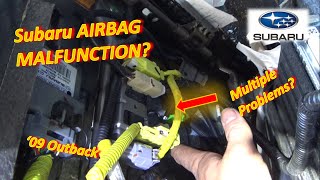
The fourth-generation Forester (SJ) is known for widespread issues with its passenger Occupant Detection System. The capacitance-based sensor mat within the seat cushion is highly sensitive to moisture from spills, high humidity, or even just condensation from normal use, which can trigger faults. Subaru issued a Technical Service Bulletin (TSB #07-108-16R) with a revised diagnostic procedure to prevent the unnecessary replacement of the entire seat cushion assembly, which was a common misdiagnosis. Additionally, a recall (WUM-98 / NHTSA 19V701000) was issued for 2015-2018 models for an unstable electrical connection in the ODS sensor mat harness, particularly in vehicles with heated seats. The exclusion of the 2014 model year from this recall, despite experiencing identical issues, led to significant owner frustration and was a focal point of a class-action lawsuit 🎬 Watch: A detailed breakdown of the Subaru ODS sensor failure. filed against Subaru.
Diagnostic Flowchart

Tap your situation to follow the diagnostic path that matches what you're seeing on this vehicle.
Symptoms You May Notice

- Airbag warning light is illuminated on the instrument cluster.
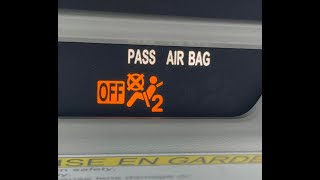
- "PASSENGER AIR BAG OFF" indicator light stays on even when an adult is seated in the passenger seat.
- "PASSENGER AIR BAG ON" indicator may illuminate when the seat is empty.
- Passenger seatbelt alarm may chime when the seat is empty, requiring the seatbelt to be buckled to stop the alarm.
- Replacing the ODS control module when the sensor mat in the seat is the actual problem.
- Clearing the code without thoroughly drying a wet seat cushion, leading to the code's immediate return.
- Replacing the ODS harness under the WUM-98 recall when the sensor mat itself was the faulty component, leading to the problem reoccurring.
Most Likely Causes

- Faulty Occupant Detection System (ODS) Sensor Mat 🔴 High Probability The sensor mat, which is integrated into the passenger seat cushion, is sensitive and prone to failure. It can be damaged by moisture from spills, high humidity, or physical stress. The WUM-98 recall for 2015-2018 models addressed a related harness connection, but many owners report the issue recurring or appearing after the recall fix, pointing to the mat itself as the root cause.
How to confirm: A professional technician will use a Subaru-specific scan tool (like the SSMIII or SSM4) to read live data from the ODS and follow the diagnostic procedure outlined in TSB 07-108-16R. The TSB explicitly states to check for moisture first before condemning the sensor mat.
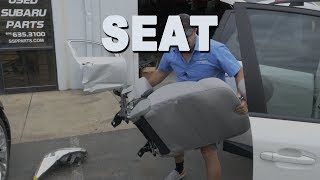
Typical fix: The sensor mat is an integral part of the entire lower seat cushion assembly. The entire seat cushion bottom must be replaced. 🎬 See this walkthrough on how to install a passenger seat. After replacement, the ODS must be recalibrated. This is a costly repair, with owners reporting dealer quotes from $1200 to over $2000.
Est. part cost: $700-$1100 - Moisture in the Seat Cushion 🟡 Medium Probability Spilled liquids or even high humidity can cause the sensitive capacitance-based sensor to malfunction and set a code. TSB 07-108-16R was created specifically to address this, as dealers were unnecessarily replacing expensive seats when they were just wet.
How to confirm: Physically inspect and feel the passenger seat for any signs of dampness or staining. The TSB specifically calls this out as the first check.
Typical fix: Thoroughly dry the seat cushion. TSB 07-108-16R recommends using the vehicle's A/C system with the fan on max, directing airflow at the cushion, or parking the vehicle in the sun with the windows open. The TSB explicitly forbids using a heat gun or hair dryer as it can damage the sensor.
Est. part cost: $0 - Poor Connection or Damaged Wiring ⚪ Low Probability The wiring and connectors under the passenger seat can be disturbed by items stored under the seat or by repeated seat adjustments. This was the specific cause cited for the WUM-98 recall on 2015-2018 models, where contact pressure in the ODS harness connector could decrease over time.
How to confirm: Visually inspect the wiring harness and connectors under the passenger seat for damage, corrosion, or loose connections. Some owners report temporarily fixing the light by jiggling or re-seating these connectors.
Typical fix: Repair the damaged wiring or clean and secure the connectors. The WUM-98 recall for 2015-2018 models involved replacing the ODS sensor mat harness free of charge. However, many owners report this fix did not solve the problem long-term.
Est. part cost: $0-$100
Rare But Worth Checking
- Faulty Occupant Detection System (ODS) Control Module: While less common than the sensor mat itself, the control module (often mounted under the seat) can fail. This is usually the last part to be replaced after all other possibilities have been exhausted. The diagnostic flowchart in the service manual will lead to this conclusion if the sensor, wiring, and airbag ECU are all confirmed to be good.
- Radio Frequency Interference: A 2012 Subaru Impreza recall (NHTSA 15V-419) for a similar capacitance-based ODS specifically cited that electronic devices like cell phones plugged into the accessory outlet could interfere with the ODS and set fault codes B1650, B1760, and/or B1761. While not officially documented for this Forester generation, it remains a theoretical possibility given the similar technology.
Diagnosis Steps
- Verify the complaint: Check for the airbag warning light and the status of the passenger airbag indicator.
- Scan the Airbag and ODS control modules for codes using a professional, Subaru-compatible scan tool (SSMIII/SSM4). Note all current and past codes.
- Follow TSB #07-108-16R: The VERY FIRST step is to check for moisture in the passenger seat cushion. Interview the customer about spills. If any wetness is suspected or found, dry it completely before proceeding. The TSB provides specific drying instructions using the car's A/C.
- If the seat is completely dry, inspect all wiring and connectors under the passenger seat for damage, corrosion, or loose connections, paying close attention to the ODS harness.
- Using the scan tool, monitor live data from the ODS to check the sensor's capacitance readings and status.
- If the sensor mat is suspected to be faulty and wiring is intact, the recommended repair is to replace the passenger seat cushion assembly. The sensor mat is not a separately serviceable component.
- After any repair, clear all codes and perform the ODS system recalibration procedure 🎬 Watch: How to reset the Subaru airbag light and SRS module. as specified by the manufacturer.
- For 2015-2018 models, verify if the WUM-98 recall has been performed. If it has and the problem persists, the issue is likely the seat cushion itself.
Parts You'll Likely Need
- Passenger Seat Cushion Assembly
(OEM #Varies by trim/color. Examples: 64140SG000VH (Black Cloth), 64140SG540VH (Black Leather). Always verify with VIN.)— The ODS sensor mat is integrated into the seat cushion. Failure of the mat requires replacing the entire cushion assembly. This is the most common fix for a persistent B1761 code, especially after the WUM-98 recall has been performed or if the vehicle is a 2014 model.
Trusted brands: Subaru (OEM)
OEM price range: $700-$1100
Aftermarket price range: Not generally available. Some owners source used seat bottoms from salvage yards via sites like car-part.com as a cheaper alternative.
Related Codes That Often Appear With This One
- B1650 — B1650 is a general 'Occupant Classification System Malfunction' code. B1761 is a more specific fault within that system, and they are frequently stored together as the primary diagnostic trigger in TSB 07-108-16R.
- B1760 — B1760 indicates a 'Sensor Mat Abnormal' fault and is very closely related to B1761 ('Sensor Mat Liquid Coating Abnormal'). They often appear together as part of the same ODS diagnostic event, frequently triggered by moisture.
Technical Service Bulletins (TSBs) & Recalls
- 07-108-16R: Provides a revised diagnostic procedure for ODS codes (B1650, B1760, B1761, etc.) to prevent unnecessary seat cushion replacement, emphasizing checking for moisture first. It also specifies the correct drying procedure.
Platform-Specific Known Issues
- A recall (NHTSA Campaign 19V701000, Subaru recall WUM-98) was issued for 2015-2018 Foresters due to an unstable electrical connection in the ODS sensor mat harness that could disable the passenger airbag.
- TSB 07-108-16R was created to guide technicians on properly diagnosing these codes to avoid the unnecessary replacement of expensive seat cushion assemblies when the cause was simply moisture.
- A class-action lawsuit (Kassien v. Subaru of America, Inc.) was filed, alleging a defective passenger-side airbag sensor in 2015-2018 Foresters. This highlighted the frustration of owners, particularly those whose issues were not resolved by the recall.
- Owners of 2014 models report identical symptoms but are excluded from the WUM-98 recall, leading to significant out-of-pocket repair costs and frustration.
Scan Tool Commands That Help
- Subaru Select Monitor (SSMIII / SSM4): Zero Point Adjustment / Rezeroing — This calibration MUST be performed after replacing the passenger seat cushion assembly or disconnecting the ODS control module. It establishes a baseline for the empty seat. The procedure requires specific vehicle conditions, such as being on a level surface, seat position all the way back and upright, and an ambient temperature between 0-40°C (32-104°F).
- Subaru Select Monitor (SSMIII / SSM4): Read Control module setting information — Used in the Driver Monitoring System (DMS) on later models, this function allows a technician to save a customer's personalized settings before performing service and then restore them afterward. While not directly for B1761, it's an example of advanced functions available in the SSM4.
Wiring & Ground Locations
- Occupant Detection Control Module — Under the front passenger's seat.. This is the brain of the ODS. All sensor mat and harness wiring terminates here. It communicates with the main airbag control module. A failure or poor connection at this module can cause B1761 and related codes.
- ODS Harness Connectors (AB59, AB53) — Under the passenger's seat, connecting the seat components to the main vehicle harness.. These connectors are the primary point of failure addressed by the WUM-98 recall. Poor contact pressure in the terminals can lead to an unstable connection, triggering the fault code. Jiggling or reseating these connectors is a common, though temporary, diagnostic step reported by owners.
- ODS Harness Inspection Label — On the ODS harness under the passenger seat, close to the center console side.. The WUM-98 recall procedure involves inspecting this label. If the supplier code is 6578 and the date code is 18074 or earlier, the harness is considered defective and must be replaced.
Real Owner Repair Stories
- Reddit user on r/SubaruForester (2016 Subaru Forester) — Airbag light coming on intermittently. Passenger seatbelt light indicates an occupant when the seat is empty. Having to pull over and jiggle/unplug wires under the seat to turn the light off.
❌ Tried (didn't work) Having the ODS sensor and seat bottom replaced under the recall in 2021., Dealer diagnostic which only read the codes from memory., Dealer claimed the issue was water damage without proof of corrosion.
✅ What actually fixed it The user's problem was ongoing, but their experience confirms a common pattern: the recall fix (harness replacement) does not always solve the problem, and the issue often returns, pointing towards a recurring failure of the sensor mat in the seat cushion itself. The dealer then quoted $1,200 to replace the seat bottom again. - YouTube user 'Final Update' (2018 Subaru Forester) — Airbag light and ODS system fault came on after the 3-year warranty expired.
❌ Tried (didn't work) Going back and forth with Subaru of America, who stated the VIN was not on the recall list.
✅ What actually fixed it The user self-diagnosed the issue by locating the ODS harness inspection label under the passenger seat. They confirmed their harness had the defective supplier code (6578) and a date code that fell within the defective range specified in the recall bulletin. Although their VIN wasn't on the official list, they proved they had the faulty part. The final resolution was not posted, but they confirmed the dealer identified the lower seat cushion (part # 64139SG000VH) as the necessary replacement.
OEM Part Supersession History
64139SG140VH→64139SG142VH— Unknown, but part supersessions often indicate a revision to improve reliability or fix a known issue.64139SJ060→64139SJ064— Unknown, likely a revision for the newer generation Forester but demonstrates the pattern of updates.
Heads up: These parts are for the 2019+ model year but show that Subaru actively revises these components.
Model Year Variations Within This Range
- 2015-2018: These model years were subject to the WUM-98 (NHTSA 19V701000) recall for the ODS sensor mat harness. The recall procedure involves inspecting a label on the harness. If the supplier code is 6578 and the date code is 18074 or earlier, the harness is replaced.
- 2014: The 2014 model year is NOT included in the WUM-98 recall, despite using a virtually identical ODS system and experiencing the same failures. Owners of 2014 models must pay for the repair out-of-pocket.
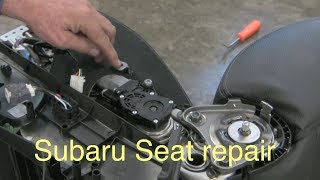
Helpful Videos
We Have This Part in Stock


The information in this article is provided for general reference and educational purposes only. Vehicle specifications, procedures, and part compatibility can vary by production date, trim level, and region. Always consult your vehicle's factory service manual and verify part numbers before purchasing or performing repairs. Safety-critical components such as airbags, seat belts, and braking systems should be installed by a qualified professional.
- Subaru FORESTER:
- 🎬 Helpful Videos
- 🛍️ Shop This Part
- What's Unique About the 2014-2018 Subaru FORESTER
- Diagnostic Flowchart
- Symptoms You May Notice
- Most Likely Causes
- Rare But Worth Checking
- Diagnosis Steps
- Parts You'll Likely Need
- Related Codes That Often Appear With This One
- Technical Service Bulletins (TSBs) & Recalls
- Platform-Specific Known Issues
- Scan Tool Commands That Help
- Wiring & Ground Locations
- Real Owner Repair Stories
- OEM Part Supersession History
- Model Year Variations Within This Range
- 🎟️ Get 5% Off