

OBD-II Code B1701: Driver Seat Belt Pretensioner Circuit Fault
What B1701 means, why it triggers, and how to fix it
- Code B1701 indicates a high-resistance fault in the driver's seat belt pretensioner circuit, instantly disabling your primary frontal crash protection.
- Over 70% of B1701 codes stem from a loose, corroded, or damaged yellow SRS connector under the driver's seat, costing $0 to fix by simply re-seating it.
- Never use a standard multimeter to test the pretensioner directly; the electrical current will detonate the explosive charge and destroy the $300+ component.
- Always perform a live-data 'wiggle test' on the under-seat wiring harness before spending $400-$850 to replace the entire pretensioner assembly.
What Does B1701 Mean?
Code B1701 means your vehicle's Supplemental Restraint System (SRS) module detects an electrical problem in the driver's seat belt pretensioner circuit. The pretensioner tightens the seat belt instantly during a crash using a small explosive charge. This fault indicates the pretensioner will not work when needed, triggering the airbag warning light.
Technical definition: The official SAE/ISO definition translates to "Driver Buckle Pretensioner Resistance Too High." The electrical resistance in the circuit exceeds the manufacturer's specified range (typically over 4.0-6.0 ohms). The SRS module interprets this as an open or damaged circuit.
Can I Drive With B1701?
Yes, But With Caution. You can physically drive the car, but it presents a severe safety risk. The B1701 code means the SRS (airbag) control module detects a fault and disables the driver's seat belt pretensioner. To prevent unpredictable deployment, most systems also disable the driver's front airbag. Ignoring this fault means driving without your vehicle's primary frontal crash protection.
Common Causes
- Loose, Corroded, or Damaged Under-Seat Connector (Very Common) — The yellow SRS connector under the driver's seat is highly vulnerable. Constant seat movement, broken locking tabs, or moisture from spilled liquids causes the pins to lose contact or corrode, instantly spiking circuit resistance.
- Damaged Wiring Harness Under the Seat (Very Common) — Items stored under the seat (water bottles, tools) roll and crush the fragile SRS wiring harness. Constant seat adjustment also stretches and breaks the wires internally over time.
- Faulty Seat Belt Buckle or Pretensioner Assembly (Common) — The pretensioner unit itself, often integrated into the seat belt buckle or retractor, fails internally. The internal explosive squib degrades, causing a permanent high-resistance reading.
- Previous Accident History (Common) — If the vehicle was in a collision, the pretensioner's explosive charge fired. It is a one-time-use component. A B1701 code remains stored until the component is replaced and the SRS module is reset.
- Previous Improper Repair or Diagnosis (Less Common) — Attempting to measure the resistance of the pretensioner's explosive squib directly with a standard multimeter sends enough current to detonate or damage the internal filament, causing a permanent fault.
- Faulty SRS Airbag Control Module (Rare) — The control module that monitors the system fails internally. Suspect this only after exhaustively ruling out the wiring, connector, and pretensioner assembly.
Symptoms
- Airbag or SRS Warning Light is On — The airbag light illuminates constantly on the dashboard. Some vehicles also display a "Service Restraints System" message.
- Audible Chime or Beep — Certain vehicles sound a repetitive chime (e.g., five beeps) upon startup or intermittently while driving to indicate a critical SRS fault.
- Seat Belt is Slow to Retract or Feels Loose — A mechanically damaged pretensioner mechanism causes the seat belt to feel loose when buckled, rattle, or fail to retract smoothly.
- High Resistance Reading on Scan Tool (scan-tool only — no driver-felt sign) — Live data from an SRS-capable scan tool shows the 'Driver Pretensioner Circuit' resistance above the specified threshold (e.g., > 4.0 ohms) or as 'OL' (Open Loop).
Diagnostic Flowchart
Tap your situation to follow the diagnostic path that matches what you're seeing on this code.
Common Fixes & Costs
- Repair or Secure Under-Seat Wiring/Connector — Parts: $0 - $25, Labor: $125 - $250, ~1 hr book time (Intermediate)
- Replace Connector Pigtail
— Parts: $20 - $50, Labor: $150 - $275, ~1.5 hr book time
(Intermediate)
: OEM - Replace the Seat Belt Buckle/Pretensioner Assembly
— Parts: $250 - $550, Labor: $150 - $300, ~1.2 hr book time
(Professional)
: OEM
: OEM - Send Original Pretensioner for Rebuilding — Parts: $65 - $120, Labor: $100 - $200, ~1 hr book time (DIY)
- Replace the SRS Airbag Control Module — Parts: $500 - $900, Labor: $200 - $400, ~2 hr book time (Professional)
Used vs. New Parts: Buying Guide
When a used part is worth it: Buying a new OEM seat belt pretensioner is strongly recommended due to the one-time-use pyrotechnic charge. A used part is only acceptable from a certified auto recycler guaranteeing the part is non-deployed and undamaged.
Donor-vehicle mileage cap: roughly under 50000 miles for the part to have meaningful remaining life.
Donor quality checklist:
- Must be a certified, non-deployed OEM part.
- Verify the donor vehicle was not involved in a flood or fire.
- Part number must be an exact match for your vehicle's VIN.
- Avoid parts with corrosion or stress marks on the plastic.
Decision logic:
- If The part contains a pyrotechnic (explosive) charge → Buy new OEM. The risk of a used part failing to deploy is too high.
- If The issue is only the connector pigtail → A new OEM pigtail is preferred, but a used connector in excellent condition is acceptable if spliced correctly by a professional.
Warranty tradeoff: Used parts typically have a 30-90 day warranty covering only the part. A new OEM part carries a 1-year warranty. Mail-in repair services offer lifetime warranties on the repair.
Worst-case if a used part fails: Infinity. A used pretensioner that fails to deploy in a crash causes life-altering injury or fatality.
What Happens If You Wait — Timeline
- Instant: The SRS module detects high resistance. The airbag warning light illuminates, and the driver's pretensioner and airbag are disabled. (MPG impact: 0%% · Added cost: $0)
- At next state inspection: The vehicle fails its annual safety inspection. Registration renewal is blocked until repaired. (MPG impact: 0%% · Added cost: $150 - $850)
- During a collision: The driver's seat belt fails to tighten, and the front airbag does not deploy, resulting in severe injury or fatality. (MPG impact: 0%% · Added cost: Infinity)
Cost of Not Fixing It
- Immediate: The driver's seat belt pretensioner and front airbag are disabled, significantly increasing the risk of serious injury or death in a frontal collision. (Added cost: N/A)
- At time of state inspection: Vehicle fails the safety inspection in states that check for an illuminated airbag warning light, preventing registration renewal. (Added cost: $400 - $850)
Diagnosis Steps
- Read the Full Code Report
Use an SRS-capable OBD-II scanner to confirm B1701 is the primary code. Note any related codes (like B1706 for the passenger side) and check freeze frame data.
Tools: SRS-capable OBD-II Scanner (Beginner) - Visually Inspect Under-Seat Area
Move the driver's seat fully up and back. Inspect the area underneath with a flashlight. Remove foreign objects. Look for the bright yellow SRS wiring loom and check for pinched, stretched, or broken wires.
Tools: Flashlight (Beginner) - Perform a 'Wiggle Test' (Intermediate)
With the scanner displaying live data for 'Driver Pretensioner Resistance', gently wiggle the yellow connector and nearby wiring under the seat. If the resistance jumps from normal (2-3 ohms) to 'O.L.', you have an intermittent break in the wiring.
Tools: SRS-capable OBD-II Scanner with Live Data (Intermediate) - Disconnect Battery and Re-seat Connector
CRITICAL: Disconnect the negative battery terminal and wait 15 minutes for system capacitors to discharge. Unplug the yellow SRS connector, inspect pins for corrosion, and plug it back in firmly until it clicks. Reconnect the battery and clear the codes.
Tools: Socket Set (for battery), Flashlight (Intermediate) - Test with an SRS Resistor Tool (Advanced)
With the battery disconnected, unplug the pretensioner connector. Plug a dedicated 2.0-3.0 ohm SRS diagnostic resistor into the VEHICLE HARNESS side. Reconnect the battery and clear the code. If B1701 disappears, the wiring is good, and the pretensioner assembly is faulty.
Tools: SRS Diagnostic Resistor Tool (2.0-3.0 Ohm) (Advanced) - Test the Wiring Harness for Continuity
If the resistor test fails, the fault is in the wiring. With the battery disconnected and the SRS module unplugged, use a multimeter to check continuity on each wire from the under-seat connector to the SRS module. 'O.L.' indicates a broken wire.
Tools: Multimeter, Vehicle-specific Wiring Diagram (Advanced) - Measure Pretensioner Component Resistance (Expert Only)
DANGER: Never use a standard multimeter on the pretensioner squib. Use a specialized, approved low-current ohmmeter designed for SRS components. A reading significantly higher than 3.0 ohms confirms internal failure.
Tools: SRS-Approved Low-Current Ohmmeter (Professional) - Final Diagnosis: SRS Module
If the pretensioner tests good and the wiring harness has perfect continuity, the fault lies with the SRS control module. This requires professional replacement and programming.
Tools: Professional Bi-directional Scan Tool, Multimeter (Professional)
When This Code Triggers (Freeze-Frame Conditions)
- Ignition Status: ON (The SRS module performs a self-test every time the key turns to the 'ON' position.)
- System Voltage: 11-14 Volts (Code sets during or after a low-voltage event (e.g., dead battery, alternator failure).)
- Component Resistance: > 4.0-6.0 Ohms (The direct cause of the code; freeze frame captures the out-of-spec resistance reading.)
Related Codes
- B1706 — Identical fault for the passenger side ('Passenger Buckle Pretensioner Resistance Too High'). Seeing both simultaneously points to widespread water damage or a failing SRS module.
- B1702 / B1703 / B1704 — Specify the exact electrical fault. B1702 is 'Resistance Too Low' (short circuit). B1703 is 'Short to Battery', and B1704 is 'Short to Ground'. These indicate pinched wires touching metal, rather than a broken wire.
- B0070 — Generic SAE code for 'Driver Seat Belt Pretensioner Deployment Control Circuit'. Some manufacturers use B0070 instead of B1701 for the exact same fault.
- B0052 — Means 'Deployment Commanded'. If seen alongside B1701, the pretensioner fired during a crash and must be replaced, and the SRS module requires resetting.
Climate & Environmental Factors
- High Humidity / Water Intrusion: Moisture catalyzes corrosion on the under-seat connector pins. Spilled drinks, wet carpets, or high ambient humidity accelerate the degradation of electrical contacts, increasing resistance.
- Cold Climates / Road Salt: Salt-laden moisture tracked into the vehicle severely corrodes wiring under the carpet. Extreme cold also makes wire insulation brittle, increasing the chance of cracking from seat movement.
How to Talk to a Mechanic About This Code
Say this: "I have an airbag light on and my scanner shows code B1701 for the driver's seat belt pretensioner circuit. Before replacing the assembly, I'd like to pay for one hour of diagnostic time to perform a live-data 'wiggle test' on the under-seat harness to check for a wiring fault."
This directs the shop to the most common and cheapest failure point (wiring) before they jump to replacing an expensive part. It establishes a clear, time-boxed diagnostic step.
Avoid saying:
- 'My airbag light is on, can you fix it?'
- 'Just do whatever it takes to turn the light off.'
- 'I think I need a new seat belt.'
Questions to ask before authorizing the repair:
- What was the specific resistance reading on the pretensioner circuit from the scan tool?
- Did you perform a wiggle test on the under-seat harness, and did the resistance value change?
- Can you confirm you tested the circuit with a diagnostic resistor and the code cleared?
- Is the replacement part a new OEM component?
- If the issue is a broken wire, will you be soldering the repair and using heat-shrink tubing?
Where to Take It: Dealer vs Independent vs Chain
- Dealer:
Recommended for Hyundai/Kia owners to check warranty coverage. For others, it is reliable but expensive.
Best for: Vehicles under warranty., Hyundai and Kia vehicles, which may have a lifetime warranty on seat belt components., Complex electrical issues requiring manufacturer-specific tools.
Downsides: Highest labor and part costs., Less willing to perform a simple wiring repair, preferring to replace the entire assembly. (Typical cost: +50% vs. baseline) - Independent Shop:
Best fit for most out-of-warranty vehicles, provided the shop has proven electrical and SRS diagnostic experience.
Best for: Out-of-warranty vehicles where cost is a concern., Simple wiring and connector repairs, which are the most common fixes for B1701.
Downsides: You must vet the shop to ensure they are equipped for SRS diagnostics, not just engine work. (Typical cost: +0% vs. baseline) - Chain Shop:
AVOID. The safety-critical nature of SRS codes is outside their area of expertise.
Best for: Simple maintenance like oil changes, tires, and brakes.
Downsides: Technicians are not trained or equipped for SRS (airbag) system diagnosis and repair., High likelihood of being turned away or misdiagnosed. (Typical cost: -10% vs. baseline)
When to Walk Away From the Repair
If the estimated repair cost exceeds 40-50% of the car's private-party value, evaluate your options. However, because B1701 causes an automatic inspection failure and disables primary safety systems, repairing it is almost always mandatory to keep or sell the car.
- Car worth $3500, fix is $750: Fix it. The repair is necessary to restore a critical safety system and make the vehicle legally sellable or pass inspection.
- Car worth $12000, fix is $800: Fix it. This is a minor cost compared to the vehicle's value and is essential for safety.
- Car worth $2500, fix is $1500: Walk away. The repair cost is 60% of the car's value. Consider selling 'as-is' to a specialized buyer or for parts.
What Scan Tool You Need for This Code
Minimum: A scanner that reads and clears Supplemental Restraint System (SRS) codes and displays live SRS data.
A standard $20 engine code reader CANNOT communicate with the SRS module. It will show 'No Codes Found' even with the airbag light on. Free rental scanners from auto parts stores are also insufficient.
Budget: Autel AutoLink AL619 / Foxwell NT630 Plus (~$90) — Reads and clears SRS codes. Displays live data, essential for performing a 'wiggle test' on the under-seat wiring.
Mid-range: BlueDriver Pro / Innova 5610 (~$120) — Offers robust SRS code reading, clearing, and live data graphing on a smartphone app or dedicated unit.
Professional: Autel MaxiCOM MK808S (~$350) — Provides full-system diagnostics, deep SRS analysis, and bi-directional control. A professional-level tool for the serious DIYer.
Rent vs buy: You must BUY a scanner. Free loan-a-tool scanners from auto parts stores cannot access the SRS module. Buying a capable budget scanner ($90) is cheaper than a single diagnostic visit at a shop ($120+).
How to Clear the Code After You Fix It
- Ensure the physical repair is complete.
- Reconnect the negative battery terminal.
- Use an SRS-capable OBD-II scan tool to clear the fault codes from the SRS module.
- Turn the ignition off, then on again, and verify the airbag light performs its self-check (on for ~6 seconds, then off) and stays off.
Drive cycle (~10 minutes): SRS codes do not require a complex drive cycle. After clearing the code, a 5-10 minute test drive confirms the repair is successful. The SRS module runs continuous self-tests.
Watch out for:
- Using a standard $20 engine code reader cannot access the SRS module to clear the code.
- Disconnecting the battery will not clear a hard SRS fault code.
- If the light returns immediately, the root cause of the high resistance remains unfixed.
Will This Fail Emissions / State Inspection?
Yes — this code typically fails an OBD-II emissions inspection.
- California: An illuminated airbag warning light is an automatic failure for the vehicle safety inspection portion of the smog check.
- New York: An illuminated airbag warning light is an advisement, not an automatic failure, but the inspector must note it on the report.
- Texas: An illuminated airbag light causes the vehicle to fail its annual safety inspection.
Most Commonly Affected Vehicles
- Ford F-150 (2009-2023) — Extremely common issue caused by wiring harness damage under the driver's seat scuff plate or near the B-pillar.
- Hyundai Sonata (2006-2014) — Well-documented issue leading to NHTSA investigation PE14-023. The SRS module sets the code if resistance exceeds 6.1 ohms.
- Kia Sportage (2005-2018) — Shares platforms with Hyundai, exhibiting the same high-resistance fault at the buckle pretensioner.
- Nissan Rogue (2011-2020) — Frequently caused by the under-seat connector becoming loose or the pretensioner assembly failing.
- Chevrolet Silverado (2007-2013) — On the GMT900 platform, this code points to a fault in the connector or wiring harness under the driver's seat carpet.
- Subaru Outback / Legacy (2010-2019) — Subaru connectors use internal shorting bars. If the connector housing is worn, it fails to disengage the shorting bar, creating a false component fault.
Manufacturer-Specific Notes
- Hyundai / Kia: The SRS module sets code B1701 if resistance exceeds 6.1 ohms. Hyundai offers a lifetime warranty on seat belt components, which frequently covers this repair for free, even for subsequent owners.
- Ford: On F-150s and Escapes, the root cause is almost always a damaged wiring harness under the driver's seat or scuff plate, not a failed pretensioner. A live-data 'wiggle test' easily confirms this.
- General Motors (GM): A B1701 code stores after a low-voltage event (like a dead battery) and requires clearing with a professional scan tool. If it returns instantly, a physical fault exists.
- Subaru: Connectors feature an internal shorting bar that engages when unplugged. A worn-out locking mechanism fails to disengage this bar when plugged in, tricking technicians into replacing a healthy pretensioner.
Real Owner Stories
2012 Hyundai Sonata, 200k miles
Airbag light came on immediately after buying the car from a used dealer.
What they tried:
- Took it to a shop that scanned the code, confirming B1701.
- Owner unplugged and replugged the main yellow connector under the driver's seat.
Outcome: Re-seating the connector fixed the poor contact. The airbag light went off permanently. Repair cost: $0.
Lesson: Always try the simplest fix first. A loose under-seat connector is the #1 cause. Unplugging and replugging (after disconnecting the battery) solves the problem for free.
2016 Ford F-150 Lariat
Airbag light appeared intermittently, then became constant.
What they tried:
- A shop performed a 'wiggle test' on the wiring harness while watching live scan tool data.
- Resistance jumped wildly when the harness near the B-pillar was moved, confirming a broken wire.
Outcome: A technician repaired the specific broken wire under the driver's side scuff plate. Total cost was $180, saving $400 over replacing the seat belt assembly.
Lesson: Don't assume the expensive component failed. On trucks, the wiring harness is prone to damage. A 'wiggle test' pinpoints simple wiring faults.
2011 Subaru Outback
Airbag light on, code B1701 present. Re-seating the connector failed.
What they tried:
- Mechanic prepared to order a new $400 pretensioner.
- A specialist noted Subaru connectors have internal 'shorting bars'.
- Inspection revealed the plastic locking tab was worn, failing to disengage the shorting bar.
Outcome: The technician replaced only the connector pigtail for $50. The fault cleared permanently.
Lesson: Manufacturer quirks matter. On Subarus, a worn-out connector mimics a failed pretensioner.
How to Prevent This Code From Triggering
- Keep the area under the front seats completely clear (Daily habit) — Objects rolling under the seat crush the delicate SRS wiring and connectors, causing an open circuit.
- Be gentle when vacuuming under the seat (During cleaning) — Jamming a vacuum nozzle under the seat dislodges the main yellow SRS connector or breaks its locking tab.
- Apply dielectric grease to the connector pins (If connector is ever disconnected) — Blocks out moisture and humidity, preventing pin corrosion that leads to high resistance faults.
- Secure loose wiring with zip ties (Once, during inspection) — Secures the harness away from moving parts, ensuring enough slack remains for full seat travel without stretching wires.
Frequently Asked Questions
Is it safe to drive my car with a B1701 code?
No. This code disables the driver's primary seat belt pretensioner and likely the front airbag. You have no primary frontal crash protection.
What is the most common misdiagnosis for B1701?
Replacing the entire $500 seat belt assembly when the actual problem is a loose or corroded under-seat connector. Always inspect and secure the connector first.
Can a bad clock spring cause a B1701 code?
No. A bad clock spring affects steering wheel components and sets codes like B0001. Code B1701 is strictly for the seat belt pretensioner circuit located in the seat or B-pillar.
Can I fix the B1701 code myself?
You can perform visual checks and re-seat the under-seat connector at home, but ONLY after disconnecting the battery for 15 minutes. Part replacement or electrical testing requires a qualified professional.
I cleared the code but it came back instantly. Why?
B1701 is a 'hard code' indicating an active electrical fault. The SRS module constantly monitors circuit resistance. The light returns immediately until the broken wire or failed part is physically repaired.
How much does it cost to fix code B1701?
A wiring or connector repair costs $150-$275 at a shop. Replacing the seat belt pretensioner assembly costs between $400 and $850. Replacing a faulty SRS module exceeds $1,000.
What is an SRS 'resistor tool' and why is it used?
An SRS resistor tool is a 2-3 ohm diagnostic resistor that plugs into the vehicle's wiring harness in place of an airbag or pretensioner. It safely mimics a functional component. If the code clears with the tool installed, it proves the vehicle's wiring is good and the pretensioner itself is faulty.
Key Takeaways
- Code B1701 indicates a high-resistance fault in the driver's seat belt pretensioner circuit, instantly disabling your primary frontal crash protection.
- Over 70% of B1701 codes stem from a loose, corroded, or damaged yellow SRS connector under the driver's seat, costing $0 to fix by simply re-seating it.
- Never use a standard multimeter to test the pretensioner directly; the electrical current will detonate the explosive charge and destroy the $300+ component.
- Always perform a live-data 'wiggle test' on the under-seat wiring harness before spending $400-$850 to replace the entire pretensioner assembly.
Helpful Videos
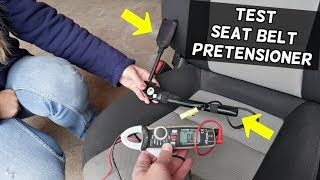
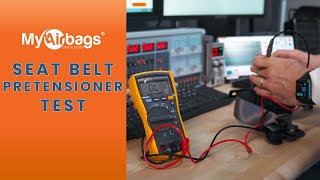
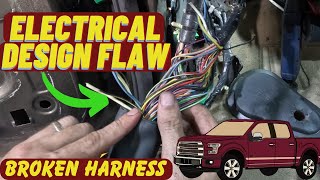
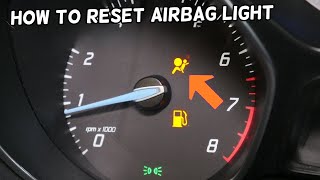

The information in this article is provided for general reference and educational purposes only. Vehicle specifications, procedures, and part compatibility can vary by production date, trim level, and region. Always consult your vehicle's factory service manual and verify part numbers before purchasing or performing repairs. Safety-critical components such as airbags, seat belts, and braking systems should be installed by a qualified professional.
- 🎬 Helpful Videos
- What Does B1701 Mean?
- Can I Drive With B1701?
- Common Causes
- Symptoms
- Diagnostic Flowchart
- Common Fixes & Costs
- Used vs. New Parts: Buying Guide
- What Happens If You Wait — Timeline
- Cost of Not Fixing It
- Diagnosis Steps
- When This Code Triggers (Freeze-Frame Conditions)
- Related Codes
- Climate & Environmental Factors
- How to Talk to a Mechanic About This Code
- Where to Take It: Dealer vs Independent vs Chain
- When to Walk Away From the Repair
- What Scan Tool You Need for This Code
- How to Clear the Code After You Fix It
- Will This Fail Emissions / State Inspection?
- Most Commonly Affected Vehicles
- Manufacturer-Specific Notes
- Real Owner Stories
- 2012 Hyundai Sonata, 200k miles
- 2016 Ford F-150 Lariat
- 2011 Subaru Outback
- How to Prevent This Code From Triggering
- Frequently Asked Questions
- Is it safe to drive my car with a B1701 code?
- What is the most common misdiagnosis for B1701?
- Can a bad clock spring cause a B1701 code?
- Can I fix the B1701 code myself?
- I cleared the code but it came back instantly. Why?
- How much does it cost to fix code B1701?
- What is an SRS 'resistor tool' and why is it used?
- Key Takeaways
- 🎟️ Get 5% Off