

OBD-II Code B1695: Left Side Airbag Sensor Malfunction
What B1695 means, why it triggers, and how to fix it
- Code B1695 disables your vehicle's entire airbag system, meaning 0 airbags will deploy in a collision.
- On 2011-2016 Kia and Hyundai hybrids, B1695 indicates a failed electric A/C compressor, not an airbag fault.
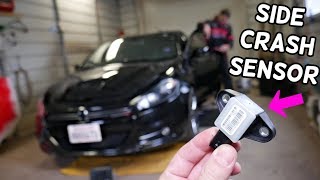
- Before buying a $150+ replacement sensor, swap the left and right side impact sensors to definitively prove the sensor is dead.
- Check the large yellow wiring connectors under the front seats; securing a loose plug fixes this code for $0 on many Chrysler and Dodge models.
What Does B1695 Mean?

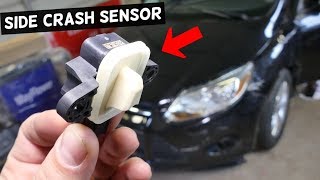
The B1695 code indicates the Supplemental Restraint System (SRS) module detects a fault in the left (driver's) side airbag impact sensor circuit. This sensor detects side-impact collisions and triggers the side or curtain airbags. When B1695 triggers, the SRS module shuts down the entire airbag system as a fail-safe. Crucial Exception: On 2011-2016 Kia and Hyundai hybrids, B1695 indicates a communication failure with the electric A/C compressor, not an airbag fault.
Technical definition: Door Side Airbag Sensor LH Malfunction. The SRS module stores this DTC when it detects an open circuit, short to ground, or short to power in the left side impact sensor circuit.
Can I Drive With B1695?
Yes, But With Caution. You can drive the vehicle, but the entire airbag system is disabled when the warning light is on. Zero airbags will deploy in a crash, creating a critical safety risk. Driving with an active airbag light also triggers an automatic failure during state safety inspections. Exception: On 2011-2016 Kia and Hyundai hybrids, this code indicates a failed A/C compressor; the vehicle is safe to drive but lacks air conditioning.
Common Causes

- Wiring or Connector Failure (Very Common) — Damaged, corroded, or loose wiring is the leading cause. Connectors under the front seats get kicked, and door jamb wiring fatigues over time. Water intrusion from leaking seals accelerates connector corrosion.
- Faulty Left Side Impact Sensor (Very Common) — The sensor fails due to age, internal short circuits, or physical damage from a previous accident.
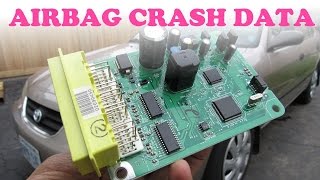
- Faulty or Un-Reset Airbag Control Module (SRS/ACM) (Common) — The central SRS computer fails or retains 'crash data' after an accident. This hard data prevents the system from functioning until professionally cleared, even if 🎬 Watch: How to clear SRS crash data via OBD2. you replace deployed airbags.
- Incorrect Sensor Installed (Less Common) — Installing a replacement sensor from a different year, model, or trim level triggers this code. Airbag part numbers must match the VIN exactly.
- Failed Repair Procedure (Less Common) — Some vehicles, notably Subarus, require a specific 'Clear Memory' initialization using a dealer-level scan tool after replacing a sensor. Failing to perform this step leaves the code active.
Symptoms

- Airbag Warning Light On — The dashboard SRS or airbag warning light illuminates permanently.
- Failed State Safety Inspection — An active airbag warning light guarantees an automatic failure in jurisdictions requiring safety inspections.
- A/C Not Blowing Cold (Kia/Hyundai Hybrids) — On 2011-2016 Kia and Hyundai hybrids, the primary symptom is a disabled air conditioning system due to a lost connection with the electric A/C compressor.
- Airbags Will Not Deploy (scan-tool only — no driver-felt sign) — The SRS module disables the entire airbag system to prevent accidental deployment. No airbags will fire in a collision.
Diagnostic Flowchart

Tap your situation to follow the diagnostic path that matches what you're seeing on this code.
Common Fixes & Costs
- Secure Loose Under-Seat/Door Connector — Parts: $0, Labor: $0-$150, ~1.0 hr book time (DIY)
- Replace Left Side Impact Sensor
— Parts: $80-$250, Labor: $150-$300, ~1.5 hr book time
(Intermediate)
: OEM
: OEM - Reset Airbag Control Module (Crash Data Removal) — Parts: $50-$150, Labor: $50-$150, ~1.5 hr book time (Intermediate)
- Replace Airbag Control Module — Parts: $200-$700, Labor: $150-$300, ~1.5 hr book time (Professional)
- Replace Electric A/C Compressor (Kia/Hyundai Hybrids)
— Parts: $1200-$2300, Labor: $250-$500, ~2.5 hr book time
(Professional)
: OEM
Used vs. New Parts: Buying Guide
When a used part is worth it: Buying a used airbag impact sensor is strongly discouraged. It only makes sense as a last resort for an older, low-value vehicle where a new part is unavailable.
Donor-vehicle mileage cap: roughly under 50000 miles for the part to have meaningful remaining life.
Donor quality checklist:
- Part number must match the original exactly.
- Verify the donor vehicle was not involved in a collision, flood, or fire.
- Visually inspect the part for physical damage, stress marks, or corrosion on the connector pins.
Decision logic:
- If The part is for any vehicle you rely on for safety. → Buy a new OEM part. The cost savings of a used sensor do not justify the safety risk.
- If A new OEM part is unavailable and the vehicle has a low replacement value. → A used part from a low-mileage, non-accident donor is a high-risk option. Assume it may not work.
- If The choice is between a new Aftermarket and a used OEM part. → Favor the new Aftermarket part from a reputable brand, as it carries a warranty and lacks unknown stress history.
Warranty tradeoff: Used parts typically have a 30-day warranty covering only the part. New OEM or reputable aftermarket sensors carry a warranty of 1 year or more.
Worst-case if a used part fails: $200-500 if the used part is dead on arrival, and an incalculable cost if it fails to trigger the airbag in a crash.
What Happens If You Wait — Timeline
- Immediate (0 seconds): Code B1695 logs during the initial key-on self-test. The airbag warning light illuminates. The entire Supplemental Restraint System (SRS) disables. (MPG impact: 0%% · Added cost: $0)
- 0 days - 1 year: The primary consequence is the complete loss of airbag protection. The vehicle fails any mandatory safety inspection. (MPG impact: 0%% · Added cost: Incalculable (Safety Risk) + Cost of eventual repair ($150 - $900+))
- 3-12+ months (if caused by water leak): Ongoing moisture and corrosion spread from the sensor connector to the wiring harness or the main SRS control module. (MPG impact: 0%% · Added cost: $500 - $1500+)
- Long Term: Continued driving normalizes the warning light, leading to driver complacency. The airbags will not deploy when needed. (MPG impact: 0%% · Added cost: The cost of not having a functional safety system in a collision.)
Cost of Not Fixing It
- Immediate: The entire Supplemental Restraint System is disabled. In a collision, no airbags will deploy, dramatically increasing the risk of serious injury or death. (Added cost: Potentially life-altering.)
- Next Inspection: The vehicle automatically fails the safety inspection in states that require one, preventing legal registration renewal. (Added cost: $150 - $900+ (cost of the required repair).)
- 1-6+ months: If the root cause is water intrusion, ongoing moisture causes further corrosion, destroying the airbag control module or other nearby electronics. (Added cost: $500 - $1500+)
Diagnosis Steps
- Scan for SRS Codes
Use an SRS-capable OBD-II scanner to confirm B1695 is active. Basic engine code readers cannot read 'B' codes.
Tools: OBD-II Scanner (SRS-capable) (Beginner) - Visually Inspect Wiring and Connectors
Inspect the yellow SRS wiring harnesses under the driver's seat and inside the door jamb. Look for loose connections, pinched wires, or green corrosion.
Tools: Flashlight (Beginner) - Perform a Sensor Swap Test
Disconnect the battery for 15 minutes. Swap the left and right side impact sensors. Reconnect the battery and rescan. If the code changes to B1690 (right side), the sensor is dead. If it stays B1695, the wiring or module is faulty.
Tools: Socket Set, Trim Removal Tools, OBD-II Scanner (Advanced) - Check for Recalls and TSBs
Search the NHTSA database using your VIN. Toyota, Subaru, Kia, and Hyundai have specific Technical Service Bulletins for this code.
Tools: VIN, Internet Access (Beginner) - Check for Stored Crash Data
If the vehicle was in a recent accident, the Airbag Control Module likely contains stored crash data. A standard scanner cannot clear this; it requires a professional SRS reset service.
Tools: Professional SRS Scan/Reset Tool (Professional) - Test Connector for Voltage and Ground
Disconnect the battery, wait 15 minutes, and unplug the sensor. Reconnect the battery, turn the ignition ON, and use a multimeter to verify the harness supplies the correct reference voltage (typically 5V or 12V) and has a solid ground (<0.1V).
Tools: Multimeter, Vehicle-Specific Wiring Diagram (Professional) - Test Wiring with a Dummy Resistor
Disconnect the battery and sensor. Insert a 2.0-3.0 Ohm resistor into the harness connector to mimic a healthy sensor. Reconnect the battery and scan. If B1695 disappears, the wiring and module are good; the original sensor is bad.
Tools: 2-3 Ohm Resistor, Multimeter, OBD-II Scanner (Professional)
When This Code Triggers (Freeze-Frame Conditions)
- System Voltage: 11.5-14.5V (Normal operating voltage during key-on self-test.)
- Ignition Status: ON (The fault is detected during the initial system check when the key is turned on.)
- Fault Status: Present / Active (Indicates the fault is currently happening, not an intermittent or past issue.)
- Time Since Key-On: < 10 seconds (The SRS module performs a self-test upon startup; faults log within seconds.)
Related Codes
- B1690 — Identical fault for the right (passenger) side sensor. Swapping sensors side-to-side changes B1695 to B1690 if the sensor is dead.
- B1698 — Left Side Airbag Sensor Initialization Incomplete. Appears after installing a new sensor if the mechanic fails to perform the manufacturer-mandated scan tool reset.
- B1615 — Front crash sensor fault. On 2011-2019 Toyotas, a software glitch falsely triggers B1695 and B1615 simultaneously, requiring a dealer software update (Recall J0X).
Climate & Environmental Factors
- High Humidity / Heavy Rain: Moisture penetrates door seals and floor pans, corroding the sensitive metal pins inside sensor connectors and disrupting the electrical signal.
- Road Salt (Salt Belt Regions): Salty slush splashes into door jambs and undercarriages, accelerating connector corrosion significantly faster than plain water.
- Extreme Temperature Fluctuations: Thermal cycling causes metal connector contacts to expand and contract, eventually loosening the connection and triggering intermittent faults.
How to Talk to a Mechanic About This Code
Say this: "I have an airbag warning light on, and my scanner shows code B1695, which points to the left side impact sensor. I'd like to schedule a diagnostic to confirm the cause. Before replacing the sensor, please verify if it's a wiring/connector issue or the sensor itself, perhaps by swapping it with the right side sensor."
This directs the mechanic toward a logical diagnostic process (checking wires, swapping sensors) instead of immediately replacing the most expensive part. It also protects you from a common misdiagnosis on certain Kia/Hyundai hybrids.
Avoid saying:
- 'My airbag light is on, can you just fix it?'
- 'Just replace the B1695 sensor.'
- 'I heard it's just a loose wire under the seat.'
Questions to ask before authorizing the repair:
- What diagnostic steps did you perform to confirm the sensor is the point of failure?
- Did you check for loose or corroded connectors under the seat or in the door?
- If the sensor needs to be replaced, is the replacement part a new OEM component with the exact part number for my VIN?
- Does my vehicle require a special system reset or initialization after the repair, and is that included in the quote?
- If my car is a Kia/Hyundai hybrid, have you ruled out the A/C compressor communication issue covered in TSBs?
Where to Take It: Dealer vs Independent vs Chain
- Dealer:
Recommended if your vehicle is known for software quirks (Subaru, Toyota recall) or if it's the specific Kia/Hyundai hybrid A/C issue.
Best for: Vehicles under warranty., Repairs requiring manufacturer-specific software updates or initialization procedures (e.g., Subaru)., Complex electrical issues or post-accident diagnostics., Diagnosing the A/C compressor fault on affected Kia/Hyundai hybrids.
Downsides: Significantly higher labor rates and part costs., Defaults to replacing entire modules rather than diagnosing a simpler wiring fault. (Typical cost: +50% vs. baseline) - Independent Shop:
Best fit for most common B1695 scenarios, such as a straightforward sensor replacement or wiring check. Ensure the shop is comfortable working on safety restraint systems.
Best for: Out-of-warranty vehicles where the cause is likely a common failure., Owners seeking a better price and more personalized service., Getting a second opinion on a high-cost dealership quote.
Downsides: Shop quality and expertise with SRS systems varies greatly., Lacks the expensive, brand-specific tools needed for post-repair system initialization on some models. (Typical cost: +0% vs. baseline) - Chain Shop:
AVOID for B1695 diagnosis and repair. The safety-critical nature of the SRS system makes these shops a poor choice.
Best for: Simple, unrelated maintenance like oil changes or tires.
Downsides: Technician skill with complex electrical and safety systems is highly variable., Lacks the advanced diagnostic tools and training required for SRS repairs., High pressure to upsell leads to unnecessary repairs. (Typical cost: -10% vs. baseline)
When to Walk Away From the Repair
If the estimated repair cost for this safety-critical system exceeds 50-60% of the car's private-party value, consider selling the vehicle as-is. A non-functional airbag system makes the car fundamentally unsafe and difficult to sell to a private party.
- Car worth $4000, fix is $650: Fix it. This is a reasonable cost to restore a critical safety feature and maintain the vehicle's value.
- Car worth $3000, fix is $2200: Walk away. The repair cost is a huge percentage of the car's value. The car is not safe to drive and has minimal resale value.
- Car worth $15000, fix is $2800: Borderline (for Kia/Hyundai Hybrid A/C fix). The cost is high but still well below the threshold. Get a second opinion from a hybrid-savvy shop.
What Scan Tool You Need for This Code

Minimum: An OBD-II scanner that reads and clears Supplemental Restraint System (SRS/Airbag) codes. A basic engine-only code reader will NOT work for B1695.
A standard $20 scanner cannot communicate with the SRS module. It won't see 'B' codes like B1695, making it completely useless for diagnosing an airbag light.
Budget: BlueDriver Pro or Autel AutoLink AL619 (~$100) — Reads and clears SRS codes for most major brands, provides freeze-frame data, and offers repair reports.
Mid-range: Foxwell NT630 Plus or Autel MaxiCOM MK808 (~$350) — Offers full-system diagnostics including SRS. Features bidirectional capabilities and service functions required to perform system initialization on brands like Subaru.
Professional: Autel MaxiSys Series or Launch X431 (~$500-1500) — Provides dealership-level diagnostic functions, including advanced coding and programming of new airbag control modules.
Rent vs buy: Most auto parts stores offer a tool loaner program, but their free scanners are typically basic engine code readers and will NOT read SRS codes. You will likely need to purchase your own SRS-capable scanner.
How to Clear the Code After You Fix It
- Ensure the physical repair is complete.
- Reconnect the negative battery terminal.
- Use an SRS-capable OBD-II scan tool to access the Airbag Control Module.
- Select the option to 'Clear Codes' or 'Reset Faults'.
- Turn the ignition off, then back on. Observe the airbag light; it illuminates for 7 seconds for a self-test and then turns off.
Drive cycle (~10 minutes): The SRS system does not require a complex drive cycle. After clearing the code, a simple key-off, key-on cycle verifies the fix. A short 10-minute test drive confirms the light stays off.
Readiness monitors affected: Not Applicable. Readiness monitors are a function of the engine control module for emissions testing, not the SRS module.
Watch out for:
- Using a basic engine code reader that cannot communicate with the SRS module.
- Failing to clear 'hard codes' or 'crash data' stored after an accident, which requires a professional reset service.
- Not performing a manufacturer-specific initialization procedure after replacing a component.
- Assuming a battery disconnect clears the code; it does not clear SRS faults.
Will This Fail Emissions / State Inspection?
Yes — this code typically fails an OBD-II emissions inspection.
- California: An airbag light will NOT fail a California smog check, as the inspection evaluates emissions systems only.
- New York: An illuminated airbag warning lamp is an ADVISORY only and does NOT cause an inspection failure.
- Texas: The airbag system is not a required item on the Texas vehicle safety inspection checklist. An active airbag light will NOT cause a failure.
- General Note: In states with comprehensive safety inspections (e.g., Pennsylvania, Virginia, Massachusetts), an active airbag warning light is an automatic failure.
Most Commonly Affected Vehicles
- Toyota Tundra (2007-2013) — Side impact sensor located in the door frequently fails. Post-accident codes persist until the main SRS module crash data is professionally reset.
- Chrysler 200 (2015-2017) — Prone to loose yellow wiring connectors under the front seats. Re-securing this plug is the most common fix.
- Kia / Hyundai Optima Hybrid / Sonata Hybrid (2011-2016) — CRITICAL: B1695 indicates a 'Loss of Communication with Electric A/C Compressor', not an airbag fault. Requires A/C compressor replacement (TSB 19-HA-001H).
- Subaru Forester / Outback / Ascent (2009-2019) — Requires a mandatory 'Clear Memory' procedure using a Subaru Select Monitor after sensor replacement. Standard scanners cannot clear the code.
- Toyota Sienna (2008-2015) — Often triggered by installing an incorrect replacement sensor part number after a door repair. Part numbers must match the VIN exactly.
- Chevrolet Suburban / Tahoe (2015-2020) — Experiences persistent crash data in the main SRS module after front-end collisions, requiring professional module resets.
Manufacturer-Specific Notes
- Kia / Hyundai (Hybrids): On 2011-2016 hybrid models, B1695 means 'Loss of Communication with Electric A/C Compressor'. Diagnosing the airbag system is a costly misdiagnosis.
- Subaru: TSB 07-149-19 mandates a 'Clear Memory' function using the Subaru Select Monitor after replacing any airbag sensor. The light stays on until this is done.
- Chrysler/Dodge/Jeep: Airbag faults frequently stem from poor connections in the large yellow wiring harness under the front seats. Cleaning and re-securing this connector fixes the issue.
- Toyota: Safety recall J0X addresses a software glitch in the airbag ECU that falsely detects sensor faults (B1695/B1615) and disables the airbags. The fix is a free dealer software update.
Real Owner Stories
2015 Chrysler 200 - Easy Fix
Airbag light came on intermittently, then stayed on. Code B1695 was present.
Outcome: The B1695 code cleared and did not return. The fix cost nothing but a can of contact cleaner.
Lesson: On Chrysler models, always check the under-seat connectors first. It is a free fix that saves a costly trip to the mechanic.
2012 Kia Optima Hybrid - Misdiagnosis Story
The A/C stopped blowing cold air, and shortly after, the airbag light came on with code B1695.
Outcome: Repairing the chewed wires restored communication with the A/C compressor. The A/C started working, and the B1695 code resolved. The airbag system was never faulty.
Lesson: For Kia/Hyundai hybrids, B1695 is an A/C communication problem, not an airbag fault. Diagnosing it as an airbag issue is a costly mistake.
2008 Toyota Tundra - Post-Accident Complication
Vehicle was in a side-impact accident. After replacing doors, airbags, and resetting the SRS module, code B1695 remained.
Outcome: Repairing the damaged wiring harness cleared the B1695 code.
Lesson: After an accident, a persistent airbag code points to hidden wiring damage. A sensor swap is a critical diagnostic step to rule out a faulty sensor.
2015 Toyota Sienna - Incorrect Part
Owner replaced a damaged driver's side door with one from a salvage vehicle. The airbag light came on immediately with code B1695.
Outcome: The part number on the salvage sensor differed from the original. Installing a new sensor with the correct OEM part number fixed the issue.
Lesson: Airbag system components are highly specific. Always verify part numbers by VIN. Using a part from a different model year or trim causes a fault.
How to Prevent This Code From Triggering
- Clean and apply dielectric grease to at-risk connectors (Every 2-3 years, or after exposure to water) — Applying dielectric grease to the weather seal of connectors creates a barrier that repels moisture and prevents corrosion.
- Inspect and clear door drain holes (Annually, especially in the fall) — Debris clogs drain holes at the bottom of doors, allowing rainwater to pool inside the door shell and submerge the sensor.
- Maintain door and window weather stripping (Annually) — Worn rubber seals allow water to leak into the cabin and door panels, damaging sensitive electronics.
- Avoid placing unsecured items under front seats (Daily habit) — Items rolling under seats snag, stress, or disconnect critical airbag wires, triggering a fault code.
- Ensure regular battery health checks (Annually) — A failing battery causes low voltage conditions or spikes during startup, corrupting data in the airbag control module.
Frequently Asked Questions
What is the B1695 code?
It indicates a malfunction in the left side airbag impact sensor circuit, disabling the airbag system. On 2011-2016 Kia and Hyundai hybrids, it indicates an A/C compressor failure instead.
Is it safe to drive with the B1695 code?
The vehicle drives normally, but zero airbags will deploy in a collision. This presents a critical safety risk. The only exception is on specific hybrids where the code relates to the A/C system.
Will my car fail inspection with an airbag light on?
Yes. In jurisdictions requiring periodic vehicle safety inspections, an illuminated airbag warning light results in an automatic failure.
I have a Kia Optima Hybrid and my A/C stopped working, now I have a B1695 code. Is my airbag broken?
No. On 2011-2016 Kia and Hyundai hybrids, B1695 specifically means the climate control module lost communication with the electric A/C compressor. Your airbags are fine, but your A/C requires professional repair.
What are the most common mistakes when diagnosing a B1695 code?
The biggest mistake is misdiagnosing a Kia/Hyundai hybrid A/C issue as an airbag fault. Another common error is replacing the sensor without performing a left-to-right swap test to verify it is actually dead.
The mechanic replaced the sensor, but the airbag light is still on. What now?
The fault lies in the wiring harness, the airbag control module contains stored crash data, or the mechanic failed to perform a mandatory system initialization reset. Subarus specifically require a dealer-level tool to clear the memory after replacement.
Can I fix the B1695 code myself?
You can easily fix loose under-seat connectors yourself. However, replacing sensors requires disconnecting the battery for 15 minutes to prevent accidental airbag deployment, and clearing the code requires a specialized SRS scanner.
How much does it cost to fix code B1695?
Fixing a loose wire costs $0. Replacing a faulty side impact sensor costs $230 to $550 for parts and labor. Replacing the electric A/C compressor on affected hybrids costs $1450 to $2800.
Key Takeaways
- Code B1695 disables your vehicle's entire airbag system, meaning 0 airbags will deploy in a collision.
- On 2011-2016 Kia and Hyundai hybrids, B1695 indicates a failed electric A/C compressor, not an airbag fault.
- Before buying a $150+ replacement sensor, swap the left and right side impact sensors to definitively prove the sensor is dead.
- Check the large yellow wiring connectors under the front seats; securing a loose plug fixes this code for $0 on many Chrysler and Dodge models.
Helpful Videos

The information in this article is provided for general reference and educational purposes only. Vehicle specifications, procedures, and part compatibility can vary by production date, trim level, and region. Always consult your vehicle's factory service manual and verify part numbers before purchasing or performing repairs. Safety-critical components such as airbags, seat belts, and braking systems should be installed by a qualified professional.
- 🎬 Helpful Videos
- What Does B1695 Mean?
- Can I Drive With B1695?
- Common Causes
- Symptoms
- Diagnostic Flowchart
- Common Fixes & Costs
- Used vs. New Parts: Buying Guide
- What Happens If You Wait — Timeline
- Cost of Not Fixing It
- Diagnosis Steps
- When This Code Triggers (Freeze-Frame Conditions)
- Related Codes
- Climate & Environmental Factors
- How to Talk to a Mechanic About This Code
- Where to Take It: Dealer vs Independent vs Chain
- When to Walk Away From the Repair
- What Scan Tool You Need for This Code
- How to Clear the Code After You Fix It
- Will This Fail Emissions / State Inspection?
- Most Commonly Affected Vehicles
- Manufacturer-Specific Notes
- Real Owner Stories
- 2015 Chrysler 200 - Easy Fix
- 2012 Kia Optima Hybrid - Misdiagnosis Story
- 2008 Toyota Tundra - Post-Accident Complication
- 2015 Toyota Sienna - Incorrect Part
- How to Prevent This Code From Triggering
- Frequently Asked Questions
- What is the B1695 code?
- Is it safe to drive with the B1695 code?
- Will my car fail inspection with an airbag light on?
- I have a Kia Optima Hybrid and my A/C stopped working, now I have a B1695 code. Is my airbag broken?
- What are the most common mistakes when diagnosing a B1695 code?
- The mechanic replaced the sensor, but the airbag light is still on. What now?
- Can I fix the B1695 code myself?
- How much does it cost to fix code B1695?
- Key Takeaways
- 🎟️ Get 5% Off