

OBD-II Code B1676: Battery Voltage Out of Range
What B1676 means, why it triggers, and how to fix it
- On Ford, Lincoln, and Mazda vehicles, B1676 indicates an internal ABS control module failure 90% of the time, rather than an actual battery issue.
- Test your battery and alternator before replacing any parts; a cranking voltage below 9.6V triggers this code across multiple modules.
- You can safely drive to a repair shop, but your ABS and traction control are completely disabled, increasing stopping distances in emergencies.
- Mailing your original ABS module to a specialist for a $150-$300 rebuild saves over $1,000 compared to a dealer replacement and requires no VIN programming.
What Does B1676 Mean?

Code B1676 indicates a control module is receiving voltage outside its operating threshold—typically below 10 volts or above 16 volts. Despite the 'Battery Voltage' name, this code frequently points to an internal hardware failure within the Anti-lock Brake System (ABS) control module itself, especially on Ford-family vehicles. The module triggers the code when the voltage anomaly lasts longer than 200 milliseconds.
Technical definition: B1676 is a manufacturer-specific code defined as 'Battery Voltage Out of Range.' Used primarily by Ford, Lincoln, Mazda, and Jaguar, it triggers when the ABS module detects system voltage outside its programmed limits. For example, on a Ford F-150 or Explorer, the code sets if the module receives less than 9.7V or more than 16V for over 210 milliseconds.
Can I Drive With B1676?
Yes, But With Caution. Yes, but your Anti-lock Braking System (ABS), traction control, and stability control are disabled. Your regular brakes function normally, but the wheels will lock up during a hard stop. This increases skidding risk and stopping distances, significantly reducing your ability to steer around obstacles in an emergency.
Common Causes

- Defective ABS Control Module (Very Common) — An internal electronic failure within the ABS control module is the primary cause on Ford, Lincoln, and Mazda vehicles. Failed internal circuits, stuck power relays, or cracked solder joints cause the module to incorrectly report a voltage drop.
- Failing or Weak Battery (Common) — A battery that is old, weak, or unable to hold a proper charge causes system voltage to drop below 9.6 volts during engine cranking. This prevents the ABS module from powering up correctly during the startup sequence.
- Faulty Alternator or Voltage Regulator (Common) — A failing alternator undercharges or overcharges the electrical system. An over-voltage condition exceeding 16 volts, or excessive AC ripple voltage from failing alternator diodes, immediately triggers this code.
- Corroded or Loose Battery Terminals/Cables (Common) — Corrosion or loose connections at the battery terminals or main ground straps create high electrical resistance. This restricts electricity flow and causes a severe voltage drop at the ABS controller.
- Shorted or Chafed Wiring Near ABS Module (Less Common) — Wires in the harness near the ABS module chafe against the chassis and short out, particularly on Jaguars. This creates a direct electrical fault the module interprets as a voltage-out-of-range condition.
- Blown Fuses or Faulty Fusible Links (Less Common) — A blown high-amperage fuse in the engine bay cuts power to the ABS module. This sets the code and causes a total loss of communication with the scanner.
- Improperly Configured Battery Management System (BMS) (Uncommon) — On newer vehicles, failing to reset the BMS after a battery replacement causes the alternator to charge incorrectly. This leads to under-voltage or over-voltage conditions that trigger the code.
Symptoms

- ABS Warning Light On — The ABS light on your dashboard illuminates immediately and stays on.
- Traction Control or Stability Control Light On — Because these systems rely on the ABS, their warning lights (TCS, VSC, RSC) illuminate simultaneously.
- ABS Pump Constantly Running — A failed internal power relay causes the ABS pump motor to run continuously, even with the key off, rapidly draining the battery. 🎬 Watch: How to fix an ABS pump that runs constantly.
- Speedometer Malfunction — The ABS module processes wheel speed data for the speedometer on many trucks (like the Ford F-150). A failed module causes the speedometer to bounce erratically or die completely.
- Shaking or Pulsing When Braking at Low Speeds — A failing ABS module causes a shudder or makes the brake pedal pulse just before coming to a complete stop in dry conditions.
- Charging System Warning Light On — If the root cause is the alternator, the red battery warning light illuminates on the dash.
- Loss of Communication with ABS Module (scan-tool only — no driver-felt sign) — Professional scan tools cannot communicate with the ABS module, confirming a total power, ground, or internal module failure.
Diagnostic Flowchart
Tap your situation to follow the diagnostic path that matches what you're seeing on this code.
Common Fixes & Costs
- Repair or Replace ABS Control Module — Parts: $150-$1200, Labor: $150-$300, ~2.0 hr book time (Professional)
- Replace Battery — Parts: $150-$350, Labor: $0-$75, ~0.5 hr book time (DIY)
- Replace Alternator — Parts: $250-$800, Labor: $150-$350, ~1.8 hr book time (Intermediate)
- Clean Connections or Repair Wiring — Parts: $5-$50, Labor: $50-$300, ~1.5 hr book time (DIY)
- Replace Blown ABS Fuse — Parts: $5-$20, Labor: $0-$25, ~0.1 hr book time (DIY)
Used vs. New Parts: Buying Guide
When a used part is worth it: When the part is discontinued, on backorder, or the vehicle has low residual value.
Donor-vehicle mileage cap: roughly under 100000 miles for the part to have meaningful remaining life.
Donor quality checklist:
- Match the part number EXACTLY.
- Buy from a reputable seller offering a 30-90 day warranty.
- Verify the donor vehicle's VIN for flood damage.
Decision logic:
- If A reputable mail-in repair service is available → Choose repair. It costs less than new, requires no programming, and carries a better warranty.
- If The part is for a common failure model and you are on a tight budget → A used part is viable, but budget for potential dealer programming costs.
- If The vehicle is newer or requires complex programming → Buy a new OEM part or professionally rebuild your original unit to guarantee compatibility.
Warranty tradeoff: Used parts offer 30-90 days. Mail-in repairs offer 1-year to lifetime. New OEM parts offer 1-2 years.
Worst-case if a used part fails: $300-$800 for a faulty used part, non-refundable shipping, and wasted diagnostic/programming fees.
What Happens If You Wait — Timeline
- 0-1 month: Code B1676 sets. ABS and Traction Control disable. Risk of skidding increases. (MPG impact: 0%% · Added cost: $0)
- 1-3 months (if caused by running pump): If the ABS pump runs constantly, the battery repeatedly drains, causing no-start conditions and premature battery death. (MPG impact: 0%% · Added cost: $150-$350)
- 3-6 months (if caused by running pump): The ABS pump motor burns out from continuous operation. A $200 module repair escalates to a $1,500+ full assembly replacement. (MPG impact: 0%% · Added cost: $1500-$2500)
- Ongoing: Driving indefinitely with disabled safety systems. An accident caused by lack of control represents the highest possible cost. (MPG impact: 0%% · Added cost: $0)
Cost of Not Fixing It
- Immediate: Disabled ABS and stability control. Increased risk of skidding and loss of control during emergency braking. (Added cost: $0)
- 0-3 months: If the ABS pump runs constantly, the battery repeatedly drains, causing no-start conditions and premature battery failure. (Added cost: $150-$350)
- 3-12+ months: The ABS pump motor burns out from continuous operation. A $200 module repair escalates to a full assembly replacement. (Added cost: $1500-$2500)
Diagnosis Steps

- Analyze All DTCs and Freeze Frame Data
Use a professional scan tool to read codes from ALL modules. If multiple modules report voltage codes (B1317, B1318, P0562), the problem is the battery or alternator. If only the ABS module reports B1676, the fault is isolated to the ABS module or its wiring. Check freeze frame data for the exact voltage level when the code set.
Tools: Professional OBD-II Scan Tool (Beginner) - Test the Battery
Measure the battery's static voltage with a multimeter; it must read 12.4-12.6 volts with the engine off. Perform a load test by having a helper start the engine while you watch the voltage. If it drops below 9.6 volts while cranking, replace the battery.
Tools: Digital Multimeter (Beginner) - Test the Charging System (Alternator)
With the engine running at 1,500 RPM, measure the voltage across the battery terminals. A healthy alternator outputs between 13.5 and 14.8 volts. Voltage below 13.5V or above 15.2V confirms a faulty alternator or voltage regulator.
Tools: Digital Multimeter (Intermediate) - [PRO TIP] Check Live Module Voltage PID
Access the ABS module's live data stream with a bi-directional scan tool. Locate the PID for internal module voltage (e.g., 'VBAT_CC'). Compare this reading to the actual voltage at the battery terminals. A discrepancy of more than 1 volt proves a wiring issue or internal module fault.
Tools: Bi-directional Scan Tool (Advanced) - Check ABS Fuses and Main Connections
Locate all high-amperage fuses (30A-60A) related to the ABS control module and pump motor in the engine bay fuse box. Visually inspect and test them for continuity. Verify the main power and ground connections at the battery are tight and corrosion-free.
Tools: Fuse puller, Multimeter (Intermediate) - Inspect Wiring to the ABS Module
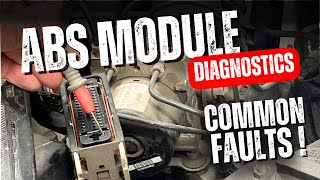
Unplug the ABS module's main electrical connector. Inspect the pins for green corrosion, moisture, or melting. Trace the harness back from the module, looking for chafed insulation or wires rubbing against the chassis.
Tools: Flashlight, Socket Set (Intermediate) - Verify Power and Ground at the ABS Module Connector
Using a vehicle-specific wiring diagram, probe the ABS module's electrical connector with the key on. Verify battery voltage (greater than 10V) on the constant and ignition-switched power pins. Verify continuity to ground on the ground pins.
Tools: Digital Multimeter, Vehicle-Specific Wiring Diagram (Advanced) - [PRO TIP] Perform Voltage Drop and Ground Tests
Connect the positive multimeter lead to the positive battery terminal and the negative lead to the ABS module's main power pin. With the key on, a reading above 0.5 volts indicates excessive resistance. Repeat on the ground side (negative battery terminal to ground pin); readings above 0.2 volts indicate a bad ground.
Tools: Digital Multimeter, Wiring Diagram, Back-probe pins (Advanced) - [PRO TIP] Check for AC Ripple Voltage
Set your multimeter to a low AC voltage scale. With the engine running at 1,500 RPM and headlights on, touch the probes to the battery terminals. A reading above 0.5V AC confirms failing alternator diodes, requiring alternator replacement.
Tools: Digital Multimeter with AC Volts function (Advanced)
When This Code Triggers (Freeze-Frame Conditions)
- Module Voltage: <10.0V or >16.0V (The voltage reading as seen by the ABS module when the fault was logged.)
- Vehicle Speed: 0 mph (Code often sets during the initial power-up sequence at key-on or during engine cranking when voltage sag is most likely.)
- Engine RPM: 0 or <500 RPM (Correlates with the code setting at key-on, before the engine is running, or during the initial crank.)
- System Status: Varies (Indicates if the fault occurred during a specific event like a jump-start, hard acceleration, or upon startup.)
Related Codes
- B1342 — Means 'ABS Control Module Internal Fault.' If paired with B1676, the ABS module is definitively dead and requires replacement.
- C1095 — Indicates an 'ABS Hydraulic Pump Motor Circuit Failure.' This points directly to a failed relay inside the ABS module assembly.
- B1317 / B1318 — Indicate battery voltage is too high (B1317) or too low (B1318). If multiple modules log these codes simultaneously, the alternator or battery is the root cause.
- P0562 / P0563 — Powertrain codes for 'System Voltage Low' and 'System Voltage High.' Seeing these confirms a vehicle-wide charging system problem.
Climate & Environmental Factors
- Cold Weather: Temperatures below 32°F (0°C) reduce battery power output by up to 60% while thickening engine oil. This forces the starter to draw more current, dropping system voltage below 9.6V and triggering B1676.
- Humidity and Road Salt: High humidity and road salt accelerate corrosion on electrical connectors and chassis grounds. This creates high resistance and localized voltage drops at the ABS module.
How to Talk to a Mechanic About This Code
Say this: "My scanner shows code B1676. Please confirm the battery and alternator are good, then perform voltage drop tests on the power and ground circuits at the ABS module connector before quoting a replacement."
Directs the technician to perform proper electrical diagnosis to rule out simple wiring issues before condemning the expensive module.
Avoid saying:
- 'My ABS light is on, can you fix it?'
- 'I think my battery is bad.'
- 'Just replace the ABS module.'
Questions to ask before authorizing the repair:
- Did you load test the battery and check for AC ripple?
- What were the voltage drop test results?
- Can I send my original unit for a rebuild?
- Does the replacement require VIN programming?
Where to Take It: Dealer vs Independent vs Chain
- Dealer:
Use only if a new OEM module with programming is required. Be prepared for a high bill ($1500+).
Best for: Vehicles under warranty, Complex programming for a new module is required
Downsides: Highest labor rates and part costs., Will only install new parts, refusing to rebuild your original module. (Typical cost: +75% vs. baseline) - Independent Shop:
Best fit. Seek a shop comfortable with the 'remove and rebuild' strategy for the ABS module.
Best for: Out-of-warranty vehicles where cost is a major factor., Shops willing to use cost-effective solutions like sending the original module for repair.
Downsides: Quality and diagnostic skill vary greatly; vet shops by reviews and ASE certifications. (Typical cost: +0% vs. baseline) - Chain Shop:
AVOID for diagnosis and repair. Use only for a free initial battery test.
Best for: Free or cheap battery and alternator testing to rule out the basics.
Downsides: Technicians often lack the advanced electrical diagnostic skills for module-level problems., High risk of misdiagnosis. (Typical cost: -10% vs. baseline)
When to Walk Away From the Repair
If the estimated repair cost exceeds 50% of the car's private-party value, consider selling it as-is.
- Car worth $3500, fix is $1800: Walk away. The repair cost is over 50% of the vehicle's value. This is not an economical repair.
- Car worth $9000, fix is $450: Fix it. A $450 mail-in module repair is well below the threshold and restores a critical safety feature.
- Car worth $5000, fix is $1500: Borderline. Get a second opinion. If the only option is a $1500 dealer replacement, consider selling. If a $400 repair is possible, it's worth doing.
What Scan Tool You Need for This Code
Minimum: A scanner that reads and clears ABS codes and displays live data.
A standard $20 engine-only reader cannot see B1676 because it resides in the ABS module.
Budget: BlueDriver Pro (~$99) — Reads ABS codes and displays live voltage data.
Mid-range: Foxwell NT510 Elite (~$180) — Provides dealer-level diagnostics and bi-directional controls for specific brands.
Professional: Autel MaxiCOM MK808BT (~$550) — Full bi-directional control, all-system diagnostics, and 28+ service functions.
Rent vs buy: Try AutoZone's free 'Fix Finder' service first. Buy a BlueDriver for regular maintenance.
How to Clear the Code After You Fix It
- Reconnect battery if it was disconnected for the repair.
- Use an OBD-II scan tool capable of reading ABS codes to clear the B1676 code.
- Perform a drive cycle to allow the system to self-test.
Drive cycle (~15 minutes): Start the vehicle and idle for 2 minutes. Drive in mixed conditions (25-55 mph) for 15 minutes, performing several normal stops. Turn the vehicle off and restart to verify the ABS light remains off.
Readiness monitors affected: B1676 does not affect emissions monitors., However, disconnecting the battery for repairs resets all monitors to 'Not Ready'.
Before emissions retest: drive at least 50 miles to fully set monitors.
Watch out for:
- Basic $20 code readers cannot clear ABS codes.
- Disconnecting the battery does not clear hard codes from the ABS module memory.
- Failing to fix the root cause makes the code return instantly.
Will This Fail Emissions / State Inspection?
No — by itself this code doesn't fail OBD inspection (but it can keep readiness monitors from setting, which causes a separate fail).
- California: An illuminated ABS light fails the safety inspection, though it passes the emissions portion.
- New York: An ABS warning light is currently NOT a cause for rejection during the annual safety inspection.
- Texas: As of 2025, non-commercial vehicles are exempt from safety inspections. An ABS light will not fail the remaining emissions test.
Most Commonly Affected Vehicles

- Ford Explorer (2002-2005) — Highly prone to internal ABS module failure. Often accompanied by code C1095 (pump motor failure) or B1342 (module internal fault).
- Ford F-150 (2004-2014) — Frequently experiences ABS module faults that set B1676 and cause speedometer failure. On 2009+ models, you must reset the Battery Management System (BMS) after a battery replacement.
- Ford Expedition (2003-2006) — Subject to the same pattern of ABS module failures as other Ford trucks and SUVs of the era, presenting with code B1676 and ABS pump-related codes.
- Chevrolet Silverado (2500/3500 HD) (2007-2014) — Known for a high rate of ABS module failure (TRW EBC-440 unit). Symptoms include the ABS light, a constantly running pump, and communication loss codes.
- Mercury Mountaineer (2002-2005) — Mechanically identical to the Ford Explorer, it suffers from the same common ABS module failures and complex part compatibility issues.
- Mazda Tribute (2001-2006) — As the twin to the Ford Escape, it experiences the same pattern of ABS module failures. Inspect the front ABS tone rings for cracks, a common failure on these models.
- Jaguar X-Type, XJ8, XK8 (1998-2008) — B1676 triggers from internal module failure or chafed wires in the harness near the ABS module shorting together (TSB JTB00041).
- Kia / Hyundai Various Models (2010-Present) — B1676 stores in the Airbag Control Module (SRS/ACU) as a 'history' code for a low voltage event during a collision, not an active ABS fault.
Manufacturer-Specific Notes
- Ford / Lincoln / Mercury / Mazda: The definition 'Battery Voltage Out of Range' is misleading. The code almost always stems from an internal electronic failure of the ABS control module, not the actual battery.
- Hyundai / Kia: B1676 is an airbag system (SRS) code indicating a history of a low voltage event during a crash, completely unrelated to the ABS system.
- Jaguar: Wires in the harness near the ABS module frequently chafe and short together, directly causing code B1676 (TSB JTB00041).
- General Motors (Chevrolet/GMC): Replacement modules require VIN programming with a dealer-level scan tool to function.
- Toyota / Lexus: On some Toyota vehicles, B1676 means 'Starter Relay Circuit-Circuit Short To Ground,' related to the remote start system, not the ABS.
- Honda / Acura: Code P1676 means 'F-CAN Communication Error' or a wheel speed sensor issue, pointing to a network problem rather than voltage.
Real Owner Stories
2002 Ford Explorer - The Classic ABS Module Failure
Owner reported the ABS light came on and stayed on. A local shop scanned the vehicle and found only code B1676 in the ABS module. Battery and alternator tested good.
What they tried:
- Initially suspected the battery due to the code's definition, but tests showed it was healthy.
- Checked ABS fuses (30A and 60A in engine bay), which were intact.
- Based on forum research pointing to module failure, the owner removed the electronic portion of the ABS module (held on by 6 Torx screws) and mailed it to a repair service.
Outcome: The repair service fixed the internal circuits of the module for around $150. After reinstalling the repaired module, the owner cleared the code with a scanner, and the ABS light stayed off. The fix was successful and avoided a costly dealer replacement.
Lesson: On older Ford SUVs and trucks, B1676 with a good battery and alternator almost always points to an internal ABS module failure. A mail-in repair service is the most cost-effective solution.
2000 Ford F-150 - Misdiagnosis leads to a drained battery
Owner found their truck battery dead multiple times. After jump-starting, the ABS light was on with codes B1676 and C1185 (ABS Pump Motor Relay Circuit). The ABS pump could be heard running even with the key out of the ignition.
What they tried:
- Replaced the battery, assuming it was old and failing. The new battery also drained overnight.
- Pulled the ABS pump relay to stop the drain as a temporary measure.
- A mechanic initially suggested replacing the entire expensive ABS hydraulic unit.
Outcome: The owner discovered the constant running pump was a symptom of a failed electronic control module, not the pump motor itself. The internal relay on the module's circuit board was stuck 'on'. Sending the electronic module for repair (costing ~$200) solved both the battery drain and the ABS codes.
Lesson: An ABS pump that runs constantly is a tell-tale sign of a failed relay inside the electronic module. This will drain your battery. Do not replace the pump motor or the whole assembly; the fault is in the cheaper-to-fix electronic controller.
2014 Ford F-150 with BMS - The 'Easy' Fix That Wasn't
A new owner of a used 2014 F-150 experienced random episodes where the entire center console and radio would shut off while driving, accompanied by the B1676 code.
What they tried:
- A mechanic checked the battery, alternator, and grounds, finding no issues. The battery was 18 months old.
- The owner suspected the previous owner did not reset the Battery Management System (BMS) after installing the battery.
- They performed the manual BMS reset procedure. The problem reoccurred the next day.
Outcome: The issue was ultimately traced to a loose connection at the main body control module (BCM) power feed, not the ABS module or BMS system. While the BMS reset is important, in this case, the B1676 code was a symptom of a wider vehicle electrical issue causing intermittent power loss to multiple modules.
Lesson: If B1676 is accompanied by other strange electrical issues (radio off, other modules failing), and a BMS reset doesn't help, suspect a main power or ground issue affecting multiple systems, not just the ABS module.
How to Prevent This Code From Triggering
- Replace car battery proactively (Every 4-5 years) — Prevents sudden, deep voltage drops during cranking that stress electronics and set codes like B1676.
- Clean battery terminals and chassis grounds (Annually) — Prevents corrosion buildup that creates high resistance and localized voltage drops.
- Use a smart battery maintainer (During storage longer than 2 weeks) — Keeps the battery at an optimal charge, preventing slow self-discharge that weakens the battery over time.
- Test charging system (Annually) — Catches an overcharging or undercharging alternator before it triggers codes or damages sensitive electronics.
Frequently Asked Questions
I just jump-started my car and now the ABS light is on with code B1676. Is the module bad?
Voltage spikes during a jump-start temporarily trigger this code. Use a scanner to clear the code. If it does not return after a drive cycle, it was a temporary glitch.
My battery and alternator tested fine. What should I do next?
If the battery and alternator pass all tests, the cause is the ABS control module or its dedicated wiring. Check the ABS fuses and perform voltage drop tests on the module's wiring harness. If the wiring is intact, the module has failed internally.
What does it mean if the ABS pump is always running?
An ABS pump running constantly with the key off indicates a failed internal relay on the ABS module's circuit board. This drains the battery rapidly. You must repair or replace the electronic module.
Can a bad wheel speed sensor cause a B1676 code?
No. A faulty wheel speed sensor sets its own specific diagnostic trouble codes (usually C1145-C1218). Code B1676 is a module-level fault related to its power supply, not sensor data.
A mechanic replaced my ABS module, but the B1676 code came back. What now?
The original problem might be in the power or ground wiring leading to the module. Alternatively, a used replacement module might have the same internal fault or lack proper VIN programming. Verify the wiring and ensure the module is programmed correctly.
My truck has a Battery Management System (BMS). Could that cause this code?
Yes. On vehicles with a BMS, the system must be reset with a scan tool after installing a new battery. Failing to reset it causes the alternator to charge incorrectly, triggering voltage instability and the B1676 code.
Can I replace just the electronic part of the ABS module myself?
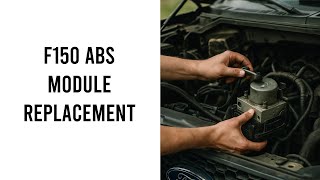
Yes, intermediate DIYers can remove just the electronic portion of the ABS module, typically held by a few Torx screws. Leaving the hydraulic unit in place means you avoid opening the brake lines. This eliminates the need for complex brake bleeding.
Key Takeaways
- On Ford, Lincoln, and Mazda vehicles, B1676 indicates an internal ABS control module failure 90% of the time, rather than an actual battery issue.
- Test your battery and alternator before replacing any parts; a cranking voltage below 9.6V triggers this code across multiple modules.
- You can safely drive to a repair shop, but your ABS and traction control are completely disabled, increasing stopping distances in emergencies.
- Mailing your original ABS module to a specialist for a $150-$300 rebuild saves over $1,000 compared to a dealer replacement and requires no VIN programming.
Helpful Videos

The information in this article is provided for general reference and educational purposes only. Vehicle specifications, procedures, and part compatibility can vary by production date, trim level, and region. Always consult your vehicle's factory service manual and verify part numbers before purchasing or performing repairs. Safety-critical components such as airbags, seat belts, and braking systems should be installed by a qualified professional.
- 🎬 Helpful Videos
- What Does B1676 Mean?
- Can I Drive With B1676?
- Common Causes
- Symptoms
- Diagnostic Flowchart
- Common Fixes & Costs
- Used vs. New Parts: Buying Guide
- What Happens If You Wait — Timeline
- Cost of Not Fixing It
- Diagnosis Steps
- When This Code Triggers (Freeze-Frame Conditions)
- Related Codes
- Climate & Environmental Factors
- How to Talk to a Mechanic About This Code
- Where to Take It: Dealer vs Independent vs Chain
- When to Walk Away From the Repair
- What Scan Tool You Need for This Code
- How to Clear the Code After You Fix It
- Will This Fail Emissions / State Inspection?
- Most Commonly Affected Vehicles
- Manufacturer-Specific Notes
- Real Owner Stories
- 2002 Ford Explorer - The Classic ABS Module Failure
- 2000 Ford F-150 - Misdiagnosis leads to a drained battery
- 2014 Ford F-150 with BMS - The 'Easy' Fix That Wasn't
- How to Prevent This Code From Triggering
- Frequently Asked Questions
- I just jump-started my car and now the ABS light is on with code B1676. Is the module bad?
- My battery and alternator tested fine. What should I do next?
- What does it mean if the ABS pump is always running?
- Can a bad wheel speed sensor cause a B1676 code?
- A mechanic replaced my ABS module, but the B1676 code came back. What now?
- My truck has a Battery Management System (BMS). Could that cause this code?
- Can I replace just the electronic part of the ABS module myself?
- Key Takeaways
- 🎟️ Get 5% Off