

OBD-II Code B1652: Crash Data Stored in Airbag Module
What B1652 means, why it triggers, and how to fix it
- Code B1652 means the SRS module has stored crash data, permanently disabling the entire airbag system until serviced.
- Do not buy a new $800 module; mail your original unit to a reset service for $40-$80 to clear the EEPROM data.
- Standard $20 OBD-II scanners cannot clear this code; you must use an SRS-capable tool or a professional reset service.
- On 2011-2017 Honda Odysseys, B1652 indicates a broken keyless entry antenna, not an airbag fault.
What Does B1652 Mean?

Code B1652 means the vehicle's Supplemental Restraint System (SRS) control module has recorded a crash event. This is a 'hard code' logging that the vehicle experienced an impact significant enough to trigger the system. Once this data is stored, the SRS module shuts down the airbag system as a safety precaution, and the airbag warning light remains illuminated until the module is professionally reset or replaced.
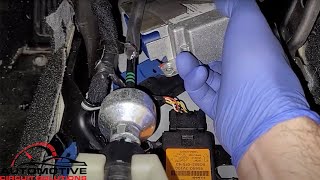
🎬 Watch: How to reset your SRS module and clear hard codes.Technical definition: The official definition for B1652 is "Crash Recorded in Front-Passenger Side Airbag" or "Crash is Recorded in SRSCM," indicating the SRS Control Module has logged deployment-level data. On Toyota models, it indicates an "Airbag Sensor Assembly connector Incomplete connection." On 2011-2017 Honda Odysseys, it points to an unrelated open circuit in the keyless entry system's rear door antenna.
Can I Drive With B1652?
No — Do Not Drive. Do not drive the vehicle. The B1652 code confirms the entire Supplemental Restraint System (SRS), including all airbags and seatbelt pretensioners, is disabled. In a collision, the system offers no protection beyond standard seatbelt locking, drastically increasing the risk of severe or fatal head, neck, and chest injuries.
Common Causes

- Vehicle collision (Very Common) — This is the primary reason for the code. The SRS module performed its function by recording data from an impact and must now be serviced.
- Installing a used SRS module from a crashed vehicle (Common) — Replacing your SRS module with one from a salvage yard vehicle that was in an accident transfers the stored B1652 code to your vehicle.
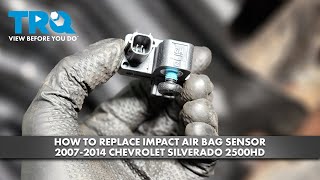
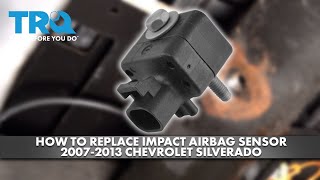
- Corroded front impact sensor (GM & Nissan) (Common) — On 2007-2014 GM trucks and some Nissan models, moisture penetrates the front impact sensor's seal, causing internal corrosion that triggers this code without an actual crash.
- Faulty SRS Control Module (Common) — The module's internal processor or memory can fail, storing false crash data without a physical impact occurring.
- Damaged wiring or loose SRS connectors (Less Common) — A poor connection at the main SRS module (common on Toyotas) or dirty yellow connectors under the front seats creates high resistance, illuminating the SRS light.
- Faulty passenger seat occupancy sensor (OCS) mat (Less Common) — Common on BMW and Nissan models, the sensor mat detecting a passenger's presence fails, triggering an SRS fault light.
- Severe battery voltage spike (Rare) — A severely drained battery or improper jump-starting corrupts the SRS module's memory, triggering a false crash code.
Symptoms

- Airbag warning light remains on — A continuously illuminated airbag or SRS warning light on the dashboard.
- Airbag system is disabled — No airbags or seatbelt pretensioners will deploy in an accident.
- Locked or tight seat belts — If a collision occurred, the seat belt pretensioners fired, leaving the belts locked, tight, or unable to retract.
- Code cannot be cleared with a scanner (scan-tool only — no driver-felt sign) — Erasing the trouble code with an OBD-II scan tool fails because the data is locked in permanent, non-volatile memory.
Diagnostic Flowchart

Tap your situation to follow the diagnostic path that matches what you're seeing on this code.
Common Fixes & Costs
- SRS Module Reset Service — Parts: $40 - $80 (service cost only), Labor: $100 - $200 (removal and reinstallation), ~1.5 hr book time (DIY)
- Replace Front Impact Sensor
— Parts: $60 - $120, Labor: $100 - $150, ~1.0 hr book time
(Intermediate)
: OEM 85598011 (Alt: Dorman 590-203, ACDelco 13502744) - Repair Wiring or Connector
— Parts: $10 - $30, Labor: $100 - $300, ~2.0 hr book time
(Intermediate)
: OEM 82998-45010 (Male terminal wire) (Alt: N/A) - Replace SRS Module (New OEM)
— Parts: $400 - $900+, Labor: $150 - $300, ~1.5 hr book time
(Professional)
: OEM 95910-4C010 (Alt: N/A (Programming required))
: OEM 95910-3Q000 (Alt: N/A (Programming required))
Used vs. New Parts: Buying Guide
When a used part is worth it: Almost never. The risk is extremely high that a salvage yard module contains stored crash data. Only viable if the part number is an exact match AND it comes from a verified non-crashed vehicle.
Donor-vehicle mileage cap: roughly under 100000 miles for the part to have meaningful remaining life.
Donor quality checklist:
- Verify donor vehicle was not in an accident and had no airbag deployment.
- Part number must match EXACTLY; superseded numbers require dealer programming.
- Avoid modules from flood-damaged vehicles, as moisture destroys the electronics.
Decision logic:
- If Your original module is not physically damaged (e.g., by fire or flood) → Use a mail-in reset service. This is the cheapest, safest option and retains your car's VIN.
- If Your original module is destroyed and a reset is impossible → Buy a new OEM module. It guarantees functionality once programmed by a dealer.
- If Budget is extremely tight and you must use a salvage part → Assume the used module needs a reset service ($40-$80) AND dealer programming ($150-$200) to match your VIN.
Warranty tradeoff: Used parts: 30-90 day warranty, often 'as-is'. New OEM: 12-month/12,000-mile warranty. Reset Service: Often offer a lifetime warranty on their data clearing work.
Worst-case if a used part fails: $300-$500 if a used module is defective, factoring in the bad part, shipping for a reset attempt, and repeated labor.
What Happens If You Wait — Timeline
- Immediate (0 seconds): Code B1652 is stored. The airbag warning light illuminates. The entire Supplemental Restraint System is disabled by the control module. (MPG impact: 0%% · Added cost: $0)
- During Ownership: The vehicle fails annual safety inspections in states like New York or Virginia, preventing legal registration. (MPG impact: 0%% · Added cost: $1000-$2500 (Estimated loss in vehicle resale value due to a known safety system fault).)
- In a Subsequent Collision: No airbags or seatbelt pretensioners deploy. The risk of severe or fatal injury increases dramatically. (MPG impact: 0%% · Added cost: Immeasurable (Potential for severe personal injury or death).)
- Post-Collision Insurance Claim: Insurance companies investigate the vehicle's condition. Discovering the SRS system was knowingly left inoperative leads to claim denial. (MPG impact: 0%% · Added cost: Potentially thousands in denied claims or legal liability.)
Cost of Not Fixing It
- Immediate: Complete deactivation of the entire Supplemental Restraint System. Risk of severe injury or death in a subsequent collision is drastically increased. (Added cost: N/A)
- During Ownership: Vehicle automatically fails state safety inspections in many jurisdictions. Significant reduction in vehicle resale value. (Added cost: $1000 - $2500 (in diminished value))
- After an Accident: Insurance claim denial or complications if the insurer determines the safety system was knowingly left in a non-functional state. (Added cost: Potentially thousands)
Diagnosis Steps
- Confirm and Attempt to Clear the Code
Use an SRS-capable OBD-II scanner to verify B1652 is active. Attempt to erase it. If it immediately returns, it is a hard-coded 'Crash Recorded' event confirming the module's memory is locked.
Tools: SRS-capable OBD-II Scanner (Beginner) - Safety First: Disconnect the Battery
Before touching any SRS components, disconnect the negative battery terminal and wait 15-30 minutes. This discharges the backup power capacitor, preventing accidental airbag deployment.
Tools: 10mm wrench (Beginner) - Inspect Front Impact Sensors (GM Focus)
On 2007-2014 GM trucks/SUVs, inspect the front impact sensors on the radiator support. Look for a split plastic housing or swelling caused by internal corrosion. If cracked, replace the sensor.
Tools: Flashlight (Beginner) - Inspect SRS Module Wiring and Connectors
Locate the SRS control module (usually under the center console). Inspect the main wiring harness for damage or loose pins. On Toyota models, a loose main connector is the primary cause of B1652.
Tools: Trim removal tools, flashlight (Intermediate) - Test Sensor Resistance (Advanced)
With a suspected bad impact sensor removed from the vehicle, measure its internal resistance using a multimeter set to Ohms. A bad sensor shows an open circuit or a dead short. Never probe the vehicle's live harness.
Tools: Multimeter, socket set (Advanced) - Check CAN Bus Communication
Use a bi-directional scan tool to view the SRS module's live data. If the scanner cannot communicate with the module on the CAN bus network, the hardware has failed and requires replacement, not just a reset.
Tools: Advanced Bi-Directional Scan Tool (Advanced) - Remove the SRS Module for Service
If the code is confirmed as non-erasable crash data and the module communicates properly, remove the module from the vehicle to mail it to a professional EEPROM reset service.
Tools: Socket set, trim removal tools (Intermediate)
When This Code Triggers (Freeze-Frame Conditions)
- Event Type: Deployment or Non-Deployment Event (The B1652 code flags that the Event Data Recorder (EDR) has stored a detailed log from a crash or significant impact.)
- Pre-Crash Data (5 seconds): Varies (The EDR captures vehicle speed, accelerator pedal position, brake application status, and engine RPM leading up to the event.)
- Crash Pulse Data: Varies (The module records the change in velocity (Delta-V), measuring the severity of the impact.)
- Occupant Status: Varies (Records seat belt status (buckled/unbuckled) for the driver and passengers at the time of the event.)
Related Codes
- B1657 / B1658 — Alternative codes for 'Crash is Recorded in SRSCM'.
- B1620 — Indicates an 'Internal Fault' within the SRS Control Module.
- B1346 / B0051 — Indicates 'Driver's Airbag Resistance Too High/Open'.
- B0052 (Seat Belt Pretensioner) — Indicates a deployed seat belt pretensioner.
Climate & Environmental Factors
- Humidity and Water Intrusion: Moisture penetrates externally mounted SRS components, specifically front impact sensors. Water inside the sensor housing causes internal corrosion that destroys the electronics.
- Road Salt: Corrosive winter road salt constantly sprays onto the vehicle's front end, dramatically accelerating the corrosion of impact sensors, connectors, and wiring.
How to Talk to a Mechanic About This Code
Say this: "I have an airbag light on and my scanner shows code B1652. I understand this is a 'crash data stored' code needing a module reset. Can you quote the labor to remove and reinstall the SRS module if I send it out for a reset service?"
Signals you understand the common fix and are focused on the most cost-effective solution. It prevents a shop from immediately quoting a full $1000+ module replacement, framing the job as a simple labor task.
Avoid saying:
- 'My airbag light is on, can you fix it?'
- 'Just replace whatever is broken.'
- 'I heard I need a new airbag computer.'
Questions to ask before authorizing the repair:
- Did you confirm with your scanner that the B1652 code cannot be cleared?
- If recommending a new module, why can't my original module be reset (e.g., is there water damage or a B1620 internal fault)?
- Does your quote for a new module include the cost of VIN programming?
- What is your warranty on the repair and the parts?
Where to Take It: Dealer vs Independent vs Chain
- Dealer:
Use as a last resort. Necessary only if a new module must be programmed.
Best for: Vehicles under warranty., Complex cases involving multiple SRS faults., When a new module requiring VIN programming is the only option.
Downsides: Highest labor rates., Will almost always recommend replacing the SRS module ($800-$1500+) rather than the affordable reset service. (Typical cost: +100% vs. baseline) - Independent Shop:
Highly Recommended. An experienced independent shop is the best partner for this repair and more likely to offer the mail-in reset solution.
Best for: Out-of-warranty vehicles., Customers seeking the cost-effective 'remove, reset, reinstall' solution., Diagnosing non-crash causes like faulty sensors or wiring.
Downsides: Quality varies; ensure the shop is experienced with SRS systems., May lack the expensive tools to program a new module if required. (Typical cost: +0% vs. baseline) - Chain Shop:
Avoid. SRS repair is a safety-critical task beyond the scope of most chain shops.
Best for: Simple, unrelated repairs like tires or oil changes.
Downsides: Technicians generally lack specialized training and diagnostic tools for complex SRS issues., High risk of misdiagnosis or being sold unnecessary parts. (Typical cost: -10% vs. baseline)
When to Walk Away From the Repair
If the total estimated repair cost for the SRS system exceeds 50% of your car's private-party value, seriously consider selling the car as-is or trading it in.
- Car worth $5000, fix is $2200: Borderline. The repair is a significant percentage of the car's value. Consider selling 'as-is' to a buyer who can fix it themselves.
- Car worth $12000, fix is $200: Fix it. A mail-in reset service is a low-cost repair restoring a critical safety feature and significant resale value.
- Car worth $3000, fix is $1800: Walk away. The repair cost is too high relative to the vehicle's value. Sell the car and put the repair money towards a replacement.
What Scan Tool You Need for This Code
Minimum: A scanner that reads and clears codes from the SRS/Airbag module. A basic engine-only code reader will not work.
A standard $20 OBD-II reader only communicates with the Engine Control Unit (ECU). The B1652 code is stored in the separate Supplemental Restraint System (SRS) module.
Budget: Autel AutoLink AL619 (~$70) — Reads and attempts to clear SRS codes on most major vehicle makes. Sufficient to confirm B1652 is present and determine if it's a 'hard code' that won't erase.
Mid-range: Foxwell NT630 Plus (~$130) — Provides excellent SRS/ABS coverage and performs active tests. Cannot clear stored crash data, but excellent for diagnosing related sensor faults.
Professional: Autel MaxiCOM MK808 / MK808BT (~$450-550) — Offers full system diagnostics and live data streaming. Helps differentiate between a simple crash data code and a complex internal module failure by checking CAN bus communication.
Rent vs buy: Auto parts stores often loan SRS-capable scanners. However, since the scanner only diagnoses B1652 and cannot clear the crash data itself, buying a budget SRS scanner is a smart long-term investment.
How to Clear the Code After You Fix It
- Install the professionally reset or new SRS module.
- Reconnect the negative battery terminal.
- Use an SRS-capable scan tool to clear any residual 'soft' codes from the repair process.
- Turn ignition on and verify the airbag light turns off after the initial 6-second bulb check.
Drive cycle: A drive cycle is not applicable. The code is stored in non-volatile memory and can only be removed by a professional reset service or module replacement. The system performs a self-test immediately upon startup.
Readiness monitors affected: None
Watch out for:
- Attempting to clear the code with a standard OBD-II scanner will fail.
- Replacing deployed airbags and seatbelts will not clear the B1652 code from the module.
- Installing a used module from a junkyard transfers a B1652 code from the donor vehicle.
Will This Fail Emissions / State Inspection?
Yes — this code typically fails an OBD-II emissions inspection.
- California: An airbag light will NOT fail a California Smog Check, which only tests emissions. However, the vehicle remains unsafe to drive.
- New York: An illuminated airbag warning light is an automatic failure for the annual safety inspection.
- Texas: An airbag light is NOT an item on the official Texas vehicle inspection checklist and typically passes, though individual shops may refuse it on safety grounds.
Most Commonly Affected Vehicles
- Kia Optima, Forte, Sorento (2006-2020) — Consistently logs B1652 for 'Crash Recorded'. The module is located under the center console and requires removal for a mail-in reset.
- Hyundai Sonata, Elantra, Genesis (2004-2015) — Frequently sets B1652 as a non-erasable crash code. The module contains a backup power supply that must be fully discharged before handling.
- Toyota Camry, Corolla, Tacoma (2004-2015) — B1652 uniquely points to an 'Incomplete connection' at the airbag ECU, indicating a loose wiring harness rather than a crash. Refer to TSB T-SB-0069-12.
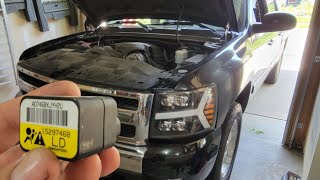
- GM (Chevrolet, GMC) Silverado, Sierra, Tahoe, Suburban (2007-2014) — Notorious for front impact sensor failures due to corrosion. The sensor is highly vulnerable on the radiator core support. Replaced by updated part 85598011.
- Honda Odyssey (2011-2017) — B1652 does not refer to the airbag system on this vehicle. It indicates an 'open circuit in the passenger side rear door LF antenna' for the keyless entry system.
- BMW 3-Series, 5-Series, X5 (2006-2013) — Prone to SRS faults triggered by a failed passenger seat occupancy mat (OCS) or a fault with the Battery Safety Terminal (BST).
Manufacturer-Specific Notes
- Hyundai / Kia: Consistently uses B1652 to mean 'Crash Recorded'. The code is intentionally locked and non-erasable with a scan tool, forcing a module reset or replacement to ensure post-crash inspection.
- Toyota: Uses B1652 to indicate an 'Airbag Sensor Assembly connector Incomplete connection'. Diagnosis must start by checking the main harness connector at the module for a loose fit.
- GM: On 2007-2014 trucks and SUVs, front impact sensors fail frequently due to water intrusion. Always visually inspect the radiator support sensors for swelling before condemning the main module.
- Honda: On 2011-2017 Odyssey models, B1652 is completely unrelated to the airbag system. It signifies an open circuit in the keyless entry system's low-frequency antenna.
Real Owner Stories
2015 Kia Optima after minor collision
Owner was in a minor accident where airbags did not deploy, but the airbag light stayed on. A scan revealed code B1652 'Crash Recorded'.
Outcome: The owner removed the SRS control module from under the center console, mailed it to a reset service, and reinstalled the cleared module. The light went off and the system passed its self-check.
Lesson: For Hyundai/Kia, B1652 is a non-erasable crash code. Do not waste money replacing other parts to fix the light; the module itself must be serviced via a mail-in reset.
2011-2017 Honda Odyssey with airbag light on
The SRS warning light illuminated, but the vehicle had not been in an accident. A standard code reader pulled B1652.
Outcome: On this specific Honda Odyssey generation, B1652 indicates an open circuit in the low-frequency antenna for the keyless entry system. The fix involved replacing the small keyless entry antenna, not touching the SRS system.
Lesson: Always verify the specific definition of a code for your exact make and model. Manufacturer quirks lead to expensive misdiagnosis.
2008 GMC Sierra with airbag light, no accident
The airbag light came on permanently. The truck had never been in a collision. A scan showed a front impact sensor fault.
Outcome: The plastic housing of one front impact sensor was cracked and swollen from internal corrosion. Replacing the single faulty sensor (Dorman 590-203) resolved the issue.
Lesson: On 2007-2014 GM trucks, a B1652-related code without an accident is almost always a corroded front impact sensor. Visually inspect these sensors before assuming the main module is bad.
2004 Toyota with B1652
Airbag light was on, and a scan tool showed B1652. The vehicle had no accident history.
Outcome: The main wiring harness connector at the SRS module was slightly loose. After unplugging, inspecting the pins, and securely reconnecting it, the code cleared permanently.
Lesson: For Toyota vehicles, B1652 points directly to a wiring or connector issue at the main airbag ECU. Check the physical connection at the module first.
How to Prevent This Code From Triggering
- Perform regular underbody washes, especially in winter. (Monthly during winter) — Removes road salt and grime that accelerates corrosion of externally mounted components like front impact sensors.
- Keep cabin interior dry and check for leaks. (Annually or after heavy rain) — Water leaks from windshield seals or clogged sunroof drains cause moisture intrusion under the center console, destroying the SRS module.
- Maintain a healthy battery and use proper jump-starting procedures. (Ongoing) — Low voltage or spikes from improper jump-starts corrupt the memory in the SRS computer, triggering false fault codes.
- Apply dielectric grease to exposed sensor connectors. (When performing front-end service) — Seals out moisture and prevents future corrosion on front impact sensor connectors.
- Secure wiring away from moving parts. (During under-dash or under-seat work) — Ensures wiring for seat sensors doesn't get snagged or pinched, preventing intermittent open circuits.
Frequently Asked Questions
Can I reset the B1652 code myself?
You cannot reset this code with a standard OBD-II scanner. It is a 'hard code' requiring a specialized service to clear the internal EEPROM crash data. Attempting to clear it with a basic tool will fail.
Is it safe to drive with code B1652?
No. This code indicates the entire airbag system is inactive. In an accident, no airbags or seatbelt pretensioners will deploy, dramatically increasing the risk of serious injury or death.
Will replacing the deployed airbags fix the B1652 code?
No. Replacing the airbags and seat belts is necessary after a crash, but it will not clear the B1652 code. The SRS control module itself must be serviced separately to clear the stored crash data.
What's the difference between resetting and replacing the airbag module?
Resetting involves a specialist clearing the crash data from your original module for $40-$80, requiring no programming. Replacing means buying a new module for $500-$1500+ and paying a dealership to program it to your car's VIN.
My car wasn't in an accident. Why do I have this code?
If the car has never been in an accident, the cause is likely a faulty SRS control module, a bad front impact sensor (especially on GM trucks), or a wiring issue. In rare cases, severe voltage fluctuations corrupt module data.
Can I use a junkyard airbag module?
Yes, but it is highly risky. The module must have the exact same part number and come from a vehicle that was never in a crash. If the donor vehicle was in an accident, the module will have its own B1652 code stored.
What does 'crash recorded passenger side' mean?
This is a common definition for B1652 on Hyundai and Kia vehicles. It indicates crash event data is logged and the system is disabled. It serves as a general identifier for the stored crash event, not necessarily isolating the passenger side.
Key Takeaways
- Code B1652 means the SRS module has stored crash data, permanently disabling the entire airbag system until serviced.
- Do not buy a new $800 module; mail your original unit to a reset service for $40-$80 to clear the EEPROM data.
- Standard $20 OBD-II scanners cannot clear this code; you must use an SRS-capable tool or a professional reset service.
- On 2011-2017 Honda Odysseys, B1652 indicates a broken keyless entry antenna, not an airbag fault.
Helpful Videos

The information in this article is provided for general reference and educational purposes only. Vehicle specifications, procedures, and part compatibility can vary by production date, trim level, and region. Always consult your vehicle's factory service manual and verify part numbers before purchasing or performing repairs. Safety-critical components such as airbags, seat belts, and braking systems should be installed by a qualified professional.
- 🎬 Helpful Videos
- What Does B1652 Mean?
- Can I Drive With B1652?
- Common Causes
- Symptoms
- Diagnostic Flowchart
- Common Fixes & Costs
- Used vs. New Parts: Buying Guide
- What Happens If You Wait — Timeline
- Cost of Not Fixing It
- Diagnosis Steps
- When This Code Triggers (Freeze-Frame Conditions)
- Related Codes
- Climate & Environmental Factors
- How to Talk to a Mechanic About This Code
- Where to Take It: Dealer vs Independent vs Chain
- When to Walk Away From the Repair
- What Scan Tool You Need for This Code
- How to Clear the Code After You Fix It
- Will This Fail Emissions / State Inspection?
- Most Commonly Affected Vehicles
- Manufacturer-Specific Notes
- Real Owner Stories
- 2015 Kia Optima after minor collision
- 2011-2017 Honda Odyssey with airbag light on
- 2008 GMC Sierra with airbag light, no accident
- 2004 Toyota with B1652
- How to Prevent This Code From Triggering
- Frequently Asked Questions
- Can I reset the B1652 code myself?
- Is it safe to drive with code B1652?
- Will replacing the deployed airbags fix the B1652 code?
- What's the difference between resetting and replacing the airbag module?
- My car wasn't in an accident. Why do I have this code?
- Can I use a junkyard airbag module?
- What does 'crash recorded passenger side' mean?
- Key Takeaways
- 🎟️ Get 5% Off