

B1650 on 2010-2014 Subaru Outback: ODS Failure Causes and Fixes
On a 2010-2014 Subaru Outback, code B1650 indicates a fault in the passenger seat's Occupant Detection System (ODS). This will disable the passenger airbag. The fix can range from a simple system recalibration (rezeroing) to an expensive replacement of the seat bottom cushion, which contains the sensor mat. Always investigate moisture and perform a rezero before replacing parts.
- B1650 means your Outback's passenger airbag is turned OFF due to a fault in the seat sensor system.
- Before agreeing to any expensive repairs, insist that the shop performs the ODS rezeroing/calibration procedure detailed in Subaru TSB #07-84-14R.
- Check if the passenger seat has gotten wet recently; moisture is a very common cause of this code. Ensure the seat is 100% dry.
- If calibration fails and the seat is dry, the most likely fix is replacing the entire passenger seat bottom cushion, which is a costly repair.
- This is a safety-critical repair that should be handled by a professional technician with the correct diagnostic tools.
What's Unique About the 2010-2014 Subaru OUTBACK

For this generation of Outback, Subaru has issued specific Technical Service Bulletins (TSBs) that revise the diagnostic procedure for B1650. These bulletins emphasize performing an ODS rezeroing (recalibration) procedure before condemning expensive parts like the seat cushion. This is a critical, money-saving step, as many issues can be resolved through this calibration without any parts being replaced. The issue is common enough that Subaru has updated its diagnostic charts specifically for this code and its related DTCs (B1760, B1761, etc.).
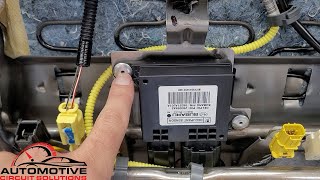
🎬 Watch: Locate the ODS module on your 2014 OutbackDiagnostic Flowchart

Tap your situation to follow the diagnostic path that matches what you're seeing on this vehicle.
Symptoms You May Notice

- Red airbag warning light illuminated on the dashboard.
- Passenger airbag OFF indicator light is lit, even with an adult passenger seated.
- Passenger airbag ON/OFF indicator may behave erratically.
- Airbag light may be intermittent, appearing only when a passenger is in the seat.
- Replacing the passenger seat cushion assembly without first attempting the ODS rezeroing/calibration procedure.
- Replacing the main airbag control module when the fault lies within the ODS components (sensor mat or ODS module).
- Condemning the seat sensor mat when the actual cause is undetected moisture in the cushion.
Most Likely Causes

- Occupant Detection System (ODS) Requires Rezeroing/Calibration 🔴 High Probability Subaru issued TSBs #07-84-14 and #07-84-14R specifically to add this calibration step to the diagnostic procedure, indicating it's a common resolution. System sensitivity can drift over time or after the seat is disassembled for any reason, requiring recalibration. A minor accident can also trigger the need for recalibration even if no airbags deploy.
How to confirm: A professional technician must use a compatible scan tool, like the Subaru Select Monitor (SSM), to perform the ODS rezeroing procedure. The procedure requires specific vehicle preparation, such as parking on a level surface, ensuring the seat temperature is between 32-104°F (0-40°C), and having no objects in the vehicle.
Typical fix: Perform the ODS rezeroing procedure following the steps in TSB #07-84-14R. If the code clears and does not return, no further action is needed. A dealer or qualified shop may charge 1-1.5 hours of labor for this service.
Est. part cost: $0 - Moisture in the Passenger Seat Cushion 🟡 Medium Probability The capacitive sensor is highly sensitive to moisture. Spilled drinks, cleaning the seats with water, leaving a window open in the rain, or even high humidity can cause the system to register a fault. Subaru TSBs specifically warn technicians to check for a wet seat cushion before beginning diagnostics.
How to confirm: Physically check if the passenger seat is damp. A Reddit user noted their B1650 code appeared immediately after a deep cleaning service. Another user confirmed their light came on after leaving the sunroof open in the rain.
Typical fix: Thoroughly dry the seat cushion. Subaru recommends parking the vehicle in the sun or using the vehicle's A/C system with the fan on high to do this and explicitly warns against using a heat gun or hair dryer. Once completely dry, the code may clear on its own or may need to be cleared with a scan tool. If the sensor was permanently damaged by the moisture, it will require replacement.
Est. part cost: $0 - Failed ODS Sensor Mat in Seat Cushion 🟡 Medium Probability The sensor mat is a sensitive capacitive sensor that can be damaged by physical stress (e.g., kneeling on the seat, heavy point loads) or moisture. An owner complaint to the NHTSA for a 2013 Outback with code B1650 resulted in a dealer recommendation to replace the entire seat bottom.
How to confirm: This is typically diagnosed after the rezeroing procedure fails to clear the code and the seat is confirmed to be 100% dry. A technician will then follow the diagnostic flowchart from the service manual, which involves checking wiring and may condemn the sensor mat if all other components test good.
Typical fix: Replace the passenger seat bottom cushion assembly, as the ODS sensor mat is integrated into it. After replacement, the new sensor must be calibrated (rezeroed).
Est. part cost: $1000-$1800 - Wiring or Connector Issue ⚪ Low Probability Wiring under the passenger seat can be disturbed by items stored under the seat or by the seat being moved back and forth repeatedly. A recall for a similar issue on later model Foresters points to harness connection being a potential failure point. Wiggling the harness under the seat has been reported by some owners to temporarily resolve the issue, pointing to a poor connection.
How to confirm: Visually inspect the wiring and connectors under the passenger seat for damage, corrosion, or disconnection. TSBs mention checking connectors (AB59) and (AB53) under the seat. Perform continuity checks as per the service manual.
Typical fix: Repair the damaged wire or clean the connector pins with contact cleaner and secure the connector.
Est. part cost: $0-$50
Rare But Worth Checking
- Faulty ODS Control Module: The ODS has its own control module, separate from the main airbag ECU, often located under the passenger seat and attached with rivets. While less common than a sensor failure, the module itself can fail or store crash data after an accident, requiring a reset or replacement. Services exist that can reset these modules without full replacement.
- Aftermarket Electronic Devices: Subaru's TSB 07-84-14R explicitly warns that aftermarket devices connected to the vehicle can cause interference with the ODS and trigger a B1650 code. This can include phone chargers, heated seat covers, or other electronics. The fix is to remove the device.
Diagnosis Steps

- Verify the airbag warning light is on. Note the status of the 'Passenger Airbag OFF' indicator.
- Scan the Airbag (SRS) Control Module for codes. Confirm B1650 is present. Then, access the Occupant Detection System (ODS) module and check for more specific codes like B1760, B1761, etc.
- Interview the driver about recent events. Ask specifically about spilled liquids, seat cleaning, heavy or sharp objects placed on the passenger seat, or any aftermarket electronics being used.
- Thoroughly inspect the passenger seat cushion for any signs of moisture. If wet, dry it completely before proceeding. Do not use a heat gun.
- Visually inspect all wiring and connectors under the passenger seat, particularly connectors (AB59) and (AB53), for damage, corrosion, or loose connections.
- Using a Subaru-compatible scan tool (like the Subaru Select Monitor or a high-end aftermarket tool), perform the 'ODS Re-zeroing' or 'Occupant Classification Sensor Reset' procedure as outlined in TSB #07-84-14R. This requires the vehicle to be empty, on a level surface, and within a specific temperature range.
- Clear the codes and cycle the ignition. See if the B1650 code returns. Have a passenger sit in the seat to confirm proper operation.
- If the code returns after a successful rezeroing and the seat is confirmed dry, the ODS sensor mat within the seat cushion is the most likely culprit. Replacement of the seat bottom assembly is the standard repair.
Parts You'll Likely Need
- Passenger Seat Cushion Assembly
(OEM #Varies by trim/color. Example for a different model/year: 64120AJ03A (Driver side pad, for reference). The ODS sensor itself may have part numbers like 98321AJ01B or 98321AJ00B.)— The ODS sensor mat is integrated into the seat cushion. If the sensor fails, the entire cushion assembly must be replaced. This was the dealer-recommended fix in an NHTSA owner complaint. Aftermarket options are not typically available for this safety component.
Trusted brands: Subaru (OEM)
OEM price range: $1000-$1400
Related Codes That Often Appear With This One
- B1760, B1761, B1771, B1795 — These are more specific diagnostic codes stored in the Occupant Detection control module that provide details about the malfunction (e.g., B1760 is 'Sensor Mat Abnormal'). B1650 is the general fault code stored in the main Airbag Control Module when these other codes are present. A full diagnosis requires scanning both modules.
Technical Service Bulletins (TSBs) & Recalls
- 07-84-14R: Describes clearer steps for completing the Occupant Detection System (ODS) rezeroing (system calibration) procedure along with a revised diagnostic chart for DTC B1650 (ODS Failure). It also details specific vehicle preparation steps required for a successful calibration.
- 07-84-14: The original TSB which first introduced revised B1650 diagnostics and the ODS rezeroing procedure for 2010-2014 Legacy and Outback models.
Platform-Specific Known Issues
- Subaru issued TSB #07-84-14R to revise the diagnostic chart for DTC B1650, adding a critical 'ODS rezeroing' step to avoid unnecessary replacement of the expensive seat cushion assembly.
- An owner of a 2013 Outback filed a complaint with the NHTSA (ODI #11204864) after being quoted $1,840 by a dealer to fix code B1650 by replacing the bottom part of the passenger seat.
- The ODS control module is riveted to the bottom of the passenger seat frame, requiring drilling out the rivets for removal if it needs to be sent for a reset service after a collision.
Mechanic-Grade Diagnostic Values
- Voltage at Occupant Detection Harness connector to chassis ground — expected: 10 V or more. Failure: Less than 10 V indicates a power supply issue to the ODS module.
- Airbag rear harness continuity — expected: Less than 10 Ω. Failure: 10 Ω or more indicates an open circuit in the harness.
- Airbag rear harness short to ground — expected: 1 MΩ or more. Failure: Less than 1 MΩ indicates a short to ground in the harness.
Hidden / Shadow Codes Worth Checking
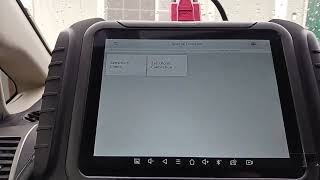
- B1787 / B1788: Occupant Classification Sensor Collision Detected. These codes can be stored in the ODS module after a minor collision (even one that doesn't deploy airbags) and will trigger the B1650 code in the main SRS module. They indicate the need to perform a zero point calibration. (see via A scan tool capable of reading codes from the 'Detection of Occupant' or 'Occupant Classification' module, such as an Xtool D8 or the Subaru Select Monitor.)
Scan Tool Commands That Help
- Subaru Select Monitor (SSMIII): Rezeroing — This is the primary calibration function. It's found under {Each System Check} -> {Occupant Detection System} -> {Rezeroing}. It must be performed after any seat disassembly or if the code is present without a clear hardware fault.
- Aftermarket (e.g., Xtool D8): Zero Point Calibration — This function, found under the 'Detection of Occupant' special functions menu, is used to recalibrate the seat sensor's baseline reading. It is the required fix when sub-codes for collision detection are present without any parts being damaged or replaced.
Wiring & Ground Locations
- ODS Control Module — Under the front passenger seat, attached to the seat frame with two rivets.. This is the brain of the occupant detection system. It can fail or store crash data independently of the main airbag ECU. Access requires removing the seat and drilling out the rivets.
- Connectors (AB59) and (AB53) — Under the passenger's seat.. These are the primary harness connectors for the ODS system mentioned in Subaru's diagnostic procedures. Checking for poor contact here is a required step before replacing parts.
- Body Integrated Unit (BIU) — Under the driver's side dash, to the right of the steering column.. The BIU is a central control module that communicates with various systems, including the SRS. While not a direct cause of B1650, it's a key part of the vehicle's electrical architecture.
- Fuse & Relay Box (F/B) — In the left kick panel, by the driver's feet.. This panel contains fuses for various body and interior systems. A power supply issue originating from a fuse here could potentially affect the ODS module.
Real Owner Repair Stories
- YouTube user with an Xtool D8 scanner (Toyota (demonstrating same B1650 code principle), post-accident) — Airbag light on with DTC B1650 after a minor front-right accident where no airbags deployed.
❌ Tried (didn't work) Clearing the B1650 code from the main SRS module (code would return instantly).
✅ What actually fixed it The technician scanned the separate 'Detection of Occupant' module and found codes B1787/B1788 (Collision Detection). Performing the 'Zero Point Calibration' special function within that module cleared the sub-codes, which then allowed the main B1650 code to be cleared and resolved the issue without replacing any parts. - YouTube channel Automotive Circuit Solutions (2014 Subaru Outback, post-accident) — Airbag light on with DTC B1650 after a collision. The main airbag module had already been reset.
❌ Tried (didn't work) Resetting the main SRS airbag control module.
✅ What actually fixed it The technician identified that the separate ODS module, located under the passenger seat and attached with rivets, also stores its own crash data. They removed the seat, drilled out the rivets to remove the module, sent it for a reset service to clear the internal crash data, and reinstalled it with new rivets. This cleared the B1650 code.
OEM Part Supersession History
98321AJ00B, 98321AJ01A→98321AJ01B— Part revision or supplier change for the ODS sensor mat.
Heads up: These parts are often listed together, suggesting they are likely interchangeable for the 2010-2014 generation, but it is always critical to verify the correct part number by VIN before ordering.98221AJ15A→98221AJ15B— Revision of the main SRS Airbag Control Module.
Heads up: While not the ODS module, replacing the wrong component is a common misdiagnosis. The main SRS module for a 2013 Outback is listed as 98221AJ15A. Always match part numbers exactly when replacing control modules.
Helpful Videos
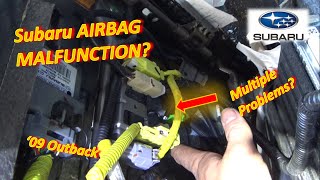
We Have This Part in Stock

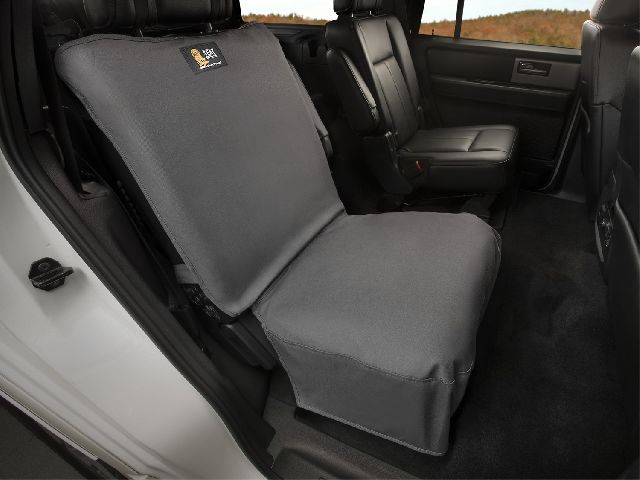
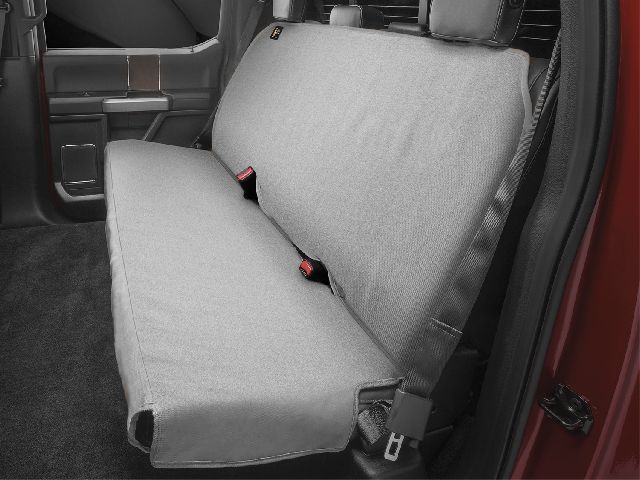
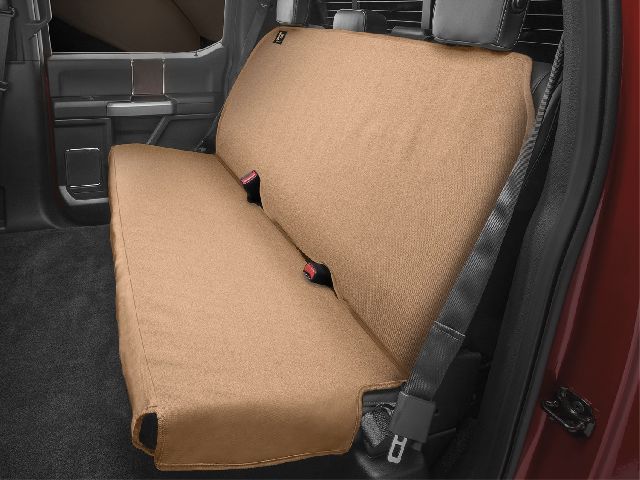

The information in this article is provided for general reference and educational purposes only. Vehicle specifications, procedures, and part compatibility can vary by production date, trim level, and region. Always consult your vehicle's factory service manual and verify part numbers before purchasing or performing repairs. Safety-critical components such as airbags, seat belts, and braking systems should be installed by a qualified professional.
- Subaru OUTBACK:
- 🎬 Helpful Videos
- 🛍️ Shop This Part
- What's Unique About the 2010-2014 Subaru OUTBACK
- Diagnostic Flowchart
- Symptoms You May Notice
- Most Likely Causes
- Rare But Worth Checking
- Diagnosis Steps
- Parts You'll Likely Need
- Related Codes That Often Appear With This One
- Technical Service Bulletins (TSBs) & Recalls
- Platform-Specific Known Issues
- Mechanic-Grade Diagnostic Values
- Hidden / Shadow Codes Worth Checking
- Scan Tool Commands That Help
- Wiring & Ground Locations
- Real Owner Repair Stories
- OEM Part Supersession History
- 🎟️ Get 5% Off