

B1650 on 2014-2018 Subaru Forester: Occupant Classification System Malfunction Explained
Code B1650 on a 2014-2018 Subaru Forester means there's a fault in the passenger seat's Occupant Classification System, which is critical for proper airbag deployment. The most common cause is a failed sensor mat inside the seat cushion, often due to moisture or stress. The fix is typically replacing the entire passenger seat bottom cushion, a costly repair ranging from $1,000 to over $2,000 at a dealership. This issue is widespread and also affects other Subaru models like the Crosstrek and Imp
- B1650 means your Forester's passenger airbag is disabled. Do not place passengers in the front seat until it is repaired.
- Before authorizing an expensive repair, ensure the passenger seat is 100% dry, as moisture is a very common trigger for this code.
- The most common official repair is to replace the entire passenger seat bottom cushion, which is a costly part.
- This is a known issue on 2014-2018 Foresters, documented by Subaru TSBs and numerous owner complaints.
- Due to the critical safety nature of the airbag system, this repair and the subsequent system recalibration should be performed by a qualified professional.
What's Unique About the 2014-2018 Subaru FORESTER

The fourth-generation Forester (2014-2018) is particularly known for this issue, as documented in multiple Technical Service Bulletins (TSBs) from Subaru. The capacitive sensor mat within the passenger seat cushion is highly sensitive to moisture from spilled liquids, an open window, or even high humidity, which can trigger the B1650 code. This has been a frequent point of frustration for owners, especially when the vehicle is out of warranty, due to the high cost of replacing the entire seat cushion assembly. Many owners report the issue persists even after a related recall (WUM-98) was performed, with dealers then quoting over $2,000 for the seat replacement.
Diagnostic Flowchart

Tap your situation to follow the diagnostic path that matches what you're seeing on this vehicle.
Symptoms You May Notice

- SRS (Airbag) warning light is on
- Passenger airbag OFF indicator light is illuminated, even with an adult in the seat
- Message on the dash indicating an SRS system fault.
- An audible chime or alarm may sound intermittently or continuously.
- Replacing only the ODS control module without addressing a faulty sensor mat.
- Clearing the code without first drying a wet seat cushion, leading to the code's immediate return.
- Assuming the WUM-98 recall fix for the harness will solve a problem caused by a failed sensor mat.
Most Likely Causes

- Failed Occupant Detection System (ODS) Sensor Mat 🔴 High Probability The sensor mat integrated into the passenger seat cushion is a sensitive capacitive unit that can be permanently damaged by moisture (spilled drinks, rain) or high humidity. Repeated stress from entering/exiting the vehicle or placing heavy, pointed objects on the seat can also lead to failure over time. Many owner complaints confirm this is the most common failure point, even on seats that have never been wet.
How to confirm: A technician will use a Subaru-specific scan tool (like the SSMIII) to read codes from the Airbag and ODS modules. If the seat is confirmed to be dry and the B1650 and/or B1760 codes persist after clearing, the sensor mat is condemned. The diagnostic procedure in TSB 07-108-16R is the official method to rule out other causes before replacing the part.
Typical fix: The ODS sensor is integrated into the passenger seat bottom cushion and is not sold as a separate part by Subaru. The entire seat cushion assembly must be replaced. After replacement, the new sensor must be calibrated to the system using the 'OCS System Reset/Recalibration' procedure.
Est. part cost: $600-$900 - Moisture in the Passenger Seat Cushion 🟡 Medium Probability As stated in Subaru TSB 07-108-16R, liquid spills or even rain from an open window can penetrate the seat and reach the sensor mat, causing a temporary or permanent fault. The TSB was created specifically to help technicians diagnose this and avoid unnecessary seat replacements. Some owners have had this issue after having their vehicle's interior detailed.
How to confirm: Visually inspect and feel the passenger seat for any dampness or staining. A technician may need to partially remove the seat cover for a thorough inspection. The presence of moisture combined with a B1650 code is a strong indicator.
Typical fix: Thoroughly dry the seat cushion. Subaru explicitly warns against using a heat gun or hair dryer. The recommended method is to park the vehicle in a sunny spot or use the vehicle's air conditioning system, with the fan on high, directed at the seat for an extended period. If the code returns after the seat is completely dry, the sensor has likely been permanently damaged.
Est. part cost: $0 - Poor Connection or Damaged Wiring Harness ⚪ Low Probability The wiring and connectors under the passenger seat can become loose or damaged. Subaru issued recall WUM-98 (NHTSA #19V701) for 2015-2018 Foresters specifically for an ODS sensor mat harness connection that could loosen over time. However, many owners report the B1650 code appearing even after this recall was performed.
How to confirm: Inspect the wiring harnesses and connectors under the passenger seat for any visible damage, corrosion, or loose connections. A technician will follow the diagnostic steps in TSB 07-108-16R, which includes checking for poor contact at the connectors. The WUM-98 recall procedure itself involves inspecting and replacing the harness if necessary.
Typical fix: If the issue is a loose connector, securing it may solve the problem. If the harness is faulty, it must be replaced. The WUM-98 recall covers the replacement of the ODS sensor mat harness at no cost.
Est. part cost: $0 - $150
Rare But Worth Checking
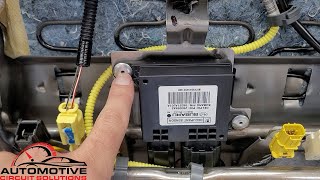
- Faulty Occupant Detection System (ODS) Control Module: This module, typically mounted with rivets to the bottom of the seat frame, can fail, but it is much less common than the sensor mat itself. Diagnosis usually involves ruling out the sensor mat and wiring first. A fault in this module can also occur after an accident, where it may store crash data and require resetting or replacement.
- Faulty Airbag Control Module (ACM): In very rare cases where replacing the seat cushion and checking wiring does not resolve the issue, the main Airbag Control Module could be at fault. The official Subaru diagnostic procedure lists replacing the ACM as the final step if a new seat cushion assembly does not fix the problem.
- Aftermarket Electronic Devices: Subaru has noted in TSBs for similar models that electronic devices (like cell phones or iPods) plugged into the accessory power outlet can, in some cases, cause interference with the capacitive ODS sensor, leading to a temporary fault. The diagnostic procedure advises checking for and removing any such devices.
Diagnosis Steps
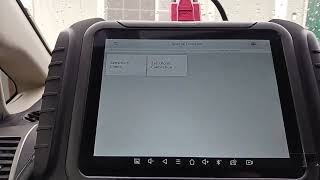
- Scan the Airbag Control Module and the Occupant Detection System (ODS) module for codes using a compatible, high-level scan tool (Subaru recommends the SSMIII). Note if B1650 is accompanied by B1760 or other related codes.
- Interview the driver about any recent liquid spills, use of seat cleaners, or if windows were left open in the rain.
- Check for any aftermarket electronic devices plugged into the vehicle's power outlets and remove them.
- Thoroughly inspect the passenger seat cushion for any signs of current or past moisture or staining.
- If moisture is found, follow the recommended procedure to dry the seat completely using the vehicle's A/C system. Do not use external heat sources like a hair dryer.
- Once dry, clear the codes and test the system by having a passenger sit in the seat. If the code does not return, the issue was moisture.
- If the seat is dry and the code returns, inspect the wiring and connectors under the passenger seat for damage or poor contact, paying close attention to the ODS harness addressed by recall WUM-98.
- Follow the diagnostic chart in TSB 07-108-17R to test the harness wiring for continuity and shorts. This involves checking for resistance less than 10 Ω between specific pins and over 1 MΩ between harness pins and chassis ground.
- If wiring is intact and the code persists, the most likely cause is a failed ODS sensor mat, requiring replacement of the passenger seat bottom cushion assembly.
- After replacement, perform the OCS System Reset/Recalibration ('Re-zeroing') procedure using a Subaru-specific scan tool, following the steps outlined in TSB 07-84-14R or the service manual.
Parts You'll Likely Need
- Passenger Seat Cushion & Frame Assembly
(OEM #Varies by trim. e.g., 64139SG140VH (Premium trims), 64139SG120VH (Touring/Limited trims). Superseded by newer numbers. Always verify with VIN.)— The ODS sensor mat is integrated into the seat cushion and is not sold separately by Subaru. This is the required part for a failed sensor.
Trusted brands: Subaru (OEM)
OEM price range: $630-$870
Aftermarket price range: Not generally available; used parts from a salvage yard are a possibility but carry risk.
Related Codes That Often Appear With This One
- B1760 — B1760 is a code for 'Sensor Mat Abnormal' stored in the Occupant Detection System module. B1650 is the corresponding code stored in the main Airbag module. They often appear together as they point to the same root problem, as noted in TSB 07-108-16R.
- B1761, B1771, or B1795 — These are other related ODS codes that can accompany B1650, indicating specific faults within the occupant detection system. TSBs confirm these codes are part of the same diagnostic family.
Technical Service Bulletins (TSBs) & Recalls
- 07-108-16R: 'Revised Diagnostic Procedure for DTC B1650' - This TSB, with multiple revisions, provides detailed steps for diagnosing the B1650 code, emphasizing checking for moisture before replacing parts. It explicitly forbids using heat guns to dry the seat and provides a specific procedure using the car's A/C system.
Platform-Specific Known Issues
- Subaru issued multiple revisions of Technical Service Bulletin #07-108-16R to help technicians diagnose this specific code and avoid unnecessary replacement of the seat cushion when moisture is the cause.
- Owner complaints frequently cite this issue occurring outside of the warranty period, leading to expensive repairs quoted between $1,600 and $2,000+.
- A recall (Subaru #WUM-98, NHTSA #19V701) was issued for 366,282 2015-2018 Foresters for a related ODS harness issue. However, many owners report the B1650 code persists or appears even after recall work was performed, as the recall only addresses the harness, not the more common sensor mat failure.
- Due to the high failure rate, owners have reported that the replacement seat cushion assembly can be on backorder for months, leaving the vehicle with a disabled passenger airbag for an extended period. [NHTSA ODI #11643722, 27]
Mechanic-Grade Diagnostic Values
- Airbag rear harness continuity — expected: < 10 Ω. Failure: Resistance is 10 Ω or more, indicating an open circuit.
- Airbag rear harness short to ground — expected: 1 MΩ or more. Failure: Resistance is less than 1 MΩ, indicating a short to ground.
- Voltage at Occupant Detection Harness connector — expected: 10 V or more. Failure: Voltage is less than 10 V, indicating a power supply issue.
- Battery Voltage (pre-check) — expected: 11 V or more. Failure: Low battery voltage can cause various electrical faults.
Hidden / Shadow Codes Worth Checking
- B1760, B1761, B1771, B1795: These codes are stored in the Occupant Detection System (ODS) module and provide more specific details about the malfunction (e.g., 'Sensor Mat Abnormal'). B1650 is the corresponding general fault stored in the main Airbag Control Module. A technician must scan both modules for a complete diagnosis. (see via A dealer-level scan tool like the Subaru Select Monitor (SSMIII) or a high-end aftermarket scanner capable of accessing the ODS module.)
Scan Tool Commands That Help
- Subaru Select Monitor (SSMIII) or equivalent: Rezeroing / System Calibration / Zero Point Adjustment — This function must be performed after replacing the passenger seat cushion assembly, ODS control module, or anytime the passenger seat is removed and reinstalled. It recalibrates the baseline for the empty seat. It can sometimes resolve a code if the calibration was simply lost, but will fail if a hard fault exists.
- Subaru Select Monitor (SSMIII) or equivalent: Clear Memory — Used after a repair is completed to clear the stored B1650 and related codes from both the Airbag and ODS control modules. Some sources note that B1650 cannot be cleared if the fault is current and the system hasn't been successfully recalibrated.
Wiring & Ground Locations
- Connectors (AB59) and (AB53) — Under the front passenger's seat.. These are the primary connectors for the Occupant Detection System harness located at the seat. They are a key point for inspection for poor contact or damage, and must be disconnected for harness testing.
- Connectors (AB6), (AB17), (AB18) — At the Airbag Control Module (ACM).. These connectors link the main body harness to the Airbag Control Module. TSB diagnostic procedures require disconnecting them to isolate and test the harness running between the ACM and the passenger seat.
Real Owner Repair Stories
- Reddit user on r/SubaruForester (2016 Subaru Forester) — Intermittent airbag light, passenger airbag disabled message. Passenger seatbelt light would indicate an occupant when the seat was empty.
❌ Tried (didn't work) Had the ODS sensor and seat bottom replaced under recall in 2021. The problem returned. A dealer diagnostic simply read the stored codes and did not perform further tests.
✅ What actually fixed it The issue was not permanently resolved. The owner resorted to temporarily fixing the light by pulling over and jiggling the wiring harness under the seat. The dealer quoted $1,200 for another seat bottom replacement, blaming unproven water damage. - Reddit user on r/SubaruForester (2015-2018 Forester) — Intermittent error: 'airbag system needs to be checked' and passenger airbag is disabled even with a passenger present.
❌ Tried (didn't work) The WUM-98 recall was performed on the vehicle.
✅ What actually fixed it The issue returned a year or two after the recall fix. The dealer claimed the new problem was unrelated and was caused by the seat getting wet (which the owner denied). The proposed fix was a new passenger seat base for approximately $2,000. The problem was not resolved through warranty or recall.
OEM Part Supersession History
64139SG140VH→64139SG142VH— Part revision or update by the manufacturer.
Model Year Variations Within This Range
- 2015-2018 only: These model years were subject to recall WUM-98 (NHTSA #19V-701) for a potentially faulty ODS sensor mat harness connection. The 2014 model year was not included in this specific recall.
- 2014-2017: Prior to a January 2018 software update, the newer Subaru Select Monitor 4 (SSM4) scan tool could NOT be used to diagnose the ODS. Technicians were required to use the older Subaru Select Monitor III (SSMIII) for any ODS-related diagnostics on these vehicles.
Helpful Videos
We Have This Part in Stock


The information in this article is provided for general reference and educational purposes only. Vehicle specifications, procedures, and part compatibility can vary by production date, trim level, and region. Always consult your vehicle's factory service manual and verify part numbers before purchasing or performing repairs. Safety-critical components such as airbags, seat belts, and braking systems should be installed by a qualified professional.
- Subaru FORESTER:
- 🎬 Helpful Videos
- 🛍️ Shop This Part
- What's Unique About the 2014-2018 Subaru FORESTER
- Diagnostic Flowchart
- Symptoms You May Notice
- Most Likely Causes
- Rare But Worth Checking
- Diagnosis Steps
- Parts You'll Likely Need
- Related Codes That Often Appear With This One
- Technical Service Bulletins (TSBs) & Recalls
- Platform-Specific Known Issues
- Mechanic-Grade Diagnostic Values
- Hidden / Shadow Codes Worth Checking
- Scan Tool Commands That Help
- Wiring & Ground Locations
- Real Owner Repair Stories
- OEM Part Supersession History
- Model Year Variations Within This Range
- 🎟️ Get 5% Off