

The Ultimate Guide to OBD-II Code B1620: Internal Control Module Fault
What B1620 means, why it triggers, and how to fix it for good
- Driving with an active B1620 code increases your risk of fatal injury by up to 29% because it completely disables your vehicle's airbags and seatbelt pretensioners.
- Diagnose B1620 based on your specific manufacturer; it means "Internal Module Failure" on 2017-2019 Hyundai/Kia vehicles, but indicates a faulty right-side impact sensor on Toyota and Lexus models.
- Check your VIN for open recalls immediately, as Kia recall SC226 and GM recall 17287 provide free dealer replacements for defective airbag control units triggering this code.
- Test your battery and alternator before spending $500+ on a new module, as voltage drops below 12.4V frequently corrupt the SRS self-test and trigger a false B1620 code.
What Does B1620 Mean?

OBD-II code B1620 is a manufacturer-specific Body (B) code signaling an internal fault within the Supplemental Restraint System (SRS) control module. The computer responsible for deploying your airbags has failed its internal self-test. For Hyundai and Kia, it points directly to module failure. For Toyota, Lexus, and Subaru, it indicates a fault with a specific side airbag sensor. In some Ford models, it refers to a problem within the air conditioning (HVAC) system.
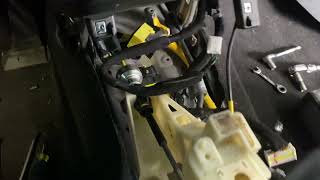
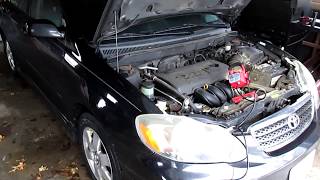
Technical definition: The SAE/ISO definition for B1620 varies by manufacturer. Hyundai and Kia define it as "Internal Fault - Replace SRSCM 🎬 Watch: Diagnosing a B1620 internal fault on a Kia Optima.". Toyota and Lexus define it as "Side Airbag Sensor Assembly Malfunction" for the right-hand (RH) side. 🎬 See how to replace a faulty Toyota airbag impact sensor. Ford and Renault define it as "A/C Control Module Communication Fault". Some Hyundai models use it for "Idle Control System RPM Higher Than Expected".
Can I Drive With B1620?

no_recommended. Driving is not recommended. An active B1620 code disables your vehicle's airbags and seatbelt pretensioners. In a crash, they will not deploy, drastically increasing the risk of serious injury or death. Frontal airbags alone reduce driver fatalities by 29% according to the NHTSA. The vehicle operates mechanically, but you are driving without a critical life-saving system. The system fails safe by deactivating, so the risk of unexpected deployment is extremely low.
Common Causes

- Internal failure of the SRS/airbag control module (Very Common) — The airbag control module (SRSCM or ACU) has an internal electronic or memory fault and cannot pass its self-test. This is the most frequent cause for Hyundai and Kia vehicles.
- Faulty side airbag impact sensor (Common) — The sensor that detects a side impact, located in the door or B-pillar, has failed. This is the primary cause on Toyota, Lexus, and Subaru vehicles.
- Manufacturing defect or software logic issue (Common) — Millions of 2017-2019 Kia and Hyundai models have defective ACUs where the metal cover shorts the memory chip (Kia SC226 recall). Other models misinterpret vibrations as faults, requiring a software update (Hyundai TX8 campaign).
- Wiring or connector issues (Common) — Damaged, corroded, or loose wiring between an airbag sensor and the control module interrupts communication. This happens frequently under seats or in door jambs where wires endure movement and moisture.
- Low battery voltage or voltage spikes (Less Common) — A weak battery, improper jump-start, or a failing alternator causes voltage fluctuations that corrupt the SRS module's self-test memory, falsely setting a B1620 code.
- Water damage to the control module (Rare) — Spilled drinks or water leaks infiltrate the vehicle's interior and short out the airbag control module, located under the center console or front seats, leading to corrosion and failure.
- Post-collision 'Crash Data Stored' (Rare) — After an accident, the SRS module stores crash data and sets an internal fault code. This locks the module, requiring professional reset or replacement.
Symptoms
- Airbag warning light is on — The light, showing an icon of a person with an airbag or the letters 'SRS', remains illuminated on the dashboard. This is often the only symptom.
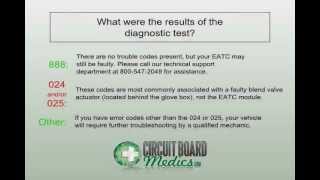
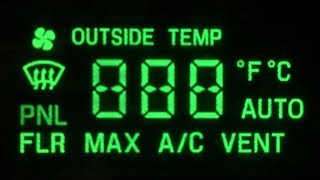
- A/C system not working properly (Ford/European) — For some makes like Ford, this code points to a fault in the climate control system, causing issues with heating, cooling, or blower fan operation. 🎬 Watch: How to perform a Ford HVAC self-test and calibration.
- High or erratic engine idle (Hyundai) — In specific Hyundai models, B1620 indicates a problem with the idle control system, causing the engine to idle at a higher RPM than expected.
- Airbags and seatbelt pretensioners disabled (scan-tool only — no driver-felt sign) — With an active B1620 fault, the airbags and seatbelt pretensioners are disabled as a fail-safe measure and will not activate in an accident.
Diagnostic Flowchart

Tap your situation to follow the diagnostic path that matches what you're seeing on this code.
Common Fixes & Costs
- Replace the SRS (Airbag) Control Module — Parts: $250-$900, Labor: $200-$450, ~2.0 hr book time (Professional)
- Replace a Side Impact Sensor — Parts: $80-$250, Labor: $100-$200, ~1.5 hr book time (Intermediate)
- Perform ACU Software Update (Recall/TSB) — Parts: $0, Labor: $0 (if covered by recall) or $150-$250, ~1.0 hr book time (Professional)
- Repair Airbag Wiring or Connectors — Parts: $20-$60, Labor: $150-$350, ~2.5 hr book time (Professional)
- Reset the SRS Control Module (Clear Crash Data) — Parts: $0, Labor: $50-$150, ~1.2 hr book time (Professional)
Used vs. New Parts: Buying Guide
When a used part is worth it: A used SRS Control Module is never recommended for DIYers. It only makes sense for professional repair shops with specialized tools to reprogram VIN-locked modules and verify they are free of crash data.
Donor-vehicle mileage cap: roughly under 40000 miles for the part to have meaningful remaining life.
Donor quality checklist:
- Verify the donor vehicle was not in a collision, as the module contains non-resettable crash data.
- Match the part number EXACTLY. Even a minor difference leads to incompatibility.
- Avoid modules from flood-damaged vehicles, as internal corrosion is a major failure cause.
Decision logic:
- If The fix is covered by a recall or extended warranty (common for Hyundai/Kia) → Use the free dealer repair with a new OEM part.
- If The vehicle's value is high and safety is the top priority → Buy a new OEM module and have it professionally installed and programmed.
- If Budget is the absolute primary concern and you accept the risk → Use a reputable service that sells pre-tested, reset used modules with a warranty and clear programming instructions.
Warranty tradeoff: Used parts from a salvage yard typically have a 30-90 day warranty, but it does not cover the labor cost if the part is faulty. New OEM parts installed by a dealer are warrantied for parts and labor for 12 months.
Worst-case if a used part fails: $500-$1000 if a used module is faulty or cannot be programmed, requiring repeat labor and the purchase of a new module.
What Happens If You Wait — Timeline
- Immediate (First 0 Seconds): The SRS module fails its self-test, the airbag light turns on, and the entire airbag and seatbelt pretensioner system is disabled.
- 1-12 Months: The vehicle is operated with a known safety defect. The owner is exposed to immense personal risk.
- 1-2 Years (or at time of resale): The vehicle's resale value is significantly reduced. Selling the car privately requires disclosing a major safety defect.
- In the event of an accident: The airbags and pretensioners do not deploy. Occupants hit the steering wheel, dashboard, or windows, leading to severe injuries.
Cost of Not Fixing It
- Immediate: Airbags and seatbelt pretensioners are disabled. In the event of a collision, they will not deploy, drastically increasing the risk of serious injury or death. (Added cost: N/A)
- Next state inspection: Vehicle fails the safety inspection in states like New York, Virginia, and Pennsylvania, preventing legal registration renewal. (Added cost: $100-$500 in potential fines and re-inspection fees.)
- Vehicle resale: Significantly reduced vehicle value and potential legal liability for selling a car with a known, undisclosed major safety defect. (Added cost: $1500-$4000 in diminished value.)
Diagnosis Steps
- Read the Full Diagnostic Report
Use a high-quality OBD-II scanner capable of reading Body (B) codes and manufacturer-specific definitions. Note the exact definition provided by the scanner and any other stored codes to determine if the fault is in the airbag, A/C, or another system.
Tools: Advanced OBD-II Scanner (Beginner) - Check for Technical Service Bulletins (TSBs) and Recalls
Search online for your vehicle's VIN and "B1620 recall". Manufacturers have issued specific campaigns for this code, such as Kia's recall SC226 and Hyundai's Service Campaign TX8, resulting in free repairs or software updates.
Tools: Internet access (Beginner) - Verify Battery and Charging System Health
Ensure the battery is fully charged (12.4-12.6V with engine off) and the alternator is charging correctly (13.7-14.7V with engine on). Correct any voltage issues and clear the codes to see if the fault returns before proceeding with expensive repairs.
Tools: Digital Multimeter (Beginner) - Swap Side Impact Sensors (Toyota/Lexus/Subaru)
For codes indicating a side-specific sensor failure, swap the right sensor with the identical one from the left side. After clearing codes, if the fault changes to the other side (e.g., B1625), the sensor is faulty. If B1620 returns, the problem is in the wiring or control module.
Tools: Basic Hand Tools, OBD-II Scanner (Advanced) - Inspect Wiring and Connectors
Disconnect the negative battery terminal and wait 30 minutes. Locate the main SRS module and related sensors. Visually inspect all connectors for corrosion (green or white powder) and ensure they are securely latched. Check for pinched wires under seats.
Tools: Flashlight, Trim Removal Tools (Intermediate) - Test Sensor Circuit Integrity (Advanced)
With the battery disconnected and components unplugged, check for a short to ground (resistance over 1 MΩ) and continuity between the sensor and module connectors (resistance below 1 Ω). NEVER use a standard multimeter to measure resistance on an airbag directly.
Tools: Digital Multimeter, Vehicle Service Manual (Advanced)
When This Code Triggers (Freeze-Frame Conditions)
- Event: Ignition ON (The SRS Control Module runs a self-test every time the ignition is turned to the 'ON' position.)
- Test Duration: Approx. 6-7 seconds (The airbag warning light illuminates for this period and turns off if the system passes the self-test.)
- System State: Self-Diagnosis (The module checks for internal hardware faults, proper sensor circuit resistance (approx. 2-3 ohms), and communication with all components.)
- Fault Trigger: Test Failure (If any part of the self-test fails, code B1620 is stored, and the airbag light remains illuminated.)
Related Codes
- B1625 — The direct counterpart to B1620 on Toyota/Lexus vehicles, indicating a fault in the left side airbag sensor circuit. Swapping the left and right sensors is the definitive diagnostic step.
- B1193 / B1650 — Indicates 'Crash Data Stored'. If seen alongside B1620, the vehicle experienced an impact and the module locked itself. The module must be professionally reset or replaced.
- U3000 — A generic code for 'Control Module Failure'. When U3000 appears with B1620, it confirms the SRS control module has a non-recoverable hardware fault requiring replacement.
- B1342 — Means 'ECU is malfunctioning'. Appearing with B1620 reinforces the diagnosis of an internal control unit failure, pointing directly at the module as the root cause.
Climate & Environmental Factors
- High Humidity / Water Intrusion: Moisture from spills or leaks infiltrates the SRS control module located under the center console. This causes corrosion on the circuit board, leading to short circuits that trigger internal fault codes.
- Extreme Cold: Very cold temperatures cause metal contacts within electrical connectors to contract, leading to loose connections. This creates intermittent communication issues interpreted as a fault.
- Road Salt: Salt-laden moisture accelerates corrosion of wiring and connectors, especially those located in exposed areas like door jambs or under the carpet.
How to Talk to a Mechanic About This Code
Say this: "I have an airbag warning light on, and my scanner shows code B1620. Based on my vehicle's make, I know this is a recall issue, a module failure, or a sensor problem. Can you please start by checking for any open recalls or TSBs for my VIN?"
This signals you are an informed customer. It directs the shop toward the most efficient diagnostic path and prevents them from jumping to the most expensive conclusion.
Avoid saying:
- 'My airbag light is on, can you just fix it?'
- 'I don't know what's wrong, just tell me what it costs.'
- 'My friend said it's probably just a sensor.'
Questions to ask before authorizing the repair:
- You've diagnosed B1620; how did you rule out a wiring or sensor issue versus a module failure?
- If the module needs replacement, does the new one require programming or 'variant coding', and is that included in your quote?
- Can you confirm my vehicle is not covered by a recall or extended warranty for this specific part?
- What is the warranty on this specific repair, for both the part and the labor?
Where to Take It: Dealer vs Independent vs Chain
- Dealer:
First choice. Due to numerous recalls, extended warranties, and the need for proprietary software for programming new modules, the dealer is the safest option for B1620.
Best for: Vehicles under warranty, or with a known recall/extended warranty (especially Hyundai, Kia, GM)., Complex jobs requiring module replacement and manufacturer-specific programming ('variant coding').
Downsides: Highest labor rates., Defaults to module replacement without thoroughly checking less expensive causes like wiring. (Typical cost: +50% vs. baseline) - Independent Shop:
Viable alternative, but requires vetting. Ask if they can program and code a new SRS module for your specific make and model in-house.
Best for: Out-of-warranty vehicles where the cause is a sensor (Toyota/Subaru) or a wiring issue., Shops with a strong reputation in auto electronics and proven access to high-end diagnostic tools.
Downsides: Lacks the latest equipment to program a new SRS module, forcing them to send the car to a dealer anyway., Quality and expertise with complex SRS systems vary widely. (Typical cost: +0% vs. baseline) - Chain Shop:
AVOID. Chain shops are not equipped to handle the complexities of B1620, which involves recalls, module programming, and in-depth electrical diagnosis.
Best for: Simple maintenance tasks like oil changes and brakes.
Downsides: Technicians lack the specialized training and equipment for complex SRS diagnostics and programming., High risk of misdiagnosis or being told the repair cannot be performed there. (Typical cost: -10% vs. baseline)
When to Walk Away From the Repair
If the total estimated repair cost for the B1620 fault exceeds 40-50% of your car's private party value, pause and consider your options.
- Car worth $5000, fix is $1200: Fix it. The repair cost is well below the 50% threshold and restores a critical safety feature.
- Car worth $3500, fix is $1500: Borderline. The cost is approaching 50% of the car's value. Get a second opinion and evaluate the car's overall health before proceeding.
- Car worth $2000, fix is $1300: Walk away. The repair cost is over 65% of the vehicle's value. It is not economical to repair.
What Scan Tool You Need for This Code
Minimum: A scanner that reads and clears Supplemental Restraint System (SRS) codes, also known as Body or 'B' codes. A basic engine-only code reader will not work.
A standard $20 scanner only reads 'P' (Powertrain) codes and shows 'No Codes Found' even with the airbag light on. You need a tool that accesses the SRS module to see the B1620 fault.
Budget: Autel AutoLink AL619 (~$70) — Reads and clears engine, ABS, and SRS codes on most major vehicle brands. It confirms the B1620 code and allows you to clear it after a repair.
Mid-range: Foxwell NT510 Elite / BlueDriver Pro (~$120-180) — Offers full system diagnostics, including SRS, and provides live data streaming. The Foxwell NT510 Elite performs basic bidirectional controls and adaptations.
Professional: Autel MaxiCOM MK808 / Launch CRP123 (~$450-600) — Provides full bidirectional control and special functions like 'Variant Coding' for Hyundai/Kia. If you are replacing the SRS module yourself, this capability is required to program the new module.
Rent vs buy: Buying a budget SRS-capable scanner like the Autel AL619 is a smart investment for any DIYer, given the safety-critical nature and the need to clear the code after repair.
How to Clear the Code After You Fix It
- Perform the physical repair (e.g., replace the module or sensor).
- Reconnect the negative battery terminal if it was disconnected.
- Use an SRS-capable OBD-II scan tool to clear the B1620 fault code.
- Turn the ignition OFF, then turn it back to the ON position.
Drive cycle (~1 minutes): A traditional drive cycle is not required. The fix is verified when the airbag light performs its normal self-check: it illuminates for approximately 7 seconds upon ignition ON, and then turns OFF.
Readiness monitors affected: None. SRS codes do not affect emissions readiness monitors.
Watch out for:
- Using a basic code reader that cannot access or clear SRS (Body) codes.
- Attempting to clear the code without fixing the underlying hardware fault; the code returns immediately on the next self-test.
- Forgetting to program a new SRS module to the vehicle's VIN, which prevents it from working correctly.
Will This Fail Emissions / State Inspection?
No — by itself this code doesn't fail OBD inspection (but it can keep readiness monitors from setting, which causes a separate fail).
- California: Will NOT fail a smog check. The airbag system is not part of the emissions inspection, and an SRS light is ignored.
- New York: Will fail the safety inspection. An illuminated airbag light is an automatic failure.
- Texas: Will NOT fail the safety inspection. The airbag system is not a required inspection item under Texas Department of Public Safety rules.
Most Commonly Affected Vehicles
- Hyundai Sonata, Elantra, Tucson, Accent, i20 (2004-2019) — Indicates an internal SRSCM fault requiring replacement. Certain 2016-2019 models are covered by a 15-year/unlimited mileage extended warranty for the ACU.
- Kia Sorento, Optima, Soul, Forte, Sedona (2011-2019) — Recall SC226 (NHTSA #22V-031) covers 2017-2019 models; dealers replace the Airbag Control Unit free of charge due to a manufacturing defect.
- Toyota Tacoma, Prius, Corolla, Avalon (2004-2015) — Points to a malfunction in a right-side airbag sensor assembly or its circuit.
- Chevrolet / GMC Silverado, Sierra, Tahoe, Yukon, Suburban, Cruze (2014-2017) — A software defect in the Sensing and Diagnostic Module (SDM) prevents airbag deployment. Addressed by safety recall 17287 requiring a dealer reflash.
- Nissan Altima, Sentra, Rogue (2013-2018) — Indicates an internal fault in the Airbag Diagnostic Sensor Unit or issues with side impact sensors. Module replacement is the standard fix.
- Subaru Outback, Legacy, Impreza (2009-2014) — Defined as a side airbag sensor failure. Diagnosis involves swapping the left and right side sensors to confirm the fault.
- Honda Civic, Accord, CR-V (2008-2015) — Points to an internal failure of the SRS unit or a fault in a side impact sensor. Honda systems are highly sensitive to low battery voltage.
- Ford Focus, Fiesta, Mondeo, Kuga (2010-2018) — This code is related to the air conditioning (HVAC) control system, not the airbags. Symptoms include no A/C, no blower, or incorrect temperature control.
Manufacturer-Specific Notes
- Hyundai / Kia: B1620 means "Internal Fault - Replace SRSCM". Kia's recall SC226 instructs dealers to replace the Airbag Control Unit if B1620 is found. Hyundai offers extended 15-year warranties for the ACU on specific models.
- Toyota / Lexus / Subaru: B1620 consistently points to a malfunction in the right-side airbag sensor assembly. The official diagnostic procedure relies on swapping the left and right sensors to isolate the fault.
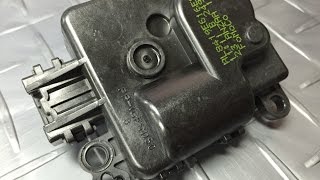
- Ford / Opel / Renault: B1620 is not a safety system code. It indicates a fault in the air conditioning (HVAC) system, related to communication with the control unit or a faulty actuator.
- GM (Chevrolet / GMC): A software defect in the Sensing and Diagnostic Module (SDM) prevents airbag deployment on 2014-2017 trucks. Recall 17287 requires a software reflash at the dealer.
Real Owner Stories
2017 Kia Forte with 55K miles
Airbag light came on for no apparent reason. A scan revealed code B1620.
Outcome: The dealer confirmed the vehicle was part of the recall. They diagnosed the B1620 code and replaced the Airbag Control Unit completely free of charge.
Lesson: For any B1620 on a 2017-2019 Kia or Hyundai, the absolute first step is to check for open recalls. This turns an $800 repair into a free fix.
2009 Hyundai Sonata with 120K miles
Airbag light appeared after a mechanic replaced a faulty alternator.
Outcome: The dealer quoted $914 for a new SRS module. The previous mechanic caused a voltage spike during the alternator job, damaging the sensitive module.
Lesson: SRS modules are sensitive to voltage spikes. A failed alternator or improper jump-start damages the module, leading to a B1620 code.
2016 Hyundai Tucson with B1620 & other codes
The dashboard lit up with multiple warnings and the scan tool couldn't communicate with the SRS module.
Outcome: The used module was from a crashed vehicle. It was locked and had an internal fault. The owner needed to buy a new module.
Lesson: Buying a used SRS module is a major gamble. They often contain stored crash data that cannot be cleared with a standard scanner.
2012 Ford Focus with A/C problems
The air conditioning stopped working. The owner used a basic scanner and found code B1620.
Outcome: The problem was a communication failure with the A/C control module, not the airbag system. The fix involved checking the A/C module's wiring.
Lesson: Always diagnose based on the manufacturer-specific definition. On Ford vehicles, B1620 is an A/C system fault.
How to Prevent This Code From Triggering
- Address Water Leaks Immediately (As needed) — The SRS module is vulnerable to water damage from clogged sunroof drains or window seal leaks. Keeping the cabin dry prevents corrosion.
- Maintain a Healthy Battery and Charging System (Ongoing) — The SRS module is sensitive to low voltage. A weak battery corrupts its memory during self-tests, triggering a false B1620 code.
- Use Proper Jump-Starting Procedure (When jump-starting) — Improper jump-starting sends a voltage spike through the electrical system, permanently damaging the SRS control module. Always connect the final negative lead to a chassis ground.
- Apply Dielectric Grease to At-Risk Connectors (During service/repair) — Applying silicone-based dielectric grease to connector seals blocks moisture and prevents corrosion for sensors in door jambs.
- Use High-Quality All-Weather Floor Mats (Daily use) — Spilled drinks seep through carpeting and reach the SRS module. Custom-fit floor liners contain liquids, preventing expensive electronic damage.
Frequently Asked Questions
Is it safe to drive with code B1620?
No, it is not safe. The airbag warning light indicates the Supplemental Restraint System (SRS) is disabled. Your airbags and seatbelt pretensioners will not activate in a crash, significantly increasing your risk of injury.
Can I fix the B1620 code myself?
Most repairs for B1620 require a professional due to the extreme danger of accidentally deploying an airbag. Replacing and programming the control module requires specialized tools and manufacturer software.
Will clearing the code fix the problem?
No. B1620 indicates a hard fault detected during a self-test. Clearing the code turns the light off for a few seconds until the module runs its next self-test, at which point the light immediately returns.
Can a low battery or a jump-start cause the B1620 code?
Yes. The SRS control module is highly sensitive to voltage. A weak battery, a failing alternator, or a voltage spike from an improper jump-start corrupts the module's memory and triggers a false internal fault code.
Can my airbags deploy randomly if the B1620 code is active?
It is extremely unlikely. Modern SRS systems are designed to fail-safe. When an internal fault is detected, the system disables itself to prevent accidental deployment.
What is the difference between replacing and resetting my airbag module?
Replacing means installing a new physical unit, which requires expensive programming to your car's VIN. Resetting is a mail-in service where a specialist clears 'crash data' from your existing module after an accident. Resetting does not fix a true internal hardware failure.
My mechanic says the code is for the A/C. Is that possible?
Yes, if you drive a Ford, Opel, Renault, or certain other European brands. On these vehicles, B1620 is assigned to the HVAC system and has nothing to do with the airbags. This highlights the importance of using a scanner that provides manufacturer-specific definitions.
Key Takeaways
- Driving with an active B1620 code increases your risk of fatal injury by up to 29% because it completely disables your vehicle's airbags and seatbelt pretensioners.
- Diagnose B1620 based on your specific manufacturer; it means "Internal Module Failure" on 2017-2019 Hyundai/Kia vehicles, but indicates a faulty right-side impact sensor on Toyota and Lexus models.
- Check your VIN for open recalls immediately, as Kia recall SC226 and GM recall 17287 provide free dealer replacements for defective airbag control units triggering this code.
- Test your battery and alternator before spending $500+ on a new module, as voltage drops below 12.4V frequently corrupt the SRS self-test and trigger a false B1620 code.
Helpful Videos

The information in this article is provided for general reference and educational purposes only. Vehicle specifications, procedures, and part compatibility can vary by production date, trim level, and region. Always consult your vehicle's factory service manual and verify part numbers before purchasing or performing repairs. Safety-critical components such as airbags, seat belts, and braking systems should be installed by a qualified professional.
- 🎬 Helpful Videos
- What Does B1620 Mean?
- Can I Drive With B1620?
- Common Causes
- Symptoms
- Diagnostic Flowchart
- Common Fixes & Costs
- Used vs. New Parts: Buying Guide
- What Happens If You Wait — Timeline
- Cost of Not Fixing It
- Diagnosis Steps
- When This Code Triggers (Freeze-Frame Conditions)
- Related Codes
- Climate & Environmental Factors
- How to Talk to a Mechanic About This Code
- Where to Take It: Dealer vs Independent vs Chain
- When to Walk Away From the Repair
- What Scan Tool You Need for This Code
- How to Clear the Code After You Fix It
- Will This Fail Emissions / State Inspection?
- Most Commonly Affected Vehicles
- Manufacturer-Specific Notes
- Real Owner Stories
- 2017 Kia Forte with 55K miles
- 2009 Hyundai Sonata with 120K miles
- 2016 Hyundai Tucson with B1620 & other codes
- 2012 Ford Focus with A/C problems
- How to Prevent This Code From Triggering
- Frequently Asked Questions
- Is it safe to drive with code B1620?
- Can I fix the B1620 code myself?
- Will clearing the code fix the problem?
- Can a low battery or a jump-start cause the B1620 code?
- Can my airbags deploy randomly if the B1620 code is active?
- What is the difference between replacing and resetting my airbag module?
- My mechanic says the code is for the A/C. Is that possible?
- Key Takeaways
- 🎟️ Get 5% Off