

OBD-II Code B1616: Parasitic Battery Drain or Airbag System Failure
The Ultimate Guide to B1616: Ford Battery Drains, Mitsubishi Airbag Faults, and How to Fix Them
- Code B1616 means a parasitic battery drain on modern Ford vehicles, but signals a critical, non-repairable airbag failure on Mitsubishi models.
- For 2023 Ford Mustang Mach-E owners, fix the B1616 drain by disconnecting the negative battery terminal for 15 minutes to reset the Remote Climate Control Module per CSP 24P16.
- If you own a 2014-2015 Mitsubishi Mirage with this code, you must replace the SRS Control Unit (part #8635A391) because the internal safing G-sensor has permanently failed.
- Diagnose Ford parasitic drains safely by performing a fuse voltage drop test with a multimeter set to millivolts (mV), looking for any reading above 0.0mV on a sleeping circuit.
What Does B1616 Mean?

Code B1616 is a manufacturer-specific Body (B) code with two primary, very different meanings. For modern Ford vehicles, it signals a parasitic battery drain where a module fails to enter 'sleep mode' after the ignition turns off. For Mitsubishi, it indicates a serious internal failure in the Supplemental Restraint System (SRS) airbag control unit. On a few other makes, it points to a fault in the rear wiper circuit.
Technical definition: The formal definition of B1616 varies significantly by manufacturer: * **Ford:** Electrical System High Key Off Load. * **Mitsubishi:** SRS-ECU Safing G-Sensor Failure. * **Chrysler / Dodge / Jeep:** Central Locking Button Stuck (related to parasitic drain). * **General (Other Manufacturers):** Wiper Rear Disable Switch Circuit Open.
Can I Drive With B1616?
Yes, But With Caution. Driving is possible, but the risk depends entirely on the vehicle. For Ford, it indicates a battery drain that will leave you stranded if the vehicle is parked for over 12 hours. Ignoring it causes premature battery failure, adding a $250 replacement cost. For Mitsubishi, the code signals a critical fault in the airbag system, meaning the airbags will not deploy in a crash. This is a major safety risk that requires immediate repair.
Common Causes

- Control Module Not 'Sleeping' (Ford Parasitic Drain) (Very Common) — On many Ford vehicles, a module like the Remote Climate Control Module (RCCM) or Body Control Module (BCM) fails to shut down properly after the car turns off, continuously drawing power and draining the battery.
- Faulty Airbag System (SRS) ECU (Mitsubishi) (Common) — On specific Mitsubishi vehicles, this code indicates a non-resettable internal failure of the safing G-sensor within the airbag control unit. This requires complete module replacement.
- Improperly Installed Aftermarket Accessories (Common) — Poorly installed aftermarket remote starters, stereos, alarms, or dash cams are a frequent source of parasitic drain. These devices are often wired incorrectly to a constant power source, preventing the vehicle's modules from entering sleep mode.
- Failing or Weak 12V Battery (Common) — A battery with a bad cell or one near the end of its life fails load tests and triggers this code in voltage-sensitive vehicles. A persistent parasitic drain also prematurely destroys an otherwise healthy battery.
- Water Intrusion Damaging the Body Control Module (BCM) (Less Common) — Water leaking from clogged sunroof drains or windshield seals drips directly onto the BCM, causing corrosion and internal shorts. This leads to a severe parasitic battery drain and erratic electrical behavior.
- Faulty Rear Wiper Disable Switch (Rare) — On some vehicles, this code points to an open circuit in the rear wiper's disable switch or its wiring, preventing the system from working correctly. Generic scan tools often incorrectly display this definition for Ford vehicles.
Symptoms

- Dead 12V Battery — The most common symptom on affected Ford models is the 12V battery going completely dead after the vehicle sits parked for several hours or overnight.
- Airbag (SRS) Warning Light On — On Mitsubishi vehicles, the primary symptom is the illumination of the airbag warning light on the dashboard, indicating the entire restraint system is disabled.
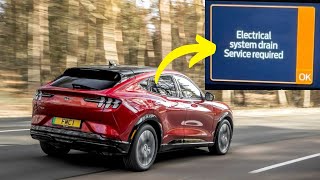
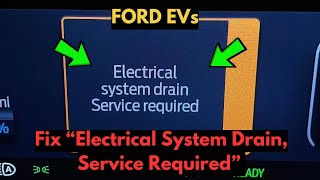
- 'Electrical System Drain' Warning Message — The instrument cluster displays a message like "Electrical System Drain Service Required" or "Low Battery: Please Start Engine" to alert the driver of the high key-off power draw.
- Radio or Infotainment Screen Stays On — The radio display, navigation screen, or instrument cluster lights remain illuminated long after the car is turned off and locked.
- Rear Wiper Malfunction — If the code relates to the wiper circuit, the rear wiper operates erratically or fails to turn on.
- High Quiescent Current Draw (scan-tool only — no driver-felt sign) — A technical confirmation of a parasitic drain, measured with a multimeter or visible as a PID on an advanced scan tool. A reading above 50-85mA after the vehicle is asleep confirms the problem.
Diagnostic Flowchart
Tap your situation to follow the diagnostic path that matches what you're seeing on this code.
Common Fixes & Costs
- Reset Control Modules (Ford) — Parts: $0, Labor: $0-$120, ~0.2 hr book time (DIY)
- Diagnose and Repair Parasitic Draw — Parts: $0, Labor: $150-$450, ~2.0 hr book time (Professional)
- Replace 12V Battery — Parts: $200-$300, Labor: $50-$100, ~0.5 hr book time (DIY)
- Replace SRS Control Unit (Mitsubishi)
— Parts: $800-$1100, Labor: $150-$250, ~1.2 hr book time
(Professional)
2014-2018 Mitsubishi Mirage: OEM - Replace Body Control Module (BCM)
— Parts: $400-$600, Labor: $200-$500, ~2.5 hr book time
(Professional)
2022-2024 Ford F-150 Lightning: OEM
Used vs. New Parts: Buying Guide
When a used part is worth it: For the Mitsubishi SRS module, a used part from a non-crashed vehicle with a matching part number is a cost-effective option. For the Ford BCM, a used part is extremely risky and only makes sense for experts who can perform reprogramming.
Donor-vehicle mileage cap: roughly under 100000 miles for the part to have meaningful remaining life.
Donor quality checklist:
- Verify the exact part number matches your original module.
- For SRS modules, get a guarantee from the seller that the donor vehicle was not in an accident.
- For BCMs, confirm the donor vehicle's options match yours.
- Avoid modules from flood-damaged vehicles.
Decision logic:
- If The part is a Ford BCM and you are not a professional with programming tools → buy new OEM. The risk of a failed programming attempt on a used module is too high.
- If The part is a Mitsubishi SRS module and budget is the primary concern → a guaranteed, non-crashed used module is acceptable. Verify the part number is identical.
- If The part is safety-critical (SRS Module) and you want maximum peace of mind → buy new OEM. This ensures it has the latest hardware revisions and a full warranty.
Warranty tradeoff: Used parts from salvage yards typically have a 30-90 day warranty. New OEM parts installed by a dealer carry a 1-2 year warranty.
Worst-case if a used part fails: $500-$1500 if a used electronic module is faulty or programmed incorrectly, requiring repeat labor costs.
What Happens If You Wait — Timeline
- Immediate (First Occurrence): Ford: 'Electrical System Drain' message appears; battery dies overnight. Mitsubishi: Airbag (SRS) warning light illuminates, disabling the entire airbag system. (MPG impact: 0%% · Added cost: $0 (Ford), Priceless (Mitsubishi - safety risk))
- 1-4 Weeks: Ford: Repeated dead batteries require frequent jump starts, placing heavy strain on the alternator. Mitsubishi: Continued driving without airbag protection. (MPG impact: 0%% · Added cost: $75-$250 (Towing, service calls))
- 1-6 Months: Ford: The 12V battery fails permanently due to sulfation from repeated deep discharges. Mitsubishi: The vehicle automatically fails state safety inspections. (MPG impact: 0%% · Added cost: $250-$500 (Premature battery replacement))
- 6+ Months: Ford: Risk of damage to other sensitive electronics from voltage spikes during repeated jump starts. Mitsubishi: In a crash, the lack of airbag deployment leads to severe injury. (MPG impact: 0%% · Added cost: $500 - $10,000+ (Secondary electronic repairs, medical costs))
Cost of Not Fixing It
- Immediate (1-30 Days): Ford: Stranded with a dead battery, requiring jump starts or a tow. Mitsubishi: Complete disabling of the airbag system, creating a critical safety risk. (Added cost: $75-$250 (Towing, service call))
- 1-6 Months: Ford: Premature battery failure due to repeated deep discharge cycles. A battery that should last 3-5 years fails in under a year. (Added cost: $250-$350 (New battery and installation))
- 6+ Months / Long-Term: Ford: Damage to sensitive electronics from repeated voltage fluctuations. Mitsubishi: Failure of state safety inspection, preventing vehicle registration renewal. (Added cost: $500 - $10,000+ (Secondary electronic repairs, fines, medical costs))
Diagnosis Steps

- Identify Your Vehicle's Code Definition
Determine what B1616 means for your specific vehicle. If you drive a modern Ford, it is a parasitic drain issue. If you drive a Mitsubishi Mirage, it is an SRS code. Check your service manual or search online for your specific make and model plus 'B1616'.
Tools: OBD-II Scanner, Internet Access (Beginner) - Check for Technical Service Bulletins (TSBs) or Recalls
Manufacturers release TSBs for known issues. Ford issued Customer Satisfaction Program 24P16 for the 2023 Mach-E for this exact code. Mitsubishi has TSB-19-52B-003 for the SRS-related code on the Mirage. Checking TSBs provides a direct path to the solution.
Tools: Internet Access (Beginner) - Perform a Control Module Reset (Ford)
For the parasitic drain issue on Ford vehicles, disconnect the negative battery terminal for 15 minutes. This forces all modules to reboot and resolves software glitches causing a drain.
Tools: 10mm Wrench (Beginner) - Test the 12V Battery
A parasitic drain damages a battery over time, and a weak battery triggers this code. Use a multimeter to check the voltage (a healthy battery is ~12.6V when off). Take the battery to an auto parts store for a free load test to verify its health.
Tools: Multimeter or Professional Battery Tester (Intermediate) - [PRO TIP] Monitor BCM PIDs with Advanced Scan Tool (Ford)
Use a tool like FORScan to monitor live data from the Body Control Module (BCM). Look for the PID called 'Quiescent_amperage'. After locking the vehicle and waiting 40 minutes, this value must drop below 50mA. If it remains high, it confirms a parasitic draw.
Tools: Advanced Scan Tool (e.g., FORScan) (Advanced) - [PRO TIP] Perform a Fuse Voltage Drop Test
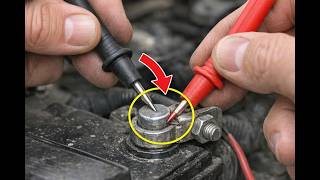
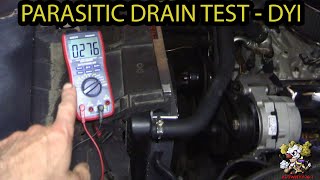
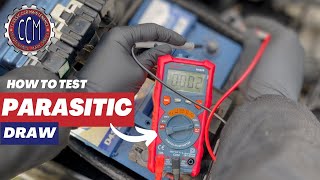
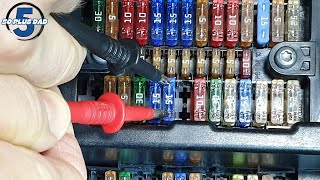
Do not disconnect the battery. Set a multimeter to DC millivolts (mV). After the vehicle is asleep (wait 60 minutes), touch the multimeter probes to the two small metal test points on the top of each fuse. A fuse on a sleeping circuit reads 0.0mV. Any reading above 0.0mV indicates a draw on that specific circuit.
Tools: Multimeter with Millivolt (mV) Setting, Fuse Voltage Drop Chart (Advanced) - Scan the SRS Module (Mitsubishi)
For the airbag-related code, a standard OBD-II scanner is insufficient. Use an advanced scan tool to read codes directly from the SRS module. Code B1616 indicates an internal ECU fault requiring replacement of the SRS control unit.
Tools: Advanced SRS-capable Scan Tool (Professional)
When This Code Triggers (Freeze-Frame Conditions)
- Fault Type: Varies (Ford vs. Mitsubishi) (For Ford, the code sets post-shutdown when a module fails its 'sleep' check. For Mitsubishi, it sets at key-on during the SRS self-test.)
- Quiescent Current (Ford): > 85 mA (The BCM logs the fault when the key-off current draw exceeds the programmed threshold (e.g., 85mA) for an extended period.)
- Ignition Status: OFF (Ford) / ON (Mitsubishi) (Ford logs it when the vehicle is supposed to be asleep (Ignition OFF). Mitsubishi logs it during the power-on self-test (Ignition ON).)
Related Codes
- U0140 — Lost Communication With Body Control Module. If you have U0140, your scan tool cannot communicate with the BCM at all. With B1616, the BCM is online but reporting it is drawing too much power.
- B1342 — ECU Is Defective. A generic code indicating an internal fault in a control module. On a Mitsubishi, seeing this alongside B1616 reinforces the diagnosis of a failed SRS unit.
- B16CF — A related Chrysler code for a BCM issue (Central Locking Button Stuck) that prevents the module from going into sleep mode, causing a battery drain.
Climate & Environmental Factors
- Cold Weather: Cold temperatures reduce a battery's chemical efficiency and available cranking amps. A parasitic drain that goes unnoticed in summer becomes critical in winter, as the battery has less reserve capacity.
- High Humidity / Moisture: Regional moisture from heavy rain leads to water intrusion from clogged sunroof drains, directly damaging the BCM and causing severe parasitic drains.
- High Heat: Extreme heat accelerates a battery's internal degradation. It weakens the battery, making it more susceptible to being fully discharged by a parasitic drain.
How to Talk to a Mechanic About This Code
Say this: "For a Ford: 'I have a B1616 code and a parasitic battery drain. Can you perform a fuse voltage drop test to isolate the circuit?' For a Mitsubishi: 'My airbag light is on with a B1616 code. I understand this indicates an internal failure of the SRS control unit. I need a quote for replacement.'"
This specific language shows you've done your research. For Ford, it directs the mechanic to a modern, efficient diagnostic method. For Mitsubishi, it acknowledges the non-repairable nature of the fault, focusing on replacement cost rather than unnecessary diagnostic hours.
Avoid saying:
- 'My battery keeps dying, can you check it?'
- 'My airbag light is on, can you just turn it off?'
- 'Just fix whatever is wrong with it.'
Questions to ask before authorizing the repair:
- For Ford: What was the final quiescent current draw in milliamps after the modules went to sleep?
- For Ford: Which specific circuit or module was causing the drain?
- For Mitsubishi: Are you using a new OEM SRS module, and what is the part number?
- Does the replacement module require programming or calibration to my vehicle's VIN?
- What is the warranty on the new module and the labor for this repair?
Where to Take It: Dealer vs Independent vs Chain
- Dealer:
Recommended for the Mitsubishi airbag fault and for Fords under warranty. A good, but expensive, option for out-of-warranty Ford drain issues.
Best for: Mitsubishi SRS module replacement (safety-critical, requires programming)., Ford vehicles under warranty or covered by a Customer Satisfaction Program., Complex diagnostics requiring manufacturer-specific tools.
Downsides: Higher labor rates and part costs., More inclined to replace modules rather than perform component-level wiring repairs. (Typical cost: +50% vs. baseline) - Independent Shop:
Best fit for the Ford parasitic drain issue if you find a reputable shop with strong electrical diagnostic skills. Risky for the Mitsubishi SRS fault.
Best for: Diagnosing the Ford parasitic drain issue on out-of-warranty vehicles., Shops specializing in automotive electronics., Cost-conscious owners who have already identified the problem.
Downsides: Quality and expertise vary widely., May not have the expensive tools to program a new SRS or BCM module. (Typical cost: +0% vs. baseline) - Chain Shop:
AVOID. These shops are not suited for diagnosing or repairing either of the primary faults associated with code B1616.
Best for: Selling you a new battery, which will not solve the underlying problem.
Downsides: Technicians are generally not equipped or trained for complex electrical diagnostics or SRS module replacement., High pressure to meet sales targets leads to misdiagnosis. (Typical cost: -10% vs. baseline)
When to Walk Away From the Repair
If the estimated repair cost exceeds 40-50% of the car's private-party value, seriously consider selling or trading it in.
- Car worth $5000, fix is $1200: Borderline (Fix It). For a Mitsubishi Mirage, this repair is mandatory for safety and inspection. The cost is high relative to value, but the car is undrivable without it.
- Car worth $35000, fix is $1500: Fix it. The repair cost for a BCM replacement on a newer Ford is well below the 40% threshold.
- Car worth $3000, fix is $1800: Walk away. The repair cost is over 50% of the car's value. The risk of other age-related failures is high.
What Scan Tool You Need for This Code
Minimum: A tool that can read manufacturer-specific Body (B) and SRS (Airbag) codes. A basic engine-only code reader is NOT sufficient.
A $20 code reader will not see the BCM or SRS modules where code B1616 is stored. For Ford, you need live data to monitor module sleep status. For Mitsubishi, you need to access the SRS system specifically.
Budget: BlueDriver Pro or FORScan with OBDLink Adapter (~$100) — BlueDriver accesses BCM/SRS codes on many vehicles. FORScan (for Ford) monitors specific PIDs like 'Quiescent_amperage' needed to diagnose the parasitic drain.
Mid-range: Foxwell NT630 Plus or Autel ML629 (~$150) — These handheld tools access Engine, ABS, and SRS modules. They reliably read and clear the B1616 code from the correct module.
Professional: Autel MaxiCOM MK808Z or XTOOL D7 (~$350-500) — These bidirectional scanners perform active tests, command modules to sleep/wake to test for parasitic draw, and perform the programming procedures required when replacing a BCM or SRS module.
Rent vs buy: Renting is not a good option. Auto parts store loaner tools are typically basic code readers that cannot access the BCM or SRS modules needed to diagnose B1616.
How to Clear the Code After You Fix It
- Fix the underlying cause (e.g., replace faulty module, repair wiring).
- For Ford, perform a module reset by disconnecting the negative battery terminal for 15 minutes.
- Use an advanced scan tool to clear the code from the specific module (BCM or SRS).
- For Mitsubishi, the code is a 'hard code' and cannot be cleared; the SRS module must be replaced.
Drive cycle (~45 minutes): A drive cycle is necessary if the battery was disconnected. A general Ford cycle includes: cold start, 15 minutes of highway driving (55-60 mph), followed by 20 minutes of stop-and-go city driving.
Readiness monitors affected: Evaporative System Monitor (EVAP), Catalyst Monitor, O2 Sensor Monitor
Before emissions retest: drive at least 50 miles to fully set monitors.
Watch out for:
- Clearing the code without fixing the parasitic drain causes the code to return immediately on a Ford.
- Attempting to clear the B1616 hard code on a Mitsubishi with a basic scanner fails; it indicates a permanent internal hardware fault.
- Forgetting to perform a drive cycle after disconnecting the battery results in an automatic emissions test failure.
Will This Fail Emissions / State Inspection?
No — by itself this code doesn't fail OBD inspection (but it can keep readiness monitors from setting, which causes a separate fail).
- California: An airbag light will NOT fail a smog check, as it is an emissions-only test. However, if the battery was disconnected, the vehicle fails for incomplete readiness monitors.
- New York: An illuminated airbag light is an advisory item, not an automatic failure. The inspector notes it on the receipt, but the vehicle passes the safety inspection.
- Texas: By law, an airbag light is not a required inspection item and does not cause a failure. However, some chain repair shops refuse to pass the vehicle as a matter of internal policy.
- Virginia / Pennsylvania: In states with strict annual safety inspections, an illuminated airbag warning light is an automatic failure, as the SRS is a critical safety system.
Most Commonly Affected Vehicles
- Ford Mustang Mach-E (2021-2023) — Vehicles built between July 1, 2023, and September 5, 2023, are subject to Customer Satisfaction Program 24P16 for code B1616-04. The Remote Climate Control Module (RCCM) stays awake, causing a parasitic drain.
- Ford F-150 Lightning (2022-2024) — Owners report this code appearing along with the 'Electrical System Drain Service Required' message, pointing to a parasitic draw issue similar to the Mustang Mach-E.
- Mitsubishi Mirage (2014-2018) — TSB-19-52B-003 was issued for a failure of the SRS-ECU's internal safing G-sensor. These model years also had recalls for potential water intrusion near the driver's kick panel.
- Jaguar XF, F-Pace, XE (2013-2024) — Known for parasitic battery drain caused by a faulty Body Control Module (BCM), often due to water intrusion from leaking sunroof drains.
- Land Rover Discovery, Discovery Sport, Range Rover Evoque (2017-2024) — Prone to 'Low Battery' warnings from parasitic drains. Causes include the infotainment head unit waking up the CAN bus or a faulty BCM.
- Chrysler / Dodge / Jeep Various Models (2010-2024) — These makes experience similar parasitic drain symptoms. Code B16CF sets if a central locking button is stuck for more than 60 seconds, keeping a module awake.
Manufacturer-Specific Notes

- Ford: On modern Ford EVs and trucks, B1616 specifically means 'Electrical System High Key Off Load' and is caused by a module failing to go to sleep.
- Mitsubishi: B1616 is an airbag system code indicating a non-repairable internal failure of the SRS-ECU's safing G-sensor. It requires module replacement per TSB-19-52B-003.
- Jaguar / Land Rover: Highly susceptible to parasitic battery drains from the BCM or infotainment modules failing to enter sleep mode, often caused by water damage.
Real Owner Stories
2023 Ford Mustang Mach-E with recurring dead battery
The owner found the car completely unresponsive in the morning. The dealer initially replaced the 12V battery, but the problem persisted, logging a B1616 code.
What they tried:
- Jump starting the vehicle.
- Dealer replaced the 12V battery.
- Dealer performed software updates.
Outcome: The issue was traced to the Remote Climate Control Module (RCCM) failing to enter sleep mode, a known issue covered by Ford's Customer Satisfaction Program 24P16. The fix involved a module reset procedure performed by the dealer.
Lesson: For modern Fords with B1616, always check for TSBs or CSPs first. A simple module reset solves the problem, whereas a battery replacement alone will not fix the underlying drain.
2017 Mitsubishi Mirage G4 with intermittent airbag light
After purchasing the car at 118k miles, the airbag light turned on and off randomly. The owner noted the dealer had recently washed the seats and found water on the wiring.
What they tried:
- Scanned the car and found SRS code B1616.
- Posted on forums seeking advice, suspecting water intrusion.
Outcome: Forum experts advised that B1616 on a Mirage specifically points to an internal, non-resettable ECU fault. The intermittent light indicated the system was disabled. The owner had to replace the SRS control unit.
Lesson: Do not ignore an airbag light. For Mitsubishi's B1616 code, the problem is an internal module failure requiring replacement, not a simple wiring or sensor issue.
Lexus GS350 with mysterious, severe battery drain
The owner purchased a used car that went through two new batteries in one week. Multiple shops could not diagnose the parasitic drain.
What they tried:
- Replaced the battery twice.
- Replaced the alternator.
Outcome: Mechanics discovered the root cause was a poorly installed aftermarket remote starter that prevented the vehicle's modules from entering sleep mode.
Lesson: If a parasitic drain appears after installing an aftermarket accessory like a remote start or dash cam, it is the number one suspect. Have it professionally disconnected to see if the drain disappears.
How to Prevent This Code From Triggering
- Clean sunroof drains and cowl drains annually (Once per year, especially in the fall) — Leaves and debris clog drains, causing water to overflow into the cabin and drip onto sensitive electronics like the Body Control Module (BCM), causing corrosion and parasitic drains.
- Use a battery tender/maintainer for long-term storage (Anytime the vehicle is parked for more than 2 weeks) — Prevents the battery from self-discharging and counteracts normal key-off parasitic draw, avoiding deep discharge cycles that permanently damage the battery.
- Ensure professional installation of all aftermarket electronics (During installation of any non-factory device) — Amateur installation taps into 'always-on' power circuits instead of ignition-switched circuits, preventing vehicle modules from entering sleep mode.
Frequently Asked Questions
Can I fix code B1616 myself?
It depends on the vehicle. For the Ford parasitic drain, a simple 15-minute battery terminal reset sometimes works, which is highly DIY-friendly. However, replacing a Mitsubishi SRS computer requires special tools and professional programming.
Why did my battery die overnight?
If you have a Ford with code B1616, a vehicle computer failed to shut down properly. This creates a 'parasitic drain' that continuously pulls power from the battery while the car is off.
Is a B1616 code dangerous?
On a Mitsubishi, yes, because it indicates a critical fault that disables the airbags during a crash. On a Ford, the primary danger is being stranded with a dead battery.
Will replacing the battery fix code B1616?
No. While a parasitic drain ruins a battery, the brand new battery will also drain completely if the underlying module or wiring issue is not repaired.
My scanner gave a strange definition for B1616 on my Ford, like 'rear wiper circuit'. What's wrong?
Generic OBD-II scan tools often display incorrect definitions for manufacturer-specific codes. For modern Fords, B1616 means a parasitic battery drain, not a wiper issue.
I installed a remote starter and now my battery dies. Could it cause a B1616 code?
Absolutely. Improperly wired aftermarket accessories prevent vehicle modules from entering sleep mode. Disconnect the device completely to see if the drain stops.
What is a 'safing G-sensor' in a Mitsubishi?
It is an internal backup sensor within the airbag control module that confirms a crash before deploying airbags. Code B1616 means this internal sensor has permanently failed.
What's the difference between an airbag 'soft code' and 'hard code'?
A soft code is a temporary glitch that can be cleared with a scanner. A hard code, like Mitsubishi's B1616, indicates permanent hardware failure requiring part replacement.
Key Takeaways
- Code B1616 means a parasitic battery drain on modern Ford vehicles, but signals a critical, non-repairable airbag failure on Mitsubishi models.
- For 2023 Ford Mustang Mach-E owners, fix the B1616 drain by disconnecting the negative battery terminal for 15 minutes to reset the Remote Climate Control Module per CSP 24P16.
- If you own a 2014-2015 Mitsubishi Mirage with this code, you must replace the SRS Control Unit (part #8635A391) because the internal safing G-sensor has permanently failed.
- Diagnose Ford parasitic drains safely by performing a fuse voltage drop test with a multimeter set to millivolts (mV), looking for any reading above 0.0mV on a sleeping circuit.
Helpful Videos


The information in this article is provided for general reference and educational purposes only. Vehicle specifications, procedures, and part compatibility can vary by production date, trim level, and region. Always consult your vehicle's factory service manual and verify part numbers before purchasing or performing repairs. Safety-critical components such as airbags, seat belts, and braking systems should be installed by a qualified professional.
- 🎬 Helpful Videos
- What Does B1616 Mean?
- Can I Drive With B1616?
- Common Causes
- Symptoms
- Diagnostic Flowchart
- Common Fixes & Costs
- Used vs. New Parts: Buying Guide
- What Happens If You Wait — Timeline
- Cost of Not Fixing It
- Diagnosis Steps
- When This Code Triggers (Freeze-Frame Conditions)
- Related Codes
- Climate & Environmental Factors
- How to Talk to a Mechanic About This Code
- Where to Take It: Dealer vs Independent vs Chain
- When to Walk Away From the Repair
- What Scan Tool You Need for This Code
- How to Clear the Code After You Fix It
- Will This Fail Emissions / State Inspection?
- Most Commonly Affected Vehicles
- Manufacturer-Specific Notes
- Real Owner Stories
- 2023 Ford Mustang Mach-E with recurring dead battery
- 2017 Mitsubishi Mirage G4 with intermittent airbag light
- Lexus GS350 with mysterious, severe battery drain
- How to Prevent This Code From Triggering
- Frequently Asked Questions
- Can I fix code B1616 myself?
- Why did my battery die overnight?
- Is a B1616 code dangerous?
- Will replacing the battery fix code B1616?
- My scanner gave a strange definition for B1616 on my Ford, like 'rear wiper circuit'. What's wrong?
- I installed a remote starter and now my battery dies. Could it cause a B1616 code?
- What is a 'safing G-sensor' in a Mitsubishi?
- What's the difference between an airbag 'soft code' and 'hard code'?
- Key Takeaways
- 🎟️ Get 5% Off