

OBD-II Code B1603: A Comprehensive Guide to a Deceptive Code
What B1603 Means, Why It Triggers, and How to Fix It on Your Ford, Hyundai, Toyota, Subaru, and More
- Code B1603 is highly manufacturer-specific: it indicates a PATS anti-theft failure on Fords, a CAN bus network crash on Hyundai/Kias, a disabled SRS system on Toyotas, or a stall history on Subarus.
- For 2017-2019 Subaru Impreza and Crosstrek models, B1603 is a 'Stall History' code covered by a free factory recall (WTT-79) requiring a 30-minute ECM software update.
- If your Ford or Mazda refuses to crank and the theft light flashes rapidly, test your spare key first; if it fails, replacing the $65 PATS transceiver ring is the most common DIY fix.
- Never ignore a B1603 code accompanied by an airbag warning light on Toyota or Mitsubishi vehicles, as this completely disables the Supplemental Restraint System and prevents airbag deployment in a crash.
What Does B1603 Mean?

The B1603 code is a highly manufacturer-specific Body Diagnostic Trouble Code (DTC). Its meaning varies dramatically: a complete CAN bus network breakdown (Hyundai/Kia), an anti-theft system failure preventing engine start (Ford/Mazda), a critical Supplemental Restraint System (SRS) fault (Toyota/Mitsubishi), or a logged history of engine stalling (Subaru). Diagnosis depends entirely on the vehicle's make and model.
Technical definition: The SAE/ISO definition for B1603 is adapted by each manufacturer. For Hyundai/Kia, it means 'CAN Bus Off.' For Ford/Mazda, it indicates a Passive Anti-Theft System (PATS) failure to read the ignition key. For Toyota, it flags an 'SRS Front Satellite Sensor Bus Initialization' failure. For Subaru, it is a 'Stall History' code logging an unexpected engine shutdown.
Can I Drive With B1603?
Yes, But With Caution. Driving is possible but highly dangerous. On Ford or Mazda vehicles, the engine will not start. On affected Subarus, the engine stalls unexpectedly in traffic, causing a sudden loss of power steering and brakes. If the code indicates an SRS/airbag fault (Toyota/Mitsubishi), the entire airbag system is disabled and will not deploy in a collision.
Common Causes

- Low Battery Voltage (Very Common) — A weak battery provides insufficient voltage during engine cranking. This causes electronic modules to drop offline temporarily, generating spurious communication codes like B1603 across all makes.
- Unprogrammed or Faulty Ignition Key (Ford, Mazda) (Common) — Using an unprogrammed key, a poorly cloned key, or a key with a damaged internal transponder chip prevents the PATS system from recognizing it, immobilizing the engine.
- Software Glitch / ECM Programming Needed (Subaru) (Common) — On 2017-2019 Impreza and 2018-2019 Crosstrek models, a known Engine Control Module (ECM) programming flaw causes the engine to stall under high A/C load, logging a B1603 'Stall History' code.
- Wiring or Connector Issue (Common) — A damaged wire, corroded pin, or loose connector interrupts communication between modules. This includes water intrusion damaging control modules or poorly installed aftermarket accessories shorting the CAN bus network.
- Faulty Airbag System Component (Toyota, Mitsubishi) (Common) — This code points directly to a fault in the SRS, such as a failed front airbag satellite sensor, a faulty clock spring, or a short circuit in a seat belt pre-tensioner squib.
- Faulty Control Module (BCM, SJB, SRS, PATS) (Less Common) — The specific module reporting the fault fails internally due to age, water damage, or internal short circuits. This requires replacing and reprogramming the Body Control Module, Smart Junction Box, or SRS module.
- Blown Fuse or Faulty Relay (Less Common) — A blown fuse cuts power to a critical module, causing it to go offline and trigger a communication fault code.
Symptoms

- Engine will not start or crank — The primary symptom for Ford and Mazda vehicles, accompanied by a rapidly flashing 'theft' light on the dashboard, indicating a PATS immobilization.
- Engine stalls when stopping or at low speed — On modern Subaru vehicles, the engine shuts off intermittently when coming to a stop, especially with the A/C running.
- Airbag or SRS warning light is on — For Toyota and Mitsubishi models, the code relates to a fault within the Supplemental Restraint System, which is completely disabled.
- Erratic or non-working electronics — On Hyundai, Kia, and Chrysler vehicles, power door locks, windows, exterior lights, or automatic climate control systems malfunction or stop working entirely.
- Multiple warning lights on the dashboard — A 'Check Engine' light, ABS, or Traction Control light illuminates simultaneously due to a general communication network failure.
Diagnostic Flowchart

Tap your situation to follow the diagnostic path that matches what you're seeing on this code.
Common Fixes & Costs
- Reprogram or Replace Ignition Key (Ford, Mazda) — Parts: $25-$100 for an OEM-quality key blank, Labor: $100-$250 for cutting and programming by a locksmith or dealer, ~1.0 hr book time (Professional)
- Perform ECM Reprogram for Recall (Subaru) — Parts: $0, Labor: $0 (Covered under Subaru Recall WTT-79), ~0.8 hr book time (Professional)
- Replace the PATS Transceiver Ring (Ford)
— Parts: $50-$120, Labor: $100-$150, ~1.0 hr book time
(DIY)
2009-2014 Ford F-150: OEM - Repair Damaged Wiring or Connectors — Parts: $10-$30, Labor: $150-$500+ (Highly dependent on diagnostic time), ~2.5 hr book time (Intermediate)
- Replace Airbag System Component (Sensor or Clock Spring)
— Parts: $150-$400, Labor: $100-$250, ~1.5 hr book time
(Professional)
2012 Toyota Camry (Front Airbag Sensor): OEM - Replace a Faulty Control Module (BCM, SJB, SRS)
— Parts: $200-$800, Labor: $150-$350 (Includes mandatory VIN programming), ~2.0 hr book time
(Professional)
2015 Hyundai Elantra (SJB/Fuse Box): OEM
DIY vs Professional
- Replace the PATS Transceiver Ring (Ford) — Beginner:
Tools: Screwdriver set (Torx and Phillips), trim removal tools, socket set. - Repair Damaged Wiring or Connectors — Beginner:
Tools: Multimeter, wire strippers, crimpers, heat shrink tubing, soldering iron. - Reprogram or Replace Ignition Key (Ford) — Beginner:
Tools: Two existing, working keys are required for the on-board programming procedure. - Replace a Faulty Control Module (BCM, SJB, SRS) — Beginner:
Tools: Professional-grade scan tool with J2534 pass-through programming capabilities. - Replace Airbag System Component — Beginner:
Tools: Socket set, trim removal tools, torque wrench, professional scan tool.
Used vs. New Parts: Buying Guide
When a used part is worth it: Used parts make sense for simple components like a PATS transceiver ring. For complex modules (BCM/SJB), buy used only if you have a confirmed way to reprogram it to your VIN.
Donor-vehicle mileage cap: roughly under 100000 miles for the part to have meaningful remaining life.
Donor quality checklist:
- Match the part number exactly; do not rely on visual similarity.
- Verify the donor vehicle was not scrapped due to flood damage.
- Ensure the seller guarantees the module is 'unlocked' or reprogrammable.
Decision logic:
- If Part is a simple transceiver or sensor and new part is < $150 → Buy new for warranty and peace of mind.
- If Part is an expensive BCM/SJB on an older vehicle → A used part from a reputable salvage yard is reasonable, but budget for professional programming.
- If Part is a safety component like an airbag or seatbelt pre-tensioner → New OEM is mandatory due to the critical safety function.
Warranty tradeoff: Used parts offer a 30-90 day functional warranty. New aftermarket parts offer 1-year warranties. New OEM parts offer a 1-year warranty.
Worst-case if a used part fails: $300-$800 if a used module fails after installation, requiring repeat labor and programming fees.
What Happens If You Wait — Timeline
- Immediate: Ford/Mazda: Engine is immobilized. Toyota/Mitsubishi: Airbag system is disabled. Subaru: Engine stalls in traffic, creating an immediate safety hazard. (MPG impact: N/A% · Added cost: $150+ for a tow truck if stranded.)
- 1 week - 2 months: Hyundai/Kia CAN Bus faults start as intermittent glitches (power locks failing, flickering dash lights). Driving with a disabled airbag system poses a constant lethal risk. (MPG impact: 0%% · Added cost: $0, but the safety risk is extreme.)
- 2 - 6 months: Intermittent electrical issues become daily annoyances. The underlying wiring short or water-damaged connector worsens rapidly. (MPG impact: 0-2%% · Added cost: $200-$400 in diagnostic fees as the problem becomes harder to trace.)
- 6+ months: A persistent wiring short completely destroys an expensive control module (BCM or SJB), turning a minor wiring repair into a major component replacement. (MPG impact: 100% (vehicle immobilized)% · Added cost: $1000-$2500+ for replacing a destroyed control module and repairing the harness.)
Cost of Not Fixing It
- Immediate: Ford/Mazda vehicles are immobilized. Toyota/Mitsubishi airbag systems are disabled. Subarus risk stalling in traffic. (Added cost: $150+ for a tow if stranded.)
- 1-6 months: Hyundai/Kia intermittent electrical problems worsen, leading to unpredictable behavior. Driving with disabled airbags poses a lethal risk. (Added cost: Higher diagnostic costs as cascading failures obscure the original fault.)
- 6+ months: A wiring issue (corrosion, shorts) degrades completely, destroying expensive control modules beyond repair. (Added cost: $1000 - $2500+ if a corroded harness shorts out and destroys a BCM or SJB.)
Diagnosis Steps
- Check for Technical Service Bulletins (TSBs) and Recalls
Search for TSBs or recalls for your vehicle's make, model, and year. Manufacturers frequently release bulletins with known fixes, such as the Subaru ECM recall (WTT-79), saving significant diagnostic time.
Tools: Internet access, Vehicle VIN (Beginner) - Test the Battery and Charging System
Use a multimeter to check battery voltage. A healthy battery reads approximately 12.6 volts with the engine off and over 13.7 volts running. Replace the battery if it fails a load test.
Tools: Multimeter, Battery Load Tester (Beginner) - Check All Keys (Ford, Mazda)
If a Ford-family vehicle won't start, try a different programmed key. If the spare works, the first key's internal transponder chip is dead or has lost its programming.
Tools: All available vehicle keys (Beginner) - Inspect All Related Fuses
Check the cabin and under-hood fuse boxes for blown fuses related to the Body Control Module (BCM), SRS, instrument cluster, or anti-theft system.
Tools: Fuse puller, Multimeter or Test Light (Beginner) - Visual Wiring Inspection
Inspect visible wiring harnesses for chafed, burnt, or disconnected wires. Focus on the steering column (PATS transceivers), under seats (SRS connectors), and areas prone to water leaks (BCM/SJB).
Tools: Flashlight, inspection mirror (Intermediate) - Inspect Airbag System Connectors (If SRS light is on)
WARNING: Disconnect the negative battery terminal and wait 15 minutes before touching SRS components. Check the yellow connectors for airbag sensors and seat belt pre-tensioners to ensure they are clean and secure.
Tools: Basic hand tools, flashlight (Intermediate) - Check CAN Bus Network Resistance (Hyundai/Kia)
Disconnect the negative battery terminal. At the OBD-II port, measure resistance between Pin 6 (CAN High) and Pin 14 (CAN Low). A healthy network reads 60 Ω. A reading of 120 Ω means a terminating resistor is offline; significantly below 60 Ω indicates a short circuit.
Tools: High-quality multimeter (Advanced) - Scan for PIDs with a Professional Scan Tool
Use a bi-directional scan tool to access module data. On a Ford, check the 'NUM_KEYS' PID to verify programmed keys. On a Hyundai/Kia, identify which specific module is reporting 'BUS OFF'.
Tools: Professional bi-directional scan tool (Advanced) - Check PATS Transceiver Voltages (Ford)
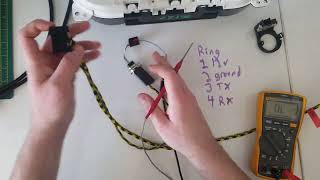
With the key on, back-probe the 4-pin transceiver ring connector. Verify 12V+ on Pin 1 (Power) and less than 5 Ω resistance to ground on Pin 2. Missing power or ground indicates a wiring issue, not a failed transceiver.
Tools: Multimeter, back-probe kit, wiring diagram (Advanced) - Analyze CAN Bus with an Oscilloscope
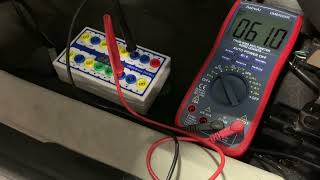
Connect an oscilloscope to CAN High (Pin 6) and CAN Low (Pin 14). A healthy bus shows a mirror-image square wave pattern (2.5V to 3.5V on High, 2.5V to 1.5V on Low). Flat lines indicate shorts to power or ground.
Tools: Dual-channel oscilloscope, OBD-II breakout box (Professional)
When This Code Triggers (Freeze-Frame Conditions)
- Battery Voltage: 11.8V - 12.5V (During key-on self-test or at the exact moment of communication loss.)
- Engine RPM: 0 RPM or dropping rapidly (For PATS no-start, RPM is 0. For Subaru stall, RPMs drop to 0.)
- Vehicle Speed: 0 mph or variable (Fault logs when stationary (PATS, SRS initialization) or while driving (CAN bus off, Subaru stall).)
- Module Status: Bus Off / No Communication (For CAN-related faults, freeze frame indicates which module stopped communicating.)
Related Codes
- B1600 — On Ford vehicles, indicates no PATS key transponder signal was received at all, whereas B1603 means a partial but unreadable signal was received.
- B1602 — On Hyundai/Kia, B1602 (CAN Error) almost always appears alongside B1603 (CAN Bus Off), confirming a general network communication breakdown.
- U-Series Codes (e.g., U0140, U1900) — Network communication codes. Seeing U0140 (Lost Communication with BCM) alongside B1603 strongly points to a CAN bus wiring problem or a failed BCM.
- P1604 — On Subarus, P1604 ('Startability Malfunction') is stored with B1603 ('Stall History'), pointing to the ECM issue covered by the factory recall.
Climate & Environmental Factors
- Cold Weather: Significantly impacts Ford's PATS system. Temperatures below 45°F cause thermal contraction in marginal electrical connections within the transceiver ring, leading to a no-start condition.
- High Humidity / Water Intrusion: Moisture causes corrosion on connector pins or inside control modules (like the Hyundai SJB), creating shorts that disrupt CAN bus communication.
- Low Battery Voltage: Exacerbated by cold weather, weak batteries provide insufficient voltage during cranking, causing modules to log spurious communication faults.
How to Talk to a Mechanic About This Code
Say this: "{'Ford_No_Start': "I have a B1603 code and a flashing theft light, and my car won't start. Please check the PATS transceiver ring and wiring before quoting a new PCM or key programming.", 'Hyundai_Kia_CAN_Bus': "My car has a B1603 'CAN Bus Off' code. I'd like a diagnostic that starts with a CAN bus resistance check at the OBD-II port and a visual inspection of the Smart Junction Box for corrosion.", 'Toyota_SRS_Light': 'My airbag light is on with a B1603 code. Please check the satellite sensor connections and wiring harness before recommending a new SRS module.', 'Subaru_Stalling': "My Subaru is stalling and has a B1603 'Stall History' code. Can you please check my VIN to see if it's covered by the WTT-79 recall for a free ECM reprogram?"}"
This language shows you've researched the common causes. It directs the technician toward cost-effective starting points, preventing them from immediately replacing expensive control modules.
Avoid saying:
- 'My car won't start, can you fix it?' (Invites a wide-ranging and expensive diagnosis.)
- 'The airbag light is on, just do whatever it takes.' (Gives the shop a blank check.)
- 'I read online it's the BCM, replace it.' (You become responsible if the new module doesn't fix the underlying wiring problem.)
Questions to ask before authorizing the repair:
- What were the specific results of the diagnostic test? (e.g., 'What was the CAN bus resistance reading?')
- Is this repair a guaranteed fix, or is it the next logical step in the diagnosis?
- If you are replacing a module, does the price include the mandatory VIN programming?
- What is the warranty on both the parts and the labor for this specific repair?
Where to Take It: Dealer vs Independent vs Chain
- Dealer:
Necessary for Subaru recall work and complex programming. Expensive for basic wiring repairs.
Best for: Subaru vehicles requiring the free WTT-79 recall service., Complex SRS/airbag system repairs requiring OEM procedures., Key programming when you have zero working keys.
Downsides: Highest labor rates., More likely to recommend replacing a whole assembly rather than repairing a wire. (Typical cost: +50% vs. baseline) - Independent Shop:
Best overall fit for most B1603 issues, especially out-of-warranty Ford and Hyundai/Kia problems.
Best for: Ford PATS-related no-start issues., Diagnosing and repairing CAN bus wiring faults on Hyundai/Kia., Out-of-warranty vehicles where cost is a major factor.
Downsides: Diagnostic skill for complex electronics varies widely; look for ASE electrical certifications., May lack the latest manufacturer-specific programming tools. (Typical cost: +0% vs. baseline) - Chain Shop:
AVOID. The B1603 code is too complex for a typical chain shop. Misdiagnosis is highly likely.
Best for: Simple, unrelated maintenance like oil changes or tires.
Downsides: Technicians lack training for complex network, anti-theft, or SRS diagnostics., High pressure to sell parts based on code alone without proper diagnosis. (Typical cost: -10% vs. baseline)
When to Walk Away From the Repair
If the estimated repair cost exceeds 40-50% of the car's private-party value, seriously consider selling or trading it in.
- Car worth $4500, fix is $1800: Walk away. The repair cost is 40% of the car's value for a significant electrical issue, and other problems may be lurking.
- Car worth $12000, fix is $500: Fix it. The repair cost is well below the threshold and resolves a critical safety or usability issue.
- Car worth $3000, fix is $0: Fix it. This represents a Subaru under the free recall program. The repair costs nothing and restores safety.
What Scan Tool You Need for This Code
Minimum: A scanner that reads manufacturer-specific Body (B), Chassis (C), and Network (U) codes, and displays live data streams.
A cheap, generic code reader will not see the B1603 code at all. You need to see live data from the specific module (PATS, SRS, BCM) to diagnose the problem.
Budget: Autel MaxiAP AP200 (~$70) — This Bluetooth dongle pairs with your smartphone and offers full-system scanning for one vehicle make. It reads B1603, views live data, and clears codes.
Mid-range: Foxwell NT510 Elite (~$180) — Provides dealer-level diagnostics with robust bi-directional controls. It performs active tests on modules and views specific PIDs like Ford's PATS key count.
Professional: Autel MaxiCOM MK808BT (~$550) — Provides extensive bi-directional control, all-system diagnostics, and advanced service functions like module initialization and fast live data graphing.
Rent vs buy: Buying is necessary for a proper DIY diagnosis. A free rental scan from AutoZone confirms the code exists, but you need your own tool with live data to find the root cause.
How to Clear the Code After You Fix It
- Fix the underlying mechanical or electrical fault.
- Use an OBD-II scan tool to clear the Diagnostic Trouble Code (DTC).
- Alternatively, disconnect the negative battery terminal for 15 minutes to reset modules.
Drive cycle (~30 minutes): A drive cycle confirms the fix. Perform a cold start, idle for 5 minutes, drive 15 minutes in mixed city/highway conditions (25-55 mph), and allow a cool-down period.
Readiness monitors affected: None directly, All monitors if the battery is disconnected
Before emissions retest: drive at least 100 miles to fully set monitors.
Watch out for:
- Clearing the code does not fix the problem; it returns immediately if the root cause remains.
- Disconnecting the battery resets all readiness monitors, causing an immediate emissions test failure.
- For Ford PATS, erasing keys without having two available permanently disables the vehicle until a locksmith reprograms it.
Will This Fail Emissions / State Inspection?
No — by itself this code doesn't fail OBD inspection (but it can keep readiness monitors from setting, which causes a separate fail).
- California: An airbag light will NOT fail a standard biennial smog check, but it will fail the safety inspection required for revived salvage vehicles.
- New York: An illuminated airbag warning light is a safety defect and WILL cause the vehicle to fail the annual safety inspection.
- Texas: The airbag system is NOT a required inspection item. An illuminated airbag light will NOT cause a failure of the annual safety inspection.
Most Commonly Affected Vehicles
- Ford F-150, Mustang, Focus, Explorer (1998-2016) — Extremely common PATS code causing a no-start and flashing theft light. Often caused by a failed key transponder or transceiver ring.
- Hyundai Elantra, Sonata, Genesis Coupe, Santa Fe (2010-2017) — Consistently means 'CAN Bus Off,' pointing to a communication network problem. Often caused by the Smart Junction Box (SJB) or a wiring fault.
- Kia Optima, Sedona, Sportage, Forte (2010-2016) — Indicates a 'CAN Bus Off' communication failure, identical to Hyundai. Affects body electronics like door locks and windows.
- Subaru Impreza, Crosstrek (2017-2019) — Sets as a 'Stall History' code. Covered by service campaign WTT-79 for an ECM programming flaw that causes stalling with the A/C on.
- Toyota/Scion Camry, Allion, tC, xB (2010-2014) — Relates to a fault in the SRS/Airbag system, specifically 'Front Satellite Sensor Bus Initialization Incomplete'.
- Chrysler/Dodge/Jeep Grand Caravan, Town & Country (2008-2016) — Often relates to a fault in the HVAC system, specifically a short in the sun sensor circuit.
- Mitsubishi Lancer, Outlander (2008-2015) — Points to a specific fault: 'Seat belt pre-tensioner (driver's side) (squib) system short-circuited'.
- Mazda Tribute, 3, 6 (2001-2011) — Shares the PATS anti-theft system with Ford. Indicates a no-start condition due to a key, transceiver, or wiring problem.
- Chevrolet Optra (2008-2011) — Indicates a general data communication failure between modules on the vehicle network.
Manufacturer-Specific Notes
- Ford / Lincoln / Mazda: The code is exclusively tied to the Passive Anti-Theft System (PATS). The classic symptom is a no-crank condition with a rapidly flashing theft light.
- Hyundai / Kia: Defined as 'CAN Bus Off.' It is often a history code without current symptoms, but active faults disable body electronics like locks and windows.
- Subaru: Logged as 'Stall History.' For 2017-2019 models, it is the primary indicator of a recall-related ECM programming flaw (WTT-79).
- Toyota / Scion: Points to the SRS/Airbag system, specifically a 'Front Satellite Sensor Bus Initialization Incomplete' fault, disabling the airbags.
- Mitsubishi: Points directly to a short circuit in the driver's side seat belt pre-tensioner squib wiring.
Real Owner Stories
2011 Ford F-150 with 125K miles - No Start
The engine would not crank on a cold morning, and the red 'theft' light flashed rapidly. The spare key also failed to start the truck.
What they tried:
- Attempted the '10-minute key on' reset trick, which failed.
- Checked the anti-theft system fuse, which was intact.
Outcome: The owner replaced the PATS transceiver ring (OEM part 8L3Z-15607-A) for $65. The 30-minute DIY repair resolved the issue immediately without requiring key reprogramming.
Lesson: For a Ford no-start with a flashing theft light, replace the inexpensive PATS transceiver ring before assuming a costly key or PCM failure.
2018 Subaru Crosstrek - Engine Stalling
The vehicle stalled intermittently when stopping in hot weather with the A/C running. A scan showed code B1603 'Stall History'.
What they tried:
- Searched for 'Subaru B1603 stall' and found Subaru Service Program WTT-79.
Outcome: The dealer confirmed the VIN was covered by the recall and performed a free ECM software update in under an hour, permanently fixing the stalling.
Lesson: Always check for recalls first. On Subarus, B1603 confirms a known software flaw that dealerships fix for free.
2013 Hyundai Genesis Coupe with 27K miles - History Code
A routine scan revealed a history code B1603 'CAN bus off'. The car drove perfectly, though the driver's door lock button occasionally stuck.
What they tried:
- Took the car to the dealership for diagnosis.
Outcome: The dealer confirmed no active faults and cleared the code. They noted the sticking door lock module likely dropped from the network momentarily, logging the history code.
Lesson: On Hyundai/Kia, a B1603 history code without active symptoms is often a temporary glitch. Clear the code and wait to see if it returns before paying for diagnostics.
2014 Hyundai Veloster with 110K miles - Airbag Light On
The airbag light was illuminated. A scan showed B1603 'CAN communication bus off' alongside active codes for the driver's airbag clock spring (B1346) and passenger seat sensor (B1764).
What they tried:
- Diagnosed the active airbag codes using live data.
Outcome: The B1603 code was a secondary symptom of the airbag modules malfunctioning and dropping off the network. Replacing the faulty clock spring and passenger sensor resolved all codes.
Lesson: When B1603 appears with active SRS codes, treat it as a secondary symptom. Fixing the primary component fault restores network communication.
How to Prevent This Code From Triggering
- Maintain a Healthy Battery (Test annually, replace every 3-5 years) — Low system voltage is a primary cause of random electronic glitches and communication codes. A strong battery prevents modules from dropping offline during engine cranking.
- Protect Control Modules from Water (Check cowl drains annually) — Water intrusion destroys BCMs and SJBs, leading to CAN bus faults. Ensure windshield cowl drains are clear of leaves and debris.
- Have a Programmed Spare Key (Once, upon vehicle purchase) — For Ford PATS systems, having two working keys allows you to program a third key yourself. Losing your only key requires an expensive locksmith visit.
- Care for Your Transponder Key (Daily habit) — The internal transponder chip is fragile. Avoid dropping the key, getting it wet, or using heavy keychains that strain the ignition cylinder.
Frequently Asked Questions
Can a weak battery cause a B1603 code?
Yes, absolutely. Low system voltage causes various communication codes. Modules drop off the network during cranking, triggering a B1603. Always test the battery and charging system before complex diagnostics.
My Ford won't start and the theft light is flashing fast. Is it a B1603?
It is very likely a PATS-related fault like B1603, B1600, or B1602. A rapidly flashing theft light after attempting to start the engine means the anti-theft system immobilized the vehicle.
How do I fix a B1603 'CAN Bus Off' code on my Hyundai?
Start by checking all fuses related to the BCM and SJB, then visually inspect wiring harnesses. Next, perform a CAN bus resistance test at the OBD-II port, looking for a healthy 60 Ohms. Incorrect resistance indicates a wiring or module problem requiring advanced diagnosis.
What does 'Stall History' mean for a Subaru B1603 code?
It means the Engine Control Module (ECM) recorded an unexpected engine stall. On many 2017-2019 models, this stems from a known ECM programming flaw. Subaru issued a free recall (WTT-79) to fix this software issue.
Can I program a new Ford key myself to fix B1603?
You can only program a third key yourself if you already have two working, programmed keys. If you have one or zero working keys, a dealership or qualified locksmith must program the new keys using specialized equipment.
Is it safe to drive with the airbag light on due to a B1603 code?
No, it is not safe. An illuminated airbag light means the entire Supplemental Restraint System (SRS) is disabled. In an accident, airbags will not deploy and seatbelt pre-tensioners will not function, dramatically increasing injury risk.
I replaced the module but the B1603 code came right back. What did I miss?
First, many new modules (BCM, SJB, SRS) require factory-level scan tool programming to link them to your vehicle's VIN. Second, the original problem often lies in the wiring or a connector leading to the module, not the module itself.
Key Takeaways
- Code B1603 is highly manufacturer-specific: it indicates a PATS anti-theft failure on Fords, a CAN bus network crash on Hyundai/Kias, a disabled SRS system on Toyotas, or a stall history on Subarus.
- For 2017-2019 Subaru Impreza and Crosstrek models, B1603 is a 'Stall History' code covered by a free factory recall (WTT-79) requiring a 30-minute ECM software update.
- If your Ford or Mazda refuses to crank and the theft light flashes rapidly, test your spare key first; if it fails, replacing the $65 PATS transceiver ring is the most common DIY fix.
- Never ignore a B1603 code accompanied by an airbag warning light on Toyota or Mitsubishi vehicles, as this completely disables the Supplemental Restraint System and prevents airbag deployment in a crash.
Helpful Videos
![How To Test CAN BUS With A Multimeter [CAN Bus Resistance Check] Mechanic Mindset](https://img.youtube.com/vi/JPE42HSJxAk/mqdefault.jpg)



The information in this article is provided for general reference and educational purposes only. Vehicle specifications, procedures, and part compatibility can vary by production date, trim level, and region. Always consult your vehicle's factory service manual and verify part numbers before purchasing or performing repairs. Safety-critical components such as airbags, seat belts, and braking systems should be installed by a qualified professional.
- 🎬 Helpful Videos
- What Does B1603 Mean?
- Can I Drive With B1603?
- Common Causes
- Symptoms
- Diagnostic Flowchart
- Common Fixes & Costs
- DIY vs Professional
- Used vs. New Parts: Buying Guide
- What Happens If You Wait — Timeline
- Cost of Not Fixing It
- Diagnosis Steps
- When This Code Triggers (Freeze-Frame Conditions)
- Related Codes
- Climate & Environmental Factors
- How to Talk to a Mechanic About This Code
- Where to Take It: Dealer vs Independent vs Chain
- When to Walk Away From the Repair
- What Scan Tool You Need for This Code
- How to Clear the Code After You Fix It
- Will This Fail Emissions / State Inspection?
- Most Commonly Affected Vehicles
- Manufacturer-Specific Notes
- Real Owner Stories
- 2011 Ford F-150 with 125K miles - No Start
- 2018 Subaru Crosstrek - Engine Stalling
- 2013 Hyundai Genesis Coupe with 27K miles - History Code
- 2014 Hyundai Veloster with 110K miles - Airbag Light On
- How to Prevent This Code From Triggering
- Frequently Asked Questions
- Can a weak battery cause a B1603 code?
- My Ford won't start and the theft light is flashing fast. Is it a B1603?
- How do I fix a B1603 'CAN Bus Off' code on my Hyundai?
- What does 'Stall History' mean for a Subaru B1603 code?
- Can I program a new Ford key myself to fix B1603?
- Is it safe to drive with the airbag light on due to a B1603 code?
- I replaced the module but the B1603 code came right back. What did I miss?
- Key Takeaways
- 🎟️ Get 5% Off