

B1572 on 2017-2019 Subaru Outback: Immobilizer Circuit Fault Causes and Fixes
On a 2017-2019 Subaru Outback, code B1572 indicates an immobilizer communication failure that can prevent the car from starting. The most common cause is a poor or corroded engine-to-chassis ground wire, a low-cost fix. A particularly notorious hidden ground point is located behind the intake manifold. Always check all grounds before suspecting expensive modules.
- B1572 on a 2017-2019 Outback is an immobilizer communication fault, not an issue with the key antenna.
- The most common and first place to check is engine grounding, specifically the two main engine-to-chassis straps and a hidden multi-ground terminal behind the intake manifold.
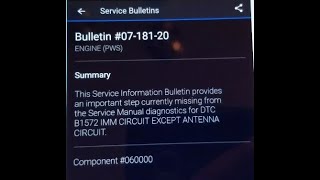
- Subaru TSB 07-181-20 is critical; it mandates checking for other immobilizer codes first before diagnosing B1572 to avoid replacing expensive parts like the BIU unnecessarily.
- Symptoms can be subtle at first, like rough idle or poor remote start performance, before escalating to a no-start condition.
What's Unique About the 2017-2019 Subaru OUTBACK
For this generation of Outback, Subaru issued a Technical Service Bulletin (TSB 07-181-20) because the factory service manual was missing a critical diagnostic step for this code. This led to technicians potentially replacing expensive parts unnecessarily. Furthermore, owner and technician experiences point heavily towards poor engine ground connections as a frequent and overlooked cause for this specific code on this platform, sometimes presenting with subtle symptoms like rough idle before a full no-start occurs. One specific, hard-to-find ground terminal block located behind the intake manifold has been identified as a common culprit, showing signs of melting plastic from the poor connection.
Diagnostic Flowchart
Tap your situation to follow the diagnostic path that matches what you're seeing on this vehicle.
Symptoms You May Notice
- Engine will not start (cranks but does not fire)
- Engine starts and then immediately stalls
- Flashing or solid red security/key icon on the dashboard
- Intermittent starting issues, may require multiple attempts to finally stay running
- Rough idle or poor remote start performance (in less severe cases)
- Flickering traction control light in some instances before failure
- Replacing the Body Integrated Unit (BIU) or Engine Control Module (ECM) without first checking for other immobilizer system codes and thoroughly inspecting all engine ground connections. TSB 07-181-20 was released specifically to prevent this misdiagnosis.
Most Likely Causes
- Poor or Corroded Engine Ground Wires 🔴 High Probability Multiple owner and technician reports identify corroded or loose engine-to-chassis ground straps as the root cause. These connections can degrade over time, creating electrical resistance that disrupts sensitive module communication. A specific ground terminal block hidden behind the intake manifold below the throttle body has been identified as a frequent failure point, with reports of the retaining bolt being loose and the surrounding plastic melted from high resistance.
How to confirm: Visually inspect the main ground straps on both sides of the engine bay, connecting the engine to the chassis. Pay special attention to the main ground terminal block behind the intake manifold; it may require reaching to feel if the bolt is loose. A voltage drop test across the ground connection under load is the definitive professional test. 🎬 See how to diagnose a no-start caused by bad grounds.
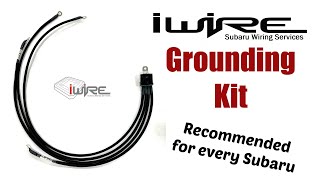
Typical fix: Remove, clean, and securely re-attach the ground wire terminals and contact points. If a cable or terminal is heavily corroded or damaged, replace the ground strap. For the hidden ground behind the intake, this involves removing the bolt, cleaning all terminals, and re-securing it. If the plastic housing is melted, new ring terminals may be needed. 🎬 Watch: How to install a grounding kit to fix these issues.
Est. part cost: $5-$50 - Wiring Harness Fault 🟡 Medium Probability A specific forum post on a related Subaru model (WRX) pointed to a bad connection in the brown 16-pin connector under the intercooler, which carries the immobilizer communication line. While not an Outback, the principle of checking critical connectors is valid.
How to confirm: Visually inspect the wiring harness between the Body Integrated Unit (BIU)/Body Control Module (BCM) and the Engine Control Module (ECM). Check for chafing, rodent damage, or corrosion at connectors. Perform continuity and resistance checks on the specific communication wires as per the service manual.
Typical fix: Repair the damaged section of the wiring harness or clean/replace the affected connector.
Est. part cost: $10-$100 - Faulty Body Integrated Unit (BIU) / Body Control Module (BCM) ⚪ Low Probability
How to confirm: This is typically a process of elimination after confirming grounds and wiring are perfect. Requires a professional scan tool to check for internal BIU faults. The TSB specifically warns against jumping to this conclusion. A faulty BIU can cause a wide range of electrical issues.
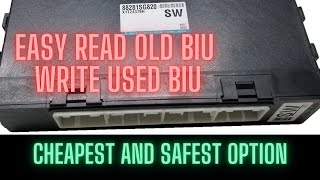
Typical fix: Replace the BIU/BCM. This part MUST be programmed by a dealer or a qualified specialist with Subaru-specific tools to recognize the vehicle's keys. Cloning services that transfer data from the old BIU to a donor unit are also available.
Est. part cost: $400-$800
Rare But Worth Checking
- Faulty Engine Control Module (ECM): This is very rare. The ECM is robust, but an internal failure in its immobilizer communication circuit could theoretically cause this code. It should only be considered after all other possibilities have been exhausted.
Diagnosis Steps
- Connect a professional scan tool capable of reading Subaru body codes.
- Per TSB 07-181-20, first check for any DTCs stored in the dedicated 'Immobilizer' system. If any are found, diagnose and resolve them before proceeding with B1572 diagnosis.
- If no other immobilizer codes are present, begin by thoroughly inspecting all engine-to-chassis ground connections. There are typically braided straps on both sides of the engine bay.
- Locate and inspect the main ground terminal block, which is hidden behind the intake manifold and below the throttle body. Check if the bolt is loose and look for signs of melted plastic, indicating a poor, high-resistance connection.
- Clean and tighten all ground points as a preventative measure, even if they look okay. Ensure a clean metal-to-metal connection.
- If grounds are confirmed good, inspect the wiring harness and connectors between the BIU/BCM and the ECM for any visible damage, paying attention to key junctions.
- If all wiring and grounds are confirmed to be in perfect condition, the fault may lie with the BIU/BCM itself, which requires professional testing and will require programming upon replacement.
Parts You'll Likely Need
- Engine Ground Strap
(OEM #81831AG000 (example, verify exact part for specific location))— This is the most frequently reported fix for B1572 on this platform, often due to corrosion or a loose connection. There are multiple ground straps in the engine bay.
Trusted brands: Subaru OE, Standard Motor Products, iWire
OEM price range: $25-$50
Aftermarket price range: $10-$25 - Body Integrated Unit (BIU)
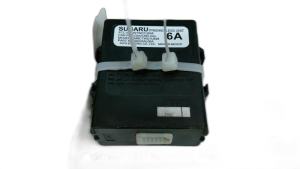
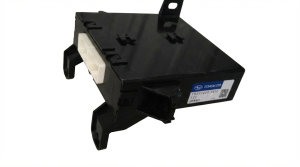
(OEM #82201AL31B (example for 2018 Outback, MUST verify by VIN))— This is the module that controls the immobilizer logic. It is a potential but less common cause of the fault, and should only be replaced after confirming grounds and wiring are good.
Trusted brands: Subaru OE
OEM price range: $400-$800
Related Codes That Often Appear With This One
- P1603 — This code for 'Engine Stall History' is often logged as a direct result of the B1572 fault causing the engine to stall.
- U0131 — This code for 'Lost Communication With Power Steering Control Module' can appear alongside B1572 if the root cause is a major ground issue, which can disrupt communication across multiple modules on the CAN bus.
Technical Service Bulletins (TSBs) & Recalls
- 07-181-20: DTC B1572- Revised Immobilizer Diagnostics. This TSB adds a critical step to check for other immobilizer codes before diagnosing B1572 to prevent unnecessary parts replacement.
Platform-Specific Known Issues
- Subaru issued Technical Service Bulletin 07-181-20 to correct a diagnostic procedure in the service manual for this code, indicating it was a common point of confusion for technicians.
- A hidden ground terminal block located behind the intake manifold is a known weak point and a common cause for this code. It bundles multiple grounds and can cause widespread communication issues when loose.
Mechanic-Grade Diagnostic Values
- BIU/Immobilizer Control Module Ground Circuit Resistance — expected: Less than 10 Ω. Failure: A reading higher than 10 Ω indicates a poor ground connection.
- BIU/Immobilizer Control Module Ignition Circuit Voltage (Key ON, Engine OFF) — expected: 10 V or more. Failure: Voltage below 10V indicates a problem in the power supply from the ignition switch.
- BIU/Immobilizer Control Module Power Supply Circuit Voltage (Key OFF) — expected: 10 V or more. Failure: Voltage below 10V indicates a problem in the constant power supply to the module.
Scan Tool Commands That Help
- Subaru Select Monitor: Communication Line Check (or Interface Check) — Used to verify the integrity of the communication line between the ECM and the Body Integrated Unit. It's found under {Each System Check} -> {Engine} -> {System Operation Check Mode} -> {security system}. This test should be performed after checking for grounds and before condemning a module.
- Subaru Select Monitor: Immobilizer Registration — This function is required after replacing the Body Integrated Unit (BIU) or other immobilizer-related components to teach the new module the vehicle's key codes.
- Subaru Select Monitor: Current Data Display — Used to monitor live data from the BIU, such as 'BATT Voltage (Control)' and 'IG power supply voltage', to confirm the module is receiving correct power in real-time. This is found under the '{Integ. Unit mode}'.
Wiring & Ground Locations
- Intake Manifold Ground — On top of the intake manifold, where multiple ECU ground wires terminate.. The ECU receives its primary ground reference from this location. If this connection is poor (due to looseness, corrosion, or aftermarket parts like TGV spacers), it can directly cause communication faults like B1572.
- BIU Ground Circuits — At the Body Integrated Unit harness connectors. Specific pins include (i84) No. 28, (B281) No. 20, and (B279) No. 27.. These are the direct ground paths for the BIU. A fault here will cause the module to malfunction. Resistance should be checked from these pins to a clean chassis ground.
- BIU Power Circuits — At the Body Integrated Unit harness connector B280. Pin 1 is ignition power, and Pin 6 is constant power.. Loss of either ignition-switched or constant power at these specific pins will prevent the BIU from operating and communicating correctly, triggering B1572.
- GE-1 — On top of the engine (as described on a 2021 model).. A loose main engine ground bolt, identified as 'GE-1' by a dealer, was found to be the root cause of widespread electrical havoc, including no-start conditions and nonsensical diagnostic codes, similar to the symptoms of B1572.
Real Owner Repair Stories
- YouTube user 'Just Be Handy' (Subaru Outback (year not specified, but within generation)) — Rough idle and poor remote start performance. No Check Engine Light was on, but code B1572 was found using a BlueDriver scanner.
✅ What actually fixed it The owner took the car to a dealer with the TSB number. The dealer diagnosed and fixed two corroded engine-to-chassis ground wires, one on each side of the engine bay. This resolved the code and the symptoms. - Reddit user on r/Subaru_Outback (2021 Subaru Outback) — Intermittent no-start, Auto Stop/Start disabled message, Vehicle Dynamics Control warning light flickering, and other random electrical issues. Diagnostic scan returned nonsensical codes for features the car didn't have.
❌ Tried (didn't work) Replacing the battery.
✅ What actually fixed it A dealership technician discovered a loose grounding bolt, identified as 'GE-1 on top of engine', was causing the widespread electrical problems. Tightening the bolt resolved all issues.
"I Checked Everything" — The Actual Cause
- A 2021 Outback presented with a no-start condition and a flood of bizarre, unrelated diagnostic codes for equipment the vehicle didn't even have. After initial checks (including a battery replacement) failed to find the cause, a dealer technician eventually traced the problem to a single loose main grounding bolt on top of the engine ('GE-1'). This highlights how a simple mechanical ground fault can create complex and misleading electronic symptoms that defy standard diagnostic logic.
OEM Part Supersession History
82201AL31B→82201AL31C, 82201AL31D, 82201AL31E, 82201AL31F— Progressive updates and revisions by the manufacturer.
Heads up: This part is for key-start models. The final part number in the chain, 82201AL31F, replaces all previous versions. Always verify the correct part number for your specific VIN and options (key-start vs. push-button start).
Model Year Variations Within This Range
- 2018-2019: The 2018 model year received a mid-cycle refresh which included significant updates to the infotainment system (new head units with Apple CarPlay/Android Auto) and related electronics. While the core immobilizer function remained, the Body Integrated Unit (BIU) received software updates and part number changes. For example, a TSB from early 2018 lists reprogramming files for BIU part number 82201AL31B to update it to 82201AL31C, indicating software changes tied to the model year refresh.
Helpful Videos
We Have This Part in Stock

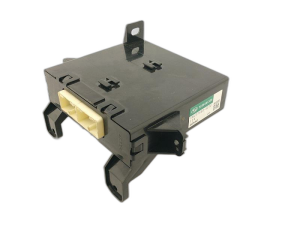

The information in this article is provided for general reference and educational purposes only. Vehicle specifications, procedures, and part compatibility can vary by production date, trim level, and region. Always consult your vehicle's factory service manual and verify part numbers before purchasing or performing repairs. Safety-critical components such as airbags, seat belts, and braking systems should be installed by a qualified professional.
- Subaru OUTBACK:
- 🎬 Helpful Videos
- 🛍️ Shop This Part
- What's Unique About the 2017-2019 Subaru OUTBACK
- Diagnostic Flowchart
- Symptoms You May Notice
- Most Likely Causes
- Rare But Worth Checking
- Diagnosis Steps
- Parts You'll Likely Need
- Related Codes That Often Appear With This One
- Technical Service Bulletins (TSBs) & Recalls
- Platform-Specific Known Issues
- Mechanic-Grade Diagnostic Values
- Scan Tool Commands That Help
- Wiring & Ground Locations
- Real Owner Repair Stories
- "I Checked Everything" — The Actual Cause
- OEM Part Supersession History
- Model Year Variations Within This Range
- 🎟️ Get 5% Off