

Ultimate B1557 Guide: Ignition Power Circuit Problem (2026 Update)
The most comprehensive guide to diagnosing and fixing OBD-II code B1557, packed with pro-level tips and manufacturer-specific details.
- Code B1557 indicates a short-to-battery on the ignition run/start circuit, meaning unwanted voltage is present when the key is off.
- Do not drive with an active B1557 code; the fault causes sudden engine stalling at highway speeds, resulting in an immediate loss of power steering and brakes.
- A worn-out ignition switch causes over 60% of B1557 codes, making the 'wiggle test' your most valuable first diagnostic step.
- Verify your manufacturer's specific definition before replacing parts, as Mitsubishi and Suzuki use B1557 for unrelated 4WD and TPMS failures.
What Does B1557 Mean?
B1557 means the Body Control Module (BCM) detects a short to the battery on the electrical circuit powering the car in the 'Run' and 'Start' key positions. Unwanted voltage exists on the circuit when the key is off, or at a higher level than expected. This points directly to a failing ignition switch, a chafed wire harness, or a stuck relay.
Technical definition: The official SAE/OBD-II definition is "Ignition Run/Start Circuit Short To Battery". This indicates a control module detected voltage on the ignition run/start circuit that is higher than the specified range or present when it should be zero, confirming a direct or partial short to positive battery voltage.
Can I Drive With B1557?
No — Do Not Drive. It is critically unsafe to drive. The fault causes your engine to stall without warning at any speed. This leads to an immediate and total loss of power steering and power-assisted brakes, creating a severe crash risk. Tow the vehicle to a repair facility.
Common Causes
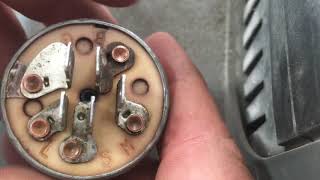
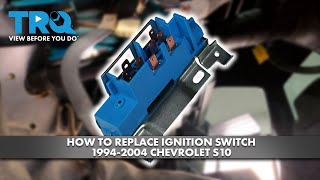
- Faulty Ignition Switch (Very Common) — Internal contacts inside the ignition switch wear out and bridge, creating a direct short. This frequently occurs in vehicles where the key feels loose or requires wiggling to start. 🎬 See this guide on how to test an ignition switch.
- Damaged Wiring Harness (Chafing or Rodents) (Common) — A wire in the ignition harness rubs through its insulation and touches a constant power source, or rodents chew through the loom. This typically happens in the steering column, under the dashboard, or near the engine bay fuse box.
- Poor Ground Connection (Common) — Corroded main ground connections at the BCM or engine block cause erratic voltage readings across multiple systems, triggering false B1557 codes. GM TSB 18-NA-161 specifically identifies ground G218 as a culprit for these electrical issues.
- Failed Starter or Ignition Relay (Less Common) — Internal contacts inside the main ignition or starter relay fuse together. This keeps power on the run/start circuit even when the key is off, which the BCM interprets as a short to battery.
- Faulty Body Control Module (BCM) (Less Common) — The BCM develops an internal short. This failure is usually accompanied by other erratic electrical problems, such as wipers, lights, or door locks activating randomly.
- Improperly Installed Aftermarket Accessories (Rare) — A remote starter, alarm system, or stereo is wired incorrectly, tapping into the ignition circuit and back-feeding voltage into the system.
- Short in a Connected Component (Rare) — A sensor or secondary module powered by the run/start circuit develops an internal short, back-feeding voltage into the primary circuit.
Symptoms
- Engine stalls while driving — The engine suddenly shuts off while driving, causing an immediate loss of power steering and power brakes.
- Car will not crank or start — Turning the key results in a single click or absolute silence, even if dashboard lights illuminate.
- Accessories stay on with key removed — The radio, climate control, or dash lights remain powered on after removing the key, indicating the ignition switch failed to cut the circuit.
- Intermittent electrical problems — Dashboard gauges flicker, drop to zero, or work randomly because the ignition switch fails to provide steady power.
- Check Engine Light or other warning lights are on — The vehicle's computer illuminates the Check Engine Light. An airbag warning light frequently accompanies this code if the fault affects related modules.
Diagnostic Flowchart
Tap your situation to follow the diagnostic path that matches what you're seeing on this code.
Common Fixes & Costs
- Replace Ignition Switch — Parts: $40-$150, Labor: $150-$250, ~1.5 hr book time (Intermediate)
- Clean or Repair Ground Connections — Parts: $1-$10, Labor: $75-$200, ~1 hr book time (DIY)
- Replace Blown Fuse and/or Relay — Parts: $5-$30, Labor: $50-$150, ~1.5 hr book time (DIY)
- Repair Damaged Wiring — Parts: $5-$50, Labor: $200-$1500+, ~4 hr book time (Professional)
- Replace Body Control Module (BCM) — Parts: $200-$700+, Labor: $150-$300, ~2 hr book time (Professional)
DIY vs Professional
- Replace Ignition Switch — Beginner: No. Recommended for intermediate DIYers.
Tools: Screwdriver set, trim removal tools, socket set, vehicle-specific instructions. - Repair Damaged Wiring — Beginner: No. Recommended for advanced or professional technicians only.
Tools: Multimeter, wiring diagrams, wire strippers, soldering iron, heat shrink tubing. - Clean or Repair Ground Connections — Beginner: Yes. This is an excellent starting point for beginners.
Tools: Socket set, wire brush, sandpaper, contact cleaner, flashlight. - Replace Body Control Module (BCM) — Beginner: No. Stop DIY and tow to a shop equipped with OEM programming tools if BCM replacement is required.
Tools: Socket set, trim removal tools, professional scan tool with programming capabilities.
Used vs. New Parts: Buying Guide
When a used part is worth it: Buying a used ignition switch is a poor financial decision. It is a high-wear item, and new aftermarket parts are inexpensive ($40-$150). The labor cost makes the risk of premature failure on a used part unacceptable.
Donor-vehicle mileage cap: roughly under 50000 miles for the part to have meaningful remaining life.
Donor quality checklist:
- Verify the part number is an exact match.
- Avoid parts from vehicles in high-corrosion areas or with flood damage.
- Test the switch with a multimeter for correct continuity in each key position before installation.
Decision logic:
- If The new OEM or quality aftermarket part costs less than $150. → Always buy new. Potential savings are minimal and not worth repeat labor costs.
- If The vehicle is over 20 years old and a new part is unavailable. → A used part from a low-mileage donor vehicle is an acceptable last resort.
- If The part has a known high wear-out rate (like an ignition switch). → Strongly favor a new part with a warranty.
Warranty tradeoff: Salvage yard parts typically carry a 30-90 day warranty covering only the part. New aftermarket parts offer 1-year to limited lifetime warranties. New OEM parts carry 1-2 year warranties.
Worst-case if a used part fails: $200-$400. If a used ignition switch fails, you pay full labor costs again plus the cost of another replacement part.
What Happens If You Wait — Timeline
- Immediate: The short circuit exists. The vehicle experiences intermittent no-start conditions or stalls while driving. The Check Engine Light illuminates. (MPG impact: 0%% · Added cost: $100-$250 for a potential tow. The primary cost is the extreme safety risk.)
- 1-14 Days: The short circuit acts as a parasitic draw, draining the battery when the vehicle is off. You return to a dead battery overnight, requiring frequent jump-starts. (MPG impact: 0%% · Added cost: $150-$250 for a replacement battery prematurely destroyed by deep cycling.)
- 2-8 Weeks: Continued electrical instability and voltage spikes stress other electronic components. The ignition switch degrades further, causing permanent no-start conditions. (MPG impact: 0%% · Added cost: $350-$600. The original repair is required, plus the cost of a new battery and advanced diagnostic fees.)
- 2+ Months: The persistent electrical fault overloads and destroys the Body Control Module (BCM). The vehicle is permanently inoperable, and body functions (lights, locks) fail completely. (MPG impact: N/A (vehicle inoperable)% · Added cost: $800-$2000+. The initial repair is compounded by an expensive BCM replacement and VIN-specific programming.)
Cost of Not Fixing It
- Immediate: Catastrophic safety failure. The engine stalls randomly, resulting in a loss of power steering and brakes. (Added cost: Cost of a tow ($100-$250) and severe accident risk.)
- 0-1 Month: Stranding and battery failure. A persistent short drains the battery overnight, requiring jump starts and destroying the battery cells. (Added cost: $150-$250 for a new battery, plus diagnostic fees.)
- 1-6+ Months: Damage to other electronic modules. A persistent short overloads and destroys the Body Control Module (BCM). (Added cost: $500-$1500+ for BCM replacement and programming.)
Diagnosis Steps
- Perform a Visual Inspection
Check battery terminals for looseness or corrosion. Inspect wiring under the steering column and around the fuse box for melted, chafed, or damaged wires. Look for signs of rodent nesting.
Tools: Flashlight (Beginner) - Test the Ignition Switch (Wiggle Test)
While trying to crank the engine, gently push the key in, pull it out slightly, or wiggle it up and down. If the car starts or dashboard lights flicker, the ignition switch is worn out and requires replacement.
Tools: Car Key (Beginner) - Check the Battery and Fuses
Ensure the battery is fully charged (12.4V or higher). Locate the fuse box and check all fuses related to the ignition, starter, and BCM. A blown fuse confirms a short, but is a symptom, not the root cause.
Tools: Multimeter, Fuse Puller (Beginner) - Test the Ignition/Starter Relay
Locate the starter or ignition relay. Swap it with an identical relay from a non-essential system (like the horn). If the car starts after the swap, the original relay failed.
Tools: Pliers or Relay Puller Tool (Intermediate) - Test for Voltage at the Starter Solenoid
Check for voltage at the small signal wire (S-terminal) on the starter solenoid while a helper turns the key to 'Start'. You should see 12V. If you have 12V but the starter doesn't engage, the starter is bad. If you lack 12V, the problem is upstream in the ignition switch or wiring.
Tools: Multimeter, Jack and Jack Stands (Intermediate) - [PRO TIP] Perform a Voltage Drop Test on the Ground Circuit
Set your multimeter to a low DC Volts scale (2V). Connect the black lead to the negative battery terminal and the red lead to the BCM's main ground point. Have a helper attempt to start the car. Any reading above 0.1 volts indicates a high-resistance ground connection requiring cleaning.
Tools: Multimeter, Wiring Diagram (Advanced) - [PRO TIP] Isolate the Short with a Parasitic Draw Test
Disconnect the negative battery cable. Connect a multimeter (set to 10A) in series between the negative post and the cable. Wait 30 minutes for modules to sleep. If the draw exceeds 50mA, pull fuses one by one. The circuit that drops the amperage significantly contains the short.
Tools: Multimeter with Amp setting (Professional) - [ADVANCED] Test the Ignition Run/Start Circuit for Unwanted Voltage
Disconnect the BCM harness connector with the battery connected and the key OFF. Using a multimeter set to DC Volts, probe the specific pin for the 'Ignition Run/Start' circuit on the harness side. Connect the black lead to chassis ground. A reading of 1.0V or higher confirms a short to voltage in the wiring harness. A 0V reading suggests an internal BCM or ignition switch fault.
Tools: Multimeter, Vehicle-Specific Wiring Diagram with Pinouts (Advanced) - [ADVANCED] Check Scan Tool Live Data
Connect a professional scan tool and navigate to BCM live data. Monitor the PID for 'Ignition Switch Position'. With the key out, the status should read 'Off' or '0V'. If it reads 'Run' or shows voltage, the BCM is actively seeing the unwanted voltage that triggers code B1557.
Tools: Professional Scan Tool (Advanced) - Note on Fuel System Checks
Code B1557 is purely an electrical fault code. Diagnosing the fuel pump, filter, or checking fuel pressure is irrelevant for this specific code and leads to misdiagnosis. Resolve the electrical fault first.
Tools: N/A (Beginner)
When This Code Triggers (Freeze-Frame Conditions)
- Vehicle Speed: 0 mph (During key-on self-test before starting, or immediately after stalling.)
- RPM: 0 or 800-2500 (Sets with key-on engine-off, or during normal driving when the short occurs.)
- Battery Voltage: 11.5-12.5V (engine off) or 13.5-14.5V (engine on) (The BCM logs system voltage to verify it is within normal operating range when the fault triggers.)
- Module Input Voltage (Ignition Run/Start Circuit): > 1.0V (when it should be 0V) (The core trigger condition; voltage is present on the circuit when the key is in the OFF position.)
Related Codes
- B1558 — Means 'Ignition Run/Start Circuit Short To Ground.' B1557 is a short to power, while B1558 is a short to ground. B1558 instantly blows a fuse when the circuit is powered.
- B1556 — Means 'Ignition Run/Start Circuit Open,' indicating a broken wire or disconnected component. Unlike B1557, B1556 does not blow fuses and fails a continuity test.
- B1555 — Means 'Ignition Run/Start Circuit Failure,' a general code. You see B1555 if the module is unsure of the exact fault type.
- P2534 — Powertrain code for 'Ignition Switch Run/Start Position Circuit Low.' The PCM detected voltage lower than expected. B1557 means voltage is higher than expected.
Climate & Environmental Factors
- High Humidity / Water Intrusion: Moisture is a primary catalyst for corrosion on wiring, connector pins, and ground points. Water seeping into fuse boxes creates a conductive path, directly causing a short to battery.
- Cold Climates / Road Salt: Road salt creates a highly corrosive environment, accelerating the degradation of wiring insulation and exposed metal connections, increasing the likelihood of shorts and bad grounds.
- Extreme Temperature Cycles: Repeated cycling from hot to cold causes condensation inside enclosed spaces like connectors and modules, introducing moisture that leads to long-term electrical failures.
How to Talk to a Mechanic About This Code
Say this: "My car has a B1557 code with a no-start and stalling symptom. I authorize one hour of diagnostic time to test the ignition run/start circuit for a short to voltage. Please check the ignition switch and related wiring before recommending a BCM replacement."
This directs the technician to the specific electrical circuit, preventing them from starting with unrelated guesses like replacing the starter. It sets a clear expectation to rule out common, cheaper causes first.
Avoid saying:
- 'My car won't start, can you fix it?' (Too vague; invites expensive guesses).
- 'Just do whatever it takes to get it running.' (A blank check for unnecessary parts).
- 'I think I need a new starter.' (Never suggest a specific repair; describe symptoms and provide the code).
Questions to ask before authorizing the repair:
- What were the results of the voltage test on the run/start circuit at the BCM connector with the key off?
- If you recommend a BCM replacement, how did you definitively rule out the ignition switch and wiring harness?
- Can you show me the damaged wiring or explain the test results that condemn the specific part?
- Is the warranty for this repair for parts and labor, and what is its duration?
Where to Take It: Dealer vs Independent vs Chain
- Dealer:
Best for: Vehicles under warranty., Complex cases requiring BCM replacement and VIN-specific programming., Very new models where independent shops lack specific TSBs or wiring diagrams.
Downsides: Highest labor rates, often 1.5-2x more than independent shops., Defaults to replacing entire assemblies (e.g., steering column) instead of smaller components. (Typical cost: +50% vs. baseline) - Independent Shop:
Best fit. A reputable independent shop with a skilled electrical diagnostician is the ideal choice. They perform component-level repairs rather than replacing entire expensive harnesses.
Best for: Out-of-warranty vehicles where cost is a factor., Diagnosing common electrical faults like a bad ignition switch or wiring short., Vehicles with known issues (older Fords, GMs).
Downsides: Quality varies widely; look for a shop specializing in electrical diagnostics., Lacks proprietary tools for programming a new BCM if required. (Typical cost: +0% vs. baseline) - Chain Shop:
AVOID. Complex electrical diagnosis is not a good fit for the chain shop business model. High risk of paying for incorrect repairs.
Best for: Simple, high-volume jobs like battery replacement, tires, or oil changes.
Downsides: Technician skill for complex electrical diagnosis is inconsistent., High pressure to meet sales goals leads to upselling unnecessary parts (e.g., selling a starter for a B1557 code). (Typical cost: -10% vs. baseline)
When to Walk Away From the Repair
If the total estimated repair cost exceeds 50% of your car's private-party value from Kelley Blue Book, seriously consider selling or trading it in.
- Car worth $5000, fix is $450: Fix it. This cost covers a common ignition switch replacement and is well below the threshold.
- Car worth $3500, fix is $1800: Walk away. A repair this expensive involves a BCM replacement or extensive harness repair, exceeding 50% of the car's value.
- Car worth $8000, fix is $2500: Borderline. Get a second opinion before authorizing. This is a significant repair, but worthwhile if the vehicle is otherwise pristine.
What Scan Tool You Need for This Code
Minimum: A scanner that reads Body (B-series) trouble codes and displays live data from the Body Control Module (BCM).
Cheap code readers only read Powertrain (P-series) codes from the engine computer and cannot access the BCM. To diagnose B1557, you must view live data PIDs like 'Ignition Switch Position' to confirm what the module sees in real-time.
Budget: BlueDriver Pro Bluetooth Scanner (~$100) — Connects to your smartphone, reads codes from all modules (including BCM), and graphs live data PIDs to see if the BCM detects voltage when the key is off.
Mid-range: Innova 5610 or Foxwell NT510 Elite (~$350) — Offers OEM-level diagnostics, reads manufacturer-specific B-codes, provides extensive live data, and includes bidirectional controls to test components.
Professional: Autel MaxiCOM MK808S or XTOOL D7 (~$400-500) — Provides full-system diagnostics with advanced live data graphing and bidirectional controls. Essential for programming and coding a replacement BCM.
Rent vs buy: Buy. Parts stores offer free loaner tools, but they are basic readers unable to access BCM codes or live data. Diagnosing this issue requires monitoring live data while wiggling keys and wires.
How to Clear the Code After You Fix It
- Reconnect the battery if disconnected during repair.
- Use an OBD-II scan tool to erase DTCs from the BCM and other modules.
- Perform a complete drive cycle to allow readiness monitors to run self-tests.
Drive cycle (~20 minutes): A generic drive cycle includes a cold start (engine off for 8+ hours), a 2-3 minute idle, 10 minutes of mixed city driving, and 10 minutes of steady highway driving between 50-60 mph.
Readiness monitors affected: Catalyst (CAT) monitor, Evaporative (EVAP) System monitor, Oxygen (O2) Sensor monitor
Before emissions retest: drive at least 50 miles to fully set monitors.
Watch out for:
- Disconnecting the battery clears the code but resets all readiness monitors to 'incomplete', causing an automatic emissions test failure.
- The code returns immediately if the underlying electrical short is not repaired.
- Some manufacturers require highly specific drive cycles to set all monitors.
Will This Fail Emissions / State Inspection?
Yes — this code typically fails an OBD-II emissions inspection.
- California: An active B1557 code causes an immediate smog check failure. After clearing the code, you must complete a drive cycle to set all readiness monitors before passing.
- New York: The NYS DMV vehicle inspection includes an OBD-II scan. Any active diagnostic trouble code results in an automatic failure.
- Texas: In the 17 counties requiring emissions testing, an active check engine light and code B1557 causes an automatic inspection failure.
Most Commonly Affected Vehicles
- Ford Focus (2008-2014) — Extremely common issue with the ignition lock housing and internal switch. TSB 18-2062 points to wire harness chafing near the engine for 2012-2014 models.
- Ford F-150 (2004-2014) — Prone to ignition switch failure. Do not confuse with a PATS (anti-theft) issue; B1557 specifically points to a circuit fault.
- Chevrolet / GMC Silverado / Sierra (1999-2007) — Known for ignition switch problems and steering column connector issues. Poor ground connections (specifically G218) are a well-documented cause of stalling.
- Ford Escape (2008-2012) — Shares a faulty ignition lock module design with the Ford Focus, leading to identical starting problems.
- Pontiac / Chevrolet Grand Prix / Impala (2004-2008) — These GM W-body platforms are susceptible to ignition switch failures and wiring shorts causing a complete loss of power during start.
- Ford Expedition / Lincoln Navigator (2025) — TSB SSM 53643 notes B1557 appears in the Rear Gate Trunk Module (RGTM) during self-tests. If no symptoms exist, ignore the code.
- Hyundai / Kia Elantra, Sonata, Optima, Sorento (2011-2018) — Known for steering column wiring harness issues leading to intermittent starting problems and electrical failures.
- Volkswagen Golf, Jetta (2000-2010) — Be cautious. Code P1557 (powertrain) refers to 'Charge Pressure Control Positive Deviation' (turbocharger issue), not the ignition circuit.
Manufacturer-Specific Notes
- General (Ford, GM, Chrysler): The standard definition is 'Ignition Run/Start Circuit Short To Battery'. This guide focuses on this primary definition.
- General Motors: GM recalled millions of 2003-2011 vehicles for faulty ignition switches that moved out of 'run' while driving, causing stalling and airbag failure. This highlights a massive pattern of switch defects in GM vehicles.
- Mitsubishi: On Mitsubishi models, B1557 means 'No Communication With Transfer Case Shift Control Module,' a 4WD system issue. Diagnosing the ignition circuit is incorrect.
- Suzuki: For Suzuki, B1557 means 'Data from LR transmitter cannot be received' (TPMS issue) or 'Vehicle Speed Sensor Signal Malfunction'.
- Chevrolet: On specific Chevrolet models, B1557 indicates a 'Calibration error in the EEPROM memory' within a control module, requiring software updates rather than wiring repairs.
Real Owner Stories
2007 Chevy Silverado with 220K miles
Truck experienced an intermittent no-crank, no-start condition. Jumping the starter relay cranked the engine, but it refused to start, indicating a control system issue.
What they tried:
- Confirmed power and grounds at battery, starter, and alternator.
- Replaced a broken transmission shift cable bracket.
- Scanned for codes, revealing multiple 'lost communication' errors with the BCM, TCM, and EBCM.
Outcome: The root cause was a poor ground connection at the underhood fuse block. Replacing the fuse block to ensure a solid ground restored normal starting and running conditions.
Lesson: Multiple 'lost communication' codes paired with a no-crank condition point to a core power or ground issue affecting the entire network. Always check main power and ground connections at the fuse block first.
2012 Ford Focus with ~100K miles
Car intermittently failed to start. The owner noticed the radio stayed on after removing the key, draining the battery overnight.
What they tried:
- Replaced the battery, assuming it was old and weak.
- Considered replacing the starter motor.
Outcome: Diagnosed as a faulty ignition switch. Internal contacts shorted, keeping the accessory circuit powered and preventing the start circuit from engaging. Replacing the $40 switch resolved the no-start and battery drain.
Lesson: If accessories stay on with the key out, suspect the ignition switch before replacing the battery or starter. A 'wiggle test' confirms a worn-out switch.
2008 Chevy Silverado, unknown mileage
Truck would not crank or start. All fuses and relays tested good. The owner bypassed the starter relay with a wire to get home.
What they tried:
- Checked all fuses.
- Tested starter relay.
- Bypassed relay to manually crank the engine.
Outcome: The owner found a small, unfamiliar key-like object under the dashboard. It was the removable key for an aftermarket anti-theft kill switch installed by a previous owner. Plugging it back in fixed the problem immediately.
Lesson: If a no-crank condition defies normal diagnosis, thoroughly check for aftermarket alarm or kill-switch systems spliced directly into the ignition circuit.
How to Prevent This Code From Triggering
- Lighten Your Keychain (Daily Habit) — Excessive weight hanging from the ignition key causes premature wear on the internal mechanical and electrical components of the ignition switch, the leading cause of B1557.
- Clean Main Ground Connections (Every 30,000 miles or 2-3 years) — Corrosion on battery-to-chassis and engine block grounds creates high resistance, causing erratic electrical behavior and false trouble codes. Clean to bare metal and apply dielectric grease.
- Use Dry Lubricant on Key Lock Cylinder (Once per year or if key feels sticky) — Powdered graphite or Teflon-based lock spray keeps mechanical tumblers moving freely. Never use oil-based lubricants like WD-40, which gum up the lock over time.
- Inspect Wiring Harnesses in High-Risk Areas (During other under-hood or under-dash maintenance) — Visually check for wiring harnesses rubbing against sharp metal edges in the steering column and near the fuse box. Protect vulnerable areas with convoluted loom to prevent shorts.
Frequently Asked Questions
Why does my car start sometimes but not others with a B1557 code?
This is a classic symptom of a failing ignition switch or a loose wire. The electrical connection is right on the edge of failing, and factors like temperature or wiggling the key temporarily make or break the connection.
What are the most common misdiagnoses for B1557?
A common mistake is replacing the battery or starter motor when the car won't crank. The biggest pitfall is ignoring manufacturer-specific definitions; for Mitsubishi or Suzuki, B1557 points to 4WD or TPMS systems, not the ignition.
Can I just replace the fuse to fix a B1557 code?
No. A fuse blows to protect the circuit from excessive current caused by a short circuit. Replacing the fuse without fixing the underlying short results in another blown fuse.
Why do my radio and dash lights stay on after I take the key out?
This strongly indicates a failed ignition switch. The switch is internally shorted, keeping the accessory circuit powered even when the key is off, which drains your battery overnight.
Is the ignition switch the same as the key lock cylinder?
No. The lock cylinder is the mechanical part your key slides into. The ignition switch is the electronic component connected behind it that routes power to the car's systems.
My scan tool gives a different definition for B1557. Why?
Carmakers like Mitsubishi and Suzuki use B1557 for completely different problems. Always verify the code definition for your specific make and model before starting any diagnosis.
Can a bad battery cause a B1557 code?
It is highly unlikely. B1557 indicates a short to voltage, meaning a circuit is getting too much power, whereas a bad battery causes low voltage problems. A severely overcharging alternator is a more likely power-source culprit.
What is a voltage drop test and why is it important for B1557?
A voltage drop test checks for unwanted resistance, most often on the ground side. A bad ground prevents current from returning to the battery properly, causing modules to malfunction and set false codes. Readings over 0.1V indicate a problem requiring repair.
Key Takeaways
- Code B1557 indicates a short-to-battery on the ignition run/start circuit, meaning unwanted voltage is present when the key is off.
- Do not drive with an active B1557 code; the fault causes sudden engine stalling at highway speeds, resulting in an immediate loss of power steering and brakes.
- A worn-out ignition switch causes over 60% of B1557 codes, making the 'wiggle test' your most valuable first diagnostic step.
- Verify your manufacturer's specific definition before replacing parts, as Mitsubishi and Suzuki use B1557 for unrelated 4WD and TPMS failures.
Helpful Videos

The information in this article is provided for general reference and educational purposes only. Vehicle specifications, procedures, and part compatibility can vary by production date, trim level, and region. Always consult your vehicle's factory service manual and verify part numbers before purchasing or performing repairs. Safety-critical components such as airbags, seat belts, and braking systems should be installed by a qualified professional.
- 🎬 Helpful Videos
- What Does B1557 Mean?
- Can I Drive With B1557?
- Common Causes
- Symptoms
- Diagnostic Flowchart
- Common Fixes & Costs
- DIY vs Professional
- Used vs. New Parts: Buying Guide
- What Happens If You Wait — Timeline
- Cost of Not Fixing It
- Diagnosis Steps
- When This Code Triggers (Freeze-Frame Conditions)
- Related Codes
- Climate & Environmental Factors
- How to Talk to a Mechanic About This Code
- Where to Take It: Dealer vs Independent vs Chain
- When to Walk Away From the Repair
- What Scan Tool You Need for This Code
- How to Clear the Code After You Fix It
- Will This Fail Emissions / State Inspection?
- Most Commonly Affected Vehicles
- Manufacturer-Specific Notes
- Real Owner Stories
- 2007 Chevy Silverado with 220K miles
- 2012 Ford Focus with ~100K miles
- 2008 Chevy Silverado, unknown mileage
- How to Prevent This Code From Triggering
- Frequently Asked Questions
- Why does my car start sometimes but not others with a B1557 code?
- What are the most common misdiagnoses for B1557?
- Can I just replace the fuse to fix a B1557 code?
- Why do my radio and dash lights stay on after I take the key out?
- Is the ignition switch the same as the key lock cylinder?
- My scan tool gives a different definition for B1557. Why?
- Can a bad battery cause a B1557 code?
- What is a voltage drop test and why is it important for B1557?
- Key Takeaways
- 🎟️ Get 5% Off