

B1529 on 2019-2020 Chevrolet Trax: Steering Wheel Control Fixes and Causes
On a 2019-2020 Chevy Trax, code B1529 almost always points to a problem with the steering wheel controls, often due to a faulty clock spring (steering wheel coil). This can cause the cruise control, horn, and radio buttons to stop working and may illuminate the airbag warning light. Replacing the clock spring is the most common fix.
- B1529 on a 2019-2020 Trax means your steering wheel control buttons have stopped communicating with the car's computer.
- The most common cause is a failed clock spring, which is a wear item. A key symptom is the airbag warning light turning on at the same time the buttons fail.
- Common symptoms are: radio and cruise control buttons on the steering wheel won't work, the horn is dead, and the airbag light is on.
- This is not a DIY-friendly repair for most people because it requires removing the driver's side airbag, which is a major safety component that requires special procedures to handle safely.
- A GM Technical Service Bulletin (21NA246) acknowledges this exact problem on the 2019 Trax.
- The repair cost at a shop is typically between $258 and $315.
What's Unique About the 2019-2020 Chevrolet TRAX
The 2019-2020 Trax is built on the GM Gamma II platform, sharing its electrical architecture with the Chevrolet Sonic and Buick Encore. A specific Technical Service Bulletin (TSB #21NA246) directly links B1529 on the 2019 Trax to inoperative steering wheel controls and cruise control, confirming this is a known issue. This isn't just a generic code definition; it's a documented pattern of failure for this specific vehicle platform and its relatives.
Diagnostic Flowchart
Tap your situation to follow the diagnostic path that matches what you're seeing on this vehicle.
Symptoms You May Notice
- Steering wheel controls for radio/infotainment are inoperative.
- Cruise control will not turn on or engage.
- Airbag warning light is illuminated on the instrument cluster.
- Horn does not work.
- Unwanted front windshield wiper swipe (as noted in TSB 21NA246).
- Grinding or rubbing noise when turning the steering wheel.
- Replacing the radio or cruise control module. The problem is almost always in the control circuit (switches, clock spring, wiring) and not the components being controlled.
- Replacing only the steering wheel switches when the clock spring is the actual point of failure. If the airbag light is on, the clock spring is the more likely culprit.
Most Likely Causes
- Failed Clock Spring (Steering Wheel Coil) 🔴 High Probability The clock spring contains a thin ribbon cable that flexes every time the steering wheel is turned. Over time, this cable can fatigue, break, or short, causing an open or short circuit. This is a common wear-and-tear item.
How to confirm: A technician can use a scan tool to monitor the switch signals from the BCM. If no signals are received when buttons are pressed, and the airbag light is on, the clock spring is the primary suspect. The horn and airbag circuits also run through the clock spring, so their failure alongside the steering wheel controls strongly points to this component.
Typical fix: Replace the clock spring assembly. This requires disconnecting the battery, removing the steering wheel and airbag, and then installing the new part, ensuring it is centered correctly.
Est. part cost: $50-$150 - Faulty Steering Wheel Control Switch 🟡 Medium Probability The switches themselves can fail internally from wear and tear, physical damage, or liquid spills. It's less common than clock spring failure.
How to confirm: A technician can test the resistance of the individual switches while pressing them to see if they fall within the specified range. If only a single button or one side of the controls doesn't work (e.g., radio works but cruise doesn't), the switch is a more likely cause than the clock spring.
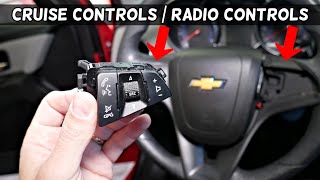
Typical fix: Replace the faulty steering wheel switch assembly. 🎬 See this walkthrough on how to remove and replace the switches. This also requires removing the airbag to access the switch mounting screws.
Est. part cost: $40-$100 - Wiring Harness Issue ⚪ Low Probability While less common, wiring between the BCM, clock spring, and switches can become damaged, chafed, or disconnected, especially if prior dash or steering column work has been performed.
How to confirm: Perform a continuity and resistance test on the wiring harness from the BCM connector to the clock spring connector. This involves checking for breaks, shorts to ground, or shorts to power in the specific circuit referenced by the BCM.
Typical fix: Repair the damaged section of the wiring harness.
Est. part cost: $5-$50
Rare But Worth Checking
- Body Control Module (BCM) Fault: This is very rare. The BCM is the last component to suspect after all wiring, switches, and the clock spring have been confirmed to be in good working order. A BCM failure would likely present with multiple other unrelated electrical issues.
Diagnosis Steps
- Connect a professional scan tool capable of reading Body Control Module (BCM) and Supplemental Restraint System (SRS) codes to confirm B1529 and any related symptom codes (e.g., SYM03) or airbag faults.
- Using the scan tool, monitor the live data for steering wheel control switch inputs while pressing each button. Note if any signals are being received by the BCM.
- Check for functionality of other steering wheel components. Test the horn and check if the airbag/SRS warning light is illuminated. If both the buttons and the horn/airbag are affected, the clock spring is the most likely cause.
- If no signals are received, inspect the wiring and connectors between the steering column and the BCM for any visible damage or loose connections.
- If wiring appears okay, gain access to the clock spring connectors. Test for proper voltage from the BCM to the clock spring and test the continuity of the circuits through the clock spring itself.
- Test the resistance of the steering wheel switches themselves to rule out a faulty switch pack.
- If switches and wiring to the clock spring test good, the clock spring is the most likely point of failure and should be replaced.
- If all components and wiring test good, the final step would be to diagnose a potential internal fault in the Body Control Module, though this is highly unlikely.
Parts You'll Likely Need
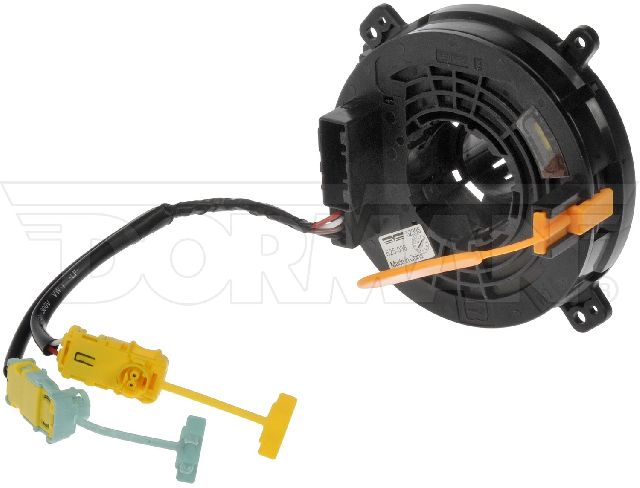
- Clock Spring / Steering Wheel Coil — This part contains the wiring that allows the steering wheel to turn while maintaining an electrical connection for the airbag, horn, and switches. It is the most common failure point for this code.
Trusted brands: ACDelco (GM Genuine), Dorman, Standard Motor Products
OEM price range: $100-$180
Aftermarket price range: $60-$120 - Steering Wheel Control Switch
(OEM #42356198)— If only specific buttons fail, the switch itself may be the cause rather than the entire clock spring assembly. Part number 42356198 is listed for the 2017-2022 Trax audio controls.
Trusted brands: ACDelco
OEM price range: $60-$120
Aftermarket price range: $40-$80
Related Codes That Often Appear With This One
- P155A — TSB #21NA246 explicitly lists P155A and B1529 together as codes related to inoperative steering wheel controls and cruise control issues on the 2019 Trax.
- Various SRS/Airbag Codes — Because the driver's side airbag circuit runs through the clock spring, a failure of this component will often trigger a supplemental restraint system (SRS) code and turn on the airbag warning light.
Technical Service Bulletins (TSBs) & Recalls
- 21NA246: Correct customer concerns of Unwanted Front Windshield Wiper Swipe, Cruise Control Wont Turn On, Steering Wheel Controls Inoperative, DTCs P155A SYM00, B1529 SYM03.
Platform-Specific Known Issues
- Technical Service Bulletin #21NA246 was issued for 2019 Trax models (among other GM vehicles) for customer concerns including inoperative steering wheel controls and cruise control, specifically citing DTC B1529 SYM03.
Mechanic-Grade Diagnostic Values
- Voltage Reference Circuit at Switch Connector — expected: Greater than 11V (typically 11.8-12.2V) between the reference voltage circuit terminal and ground with the ignition ON and switch disconnected.. Failure: Less than 11V suggests a short to ground or an open/high resistance in the circuit.
- Signal Circuit Voltage to Ground — expected: 0 Volts at the signal circuit terminal with the ignition ON and switch disconnected.. Failure: Greater than 0V indicates a short to voltage in the signal circuit.
- Signal Circuit Continuity — expected: Less than 2 ohms of resistance end-to-end on the signal circuit.. Failure: 2 ohms or greater indicates an open or high resistance in the circuit.
- Steering Wheel Switch Resistance — expected: Each button press should correspond to a unique resistance value within a specific range defined by the manufacturer. For example, one button might be 1.2k ohms, another 1.8k ohms, etc.. Failure: Infinite resistance (open) or 0 ohms (short) when a button is pressed, or a value that doesn't change, indicates a faulty switch.
Hidden / Shadow Codes Worth Checking
- B1529 03: Device Voltage Reference Output Circuit Voltage Below Threshold. This is the specific symptom byte cited in TSB #21NA246, indicating the BCM has detected a short to ground in the 12V reference circuit for the switches. (see via A professional GM-compliant scan tool like a GDS2 (Global Diagnostic System 2) is required to view symptom bytes.)
- B1529 07: Device Voltage Reference Output Circuit Voltage Above Threshold. This indicates the BCM has detected a short to voltage in the 12V reference circuit. (see via A professional GM-compliant scan tool like a GDS2 (Global Diagnostic System 2).)
Scan Tool Commands That Help
- GDS2 (GM Global Diagnostic System 2): BCM Data Display > SWC (Steering Wheel Control) Bank 1 Status — To live-monitor the status of the steering wheel control switches. The parameter should read 'Idle' and change to 'SW1-SW7' (or similar) when each button is pressed. If the status doesn't change, it confirms the BCM is not receiving the input, pointing to an issue in the switch, clock spring, or wiring.
- GDS2 (GM Global Diagnostic System 2): Control Functions (Bidirectional Controls) — While GDS2 may not have a direct bidirectional command for the switches themselves (as they are passive inputs), a technician can use bidirectional controls for related BCM functions (like lights, locks) to verify that the BCM itself is capable of commanding outputs, helping to isolate the fault to the input side of the circuit.
Wiring & Ground Locations
- BCM Connector X4, Pin 6 — The Body Control Module (BCM) is located under the driver's side of the dashboard. Connector X4 is one of several large connectors on the BCM.. Pin 6 on the X4 connector is for the 'Steering Wheel Controls Signal' (Circuit 1796, D-BU wire). This is the primary signal wire a technician must test for voltage and resistance when diagnosing a B1529 code.
- BCM Connector X4, Pin 8 — On the same BCM X4 connector.. Pin 8 is the 'Low Reference' (ground) for the steering wheel controls (Circuit 6009, TN/BK wire). A bad connection here can cause incorrect voltage readings and trigger the code.
- G302 — A wiring diagram for the 2019 Trax instrument cluster shows a ground point G302 located under the center console.. While not directly tied to the steering wheel controls in the available diagram, poor grounds in this area can cause a wide range of BCM and instrument cluster issues. If direct circuit testing fails to find a fault, checking the integrity of major grounds like G302 is a valid next step.
Helpful Videos

We Have This Part in Stock

The information in this article is provided for general reference and educational purposes only. Vehicle specifications, procedures, and part compatibility can vary by production date, trim level, and region. Always consult your vehicle's factory service manual and verify part numbers before purchasing or performing repairs. Safety-critical components such as airbags, seat belts, and braking systems should be installed by a qualified professional.
- Chevrolet TRAX:
- 🎬 Helpful Videos
- 🛍️ Shop This Part
- What's Unique About the 2019-2020 Chevrolet TRAX
- Diagnostic Flowchart
- Symptoms You May Notice
- Most Likely Causes
- Rare But Worth Checking
- Diagnosis Steps
- Parts You'll Likely Need
- Related Codes That Often Appear With This One
- Technical Service Bulletins (TSBs) & Recalls
- Platform-Specific Known Issues
- Mechanic-Grade Diagnostic Values
- Hidden / Shadow Codes Worth Checking
- Scan Tool Commands That Help
- Wiring & Ground Locations
- 🎟️ Get 5% Off