

OBD-II Code B1527: High Parasitic Load (Battery Drain)
What B1527 means, why it triggers, and how to fix it
- Code B1527 triggers when the Body Control Module detects a battery drain exceeding 2 amps while the vehicle is parked.
- Improperly wired aftermarket accessories, such as dash cams or remote starters, are the leading cause of this parasitic draw.
- On 2016 GM SUVs, a known software glitch requires a $150-$200 BCM reprogram at a dealership, not a full module replacement.
- Diagnosing this code requires a digital multimeter to perform a parasitic draw test, aiming for a normal sleep-state reading below 85 milliamps.
What Does B1527 Mean?

B1527 means the Body Control Module (BCM) detected the battery losing significant power while the vehicle was turned off. The computer sets this code when the battery's charge drops by 30% due to a draw exceeding 2 amps while parked.
Technical definition: The SAE definition for code B1527 is "High Parasitic Load Detected." The Body Control Module (BCM) monitors the battery's state of charge (SOC). The code triggers when the ignition turns to Accessory or Run and the BCM detects the SOC is 30 percent lower than when the engine last ran, indicating a battery drain exceeding 2 amps occurred while off.
Can I Drive With B1527?
Yes, But With Caution. Yes, but you risk getting stranded. A significant drain (2+ amps) depletes a healthy battery in under 24 hours. Repeatedly draining a standard car battery permanently damages it, requiring premature replacement.
Common Causes

- Aftermarket Electronics (Radio, Alarm, Remote Starter, Dash Cam) (Very Common) — Improperly installed aftermarket accessories are the leading cause. Devices wired to a constant power source instead of a switched ignition source fail to 'go to sleep', causing a constant power drain.
- Faulty OnStar or Telematics Module (Common) — On GM vehicles, the OnStar (VCIM) module frequently fails to enter sleep mode. It continuously attempts to establish a connection or run self-checks, causing a significant battery drain.
- Stuck Relay or Switch (Common) — A relay (fuel pump, A/C) gets stuck in the 'on' position, or a switch (glove box, vanity mirror) fails, keeping a circuit powered continuously.
- Faulty Body Control Module (BCM) (Common) — The BCM fails internally, preventing it or other modules it controls from shutting down properly.
- Software Glitch in a Control Module (Less Common) — A software error prevents modules from sleeping. GM TSB 16-NA-152 identifies a BCM software issue triggered by the child window lock switch on 2016 SUVs.
- Faulty Alternator Diode (Less Common) — Failed alternator diodes create a path for current to flow from the battery back through the alternator when the car is off.
- Defective Factory Component (Less Common) — Factory-installed modules like the radio, instrument cluster, or amplifier develop internal shorts, drawing power constantly. On C5 Corvettes, a shorted Driver Information Center button causes this.
- Worn or Damaged Wiring (Rare) — Wiring that rubs through its insulation and touches the metal frame creates a short circuit, leading to a persistent power drain.
Symptoms

- Dead or Weak Battery — The primary symptom is returning to a parked car to find a dead battery, requiring frequent jump-starts.
- Slow Engine Crank — Before the battery dies completely, the engine turns over sluggishly during startup.
- Warning Messages on Dash — The dash displays 'Battery Saver Active' or 'Low Battery' as the vehicle shuts down non-essential systems to preserve power.
- Electrical Gremlins — The radio stays on, interior lights flicker, or dashboard relays click after the car is turned off.
Diagnostic Flowchart

Tap your situation to follow the diagnostic path that matches what you're seeing on this code.
Common Fixes & Costs
- Repair or Remove Faulty Aftermarket Electronics — Parts: $0-$150, Labor: $100-$200, ~1.5 hr book time (Intermediate)
- Reprogram Body Control Module (BCM) — Parts: $0, Labor: $100-$200, ~1 hr book time (Professional)
- Replace Faulty Relay or Switch — Parts: $10-$50, Labor: $50-$150, ~0.8 hr book time (Beginner)
- Replace Alternator — Parts: $200-$500, Labor: $100-$250, ~1.3 hr book time (Intermediate)
- Replace Body Control Module (BCM) — Parts: $300-$700, Labor: $150-$400, ~2 hr book time (Professional)
- Replace Ford Lighting Control Module (LCM) — Parts: $150-$300, Labor: $75-$150, ~1 hr book time (Intermediate)
- Diagnose and Repair Parasitic Draw (Shop Labor) — Parts: $0, Labor: $150-$450, ~2 hr book time (Professional)
Used vs. New Parts: Buying Guide
When a used part is worth it: Almost never for a DIYer. A used BCM is locked to the original vehicle's VIN and security system. It requires professional tools to 'virginize' and reprogram.
Donor-vehicle mileage cap: roughly under 50000 miles for the part to have meaningful remaining life.
Donor quality checklist:
- Part number must be an exact match.
- Verify the donor vehicle had the exact same option package.
- Ask the seller if the module has been 'unlocked' or 'virginized' by a professional service.
Decision logic:
- If You are a DIYer without professional programming tools → Buy a new OEM part or a professionally remanufactured, pre-programmed unit. Do not buy from a junkyard.
- If The vehicle is old and has low value → A professionally remanufactured BCM programmed to your VIN before shipping offers the best balance of cost and reliability.
- If The part is for a critical system (e.g., security, ignition) → Favor a new OEM part installed and programmed by a dealer to ensure compatibility.
Warranty tradeoff: Used BCMs typically have a 30-day part-only warranty. New OEM and quality remanufactured units carry a 1-year or longer warranty.
Worst-case if a used part fails: $400 - $800. If a used BCM fails to program, you pay for the failed attempt, towing fees, a new module, and a second programming fee.
What Happens If You Wait — Timeline
- 0-1 month: A moderate draw (100-250mA) begins. The battery dies after sitting for a few days. You need an occasional jump-start. The B1527 code is stored. (Added cost: $0)
- 1-3 months: Jump-starts become frequent. The battery dies overnight. Constant drain and recharge cycles stress the alternator. (Added cost: $150 - $350 (Cost of a new battery))
- 3-6 months: The original battery is ruined. The alternator works overtime to recharge a severely depleted battery on every drive, leading to overheating. (Added cost: $350 - $700 (Cost of battery and increased risk of alternator failure))
- 6+ months: The alternator fails from sustained overuse. Frequent jump-starting causes voltage spikes, damaging sensitive electronics like the BCM. (Added cost: $800 - $1500+ (Cost of battery, alternator, and module replacement))
Cost of Not Fixing It
- Immediate: High risk of a dead battery and being stranded. Inconvenience of needing frequent jump-starts. (Added cost: $0)
- 1-6 months: Permanent battery damage (sulfation) from repeated deep discharge cycles, requiring premature battery replacement. Increased wear on the alternator. (Added cost: $150 - $350)
- 6+ months: Catastrophic failure of the alternator. Potential damage to sensitive electronics from improper jump-starting procedures. (Added cost: $500 - $1500+)
Diagnosis Steps
- Visually Inspect for Obvious Issues
Look for lights staying on, such as glove box, trunk, or vanity mirror lights. Check for poorly installed aftermarket accessories. Ensure all accessory switches are turned off.
Tools: Flashlight (Beginner) - Test the Battery and Charging System
Confirm the battery is healthy and the alternator charges correctly (13.5-14.5 volts when running). A weak battery that cannot hold a charge mimics a parasitic draw.
Tools: Digital Multimeter or Free Parts Store Test (Beginner) - Check for Technical Service Bulletins (TSBs)
Search online for your vehicle's make, model, year, and 'B1527' or 'parasitic draw'. Manufacturers release bulletins for known issues, such as TSB 16-NA-152 for 2016 GM SUVs.
Tools: Internet access (Beginner) - Perform a Basic Parasitic Draw Test
Set a multimeter to 10A DC. Disconnect the negative battery cable. Connect the multimeter in series between the cable and the negative post. Latch all doors and the hood to enter 'sleep mode'. Wait 20-60 minutes. A normal reading is 50-85mA. A reading consistently above 100mA confirms a parasitic draw.
Tools: Digital Multimeter, Basic hand tools (Intermediate) - Isolate the Circuit with the Draw (Fuse Pull)
With the multimeter showing the draw, pull fuses one by one. When the amperage reading drops to the normal range (below 85mA), you have found the circuit containing the faulty component.
Tools: Multimeter, Fuse puller or needle-nose pliers (Intermediate) - Advanced Circuit Isolation: Fuse Voltage Drop Test
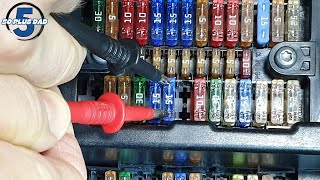
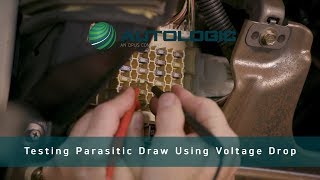
Set your multimeter to DC millivolts (mV). With the car in sleep mode, touch the probes to the two test points on top of each fuse. A fuse on a circuit with a draw shows a stable mV reading. Cross-reference this reading on a fuse voltage drop chart to determine the amperage without pulling the fuse.
Tools: Digital Multimeter (with mV setting), Fuse Voltage Drop Chart (Advanced) - Advanced Component Test: Alternator Diode Leakage
Set a multimeter to AC Volts. With the engine running at 1500 RPM and electrical loads on, touch the probes to the battery terminals. A reading of 0.5V AC or higher indicates a failed diode leaking AC voltage. Alternatively, disconnect the main power wire from the alternator with the engine off; if the draw disappears, the alternator is faulty.
Tools: Digital Multimeter (with AC Volts) (Advanced) - Scan Tool BCM Data Check
Using a professional scan tool, navigate to the BCM live data. Look for 'Previous State of Charge' and 'Start-Up State of Charge'. A difference greater than 30% confirms the condition setting the B1527 code.
Tools: OBD-II Scan Tool (with BCM data capability) (Intermediate) - Pinpoint the Faulty Component
Consult a wiring diagram to see all components on the isolated circuit. Disconnect each component one at a time until the draw disappears to identify the exact failed part.
Tools: Repair manual or wiring diagram, Basic hand tools (Advanced) - Thermal Camera Inspection
If the draw is large, use a thermal imaging camera after the car has been off for an hour. A component drawing current generates heat and appears as a bright spot, quickly identifying faulty modules or relays.
Tools: Thermal Imaging Camera (Advanced)
When This Code Triggers (Freeze-Frame Conditions)
- Previous State of Charge: e.g., 95% (The battery's state of charge recorded by the BCM when the engine was last turned off.)
- Start-Up State of Charge: e.g., 65% (The battery's state of charge measured by the BCM at the next key-on event.)
- State of Charge Delta: > 30% (The calculated difference between the previous and start-up SOC. The code sets when this value exceeds 30%.)
- Estimated Current Draw: > 2.0 Amps (The BCM sets the code when it calculates a drain of over 2 amps occurred while the vehicle was off.)
Related Codes
- P0562 — Means 'System Voltage Low.' The parasitic draw (B1527) drains the battery, causing system voltage to drop too low during startup, triggering P0562.
- U0140 — Means 'Lost Communication With Body Control Module.' If the BCM fails, it drains the battery and stops communicating, setting both codes.
- U-Series Codes (e.g., U0074, U0155, U0184) — If the module causing the battery drain fails internally, it stops communicating on the network. A U-code points to the specific module causing the B1527 drain.
- P0620 — Means 'Generator Control Circuit Malfunction.' A bad diode inside the alternator causes both a battery drain when off and a charging system fault when running.
Climate & Environmental Factors
- Cold Weather: Cold temperatures reduce a battery's ability to deliver cold cranking amps (CCA) by 20-50%. A minor parasitic draw that goes unnoticed in summer drains a weakened battery overnight in winter.
- High Humidity: Moisture penetrates electrical connectors and fuse boxes, accelerating corrosion and creating short circuits. This causes modules to stay awake and draw current.
- Altitude: Altitude has no direct impact on the electronic components that cause parasitic draws.
How to Talk to a Mechanic About This Code
Say this: "I have a parasitic battery drain and my scanner shows code B1527. I'd like to schedule a diagnostic to perform a parasitic draw test and isolate the faulty circuit. I've already had the battery and alternator tested."
This signals you understand the problem is not just a bad battery and requests a specific diagnostic procedure. It focuses the technician on the correct task.
Avoid saying:
- 'My battery keeps dying'
- 'My car won't start'
- 'Just fix whatever is wrong with it'
Questions to ask before authorizing the repair:
- What was the final amperage of the parasitic draw you measured?
- Which fuse or circuit did you isolate the draw to?
- What specific component on that circuit has failed?
- If it's a module, does it require programming after replacement?
- Is there a Technical Service Bulletin (TSB) for this issue on my vehicle?
Where to Take It: Dealer vs Independent vs Chain
- Dealer:
Recommended if a known TSB requires a software update or if a complex module like the BCM needs replacement and programming.
Best for: Vehicles under warranty, Known issues covered by a Technical Service Bulletin (TSB), like the 2016 GM SUV software update., Complex BCM replacement and programming.
Downsides: Highest labor rates., May be more inclined to replace an entire module rather than perform a detailed wiring repair. (Typical cost: +50% vs. baseline) - Independent Shop:
Best fit for most out-of-warranty B1527 issues, especially if you find a shop with a strong reputation for electrical diagnostics.
Best for: Out-of-warranty vehicles where cost is a factor., Shops that specialize in automotive electrical diagnostics., Tracing common issues like aftermarket radio wiring or stuck relays.
Downsides: Quality and expertise vary greatly; vet the shop's reviews for electrical work., May not have the expensive tools to reprogram certain modules. (Typical cost: +0% vs. baseline) - Chain Shop:
AVOID for diagnosis. Parasitic draw testing is beyond the scope of quick-lube or chain tire shops. Use them only to confirm battery health.
Best for: Free or low-cost battery and alternator testing to rule out the basics.
Downsides: Technicians lack specialized training for time-consuming parasitic draw testing., High pressure to sell parts like batteries and alternators. (Typical cost: -10% vs. baseline)
When to Walk Away From the Repair
If the estimated repair cost exceeds 50% of the car's private-party value, consider selling or trading in the vehicle instead of repairing it.
- Car worth $4000, fix is $2500: Walk away. A repair cost of 62.5% is too high for the car's value.
- Car worth $12000, fix is $1800: Fix it. At 15% of the vehicle's value, the repair is well below the threshold.
- Car worth $3000, fix is $1000: Borderline. At 33% of the car's value, the repair is reasonable if the car is otherwise reliable. Get a second opinion.
What Scan Tool You Need for This Code
Minimum: A multimeter is the primary tool for testing. For scanning, you need a tool that reads Body Control Module (BCM) codes and views BCM live data.
A basic $20 code reader only shows 'P' (Powertrain) codes and won't see 'B' (Body) codes like B1527.
Budget: Foxwell NT301 / Ancel BD310 (~$70) — Reads and clears B-codes, the absolute minimum required. However, they may not show the specific BCM live data needed for advanced diagnosis.
Mid-range: BlueDriver Pro / Foxwell NT710 (~$120) — Accesses manufacturer-specific codes and displays live data from the BCM, such as module voltage and status.
Professional: Autel MaxiCOM MK808 / Launch X431 series (~$500-1200) — Provides full bidirectional control to command modules on and off to isolate the draw. Essential for programming a new BCM.
Rent vs buy: Auto parts stores offer loan-a-tool programs, but many no longer lend scanners. For a parasitic draw, you need the tool at home for extended testing, making buying a capable scanner the better option.
How to Clear the Code After You Fix It
- Fix the source of the parasitic draw
- Fully charge the battery
- Use an OBD-II scan tool to clear the code from the BCM
Drive cycle: A traditional drive cycle is not required. The BCM clears the history code if the fault does not recur for 50 ignition cycles, or once the battery's State of Charge measures 80% or higher. Let the vehicle sit overnight to verify the repair.
Readiness monitors affected: Catalyst Monitor, Evaporative System Monitor, O2 Sensor Monitor, O2 Sensor Heater Monitor
Before emissions retest: drive at least 100 miles to fully set monitors.
Watch out for:
- Disconnecting the battery resets all emissions readiness monitors, causing an immediate emissions test failure until a new drive cycle is completed.
- Clearing the code without fixing the draw results in the code returning as soon as the BCM detects another significant drop in battery charge.
Will This Fail Emissions / State Inspection?
No — by itself this code doesn't fail OBD inspection (but it can keep readiness monitors from setting, which causes a separate fail).
- California: CARB allows only one 'Not Ready' monitor for model year 2001+ vehicles. After a battery disconnect, complete a full drive cycle before a smog retest.
- New York: NYVIP allows only one 'Not Ready' monitor for 2001 and newer vehicles. Too many incomplete monitors result in an automatic failure.
- Texas: For 2001 and newer vehicles, Texas allows one 'Not Ready' monitor. Two or more result in a failure of the OBD portion of the inspection.
Most Commonly Affected Vehicles
- Chevrolet Tahoe, Suburban (2016) — TSB 16-NA-152 addresses a child window lock switch causing the BCM to repeatedly wake up. The fix is a BCM software update.
- GMC Yukon, Yukon XL (2016) — Covered under TSB 16-NA-152 for the same parasitic draw issue caused by a software fault. The fix is a BCM reprogram.
- Cadillac Escalade, Escalade ESV (2016) — Part of TSB 16-NA-152, experiencing a dead battery and B1527 code due to the BCM software glitch.
- Chevrolet Corvette (1997-2004) — On C5 models, a shorted button on the Driver Information Center (DIC) prevents modules from sleeping, setting code B1527.
- GMC Sierra (2007-2018) — Often reported for parasitic draws from the instrument cluster, radio, or OnStar module.
- Chevrolet Impala (2007-2013) — Commonly cited as having issues with the BCM or factory radio causing parasitic draws.
- Ford Crown Victoria, Mercury Grand Marquis (1998-2011) — Well-known for parasitic battery drains caused by a failing Lighting Control Module (LCM).
- Chevrolet Volt (2011-2015) — The official workshop manual lists DTC B1527 as a recognized parasitic load fault.
Manufacturer-Specific Notes
- General Motors (Chevrolet, GMC, Cadillac): This code is most common on GM vehicles. TSB 16-NA-152 covers a software glitch on 2016 full-size SUVs requiring a BCM reprogram. Faulty OnStar modules are another frequent cause.
- Hyundai / Kia: B1527 indicates an 'On/Off switch open or short to Battery' fault within the passenger airbag system. This is unrelated to a parasitic battery drain.
- Mitsubishi: B1527 is defined as 'Lost Communication With Mobile Communications Control Systems.' This relates to the telematics module and is not a battery drain issue.
- Ford: Ford does not typically use B1527, but similar parasitic draw problems are well-documented, such as the Lighting Control Module (LCM) failure in Crown Victoria models.
Real Owner Stories
2015 GMC Sierra 1500 with 85K miles
The battery died overnight in cold weather. The owner installed a new battery, but the problem persisted and code B1527 appeared.
What they tried:
- Replaced the battery (problem returned).
- Performed a parasitic draw test and found a draw of over 300mA.
- Pulled fuses and discovered the draw was on the radio and OnStar circuit.
Outcome: The owner pulled the fuse for the OnStar module (labeled 'VCIM') and the draw disappeared. Leaving the fuse out permanently solved the battery drain at the cost of OnStar functionality.
Lesson: On GM trucks and SUVs, the OnStar module is a primary suspect for parasitic draws. Pulling the fuse is a quick, free way to confirm it before spending money on diagnostics.
2016 Chevrolet Tahoe with 75K miles
The battery died after sitting for a day, triggering a 'Battery Saver Active' message and code B1527.
What they tried:
- A mechanic could not find the draw and suggested replacing the BCM for over $1,000.
- The owner sought a second opinion at a dealership after finding a TSB online.
Outcome: The dealership identified the vehicle was covered by TSB 16-NA-152. They reprogrammed the BCM in under an hour for $150, solving the problem.
Lesson: Always check for Technical Service Bulletins (TSBs). A simple software update is often misdiagnosed as an expensive hardware failure.
2011 Chevy Impala with 110K miles
The battery drained intermittently over several days. A parasitic draw test showed a fluctuating draw between 100mA and 500mA.
What they tried:
- Pulled fuses for common culprits, but the draw remained.
- Disconnected the main power wire from the back of the alternator while the multimeter was connected.
- The parasitic draw immediately dropped to under 50mA.
Outcome: A failed diode inside the alternator caused current to leak back from the battery. Replacing the alternator fixed the parasitic drain and the B1527 code.
Lesson: A parasitic draw that cannot be traced to a specific fuse is often caused by a bad alternator diode. Confirm this by disconnecting the alternator's main power lead during a draw test.
How to Prevent This Code From Triggering
- Ensure Professional Installation of Aftermarket Electronics (During installation) — Improper wiring to a constant-on source instead of a switched accessory wire (ACC) is the leading cause of parasitic drains. Professional installers wire devices to power off with the ignition.
- Periodically Clean Battery Terminals (Every 1-2 years or with oil change) — Corrosion increases resistance, hindering the alternator's ability to fully charge the battery. This makes the battery more susceptible to dying from a normal parasitic draw.
- Use a Battery Maintainer for Long-Term Storage (When parking for 2+ weeks) — All cars have a normal parasitic draw (20-85mA). A smart battery maintainer counteracts this drain, keeping the battery charged and preventing sulfation damage.
- Drive the Vehicle Regularly (At least once a week) — Short trips fail to fully recharge the battery. Driving for at least 15-20 minutes weekly ensures the battery maintains a healthy state of charge.
Frequently Asked Questions
Can a bad battery cause code B1527?
No, a bad battery does not cause this code. The code triggers because a component actively drains a charged battery. However, a weak battery dies much faster from a parasitic draw.
I installed a new battery and still have code B1527. Why?
This confirms the problem is a parasitic draw, not the battery. A component in your car is draining the new battery when turned off. You must perform a parasitic draw test to find the faulty circuit.
What is an acceptable amount of parasitic draw?
For modern vehicles, a draw of 50 to 85 milliamps (0.050 to 0.085 amps) is normal to power memory and sleeping modules. A consistent draw over 100 milliamps indicates a problem.
My mechanic wants to replace my GM SUV's BCM for a TSB. Is that right?
No. TSB 16-NA-152 for 2016 GM SUVs specifically calls for a software reprogram of the existing BCM, not a replacement. A reprogram is a much faster and less expensive repair.
Can a bad alternator cause a parasitic battery drain?
Yes. If an internal diode fails, it allows current to flow out of the battery and through the alternator when the car is off, causing a significant drain.
Is it expensive to fix a parasitic draw?
The primary cost is the mechanic's diagnostic time, typically $150 to $450 for 1-3 hours of labor. The actual repair ranges from a cheap $10 relay to an expensive $700 BCM.
How long can my car sit before the battery dies from a parasitic drain?
A healthy battery with a normal draw sits for 2-3 weeks. With a problematic parasitic draw, your car may not start after 2-3 days, or even overnight.
Can I just disconnect my battery every night?
While it prevents draining, it is not a real solution. It erases radio presets and memory settings, and causes issues with computers that need to maintain learned values for optimal performance.
Key Takeaways
- Code B1527 triggers when the Body Control Module detects a battery drain exceeding 2 amps while the vehicle is parked.
- Improperly wired aftermarket accessories, such as dash cams or remote starters, are the leading cause of this parasitic draw.
- On 2016 GM SUVs, a known software glitch requires a $150-$200 BCM reprogram at a dealership, not a full module replacement.
- Diagnosing this code requires a digital multimeter to perform a parasitic draw test, aiming for a normal sleep-state reading below 85 milliamps.
Helpful Videos


The information in this article is provided for general reference and educational purposes only. Vehicle specifications, procedures, and part compatibility can vary by production date, trim level, and region. Always consult your vehicle's factory service manual and verify part numbers before purchasing or performing repairs. Safety-critical components such as airbags, seat belts, and braking systems should be installed by a qualified professional.
- 🎬 Helpful Videos
- What Does B1527 Mean?
- Can I Drive With B1527?
- Common Causes
- Symptoms
- Diagnostic Flowchart
- Common Fixes & Costs
- Used vs. New Parts: Buying Guide
- What Happens If You Wait — Timeline
- Cost of Not Fixing It
- Diagnosis Steps
- When This Code Triggers (Freeze-Frame Conditions)
- Related Codes
- Climate & Environmental Factors
- How to Talk to a Mechanic About This Code
- Where to Take It: Dealer vs Independent vs Chain
- When to Walk Away From the Repair
- What Scan Tool You Need for This Code
- How to Clear the Code After You Fix It
- Will This Fail Emissions / State Inspection?
- Most Commonly Affected Vehicles
- Manufacturer-Specific Notes
- Real Owner Stories
- 2015 GMC Sierra 1500 with 85K miles
- 2016 Chevrolet Tahoe with 75K miles
- 2011 Chevy Impala with 110K miles
- How to Prevent This Code From Triggering
- Frequently Asked Questions
- Can a bad battery cause code B1527?
- I installed a new battery and still have code B1527. Why?
- What is an acceptable amount of parasitic draw?
- My mechanic wants to replace my GM SUV's BCM for a TSB. Is that right?
- Can a bad alternator cause a parasitic battery drain?
- Is it expensive to fix a parasitic draw?
- How long can my car sit before the battery dies from a parasitic drain?
- Can I just disconnect my battery every night?
- Key Takeaways
- 🎟️ Get 5% Off