

OBD-II Code B1518: Ignition Switch Anti-Theft Sensor Failure
The Ultimate Guide to Diagnosing and Fixing GM Passlock Issues
- Code B1518 on GM vehicles specifically flags a failure in the Passlock anti-theft system, cutting fuel to the engine 1 to 2 seconds after starting.
- Perform the 10-minute relearn procedure (leaving the key in the 'ON' position until the security light stops flashing) to temporarily bypass the system and start the car.
- Test your battery before replacing parts; cranking voltage below 10.5V frequently triggers a false B1518 code by starving the Body Control Module.
- Permanently fix the issue by replacing the ignition lock cylinder housing (costing $300-$600) or installing a $50 aftermarket Passlock bypass module.
What Does B1518 Mean?

Code B1518 is a Body Control Module (BCM) code indicating the computer received an incorrect signal from the anti-theft sensor in the ignition lock cylinder. On General Motors vehicles, this sensor is the core of the Passlock I or II system. It uses a Hall-effect sensor to measure a magnet's position on the rotating lock cylinder, generating a specific resistance value ('R-Code'). If this signal falls outside the expected range, the BCM assumes a theft attempt and disables the fuel injectors via the Powertrain Control Module (PCM).
Technical definition: The Body Control Module (BCM) detects an incorrect but valid voltage signal from the ignition switch Passlock sensor. This indicates a fault within the vehicle's anti-theft system circuit, proving the sensor's output is outside the expected range but is not an open or short circuit. The BCM cannot validate the operator's identity and enters a fuel-disable fault mode.
Can I Drive With B1518?
Yes, But With Caution. If the engine stays running, you can drive safely without damaging other components. However, the primary risk is being stranded. The fault is highly intermittent; a car that starts now will likely fail to restart on your next attempt. Because the computer's failure mode is to cut fuel, you risk stalling in traffic 1 to 2 seconds after starting.
Common Causes

- Worn or Faulty Ignition Lock Cylinder (Passlock Sensor) (Very Common) — The Passlock sensor is integrated into the ignition lock cylinder housing. After thousands of key cycles, the internal components wear out, or a worn key prevents smooth rotation. This misalignment causes the sensor to produce an erratic resistance value, sending an incorrect voltage signal to the BCM.
- Broken or Damaged Ignition Wiring (Very Common) — The three small wires (yellow, orange/black, black) leading from the Passlock sensor are thin and fragile. They suffer stress and chafing from the tilting and rotation of the steering column, causing intermittent breaks that drop the signal.
- Low or Unstable Battery Voltage (Common) — A weak battery provides insufficient voltage to the BCM during engine cranking. This voltage drop forces the BCM to misread the Passlock sensor's signal, incorrectly setting a B1518 code even if the sensor and wiring are perfectly fine.
- Aftermarket Remote Starter Interference (Common) — Improperly installed remote start systems splice directly into the Passlock sensor wiring. These connections corrode, loosen, or the bypass module itself fails, interrupting the factory signal and triggering the code.
- Poor BCM Ground or Splice Pack Corrosion (Less Common) — The BCM requires a clean, solid ground to interpret voltage signals accurately. A loose or corroded ground wire causes erratic readings. On vehicles like the Colorado/Canyon, factory wire splice points (splice packs) frequently corrode, causing high resistance.
- Failing Ignition Switch (Electrical Portion) (Less Common) — The main electrical ignition switch provides power to the BCM. If it fails to send the correct power signals in the 'RUN' or 'CRANK' positions, it creates a communication error that mimics a Passlock sensor failure.
- Faulty Body Control Module (BCM) (Rare) — The BCM occasionally fails internally and loses the ability to process the signal from a known-good sensor. Consider this only after exhaustively testing the wiring, battery, and sensor.
Symptoms

- Engine Starts and Immediately Stalls — The engine fires and runs for 1 to 2 seconds before the BCM instructs the PCM to cut fuel, causing it to die instantly.
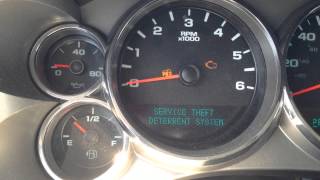
- Flashing 'Security' or 'Theft' Light — During a failed start attempt, the 'Security' or 'Theft' warning light on the instrument panel blinks, confirming the anti-theft system is active.
- Intermittent No-Start Condition — The car starts perfectly for weeks, then suddenly fails. Changes in temperature, humidity, or vibration trigger the failing sensor or broken wire.
- Engine Won't Crank — After multiple failed start attempts, the BCM logic on certain models disables the starter relay entirely, resulting in a dead key turn.
- Security Light Stays On Solid While Driving — If the Passlock system detects a fault while the engine is already running, it illuminates the security light continuously but does not shut down the engine. The no-start issue occurs on the next key cycle.
Diagnostic Flowchart
Tap your situation to follow the diagnostic path that matches what you're seeing on this code.
Common Fixes & Costs
- Replace Ignition Lock Cylinder Housing with Passlock Sensor
— Parts: $150-$300, Labor: $150-$300, ~2 hr book time
(Intermediate)
Chevrolet Malibu (1997-2003): OEM ACDelco: 19258699 (Alt: Dorman: 924-702)
Pontiac Grand Am (1999-2005): OEM ACDelco: 19258699 (Alt: Dorman: 924-702)
Oldsmobile Alero (1999-2004): OEM ACDelco: 19258699, D1462G (Alt: Dorman: 924-702) - Install an Aftermarket Passlock Bypass Module — Parts: $30-$80, Labor: $100-$200, ~1.5 hr book time (Intermediate)
- Bypass the Passlock System with a Resistor — Parts: $1-$10, Labor: $100-$175, ~1.2 hr book time (DIY)
- Repair Damaged Wiring Harness — Parts: $5-$20, Labor: $125-$300, ~2 hr book time (Intermediate)
- PCM Reprogramming to Disable Passlock — Parts: $0, Labor: $150-$250, ~1 hr book time (Professional)
DIY vs Professional
- Replace Ignition Lock Cylinder Housing — Beginner:
Tools: Socket set, screwdrivers, trim removal tools, steering wheel puller and lock plate compressor (model dependent). - Install an Aftermarket Passlock Bypass Module — Beginner:
Tools: Wire strippers, wire connectors or soldering iron, electrical tape, multimeter. - Bypass the Passlock System with a Resistor — Beginner:
Tools: Multimeter, soldering iron, solder, heat-shrink tubing, wire strippers. - Repair Damaged Wiring Harness — Beginner:
Tools: Multimeter, soldering iron, solder, heat-shrink tubing, wire strippers. - PCM Reprogramming to Disable Passlock — Beginner:
Tools: Specialized vehicle tuning software and hardware (e.g., HP Tuners, EFILive).
Used vs. New Parts: Buying Guide
When a used part is worth it: For this specific part (Ignition Lock Cylinder with Passlock Sensor), buying used is never recommended. The part has a known high failure rate due to wear. A used part from a salvage yard carries a high risk of failing soon after installation.
Donor-vehicle mileage cap: roughly under 20000 miles for the part to have meaningful remaining life.
Donor quality checklist:
- If forced to buy used, seek a part from a very low-mileage vehicle that was wrecked.
- Avoid parts with any visible corrosion on connectors.
- Verify the part number exactly, as there are many similar-looking but incompatible GM ignition cylinders.
Decision logic:
- If The goal is a reliable, long-term fix. → Buy a new OEM (ACDelco) or reputable aftermarket (e.g., Dorman) part. The cost is justified by the warranty and reduced risk of repeat labor.
- If The vehicle has very low value and the budget is extremely tight. → A used part is a high-risk gamble. A better low-cost option is to attempt a resistor bypass on the existing faulty part.
- If The part has a known wear-out failure mode (like this Passlock sensor). → Always favor new. You are paying for labor, and repeating that labor for a failed used part negates any initial savings.
Warranty tradeoff: Used parts typically have a 30-90 day warranty at best, which does not cover labor. New aftermarket parts from brands like Dorman often come with a limited lifetime warranty. New OEM parts have a 1-2 year warranty.
Worst-case if a used part fails: $200-$400 if a used part fails after installation, primarily from repeating the 2-3 hours of labor plus the cost of another part.
What Happens If You Wait — Timeline
- 0-2 months: Intermittent failure, perhaps once or twice a month. The engine starts and stalls, but restarts after a single 10-minute relearn procedure. The issue is often triggered by temperature swings. (MPG impact: 0%% · Added cost: $0)
- 2-6 months: Failure frequency increases to weekly. The car becomes noticeably unreliable. May require multiple relearn attempts to start. The risk of being stranded increases significantly. (MPG impact: 0%% · Added cost: $75-$200 (Potential cost of a single tow if the relearn procedure fails).)
- 6-12 months: Failure is a near-daily occurrence. The 10-minute relearn becomes less effective as the sensor or wiring fault becomes permanent. The vehicle is essentially unusable for reliable daily transport. (MPG impact: 0%% · Added cost: $200-$500 (Cumulative costs from multiple tows, ride-sharing, and lost time).)
- 12+ months: Hard failure. The sensor or wiring circuit is permanently open or shorted. The relearn procedure no longer works. The vehicle is completely immobilized until a repair is performed. (MPG impact: 0%% · Added cost: $400+ (Cost of the final tow plus the mandatory repair. Does not cause damage to other components).)
Cost of Not Fixing It
- Immediate: Intermittent no-start or start-and-stall condition. High risk of being stranded without warning. (Added cost: $75-$200 per incident for towing.)
- 1-3 months: Increased frequency of no-start events, leading to significant unreliability. Cost of lost time, missed appointments, and repeated temporary fixes. (Added cost: $100-$500 in associated costs (ride-sharing, lost work).)
- 3+ months: The primary failure does not cause progressive damage to other major components. The cost remains one of extreme inconvenience and repeated towing expenses. (Added cost: Cumulative costs of being stranded.)
Diagnosis Steps

- Verify Code with a BCM-Capable Scanner
Use an OBD-II scanner that reads 'B' (Body) codes. A standard $20 engine-only scanner cannot see the B1518 code, leading to misdiagnosis. Confirm B1518 is the primary active code in the BCM.
Tools: OBD-II Scanner (with BCM/Body system capability) (Beginner) - Perform the 10/30-Minute Relearn Procedure
Attempt to start the engine. When it stalls, leave the key in the 'ON' position. The 'Security' light will flash. Wait 10 minutes until the light turns off. Turn the key 'OFF' for 10 seconds, then start the engine. If it starts, you have a confirmed Passlock fault. If it fails, repeat twice more for a full 30-minute relearn.
Tools: None (Beginner) - Test the Battery and Charging System
Ensure the battery has at least 12.4V at rest. Perform a load test to check its health, as cranking voltage below 10.5V triggers this code. Verify the alternator charges at 13.8V-14.5V when running.
Tools: Multimeter, Battery Load Tester (Beginner) - Analyze Scan Tool Live Data
Using a BCM-capable scan tool, monitor the 'Passlock Data Voltage' PID. Observe the voltage as you turn the key from 'ON' to 'CRANK'. Monitor the 'VTD Fuel Disable' PID; it reads 'Active' when the fault occurs, confirming the BCM is commanding the fuel cut.
Tools: Advanced OBD-II Scanner (Advanced) - Inspect the Ignition Cylinder Wiring Harness
Remove the plastic shrouds around the steering column. Locate the thin three-wire harness (yellow, orange/black, black) from the ignition lock cylinder. Gently tug each wire to check for internal breaks and inspect for chafing near the tilt-steering pivot.
Tools: Screwdriver set, trim removal tools (Intermediate) - Measure Passlock Sensor Voltage Signal
Backprobe the yellow signal wire with a multimeter set to DC Volts. With the key 'ON', you should see a 5V reference voltage. Turn the key to 'CRANK'; this voltage must drop to a steady value between 0.86V and 4.28V. If it stays at 5V or drops to 0V, the sensor or wiring has failed.
Tools: Multimeter, backprobe pins, wiring diagram (Advanced) - Measure Passlock Sensor Resistance
Disconnect the ignition cylinder connector. Measure the resistance between the yellow signal wire and the black ground wire on the SENSOR side with the key in 'RUN'. A good sensor shows a stable resistance between 400 and 14,000 Ohms. An open circuit (OL) or fluctuating reading means a dead sensor.
Tools: Multimeter, wiring diagram (Advanced) - Check for Voltage Drop at Key and BCM
Backprobe the yellow signal wire at the ignition cylinder connector and at the corresponding pin at the BCM. With the key ON, both readings must be identical (e.g., 5.0V). Lower voltage at the BCM indicates high resistance in the wire between the two points.
Tools: Multimeter, wiring diagram, backprobe pins (Advanced) - Perform a BCM Ground Integrity Test
Locate the primary ground wire for the BCM. With the key on, place the multimeter red lead on the battery positive terminal and the black lead on the BCM ground pin. A reading of 12.6V is perfect. Anything 12.2V or less indicates a poor ground connection.
Tools: Multimeter, wiring diagram (Advanced) - Verify Fuel Pressure
Connect a fuel pressure gauge to the schrader valve on the fuel rail. With the key on and engine off, pressure should be 50-60 PSI. When you crank the engine and it stalls, observe the pressure drop significantly as the PCM deactivates the fuel pump, confirming the Passlock fuel cut.
Tools: Fuel Pressure Gauge (Intermediate) - Test the Main Ignition Switch Signals
Test the power outputs from the main electrical ignition switch to the BCM. Ensure the correct circuits receive battery voltage in the 'RUN' and 'CRANK' positions. Intermittent power loss here triggers a false Passlock code.
Tools: Multimeter, wiring diagram (Advanced)
When This Code Triggers (Freeze-Frame Conditions)
- System Voltage: 10.5V - 11.8V (During engine crank. A voltage drop below this range causes the BCM to misread the sensor and set a false code.)
- Key Position: CRANK (The fault logs when the key turns to the 'CRANK' position and the BCM receives an out-of-range signal from the Passlock sensor.)
- Passlock Sensor Voltage: 0V or 5V (The BCM expects a specific voltage drop from the 5V reference during crank. If the signal remains at 5V or drops to 0V, it indicates a circuit or sensor failure.)
- VTD Fuel Disable: Active / Yes (This parameter confirms the BCM actively commanded the PCM to cut fuel due to the detected Passlock fault.)
Related Codes
- B2960 — B1518 means the sensor's voltage is invalid (out of range). B2960 means the BCM received a valid voltage, but it differs from the one it originally learned. B2960 often appears after component replacement.
- P1626 — This is a Powertrain (PCM) code for 'Theft Deterrent Fuel Enable Signal Lost'. It is a direct consequence of B1518. The BCM sets B1518 and withholds the 'OK to run' signal from the PCM, causing the PCM to set P1626 and cut fuel.
- B3031 — Indicates 'Security System Controller In Learn Mode.' It appears if the system is trying and failing to relearn a new sensor value. B1518 indicates the bad signal, while B3031 indicates the BCM is stuck trying to accept it.
- B3055 — Means 'No Transponder Key' and applies to GM's transponder-based systems (Passkey III), not the resistor-based Passlock system. B1518 is specific to the non-transponder Passlock system.
- B2958 — Stands for 'Passlock Sensor Data Circuit High'. While B1518 indicates an 'incorrect' signal, B2958 specifically points to voltage on the signal circuit exceeding the maximum allowable threshold, indicating a short to voltage.
Climate & Environmental Factors
- Temperature Extremes (Hot & Cold): Changes in temperature cause materials to expand and contract. This is a primary trigger for intermittent failures, causing hairline cracks in the sensor's fragile wiring or internal solder joints to temporarily open or close a circuit.
- High Humidity: Moisture penetrates the ignition switch assembly or connectors over time. This leads to corrosion on electrical contacts or subtle changes in circuit resistance, causing the BCM to receive an out-of-spec signal.
How to Talk to a Mechanic About This Code
Say this: "I have a start-and-stall issue and my research points to a B1518 Passlock sensor code. I'd like a diagnostic confirmation. Please check the Passlock sensor signal and the related wiring from the ignition cylinder before recommending a new ignition switch or BCM."
This signals you understand the common failure points. It directs the technician to the most likely causes (sensor and wiring) and prevents them from immediately suggesting expensive, less likely solutions like replacing the Body Control Module.
Avoid saying:
- 'My car won't start, can you fix it?' (too vague)
- 'The security light is on.' (describes a symptom, not the likely problem)
- 'Just do whatever it takes to get it running.' (invites unnecessary part replacement)
Questions to ask before authorizing the repair:
- Did you get a specific voltage or resistance reading from the Passlock sensor? What was it?
- Did you inspect the three-wire harness for breaks or chafing near the steering column tilt mechanism?
- If you're recommending a new ignition lock cylinder, does that part include a new Passlock sensor?
- What is the warranty on the replacement part and the labor?
Where to Take It: Dealer vs Independent vs Chain
- Dealer:
A safe but expensive option. They see this issue constantly, but you pay a premium for the repair.
Best for: Vehicles still under any form of warranty, Complex electrical issues where a factory scan tool (Tech 2) is required for diagnostics
Downsides: Significantly higher labor rates, Unwilling to perform a lower-cost bypass, preferring the official (and more expensive) part replacement (Typical cost: +50% vs. baseline) - Independent Shop:
Best fit for most owners. An experienced independent mechanic is very familiar with the GM Passlock issue and offers a range of solutions from full replacement to an affordable bypass.
Best for: Out-of-warranty GM vehicles, Owners seeking more cost-effective repair options like a wiring repair or a resistor bypass
Downsides: Quality and experience vary greatly; look for shops with good reviews specifically mentioning electrical or GM repairs. (Typical cost: +0% vs. baseline) - Chain Shop:
Use with caution. Acceptable if you are certain the ignition lock cylinder needs replacement and they offer a competitive price. Avoid for initial diagnosis of an intermittent electrical problem.
Best for: Simple, straightforward parts replacement if the diagnosis is already certain.
Downsides: Technician skill varies dramatically., Lacks the specific diagnostic tools or experience for body control module codes., High pressure to upsell. (Typical cost: -10% vs. baseline)
When to Walk Away From the Repair
If the estimated repair cost exceeds 50% of the car's private-party value (Kelley Blue Book, Edmunds), seriously consider selling the car as-is or trading it in.
- Car worth $3000, fix is $600: Fix it. The repair cost is well under the 50% threshold and restores the car's primary function.
- Car worth $2500, fix is $1300: Walk away. The repair cost is over 50% of the vehicle's value. The money is better put towards a replacement vehicle.
- Car worth $4000, fix is $2100: Borderline, likely walk away. Get a second opinion, but this repair is likely not a good investment.
What Scan Tool You Need for This Code
Minimum: A scanner that reads and clears 'B' (Body) codes, specifically for GM vehicles.
A standard $20-$50 engine-only code reader cannot see the B1518 code because it is stored in the Body Control Module (BCM), not the Powertrain Control Module (PCM). You will be unable to diagnose or clear the actual fault.
Budget: BlueDriver Pro (~$100) — Reads and clears BCM codes on GM vehicles, views live data for the Passlock sensor voltage, and confirms the fault before you go to a shop.
Mid-range: Autel MaxiCheck MX808S / Foxwell NT809 (~$300) — Offers full system diagnostics, including reading BCM codes and live data. Includes limited bidirectional capabilities to test components, helpful for advanced diagnosis.
Professional: Autel MaxiSys MS906 Series / GM Tech 2 Clone (~$400-1200) — Provides full bidirectional control and special functions. A GM Tech 2 (or a quality clone) is the original dealer tool and has specific built-in diagnostic tests for the Passlock system.
Rent vs buy: Most auto parts stores offer free code scanning, but their loaner tools are basic engine code readers that cannot see BCM codes. For this specific code, you must buy a capable scanner or go to a repair shop. Investing in a mid-range scanner is a good value for modern cars.
How to Clear the Code After You Fix It
- Perform the 30-minute relearn procedure if the ignition cylinder/sensor was replaced.
- Use a BCM-capable OBD-II scan tool to clear the B1518 code from the Body Control Module.
- Perform a complete GM drive cycle to ensure all readiness monitors are set to 'Ready'.
Drive cycle (~25 minutes): Cold start (coolant temp below 122°F). Idle for 2-3 minutes with electrical load (A/C, rear defrost ON). Accelerate to 55 mph and hold steady for 3 minutes. Coast down to 20 mph without using the brake. Accelerate to 60 mph and hold steady for 5 minutes. Coast down to a stop.
Readiness monitors affected: Catalyst Monitor, O2 Sensor Monitor, EVAP System Monitor
Before emissions retest: drive at least 50 miles to fully set monitors.
Watch out for:
- Disconnecting the battery does not reliably clear a 'B' code and resets all readiness monitors to 'Not Ready', guaranteeing an emissions test failure.
- The code immediately returns if the root cause (bad sensor, wiring) is not fixed.
- Using a basic engine code reader that cannot communicate with the BCM fails to clear the code.
Will This Fail Emissions / State Inspection?
Yes — this code typically fails an OBD-II emissions inspection.
- California: A B1518 code may not illuminate the main 'Check Engine' light, but if the BCM is scanned, the code's presence leads to failure. Any attempt to clear the code or a battery disconnect resets readiness monitors, resulting in an automatic test failure until a full drive cycle is completed.
- New York: NYS inspections include an OBD-II scan for all 1996 and newer vehicles. The system reads codes from all modules, and an active B1518 fault code results in an emissions inspection failure.
- Texas: In the 17 counties requiring emissions testing, the OBD-II test fails a vehicle if it has active fault codes. While the 'Security' light itself isn't an inspection item, the underlying B1518 code is. If readiness monitors are not set, the vehicle fails.
Most Commonly Affected Vehicles

- Chevrolet Malibu (1997-2003) — Extremely common issue. These models were part of a major GM recall (14V400) for the ignition switch moving out of the run position, directly related to Passlock components.
- Pontiac Grand Am (1999-2005) — Shares the failure-prone GM Passlock II system and was included in the ignition switch recall.
- Oldsmobile Alero (1999-2004) — A twin to the Grand Am, suffering from identical Passlock failures and part of the same recall.
- Chevrolet Cavalier (2000-2005) — The Passlock system in these models is a frequent cause of no-start conditions and B1518.
- Pontiac Sunfire (2000-2005) — As the sibling to the Cavalier, it utilizes the exact same high-failure-rate Passlock sensor design.
- Chevrolet Monte Carlo (2000-2005) — Another W-body platform car included in the large-scale GM ignition switch recall.
- Chevrolet Equinox (2005-2009) — First-generation models are notorious for Passlock system failures. The Pontiac Torrent is its mechanical twin and shares the problem.
- Saturn Ion (2003-2007) — Built on the Delta platform, these vehicles use a similar GM anti-theft design susceptible to ignition switch failures.
- GMC Canyon / Chevrolet Colorado (2004-2012) — First-gen trucks frequently experience Passlock sensor issues. They are also known for corroded electrical splice packs under the driver's side carpet causing this code.
Manufacturer-Specific Notes
- General Motors (All affected brands): This code is overwhelmingly linked to the GM Passlock I and Passlock II anti-theft systems used from the mid-1990s to the late-2000s. The design is infamous for the high failure rate of the sensor and associated wiring.
- General Motors: GM issued a massive recall (NHTSA Campaign ID: 14V-400) for millions of vehicles due to the ignition switch moving out of the 'RUN' position if the key ring was too heavy. This recall addressed the assembly directly tied to the Passlock sensor.
- Chevrolet / GMC: On the 2004-2012 Colorado and Canyon trucks, a common source of Passlock faults is corrosion in the large electrical splice packs (specifically SP205) located under the driver-side door sill plate and carpet.
- Subaru / Ford: Do not confuse this code with codes from other manufacturers. On Ford vehicles, P1518 indicates 'Intake Manifold Runner Control Stuck Open'. On Subarus, P1518 indicates 'Starter Switch Circuit Low Input'.
Real Owner Stories
2004 Chevy Impala with intermittent start-and-stall
Owner experienced the classic Passlock symptom: engine starts then immediately dies, with a flashing security light. The issue became progressively worse.
What they tried:
- Multiple 10-minute relearn procedures, which worked temporarily.
- Attempted a resistor bypass by measuring the sensor's resistance, but it failed to solve the problem, suggesting the sensor was too erratic to get a stable reading.
Outcome: The owner successfully performed a resistor bypass by cutting the yellow signal wire and the black ground wire and twisting them together, bypassing the sensor entirely. The car started reliably after performing the 30-minute relearn procedure, though the security light remained on permanently.
Lesson: If measuring the sensor for a resistor bypass is unsuccessful, a 'zero-ohm' bypass (connecting signal to ground) works, but it causes the security light to stay on permanently.
2008 GMC Canyon with multiple electrical faults, including B1518
Truck had 98,000 miles and experienced various intermittent electrical problems, including the no-start condition associated with the Passlock system.
What they tried:
- The owner suspected the known issue with ground splice packs on this platform rather than the ignition switch itself.
Outcome: The problem traced to corrosion in the ground splice packs (specifically SP105) located under the driver-side door sill plate. By cutting the ground wires from the pack and grounding them directly to a clean chassis point, the electrical issues, including the B1518 code, resolved.
Lesson: On first-generation Chevy Colorados and GMC Canyons, always inspect the ground splice packs under the driver's side carpet/sill plate before replacing expensive components like the ignition switch or BCM.
2003 Pontiac Grand Am with a maddening crank-no-start
The car cranked strongly but would not start. The only way to get it to start was to disconnect the battery for over an hour. The problem was not temperature-dependent and threw no codes.
What they tried:
- Replaced the battery.
- Replaced the ignition switch.
- Verified fuel pressure (~52 PSI) and spark, both seemed good.
- Discovered that a shot of starting fluid would get the engine to fire up.
Outcome: After extensive troubleshooting, the owner found a forum thread suggesting a bizarre solution: a blown AC fuse (#37 in the under-hood fuse box). After replacing the blown fuse, the car started reliably.
Lesson: Ancillary circuits sometimes have an unexpected impact on starting. If you have a crank-no-start with good fuel pressure and spark, check all fuses, even seemingly unrelated ones, before suspecting major components.
How to Prevent This Code From Triggering
- Use a lightweight keychain. (Daily habit) — Excessive weight hanging from the ignition key causes constant stress and wear on the internal tumblers and the Passlock sensor assembly. Drive with only the ignition key in the ignition.
- Apply dielectric grease to the ignition switch connector. (During any steering column maintenance) — Dielectric grease is a non-conductive sealant that prevents moisture, oxygen, and contaminants from causing corrosion on the small, sensitive pins of the Passlock sensor connector, ensuring a clean signal.
- Inspect and secure wiring harnesses. (Periodically (e.g., during oil changes)) — The thin wires leading from the ignition cylinder are prone to chafing and breaking near tilt-steering pivot points. Securing the harness with loom or zip ties prevents the rubbing that leads to an open circuit.
- Maintain a healthy battery and clean terminals. (Every 6 months) — Low voltage during cranking is a primary cause of false B1518 codes. Regularly testing the battery and ensuring terminals are clean prevents voltage drops that cause the BCM to misread the signal.
Frequently Asked Questions
What is the difference between the 10-minute and 30-minute relearn?
The 10-minute relearn is a temporary bypass that often gets the car started. The 30-minute relearn (three consecutive 10-minute cycles) is mandatory to program a new BCM or ignition cylinder to the vehicle. If you replace a part, you must perform the full 30-minute procedure.
Is it safe to bypass the Passlock system with a resistor?
Mechanically, it is safe and provides a permanent solution to the starting problem. However, it permanently disables the factory anti-theft feature for the ignition system. The fuel cut-off will no longer activate if the ignition is tampered with.
Why does my car start in warm weather but not cold?
Temperature changes cause materials to expand or contract, which temporarily completes or separates a broken circuit. This intermittency strongly points to a physical fault, like a hairline crack in the sensor's wiring or internal solder joints.
I replaced the ignition switch and it still won't start, what now?
Ensure you performed the full 30-minute, 3-cycle relearn procedure, as this is mandatory for the BCM to learn the new sensor. If you did, the fault lies in the wiring between the switch and the BCM, or a poor BCM ground.
Should I replace the Body Control Module (BCM) to fix this?
No, this is your absolute last resort. The B1518 code is almost always caused by the inexpensive Passlock sensor or its wiring. Replacing the BCM is costly, requires dealer programming, and rarely fixes the issue.
What is the difference between GM's Passlock and Passkey systems?
Passlock is a resistor-based system using a sensor in the ignition cylinder; the key itself has no electronics. Passkey is a transponder-based system where a computer chip is embedded in the head of the ignition key.
Can I use a simple code reader to diagnose this?
No. B1518 is a 'B' (Body) code stored in the Body Control Module. Basic $20 code readers only access 'P' (Powertrain) codes from the engine computer. You need a scanner capable of communicating with the BCM.
Key Takeaways
- Code B1518 on GM vehicles specifically flags a failure in the Passlock anti-theft system, cutting fuel to the engine 1 to 2 seconds after starting.
- Perform the 10-minute relearn procedure (leaving the key in the 'ON' position until the security light stops flashing) to temporarily bypass the system and start the car.
- Test your battery before replacing parts; cranking voltage below 10.5V frequently triggers a false B1518 code by starving the Body Control Module.
- Permanently fix the issue by replacing the ignition lock cylinder housing (costing $300-$600) or installing a $50 aftermarket Passlock bypass module.
Helpful Videos

The information in this article is provided for general reference and educational purposes only. Vehicle specifications, procedures, and part compatibility can vary by production date, trim level, and region. Always consult your vehicle's factory service manual and verify part numbers before purchasing or performing repairs. Safety-critical components such as airbags, seat belts, and braking systems should be installed by a qualified professional.
- 🎬 Helpful Videos
- What Does B1518 Mean?
- Can I Drive With B1518?
- Common Causes
- Symptoms
- Diagnostic Flowchart
- Common Fixes & Costs
- DIY vs Professional
- Used vs. New Parts: Buying Guide
- What Happens If You Wait — Timeline
- Cost of Not Fixing It
- Diagnosis Steps
- When This Code Triggers (Freeze-Frame Conditions)
- Related Codes
- Climate & Environmental Factors
- How to Talk to a Mechanic About This Code
- Where to Take It: Dealer vs Independent vs Chain
- When to Walk Away From the Repair
- What Scan Tool You Need for This Code
- How to Clear the Code After You Fix It
- Will This Fail Emissions / State Inspection?
- Most Commonly Affected Vehicles
- Manufacturer-Specific Notes
- Real Owner Stories
- 2004 Chevy Impala with intermittent start-and-stall
- 2008 GMC Canyon with multiple electrical faults, including B1518
- 2003 Pontiac Grand Am with a maddening crank-no-start
- How to Prevent This Code From Triggering
- Frequently Asked Questions
- What is the difference between the 10-minute and 30-minute relearn?
- Is it safe to bypass the Passlock system with a resistor?
- Why does my car start in warm weather but not cold?
- I replaced the ignition switch and it still won't start, what now?
- Should I replace the Body Control Module (BCM) to fix this?
- What is the difference between GM's Passlock and Passkey systems?
- Can I use a simple code reader to diagnose this?
- Key Takeaways
- 🎟️ Get 5% Off