

B1517 on 2014-2019 Chevrolet Corvette: Battery Voltage Code Causes and Fixes
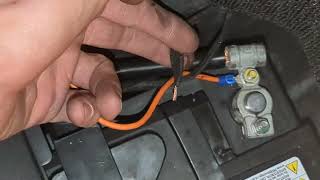
On a C7 Corvette, code B1517 almost always points to a loose or damaged small black wire on the negative battery terminal, often occurring after a battery replacement. This wire is for the battery current sensor. Before replacing any major parts, carefully inspect this specific wire and its connection. This is a simple fix that costs nothing but time.
- For a 2014-2019 Corvette, B1517 is most likely caused by a loose or broken battery current sensor wire on the negative battery terminal, per TSB #PIC6439.
- Always check this specific wire connection before replacing any parts like the battery or alternator.
- The fix is often free or very cheap and only requires inspecting and tightening/repairing the connection.
- If the wire is secure, then proceed with standard charging system diagnosis, with a weak battery being the next most likely cause.
- This issue is almost always caused by improper procedure during a battery replacement.
What's Unique About the 2014-2019 Chevrolet CORVETTE

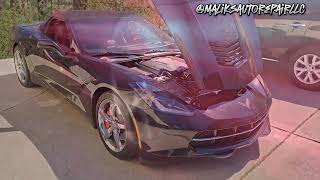
Unlike other GM vehicles where code B1517 might point to a software glitch or general charging system failure, on the C7 Corvette there is a well-documented mechanical issue. GM issued Technical Service Bulletin #PIC6439 specifically for this car, advising technicians that B1517 (especially with symptom byte 5A) is commonly caused by a small black ground wire on the negative battery terminal being loose, damaged, or improperly installed. 🎬 Watch: See how to repair the broken sensor wire. This wire is the battery current sensor, and its short length makes it prone to being pulled or broken during a battery change. The TSB explicitly states this is not a manufacturing defect but an issue caused by improper service. This makes the diagnostic process for the Corvette unique and often much simpler than for other models.
Diagnostic Flowchart
Tap your situation to follow the diagnostic path that matches what you're seeing on this vehicle.
Symptoms You May Notice
- Check Engine Light or other malfunction indicator lamps
- "Service Vehicle Soon" or "Service Charging System" message on the Driver Information Center (DIC)
- Unusual behavior from electronic accessories (e.g., radio/infotainment screen goes dark, blower fan stops working)
- No-start or slow-crank condition
- Remote start not working
- Inaccurate fuel gauge reading
- Windows may need re-indexing after power loss
- Replacing the alternator when the battery is weak.
- Replacing the battery when the TSB-identified battery current sensor wire is simply loose or broken.
- Replacing the Body Control Module (BCM) before checking all wiring and charging system components.
Most Likely Causes

- Loose or Damaged Negative Battery Terminal Sensor Wire 🔴 High Probability As documented in TSB #PIC6439, this specific wire for the battery current sensor is often disturbed or incorrectly reinstalled during a battery replacement. Forum users confirm the wire is very short and the ring terminal can be easily bent or broken off when maneuvering the heavy battery in its tight compartment.
How to confirm: Visually inspect the main negative battery cable terminal in the rear compartment. Check the small, separate black wire that attaches to a small stud on the terminal clamp. Ensure it is securely fastened with its nut, not rotated, frayed, or with a broken ring terminal.
Typical fix: Securely re-fasten or repair the connection. If the ring terminal is broken, a new one can be crimped onto the wire. No parts are typically required unless the sensor itself is damaged. One owner advises to always disconnect this small wire first before removing the main negative cable to prevent damage.
Est. part cost: $0-$5 - Failing or Weak Battery 🟡 Medium Probability C7 Corvettes have significant parasitic draw from their numerous electronic modules, which can weaken a battery if the car isn't driven regularly or kept on a battery tender. A weak battery can cause a host of seemingly unrelated electronic issues and codes.
How to confirm: Perform a battery load test. Most auto parts stores can do this for free. A healthy battery should read above 12.4 volts at rest and maintain voltage under load. C7 owners report issues even with voltages as high as 12.2V.
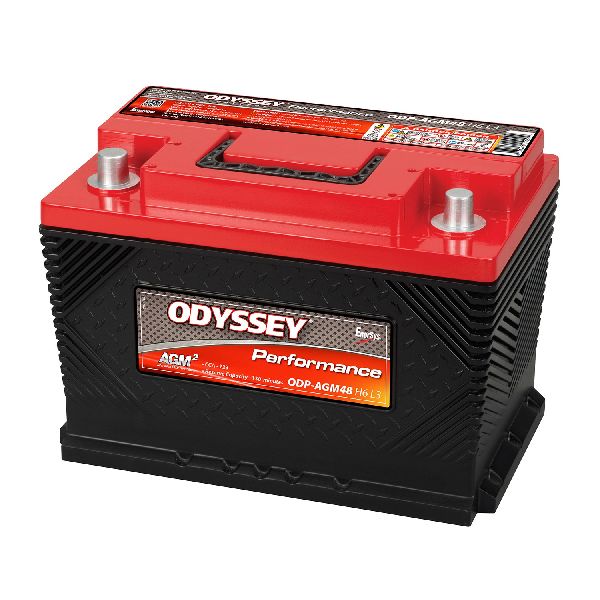
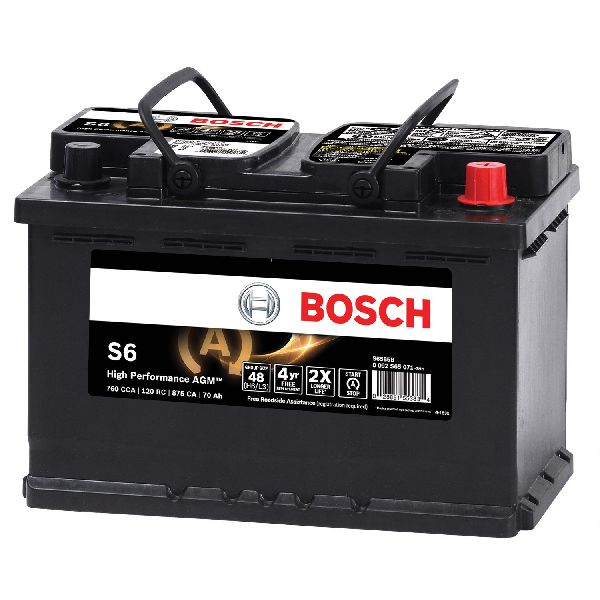
Typical fix: Replace the vehicle's battery. The recommended size is a Group 48 (also called H6).
Est. part cost: $180-$300 - Failing Alternator ⚪ Low Probability
How to confirm: With the engine running, use a multimeter to check the voltage at the battery terminals. A healthy alternator should provide a charging voltage between 13.5 and 14.5 volts, though the computer-controlled system can cause this to fluctuate. Some owners have reported receiving defective new alternators, so testing is crucial.
Typical fix: Replace the alternator.
Est. part cost: $250-$600 - Corroded or Loose Battery Cables ⚪ Low Probability
How to confirm: Inspect the main positive and negative battery cable ends for any white or greenish crust (corrosion). Ensure the main terminals are pushed down fully, level, and tight, and do not move when wiggled.
Typical fix: Clean the battery terminals and cable ends with a wire brush. If corrosion is severe, the cable ends may need replacement.
Est. part cost: $5-$50
Rare But Worth Checking
- Faulty Body Control Module (BCM): This is extremely rare. Do not replace the BCM unless all other possibilities, especially the TSB-identified wire, have been exhaustively ruled out by a professional.
- Loose Ground Connection at Engine Block or Starter: On C6 models, a loose ground above the starter was a common cause for "Service Charging System" messages. While less documented for B1517 on the C7, it remains a possibility for general voltage issues.
Diagnosis Steps
- Read the code with an OBD-II scanner to confirm B1517 is present. If possible, use a professional scan tool to check for symptom bytes like '03' (Low Voltage) or '5A' (Plausibility Failure).
- CRITICAL STEP for Corvette: Locate the battery in the rear of the vehicle. Carefully inspect the negative battery terminal. Find the small, separate black wire that connects to a stud on the main terminal clamp.
- Confirm this small wire (the battery current sensor wire) is tight, not damaged, and its ring terminal is not broken or bent. This is the most likely cause per TSB #PIC6439.
- If the wire is secure, proceed with standard electrical diagnosis.
- Test the battery. Use a multimeter to check the resting voltage (should be >12.4V). Perform a load test to check its health.
- Test the charging system. Start the engine and measure the voltage at the battery terminals. It should be between approximately 13.5V and 14.5V, but be aware the C7 uses a computer-controlled charging system that varies voltage.
- Inspect all main power and ground connections for tightness and corrosion, including the main engine ground strap and the connection at the alternator.
- If power was disconnected, you may need to re-index the windows. Raise each window and hold the switch in the 'up' position for a few seconds after it closes.
- If all tests pass and the code returns, the issue may be more complex and require professional diagnosis of the BCM and its circuits.
Parts You'll Likely Need

- Battery
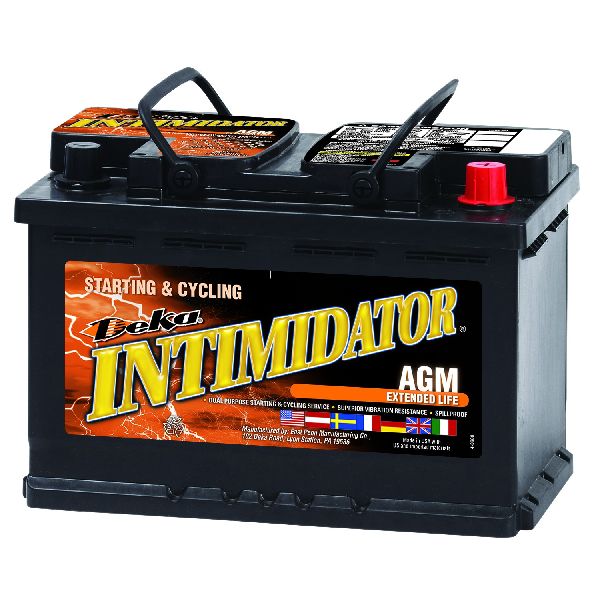
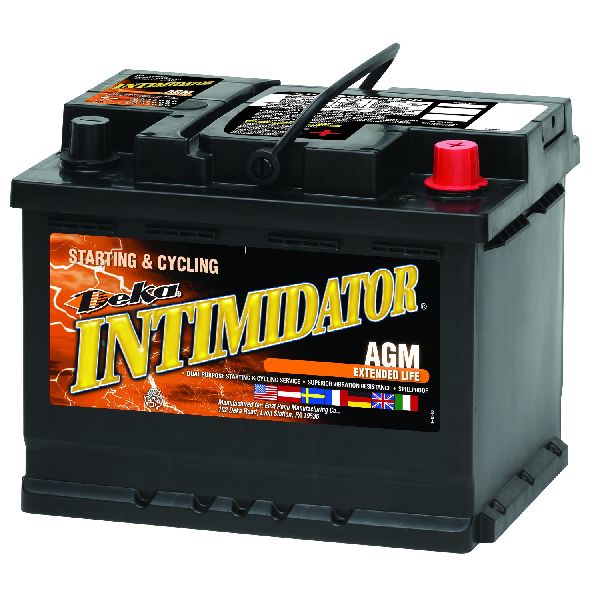
(OEM #ACDelco Gold 48HPG (88865245) or 94RAGM (88864542))— If the primary cause (loose sensor wire) is not the issue, a weak or failing battery is the next most common culprit for voltage-related codes. The C7 uses a Group 48 / H6 battery.
Trusted brands: ACDelco, Interstate, Optima
OEM price range: $220-$300
Aftermarket price range: $180-$250 - Battery Current Sensor
(OEM #13505369)— In rare cases where the small black wire itself is damaged beyond a simple ring terminal repair, the sensor it's attached to may need replacement.
Trusted brands: ACDelco
OEM price range: $40-$70
Related Codes That Often Appear With This One
- B1325 — This is another GM code for 'Device Power Circuit Voltage Below Threshold' and often appears with B1517 when there is a systemic low voltage condition.
- C0800 — This code relates to 'Device 1 Power Circuit' and can be triggered alongside B1517 by the same underlying low voltage problem.
- P0455, P2068, P2066 — A low voltage event from a dead or disconnected battery can cause a variety of seemingly unrelated codes, such as EVAP and fuel level sensor codes, to appear simultaneously. Often, these will clear after a proper battery is installed and the car is driven.
Technical Service Bulletins (TSBs) & Recalls
- PIC6439: Communicates a diagnostic tip for a B1517 DTC, pointing directly to the small black wire (battery current sensor) on the negative battery cable as the likely cause. It notes the issue is especially linked to symptom byte 5A and is caused by improper service, not a factory defect.
Platform-Specific Known Issues
- TSB #PIC6439 identifies that B1517 is often set due to a loose or damaged small black wire on the negative battery terminal, which can happen during improper servicing of the battery.
- CorvetteForum members frequently report breaking this wire's ring terminal during battery replacement due to the wire's short length and the difficulty of maneuvering the battery.
- A dead or disconnected battery can cause numerous other codes to appear, which often resolve themselves after a new, correct battery is installed and the car is driven.
Mechanic-Grade Diagnostic Values

- System Voltage (BCM vs ECM) — expected: Voltage readings should be consistent between modules.. Failure: A difference of more than 2 volts for 10 seconds between two separate battery sense circuits in the BCM can set B1517 with symptom 5A.
- Alternator Voltage Output (at Alternator Post) — expected: Approximately 14.7 volts with the engine running and minimal load.. Failure: Significantly lower voltage, or voltage that doesn't increase from resting battery voltage, indicates a charging problem.
- System Voltage (at Battery Terminals) — expected: Approximately 14.5 volts with the engine running, showing a slight drop from the alternator post reading.. Failure: A large voltage drop between the alternator post and the battery indicates high resistance in the charging cable or connections.
Hidden / Shadow Codes Worth Checking
- B1517 sym 03: Battery Voltage Below Threshold. The BCM has detected system voltage under approximately 11 volts. (see via A professional-grade scan tool like the GM GDS2 or Tech 2 is required to view symptom bytes.)
- B1517 sym 07: Battery Voltage Above Threshold. The BCM has detected system voltage over approximately 16 volts, indicating an overcharge condition. (see via A professional-grade scan tool like the GM GDS2 or Tech 2 is required to view symptom bytes.)
- B1517 sym 5A: Battery Voltage Plausibility Failure. The BCM has compared two separate voltage sense circuits and found a discrepancy of more than 2 volts for 10 seconds. This is the specific symptom byte mentioned in TSB #PIC6439 as being directly linked to the loose battery current sensor wire. (see via A professional-grade scan tool like the GM GDS2 or Tech 2 is required to view symptom bytes.)
Scan Tool Commands That Help
- GDS2: Viewing HMI Data List — Technicians should be aware that on 2016-2018 Corvettes, viewing the Human Machine Interface (HMI) data parameters with GDS2 can cause a temporary loss of communication with the scan tool. This is a known bug and does not indicate a faulty HMI module. Communication can often be restored by clicking 'OK' on the error or by temporarily pulling the HMI fuse.
Wiring & Ground Locations
- Battery Current Sensor Wire — A small black wire with a ring terminal attached to a stud on the main negative battery terminal clamp, located in the rear cargo area.. This is the wire identified in TSB #PIC6439 as the most common cause of code B1517 5A. It is short and easily damaged or left loose during a battery replacement.
- G401 — On the outer side of the left (driver's side) frame rail, forward of the rear axle.. This is a major chassis ground point in the rear of the vehicle. While not directly implicated by the TSB, a poor connection here can cause a wide range of electrical issues for rear-mounted modules.
- G402 — Located on the right (passenger side) rear inner frame rail.. This is the corresponding major chassis ground on the passenger side, near the battery. A poor connection here could contribute to voltage plausibility issues and other electrical faults.
- BCM Connectors (e.g., X4) — The Body Control Module (BCM) is located under the dashboard. A document for a similar GM platform shows BCM connector X4 Pin 11 as a ground (Z65 circuit).. Since the BCM is the module setting this code, verifying its own power and ground pins is a critical step if the battery-end issues are ruled out. A compromised BCM ground could cause it to misinterpret system voltage.
Real Owner Repair Stories
- Reddit user r/Corvette (2016 Corvette Z06) — Owner found the 3-prong plug for the battery current sensor on the ground cable was disconnected and could not find where it was supposed to plug in.
❌ Tried (didn't work) Searching the main wiring harness for a mating connector., Consulting dealership diagrams which showed the sensor but not its connection point.
✅ What actually fixed it This story highlights the confusion around the battery current sensor wiring. While the user didn't post a final resolution, their problem is the exact scenario TSB #PIC6439 addresses: a disconnected or damaged wire at the negative battery terminal. The fix is to correctly re-secure this connection.
OEM Part Supersession History
10306471, 13502261, 25809382→13505369— Part consolidation and revision for the Battery Current Sensor used across multiple GM platforms.13508047, 13517335, 13520441, 13526053→13545953— Part consolidation and revision for a different design of Battery Current Sensor used on other GM vehicles. It's important to verify the correct part for the specific vehicle.
Heads up: There appear to be multiple designs for GM battery current sensors; visual confirmation or VIN lookup is critical before ordering.
Model Year Variations Within This Range
- 2014: The 2014 model year used a 6-speed automatic transmission, while 2015-2019 models used an 8-speed automatic. This does not affect the B1517 code.
- 2014-2015: Models from 2014-2015 did not have Apple CarPlay/Android Auto. Front curb cameras were added in 2016. These are infotainment differences and do not affect the B1517 code.
Helpful Videos


We Have This Part in Stock


The information in this article is provided for general reference and educational purposes only. Vehicle specifications, procedures, and part compatibility can vary by production date, trim level, and region. Always consult your vehicle's factory service manual and verify part numbers before purchasing or performing repairs. Safety-critical components such as airbags, seat belts, and braking systems should be installed by a qualified professional.
- Chevrolet CORVETTE:
- 🎬 Helpful Videos
- 🛍️ Shop This Part
- What's Unique About the 2014-2019 Chevrolet CORVETTE
- Diagnostic Flowchart
- Symptoms You May Notice
- Most Likely Causes
- Rare But Worth Checking
- Diagnosis Steps
- Parts You'll Likely Need
- Related Codes That Often Appear With This One
- Technical Service Bulletins (TSBs) & Recalls
- Platform-Specific Known Issues
- Mechanic-Grade Diagnostic Values
- Hidden / Shadow Codes Worth Checking
- Scan Tool Commands That Help
- Wiring & Ground Locations
- Real Owner Repair Stories
- OEM Part Supersession History
- Model Year Variations Within This Range
- 🎟️ Get 5% Off