

OBD-II Code B1517: Battery Voltage Problem
What B1517 means, why it triggers, and how to fix it
- Code B1517 indicates a system voltage issue, triggering when voltage drops below 11V or exceeds 16V for more than 15 seconds.
- Test the battery and alternator first; a weak battery failing a load test is the root cause in over 50% of B1517 cases.
- On 2014-2019 GM vehicles, inspect the small black battery current sensor wire on the negative terminal before replacing parts, as a loose connection here guarantees a B1517 5A code.
- If the warning appears only for the first 5-10 minutes of a cold start on a 2007-2014 GM diesel truck, it is normal glow plug operation and requires zero repairs.
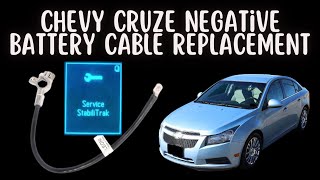
- On 2011-2015 Chevy Cruze models, a B1517 code paired with flickering radios or heavy steering requires replacing the defective negative battery cable (GM Special Coverage 14311B).
What Does B1517 Mean?

Code B1517 means the car's Body Control Module (BCM) detects the vehicle's electrical system voltage is either too high or too low. It triggers when the voltage drops below 11 volts or exceeds 16 volts for more than 15 seconds while the engine runs above 1,100 RPM. This immediately displays a 'Service Charging System' message on your dashboard.
Technical definition: The Body Control Module (BCM) detects that the system voltage is outside of a calibrated range for a specified amount of time. This flags as 'Battery Voltage Below Threshold' (B1517 03), 'Battery Voltage Above Threshold' (B1517 07), or 'Battery Voltage Plausibility Failure' (B1517 5A). A plausibility failure sets when the BCM's two internal battery sense circuits differ by more than 2 volts for 10 seconds, indicating a wiring or internal BCM fault.
Can I Drive With B1517?
Yes, But With Caution. Yes, but get it checked immediately. While the code is sometimes a temporary cold-start glitch, it is often the first sign of a failing battery or alternator that leaves you stranded. On the 2011-2015 Chevy Cruze, this causes a sudden loss of power steering, posing a severe safety risk. Ignoring a persistent warning masks a genuine charging problem that leads to a no-start condition or stalling.
Common Causes

- Weak or Failing Battery (Very Common) — An aging battery is the most frequent cause. It no longer holds a steady charge, causing voltage to dip significantly during engine start-up or in cold weather.
- Failing Alternator (Common) — The alternator charges the battery while the engine runs. If its internal voltage regulator fails, it undercharges (causing low voltage) or overcharges (causing high voltage), triggering the code.
- Outdated Body Control Module (BCM) Software (Very Common) — On 2007-2014 GM vans and trucks, the original BCM software is too sensitive and incorrectly flags a normal, temporary voltage drop during a cold start as a problem. This known issue requires a dealer update per Technical Service Bulletin (TSB) PIT5289B.
- Defective Negative Battery Cable (Chevy Cruze) (Common) — On 2011-2015 Chevrolet Cruze models, the factory crimp on the negative battery cable fails, causing high resistance and severe electrical issues, including code B1517. GM issued Special Coverage program 14311B for this exact defect.
- Damaged Battery Current Sensor Wire (Common) — A small black wire on the negative battery terminal informs the BCM about the battery's state of charge. It is frequently damaged or left loose after a battery replacement, causing a B1517 5A code per GM TSB PIC6439.
- Normal Operation on Diesel Trucks (Less Common) — On GM diesel trucks, the massive power needed for glow plugs (110 amps) and intake heaters (130 amps) on a cold start causes a large, temporary voltage drop. GM TSB PIT4813F states that if the B1517 code clears after a few minutes, it is normal and requires zero repairs.
- Parasitic Electrical Drain (Less Common) — A module failing to shut down, a stuck relay, or water intrusion creates a constant power draw that drains the battery overnight. This creates a low voltage condition on the next startup.
- Poor BCM Ground Connection (Less Common) — On GM trucks and SUVs, the main ground for the BCM (G218) loosens or develops high resistance due to trapped dash insulation. This causes the BCM to malfunction and set numerous codes, including B1517.
Symptoms

- 'Service Charging System' Message — This is the most common symptom, appearing immediately on the driver information center (DIC) on the dashboard.
- Low Voltage Gauge Reading — The dashboard voltmeter shows a reading lower than its normal 13.7-14.7 volt position.
- Slow Engine Crank — The engine turns over more slowly than usual during startup, indicating a weak battery.
- Intermittent Electrical Glitches — On vehicles like the Chevy Cruze, you experience random issues like the radio turning off, blinker sounds disappearing, or 'Service Stabilitrak' warnings.
- Symptoms Disappear After Warm-Up — The warning message and low voltage reading happen only for the first few minutes after a cold start and vanish as the vehicle warms up.
- Red Battery Warning Light — The battery or charge indicator light on the instrument panel illuminates.
Diagnostic Flowchart
Tap your situation to follow the diagnostic path that matches what you're seeing on this code.
Common Fixes & Costs
- Replace Battery — Parts: $180-$300, Labor: $25-$50, ~0.5 hr book time (DIY)
- Replace Alternator — Parts: $200-$450, Labor: $150-$250, ~1.5 hr book time (Intermediate)
- Reprogram Body Control Module (BCM) — Parts: $0, Labor: $150-$200, ~1 hr book time (Professional)
- Replace Negative Battery Cable (Chevy Cruze) — Parts: $40-$80, Labor: $50-$120, ~0.8 hr book time (DIY)
- Clean Terminals / Secure Battery Current Sensor Wire — Parts: $5-$20, Labor: $0, ~0.2 hr book time (DIY)
Used vs. New Parts: Buying Guide
When a used part is worth it: For alternators, a used OEM unit from a low-mileage wrecked vehicle is often more reliable than a cheap, new aftermarket part. For batteries, buying used is never recommended due to unknown history and short lifespan.
Donor-vehicle mileage cap: roughly under 80000 miles for the part to have meaningful remaining life.
Donor quality checklist:
- For batteries, check the date code; avoid any battery older than 2-3 years.
- Inspect battery terminals for corrosion or case for swelling/leaks.
- For alternators, favor sellers who test the part and offer a warranty (30-90 days is common).
- Match part numbers exactly, as amperage and mounting points vary.
Decision logic:
- If The part is a battery. → Buy new. The savings on a used battery are minimal compared to the risk of being stranded.
- If The part is an alternator and the vehicle is older or has high mileage. → A quality remanufactured or a tested used OEM part is a cost-effective choice.
- If You plan to keep the vehicle for a long time. → Buy a new OEM or high-quality remanufactured alternator for maximum longevity and warranty.
Warranty tradeoff: Used parts typically have a 30-90 day exchange warranty. Remanufactured parts often come with a 1-year to limited lifetime warranty. New aftermarket parts offer similar warranties, while new OEM parts carry the manufacturer's guarantee.
Worst-case if a used part fails: $200-$500 if a used alternator or battery fails shortly after installation, requiring repeat labor costs plus the price of another replacement part.
What Happens If You Wait — Timeline
- 0-4 weeks: Intermittent 'Service Charging System' message, usually only on cold starts. No noticeable performance issues. Voltage dips but recovers. (MPG impact: 0%% · Added cost: $0)
- 1-3 months: Warning becomes more frequent and stays on longer. A weak battery strains the alternator, or a failing alternator undercharges the battery. Increased risk of a no-start event, especially in cold weather. (MPG impact: 0-2%% · Added cost: $75 (for a potential jump start or roadside assistance call))
- 3-6 months: One of the main components (battery or alternator) fails completely, leaving you stranded. The constant voltage fluctuations stress the other component, significantly shortening its life. For example, a bad alternator kills a brand new battery. (MPG impact: N/A (Vehicle is likely disabled)% · Added cost: $300-$700 (Cost to replace the initial failed part plus the tow. The second component is now weakened and likely to fail soon.))
- 6+ months: Cascading failures. Ignoring the issue leads to the failure of both the battery and alternator. Sustained low or high voltage causes permanent damage to other sensitive electronics like the BCM, fuel pump control module, or radio. (MPG impact: N/A% · Added cost: $800-$2000+ (Cost of replacing battery, alternator, and potentially one or more damaged electronic modules.))
Cost of Not Fixing It
- Immediate: Vehicle fails to start, leaving you stranded. On some models (e.g., Chevy Cruze), it causes sudden loss of power steering, creating a safety hazard. (Added cost: $75-$250 (for a tow or roadside assistance))
- Weeks to Months: A failing alternator or persistent low voltage puts significant strain on the battery, shortening its life. A bad battery forces the alternator to work harder, causing it to fail prematurely. (Added cost: $300-$700 (cost to replace the other component that fails as a result))
- Months to a Year: Sustained low or high voltage damages sensitive electronics, including the starter motor, fuel pump, and various control modules. (Added cost: $500-$2000+ (cost to diagnose and replace damaged electronic modules))
Diagnosis Steps

- Test the Battery
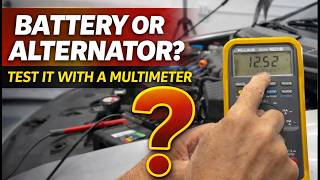
Use a multimeter to check the battery voltage with the engine off. A healthy battery reads 12.4-12.6 volts. For a definitive test, take it to an auto parts store for a free load test to check its Cold Cranking Amps (CCA) and overall health.
Tools: Multimeter or free test at auto parts store (Beginner) - Test the Alternator Output
With the engine running, use a multimeter to test the voltage at the battery terminals. A healthy alternator outputs between 13.7 and 14.7 volts. Note: On modern GM vehicles with Regulated Voltage Control (RVC), voltage intentionally drops to 12.5-13.0V when the battery is fully charged. A reading consistently below 13.2V or above 15.5V indicates an alternator fault.
Tools: Multimeter (Intermediate) - Inspect Battery Terminals and Sensor Wire
Visually inspect the battery terminals for corrosion and ensure both cables are tight. Crucially, inspect the small black wire attached to the negative terminal clamp; ensure it is secure, clean, and undamaged, as this is a frequent failure point per TSB PIC6439.
Tools: Gloves, safety glasses, 10mm wrench (Beginner) - Check When the Warning Appears
If the code appears ONLY for a few minutes after a cold start and then disappears (especially on a diesel truck), it is likely normal operation or a BCM software issue. If it happens randomly while driving or persists when warm, you have a hardware failure.
Tools: None (Beginner) - Check for Technical Service Bulletins (TSBs)
Search for your specific vehicle. PIT5289B points to a BCM software update for GM vans. PIT4813F explains normal cold-start behavior for diesel trucks. Special Coverage 14311B addresses the faulty negative battery cable on the Chevy Cruze.
Tools: Smartphone or computer (Intermediate) - Perform a Cable Voltage Drop Test
With the engine cranking, measure the voltage between the positive battery post and the main terminal on the starter; a reading above 0.1V indicates high resistance in the positive cable. Measure between the negative battery post and the engine block; a reading above 0.2V indicates a faulty negative cable or ground connection.
Tools: Multimeter with long leads (Advanced) - Scan for Symptom Bytes
A professional scan tool reads the 'symptom byte' for diagnostic direction. '03' indicates low voltage (<11V for 15s), '07' indicates high voltage (>16V for 15s), and '5A' points to a 'Plausibility Failure' where the BCM's internal sense circuits disagree by more than 2V for 10s.
Tools: Professional OBD-II Scan Tool (Advanced) - Perform a Parasitic Draw Test
If the battery dies overnight, perform a parasitic draw test. With the vehicle off and all modules asleep (wait 30 mins), connect a multimeter in series with the negative battery cable. A draw over 50 milliamperes (0.050A) indicates a component is not shutting off. Pull fuses one by one to isolate the faulty circuit.
Tools: Multimeter with 10A capability (Advanced) - Inspect BCM Ground Connection (G218)
On GM trucks/SUVs, a poor BCM ground at location G218 (behind the driver's side dash) causes this code. Inspect the ground point to ensure the nut is tight and dash insulation is not pinched between the terminal and the body. Use a multimeter to confirm resistance between the BCM ground pins and chassis ground is less than 1.0 ohm.
Tools: Trim removal tools, socket set, multimeter (Advanced)
When This Code Triggers (Freeze-Frame Conditions)
- Battery Voltage: <11V or >16V (Condition must be met for 10-15 seconds to set code.)
- Engine RPM: > 1,100 RPM (The engine must be running above idle speed for the code to trigger.)
- Ignition Status: Run (Not Start) (The diagnostic runs when the ignition is on, but not during engine cranking.)
- Engine Coolant Temp: < 122°F (50°C) (Often occurs after a cold start, especially on diesel trucks or vehicles with BCM software issues.)
Related Codes
- B1325 — This code for 'Device Power Circuit Voltage Below Threshold' often appears alongside B1517, reinforcing that the core issue is low system voltage. If both are present, it strongly suggests a failing battery or alternator rather than a BCM software glitch.
- C0800 — Meaning 'Device 1 Power Circuit', this code is commonly found with B1517 and points to a problem in the power supply to a specific control module, often caused by a weak battery. Seeing B1517 and C0800 together makes a battery test the top priority.
- P0562 — This is a powertrain code for 'System Voltage Low'. If you see this with B1517, it confirms the low voltage condition is detected by multiple major modules (BCM and PCM). This points to a definite charging system hardware problem (battery, alternator, or main cables).
- U0140 — This code means 'Lost Communication With Body Control Module'. A severe voltage drop, or a poor BCM ground connection (like at G218), causes the BCM to shut down and go offline, triggering this code along with B1517.
Climate & Environmental Factors
- Cold Weather: Cold temperatures significantly increase the internal resistance of a battery, reducing its ability to provide power. A weak battery that works fine in summer fails on a cold morning, causing a voltage drop that triggers B1517.
- High Humidity: High humidity accelerates corrosion on battery terminals and cable ends by trapping acidic vapors and creating a conductive film. This increased corrosion creates high resistance, leading to voltage drops.
- High Altitude: High altitude causes conventional (non-sealed) batteries to lose water more quickly, lowering electrolyte levels. This reduces battery performance and contributes to premature failure.
How to Talk to a Mechanic About This Code
Say this: "I have a 'Service Charging System' message and a B1517 code. I'd like to schedule a diagnostic. Please start by performing a digital load test on the battery and checking the alternator's output voltage. Also, please check for any TSBs related to the BCM software, as I know some models have an update for this code."
This signals you've done your research and directs the shop to perform specific, logical diagnostic steps. It prioritizes checking the most common and cheapest-to-fix items (battery, connections, software) before assuming an expensive part like the alternator has failed.
Avoid saying:
- 'Just fix whatever's wrong'
- 'My battery light is on, can you look at it?' (too vague, invites upsells)
- 'Whatever you recommend'
Questions to ask before authorizing the repair:
- If you're recommending a battery: Did it fail a load test, and what were the measured Cold Cranking Amps versus its rating?
- If you're recommending an alternator: What was the voltage reading at the battery with the engine running? Was it consistently low or was it spiking high?
- If you're recommending a BCM software update: Can you confirm this is for a specific TSB, like PIT5289B for the cold start issue?
- If the cause was a loose wire (like on the battery sensor): Can you show me the connection you repaired?
- What is the warranty on the parts and labor for this repair?
Where to Take It: Dealer vs Independent vs Chain
- Dealer:
Best for: Vehicles with known BCM software issues (e.g., 2012-2014 Express/Savana) that require a dealer-only software update., Vehicles potentially under a special coverage program, like the 2011-2015 Chevy Cruze negative battery cable., Complex electrical diagnosis where factory tools (like GM's GDS2) are required.
Downsides: Highest labor rates., May be quick to recommend a software update without first ruling out simpler hardware issues. (Typical cost: +50% vs. baseline) - Independent Shop:
Best starting point. A good independent shop diagnoses and fixes the most common causes (battery, alternator, connections) cost-effectively. If they confirm a software update is needed, you can then go to the dealer for that specific service.
Best for: Initial diagnosis: battery load testing and alternator output checks., Straightforward parts replacement like batteries, alternators, and cables., Out-of-warranty vehicles where cost is a primary concern.
Downsides: Quality varies greatly; look for ASE certification and good reviews., May not have the expensive equipment or subscriptions needed for BCM reprogramming. (Typical cost: +0% vs. baseline) - Chain Shop:
Use with caution. Acceptable for a free battery test to rule it out. Be very skeptical if they immediately recommend an expensive alternator replacement without showing you definitive test results (e.g., high/low voltage readings).
Best for: Free battery testing and selling/installing a new battery.
Downsides: Technician skill varies dramatically., High pressure to upsell. May misdiagnose a software issue or bad connection as a failed alternator, which is a more profitable repair for them. (Typical cost: -10% vs. baseline)
When to Walk Away From the Repair
If the estimated repair cost exceeds 50% of the car's private-party value, you should seriously consider selling or trading it in instead of repairing it.
- Car worth $4000, fix is $2100: Walk away. The repair cost is over 50% of the car's value.
- Car worth $12000, fix is $1000: Fix it. The repair cost is well below the threshold and is a reasonable investment to keep a more valuable car running.
- Car worth $3000, fix is $700: Borderline, but likely worth fixing. The cost is less than 25% of the car's value. However, consider the car's overall condition and if other major repairs are looming.
What Scan Tool You Need for This Code
Minimum: A scanner that can read manufacturer-specific Body (B) codes and display live data for system voltage.
A cheap, generic code reader might only show Powertrain (P) codes and miss the B1517 code entirely. Even if it reads the code, it won't show the critical 'symptom byte' (e.g., 03, 07, 5A) that tells you if the problem is low voltage, high voltage, or a sensor plausibility issue. It also can't show you live voltage data to watch for spikes or dips.
Budget: BlueDriver Pro Scan Tool (~$100) — Connects to your smartphone via Bluetooth. It reads and clears enhanced codes (ABS, Airbag, BCM) for GM vehicles, which is necessary to see B1517. It also provides live data graphing, so you can watch the system voltage in real-time to diagnose charging issues.
Mid-range: Foxwell NT510 Elite for GM / NT710 (~$150) — A powerful handheld scanner pre-loaded for GM vehicles. It provides full system diagnostics, including reading BCM codes with symptom bytes. Crucially, it offers bi-directional control (active tests), allowing you to command specific components to test their function, which is helpful in advanced electrical diagnosis.
Professional: Autel MaxiCOM MK808 / MK906BT (~$500-1200) — Professional-level tablet scanners that offer full-system, OE-level diagnostics for all makes. They provide extensive live data, graphing, bi-directional control, and service functions. While they can't program a BCM without a more advanced J2534 interface and subscription, they provide the deepest diagnostic data to confirm a software issue exists before sending it to the dealer.
Rent vs buy: A free scan at an auto parts store may not read B-codes, making it useless for B1517. For a one-time fix, buying a budget pick like the BlueDriver is a good investment. It pays for itself by helping you avoid a single misdiagnosis and can be used for future issues.
How to Clear the Code After You Fix It
- Fix the underlying electrical issue (e.g., replace battery, update BCM).
- Use an OBD-II scan tool to clear the Diagnostic Trouble Code (DTC).
- Perform a complete drive cycle to allow vehicle readiness monitors to run.
Drive cycle (~20 minutes): Cold start (coolant temp below 122°F). Idle for 2-3 minutes with electrical load (A/C, rear defrost ON). Accelerate to 55 mph and hold steady for 3-5 minutes. Coast down to 20 mph without using the brake. Accelerate again to 55-60 mph and hold for 5 minutes. Decelerate and idle for 2 minutes.
Readiness monitors affected: Catalyst monitor, EVAP system monitor, Oxygen (O2) sensor monitor
Before emissions retest: drive at least 50 miles to fully set monitors.
Watch out for:
- Simply disconnecting the battery clears the code, but it resets all readiness monitors to 'Not Ready', causing an automatic emissions test failure.
- The code returns immediately or after a short drive if the root cause (like a weak battery or bad alternator) is not repaired.
Will This Fail Emissions / State Inspection?
Yes — this code typically fails an OBD-II emissions inspection.
- California: A B-code like B1517 does not cause an immediate failure if the Check Engine Light is off, but the underlying voltage issue prevents readiness monitors from setting. California requires all monitors to be 'Ready' on 2001+ vehicles, blocking the test until a drive cycle completes.
- New York: The NYS inspection fails if the Check Engine Light is on. If the light is off but readiness monitors are 'Not Ready' (e.g., after disconnecting the battery), the vehicle fails. For 2001+ vehicles, only one non-continuous monitor is allowed to be 'Not Ready'.
- Texas: In counties requiring emissions testing, an illuminated Check Engine Light is an automatic failure. Clearing the code resets readiness monitors. For 2001+ vehicles, only one monitor is allowed to be 'Not Ready' to pass the inspection.
Most Commonly Affected Vehicles
- Chevrolet Express / GMC Savana (2007-2014) — Prone to a BCM software glitch (TSB PIT5289B) that incorrectly triggers the code on cold starts. The 2012-2014 model years are particularly noted for this issue. A dealer software update is the fix.
- Chevrolet Silverado / GMC Sierra (Diesel) (2007-2014) — Often shows this code on cold starts due to the high power draw from glow plugs and heaters; this is considered normal operation (TSB PIT4813F) if it clears after warm-up. No repairs should be performed.
- Chevrolet Cruze (2011-2015) — Overwhelmingly caused by a faulty negative battery cable with a bad factory crimp, causing random electrical issues. This is a known issue covered by GM Special Coverage program 14311B.
- Chevrolet Corvette (2014-2019) — A known issue involves a damaged or loose wire on the negative battery terminal causing this code, especially after a battery replacement, as documented in TSB PIC6439. This sets a B1517 5A.
- Chevrolet Equinox (2010-2017) — Frequently sets this code along with B1325 and C0800 when the battery is failing. These codes together strongly point to a battery replacement being needed.
- Saturn Outlook (2007-2010) — Shares the GM Lambda platform and is susceptible to the same BCM software sensitivity, weak batteries, and alternator failures that trigger B1517.
- Ford F-150 / Explorer (2005-2014) — On many Ford vehicles, B1517 does not indicate a voltage problem but instead points to a 'Seat Driver Occupied Switch Circuit Short To Battery'. Repair costs for a seat switch range from $140 to over $400.
- Hyundai Santa Fe / Elantra (2007-2012) — This code has multiple meanings on Hyundai models, including 'Driver Seat Belt Buckle Switch Faulty' or 'Electronic Control Unit ROM Malfunction', requiring careful diagnosis.
- Kia Sorento / Optima (2011-2015) — On some Kia models, B1517 means 'Left Headlamp Control Bus Signal or Message Failures', indicating a communication problem with the headlight module, not a battery issue.
Manufacturer-Specific Notes
- General Motors (Chevrolet, GMC, Saturn, Cadillac): This is the most common brand for this code, where it almost always relates to a battery voltage or charging system issue. GM issued multiple TSBs (PIT5289B, PIT4813F, PIC6439) to address software glitches, normal diesel operation, and common wiring faults.
- Chevrolet Cruze: On 2011-2015 models, B1517 is a hallmark symptom of a defective negative battery cable with a poor factory crimp. GM issued Special Coverage 14311B, extending the warranty for this specific part to 10 years or 120,000 miles.
- Kia: On some Kia models, B1517 means 'Left Headlamp Control Bus Signal or Message Failures', indicating a communication problem with the headlight module, not a battery issue.
- Hyundai: For certain Hyundai vehicles, B1517 means 'Electronic Control Unit ROM Malfunction' or 'Driver Seat Belt Buckle Switch Faulty', pointing to either an internal module failure or a seatbelt sensor issue.
- Ford: On some Ford vehicles, B1517 relates to the 'Seat Driver Occupied Switch Circuit', indicating a short in the seat sensor system.
Real Owner Stories
2014 Chevy Corvette after DIY battery replacement
Owner replaced the battery themselves. Immediately after, the 'Service Charging System' message appeared and code B1517 5A was set.
What they tried:
- Took the car to a dealership, fearing a bad BCM or alternator.
Outcome: The technician immediately referenced TSB PIC6439, inspected the negative battery terminal, and found the small black wire for the battery current sensor was loose. They secured the wire's ring terminal. The code was cleared and did not return. The fix was covered under a minimal one-hour diagnostic fee.
Lesson: If B1517 appears right after a battery change on a GM vehicle, the first and most likely cause is a problem with the small battery current sensor wire on the negative terminal. Always check this simple connection before assuming a more expensive part has failed.
2014 Chevy Cruze with 110k miles and random electrical issues
The car randomly displayed 'Service Stabilitrak', the radio cut out, and the power steering occasionally felt heavy at low speeds. Code B1517 was present.
What they tried:
- A dealership initially diagnosed a bad alternator and quoted $700 for replacement.
- The owner researched the symptoms online and found GM Special Coverage 14311B regarding the negative battery cable.
- The owner proved to the dealer that the original, faulty cable was still on the car.
Outcome: The dealership replaced the negative battery cable under the special coverage program. All electrical gremlins and the B1517 code were resolved. The owner avoided the cost of a misdiagnosed alternator replacement.
Lesson: On a 2011-2015 Cruze, a wide range of bizarre electrical problems plus code B1517 almost always points to the faulty negative battery cable. Check for eligibility under Special Coverage 14311B before paying for other repairs.
2010 GMC Sierra 2500HD Diesel in a cold climate
Every winter morning, for the first 5-10 minutes of driving, the 'Service Charging System' message appeared and the voltage gauge read low (around 11.5-12V). The warnings then disappeared for the rest of the day.
What they tried:
- The owner had the battery and alternator tested at a parts store, and both passed.
- They considered replacing the alternator as a next step.
Outcome: After searching online forums, the owner found GM Technical Service Bulletin PIT4813F. The TSB explains that the massive current draw from the glow plugs (110A) and intake air heater (130A) on a cold diesel engine temporarily exceeds the alternator's output, causing the warning. This is considered normal operation.
Lesson: On GM diesel trucks from the 2007-2014 era, a temporary B1517 and charging system warning on cold starts is normal and requires no repairs. Do not replace parts if the symptoms go away after the engine warms up.
How to Prevent This Code From Triggering
- Periodically Clean Battery Terminals (Every 12 months or at every oil change) — Removes corrosion (the fuzzy white or green buildup) that creates high resistance, preventing the battery from charging properly and forcing the alternator to work harder.
- Get a Professional Battery Test Annually (Once per year (especially before winter)) — A simple conductance test reveals a battery's declining health before it fails, preventing you from being stranded and protecting the alternator from the strain of constantly charging a weak battery.
- Avoid Frequent Short Trips (Daily habit) — The alternator needs time (typically 15-20 minutes of driving) to fully replenish the charge used to start the engine. Frequent short trips consistently drain the battery, shortening its life.
- Minimize Electrical Load When Engine is Off (Daily habit) — Using the radio, lights, or charging devices with the engine off drains the battery directly. This leads to a low voltage state that triggers B1517 on the next startup.
- Ensure Battery is Securely Mounted (During battery service) — A loose battery hold-down allows for excessive vibration, which shortens the battery's internal lifespan and loosens cable connections over time.
Frequently Asked Questions
I just replaced my battery and now I have this code. Why?
Check the small black wire on the negative battery terminal. It is easily damaged, rotated, or left loose during a battery change. If this battery current sensor wire is not secure, it triggers code B1517 with a '5A' symptom byte.
My 'Service Charging System' light comes on in the cold but then goes away. What should I do?
Get your battery load tested for free at an auto parts store, as cold weather exposes weak batteries. If the battery passes and you drive a 2012-2014 GM truck or van, contact a dealer. You likely need a BCM software update per TSB PIT5289B.
Why does my Chevy Cruze have random electrical problems and a B1517 code?
This is caused by a faulty negative battery cable with a bad factory crimp on 2011-2015 models. The high resistance causes flickering radios, 'Service Stabilitrak' messages, and loss of power steering. GM's special coverage program (14311B) replaces this cable under an extended 10-year/120,000-mile warranty.
Why does my voltage gauge read low (12.5-13V) while driving, but the battery and alternator test good?
This is normal operation for modern GM vehicles using a Regulated Voltage Control (RVC) system. The system intentionally lowers the charging voltage to 12.5-13.0V when the battery is fully charged to improve fuel economy. Do not misdiagnose this as a failing alternator.
I replaced the alternator but the code came back. What did I miss?
A weak battery mimics alternator issues, so always load-test the battery first. Next, check for a loose battery current sensor wire on the negative terminal (TSB PIC6439). Finally, rule out a parasitic drain or a BCM software issue, neither of which a new alternator fixes.
What does the B1517 5A code mean on my Corvette?
Symptom byte '5A' indicates a 'Plausibility Failure' where sensor readings disagree. On a 2014-2019 Corvette, this points directly to a loose or damaged battery current sensor wire on the negative terminal (TSB PIC6439). Check this connection before replacing any parts.
Can I update the BCM software myself to fix the cold start issue?
No, reprogramming the BCM requires professional equipment. A technician needs a subscription to GM's Service Programming System (SPS) and a specialized tool like a Tech 2 or GDS2. Stop DIY diagnosis here and take the vehicle to a dealer or well-equipped independent shop.
Is it expensive to fix code B1517?
Costs range from $0 for tightening a loose wire to $450+ for a new alternator. A BCM software update costs $150-$200 in labor, while a new battery runs $180-$300. Always test the battery and connections first to avoid unnecessary expensive repairs.
Key Takeaways
- Code B1517 indicates a system voltage issue, triggering when voltage drops below 11V or exceeds 16V for more than 15 seconds.
- Test the battery and alternator first; a weak battery failing a load test is the root cause in over 50% of B1517 cases.
- On 2014-2019 GM vehicles, inspect the small black battery current sensor wire on the negative terminal before replacing parts, as a loose connection here guarantees a B1517 5A code.
- If the warning appears only for the first 5-10 minutes of a cold start on a 2007-2014 GM diesel truck, it is normal glow plug operation and requires zero repairs.
- On 2011-2015 Chevy Cruze models, a B1517 code paired with flickering radios or heavy steering requires replacing the defective negative battery cable (GM Special Coverage 14311B).
Helpful Videos

The information in this article is provided for general reference and educational purposes only. Vehicle specifications, procedures, and part compatibility can vary by production date, trim level, and region. Always consult your vehicle's factory service manual and verify part numbers before purchasing or performing repairs. Safety-critical components such as airbags, seat belts, and braking systems should be installed by a qualified professional.
- 🎬 Helpful Videos
- What Does B1517 Mean?
- Can I Drive With B1517?
- Common Causes
- Symptoms
- Diagnostic Flowchart
- Common Fixes & Costs
- Used vs. New Parts: Buying Guide
- What Happens If You Wait — Timeline
- Cost of Not Fixing It
- Diagnosis Steps
- When This Code Triggers (Freeze-Frame Conditions)
- Related Codes
- Climate & Environmental Factors
- How to Talk to a Mechanic About This Code
- Where to Take It: Dealer vs Independent vs Chain
- When to Walk Away From the Repair
- What Scan Tool You Need for This Code
- How to Clear the Code After You Fix It
- Will This Fail Emissions / State Inspection?
- Most Commonly Affected Vehicles
- Manufacturer-Specific Notes
- Real Owner Stories
- 2014 Chevy Corvette after DIY battery replacement
- 2014 Chevy Cruze with 110k miles and random electrical issues
- 2010 GMC Sierra 2500HD Diesel in a cold climate
- How to Prevent This Code From Triggering
- Frequently Asked Questions
- I just replaced my battery and now I have this code. Why?
- My 'Service Charging System' light comes on in the cold but then goes away. What should I do?
- Why does my Chevy Cruze have random electrical problems and a B1517 code?
- Why does my voltage gauge read low (12.5-13V) while driving, but the battery and alternator test good?
- I replaced the alternator but the code came back. What did I miss?
- What does the B1517 5A code mean on my Corvette?
- Can I update the BCM software myself to fix the cold start issue?
- Is it expensive to fix code B1517?
- Key Takeaways
- 🎟️ Get 5% Off