

OBD-II Code B1493: Decklid/Trunk Release Circuit Failure / OCS Communication Error
What B1493 means, why it triggers, and how to fix it
- Verify your vehicle's specific B1493 definition first: it indicates a trunk release failure on Fords, a critical passenger airbag disablement on Hyundai/Kias, or a charging system fault on Chevrolets.
- On 2010-2017 Ford Mustangs, inspect the flexible rubber wiring conduit between the trunk lid and body for severed wires before replacing the $150 latch actuator.
- For Hyundai and Kia models, B1493 disables the passenger airbag; check for damaged wiring under the passenger seat or verify if your VIN qualifies for the 15-year OCS sensor warranty extension.
- Never simply clear a B1493 airbag code; the SRS module re-runs its self-test on every ignition cycle and immediately triggers the warning light until the physical fault is repaired.
What Does B1493 Mean?

Code B1493 is a manufacturer-specific code with distinct meanings. On Ford, Lincoln, and Mercury vehicles, the Body Control Module (BCM) detects a problem in the trunk or decklid release electrical circuit. On Hyundai and Kia vehicles, B1493 indicates a 'Passenger Occupant Detecting System (PODS) Communication Error,' meaning the main airbag controller lost communication with the passenger seat sensor.
Technical definition: On Ford, Lincoln, and Mercury vehicles, B1493 is defined as Decklid Release Circuit Failure, set when the BCM detects an open or short in the trunk latch actuator circuit. On Hyundai and Kia vehicles, it is defined as PODS Communication Error, set by the Supplemental Restraint System Control Module (SRSCM) when it loses signal from the Weight Classification System (WCS). On Chevrolet vehicles, it is defined as 'Alternator F-Terminal Circuit High Voltage'.
Can I Drive With B1493?
Yes, But With Caution. For a Ford, Lincoln, or Mercury, the vehicle is safe to drive as this affects a convenience feature. For a Hyundai, Kia, or Chevrolet, this code indicates a critical safety or charging system failure. On Hyundai/Kia, the passenger airbag system is disabled and will NOT deploy in an accident, drastically increasing injury risk. Driving with an unfixed airbag fault causes insurance claim denial for negligent maintenance. On Chevrolet models, this code points to a charging system issue that leaves you stranded.
Common Causes

- Broken or Chafed Wiring in Trunk Harness (Ford) (Very Common) — The wiring harness running from the car's body to the trunk lid flexes constantly. This movement causes wires to fatigue, break, or rub through their insulation, creating a short or open circuit.
- Damaged Under-Seat Wiring (Hyundai/Kia) (Very Common) — Wiring under the passenger seat is easily kicked by rear passengers, snagged by stored items, or damaged by seat movement. On 2015-2018 Kia Sedonas, a faulty factory harness clip causes wire breakage (Recall SC175).
- Failed OCS/PODS Sensor Mat (Hyundai/Kia) (Common) — The Occupant Classification System sensor mat within the passenger seat cushion fails internally. This requires replacing the entire seat cushion assembly.
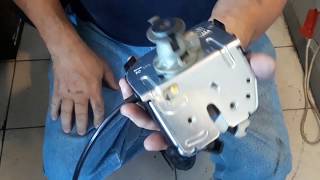
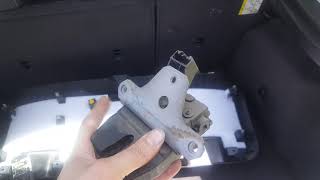
- Faulty Trunk Latch/Actuator Assembly (Ford) (Common) — The electric motor inside the latch burns out or the internal plastic gears strip, preventing it from unlatching the trunk. 🎬 See how to remove a Ford Focus trunk latch assembly
- Blown Fuse (Common) — An electrical surge or a short circuit in the trunk release or airbag system blows the protecting fuse.
- Defective Decklid Release Switch (Ford) (Less Common) — The interior button or exterior trunk lid switch fails due to worn internal contacts or corrosion.
- Corroded Under-Seat Connectors (Hyundai/Kia) (Less Common) — Spilled liquids seep into the electrical connectors under the passenger seat, causing corrosion and interrupting sensitive OCS communication signals.
- Faulty Alternator or Charging System (Chevrolet) (Rare) — On specific Chevrolet models, this code points to a high voltage condition in the alternator's control circuit, unrelated to the trunk or airbags.
- Faulty Body Control Module (BCM) (Rare) — An internal failure in the BCM's driver circuit prevents it from sending the release signal to the trunk actuator.
Symptoms

- Airbag warning light is on — The primary symptom for Hyundai and Kia vehicles. The SRS light illuminates, indicating the passenger airbag system is disabled.
- Trunk will not open — The trunk does not unlatch when using the interior release button or the key fob. The main symptom for Ford vehicles.
- Passenger airbag 'OFF' indicator behaves incorrectly — The light stays off when an adult is seated or stays on when the seat is empty, because the controller cannot communicate with the seat sensor.
- “Trunk Ajar” warning light is on — The dashboard displays a 'Trunk Ajar' message even when the trunk is securely closed, often accompanying a non-functional latch.
- Trunk opens unexpectedly — A short in the wiring or switch causes the trunk to pop open on its own, sometimes while driving.
- Clicking noise from trunk — A clicking sound from the latch area when pressing the release button indicates the actuator receives a signal but is mechanically jammed. 🎬 Watch: Step-by-step guide to replacing a Ford hatch latch
- Battery Light (Chevrolet) — A battery or charging system warning light illuminates due to the alternator circuit fault.
Diagnostic Flowchart
Tap your situation to follow the diagnostic path that matches what you're seeing on this code.
Common Fixes & Costs

- Repair Broken Wires — Parts: $5-$20, Labor: $150-$300, ~1.5 hr book time (Intermediate)
- Replace Trunk Latch Actuator Assembly (Ford)
— Parts: $50-$250, Labor: $75-$150, ~0.8 hr book time
(Intermediate)
Ford Mustang (2010-2014): OEM DR3Z-5443200-A (Alt: Autopart Premium APDLA0683, Dorman 940-108)
Ford Focus (2012-2018): OEM BM5Z-5443150-B (Alt: Duralast DLA1611, Standard Motor Products DLA1611) - Replace OCS Sensor / Seat Cushion Assembly (Hyundai/Kia)
— Parts: $500-$1200, Labor: $200-$400, ~2.5 hr book time
(Pro Only)
Hyundai Sonata / Elantra (2011-2016): OEM 88950-3X500 (OCS Module), Cushion Assembly is VIN-specific (Alt: N/A)
Kia Sedona (2015-2018): OEM 88952-A9500 (OCS Module), Cushion Assembly is VIN-specific (Alt: N/A) - Replace Blown Fuse — Parts: $1-$5, Labor: $0, ~0.1 hr book time (DIY)
- Replace Trunk Release Switch (Ford)
— Parts: $15-$70, Labor: $50-$100, ~0.3 hr book time
(DIY)
Ford Focus (2012-2018): OEM BM5Z-54432A38-B (Alt: Standard Motor Products DS-2435) - Recalibrate OCS/SRS System — Parts: $0, Labor: $100-$250, ~0.8 hr book time (Pro Only)
- Replace Air Bag Control Module (SRSCM)
— Parts: $800-$1000, Labor: $150-$250, ~1.5 hr book time
(Pro Only)
Hyundai Sonata (2011-2016): OEM VIN-specific, e.g., 95910-4R050 (Alt: N/A)
Used vs. New Parts: Buying Guide
When a used part is worth it: For a Ford trunk latch actuator, a used part from a reputable salvage yard is a cost-effective option for older vehicles. For the Hyundai/Kia OCS sensor, buying used is STRONGLY DISCOURAGED as it is a critical, one-time-use safety component.
Donor-vehicle mileage cap: roughly under 100000 miles for the part to have meaningful remaining life.
Donor quality checklist:
- Verify the part number matches exactly.
- For the trunk latch, ensure the donor vehicle wasn't in a rear-end collision.
- Never buy used electronic safety components like airbag sensors from unknown sources.
Decision logic:
- If The part is an airbag sensor, module, or seat cushion (OCS). → Always buy new OEM. The safety risk and calibration issues with a used part are not worth the savings.
- If The part is a mechanical component like a trunk latch and the vehicle is over 100k miles. → A tested, warranted used part is an acceptable budget repair.
- If The vehicle is newer or has low mileage. → Buy a new OEM or high-quality aftermarket part to ensure longevity.
Warranty tradeoff: Used parts typically come with a 30-90 day warranty covering the part only. New aftermarket parts offer 1-year to limited lifetime warranties. New OEM parts carry a 12-month/12,000-mile warranty.
Worst-case if a used part fails: $200-$500 if a used part fails after installation, requiring repeat labor and a second replacement part.
What Happens If You Wait — Timeline
- Immediate: For Hyundai/Kia, the airbag light illuminates and the passenger airbag is disabled. For Ford, the trunk release becomes intermittent or fails completely. (MPG impact: 0%% · Added cost: $0. The primary cost is the immediate loss of a safety feature (Hyundai/Kia) or convenience feature (Ford).)
- 1-3 months: For Hyundai/Kia, the hard fault guarantees a failed state safety inspection. For Ford, continued flexing of the damaged trunk harness causes backup camera failure. (MPG impact: 0%% · Added cost: $50-$200 in failed inspection fees. For Ford, the repair requires multiple wire splices instead of just one.)
- 3-6 months: For Hyundai/Kia, increased risk of personal injury claim denial by insurance in case of an accident. For Ford, a short circuit blows a fuse, affecting other components. (MPG impact: 0%% · Added cost: Potential for thousands in denied insurance claims. A simple wire repair escalates to needing a new harness section ($150 to $500+).)
- 6+ months / In case of accident: For Hyundai/Kia, a passenger is injured in a crash where the airbag should have deployed. For Ford, a critical short damages the Body Control Module (BCM). (MPG impact: 0%% · Added cost: Untold personal injury cost. BCM replacement exceeds $1000.)
Cost of Not Fixing It
- Immediate: For Hyundai/Kia: Passenger airbag is disabled and will not deploy in a crash. For Ford: Inconvenience of a non-working trunk. For Chevy: Charging system failure leaves you stranded. (Added cost: $0)
- 0-6 months: Failed state safety inspection in many states. Potential for trunk to open unexpectedly while driving (Ford). Severe risk of injury or death in an accident (Hyundai/Kia). (Added cost: $50-$200 (failed inspection fees, re-tests))
- 6+ months / In case of accident: Insurance companies deny personal injury claims citing negligent maintenance if the airbag system was knowingly inoperative. Continued flexing of a damaged Ford wire harness causes backup camera failure. (Added cost: Thousands in denied insurance claims or additional repair costs.)
Diagnosis Steps
- Verify the Code's Meaning for Your Vehicle
Confirm what B1493 means for your specific Make and Model. Assuming it's a trunk issue on a Hyundai leads to a dead end. Use a scan tool that provides manufacturer-specific definitions.
Tools: OBD-II Scanner with manufacturer-specific code definitions (Beginner) - Inspect the Relevant Wiring Harness
For a trunk fault (Ford), pull back the rubber conduit between the trunk lid and body to meticulously inspect wires for breaks. For an airbag fault (Hyundai/Kia), slide the passenger seat fully forward and back, inspecting all wiring and connectors underneath for damage, snags, or loose connections.
Tools: Flashlight (Intermediate) - Check Fuses
Locate the fuse boxes and consult the owner's manual to find fuses related to the Body Control Module (BCM), Trunk Release, or Supplemental Restraint System (SRS). Test with a multimeter for continuity.
Tools: Owner's manual, fuse puller, multimeter (Beginner) - Load Test the Trunk Actuator Circuit (Ford)
Disconnect the trunk latch actuator. Connect a test light or headlight bulb across the power and ground terminals of the connector. Have a helper press the trunk release button. If the bulb lights up brightly, the circuit is good and the actuator is faulty. If the bulb is dim or off, trace the circuit for high resistance or an open wire.
Tools: Test light or headlight bulb with pigtails, wiring diagram (Advanced) - Test the Decklid Release Switch (Ford)
Remove the interior trunk release switch. Use a multimeter set to continuity. The meter must show an open circuit normally and a closed circuit (near-zero ohms) when the button is pressed.
Tools: Multimeter, trim removal tools (Intermediate) - Check OCS CAN Bus Resistance (Hyundai/Kia)
Disconnect the vehicle's battery. At the OCS module connector under the passenger seat, measure the resistance between the CAN High and CAN Low wires. A healthy CAN bus reads approximately 60 Ohms. A reading of 120 Ohms indicates a broken wire. 0 Ohms indicates a short.
Tools: Multimeter, wiring diagram (Advanced) - Check OCS Communication Lines (Hyundai/Kia)
Navigate to the SRS/WCS module data stream on an advanced scan tool. Look for passenger weight or OCS status parameters. Frozen or 'Error' data confirms a communication breakdown. Use an oscilloscope to check for a square wave data signal on the communication wire.
Tools: Advanced Bi-Directional Scan Tool, Oscilloscope (Advanced) - Perform OCS Zero Point Calibration (Hyundai/Kia)
After replacing an OCS sensor mat or seat, the system must be recalibrated. Ensure the passenger seat is completely empty, then run the 'OCS Reset' or 'Zero Point Calibration' function from the scan tool. Failure to do this causes the code to return immediately.
Tools: Advanced Bi-Directional Scan Tool (Pro Only)
When This Code Triggers (Freeze-Frame Conditions)
- System Self-Test: Active (The SRS and BCM modules perform a self-test every time the ignition is turned to the 'ON' position.)
- Component Resistance: Out of Spec (The code triggers if the module detects incorrect electrical resistance (an open or short) from the trunk actuator or OCS sensor during the self-test.)
- Communication Status: No Signal / Error (For the Hyundai/Kia variant, the code sets when the main airbag module (SRSCM) fails to receive a valid data signal from the occupant classification module.)
- Battery Voltage: 9-16 Volts (The fault logs when system voltage is within the normal operating range, indicating a specific circuit problem rather than a main power supply failure.)
Related Codes
- B1490 — On Hyundai/Kia, this is 'OCS Defect' and often appears with B1493. B1490 means the sensor mat failed its self-test, while B1493 means the airbag module can't talk to the OCS module. A single broken wire causes both.
- B1764 — On Kia vehicles, this code for 'OCS MAT defect' pairs with B1490 and shares the same root causes as B1493, pointing to a failure in the passenger seat sensor system.
- B1342 — Indicates a general fault in the Body Control Module (BCM). If it appears with the Ford version of B1493, it strongly suggests the BCM itself is the problem, not the trunk wiring.
- B1447 / B1448 — On Hyundai/Kia, these indicate a specific OCS component failed its internal self-test. They often appear with B1493 and point to the same root causes under the passenger seat.
Climate & Environmental Factors
- Cold Weather: Low temperatures cause wire insulation to become hard and brittle. When flexed in a trunk lid harness, the insulation cracks, exposing the wire to moisture or shorting.
- Humidity / Moisture: Water seeps into cracked wiring or poorly sealed connectors, causing corrosion. This increases electrical resistance, leading to weak actuator performance or a complete loss of signal in OCS data lines.
- Vibration and Mechanical Stress: Constant flexing (trunk harness) or vibration (under-seat wiring) causes metal fatigue in the copper strands, leading to an open circuit even if the insulation appears intact.
How to Talk to a Mechanic About This Code
Say this: "It's crucial to specify your vehicle type. For a Ford: 'I have a B1493 code and my trunk won't open; please diagnose the decklid release circuit wiring.' For a Hyundai/Kia: 'My airbag light is on with a B1493 code; please diagnose the SRS system for an OCS communication error.'"
This immediately tells the shop you understand the code has multiple meanings and directs them to the correct system, saving diagnostic time and preventing confusion.
Avoid saying:
- 'My airbag light is on, can you check it?' (Too vague, doesn't mention the specific code)
- 'My trunk is broken.' (If you have a Hyundai/Kia, this sends the mechanic on a wild goose chase)
- 'Just fix whatever is wrong.'
Questions to ask before authorizing the repair:
- For Ford: Did you find a broken wire, or did a load test confirm the latch itself failed?
- For Hyundai/Kia: Was the fault a damaged wire, or is the OCS sensor mat defective?
- For Hyundai/Kia: If the seat cushion needs replacement, is a system recalibration included in the quote?
- For Hyundai/Kia: Have you checked my VIN for eligibility under the OCS sensor warranty extension campaign?
- What is the warranty on this specific repair, covering both parts and labor?
Where to Take It: Dealer vs Independent vs Chain
- Dealer:
Best for: Hyundai/Kia airbag repairs, as they have the specific tools for OCS recalibration and access to warranty/recall information., Vehicles where a recall (like Kia's SC175) or warranty extension applies., Complex electrical issues requiring manufacturer-specific software.
Downsides: Significantly higher labor and diagnostic rates, often 40-50% more than independent shops., May default to replacing an entire assembly when a simpler wiring repair suffices. (Typical cost: +50% vs. baseline) - Independent Shop:
For Ford, a trusted independent shop is the best choice. For Hyundai/Kia, the dealership is strongly recommended due to the critical safety system, potential warranties, and mandatory recalibration procedures.
Best for: The Ford/Lincoln trunk release fault; a good independent shop easily diagnoses and repairs the common wiring issue for less cost., Out-of-warranty vehicles where cost is a primary concern.
Downsides: Must verify the shop has an advanced scanner capable of reading SRS/BCM codes and performing OCS recalibration for Hyundai/Kia., Quality and expertise vary widely; look for ASE certification. (Typical cost: +0% vs. baseline) - Chain Shop:
AVOID. The complexity of B1493 is a poor fit for the chain shop model. There is a high risk of incorrect diagnosis or an incomplete repair.
Best for: Simple maintenance like oil changes or tire rotations, not complex diagnostics.
Downsides: Technicians lack specific training for SRS systems or advanced tools for recalibration., High risk of misdiagnosis due to the code's multiple meanings. (Typical cost: -10% vs. baseline)
When to Walk Away From the Repair
If the estimated repair cost for the B1493 fault exceeds 40-50% of your car's current private-party market value, seriously consider selling or trading in the vehicle.
- Car worth $3500, fix is $1600: Walk away. The repair for the Hyundai/Kia OCS sensor is nearly half the car's value. Sell the car 'as-is' with full disclosure of the airbag fault.
- Car worth $10000, fix is $350: Fix it. A typical wiring repair for the Ford trunk issue is a minor cost relative to the vehicle's value.
- Car worth $6000, fix is $1500: Borderline. The repair cost is 25% of the car's value. If the car is otherwise in excellent condition, get a second opinion. If it has other pending issues, sell.
What Scan Tool You Need for This Code
Minimum: A scanner that reads and clears manufacturer-specific Body (BCM) and SRS (Airbag) codes. Basic engine-only code readers will not work.
A standard $20 engine code reader cannot see 'B' codes like B1493. It reports 'no codes found' even when the airbag or trunk is malfunctioning.
Budget: BlueDriver Pro (~$99) — Reads and clears SRS/Airbag, ABS, and Transmission codes for most major brands, essential for diagnosing B1493.
Mid-range: Foxwell NT604 Elite / XTOOL D7 (~$140) — Provides full system diagnostics. The XTOOL D7 offers bidirectional controls to test components and performs service functions like OCS reset.
Professional: Autel MaxiCOM MK808 / MK906BT (~$500-1200) — Offers full bidirectional control, OEM-level diagnostics, and special functions like OCS Zero Point Calibration, mandatory after replacing a Hyundai/Kia seat sensor.
Rent vs buy: Most free 'loan-a-tool' scanners at auto parts stores are basic engine code readers and will NOT read SRS/airbag codes. You must purchase a recommended scanner or pay for a professional diagnosis.
How to Clear the Code After You Fix It
- Ensure all physical repairs (e.g., wire repair, component replacement) are complete.
- Reconnect the vehicle battery if it was disconnected.
- Use an OBD-II scan tool with SRS/Body control capabilities to access the specific module (SRSCM or BCM).
- Select the function to 'Clear Codes' or 'Reset Faults'.
- Cycle the ignition off, then on, and observe the warning light. It performs a self-check (light on for ~7 seconds) and turns off.
Drive cycle (~15 minutes): For an airbag system fault, the ignition cycle self-test is the primary check. After clearing the code, turn the key off and on. If the light stays off, a short 15-minute drive with a passenger in the seat verifies the OCS fix is stable.
Readiness monitors affected: Supplemental Restraint System (SRS), Body Control Module (BCM)
Watch out for:
- Clearing the code without fixing the underlying physical problem; the light returns immediately on the next ignition cycle.
- Using a basic engine-only code reader that cannot communicate with the SRS or BCM.
- Forgetting to perform the OCS Zero Point Calibration after replacing a Hyundai/Kia seat sensor.
Will This Fail Emissions / State Inspection?
Yes — this code typically fails an OBD-II emissions inspection.
- California: An airbag warning light does NOT cause a failure of the California Smog Check, which focuses only on emissions.
- New York: An illuminated airbag warning light is checked during the safety inspection and causes an automatic failure.
- Texas: An airbag warning light is NOT an inspected item and does not cause a vehicle to fail the state safety inspection.
- Pennsylvania / Virginia: In states with comprehensive annual safety inspections, an illuminated airbag (SRS) warning light is an automatic failure.
Most Commonly Affected Vehicles

- Ford Mustang (2010-2017) — Extremely common issue due to wiring harness fatigue in the flexible conduit to the trunk lid. A TSB (19-2273) was issued for 2015-2017 models.
- Hyundai Sonata / Elantra (2011-2016) — Frequently logs B1493 for OCS/PODS communication errors caused by wiring issues or a faulty seat sensor mat. Hyundai extended the warranty on the OCS mat for some models (TSB 15-BE-004-1).
- Kia Sedona (2015-2018) — Subject to safety recall SC175 for a faulty ODS wiring harness clip under the manual passenger seat that breaks wires and sets B1493.
- Hyundai Veloster (2012-2017) — B1493 indicates an airbag system fault (PODS communication error), NOT a trunk issue.
- Ford Focus (2012-2018) — The trunk release switch and the latch actuator itself are known failure points causing this code.
- Ford Fusion / Lincoln MKZ (2013-2020) — Wiring harness and latch actuator failures are common on these models.
- Ford Crown Victoria / Mercury Grand Marquis (2004-2011) — Prone to failures of the trunk latch actuator assembly itself, rather than wiring.
- Chevrolet Various (2005-2015) — B1493 indicates 'Alternator F-Terminal Circuit High Voltage', a charging system code unrelated to the body or airbags.
- Nissan Altima, Sentra, Rogue, Versa (2012-2024) — Subject to TSB NTB19-071D for identical symptoms: an airbag light caused by an OCS fault requiring a special calibration procedure.
Manufacturer-Specific Notes
- Hyundai / Kia: CRITICAL: B1493 is NOT related to the trunk. It indicates a 'Passenger Occupant Detecting System (PODS) Communication Error' within the airbag system. Some models have a 15-year/unlimited mileage warranty extension on the OCS sensor mat (TSB 15-BE-004-1).
- Kia: Safety Recall SC175 for the 2015-2018 Sedona addresses a design flaw where a wiring harness clip under the passenger seat causes wire breakage, leading to B1493. The fix removes the clip and replaces the seat cushion if damaged.
- Ford: A known issue on 2015-2017 Mustangs involves the trunk lid wiring harness failing, causing the trunk release and backup camera to stop working. Ford issued TSB 19-2273 to address this.
- Chevrolet: The B1493 code has a unique meaning: 'Alternator F-Terminal Circuit High Voltage'. Diagnosing this requires testing the alternator and its control circuits, completely ignoring the trunk or airbag systems.
Real Owner Stories
2016 Ford Mustang EcoBoost at 75,000 miles
The trunk release button and key fob stopped working completely. The backup camera also started cutting out.
What they tried:
- Checked the fuse for the trunk release, which was fine.
- Replaced the trunk latch actuator for $250, but the problem remained.
Outcome: Owner pulled back the rubber conduit between the trunk and car body and found three wires completely broken. Spliced and repaired the broken wires for under $10 in materials. Trunk and camera function were fully restored.
Lesson: On a Ford with B1493, the trunk wiring harness is the #1 suspect, especially if the backup camera is also failing. Always inspect the harness for broken wires before replacing expensive components.
2012 Hyundai Sonata at 110,000 miles
Airbag light stayed on. The 'passenger airbag off' light was always illuminated, even with an adult in the seat.
What they tried:
- Took it to a dealer, who diagnosed B1493 (OCS Communication Error) and B1490 (OCS Defect).
Outcome: The dealer quoted $1,500 to replace the passenger seat bottom cushion, as the OCS sensor is integrated into it. The owner's VIN was not covered by warranty extensions. Faced with a high repair bill, they traded the vehicle in.
Lesson: For a Hyundai/Kia, B1493 is an expensive problem because the OCS sensor is part of the seat cushion. Always check with a dealer for applicable warranty extensions or recalls for your VIN before approving the repair.
2017 Kia Sedona at 60,000 miles
Airbag light came on. The owner had received a recall notice in the mail (SC175).
What they tried:
- Took the vehicle to the Kia dealership for the recall service.
Outcome: The dealer confirmed the B1493 code. The technician found the wiring harness under the passenger seat was damaged by the faulty factory clip. The entire passenger seat cushion assembly was replaced at no charge under the recall.
Lesson: Always check for open recalls. For 2015-2018 Kia Sedonas, recall SC175 directly addresses a known cause of B1493 and provides a free fix.
2013 Hyundai Elantra at 95,000 miles
Airbag light appeared after a rear-seat passenger kicked something under the front passenger seat.
What they tried:
- Pulled code B1493 with a scanner.
- Visually inspected the wiring under the passenger seat and found a yellow connector knocked loose.
Outcome: After disconnecting the battery, the owner securely re-seated the connector. They reconnected the battery, cleared the code, and the airbag light stayed off. Total cost was $0.
Lesson: On Hyundai/Kia models, the simplest cause of B1493 is physical damage or a loose connection under the passenger seat. A thorough visual inspection should be the first step.
How to Prevent This Code From Triggering
- Be mindful of the passenger seat area (Hyundai/Kia) (Daily habit) — Instruct rear passengers not to kick under the front seat. Avoid storing hard objects under the passenger seat that snag the sensitive OCS wiring harness.
- Clean under-seat spills immediately (Hyundai/Kia) (As needed) — Spilled liquids seep into the OCS module or its connectors, causing corrosion and communication errors.
- Periodically inspect the trunk harness (Ford) (Every oil change) — Gently pull back the rubber conduit between the trunk lid and body. Catching insulation damage early allows for a simple tape repair before the wire breaks completely.
- Use a battery tender for long-term storage (When storing vehicle for 3+ weeks) — Maintains a stable voltage, preventing low-voltage conditions that trigger spurious communication fault codes in sensitive modules like the SRS.
- Address water leaks promptly (As needed) — A leaking trunk seal or sunroof saturates wiring and connectors, leading to corrosion and high-resistance faults.
Frequently Asked Questions
Is it safe to drive with code B1493?
If the code relates to a Ford trunk, yes, it is an inconvenience. If you drive a Hyundai or Kia, NO, because the passenger airbag system is disabled and will not deploy in a crash. It is a major safety risk and causes automatic failure during state safety inspections.
What is the biggest mistake when diagnosing B1493?
The biggest mistake is not confirming the code's definition for your specific vehicle. Trying to diagnose a trunk circuit on a Hyundai fails because the code points to the airbag system. The second biggest mistake is clearing an airbag code without fixing the broken wire or sensor, causing the light to return immediately.
My mechanic says I need a new passenger seat cushion for B1493. Is this correct?
Yes, this is a legitimate repair for the airbag-related version of this code on Hyundai and Kia vehicles. The passenger weight sensor (OCS mat) is permanently built into the seat foam cushion. If the sensor fails, you must replace the entire seat cushion assembly and recalibrate the system.
How can I open my trunk if the button and key fob don't work?
You must use the manual emergency release handle located inside the trunk. Fold down your rear seats to gain access to the trunk area. Pull the glow-in-the-dark handle attached to the latch mechanism to open the trunk.
How much does it cost to fix B1493?
A Ford trunk issue costs from $5 for a fuse to $250 for a new latch assembly installed. A Hyundai/Kia airbag wiring repair costs $150-$300 at a shop. Replacing the Hyundai/Kia OCS sensor mat costs between $700 and $1,600 at a dealership, including parts, labor, and recalibration.
Can I just clear the airbag light for B1493?
No, B1493 indicates a hard fault in the system. Even if you use a scanner to clear the code, the SRS module re-runs its self-test on the next ignition cycle. The light returns immediately until the physical fault is repaired.
Will my insurance cover an accident if my airbag light was on?
Yes, but driving with a known airbag fault gives insurance companies grounds to reduce or deny your personal injury claim. If an injury occurs that the disabled airbag would have prevented, they argue negligent maintenance. Always fix safety restraint codes immediately to protect your coverage and passengers.
I just replaced my car battery and now the airbag light is on. Is it related?
A voltage spike or drop during a battery change sometimes sets a temporary fault in the sensitive SRS module. Attempt to clear the code with a bidirectional scanner. If the code returns immediately, a hard fault exists and requires physical diagnosis.
Key Takeaways
- Verify your vehicle's specific B1493 definition first: it indicates a trunk release failure on Fords, a critical passenger airbag disablement on Hyundai/Kias, or a charging system fault on Chevrolets.
- On 2010-2017 Ford Mustangs, inspect the flexible rubber wiring conduit between the trunk lid and body for severed wires before replacing the $150 latch actuator.
- For Hyundai and Kia models, B1493 disables the passenger airbag; check for damaged wiring under the passenger seat or verify if your VIN qualifies for the 15-year OCS sensor warranty extension.
- Never simply clear a B1493 airbag code; the SRS module re-runs its self-test on every ignition cycle and immediately triggers the warning light until the physical fault is repaired.
Helpful Videos


The information in this article is provided for general reference and educational purposes only. Vehicle specifications, procedures, and part compatibility can vary by production date, trim level, and region. Always consult your vehicle's factory service manual and verify part numbers before purchasing or performing repairs. Safety-critical components such as airbags, seat belts, and braking systems should be installed by a qualified professional.
- 🎬 Helpful Videos
- What Does B1493 Mean?
- Can I Drive With B1493?
- Common Causes
- Symptoms
- Diagnostic Flowchart
- Common Fixes & Costs
- Used vs. New Parts: Buying Guide
- What Happens If You Wait — Timeline
- Cost of Not Fixing It
- Diagnosis Steps
- When This Code Triggers (Freeze-Frame Conditions)
- Related Codes
- Climate & Environmental Factors
- How to Talk to a Mechanic About This Code
- Where to Take It: Dealer vs Independent vs Chain
- When to Walk Away From the Repair
- What Scan Tool You Need for This Code
- How to Clear the Code After You Fix It
- Will This Fail Emissions / State Inspection?
- Most Commonly Affected Vehicles
- Manufacturer-Specific Notes
- Real Owner Stories
- 2016 Ford Mustang EcoBoost at 75,000 miles
- 2012 Hyundai Sonata at 110,000 miles
- 2017 Kia Sedona at 60,000 miles
- 2013 Hyundai Elantra at 95,000 miles
- How to Prevent This Code From Triggering
- Frequently Asked Questions
- Is it safe to drive with code B1493?
- What is the biggest mistake when diagnosing B1493?
- My mechanic says I need a new passenger seat cushion for B1493. Is this correct?
- How can I open my trunk if the button and key fob don't work?
- How much does it cost to fix B1493?
- Can I just clear the airbag light for B1493?
- Will my insurance cover an accident if my airbag light was on?
- I just replaced my car battery and now the airbag light is on. Is it related?
- Key Takeaways
- 🎟️ Get 5% Off