

OBD-II Code B1489: Passenger Airbag Off Indicator Circuit Failure
What B1489 means, why it triggers, and how to fix it
- Code B1489 disables the entire airbag system, meaning 0 airbags will deploy in a crash until the vehicle is repaired.
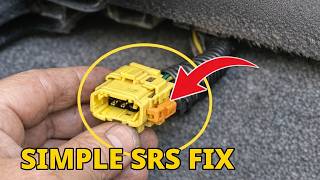
- The most frequent cause is a broken wire or loose yellow connector under the passenger seat, costing under $25 in parts to fix.
- Manufacturer definitions vary wildly: B1489 means a burnt dash bulb on a 2010 Mitsubishi, but a failed $300 Occupant Classification Sensor on a 2008 Hyundai.
- Never attempt SRS repairs without disconnecting the negative battery terminal for at least 30 minutes to prevent accidental airbag deployment.
- A standard $20 OBD-II reader cannot diagnose this code; you must use a scanner with SRS/Body module capabilities costing $100 or more.
What Does B1489 Mean?

B1489 indicates the Supplemental Restraint System (SRS) module detected an electrical fault in the 'PASSENGER AIRBAG OFF' indicator light circuit. Because the module cannot verify the status of this warning light, it assumes the system is compromised. As a failsafe, it shuts down the entire airbag system and illuminates the main dashboard SRS warning light.
Technical definition: The SAE/ISO definition for B1489 is 'Passenger's Air Bag OFF Indicator Lamp Open Circuit'. The SRS control unit detected a break or infinite resistance in the circuit connecting to the passenger airbag status light. However, this is a manufacturer-specific code; on Hyundai or Kia vehicles, it often indicates a failure of the Occupant Classification System (OCS) module.
Can I Drive With B1489?
No — Do Not Drive. No. The SRS warning light indicates the entire Supplemental Restraint System is disabled as a failsafe. In a collision, zero airbags will deploy and seatbelt pretensioners will not activate. Repair the vehicle immediately to restore occupant protection.
Common Causes


- Damaged or Loose Wiring/Connectors (Very Common) — Thin wires leading to the passenger airbag indicator or under-seat sensors get pinched, frayed, or disconnected. This is the most frequent cause, especially in harnesses under the passenger seat or behind the dashboard.
- Burnt-Out Indicator Bulb/LED (Common) — The small bulb or LED inside the 'PASSENGER AIRBAG OFF' indicator assembly burns out. The SRS module detects this lack of continuity as an open circuit.
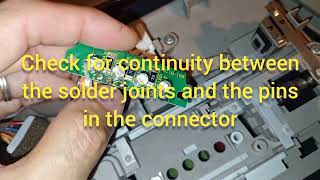
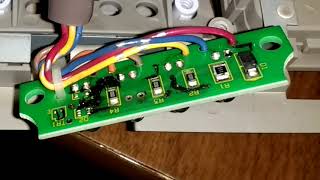
- Cracked Solder Joints (Subaru) (Common On Specific Models) — On 2007-2009 Subaru models, solder connections on the overhead console's indicator circuit board crack from vibration and temperature cycles 🎬 Watch: How to fix the Subaru overhead console circuit board., creating an open circuit.
- Faulty Occupant Classification Sensor (OCS) Module (Common On Specific Models) — On Hyundai and Kia vehicles, a failing passenger seat weight sensor module causes communication errors interpreted as a B1489 fault.
- Spilled Liquid or Corrosion (Less Common) — Liquid seeping into the center console corrodes indicator connectors. External components, like front impact sensors on Nissan trucks, also corrode from road salt, triggering circuit faults.
- Low Battery Voltage (Less Common) — System voltage dropping below 12.0 volts causes sensitive SRS controllers to malfunction and store spurious fault codes. This frequently occurs during a jump-start or alternator failure.
- Faulty SRS Airbag Control Module (Rare) — The master SRS computer fails internally and incorrectly reports a circuit problem. Consider this only after exhausting all other diagnostic steps.
Symptoms

- SRS/Airbag Warning Light is On — A red or amber warning light with an airbag icon or 'SRS' remains constantly illuminated on the instrument cluster.
- Incorrect 'Passenger Airbag Off' Indicator State — The passenger indicator light never turns on (even during startup), stays on permanently, or flickers erratically regardless of seat occupancy.
- Failed State Safety Inspection — An active SRS warning light is an automatic failure for vehicle safety inspections in strict jurisdictions like PA, VA, and NY.
Diagnostic Flowchart
Tap your situation to follow the diagnostic path that matches what you're seeing on this code.
Common Fixes & Costs
- Repairing Damaged Wiring or Reconnecting a Loose Connector — Parts: $0-$25, Labor: $120-$250, ~1.0 hr book time (Intermediate)
- Replacing the Passenger Airbag Indicator Light Assembly — Parts: $70-$300, Labor: $100-$300, ~1.2 hr book time (Intermediate)
- Resoldering Cracked Joints on Indicator Circuit Board (Subaru) — Parts: $0-$10, Labor: $200-$400, ~2.5 hr book time (Advanced)
- Replacing a Faulty Occupant Classification Sensor (OCS) Module — Parts: $250-$700, Labor: $200-$400, ~1.8 hr book time (Professional)
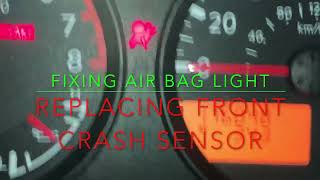
- Replacing a Front Crash Sensor (Common on Nissan) — Parts: $180-$450, Labor: $100-$150, ~1.0 hr book time (Intermediate)
Used vs. New Parts: Buying Guide
When a used part is worth it: For simple, non-electronic components like the indicator light assembly, a used part from a reputable auto recycler is acceptable. For electronic modules (OCS, SRS ECU) or sensors, used parts are risky due to unknown history.
Donor-vehicle mileage cap: roughly under 100000 miles for the part to have meaningful remaining life.
Donor quality checklist:
- Verify the donor vehicle was not involved in a collision or flood.
- Match the part number exactly, as even minor variations are incompatible.
- For sensors, avoid parts from regions with heavy road salt use due to high risk of corrosion.
Decision logic:
- If The part is a simple indicator bulb/assembly and the cost saving is significant (>50%) → Used part is a reasonable choice.
- If The part is an electronic sensor, OCS module, or the main SRS ECU → Buy new OEM or a remanufactured unit from a specialist with a warranty. The risk of a faulty used part and repeat labor costs is too high.
- If The vehicle is a Subaru with this issue → Attempting to resolder the existing circuit board is more effective than buying a used assembly which may have the same defect.
Warranty tradeoff: Used parts from a salvage yard typically have a 30-90 day warranty covering only the part. New OEM parts and reputable remanufactured modules offer longer warranties (1 year to lifetime) providing more security.
Worst-case if a used part fails: $300-$600 if a used electronic module or sensor fails after installation, requiring repeat labor for diagnosis and replacement.
What Happens If You Wait — Timeline
- Immediately: The SRS module detects the open circuit, illuminates the airbag warning light, and disables the entire Supplemental Restraint System as a failsafe. (MPG impact: 0%% · Added cost: $0 (Safety risk is now active))
- 1 week - 3 months: The vehicle is driven without airbag protection. If the root cause is an intermittent connection, the light may occasionally turn off and on, giving a false sense of security. (MPG impact: 0%% · Added cost: $0 (Safety risk continues))
- Next safety inspection / In case of accident: The vehicle automatically fails state safety inspections. In an accident, airbags will not deploy, drastically increasing injury risk. Insurance companies may reduce claim payouts if a known safety defect was ignored. (MPG impact: 0%% · Added cost: $50 (Failed inspection fee) + Infinite (Medical bills, liability, loss of life))
Cost of Not Fixing It
- Immediately: The entire Supplemental Restraint System (airbags, pretensioners) is disabled. In the event of a collision, airbags will not deploy. (Added cost: N/A (Safety Risk))
- Next Vehicle Inspection: The vehicle automatically fails the safety inspection in states that require one, preventing legal registration renewal. (Added cost: $20-$50 (Failed inspection fee) + cost of eventual repair)
- In Case of Accident: Drastically increased risk of serious injury or death for all occupants. An insurance company may reduce a claim payout if a known safety defect was ignored. (Added cost: Potentially infinite (Medical bills, liability, loss of life))
Diagnosis Steps
- Check Passenger Seat and Reset System
Clear the passenger seat and floorboard of all objects. Ensure nothing is pinching wires under the seat. Turn the car off, wait two minutes, and restart it to clear temporary glitches.
Tools: None (Beginner) - Read SRS Codes with a Capable Scanner
Use an OBD-II scanner capable of reading SRS/Airbag 'B' codes. Confirm B1489 is present and note its exact definition for your vehicle's make and model. Note any CAN bus codes (like B1206), which must be diagnosed first.
Tools: OBD-II Scanner with SRS/Body capability (Beginner) - Visually Inspect Wiring and Connectors
Inspect the bright yellow SRS wiring harnesses under the passenger seat and behind the dashboard indicator light. Look for disconnected plugs, pinched wires, chafing, and green corrosion.
Tools: Flashlight, Trim removal tools (Intermediate) - Check Circuit Resistance with Live Data
Using an advanced scan tool, observe the live data resistance PID for the passenger indicator circuit. A normal reading is 2.0 to 3.0 ohms. A reading of 'OL' or >5.0 ohms confirms an open circuit.
Tools: Advanced OBD-II Scanner with SRS Live Data (Advanced) - Check for Power and Ground at the Indicator
Disconnect the indicator light assembly. With the ignition ON, use a multimeter to verify battery voltage (approx. 12V) on the power wire and check for good ground (less than 1 ohm resistance) on the ground wire.
Tools: Multimeter, Vehicle-specific wiring diagram (Advanced) - Test Circuit with a Resistor Tool
Connect a 2.2 to 2.7 ohm airbag circuit test resistor to the harness connector in place of the indicator light. Clear codes and cycle the ignition. If B1489 stays away, the wiring and SRS module are good; replace the indicator assembly.
Tools: Airbag Circuit Test Resistor Set, SRS-capable Scanner (Professional) - Check for Continuity to the SRS Module
Disconnect the battery for 30 minutes. Disconnect the indicator light and the SRS module. Measure resistance on the signal wire between the two connectors. A reading of 'OL' indicates a broken wire requiring repair.
Tools: Multimeter, Vehicle-specific wiring diagram (Advanced) - [PRO TIP] Test by Grounding the Signal Wire
Disconnect the SRS module and negative battery terminal. Apply a fused jumper wire from the indicator light's signal pin on the harness side to a known good ground. Reconnect battery and turn ignition ON. If the light illuminates, the wiring and bulb are good, indicating a faulty SRS module.
Tools: Fused jumper wire, Multimeter, Wiring diagram (Professional)
When This Code Triggers (Freeze-Frame Conditions)
- System Voltage: 13.5-14.5V (Normal operating voltage during key-on self-test. A low voltage condition sets spurious codes.)
- Ignition Cycle Count: 1 (Fault is detected immediately on the first key-on cycle after the fault occurs.)
- Fault Status: Present / Active (Unlike intermittent powertrain codes, B1489 is a 'hard fault' present as soon as the ignition is turned on.)
- Component Resistance: > 5.0 Ohms or 'Open' (The SRS module constantly monitors circuit resistance. It sets code B1489 when it detects a reading that is too high, indicating a break in the circuit.)
Related Codes
- B1490 — The direct counterpart to B1489. B1489 indicates an open circuit (broken wire), while B1490 indicates a short circuit (wire touching ground). A multimeter continuity test differentiates them.
- B1206 — A CAN bus communication error code. A faulty network prevents the SRS module from communicating correctly, causing it to store B1489 as a 'ghost' code. Fix the network issue first.
- B0074 / B0081 — These codes point directly to a fault with the Passenger Occupant Classification Sensor (OCS) mat in the seat cushion. If seen alongside B1489, the root cause is the OCS system.
- B1495 — On Hyundai models, B1495 ('OCS/BTS Power Supply Circuit Open') is often seen with B1489, indicating a problem with the Belt Tension Sensor (BTS) wiring harness under the passenger seat.
Climate & Environmental Factors
- High Humidity / Moisture: Causes corrosion on connectors and sensor components, especially those exposed to the elements. This corrosion increases resistance and causes an open circuit fault (B1489).
- Cold Weather: Extreme cold causes materials to contract, loosening electrical connections and exposing pre-existing weaknesses in solder joints (e.g., the Subaru overhead console issue).
- Road Salt (Coastal/Winter Regions): Highly corrosive. Greatly accelerates the failure of low-mounted, exposed components like front crash sensors on Nissan trucks by corroding internal circuit boards.
How to Talk to a Mechanic About This Code
Say this: "I have an airbag warning light on and my own scanner is showing a manufacturer-specific code B1489. I need to book an appointment for an SRS system diagnostic to pinpoint the exact cause. My vehicle is a [Your Make, Model, Year]."
This signals that you are an informed customer. You've identified the specific system (SRS), the exact code (B1489), and the need for a proper diagnostic rather than just 'fixing the light'. This directs the technician's focus and reduces the chance of unnecessary inspections.
Avoid saying:
- 'My airbag light is on, can you just turn it off?'
- 'I have a warning light, can you just take a quick look?'
- 'Just fix whatever is wrong with the airbag system.'
Questions to ask before authorizing the repair:
- What is the specific definition of B1489 for my vehicle's make?
- Based on the diagnostic, is the fault a simple wiring issue, a burnt-out bulb, or a failed module?
- Did you test the wiring and connectors before recommending the replacement of a component?
- If a module (like the OCS or SRS ECU) needs to be replaced, does your quote include the cost of programming or calibration required afterward?
- What is the warranty on this specific airbag system repair, covering both parts and labor?
Where to Take It: Dealer vs Independent vs Chain
- Dealer:
Best for: Vehicles under warranty., Known, complex manufacturer-specific issues (e.g., Hyundai OCS module failures)., Repairs requiring module programming with proprietary software.
Downsides: Highest labor rates, often 1.5-2x more than independent shops., More likely to replace an entire assembly (e.g., Subaru overhead console) rather than attempting a component-level repair (resoldering). (Typical cost: +50% vs. baseline) - Independent Shop:
Best fit for most scenarios. A reputable independent shop with strong electrical diagnostic skills handles the majority of B1489 causes (wiring, bulbs, known pattern failures) more cost-effectively than a dealer.
Best for: Out-of-warranty vehicles where cost is a major factor., Common, well-documented faults (wiring under seat, Subaru solder issue)., Diagnosing and replacing accessible components like indicator lights or external sensors.
Downsides: Shop quality and SRS/electrical expertise vary widely. Vet shops based on reviews and ASE certifications., May not have the latest, most expensive tools for programming new SRS modules on all makes. (Typical cost: +0% vs. baseline) - Chain Shop:
AVOID. This is not a job for a quick-lube or general service chain. The risk of incorrect diagnosis or improper repair on a critical safety system is too high.
Best for: Simple, unrelated maintenance like oil changes or tires.
Downsides: Technicians generally lack the specialized training and tools for SRS diagnostics., High likelihood of misdiagnosis or being told to go to a dealer., Their business model is not suited for complex, safety-critical electrical troubleshooting. (Typical cost: -10% vs. baseline)
When to Walk Away From the Repair
If the total estimated repair cost for the B1489 code exceeds 50% of your car's private-party value, seriously consider selling the car as-is or trading it in. An active airbag light significantly reduces a car's value and makes it difficult to sell.
- Car worth $3500, fix is $2200: Walk away. The repair cost is over 60% of the car's value. It's not economically sensible to proceed.
- Car worth $15000, fix is $450: Fix it. The repair cost is only 3% of the car's value and restores a critical safety feature, making the investment worthwhile.
- Car worth $5000, fix is $1800: Borderline. Get a second opinion. If the fix is confirmed to be expensive (e.g., a new OCS module), it may be time to move on from the vehicle.
What Scan Tool You Need for This Code

Minimum: A scanner that reads and clears 'B' (Body) codes, specifically for the SRS/Airbag system.
A standard, sub-$50 OBD-II code reader only reads 'P' (Powertrain) codes like a check engine light. It cannot communicate with the SRS module and shows 'No Codes Found' even with the airbag light on. You will waste time and money without an SRS-capable tool.
Budget: Autel AutoLink AL619 (~$95) — Reads and clears codes from the SRS and ABS systems, in addition to standard engine codes. It retrieves the specific B1489 code, allowing you to begin diagnosis.
Mid-range: Foxwell NT510 Elite / BlueDriver Pro (~$120-180) — Provides full SRS system access to read and clear codes, and displays live data streams. This allows you to see real-time information from sensors, crucial for diagnosing intermittent issues.
Professional: Autel MaxiCOM MK808 / MX808 (~$450-550) — Offers full-system, bidirectional diagnostics. It reads manufacturer-specific definitions for B1489, views live data, and performs active tests. For some vehicles, it performs the calibration needed after replacing an OCS module.
Rent vs buy: Most auto parts store 'free rental' scanners are basic code readers and WILL NOT read SRS codes. If this is a one-time fix, your best option is to pay the ~$150 diagnostic fee at a reputable independent shop. Buy a scanner only if you plan to perform your own diagnostics on modern cars more than once or twice a year.
How to Clear the Code After You Fix It
- Ensure the physical fault (e.g., broken wire, burnt bulb) has been corrected.
- Reconnect the vehicle battery if it was disconnected for the repair.
- Use an SRS-capable OBD-II scan tool to access the Airbag/SRS module.
- Select the function to 'Clear Codes' or 'Erase DTCs'.
Drive cycle (~1 minutes): SRS codes do not require a complex drive cycle. After clearing the code, turn the ignition off, wait 10 seconds, and turn it back to 'ON'. The SRS module performs a self-test; if the repair was successful, the airbag warning light illuminates for a few seconds and then turns off.
Readiness monitors affected: None. SRS system status does not affect emissions readiness monitors.
Watch out for:
- Using a basic engine code reader that cannot communicate with the SRS module.
- Failing to fix the underlying electrical fault, causing the code to reappear immediately upon the next key cycle.
Will This Fail Emissions / State Inspection?
No — by itself this code doesn't fail OBD inspection (but it can keep readiness monitors from setting, which causes a separate fail).
- California: An airbag light will NOT cause a failure of the emissions-only smog check. The SRS system is not part of the emissions test.
- New York: An illuminated airbag warning light is grounds for failure of the annual safety inspection.
- Texas: An airbag light is NOT an inspection item and will not cause a failure in the Texas state safety inspection.
- Pennsylvania / Virginia: In states with strict safety inspections like PA and VA, an illuminated airbag light is an automatic failure. The system must perform its self-check correctly to pass.
Most Commonly Affected Vehicles
- Mitsubishi Outlander, Lancer (2007-2017) — This code is extremely common and almost always points to an open circuit in the indicator light or its wiring.
- Hyundai / Kia Santa Fe / Sorento / Azera (2007-2012) — On these models, B1489 often indicates an 'Occupant Classification (OC) ECU Defect' rather than a light circuit failure.
- Subaru Outback / Legacy (2007-2009) — A widely known issue where cracked solder joints on the circuit board inside the overhead console assembly cause an open circuit for the passenger airbag indicator.
- Chevrolet / GMC Silverado / Sierra (2007-2013) — These trucks are notorious for SRS light issues caused by chafed or damaged wiring harnesses under the passenger seat.
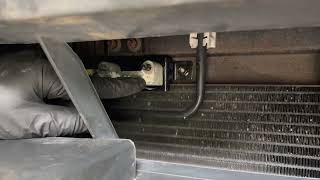
- Nissan Frontier / Xterra / Pathfinder (2005-2015) — These vehicles frequently suffer from front crash sensor failure due to corrosion. The sensor is mounted low on the radiator support, exposed to water and road salt.
Manufacturer-Specific Notes
- Mitsubishi: Uses the standard definition: 'Passenger's Air Bag OFF Indicator Lamp Open Circuit'. Diagnostic procedures focus on checking for ~12V at the connector and <2 ohms continuity on the signal line.
- Hyundai: Defines B1489 as 'PODS(Passenger Occupant Detecting System) ECU Defect'. This points to a failure of the control module under the passenger seat, not the indicator light on the dash.
- GMC / Chevrolet: On older GM vehicles, B1489 refers to an open circuit in the 'Generator L-Terminal Circuit,' part of the alternator and charging system, completely unrelated to airbags.
- Subaru: While the code points to an open circuit in the indicator lamp, the cause is almost universally cracked solder joints on the overhead console's circuit board in 2007-2009 models.
Real Owner Stories
2008 Subaru Outback - The Classic Solder Fix
Airbag light came on intermittently in cold weather. Code B1489 was present. The 'Passenger Airbag Off' light in the overhead console was dead.
Outcome: Owner removed the overhead console, identified cracked solder points on the indicator light PCB, and re-flowed the solder. Total cost was $0. The light stayed off.
Lesson: On 2007-2009 Subarus, B1489 is almost always caused by failed solder joints in the overhead console. A free repair with a soldering iron saves hundreds over replacing the assembly.
2008 Hyundai Santa Fe - A Case of Mistaken Identity
Airbag light was on, and a basic scan showed code B1489. The owner assumed it was the indicator bulb.
Outcome: The mechanic used an advanced scanner showing the Hyundai-specific definition: 'Passenger Occupant Classification (OC) ECU Defect'. The module under the passenger seat was replaced and calibrated, fixing the issue.
Lesson: The definition of B1489 is manufacturer-specific. On a Hyundai, it points to the OCS module, not the indicator light. Always use a scanner that provides manufacturer-specific definitions.
2012 Nissan Frontier - The Corroded Sensor
The airbag warning light came on and would not reset. A scan revealed a fault related to the front impact sensor.
Outcome: The front crash sensor, mounted low on the radiator support, had corroded and physically fallen apart from road salt exposure. Replacing the sensor and clearing codes resolved the issue.
Lesson: On vehicles where sensors are in exposed locations, environmental factors like road salt are a primary cause of SRS faults. Visual inspection of external components quickly identifies the problem.
2013 Mazda 3 - The Under-Seat Connector
Airbag light came on immediately after being rear-ended in a minor accident.
Outcome: The technician found the impact caused an item under the seat to shift and disconnect a yellow SRS connector for the Occupant Classification System. Reconnecting the plug fixed the problem.
Lesson: Sudden jolts or items shifting under seats easily disconnect sensitive SRS connectors. If the light appears after an accident or hard braking, check the wiring underneath the seats first.
How to Prevent This Code From Triggering
- Keep Under-Seat Area Clear (Ongoing / Habit) — Prevents water bottles or other objects from rolling under the seat and pinching or disconnecting the sensitive SRS and OCS wiring harnesses.
- Apply Dielectric Grease to Connectors (During any related repair) — Applying a small amount of dielectric grease seals connectors from moisture and oxygen, preventing future corrosion which causes high resistance or open circuits.
- Maintain Battery and Charging System Health (Annually) — A weak battery or failing alternator causes low voltage conditions that trigger spurious, random fault codes in sensitive modules like the SRS computer.
- Clean Exposed Sensors in Salt-Belt Regions (Annually (e.g., after winter)) — Gently rinsing road salt and debris from low-mounted sensors (like Nissan trucks) slows down the corrosion process that leads to their eventual failure.
Frequently Asked Questions
Is it safe to drive my car with code B1489?
No. The code disables the entire airbag system. In an accident, no airbags will deploy, significantly increasing injury risk. Repair the vehicle immediately.
Why does my scanner give a different definition for B1489?
B1489 is a manufacturer-specific 'B' (Body) code. Mitsubishi uses it for the airbag indicator, while Hyundai uses it for the occupant sensor ECU. Use a high-quality scanner that identifies your specific VIN.
Can I fix code B1489 myself?
Simple visual checks for loose under-seat connectors are safe for DIY. However, any repair involving disconnecting yellow SRS connectors requires strict safety protocols, including disconnecting the battery for 30 minutes. Leave complex module replacements to professionals.
Will clearing the code with a scanner fix the problem?
No. Clearing the code only erases the fault from the module's memory. If the underlying broken wire or burnt bulb remains, the SRS module detects it immediately and triggers the light again.
What's the difference between an open circuit (B1489) and a short circuit (B1490)?
An open circuit (B1489) means a break in the electrical path, like a cut wire or burnt bulb, stops current flow. A short circuit (B1490) means current takes an unintended path to ground. A multimeter easily distinguishes between the two.
My airbag light came on after a jump-start, is it related?
Yes. Voltage spikes or drops during a jump-start confuse sensitive SRS control modules, causing them to store false fault codes. Clear the code with an SRS scanner; if it returns, a hard fault exists.
How much does it cost to diagnose an airbag light?
A professional SRS diagnostic scan typically costs between $120 and $200. This fee identifies the specific code and pinpoints the problem area. Actual repair costs range from $150 for wiring fixes to over $1,500 for module replacements.
Why did my airbag light turn on after I put something on the passenger seat?
Heavy items or electronics confuse the Occupant Classification System (OCS) weight sensors. The system rapidly switches the airbag on and off, which the SRS module interprets as a fault. Always place heavy items on the floor.
Key Takeaways
- Code B1489 disables the entire airbag system, meaning 0 airbags will deploy in a crash until the vehicle is repaired.
- The most frequent cause is a broken wire or loose yellow connector under the passenger seat, costing under $25 in parts to fix.
- Manufacturer definitions vary wildly: B1489 means a burnt dash bulb on a 2010 Mitsubishi, but a failed $300 Occupant Classification Sensor on a 2008 Hyundai.
- Never attempt SRS repairs without disconnecting the negative battery terminal for at least 30 minutes to prevent accidental airbag deployment.
- A standard $20 OBD-II reader cannot diagnose this code; you must use a scanner with SRS/Body module capabilities costing $100 or more.
Helpful Videos

The information in this article is provided for general reference and educational purposes only. Vehicle specifications, procedures, and part compatibility can vary by production date, trim level, and region. Always consult your vehicle's factory service manual and verify part numbers before purchasing or performing repairs. Safety-critical components such as airbags, seat belts, and braking systems should be installed by a qualified professional.
- 🎬 Helpful Videos
- What Does B1489 Mean?
- Can I Drive With B1489?
- Common Causes
- Symptoms
- Diagnostic Flowchart
- Common Fixes & Costs
- Used vs. New Parts: Buying Guide
- What Happens If You Wait — Timeline
- Cost of Not Fixing It
- Diagnosis Steps
- When This Code Triggers (Freeze-Frame Conditions)
- Related Codes
- Climate & Environmental Factors
- How to Talk to a Mechanic About This Code
- Where to Take It: Dealer vs Independent vs Chain
- When to Walk Away From the Repair
- What Scan Tool You Need for This Code
- How to Clear the Code After You Fix It
- Will This Fail Emissions / State Inspection?
- Most Commonly Affected Vehicles
- Manufacturer-Specific Notes
- Real Owner Stories
- 2008 Subaru Outback - The Classic Solder Fix
- 2008 Hyundai Santa Fe - A Case of Mistaken Identity
- 2012 Nissan Frontier - The Corroded Sensor
- 2013 Mazda 3 - The Under-Seat Connector
- How to Prevent This Code From Triggering
- Frequently Asked Questions
- Is it safe to drive my car with code B1489?
- Why does my scanner give a different definition for B1489?
- Can I fix code B1489 myself?
- Will clearing the code with a scanner fix the problem?
- What's the difference between an open circuit (B1489) and a short circuit (B1490)?
- My airbag light came on after a jump-start, is it related?
- How much does it cost to diagnose an airbag light?
- Why did my airbag light turn on after I put something on the passenger seat?
- Key Takeaways
- 🎟️ Get 5% Off