

B1471 on 2018-2023 Lincoln Navigator: Multi-Contour Seat Fault Causes and Fixes
On a 2018-2023 Lincoln Navigator, code B1471 almost always indicates a problem with the multi-contour 'Perfect Position' massaging seats. The most common cause is a poor electrical connection at the seat module, a known issue addressed by Lincoln TSB 19-2390. The fix is typically a low-cost connector pigtail (Part No. KU2Z-14S411-FA), not an expensive seat module.
- B1471 on a Navigator almost always points to an issue with the multi-contour seat wiring connector, not the module itself.
- The official fix is detailed in TSB 19-2390 and involves soldering in a new pigtail connector (Part No. KU2Z-14S411-FA or -FB).
- On 2022-2023 models, check for a B1471:13 sub-code, which indicates a software configuration issue (SSM 52174) requiring a dealer tool to fix.
- Do not replace the expensive seat control module until the connector and software causes have been definitively ruled out.
- The vehicle is safe to drive with this fault, as it only affects a comfort feature.
What's Unique About the 2018-2023 Lincoln NAVIGATOR

The Lincoln Navigator's 'Perfect Position' seats are exceptionally complex, using a network of air bladders, pumps, and dedicated control modules to provide a wide range of adjustments and massage functions. 🎬 Watch: See how these 22-way multicontour seats are designed to function. This complexity creates specific failure points. Lincoln has officially recognized two primary issues via Technical Service Bulletins: terminal fretting at the main module connector causing poor contact, and software configuration glitches that can occur after module replacement or reprogramming.
Diagnostic Flowchart
Tap your situation to follow the diagnostic path that matches what you're seeing on this vehicle.
Symptoms You May Notice
- Massage and/or lumbar functions are inoperative.
- Seat adjustment controls on the SYNC touchscreen are grayed out or unresponsive.
- The button on the side of the seat to activate the massage menu does not work.
- Massage function may turn on briefly and then shut off.
- The issue can be intermittent, especially at first.
- You may hear the air pump inside the seat running, but none of the bladders inflate or deflate.
- Replacing the entire seat control module without first performing the TSB 19-2390 connector repair. The connector pigtail is the fix in the vast majority of cases.
- Simply cleaning the connector or applying dielectric grease. While this may provide a temporary fix, the fretting corrosion will cause the issue to return until the connector terminals are replaced.
Most Likely Causes

- Terminal Fretting at Seat Module Connector 🔴 High Probability This is a well-documented issue across many Ford/Lincoln platforms with multi-contour seats. Normal vehicle vibrations cause microscopic wear and corrosion on the connector pins, leading to an open circuit or loss of communication. This is the primary subject of TSB 19-2390.
How to confirm: Visually inspect the 16-pin connector (C341-G/H) at the SCMG/SCMH module inside the seat backrest. Look for corrosion, backed-out pins, or tiny black dust (fretting) on the terminals. Wiggling the connector with the ignition on may cause the seat functions to return momentarily, confirming a bad connection.
Typical fix: Replace the connector with a new pigtail (Part No. KU2Z-14S411-FA or its successor KU2Z-14S411-FB), soldering each wire connection and sealing with heat shrink as specified in TSB 19-2390. The TSB also instructs technicians to create a stress-relief loop in the harness and secure it with a zip tie to prevent future failures.
Est. part cost: $40-$75 - Seat Module Software/Configuration Issue 🟡 Medium Probability Specifically on 2022-2023 models, the module can lose its configuration after a software update or replacement, triggering a B1471:13 sub-code. This is documented in Ford's Special Service Message (SSM) 52174.
How to confirm: A professional scan tool (like Ford's FDRS) is needed to check for the B1471:13 code and the module's configuration status. This issue is distinct from the wiring problem and will not be solved by a connector replacement.
Typical fix: Run the 'SCMG/SCMH Configuration' application using a dealer-level diagnostic tool like FDRS to restore the module's proper settings. This recalibrates the module to the vehicle.
Est. part cost: $0 - Failed Seat Control Module (SCMG/SCMH) ⚪ Low Probability While possible, outright module failure is far less common than the connector or software issues. It should only be suspected after the other causes are ruled out. Owners on forums often replace the module only to find the problem persists because the true cause was the connector.
How to confirm: After confirming the wiring, connector, and software configuration are all correct, the module itself becomes the likely culprit. A bidirectional scan tool may fail to communicate with the module at all, even with a known-good connection.
Typical fix: Replace the faulty seat control module and perform the necessary programming (PMI - Programmable Module Installation) using FDRS. This is not a plug-and-play part.
Est. part cost: $600-$1000+
Rare But Worth Checking
- Blown Fuse: Always perform this simple check first. Owners on F-150 forums have reported a dedicated 10A fuse for the multi-contour seats (often Fuse 19 in the under-hood fuse box) can blow, disabling the system. While not the most common cause for this specific code, it's the easiest to rule out.
Diagnosis Steps
- Scan all vehicle modules for DTCs. Note if B1471 is present with U024B or U024C, which strongly points to the connector issue.
- Check the fuse for the multi-contour seats, typically a 10A fuse in the under-hood fuse box (check owner's manual for exact location, may be listed as 'Power Seats').
- If the vehicle is a 2022-2023 model and the code is B1471:13, check for software configuration issues per SSM 52174 before proceeding with physical repairs.
- Gain access to the SCMG (driver) or SCMH (passenger) module inside the seat backrest by unzipping or unclipping the rear cover.
- Carefully disconnect the main electrical connector (C341-G/H) and inspect the pins and terminals on both the harness side and the module side for signs of corrosion, damage, or fretting (black dust).
- If fretting is found, perform the repair outlined in TSB 19-2390 by replacing the connector pigtail. The TSB specifies to solder and heat shrink each wire, not to use butt connectors.
- If the connector appears pristine, use a multimeter to test the wiring between the switch and the module for continuity.
- If all wiring and connections are confirmed good, and the software configuration is correct, suspect a faulty seat control module. Module replacement requires programming with Ford's FDRS software.
Parts You'll Likely Need

- Connector Pigtail Kit
(OEM #KU2Z-14S411-FA (superseded by KU2Z-14S411-FB))— This is the official part from Lincoln to fix the common terminal fretting issue as described in TSB 19-2390. One kit is needed per seat.
Trusted brands: Motorcraft
OEM price range: $40-$75
Aftermarket price range: $30-$50 - Driver Multi-Contour Seat Module (SCMG)
(OEM #GU5Z-14C708-BA (verify with VIN, part numbers change frequently))— Replaced only in the rare case that the module itself has failed after wiring and software issues have been ruled out. Requires dealer programming.
Trusted brands: Motorcraft
OEM price range: $600-$1000+ - Front Seat Bolts
(OEM #W719352-S451, W718633-S451)— TSB 19-2390 notes that for the Navigator, new seat bolts are required when removing the seats to perform the pigtail repair.
Trusted brands: Motorcraft
OEM price range: $10-$20
Related Codes That Often Appear With This One
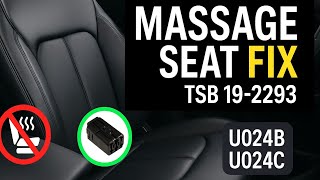
- U024B — Means 'Lost Communication With Seat Control Module G' (Driver). It appears with B1471 because the corroded connector disrupts both the switch input circuit and network communication.
- U024C — Means 'Lost Communication With Seat Control Module H' (Passenger). It is often stored alongside B1471 for the same reason as U024B, but for the passenger side.
Technical Service Bulletins (TSBs) & Recalls
- TSB 19-2390: Intermittent Multi-Contour Seat Operation And/Or Massage And Lumbar Adjust Inoperative.
- SSM 52174: DTC B1471:13 Stored In SCMG And/Or SCMH After Reprogramming or Replacement.
Platform-Specific Known Issues
- TSB 19-2390: This bulletin directly addresses intermittent or inoperative multi-contour seat functions on 2018-2020 Navigators. It identifies the cause as terminal fretting at the SCMG/SCMH connector and provides a detailed procedure for replacing the connector pigtail with a new part, using solder and heat shrink for a durable repair. It explicitly states to perform the repair on BOTH front seats and lists a labor time of 2.4 hours for the Navigator.
- SSM 52174: This Special Service Message applies to 2022-2023 Navigators. It notes that DTC B1471:13 can set in the seat modules after reprogramming or replacement due to a loss of configuration. The fix requires using the Ford diagnostic software (FDRS) to run the module configuration routine.
Hidden / Shadow Codes Worth Checking
- B1471:13: This sub-type specifies a 'Circuit Open' failure. It is set when the control module detects a lack of bias voltage or low current flow from the multi-contour seat switch input. This is the specific code variant triggered by the connector fretting in TSB 19-2390 and the configuration issue in SSM 52174. (see via Ford's Integrated Diagnostic System (IDS), Ford Diagnosis and Repair System (FDRS), or high-end professional scan tools. Advanced DIY tools like FORScan may also display these sub-codes.)
Scan Tool Commands That Help

- Ford FDRS (Ford Diagnosis and Repair System): SCMG/SCMH Configuration — This function is required to resolve DTC B1471:13 on 2022-2023 models after a module has been reprogrammed or replaced, as specified in SSM 52174. It restores the module's correct operational parameters.
- Ford FDRS (Ford Diagnosis and Repair System): Programmable Module Installation (PMI) — This procedure is mandatory when a new SCMG or SCMH module is installed. The PMI process downloads the vehicle-specific 'As-Built' data and configuration from Ford's servers (or the old module, if possible) and writes it to the new module, allowing it to communicate and function correctly within the vehicle's network.
- Ford FDRS (Ford Diagnosis and Repair System): Network Test — This initial diagnostic step pings all modules on the vehicle's CAN network. For this issue, it is used to quickly verify if the SCMG or SCMH module is completely unresponsive (will show as 'Gray' or not responding), which strongly indicates a communication breakdown due to the connector failure.
Wiring & Ground Locations
- C341-G / C341-H — Inside the driver (G) or passenger (H) seat backrest, plugged directly into the SCMG/SCMH module.. This 16-pin connector is the primary failure point identified in TSB 19-2390. Terminal fretting and corrosion within this specific connector cause the open circuit that triggers DTC B1471 and related communication codes.
- G203 — Located at the lower left 'A' pillar, behind the kick panel.. This is a primary chassis ground point for multiple components, including the driver's seat module and other instrument panel modules. While less common than the connector issue, a poor connection at this ground point could cause intermittent electrical issues for the seat system.
Real Owner Repair Stories
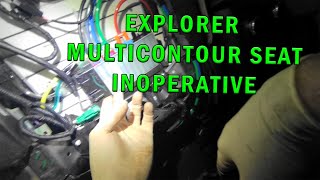
- YouTube video by a technician (2021 Ford Explorer (shares the same seat system and TSB)) — Multi-contour seat functions (massage, lumbar) were inoperative. Scan tool showed U024B 'Lost Communication with SCMG' and the SCMG module was not responding on the network test.
❌ Tried (didn't work) Initial diagnosis did not require trying other parts because the symptoms and codes pointed directly to the known TSB issue.
✅ What actually fixed it The technician performed the repair outlined in TSB 19-2390. He accessed the SCMG module in the seat backrest, confirmed the connector was the issue, and replaced it with the pigtail kit. This restored communication and function to the multi-contour seat system.
OEM Part Supersession History
KU2Z-14S411-FA→KU2Z-14S411-FB— Standard part number update. The KU2Z-14S411-FB is the current service part recommended for the TSB 19-2390 repair.
Heads up: The parts are interchangeable. KU2Z-14S411-FB is a direct replacement for the -FA version. It is also sold under the Motorcraft part number WPT-1585.
Model Year Variations Within This Range
- 2022-2023: The 2022 model year introduced a significant interior refresh. This included a larger 13.2-inch SYNC 4 infotainment screen, new digital instrument cluster, and updated seat controls. The massage function was improved and the controls on the side of the seat were simplified. Most importantly for this code, 2022-2023 models are specifically called out in SSM 52174 for potentially losing module configuration after software updates, requiring the 'SCMG/SCMH Configuration' routine in FDRS to fix.
- 2018-2021: These pre-refresh models use the SYNC 3 system and have a different physical seat control switch layout. The primary cause of B1471 on these models is almost exclusively the terminal fretting issue at the C341-G/H connector, as detailed in TSB 19-2390.
Helpful Videos

We Have This Part in Stock

The information in this article is provided for general reference and educational purposes only. Vehicle specifications, procedures, and part compatibility can vary by production date, trim level, and region. Always consult your vehicle's factory service manual and verify part numbers before purchasing or performing repairs. Safety-critical components such as airbags, seat belts, and braking systems should be installed by a qualified professional.
- Lincoln NAVIGATOR:
- 🎬 Helpful Videos
- 🛍️ Shop This Part
- What's Unique About the 2018-2023 Lincoln NAVIGATOR
- Diagnostic Flowchart
- Symptoms You May Notice
- Most Likely Causes
- Rare But Worth Checking
- Diagnosis Steps
- Parts You'll Likely Need
- Related Codes That Often Appear With This One
- Technical Service Bulletins (TSBs) & Recalls
- Platform-Specific Known Issues
- Hidden / Shadow Codes Worth Checking
- Scan Tool Commands That Help
- Wiring & Ground Locations
- Real Owner Repair Stories
- OEM Part Supersession History
- Model Year Variations Within This Range
- 🎟️ Get 5% Off