

B1460 on 2012-2014 Dodge Challenger: Audio Speaker Output Fault Guide
On a 2012-2014 Challenger, code B1460 almost always indicates a software problem within the factory radio or amplifier, not a faulty speaker. The most common fix is a software update performed by a Dodge dealer, as outlined in technical service bulletins. In some cases, particularly on SRT models with the 18-speaker system, the amplifier itself may require replacement.
- B1460 on a 2012-2014 Challenger is most often a software issue, not a hardware failure.
- Before replacing any parts, check the 25A amplifier fuse in the trunk and then check with a dealer for applicable software updates related to TSBs 08-056-14 and 08-033-13.
- Do not replace the speaker unless you have definitively ruled out the amplifier and wiring by swapping channels.
- The amplifier is located under the dashboard to the left of the steering column, not in the trunk on this model.
What's Unique About the 2012-2014 Dodge CHALLENGER
On this generation of Dodge Challenger and its platform mates (Dodge Charger, Chrysler 300), audio system complaints that trigger code B1460 are very frequently linked to software glitches in the audio amplifier. Dodge issued multiple Technical Service Bulletins (TSBs) to address conditions where the audio system mutes itself, often at higher volumes or when playing tracks with deep bass, which then requires an ignition key cycle to reset. This is a known platform issue, making a software diagnosis the first step 🎬 Watch: How to diagnose and fix no sound issues before suspecting any hardware failure. The amplifier is located under the dashboard to the left of the steering column.
Diagnostic Flowchart
Tap your situation to follow the diagnostic path that matches what you're seeing on this vehicle.
Symptoms You May Notice
- No sound from the radio, but the head unit appears to be on.
- Audio mutes and remains muted until the ignition is turned off and on again.
- Audio system defaults to 'surround sound' mode after a key cycle.
- Sound may cut out at higher volumes, especially with heavy bass.
- Distorted or muffled sound from speakers.
- Audio cuts in and out intermittently, which can be mistaken for a loose wire.
- Replacing the front left speaker without first checking for TSBs or testing the amplifier. The symptoms strongly point to a software or amplifier issue on this platform, making the speaker itself an unlikely cause.
- Replacing the radio head unit. The B1460 code is set by the amplifier, not the head unit. If the screen and controls work but there is no sound, the problem is almost always downstream at the amp or speakers.
Most Likely Causes
- Audio Amplifier Software Glitch 🔴 High Probability This is a well-documented issue addressed by multiple manufacturer TSBs (08-056-14 and 08-033-13) for this specific vehicle platform. TSB 08-033-13 specifically calls out the amp muting when it detects bass frequencies below 20 Hz.
How to confirm: A Dodge dealer can check the vehicle's VIN against applicable TSBs and verify the current software version of the audio amplifier using a wiTECH scan tool.
Typical fix: Reprogramming the audio amplifier with the latest available software. This is often referred to as a 'flash'.
Est. part cost: $0 - Faulty Audio Amplifier 🟡 Medium Probability For vehicles with the 18-speaker premium audio system (sales code RGE) built on or before Feb 10, 2014, TSB 08-056-14 suggests the amplifier itself may be faulty if software updates do not resolve the issue. Internal component failure can also occur from normal use.
How to confirm: If a software update does not fix the problem or is not applicable, and the fuse, speaker, and wiring test good, the amplifier is the likely culprit. This is a process of elimination.
Typical fix: Replace the audio amplifier. The TSB recommends ordering from the exchange center. The amplifier is located under the dash to the left of the steering column.
Est. part cost: $200-$500 (used/remanufactured), $600+ (new OEM) - Blown Amplifier Fuse ⚪ Low Probability An internal short in the amplifier or a wiring issue can cause the fuse to blow as a protective measure.
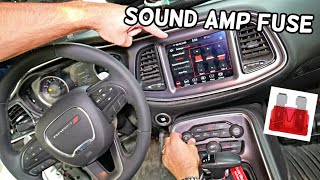
How to confirm: Check the amplifier fuse, which is typically a 25-amp fuse located in the trunk 🎬 See this walkthrough for finding and replacing the amplifier fuse fuse box near the battery. On some models, it may be fuse #25 or #27. If the fuse is blown, replace it. If it blows again immediately, the amplifier or wiring has a short.
Typical fix: Replace the blown fuse. If it reoccurs, diagnose the underlying short circuit.
Est. part cost: $1-$5 - Speaker Wiring Issue ⚪ Low Probability
How to confirm: Inspect the wiring between the amplifier (located under the driver's dash) and the front left speaker for opens, shorts to ground, or shorts to power. Pay close attention to the wiring in the door jamb boot, a common area for fatigue and breakage from opening and closing the door.
Typical fix: Repair the damaged section of wiring.
Est. part cost: $5-$20 - Failed Speaker ⚪ Low Probability
How to confirm: Disconnect the speaker and test its resistance with a multimeter (should typically be around 4 ohms). Alternatively, swap the suspect speaker with a known-good one from another channel (e.g., the front right speaker) and see if the fault code changes to B1465 (Channel 2). If the code follows the speaker, the speaker is bad. An internal break in the speaker's voice coil can also cause intermittent cutting in and out.
Typical fix: Replace the failed speaker.
Est. part cost: $50-$150
Diagnosis Steps
- Check Amplifier Fuse. Before any other steps, inspect the amplifier fuse in the trunk fuse box (often a 25A fuse, #25 or #27). Replacing a simple fuse can save significant diagnostic time.
- Check for Technical Service Bulletins (TSBs). This is a critical step. Have a dealer or a shop with access to TSB databases check if TSB 08-056-14 or 08-033-13 apply to your vehicle's VIN.
- Perform Software Update. If a TSB is applicable, have the dealer perform the amplifier software update using a wiTECH tool. This is the most likely fix.
- Scan for All Codes. Use a capable scan tool to read codes from the Amplifier module. Note if B1460 is active or stored, and if other speaker channel codes (like B1465) are also present.
- Test the Speaker. If no TSB applies or the update fails, test the speaker. Swap the front left (Channel 1) and front right (Channel 2) speakers. Clear codes and see if the fault changes to B1465. If it does, the speaker is bad. If B1460 returns, the speaker is good.
- Inspect Wiring. If the speaker is good, inspect the wiring harness between the amplifier and the speaker. The amplifier is under the dash, left of the steering column. Check for damage, especially in the flexible boot between the door and the car body.
- Confirm Amplifier Failure. If the software is up-to-date, the fuse is good, and both the speaker and wiring are confirmed to be good, the amplifier has an internal fault and needs to be replaced.
Parts You'll Likely Need
- Audio Amplifier
(OEM #05091272AD, 5091272AD (replaces 05091272AC, 5091272AC))— This is the part that requires replacement if a software update does not resolve the issue, as specified in TSB 08-056-14 for certain premium audio systems. Several part numbers may be interchangeable.
Trusted brands: Mopar (OEM)
OEM price range: $600+
Aftermarket price range: $200-$500 (Used/Remanufactured) - Mini Fuse (25 Amp) — A blown fuse in the trunk fuse box can cause a total loss of audio and is a simple first check.
Trusted brands: Bussmann, Littlefuse
OEM price range: $1-$5
Aftermarket price range: $1-$5
Related Codes That Often Appear With This One
- B1465-92 — This is the code for 'Channel 2 Audio Speaker Output-Performance or Incorrect Operation'. The TSBs from Dodge list B1460 and B1465 together, as the underlying software issue can affect multiple speaker channels.
- B146A-92, B146F-92, etc. — The same fault condition can be logged for any of the speaker channels supported by the amplifier, up to Channel 12 on premium systems.
Technical Service Bulletins (TSBs) & Recalls
- 08-056-14: For SRT models with the 18-speaker system, addresses audio muting at high volumes. The fix involves checking software and potentially replacing the amplifier.
- 08-033-13: For other audio systems, addresses audio muting due to low-frequency bass signals (<20 Hz), fixed with a radio/amplifier software update.
Platform-Specific Known Issues
- A documented condition in TSB 08-033-13 describes the amplifier muting the speakers when it detects a bass frequency lower than 20 Hz, which requires an ignition cycle to restore sound. This is fixed with a software flash.
- TSB 08-056-14 addresses an issue on vehicles with the 18-speaker premium audio system (SRT models, sales code RGE) where the audio mutes at high volume, which may require amplifier replacement if a software update doesn't fix it.
Mechanic-Grade Diagnostic Values
- Speaker Wiring Resistance — expected: Below 2.0 Ohms. Failure: A reading above 2.0 Ohms indicates an open or high resistance in the circuit between the amplifier and the speaker.
- DC Offset at Speaker Output — expected: Near 0 mV, generally under 100mV.. Failure: The B1460-92 code sets when the amplifier detects a sustained DC offset for 5 seconds. While no exact voltage is given in the Dodge TSB, general audio repair considers anything over 100mV a potential problem.
Hidden / Shadow Codes Worth Checking
- B1460-12: Channel 1 Audio Speaker Output - Circuit Short to Battery (see via A professional scan tool like wiTECH that can read manufacturer-specific body codes.)
- B1460-13: Channel 1 Audio Speaker Output - Circuit Open (see via A professional scan tool like wiTECH that can read manufacturer-specific body codes.)
- B1464-00: Channel 1 Audio Speaker Output Circuit Shorted Together (see via A professional scan tool like wiTECH that can read manufacturer-specific body codes.)
Scan Tool Commands That Help
- wiTECH: Reprogram Amplifier / Flash Amplifier — This is the primary repair procedure outlined in TSBs 08-056-14 and 08-033-13 to fix the software glitch causing the B1460 code. The wiTECH software level must be at release 13.03 or higher. The tool will guide the technician through flashing the module and clearing any resulting DTCs in other modules.
Wiring & Ground Locations
- Amplifier Ground — The factory amplifier is located to the left of the steering column, under the driver's side dash. While a specific ground point designator (e.g., Gxxx) was not found in searches, the best ground connection is always a clean, paint-free spot on the main chassis or subframe as close to the component as possible.. A poor ground can cause a variety of electrical issues, including unpredictable amplifier behavior and noise, though it is a less common cause for this specific code than the software glitch.
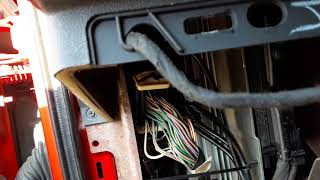
- Amplifier C2 Harness Connector — This is one of the main connectors on the audio amplifier located under the driver's side dash.. This connector contains the speaker output circuits. Technicians will disconnect this to measure resistance on the speaker wires running to the doors, checking for opens or shorts.
Real Owner Repair Stories
- ChallengerTalk Forum User (2014 Dodge Challenger with Boston Acoustics system) — Radio would cut out, requiring an ignition cycle to restore sound. This would happen frequently.
❌ Tried (didn't work) The user initially suspected a bad speaker or loose wire.
✅ What actually fixed it The user took the car to the dealership, which identified TSB 08-033-13. They performed a software flash on the radio/amplifier, which completely resolved the issue. The repair was covered under warranty.
OEM Part Supersession History
05091272AC / 5091272AC→05091272AD / 5091272AD— Part revision or update by the manufacturer. This is common for electronic modules to address hardware or software issues found in earlier versions.
Heads up: The new part number (AD) directly replaces the old one (AC). There are no known incompatibility issues when using the superseded part.
Model Year Variations Within This Range
- 2012-2014: Multiple audio systems were available: a base 4 or 6-speaker system, a 6 or 7-speaker Boston Acoustics system, and premium Kicker or Harman Kardon systems on higher trims like the SRT. The TSBs for code B1460 apply differently depending on the system; for example, TSB 08-056-14 specifically calls out the 18-speaker Harman Kardon system (sales code RGE). The physical speakers also differ significantly in quality and impedance between the base and premium systems.
- 2011-2014: A user on a forum noted that for parts and chassis modifications, there is a sub-generation from 2011-2014, distinct from the 2008-2010 and 2015+ models. This suggests parts like the amplifier are generally consistent across the 2012-2014 range.
Helpful Videos
We Have This Part in Stock



The information in this article is provided for general reference and educational purposes only. Vehicle specifications, procedures, and part compatibility can vary by production date, trim level, and region. Always consult your vehicle's factory service manual and verify part numbers before purchasing or performing repairs. Safety-critical components such as airbags, seat belts, and braking systems should be installed by a qualified professional.
- Dodge CHALLENGER:
- 🎬 Helpful Videos
- 🛍️ Shop This Part
- What's Unique About the 2012-2014 Dodge CHALLENGER
- Diagnostic Flowchart
- Symptoms You May Notice
- Most Likely Causes
- Diagnosis Steps
- Parts You'll Likely Need
- Related Codes That Often Appear With This One
- Technical Service Bulletins (TSBs) & Recalls
- Platform-Specific Known Issues
- Mechanic-Grade Diagnostic Values
- Hidden / Shadow Codes Worth Checking
- Scan Tool Commands That Help
- Wiring & Ground Locations
- Real Owner Repair Stories
- OEM Part Supersession History
- Model Year Variations Within This Range
- 🎟️ Get 5% Off