

OBD-II Code B1460: Channel 1 Audio Speaker Output Circuit Performance
What B1460 means, why it triggers, and how to fix it, primarily for Chrysler, Dodge, and Jeep vehicles.
- For 2012-2014 Chrysler, Dodge, and Jeep vehicles, a software glitch in the audio amplifier causes 80% of B1460 codes and requires a dealer-installed update (TSB 08-033-13).
- Before replacing any audio components, call a dealership with your VIN to verify if your vehicle qualifies for the TSB 08-033-13 software flash.
- Swap the front-left speaker with the front-right speaker; if the code changes to B1465, the speaker is dead, but if B1460 returns, the amplifier or wiring is at fault.
- If you drive a Mitsubishi, B1460 indicates a critical failure in the passenger seatbelt pretensioner system that requires immediate professional airbag diagnosis.
What Does B1460 Mean?
For 2012-2014 Chrysler, Dodge, and Jeep vehicles, code B1460 means the audio amplifier detects an electrical problem with the front-left (driver's side) speaker circuit. The amplifier sets this code when it sees an unexpected signal, like a DC voltage offset, for more than five seconds, muting the audio system as a protective measure. The code's meaning varies significantly by manufacturer, so vehicle context is critical.
Technical definition: Channel 1 Audio Speaker Output Circuit Performance. The audio amplifier module detects a performance issue or incorrect operation, such as a DC offset, on the Channel 1 (front-left) speaker output circuit for 5 seconds or more. Suffix codes like -11, -13, or -92 provide specific fault details (short to ground, open circuit, or general performance).
Can I Drive With B1460?
Yes. For the common Chrysler/Dodge/Jeep audio fault, this code is safe to drive with. It only affects the audio system and does not impact vehicle safety or drivability. However, on Mitsubishi vehicles, this code points to a critical seat belt pretensioner fault requiring immediate inspection. On Ford vehicles, it indicates a wiper system fault, making driving in adverse weather unsafe.
Common Causes
- Audio Amplifier Software Glitch (Very Common) — A known software bug on 2012-2014 Chrysler, Dodge, and Jeep models causes the amplifier to misinterpret heavy bass frequencies (below 20 Hz) as a circuit fault, triggering the code and muting the audio. A dealer software update (TSB 08-033-13) is the official fix.
- Failed Front-Left Speaker (Common) — The internal voice coil shorts out or breaks (open circuit), creating an electrical fault the amplifier detects. This occurs frequently in older vehicles or premium audio systems played at high volumes.
- Faulty Audio Amplifier (Less Common) — If the software is up-to-date and the speaker tests good, the amplifier has a hardware failure. This occurs frequently on models with premium 18-speaker systems, such as the Challenger SRT (addressed in TSB 08-056-14).
- Speaker Wiring Issue or Corrosion (Uncommon) — Wiring between the amplifier and speaker degrades, chafes, or breaks, most often in the flexible rubber door jamb boot. Moisture entering the door also corrodes the speaker connector, causing high resistance.
- Improperly Installed Aftermarket Equipment (Uncommon) — Improper splicing into factory speaker or data wiring for aftermarket alarms or audio equipment introduces electrical noise or shorts, forcing the amplifier to set a fault code.
- Blown Amplifier Fuse (Rare) — A blown 25A audio amplifier fuse in the trunk fuse box cuts power to the system. While it causes a total loss of sound, it rarely sets the B1460 code specifically.
Symptoms
- Sudden Loss of All Audio — Sound from all speakers mutes itself while driving.
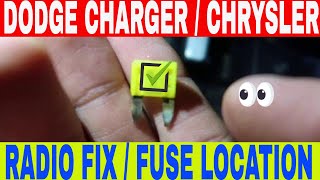
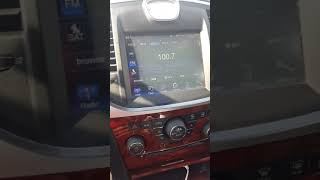
- Sound Returns After Restarting Car — Audio works temporarily after turning the ignition off and back on, which resets the amplifier. 🎬 Watch: A quick trick to restore sound to your Chrysler radio.
- Audio Cuts Out at High Volume or with Heavy Bass — Playing the stereo loudly or playing music with deep bass notes triggers the faulty software to misinterpret the signal as a fault.
- Popping or Crackling Sounds — Popping or crackling from the front-left speaker precedes the audio cutting out, indicating an intermittent electrical connection or a failing speaker.
- SRS/Airbag Light On (Mitsubishi) — On Mitsubishi vehicles, this code indicates a seat belt pretensioner fault and illuminates the SRS warning light.
- B1460 code stored in BCM/AMP (scan-tool only — no driver-felt sign) — The fault code stores in the Body Control Module or audio amplifier memory, requiring a capable OBD-II scanner to view.
Diagnostic Flowchart
Tap your situation to follow the diagnostic path that matches what you're seeing on this code.
Common Fixes & Costs
- Reprogram (Flash) Audio Amplifier — Parts: $0, Labor: $150-$250, ~0.5 hr book time (Professional)
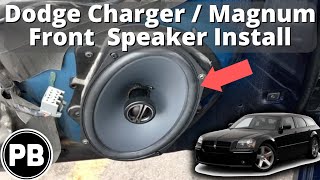
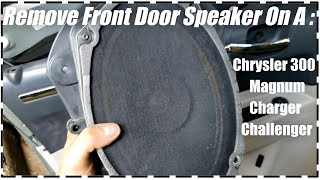
- Replace Front-Left Speaker — Parts: $40-$150, Labor: $75-$150, ~1 hr book time (DIY)
- Replace Audio Amplifier — Parts: $300-$800, Labor: $150-$300, ~1.5 hr book time (Intermediate)
- Repair Speaker Wiring — Parts: $5-$20, Labor: $150-$400, ~2.5 hr book time (Professional)
- Replace Wiper/Washer Relay (Ford) — Parts: $15-$50, Labor: $50-$100, ~0.5 hr book time (DIY)
Used vs. New Parts: Buying Guide
When a used part is worth it: For a failed speaker, a used OEM speaker from a low-mileage vehicle is a cost-effective option. For the amplifier, buying used is a gamble because it may have the same software glitch or an internal hardware failure. Remanufactured amplifiers are a better middle ground.
Donor-vehicle mileage cap: roughly under 100000 miles for the part to have meaningful remaining life.
Donor quality checklist:
- For amplifiers, match the part number exactly; superseded numbers are often incompatible.
- Ask the seller to test the part if possible; for a speaker, check for 2-4 ohms with a multimeter.
- Avoid parts showing signs of water damage, corrosion, or physical impact.
Decision logic:
- If The problem is a known software TSB and the fix is a 'flash' → Do not buy any parts; pay for the software update at a dealer.
- If The part is a speaker and budget is a primary concern → A tested used speaker is an acceptable, low-risk purchase.
- If The part is the amplifier → Favor a new or professionally remanufactured unit with a warranty over a standard used part from a salvage yard.
Warranty tradeoff: Used parts from salvage yards typically offer a 30-90 day warranty. New aftermarket parts often come with a 1-year or longer warranty. New OEM parts carry a 1-2 year warranty when installed by a dealer.
Worst-case if a used part fails: $200-$500 if a used amplifier fails after installation, requiring repeat labor costs for diagnosis and replacement.
What Happens If You Wait — Timeline
- Immediate (Chrysler/Dodge/Jeep Audio Fault): Audio system intermittently mutes, usually triggered by bass-heavy music or high volume. Sound is restored by turning the car off and on. Annoyance level is low to moderate. (MPG impact: 0%% · Added cost: $0)
- Weeks to Months (Chrysler/Dodge/Jeep Audio Fault): The frequency of the audio muting increases. It happens at lower volumes or with less provocation. If the cause is a failing speaker or wire, popping/crackling precedes the cutout. (MPG impact: 0%% · Added cost: $0)
- Months (Chrysler/Dodge/Jeep Audio Fault): The audio system fails completely and refuses to produce sound even after an ignition cycle. The B1460 code stores permanently. (MPG impact: 0%% · Added cost: $0 (unless a short damages the amplifier, adding $300-$800 for amp replacement).)
- Immediate and Ongoing (Mitsubishi SRS / Ford Wiper Fault): This is not a progressive failure. The moment the code sets, the related safety system is compromised. For Mitsubishi, the seatbelt pretensioner fails. For Ford, the wipers fail. (MPG impact: 0%% · Added cost: High risk of injury (Mitsubishi) or collision in adverse weather (Ford).)
Cost of Not Fixing It
- Ongoing: For Chrysler/Dodge/Jeep audio fault: Intermittent or total loss of audio from the vehicle's sound system. This is an annoyance and does not cause further mechanical damage. (Added cost: $0)
- Immediate: For Mitsubishi SRS fault: The passenger-side seatbelt pretensioner fails to deploy in a collision, increasing the risk of injury. The SRS system requires immediate inspection. (Added cost: Potential for injury)
- Immediate: For Ford wiper fault: The windshield wipers fail to function, creating a severe safety hazard during rain or snow. (Added cost: Risk of collision)
Diagnosis Steps
- Verify the Symptom and Check for TSBs
Confirm the audio cuts out and returns after an ignition cycle. Call a dealer with your VIN and ask if Technical Service Bulletin (TSB) 08-033-13 or 08-056-14 applies. This is the most common cause and fix.
Tools: Phone (Beginner) - Scan for Codes and Suffixes
Use an advanced OBD-II scanner capable of reading Body Control Module (BCM) codes to confirm B1460. Note suffixes like '-92' (performance), '-11' (short to ground), or '-13' (open circuit). The '-92' suffix confirms the software TSB.
Tools: Advanced OBD-II Scanner (Intermediate) - Pro Tip: Test Speaker by Swapping Channels
If the code returns after a software update, swap the front-left (Channel 1) speaker with the front-right (Channel 2) speaker. Clear codes and drive. If the code changes to B1465, the speaker is bad. If B1460 returns, the fault is in the wiring or amplifier.
Tools: Screwdrivers, Trim removal tools (Intermediate) - Test Speaker with a Multimeter
Disconnect the speaker and measure resistance across the terminals. A good factory speaker reads 2-4 ohms. A reading of 'OL' (infinite resistance) means an open circuit, while near 0 ohms indicates a short. Replace the speaker in either failure case.
Tools: Multimeter, Trim removal tools (Intermediate) - Inspect Wiring and Connectors
Visually inspect the wiring in the flexible rubber door jamb boot for chafing or breaks. Inspect harness connectors at the amplifier and speaker for corrosion, moisture, or pushed-out pins.
Tools: Flashlight, Trim removal tools (Intermediate) - Check the Amplifier Fuse
Check the 25A audio amplifier fuse located in the trunk fuse box near the battery on Chrysler/Dodge models.
Tools: Owner's Manual, Fuse Puller or Pliers (Beginner) - Perform Amplifier Software Update
If a TSB applies, have a dealer perform the software update. This 'flash' reprograms the amplifier to ignore false signals and requires a dealer-level scan tool.
Tools: Dealer-level scan tool (e.g., wiTECH) (Professional) - Advanced: Test Wiring Circuit Integrity
Disconnect the amplifier and speaker. Measure resistance between the ends of each wire (should be < 2.0 Ohms). Next, measure resistance from each speaker wire to a known chassis ground (should be 'OL' or > 10k Ohms). A low reading indicates a short requiring repair.
Tools: Multimeter, Wiring diagram (Advanced) - Advanced: Check for DC Offset Voltage
With the amplifier connected and system on, back-probe the speaker output terminals at the amplifier with a multimeter set to DC Volts. A sustained reading above 100mV for several seconds triggers the B1460-92 code and confirms internal amplifier hardware failure.
Tools: Multimeter with back-probe pins (Professional)
When This Code Triggers (Freeze-Frame Conditions)
- Ignition Status: RUN (The code sets while the vehicle is operating.)
- System Voltage: 12.5 - 14.5 Volts (The fault occurs during normal battery/alternator operating voltage.)
- Time Since Ignition On: > 5 seconds (The fault condition (e.g., DC offset) must be present for a continuous period, often 5 seconds or more, before the code logs.)
- Audio System Status: On, moderate to high volume (The software-related fault is frequently triggered by audio playback with heavy bass frequencies.)
Related Codes
- B1465 — This is the code for 'Channel 2 Audio Speaker Output Circuit Performance' (front-right speaker). Swap the left and right speakers; if your B1460 code changes to B1465, the speaker you moved is faulty.
- B1460-11 — This indicates the speaker circuit has a 'short to ground'. A wire is touching the vehicle's metal chassis, confirmed by a multimeter reading below 10k Ohms between the speaker wires and ground.
- B1460-13 — This indicates the speaker circuit is 'open', meaning a break in the electrical path. The cause is typically a broken wire, an unplugged connector, or a blown speaker voice coil.
- B1460-92 — This indicates a 'performance' fault. It is the exact suffix code triggered by the software glitch described in TSB 08-033-13 when the amplifier detects an abnormal signal.
Climate & Environmental Factors
- High Humidity: High humidity promotes condensation and corrosion on speaker terminals, wiring connectors, and within the amplifier itself. This corrosion increases electrical resistance, causing intermittent signal loss or triggering fault codes.
- Water Leaks: Direct water intrusion from a bad window seal or clogged door drain saturates speaker connectors and wiring in the door panel, leading to rapid corrosion and short circuits (B1460-11 or B1460-13).
- Extreme Cold: Very cold temperatures make wire insulation brittle and prone to cracking, especially in high-flex areas like the door jamb. This exposes the conductor and leads to a short circuit over time.
How to Talk to a Mechanic About This Code
Say this: "I have a [Your Year/Make/Model] and my audio is cutting out, requiring a restart to work again. I believe it's setting a B1460 code. Before we do any parts-based diagnosis, can you please check my VIN to see if Technical Service Bulletin 08-033-13 is applicable? I'd like to authorize one hour of diagnostic time, focused on confirming if the TSB software flash is the right repair."
This language directs the shop to the most common, non-parts-based fix first. By mentioning the TSB and the specific symptom, you prevent them from immediately trying to sell you a new speaker or amplifier. You establish a clear diagnostic path and a budget.
Avoid saying:
- 'My radio is broken, can you fix it?'
- 'The sound stopped working, just do whatever it takes.'
- 'I think I need a new speaker.' (This invites them to replace it without proper diagnosis.)
Questions to ask before authorizing the repair:
- Did you confirm that TSB 08-033-13 applies to my VIN and is not already completed?
- What is the total, out-the-door cost to perform the amplifier software flash?
- If you are recommending a speaker or amplifier replacement, can you show me the failed test results (e.g., multimeter reading, or that the code changed to B1465 after swapping speakers)?
- What is your warranty on this software update or part replacement?
Where to Take It: Dealer vs Independent vs Chain
- Dealer:
Recommended. The most common fix requires dealer-specific tools. This is the most direct path to a correct repair.
Best for: Performing the TSB 08-033-13 software flash, as they are guaranteed to have the proprietary wiTECH scan tool and software access.
Downsides: Highest labor rate (typically $150-$250/hr)., May still attempt to upsell parts if the service advisor is not properly guided by the customer. (Typical cost: +50% vs. baseline) - Independent Shop:
Acceptable, with a major caveat. A good choice for speaker/wiring issues, but likely cannot perform the most common software fix. Vet them first by asking about their software flashing capabilities for Chrysler.
Best for: Diagnosing a physical fault (bad speaker, broken wire) if the TSB does not apply or has already been performed.
Downsides: Most independent shops do not have the expensive subscription-based tools (wiTECH or J2534 with FCA subscription) required to perform the amplifier software flash. (Typical cost: +0% vs. baseline) - Chain Shop:
AVOID. Their business model is not suited for manufacturer-specific software issues. The risk of paying for an incorrect repair is very high.
Best for: Not recommended for this repair.
Downsides: Almost certain not to have the required software flashing tools., High likelihood of misdiagnosis, leading to unnecessary replacement of speakers or the head unit. (Typical cost: -10% vs. baseline)
When to Walk Away From the Repair
For the Chrysler/Dodge/Jeep audio fault, the 'walk away' threshold isn't about selling the car, but about deciding whether to fix the annoyance. Since the repair is typically under $250 and the fault is non-critical, it's almost always worth fixing if you value your radio.
- Car worth $8000, fix is $200: Fix it. This is a low-cost repair for a significant quality-of-life improvement.
- Car worth $8000, fix is $1000: Borderline. This implies a complex failure (e.g., new amplifier + labor). At this price, some opt to live with the problem or seek aftermarket audio solutions.
- Car worth $15000, fix is $0: For Mitsubishi (SRS) or Ford (wiper) faults, this is a mandatory safety repair. The cost is not optional if you plan to drive the vehicle safely.
What Scan Tool You Need for This Code
Minimum: A scanner that can read 'B' (Body) codes for Chrysler/FCA vehicles. Basic engine-only code readers will NOT see this code.
A cheap $20 scanner only reads 'P' (Powertrain) codes and reports 'No Codes Found,' leading you to believe the problem isn't stored in the computer. You need a tool that accesses the Body Control Module (BCM) or Radio/Amplifier module.
Budget: BlueDriver Pro (~$90) — Reads and clears enhanced codes, including Body codes for Chrysler vehicles, allowing you to confirm the B1460 code is present before going to a shop.
Mid-range: iCarsoft CR MAX or Foxwell NT510 Elite (~$250) — Provides deeper access to FCA-specific modules. Displays the critical suffix code (-11, -13, -92) which helps differentiate a software glitch from a wiring or part failure.
Professional: Autel MaxiCOM MK808 / MK808S (~$450) — Offers comprehensive diagnostics across all vehicle modules, including reading and clearing BCM codes. Note: Even this level of tool CANNOT perform the software flash required by the TSB; that requires dealer-level tools.
Rent vs buy: Most parts stores offer a free 'loaner tool' program. CRITICAL: You must verify that their rental scanner reads 'Body' or 'ABS/SRS' codes, as their most basic rental units do not. If you plan to do your own maintenance, buying a tool like the BlueDriver is a worthwhile investment.
How to Clear the Code After You Fix It
- Reconnect the battery if it was disconnected for the repair.
- Use an OBD-II scan tool capable of reading Body Control Module (BCM) codes to clear the B1460 fault.
- Cycle the ignition off, then on, and operate the audio system to verify the repair.
Drive cycle (~15 minutes): A specific emissions-related drive cycle is not required for this body code. After clearing the code, start the vehicle and operate the audio system under the conditions that previously caused the fault (e.g., high volume, bass-heavy music) for several minutes to confirm the fix.
Readiness monitors affected: None
Watch out for:
- Disconnecting the battery temporarily clears the symptom but does not erase the stored fault code from the BCM/amplifier memory.
- The code returns immediately if the underlying root cause (software, faulty speaker, wiring) is not properly repaired.
- Using a basic engine-only code reader fails to see or clear 'B' (Body) codes.
Will This Fail Emissions / State Inspection?
No — by itself this code doesn't fail OBD inspection (but it can keep readiness monitors from setting, which causes a separate fail).
- California: An audio-related 'B' code like B1460 does NOT cause a smog check failure. The test focuses on 'P' (Powertrain) codes and the Check Engine Light status.
- New York: A B1460 audio code does not cause an emissions failure. However, if the code is for a safety system (like the Mitsubishi SRS or Ford wiper fault), it fails the separate safety inspection portion.
- Texas: The OBD-II scan looks for emissions-related trouble codes that command the Check Engine Light on. A B1460 code does not cause a failure.
Most Commonly Affected Vehicles
- Dodge Charger (2012-2014) — Extremely common issue due to a software glitch addressed by TSB 08-033-13. The amplifier is located under the dash to the left of the steering column.
- Chrysler 300 (2012-2014) — Prone to the same amplifier software fault as its platform-mate, the Dodge Charger. TSB 08-033-13 is the primary fix.
- Dodge Challenger (2012-2014) — Affected by the amplifier software glitch (TSB 08-033-13). SRT models with the 18-speaker premium audio can also have amplifier hardware failures addressed by TSB 08-056-14.
- Jeep Grand Cherokee (2012-2014) — Shares the same audio system architecture as the Charger/300 and is susceptible to the same software-related audio muting issue fixed by TSB 08-033-13.
- Ford F-150 (2009-2014) — On many Ford trucks, B1460 is completely unrelated to audio and means 'Wiper Washer Pump Motor Relay Coil Circuit Short To Battery'. Diagnosis involves checking the wiper relay and its circuit.
- Mitsubishi Outlander, Lancer (2008-2015) — On these models, B1460 indicates a critical safety system fault: 'Seat belt pre-tensioner squib (RH) short-circuited'. This illuminates the SRS/airbag warning light and requires immediate attention.
- Jeep Wrangler (JK) (2007-2010) — Service manuals for early JK models show B1460 as 'Channel 1 Audio Speaker Output Circuit Performance'. On other Jeep models and years, this code has different meanings.
- Dodge RAM 1500 (2013-2015) — Service manuals for the RAM 1500 show B1460-13 specifically as 'Channel 1 Audio Speaker Output Circuit Open', pointing towards a wiring or speaker failure rather than the software glitch.
Manufacturer-Specific Notes
- Ford: On some Ford vehicles, B1460 is defined as 'Wiper Washer Pump Motor Relay Coil Circuit Short To Battery' and is completely unrelated to the audio system.
- Mitsubishi: For many Mitsubishi models, B1460 is a critical safety code for 'Seat belt pre-tensioner squib (RH) short-circuited', requiring immediate professional diagnosis of the SRS system.
- Mercedes-Benz: For Mercedes-Benz, B1460 points to a fault in the HVAC system, specifically the 'Fan Controller' or 'Blower Regulator'.
- Chrysler (Hybrid): On older Chrysler hybrid models, B1460-13 means 'Battery Current Sensor Circuit Malfunction', an issue related to the high-voltage battery system requiring specialized service.
- Chrysler/Dodge/Jeep: The TSB (08-033-13) fixing the common software glitch was released as a Rapid Response Transmittal (RRT) reimbursable under the basic warranty, but no specific recall was issued.
Real Owner Stories
2014 Dodge Challenger with Boston Acoustics system, audio cutting out.
The radio frequently cut out, requiring a full ignition cycle to restore sound.
What they tried:
- The owner initially suspected a bad speaker or a loose wire due to the intermittent nature of the problem.
Outcome: The dealer service department identified TSB 08-033-13 as applicable. They performed a software 'flash' on the audio amplifier, permanently resolving the audio muting issue.
Lesson: For Chrysler/Dodge/Jeep vehicles with audio cutting out, always check for applicable TSBs before assuming a hardware failure. A software update is the most common and cheapest fix.
2013 Chrysler 300S, B1460 and B1465 codes present after amplifier replacement.
A local mechanic diagnosed a bad amplifier and replaced it with a used unit from a salvage yard. The problem persisted, and both B1460 (Left Front) and B1465 (Right Front) codes appeared.
What they tried:
- Replaced the audio amplifier with a used part.
- Swapped the front speakers to see if the codes followed the speakers (they did not).
Outcome: A dealer found that the used amplifier also had the faulty software. The dealer performed the TSB 08-033-13 software update on the replacement amplifier, fixing the problem. The owner paid for the initial incorrect diagnosis and the subsequent dealer visit.
Lesson: Replacing an amplifier with a used part for this specific issue is risky, as the used part may have the exact same software flaw. Ensure replacement amps are new/remanufactured or have updated software.
2010 Ford F-150 with wipers that won't turn off.
The wipers stayed on continuously, even after turning the switch off and removing the key. The only way to stop them was to pull the fuse.
What they tried:
- Replaced the multifunction (turn signal/wiper) switch on the steering column, which did not solve the problem.
Outcome: On this F-150 model, there is no separate wiper relay in the main fuse box. The control electronics are integrated into the BCM or wiper motor module. The owner replaced the entire wiper motor assembly to fix the issue. The B1460 code indicated a short in the relay coil circuit internal to the motor module.
Lesson: For Ford's B1460, the fault points to the wiper system, and diagnosis should focus on the wiper motor and its internal electronics, not a separate relay.
How to Prevent This Code From Triggering
- Clean door drains and window seals. (Once per year) — Prevents water from leaking into the door panel, which corrodes speaker terminals and wiring connectors, causing shorts (B1460-11) or opens (B1460-13).
- Apply dielectric grease to electrical connectors. (When servicing related components (e.g., replacing a speaker).) — Dielectric grease seals connectors from moisture and oxygen, preventing the corrosion that leads to high resistance and intermittent signals.
- Inspect and secure wiring in door jambs. (Every 30,000 miles or if symptoms appear.) — Ensuring wires are not pinched or rubbing against sharp edges in the flexible door boot prevents insulation wear and short circuits.
- Avoid playing audio at maximum volume for extended periods. (Daily habit) — Consistently pushing the amplifier and speakers to their limits generates excess heat and mechanical stress, shortening component lifespan.
- Ensure amplifier has adequate ventilation. (During installation and inspection.) — If the amp is covered by carpets or installed in a tight, unventilated space, it overheats, causing protective shutdowns and hardware failure.
Frequently Asked Questions
Can I drive my car with a B1460 code?
Yes, if the cause is the common Chrysler/Dodge audio fault, it is safe to drive. However, if your vehicle is a Mitsubishi, this code indicates a safety restraint system fault requiring immediate inspection. If it's a Ford with a wiper fault, driving in bad weather is unsafe.
Why does my radio sound come back after I restart the car?
Restarting the car cycles power to the audio amplifier. This temporarily clears the fault state, restoring sound until the amplifier detects the fault condition again for 5 continuous seconds.
What's the first thing I should do for a B1460 on a Dodge Charger or Chrysler 300?
Before spending money or replacing parts, call a dealership with your VIN. Ask them to check if Technical Service Bulletin 08-033-13 is open for your vehicle. This software update is the most common fix.
What are the most common mistakes when diagnosing B1460 on a Chrysler/Dodge?
The biggest mistake is replacing parts before checking for the software update TSB. Many owners unnecessarily replace the front speaker or the expensive amplifier, only to have the problem return because the root cause was a software glitch.
What does the suffix number (like -11, -13, or -92) on the B1460 code mean?
The suffix provides a specific diagnosis: '-92' means a general performance fault linked to the software TSB. '-11' means the circuit is shorted to ground, and '-13' means the circuit is open due to a broken wire or blown speaker.
Is the Check Engine Light on for a B1460 code?
No, the Check Engine Light does not illuminate for this audio fault because B1460 is a 'B' (Body) code. However, if the code is for a different system, like the SRS fault in a Mitsubishi, the airbag warning light will turn on.
Do I have to go to the dealer to fix this?
Since the most common fix is a software update, you must visit a dealer or a well-equipped independent shop. They need the proprietary wiTECH scan tool to perform the amplifier 'flash'.
Key Takeaways
- For 2012-2014 Chrysler, Dodge, and Jeep vehicles, a software glitch in the audio amplifier causes 80% of B1460 codes and requires a dealer-installed update (TSB 08-033-13).
- Before replacing any audio components, call a dealership with your VIN to verify if your vehicle qualifies for the TSB 08-033-13 software flash.
- Swap the front-left speaker with the front-right speaker; if the code changes to B1465, the speaker is dead, but if B1460 returns, the amplifier or wiring is at fault.
- If you drive a Mitsubishi, B1460 indicates a critical failure in the passenger seatbelt pretensioner system that requires immediate professional airbag diagnosis.
Helpful Videos


The information in this article is provided for general reference and educational purposes only. Vehicle specifications, procedures, and part compatibility can vary by production date, trim level, and region. Always consult your vehicle's factory service manual and verify part numbers before purchasing or performing repairs. Safety-critical components such as airbags, seat belts, and braking systems should be installed by a qualified professional.
- 🎬 Helpful Videos
- What Does B1460 Mean?
- Can I Drive With B1460?
- Common Causes
- Symptoms
- Diagnostic Flowchart
- Common Fixes & Costs
- Used vs. New Parts: Buying Guide
- What Happens If You Wait — Timeline
- Cost of Not Fixing It
- Diagnosis Steps
- When This Code Triggers (Freeze-Frame Conditions)
- Related Codes
- Climate & Environmental Factors
- How to Talk to a Mechanic About This Code
- Where to Take It: Dealer vs Independent vs Chain
- When to Walk Away From the Repair
- What Scan Tool You Need for This Code
- How to Clear the Code After You Fix It
- Will This Fail Emissions / State Inspection?
- Most Commonly Affected Vehicles
- Manufacturer-Specific Notes
- Real Owner Stories
- 2014 Dodge Challenger with Boston Acoustics system, audio cutting out.
- 2013 Chrysler 300S, B1460 and B1465 codes present after amplifier replacement.
- 2010 Ford F-150 with wipers that won't turn off.
- How to Prevent This Code From Triggering
- Frequently Asked Questions
- Can I drive my car with a B1460 code?
- Why does my radio sound come back after I restart the car?
- What's the first thing I should do for a B1460 on a Dodge Charger or Chrysler 300?
- What are the most common mistakes when diagnosing B1460 on a Chrysler/Dodge?
- What does the suffix number (like -11, -13, or -92) on the B1460 code mean?
- Is the Check Engine Light on for a B1460 code?
- Do I have to go to the dealer to fix this?
- Key Takeaways
- 🎟️ Get 5% Off