

OBD-II Code B1459: Wiper Washer Pump Circuit Failure
What B1459 means, why it triggers, and how to fix it
- Code B1459 indicates an open electrical circuit for the windshield washer pump, meaning the 12-volt control signal is physically broken or disconnected.
- Swap the washer pump relay with an identical non-critical relay (like the horn) in the fuse box for a free, 60-second diagnostic test.
- Never replace a $50-$100 washer pump without first using a multimeter to confirm the electrical connector receives 12 volts when the switch is activated.
- Verify your specific vehicle's code definitions, as luxury brands like Mercedes-Benz and Lexus use B1459 to indicate climate control failures, not washer issues.
What Does B1459 Mean?
Code B1459 means the Body Control Module (BCM) detects a break in the electrical circuit for the windshield washer pump relay. The electrical signal to turn on the washer pump is getting lost between the control switch and the pump itself.
Technical definition: Wiper Washer Pump Motor Relay Coil Circuit Open.
Can I Drive With B1459?
Yes, But With Caution. You can drive your car, but your windshield washers will not work. This is a serious safety hazard in rain, snow, or when road spray instantly obscures your vision. A 2023 highway safety study found 1 in 8 poor-weather accidents began with impaired vision from an obscured windshield. Driving without functional washers causes permanent $600+ windshield scratches from dry wiping and leads to traffic citations in many jurisdictions.
Common Causes
- Failed Washer Pump Relay (Very Common) — The relay is a small electronic switch controlling power to the washer pump. It burns out over time and is the most common failure point in this circuit.
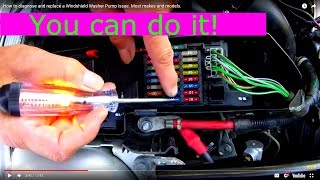
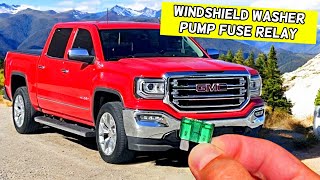
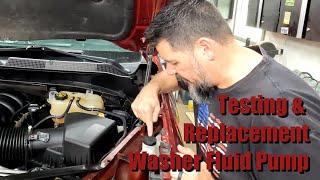
- Blown Washer System Fuse (Very Common) — Fuses blow to protect the circuit from electrical surges. This is the first and easiest part to check. 🎬 Watch: How to find and replace the washer pump relay and fuse.
- Failed Windshield Washer Pump (Common) — The small electric motor inside the fluid reservoir wears out, shorts internally, or seizes, creating an open circuit reading.
- Damaged Wiring or Connectors (Less Common) — Wires leading to the relay or pump corrode, break, or disconnect. This happens frequently where harnesses pass through the firewall or wheel wells.
- Faulty Multi-Function Switch (Less Common) — The steering column switch used to activate the washers fails internally, stopping the signal to the relay.
- Failed Clock Spring (Less Common) — The clock spring is a rotary electrical connector in the steering column. Its delicate internal ribbons break over time, creating an open circuit for the washer switch.
- Failed Body Control Module (BCM) (Rare) — The computer controlling the washer system can fail internally, though this is rare and requires ruling out all other components first.
Symptoms
- Windshield washers do not spray — When you activate the washer switch, no fluid exits the nozzles.
- No sound from the washer pump — You will not hear the typical humming or whirring sound of the pump motor when the system is activated.
- Washer system works intermittently — A loose connection, failing relay, or worn pump motor causes sporadic operation before failing completely.
- Wipers smear dirt without cleaning — Without washer fluid to lift and lubricate, wipers smear existing grime and damage the glass.
- Warning light on the dashboard (also visible on scanner) — A Check Engine Light or a specific body system warning light illuminates.
Diagnostic Flowchart
Tap your situation to follow the diagnostic path that matches what you're seeing on this code.
Common Fixes & Costs
- Replace Blown Fuse — Parts: $1-$5, Labor: $0, ~0.1 hr book time (DIY)
- Replace Washer Pump Relay — Parts: $15-$50, Labor: $0, ~0.2 hr book time (DIY)
- Replace Windshield Washer Pump — Parts: $15-$90, Labor: $110-$250, ~1.2 hr book time (Intermediate)
- Wiring Repair — Parts: $5-$20, Labor: $120-$320, ~2 hr book time (Professional)
- Replace Clock Spring — Parts: $75-$300, Labor: $125-$250, ~1.5 hr book time (Professional)
Used vs. New Parts: Buying Guide
When a used part is worth it: For common parts like washer pumps and relays, the low cost of new aftermarket parts makes them a better value. A used part makes sense if the vehicle is old, a new part is unavailable, or for a quick, budget-conscious repair when the part is easily accessible.
Donor-vehicle mileage cap: roughly under 100000 miles for the part to have meaningful remaining life.
Donor quality checklist:
- For electrical parts, avoid components from flood or collision-damaged vehicles.
- Visually inspect connectors for corrosion or damage.
- Match the part number exactly, as even similar-looking pumps or relays have different internal specs.
Decision logic:
- If New aftermarket part is under $50 and readily available → buy new for better reliability and warranty.
- If Vehicle is over 15 years old and part is for a non-critical function → a tested used part from a reputable salvage yard is a reasonable choice.
- If Part is simple, like a relay, and can be tested before purchase → used is acceptable if the savings are significant.
Warranty tradeoff: Used parts from a salvage yard typically come with a 30-90 day warranty that covers the part only, not labor. New aftermarket parts usually offer a warranty of one year or longer.
Worst-case if a used part fails: $150-$300
What Happens If You Wait — Timeline
- Immediate: Inoperative windshield washers. Code B1459 is stored in the BCM. No ability to clean the windshield while driving. (MPG impact: 0%% · Added cost: $0)
- 1-4 weeks: Using wipers on a dirty, dry windshield begins to wear down the soft rubber edge of the wiper blades, causing streaking and reducing their effectiveness in rain. (MPG impact: 0%% · Added cost: $25-$50 (for new wiper blades))
- 1-3 months: Continued use of wipers on a gritty windshield creates micro-scratches in the glass. These are especially visible at night with oncoming headlights, causing glare and reducing visibility. (MPG impact: 0%% · Added cost: $50-$100 (for professional glass polishing, if scratches are minor))
- 6+ months: Deeper, permanent scratches form in the driver's primary line of sight. This level of damage cannot be polished out and causes the vehicle to fail a safety inspection. The only fix is a full windshield replacement. (MPG impact: 0%% · Added cost: $400-$1500+ (for windshield replacement and ADAS recalibration))
Cost of Not Fixing It
- Immediate: Inability to clean the windshield, creating a severe safety hazard in rain, snow, or from road spray. This leads to fines for an obstructed view. (Added cost: $100+)
- 0-3 months: Using wipers on a dry, dirty windshield causes friction that wears out wiper blades prematurely and creates micro-scratches in the glass. (Added cost: $30-$800)
- 3+ months: Permanent scratches form in the driver's line of sight, requiring a full windshield replacement. This is especially costly on vehicles with ADAS cameras that require recalibration. (Added cost: $400-$1500+)
Diagnosis Steps
- Inspect the Washer Fuse
Locate the fuse box using your owner's manual. Find the fuse for the windshield washers (often labeled WW, WSH, or with a windshield symbol). If the metal strip inside is broken, replace it with a new fuse of the identical amperage rating (typically 10-15 amps).
Tools: Fuse puller or needle-nose pliers (Beginner) - Listen for the Relay and Pump
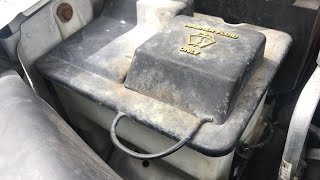
Have a helper activate the washer switch while you listen for two sounds: a faint 'click' from the relay in the fuse box and a 'hum' from the washer pump at the bottom of the fluid reservoir.
Tools: A helper (Beginner) - Swap the Washer Relay
Find another non-critical relay with the exact same part number in the fuse box (like the horn or fog lamp relay). Swap it with the washer relay and test the washers. If they work, the original relay is bad.
Tools: None (Intermediate) - Test for Voltage at the Pump
Disconnect the electrical connector at the washer pump. Use a multimeter set to DC Volts to check for power at the connector when a helper activates the switch. A normal reading is ~12V. If you have 12V but the pump doesn't run, the pump has failed. No voltage means the problem is upstream.
Tools: Multimeter (Intermediate) - Test Washer Pump Motor Resistance
Disconnect the washer pump connector. Set your multimeter to Ohms (Ω). Touch the probes to the two terminals on the pump. A good pump motor reads between 5 and 15 Ohms. A reading of 'OL' indicates an open circuit (bad motor).
Tools: Multimeter (Advanced) - Inspect the Wiring Harness
Visually trace the wires from the washer pump and relay. Look for green/white corrosion, broken wires, and loose connectors, paying close attention to where the harness bends or is exposed to the elements.
Tools: Flashlight (Intermediate) - Differentiate Open vs. Short Circuits (Advanced)
Disconnect the battery, relay, and BCM connector. Use a multimeter on Ohms to check for continuity on the relay control wire between the BCM connector and the relay socket. Less than 1 Ohm indicates good continuity. 'OL' confirms an open wire.
Tools: Multimeter, vehicle wiring diagram (Professional) - Perform a Relay Circuit Load Test (Pro Tip)
Disconnect the relay and pump. Create jumper wires to connect a 12V headlamp bulb to the power and ground terminals in the relay socket that feed the pump. Activate the switch. If the bulb is dim or doesn't light, there is high resistance in the wiring that a simple voltage test missed.
Tools: Headlamp bulb with pigtails, jumper wires, wiring diagram (Professional) - Check BCM Command State (Pro Tip)
Using a bidirectional scan tool, access the BCM data. Command the washer pump 'ON' with the scan tool. If the tool shows the command is sent but the relay doesn't click, there's no voltage at the relay control wire, and the wire tests good for continuity, the BCM's internal driver has failed.
Tools: Advanced bidirectional scan tool (Professional)
When This Code Triggers (Freeze-Frame Conditions)
- Washer Switch Status: Active (The code is set the moment the driver activates the washer switch.)
- Battery Voltage: 11.5-14.5V (Normal operating voltage; the fault is not typically voltage-related.)
- Time Since Engine Start: Varies (Occurs at any time, from key-on to hours into a drive, whenever the washer is used.)
- Ambient Temperature: Varies (Occurs at any temperature, though underlying causes like corrosion are worse in humid or salt-belt regions.)
Related Codes
- B1460 — This code means 'Wiper Washer Pump Motor Relay Coil Circuit Short To Battery'. It indicates the control wire for the relay is getting constant 12V power. A B1459 is an open (no connection), while a B1460 is a stuck 'on' electrical signal.
- B1461 — This code means 'Wiper Washer Pump Motor Relay Coil Circuit Short To Ground'. The control wire is touching ground before the relay, which instantly blows a fuse when the washer switch is used.
- B1465 — This code for 'Wiper Brake/Run Relay Circuit Open' relates to the wiper motor's ability to park correctly. Seeing it alongside B1459 suggests a wider issue with the multi-function switch, clock spring, or BCM.
- B1731 — This code for 'Engine-ECU communication timeout' indicates a broader network communication problem or a failing BCM, rather than a simple open in the washer circuit. Diagnose any 'U' (network) codes first.
Climate & Environmental Factors
- Cold Weather: Using non-winter-grade washer fluid causes it to freeze solid. When the pump tries to move frozen fluid, it strains the motor, draws excess current, and blows the fuse or burns out the pump.
- High Humidity / Salt Belt Regions: Road salt infiltrates electrical connectors, causing green copper corrosion that creates high resistance or a complete open circuit.
How to Talk to a Mechanic About This Code
Say this: "I have a B1459 code and my windshield washers are not working. I've already checked the fuse and swapped the relay with no change. I'd like to book a diagnostic appointment to test for power at the washer pump and trace the circuit if necessary."
This signals to the shop that you have already performed the basic, common-sense checks. It directs the technician to start at the next logical step (testing at the component), saving diagnostic time and preventing them from charging you for tests you've already done.
Avoid saying:
- 'My washers are broken, please fix it.'
- 'My car has a warning light, can you check it out?'
- 'Just do whatever it takes to get it working.'
Questions to ask before authorizing the repair:
- What were the results of the voltage test at the washer pump connector?
- If you are recommending a new pump, have you confirmed it has power and ground but is not running?
- If you found a wiring issue, can you show me where the break or corrosion is?
- What is the warranty on the recommended parts and labor?
Where to Take It: Dealer vs Independent vs Chain
- Dealer:
A safe but expensive choice for out-of-warranty repairs. Necessary for warranty work or if a known manufacturer-specific issue (like a VW clock spring warranty extension) applies.
Best for: Vehicles under warranty., Complex, model-specific issues like a known BCM failure or clock spring replacement on certain European models., Repairs covered by a Technical Service Bulletin (TSB) or recall.
Downsides: Significantly higher labor rates and parts costs., More inclined to replace a whole assembly rather than repair a specific wire. (Typical cost: +50% vs. baseline) - Independent Shop:
Best fit for most situations. A competent independent shop easily diagnoses and repairs the common causes of B1459 (fuse, relay, pump, wiring) at a much lower cost than a dealer.
Best for: Out-of-warranty vehicles where cost is a factor., Standard electrical diagnostics like testing fuses, relays, pumps, and wiring., Building a long-term relationship with a trusted mechanic.
Downsides: Quality and diagnostic capabilities vary widely; look for ASE certifications and good reviews., Lacks access to the very latest manufacturer-specific software for BCM-level issues. (Typical cost: +0% vs. baseline) - Chain Shop:
Avoid for this code. While they check a fuse, diagnosing an open circuit, a bad relay, or a faulty BCM is often beyond their core expertise, increasing the risk of a costly misdiagnosis.
Best for: Simple, high-volume jobs like oil changes, tires, and batteries.
Downsides: Technician skill varies dramatically; not ideal for nuanced electrical diagnostics., High pressure to upsell services, leading to misdiagnosis or unnecessary repairs., Lacks specific diagnostic tools or wiring diagrams for anything beyond basic checks. (Typical cost: -10% vs. baseline)
When to Walk Away From the Repair
If the estimated repair cost exceeds 40% of your car's private-party value, and the car has other significant issues, consider selling or trading it in.
- Car worth $3000, fix is $1200: Walk away. A worst-case scenario repair (e.g., BCM replacement) is not economical on a car of this value.
- Car worth $15000, fix is $450: Fix it. A typical washer pump replacement is a reasonable expense to maintain the safety and value of the vehicle.
- Car worth $5000, fix is $750: Borderline. This likely represents a clock spring replacement. Get a second opinion and check for warranty extensions before proceeding.
What Scan Tool You Need for This Code
Minimum: A scanner that reads 'B' (Body) codes from the Body Control Module (BCM). Basic sub-$50 code readers that only read 'P' (Powertrain) codes will not see code B1459.
A standard cheap code reader from a parts store only checks for engine and emissions codes. It cannot communicate with the BCM, so it reports 'No Codes Found' even when B1459 is active, leading to incorrect conclusions.
Budget: BlueDriver Pro Scan Tool (~$100) — Connects to a smartphone app and reads codes from all modules, including the BCM. It correctly identifies B1459 and provides freeze-frame data, which is sufficient for a knowledgeable DIYer to begin diagnosis.
Mid-range: XTOOL D7 or Innova 5610 (~$350) — These tablet-style scanners offer full-system diagnostics and bidirectional control. This allows you to send a command directly from the scanner to the BCM to activate the washer pump relay, instantly confirming if the switch, BCM, and wiring to the relay are working.
Professional: Autel MaxiCOM MK808 / XTOOL D8S (~$500-800) — Provides full bidirectional control, advanced live data graphing, and access to manufacturer-specific PIDs and diagnostic procedures, which is essential for diagnosing the least common causes like a failing BCM.
Rent vs buy: Most parts store 'loaner' tools are basic code readers and will not read BCM codes. If you plan to do your own maintenance, buying a budget scanner that reads all modules is a worthwhile investment. For a one-time fix, paying a shop's diagnostic fee is more economical than buying a mid-range tool.
How to Clear the Code After You Fix It
- Reconnect any disconnected components (e.g., battery).
- Use an OBD-II scan tool to erase the Diagnostic Trouble Code (DTC) from the Body Control Module (BCM).
- Cycle the ignition off and on, then activate the windshield washer function for several seconds to confirm the repair.
Drive cycle (~5 minutes): A formal drive cycle is not required. After clearing the code, simply test the washer function. If the repair was successful, the code will not return. If the fault persists, the code resets immediately upon the next use of the washer switch.
Readiness monitors affected: None
Watch out for:
- Simply disconnecting the battery does not clear a body code from the BCM; using a scan tool is the correct method.
- If the code returns immediately, the root cause (e.g., bad wiring, faulty pump) has not been properly fixed.
Will This Fail Emissions / State Inspection?
No — by itself this code doesn't fail OBD inspection (but it can keep readiness monitors from setting, which causes a separate fail).
- California: This 'B' code will not cause a smog check failure on its own. However, if the windshield washers are inoperative, it fails the separate safety inspection portion, though California does not have a statewide periodic safety inspection program for most private vehicles.
- New York: New York requires an annual safety inspection that explicitly checks for the proper function of windshield wipers and blades. An inoperative washer system is a direct cause for failure.
- Texas: The annual safety inspection in required counties checks for the presence and operation of windshield wipers. An inability to clean the windshield results in a failure.
Most Commonly Affected Vehicles
- Ford Explorer (2002-2010) — This code is very common on this platform, which is shared with the Mercury Mountaineer and Lincoln Aviator.
- Ford F-150 (2004-2014) — Frequently reported. On 2013 models, be aware of TSB 14-0159, which addresses issues with inoperative steering wheel arrow controls related to the column's electrical system.
- Ford Expedition (2003-2017) — Shares many electrical components with the F-150, making it susceptible to the same washer circuit failures.
- Chevrolet Silverado / GMC Sierra (2007-2018) — Washer pump failures are a known issue. Replacement requires removing the wheel well liner, increasing labor time.
- Volkswagen Polo, Golf, Jetta, Tiguan (2005-2018) — The fault is often traced to a failed clock spring. VW issued a warranty extension (codes U36/U37) for the clock spring to 15 years/unlimited mileage for many 2010-2018 models.
- Nissan Qashqai, X-Trail, Micra (2007-2020) — Highly susceptible to this fault, with reports pointing towards either the clock spring or the multi-function switch.
- Mercury Mountaineer (2002-2010) — A sister vehicle to the Ford Explorer, it shares the identical electrical system and common failure points.
- Lincoln Aviator (2003-2005) — As the luxury version of the Ford Explorer, it is also prone to this specific body control module code.
Manufacturer-Specific Notes
- Ford, Lincoln, Mercury: For these brands, B1459 almost exclusively refers to an open circuit for the washer pump relay. Technical Service Bulletins (TSBs) are often available for specific models.
- Lexus: On certain models like the LS 460, B1459 is an entirely different code related to the climate control system, specifically the 'Max Hot Bypass Damper HOT Control Circuit'. It has nothing to do with the wipers.
- Mercedes-Benz: On many Mercedes models, B1459 points to a fault in the A/C system, such as a communication issue ('Series Interface K2') between the climate control unit and the instrument cluster.
- Renault: On models like the Scala, special tool B. Vi. 1459 is referenced for fitting a driveshaft seal, which is completely unrelated to the diagnostic code.
Real Owner Stories
2016 GMC Sierra at 105K miles - Easy Fix
The washer pump suddenly stopped working. No sound from the pump when the button was pressed.
What they tried:
- Checked the washer fluid fuse in the under-hood fuse box, which was intact.
- Listened for the pump motor and heard nothing.
- Tested for voltage at the pump connector and confirmed 12V was present when the switch was activated.
Outcome: The owner replaced the washer pump. On this truck, it required removing the auxiliary battery tray to gain access. The new OEM pump cost around $40, and the repair took about an hour. The system worked perfectly after replacement.
Lesson: Even if it's the most common failure part, always test for power and ground at the component before replacing it. This confirms the problem is the part itself and not the wiring or fuse.
2008 Ford F-150 at 150K miles - Misdiagnosis
Washers worked intermittently for weeks before failing completely. The owner assumed the pump was bad.
What they tried:
- Replaced the windshield washer pump; the problem persisted.
- Checked the fuse, which was good.
- Swapped the washer relay with the horn relay; the washers began working immediately.
Outcome: The issue was a faulty washer pump relay, not the pump itself. The owner spent money on a pump they didn't need. A new relay cost about $20 and fixed the problem instantly.
Lesson: Always start with the simplest and cheapest tests first. Swapping a relay is free and takes seconds, potentially saving you the cost and effort of replacing a larger component.
2013 VW Jetta at 85K miles - Unusual Cause
Washer function failed, but wipers, horn, and cruise control all worked fine. The airbag light was also on.
What they tried:
- The owner initially suspected the pump or a fuse.
- After researching online forums, they found many similar complaints pointing to the clock spring.
- A diagnostic scan at a local shop confirmed a fault in the clock spring assembly.
Outcome: The clock spring was the culprit. A single circuit inside the delicate ribbon cable had broken. The owner learned that VW had a warranty extension for this part (15 years/unlimited mileage) and had the repair done at a dealership for free.
Lesson: When a steering wheel-mounted function fails, especially if an airbag light is also present, the clock spring is a very likely cause. Always check for recalls or warranty extensions before paying for a common, known issue.
How to Prevent This Code From Triggering
- Use high-quality, season-appropriate washer fluid. (Always) — Using winter-grade fluid prevents freezing, which cracks the reservoir and damages the pump motor. Using the same brand of fluid prevents different additives from mixing and forming a gel that clogs the system.
- Never run the washer pump dry. (Daily habit) — The fluid acts as a coolant and lubricant for the pump motor. Running it dry, even for a few seconds, causes it to overheat and wear out prematurely.
Frequently Asked Questions
Can I just replace the fuse to fix code B1459?
You can, and it works if the original fuse failed from age. However, if a new fuse blows immediately, it indicates a short circuit. This is likely from a failing pump motor drawing too much current or a chafed wire.
How do I know if it's the pump or the relay that's bad?
Swap the washer relay with a known good one (like the horn relay). If the washers start working, your relay was bad. If they still don't work, check for 12V power at the pump connector to confirm the pump is the culprit.
What's the difference between B1459, B1460, and B1461?
B1459 (Open) means the wire is cut, stopping electricity flow. B1460 (Short to Power) means the wire touches a power source, sticking the pump ON. B1461 (Short to Ground) means the wire touches bare metal, creating a shortcut that instantly blows the fuse.
My wipers work but the washers don't. Could it still be the clock spring?
Yes. The clock spring contains multiple, separate electrical circuits bundled into one rotating assembly. It is very common for the single circuit for the washer function to break while the wipers and airbag remain intact.
Is it safe to drive with a broken clock spring?
It is not recommended. A failed clock spring critically means the driver's airbag will not deploy in an accident. If you have an airbag warning light on along with other steering wheel control issues, have the vehicle inspected immediately.
Why did I get a $300 quote to replace a $50 washer pump?
The cost of the part is only one component. On many modern vehicles, the washer pump is located behind the front bumper cover or wheel well liner. Removing these panels adds 1-2 hours of labor, significantly increasing the total bill.
Do I need to reprogram the car after replacing the washer pump or relay?
No. For a simple component replacement like a washer pump, fuse, or relay, no programming or special procedures are required. The repair is complete once the new part is installed and the code is cleared.
Key Takeaways
- Code B1459 indicates an open electrical circuit for the windshield washer pump, meaning the 12-volt control signal is physically broken or disconnected.
- Swap the washer pump relay with an identical non-critical relay (like the horn) in the fuse box for a free, 60-second diagnostic test.
- Never replace a $50-$100 washer pump without first using a multimeter to confirm the electrical connector receives 12 volts when the switch is activated.
- Verify your specific vehicle's code definitions, as luxury brands like Mercedes-Benz and Lexus use B1459 to indicate climate control failures, not washer issues.
Helpful Videos




The information in this article is provided for general reference and educational purposes only. Vehicle specifications, procedures, and part compatibility can vary by production date, trim level, and region. Always consult your vehicle's factory service manual and verify part numbers before purchasing or performing repairs. Safety-critical components such as airbags, seat belts, and braking systems should be installed by a qualified professional.
- 🎬 Helpful Videos
- What Does B1459 Mean?
- Can I Drive With B1459?
- Common Causes
- Symptoms
- Diagnostic Flowchart
- Common Fixes & Costs
- Used vs. New Parts: Buying Guide
- What Happens If You Wait — Timeline
- Cost of Not Fixing It
- Diagnosis Steps
- When This Code Triggers (Freeze-Frame Conditions)
- Related Codes
- Climate & Environmental Factors
- How to Talk to a Mechanic About This Code
- Where to Take It: Dealer vs Independent vs Chain
- When to Walk Away From the Repair
- What Scan Tool You Need for This Code
- How to Clear the Code After You Fix It
- Will This Fail Emissions / State Inspection?
- Most Commonly Affected Vehicles
- Manufacturer-Specific Notes
- Real Owner Stories
- 2016 GMC Sierra at 105K miles - Easy Fix
- 2008 Ford F-150 at 150K miles - Misdiagnosis
- 2013 VW Jetta at 85K miles - Unusual Cause
- How to Prevent This Code From Triggering
- Frequently Asked Questions
- Can I just replace the fuse to fix code B1459?
- How do I know if it's the pump or the relay that's bad?
- What's the difference between B1459, B1460, and B1461?
- My wipers work but the washers don't. Could it still be the clock spring?
- Is it safe to drive with a broken clock spring?
- Why did I get a $300 quote to replace a $50 washer pump?
- Do I need to reprogram the car after replacing the washer pump or relay?
- Key Takeaways
- 🎟️ Get 5% Off