

OBD-II Code P1457: Evaporative Emission Control (EVAP) System Leak (Canister Side)
The definitive guide to what P1457 means, its causes, advanced diagnosis, and proven fixes. Note: B1457 is not a standard OBD-II code; this guide covers the likely intended code, P1457, and other manufacturer-specific definitions.
- B1457 is a non-standard code often confused with P1457, which indicates a vacuum leak in the EVAP canister system, though Mitsubishi uses B1457 for a rear side impact sensor error.
- A rusted or stuck-open Canister Vent Shut (CVS) valve causes over 70% of P1457 codes on Honda and Acura vehicles due to its exposed location under the car.
- Never replace the gas cap to fix a P1457 code; a loose or faulty gas cap triggers code P1456, while P1457 strictly isolates the leak to the charcoal canister side.
- Pinpointing a P1457 leak requires a bidirectional scan tool to actuate the EVAP solenoids and an EVAP smoke machine pumping 0.5-1.0 PSI to reveal hairline cracks.
What Does B1457 Mean?
This trouble code means your car's computer (PCM) detected a small leak in the evaporative emission (EVAP) system connected to the charcoal canister. The EVAP system traps gasoline vapors from the fuel tank and burns them in the engine instead of letting them pollute the air. This specific code, common on Honda and Acura vehicles, points to a leak on the 'canister side' of the system (canister, valves, hoses), not the fuel tank or gas cap side.
Technical definition: The official SAE/ISO definition for P1457 is 'EVAP Control System Leakage (EVAP Canister System)'. On some makes like Ford, it is defined as 'Unable to Pull Vacuum in Tank'. It indicates the Powertrain Control Module (PCM) failed a self-test of the EVAP system's integrity, specifically a leak preventing vacuum in the components surrounding the charcoal canister. An extensive search for the body code 'B1457' found it is not a standard OBD-II code. However, Mitsubishi uses it for 'Rear side impact sensor (LH) voltage error'. This guide focuses on the common P1457 EVAP issue.
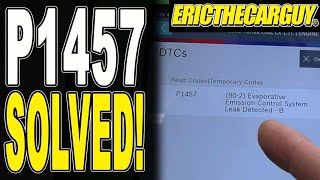
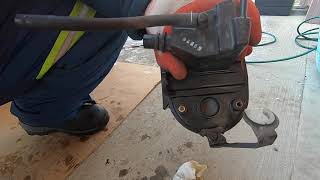
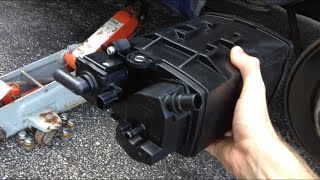
🎬 Watch: A complete guide to diagnosing and fixing P1457 codes.Can I Drive With B1457?
Yes, But With Caution. Yes, you can drive with a P1457 code. It does not affect engine performance or safety in the short term. However, you will fail an emissions test, notice a fuel smell, and experience slightly reduced fuel economy. Ignoring it for an extended period, especially if caused by a stuck-open purge valve, negatively impacts the air-fuel mixture and contributes to catalytic converter damage, a repair costing $800-$2500.
Common Causes
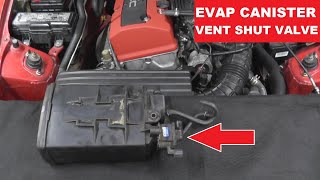
- Faulty Canister Vent Shut (CVS) Valve or Solenoid (Very Common) — The most frequent culprit on Hondas and Acuras. Located under the car, the valve is exposed to road salt and moisture. This rusts the metal valve body, warping the plastic housing, breaking the O-ring seal, or sticking the valve open, preventing the system from sealing.
- Rotted, Cracked, or Disconnected EVAP Hoses (Common) — Rubber and plastic hoses connecting the charcoal canister, purge valve, and vent valve become brittle with age and heat cycles. This creates small cracks or breaks causing a vacuum leak. Rodents also chew through these lines.
- Damaged or Saturated Charcoal Canister (Less Common) — The plastic canister housing develops hairline cracks from impacts or age. More commonly, it becomes saturated with liquid fuel from habitually 'topping off' the gas tank. A fuel-soaked canister cannot properly adsorb vapors, causing pressure and vacuum tests to fail.
- Faulty EVAP Bypass Solenoid Valve (Less Common) — Similar to the CVS valve, this solenoid is part of the canister assembly and fails from corrosion. It fails mechanically or short-circuits internally. A severe short damages the driver transistor within the Powertrain Control Module (PCM).
- Faulty EVAP Purge Valve/Solenoid (Less Common) — Usually in the engine bay, the purge valve sticks open. While this often triggers P0497 (low purge flow), a stuck-open valve introduces un-metered air during the EVAP self-test, preventing required vacuum and setting P1457.
- Faulty Fuel Tank Pressure (FTP) Sensor (Rare) — The sensor monitoring EVAP pressure and vacuum fails. If it provides incorrect readings to the PCM (e.g., stuck at atmospheric pressure), the computer falsely interprets a leak.
- Faulty Wiring or Electrical Connection (Rare) — A broken wire, blown fuse, or corroded connector in the CVS valve or bypass solenoid circuit prevents it from closing when commanded. The system fails the leak test because the valve never seals the canister.
- Damaged Powertrain Control Module (PCM) (Very Rare) — A short-circuited CVS or bypass solenoid overloads and burns out the PCM driver transistor controlling it. The PCM can no longer command the valve to close, causing P1457 to persist even after replacing the faulty valve.
Symptoms
- Check Engine Light is On — Often the only symptom. The light illuminates after the EVAP system fails its self-test on two consecutive drive cycles.
- Fuel Smell — A faint to moderate smell of raw gasoline is noticeable around the rear of the vehicle or on hot days as unburned fuel vapors escape.
- Failed Emissions Test — An active P1457 code automatically fails a state emissions inspection because the EVAP system monitor will not be 'Ready'.
- Decreased Fuel Efficiency — A minor decrease in MPG occurs. The EVAP system recycles fuel vapors; when it leaks, this fuel is lost to the atmosphere.
- Rough Idle or Stalling (Rare) — If the purge valve sticks open, it creates a constant vacuum leak, altering the air-fuel mixture and causing a rough idle or engine stalling.
Diagnostic Flowchart
Tap your situation to follow the diagnostic path that matches what you're seeing on this code.
Common Fixes & Costs
- Replace Canister Vent Shut (CVS) Valve
— Parts: $40-$120, Labor: $100-$200, ~1.2 hr book time
(Intermediate)
2001-2005 Honda Civic: OEM 17310-S5A-L31 (Alt: Dorman 911-809, Standard Motor Products CVS68)
1998-2002 Honda Accord: OEM 17310-S0X-A02 (Alt: Dorman 911-761, Walker 258-0003)
1999-2003 Acura TL: OEM 17310-S0X-A02 (Alt: Dorman 911-761, Wells PV422) - Replace Cracked or Leaking EVAP Hoses — Parts: $10-$50, Labor: $50-$150, ~1 hr book time (DIY)
- Replace Charcoal Canister Assembly
— Parts: $250-$700, Labor: $90-$250, ~1.5 hr book time
(Intermediate)
2001-2005 Honda Civic: OEM 17011-S5B-A00 (Alt: Dorman 911-766, Carquest CPN1072)
2003-2007 Honda Accord: OEM 17011-SDA-A00 (Alt: Dorman 911-758, Standard Motor Products CP3079)
2004-2008 Acura TL: OEM 17011-RDB-L00 (Alt: Genuine W0133-1711877) - Replace EVAP Purge Valve/Solenoid
— Parts: $30-$140, Labor: $50-$90, ~0.6 hr book time
(DIY)
2001-2005 Honda Civic: OEM 36162-PLC-003 (Alt: Dorman 911-452, Standard Motor Products CP514)
2003-2007 Honda Accord: OEM 36162-RAA-A01 (Alt: Dorman 911-141, Bosch 0280142432)
2004-2008 Acura TL: OEM 36162-RDM-A01 (Alt: Dorman 911-141, Standard Motor Products CP509) - Replace EVAP Bypass Solenoid Valve — Parts: $60-$150, Labor: $80-$180, ~1.2 hr book time (Intermediate)
DIY vs Professional
- Replace EVAP Purge Valve/Solenoid — Beginner:
Tools: Pliers, 8mm or 10mm socket/wrench, flashlight. - Replace Canister Vent Shut (CVS) Valve — Beginner:
Tools: Jack and jack stands, socket set, penetrating oil, Phillips screwdriver, pliers, potentially a hammer and punch or drill for rusted screws. - Replace Charcoal Canister Assembly — Beginner:
Tools: Jack and jack stands, socket set (10mm, 12mm), pliers, penetrating oil.
Used vs. New Parts: Buying Guide
When a used part is worth it: For the expensive charcoal canister assembly, a used part from a low-mileage, non-rust-belt vehicle is a cost-effective option. Never buy a used Canister Vent Shut (CVS) valve, as it is an inexpensive wear item prone to corrosion.
Donor-vehicle mileage cap: roughly under 60000 miles for the part to have meaningful remaining life.
Donor quality checklist:
- Verify the donor vehicle was not scrapped for emissions-related failures.
- Avoid parts from the Rust Belt, as corrosion is the primary failure mode for the vent valve.
- Match the OEM part number exactly; seemingly identical parts have different internal valve configurations.
Decision logic:
- If The part is an electronic solenoid/valve (CVS, Purge, Bypass) and costs < $150 new → Always buy new. The risk of a used part failing quickly outweighs the minimal savings.
- If The part is the full canister assembly and the vehicle is > 150K miles → A used part from a low-mileage donor is an acceptable risk to save several hundred dollars.
- If The failure is a known wear-out item like a valve seal or solenoid → Favor new aftermarket or OEM parts that often have design improvements over the original.
Warranty tradeoff: Used parts from salvage yards typically offer a 30-90 day warranty. New aftermarket parts usually have a 1-year to limited lifetime warranty. New OEM parts carry a 1-year warranty.
Worst-case if a used part fails: $200-500 if a used canister fails after installation, requiring repeat labor costs plus the cost of another part.
What Happens If You Wait — Timeline
- 0-1 Month: Check Engine Light (MIL) turns on. The car passes its internal EVAP monitor self-test intermittently. No perceivable symptoms other than the light. You fail an emissions test. (MPG impact: 0-1%% · Added cost: $0)
- 1-6 Months: The MIL stays on consistently. A faint fuel smell is noticeable around the rear of the car on hot days. A minor decrease in fuel economy occurs as vapors escape. (MPG impact: 1-3%% · Added cost: $20-60 in wasted fuel)
- 6-18 Months: If caused by a stuck-open purge valve, the constant vacuum leak alters long-term fuel trims, causing a slightly rough idle and putting sustained stress on the catalytic converter. (MPG impact: 3-5%% · Added cost: $50-150 in wasted fuel)
- 18+ Months: Prolonged driving with a significant leak from a stuck valve causes premature failure of the catalytic converter. A shorted solenoid fails the internal driver circuit in the PCM, requiring expensive computer repair. (MPG impact: 5-10%% · Added cost: $800 - $2500 (catalytic converter or PCM replacement))
Cost of Not Fixing It
- 0-3 Months: Failed emissions test, minor decrease in fuel economy (1-5%), and a persistent fuel smell. No significant risk of mechanical damage. (Added cost: Negligible, other than wasted fuel.)
- 3-12 Months: If caused by a stuck-open purge valve, the altered air-fuel ratio causes minor engine performance issues like a slightly rough idle and stresses the catalytic converter. (Added cost: $0 - $50 in minor fuel loss.)
- 12+ Months: Prolonged driving with a rich or lean condition from a stuck valve causes premature failure of the catalytic converter. A shorted valve potentially damages the PCM. (Added cost: $1200 - $2800 for catalytic converter replacement.)
Diagnosis Steps
- Verify Code and Check Gas Cap
First, confirm P1457 is the active code with an OBD-II scanner. While this code is not for the gas cap (P1456 on Hondas), ensure the cap is tight (three clicks) and its seal is intact as a free first step.
Tools: OBD-II Scanner (Beginner) - Visually Inspect Canister Area
Safely raise the vehicle. Locate the charcoal canister near the fuel tank. Meticulously inspect all attached rubber and plastic hoses for cracks, disconnections, or rodent damage. Check the canister for visible cracks.
Tools: Flashlight, Jack and Jack Stands (Beginner) - Test Solenoids with a Bidirectional Scanner
Using a bidirectional scan tool, command the Canister Vent Shut (CVS) valve, Purge Control Solenoid, and Bypass Solenoid on and off individually. Listen for an audible 'click' from each valve. Silence indicates an electrical or mechanical failure.
Tools: Bidirectional Scan Tool (Intermediate) - Perform a Manual Solenoid Bench Test
If you lack a bidirectional scanner, remove the suspect solenoid. Apply 12V power and a ground directly to its electrical terminals using a power probe or jumper wires. The valve must make a distinct clicking sound. Be prepared for heavily rusted mounting screws.
Tools: 12V Power Probe or Jumper Wires, Socket Set, Penetrating Oil (Intermediate) - Perform a Smoke Test
An EVAP-specific smoke machine forces low-pressure (0.5-1.0 PSI), UV-dyed smoke into the system via a service port. Exceeding 1.0 PSI damages EVAP components. Smoke visibly exits from any crack, bad seal, or faulty component, pinpointing the exact leak location.
Tools: EVAP Smoke Machine, UV Light (Advanced) - Advanced: Check Fuel Tank Pressure (FTP) Sensor Voltage
Connect a scan tool or backprobe the FTP sensor's signal wire with a multimeter. With the key on, engine off, and gas cap removed, the baseline voltage must be stable, typically between 2.45V and 2.55V on Honda models. A stuck reading indicates a faulty sensor.
Tools: Scan Tool or Multimeter, Backprobe Kit (Advanced) - Advanced: FTP Sensor Vacuum Test
With the system sealed (CVS valve commanded closed), use a hand vacuum pump on the EVAP service port to slowly apply vacuum. Monitor the FTP sensor voltage on your scan tool; it must drop smoothly. Apply 2 kPa (0.6 inHg) of vacuum and confirm it holds steady for one minute. A dropping vacuum level confirms a leak.
Tools: Scan Tool, Handheld Vacuum Pump, EVAP Port Adapter (Advanced) - Advanced: Test Solenoid Resistance
Disconnect the suspect solenoid's electrical connector. Use a multimeter set to Ohms to measure resistance across the two pins. A normal reading for a Honda CVS valve is 20-40 Ohms. Infinity (OL) indicates an open circuit, while near zero indicates a short circuit.
Tools: Multimeter (Advanced) - Advanced: Check PCM Driver Circuit
If a replaced solenoid still fails to actuate, check for a failed PCM driver. Disconnect the solenoid and PCM connector. Check for continuity and shorts to ground on the control wire. If wiring is intact, the PCM's internal driver transistor is burned out.
Tools: Multimeter, Vehicle-Specific Wiring Diagram (Pro)
When This Code Triggers (Freeze-Frame Conditions)
- Fuel Level: 15-85% (The EVAP monitor will not run if the tank is too full or nearly empty.)
- Engine Coolant Temp: 40-95°F (at startup) (Requires a 'cold soak,' where the engine has been off for 8+ hours and coolant temp is close to ambient air temp.)
- Vehicle Speed: 45-65 mph (The test runs during a period of steady highway cruising.)
- Engine Load: 20-60% (Requires steady throttle input, not heavy acceleration or deceleration.)
Related Codes
- P1456 — The other half of Honda's EVAP diagnostic system. P1456 indicates a leak on the 'fuel tank side' (gas cap, filler neck), while P1457 points to the 'canister side'.
- P0455 — Indicates a 'gross leak'. A component failure starting as a small leak (P1457) worsens into a large leak (P0455), such as a completely broken hose.
- P0442 — A generic 'small leak'. P1457 is a manufacturer-specific code providing more detail, pointing directly to the canister area to save diagnostic time.
- P0497 — Indicates 'low purge flow,' a flow problem, not a leak. Caused by a stuck-closed purge valve or blockage. P1457 is a leak preventing the system from sealing.
Climate & Environmental Factors
- Road Salt (Rust Belt Regions): The single largest factor for P1457 on Hondas/Acuras. The exposed CVS valve corrodes severely, leading to cracks in the plastic housing or failure of the internal seal.
- Cold Weather: Cold temperatures cause rubber hoses and plastic seals to contract, harden, and become brittle. A seal fine in warm weather shrinks in freezing temperatures to create a small leak.
- Seasonal Changes (Spring/Fall): EVAP self-tests require specific ambient temperature ranges. The moderate temperatures of spring and fall are when the test runs most frequently, triggering the light for existing leaks.
How to Talk to a Mechanic About This Code
Say this: "I have a check engine light with a P1457 code on my Honda. I'd like to schedule a diagnostic. Please perform a smoke test on the EVAP canister system to pinpoint the leak."
This signals you know the code is specific to the canister area and that a smoke test is the correct first step. It prevents the shop from wasting time on incorrect procedures like replacing the gas cap.
Avoid saying:
- 'My check engine light is on, can you look at it?' (This is too vague and invites expensive, unnecessary diagnostics).
- 'My car has an EVAP leak, can you fix it?' (Still too general; P1457 points to a specific area).
- 'I think it's the gas cap.' (This is the common misdiagnosis for this specific code).
Questions to ask before authorizing the repair:
- Did the smoke test reveal the exact location of the leak?
- Can you show me the failed part or a picture of where the smoke was leaking from?
- If it's the canister vent valve, are the mounting bolts rusted, and is there a risk of them breaking during removal?
- What is the warranty on the parts and labor for this repair?
Where to Take It: Dealer vs Independent vs Chain
- Dealer:
Good, but expensive. Best reserved for warranty work or if an independent shop is stumped. They have exact OEM parts and manufacturer-specific tools.
Best for: Vehicles still under an emissions warranty., Complex cases where multiple parts have been replaced and the code persists, suggesting a rare wiring or PCM issue.
Downsides: Highest labor rates, typically 1.5-2x an independent shop., May recommend replacing the entire canister assembly when only a smaller, cheaper valve has failed. (Typical cost: +50% vs. baseline) - Independent Shop:
Best fit. Any reputable independent shop specializing in Japanese vehicles has seen and fixed this many times. They provide the best balance of expertise and cost.
Best for: Most P1457 repairs on out-of-warranty vehicles, especially Hondas and Acuras., Cost-conscious owners, as labor rates are significantly lower.
Downsides: Quality varies; ensure the shop has experience with Honda/Acura EVAP systems and owns a smoke machine and a bidirectional scanner. (Typical cost: +0% vs. baseline) - Chain Shop:
Avoid for this code. P1457 requires specific diagnostic steps (smoke test, valve actuation) better handled by a specialist or experienced independent shop.
Best for: Simple, unrelated maintenance like oil changes or tire rotations.
Downsides: Technician skill and equipment (like EVAP-specific smoke machines) can be inconsistent., Often have higher pressure to meet sales targets, which leads to upselling or misdiagnosis of a nuanced code like P1457. (Typical cost: -10% vs. baseline)
When to Walk Away From the Repair
If the estimated repair cost for the P1457 code exceeds 40-50% of your car's current private-party value, consider selling the vehicle as-is or trading it in.
- Car worth $3500, fix is $750: Fix it. The repair cost is about 21% of the car's value, making it a worthwhile investment to keep the car road-legal and maintain its value.
- Car worth $2500, fix is $900: Borderline. A $900 repair for a full canister replacement is significant. Get a second opinion to confirm no cheaper fix is possible before proceeding.
- Car worth $2000, fix is $1200: Walk away. The repair cost is 60% of the vehicle's value. It is not economically sensible to perform this repair.
What Scan Tool You Need for This Code
Minimum: Bidirectional control to command EVAP solenoids (purge and vent) on and off.
A basic $20 code reader only shows the P1457 code. Proper diagnosis requires commanding the canister vent valve to close and the purge valve to open or close. This requires a bidirectional scanner.
Budget: LAUNCH Creader Elite / MUCAR CDE900 (~$99) — These entry-level tools offer limited bidirectional tests for some models, often as an add-on purchase. They read codes and show live data, but full EVAP valve actuation is not guaranteed.
Mid-range: Foxwell NT510 Elite (with Honda software) (~$180) — Provides full bidirectional control for Honda/Acura systems. Allows you to command the Canister Vent Shut (CVS) valve and Purge Valve on/off to listen for clicks and confirm electrical function.
Professional: Autel MaxiCOM MK808 / MK808S (~$450) — Offers comprehensive OEM-level bidirectional controls for all vehicle systems, including a dedicated EVAP leak test function that automates sealing the system and monitoring pressure sensors.
Rent vs buy: Auto parts stores typically only rent basic code readers, not bidirectional scanners. If this is a one-time fix, it is more cost-effective to pay a shop for one hour of diagnostic time than to buy a mid-range scanner.
How to Clear the Code After You Fix It
- Use an OBD-II scan tool to clear the trouble codes.
- Ensure fuel tank is between 1/4 and 3/4 full.
- Perform the vehicle-specific drive cycle to run the EVAP readiness monitor.
Drive cycle (~30 minutes): A typical Honda drive cycle requires a cold start (sitting for 8+ hours). Start the engine and idle for 2.5 minutes with A/C on. Turn A/C off, then accelerate to 55 mph and hold for 3 minutes. Coast down to 20 mph without braking. Accelerate back to 55-60 mph and hold for 5 minutes. Finally, coast to a stop.
Readiness monitors affected: Evaporative (EVAP) System, Catalyst (CAT), Oxygen (O2) Sensor
Before emissions retest: drive at least 100 miles to fully set monitors.
Watch out for:
- Disconnecting the battery clears codes but resets all readiness monitors to 'incomplete', guaranteeing an emissions test failure until a full drive cycle completes.
- Incorrect fuel levels (outside 15-85%) prevent the EVAP monitor from running.
- The code returns if the root cause was misdiagnosed or the new part seals poorly. The EVAP self-test takes several days of driving to run again.
Will This Fail Emissions / State Inspection?
Yes — this code typically fails an OBD-II emissions inspection.
- California: Automatic failure. California's smog check requires the Malfunction Indicator Lamp (Check Engine Light) to be off and all OBD-II readiness monitors to be 'Ready'. P1457 causes the EVAP monitor to be 'Not Ready'.
- New York: Automatic failure. The NYS vehicle inspection program includes an OBD-II scan. An active P1457 code or an incomplete EVAP readiness monitor results in a failed test.
- Texas: Automatic failure in the 17 counties requiring emissions testing. The OBD-II portion of the test fails due to the active DTC and the incomplete EVAP monitor.
Most Commonly Affected Vehicles
- Honda Civic (1998-2005) — Extremely common due to CVS valve corrosion. The 2001-2005 models are particularly known for this. Valve bolts are notoriously difficult to remove and often break.
- Honda Accord (1998-2007) — Shares a similar EVAP design to the Civic, making it prone to the same CVS valve and canister failures.
- Acura TL (1999-2008) — Uses similar EVAP components. The 2002-2003 models are frequently cited.
- Honda CR-V (1998-2006) — The canister and vent valve assembly is a very common failure point. On 2002-2004 models, a metal shield covers the assembly, and its bolts severely rust.
- Honda Odyssey (1999-2010) — Sets P1457 often due to a faulty CVS valve. TSB 03-001 specifically addresses this issue.
- Acura Integra (1996-2001) — Well-known for P1457 caused by a corroded CVS. A shorted solenoid burns out a specific transistor in the ECU.
- Acura RSX (2002-2004) — Prone to P1457. If replacing canister valves fails, TSB 08-010 points to a faulty fuel vent tube.
- Ford Escape / Mustang (EcoBoost) (2013-2018) — On EcoBoost models, a stuck-open canister purge valve sets P1450 but causes the system to fail a vacuum test, triggering P1457 secondarily.
Manufacturer-Specific Notes
- Honda/Acura: Exceptionally common. P1456 points to the fuel tank side and P1457 points to the canister side. TSB 03-001 details how road salt corrosion fails the EVAP Bypass Solenoid Valve and warns a shorted valve damages the PCM.
- Ford: Defined as 'Unable To Pull Vacuum In Tank', functionally identical to the Honda definition. Triggered secondarily by a stuck-open canister purge valve on EcoBoost models.
- Jaguar: Means 'Unable to pull vacuum in tank' and points to issues with the fuel tank ventilation system or purge control valve.
- Mitsubishi: B1457 is an unrelated SRS (airbag system) code defined as 'Rear side impact sensor (LH) voltage error'.
Real Owner Stories
2002 Honda CR-V at 260K miles - Misdiagnosis Story
Check Engine Light with P1457 appeared two weeks before a required smog check.
What they tried:
- Based on online research, the owner suspected a faulty purge valve and replaced it with an aftermarket part from RockAuto.
- The P1457 code returned after 40 miles.
- As a last-ditch effort before a mechanic appointment, they purchased a new OEM gas cap from a local dealer.
Outcome: Replacing the OEM gas cap fixed the issue. The light stayed off for over 75 miles, allowing the car to pass its emissions test.
Lesson: While P1457 is almost always a canister-side leak, in rare cases, a faulty gas cap seal causes a P1457. Given its low cost, checking or replacing the gas cap with an OEM part is a worthwhile first step.
2004 Honda CR-V at 167K miles - The Persistent Code
P1457 code persisted despite replacing multiple common components.
What they tried:
- Replaced the EVAP purge valve.
- Replaced the charcoal canister.
- Replaced the canister vent valve.
Outcome: The code continued to return. A local shop quoted $900 to address a known Technical Service Bulletin (TSB 08-016) that involves redoing EVAP lines and requires dropping the fuel tank. The owner was left considering replacing another, less common solenoid (Fuel Vent Module, P/N 17380-S5A-A32) before committing to the expensive repair.
Lesson: If the code persists after replacing the most common parts (vent valve, canister), the issue is a less common component or a wiring fault. Before undertaking expensive repairs like dropping the fuel tank, investigate relevant TSBs and perform a full smoke test.
2003 Acura CL-S - The Unusual Electrical Fault
A persistent P1457 code was present for about a year, even after confirming all valves and solenoids were mechanically working and the system held a vacuum.
What they tried:
- Confirmed the Canister Vent Valve worked.
- Confirmed the Purge Valve worked.
- Replaced the Bypass Solenoid valve.
- Confirmed the Two-Way valve worked.
- Confirmed the fuel tank and EVAP lines held pressure and vacuum.
Outcome: The actual fault was a failed driver transistor (specifically, the 'STA415A' transistor array) on the ECU/PCM circuit board. The PCM was not providing the ground signal to the vent and bypass solenoids. The owner fixed it by replacing the specific transistor on the board, restoring function without needing a full ECU replacement.
Lesson: In rare cases where all physical and mechanical components are verified good, the root cause is electrical within the PCM itself. If a solenoid doesn't 'click' even with a direct 12V supply, but the solenoid's resistance is normal, check if the PCM is sending the command signal.
How to Prevent This Code From Triggering
- Avoid 'topping off' your fuel tank (Every fill-up) — Continuing to add fuel after the pump clicks off forces liquid gasoline into the charcoal canister. A fuel-saturated canister cannot function properly and requires replacement.
- Periodically wash the vehicle's undercarriage (Monthly, especially in winter (Rust Belt regions)) — Regularly washing away road salt and grime slows corrosion on the Canister Vent Shut (CVS) valve, extending its life.
- Apply an undercoating or rust inhibitor (Once per year (before winter)) — Applying a lanolin-based rust inhibitor around the EVAP canister shields metal and plastic parts from corrosive road salt and moisture.
- Inspect EVAP hoses during other maintenance (Every oil change) — Visually inspect rubber and plastic EVAP hoses for cracking, brittleness, or loose connections during oil changes to catch deterioration early.
Frequently Asked Questions
Will replacing my gas cap fix a P1457 code?
No, replacing the gas cap almost never fixes a P1457 code on a Honda/Acura. That solution is for the related code P1456, which indicates a leak on the fuel tank side. P1457 specifically means the leak is in the canister system.
What are common misdiagnoses for P1457?
A common mistake is confusing P1457 with P1456 and replacing the gas cap. Shops unfamiliar with this code waste time smoke testing the fuel tank when the issue is almost always in the canister assembly under the car.
Why did the code come back after I replaced the vent valve or canister?
This happens if the replacement part seals poorly, a secondary hairline hose crack was missed, or the original shorted valve damaged the PCM driver circuit. Perform a smoke test and electrical diagnostics to isolate the remaining fault.
Is it safe to drive with a P1457 code?
Yes, it is generally safe for short-term driving. The code indicates an emissions control problem that does not affect immediate performance or reliability. However, you will release harmful fuel vapors and fail an emissions test.
How much does it cost to fix a P1457 code?
Total costs range from $80 for a DIY purge valve replacement to $900 for a shop-installed charcoal canister. The most common fix, replacing the canister vent valve at a shop, typically costs $140 to $320.
Can I fix a P1457 code myself?
Yes, if you are moderately skilled. Replacing the purge valve in the engine bay is beginner-friendly, but replacing the canister vent valve under the car is difficult due to severely rusted bolts. Pinpointing the leak without a smoke machine is very challenging.
Can a P1457 code cause a car to not start?
It is extremely rare, but possible. If the EVAP purge valve is severely stuck open, it creates a large vacuum leak making the engine's air-fuel mixture too lean to start. This situation is accompanied by a very rough idle.
Key Takeaways
- B1457 is a non-standard code often confused with P1457, which indicates a vacuum leak in the EVAP canister system, though Mitsubishi uses B1457 for a rear side impact sensor error.
- A rusted or stuck-open Canister Vent Shut (CVS) valve causes over 70% of P1457 codes on Honda and Acura vehicles due to its exposed location under the car.
- Never replace the gas cap to fix a P1457 code; a loose or faulty gas cap triggers code P1456, while P1457 strictly isolates the leak to the charcoal canister side.
- Pinpointing a P1457 leak requires a bidirectional scan tool to actuate the EVAP solenoids and an EVAP smoke machine pumping 0.5-1.0 PSI to reveal hairline cracks.
Helpful Videos

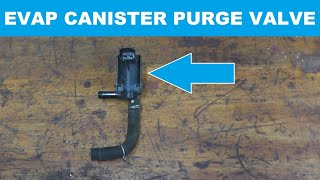

The information in this article is provided for general reference and educational purposes only. Vehicle specifications, procedures, and part compatibility can vary by production date, trim level, and region. Always consult your vehicle's factory service manual and verify part numbers before purchasing or performing repairs. Safety-critical components such as airbags, seat belts, and braking systems should be installed by a qualified professional.
- 🎬 Helpful Videos
- What Does B1457 Mean?
- Can I Drive With B1457?
- Common Causes
- Symptoms
- Diagnostic Flowchart
- Common Fixes & Costs
- DIY vs Professional
- Used vs. New Parts: Buying Guide
- What Happens If You Wait — Timeline
- Cost of Not Fixing It
- Diagnosis Steps
- When This Code Triggers (Freeze-Frame Conditions)
- Related Codes
- Climate & Environmental Factors
- How to Talk to a Mechanic About This Code
- Where to Take It: Dealer vs Independent vs Chain
- When to Walk Away From the Repair
- What Scan Tool You Need for This Code
- How to Clear the Code After You Fix It
- Will This Fail Emissions / State Inspection?
- Most Commonly Affected Vehicles
- Manufacturer-Specific Notes
- Real Owner Stories
- 2002 Honda CR-V at 260K miles - Misdiagnosis Story
- 2004 Honda CR-V at 167K miles - The Persistent Code
- 2003 Acura CL-S - The Unusual Electrical Fault
- How to Prevent This Code From Triggering
- Frequently Asked Questions
- Will replacing my gas cap fix a P1457 code?
- What are common misdiagnoses for P1457?
- Why did the code come back after I replaced the vent valve or canister?
- Is it safe to drive with a P1457 code?
- How much does it cost to fix a P1457 code?
- Can I fix a P1457 code myself?
- Can a P1457 code cause a car to not start?
- Key Takeaways
- 🎟️ Get 5% Off