

B1455 on 2015-2019 Lexus RC F: Driver's Side FOOT/DEF Servo Motor Guide
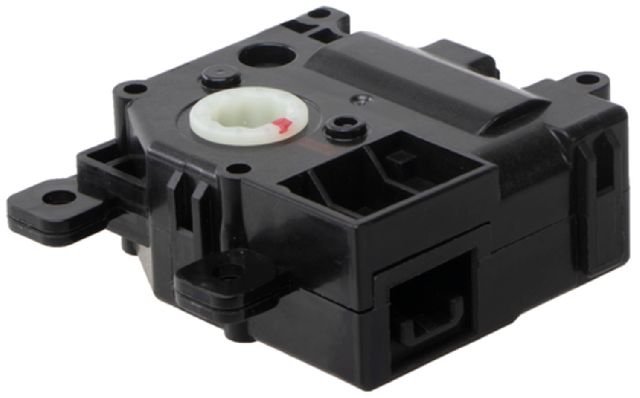
Code B1455 on a Lexus RC F means the driver's side FOOT/DEF servo motor has failed. This is a very common problem across the Lexus RC, IS, and GS platforms, acknowledged by Lexus with a warranty extension program. The fix is to replace the servo motor (part #87106-30500). The part is relatively inexpensive (~$150-$200), but labor costs are extremely high ($2,000-$4,000+) because the entire dashboard must be removed to access it.
- B1455 is a body code for a faulty driver-side airflow direction motor (FOOT/DEF), not a critical engine problem.
- This is a very common and well-documented failure on the Lexus RC F, covered by manufacturer TSBs.
- The primary symptom is the inability to direct air to the driver's floor or defroster vents.
- The repair is extremely expensive (often $2,000-$4,000) due to the 8+ hours of labor required to remove the dashboard.
- Before authorizing repair, confirm the diagnosis with a scan tool and ask the shop if they recommend replacing other servos simultaneously to save on future labor costs.
What's Unique About the 2015-2019 Lexus RC F
The 2015-2019 Lexus RC F, along with its platform mates like the 3rd Gen IS and 4th Gen GS, is notorious for premature HVAC servo motor failures. The problem is so widespread that Lexus issued Technical Service Bulletins (L-SB-0001-21, L-SB-0019-20) and a Customer Support Program (20LE01) to address the high failure rate. The issue stems from the internal design of the Denso-made servo motors, where the contact points for the position sensor wear out or accumulate debris, causing an electrical fault. While the code points to a specific servo, owners and technicians often recommend replacing multiple or all servos at once due to the extreme labor (13-22+ hours) involved in accessing them.
Diagnostic Flowchart
Tap your situation to follow the diagnostic path that matches what you're seeing on this vehicle.
Symptoms You May Notice
- Air does not blow from the driver's side floor (foot) vents
- Air does not blow from the driver's side windshield (defrost) vents
- Clicking, grinding, or ticking noises from behind the dashboard, especially when changing modes
- HVAC airflow is stuck in one position on the driver's side
- Improper or uneven temperature control (though this is often a symptom of a different, but related, servo failure)
- Climate control system seems to take a long time to 'boot up' or respond to inputs after starting the car.
- Replacing the wrong servo motor. The HVAC unit contains many servos; B1455 is specifically for the Driver Side FOOT/DEF motor. The owner in NHTSA complaint #11364790 reported a passenger-side issue with a B1455 code, highlighting potential confusion by owners, though the code itself is driver-side specific.
- Replacing the A/C compressor or recharging the refrigerant. This code is related to airflow direction, not the system's ability to create cold air.
- Assuming a reset is a permanent fix. Clearing codes or disconnecting the battery may temporarily restore function, but the fault almost always returns as it's a mechanical/electrical wear issue.
Most Likely Causes
- Failed Driver Side FOOT/DEF Servo Motor 🔴 High Probability This is a well-documented, common failure point acknowledged by Lexus through TSB L-SB-0001-21 and Customer Support Program 20LE01. The internal components of the servo motor, specifically the carbon contact strips for the position sensor, wear out or get dirty, causing an electrical fault.
How to confirm: Use a diagnostic scan tool (like Toyota Techstream) to perform an active test on the 'Driver Side FOOT/DEF' servo. Listen for motor operation or check for airflow changes. A definitive confirmation is viewing the live data stream and seeing a mismatch between the 'target pulse' and 'actual pulse' for the servo. If the servo does not respond or the pulses don't match, it has failed.
Typical fix: Replace the faulty servo motor. Due to the high labor cost, it is strongly recommended to replace other accessible servos at the same time, as they are prone to similar failures.
Est. part cost: $120-$200 - Wiring or Connector Issue ⚪ Low Probability
How to confirm: Once the servo motor is accessed after dashboard removal, visually inspect the connector and nearby wiring for any signs of damage, corrosion, or loose pins. Use a multimeter to test for power and ground at the connector when the HVAC system is commanded to change modes.
Typical fix: Repair the damaged section of the wiring harness or clean/replace the connector.
Est. part cost: $5-$50 - Faulty A/C Amplifier (Climate Control ECU) ⚪ Low Probability Less common than servo failure, but possible. Some TSBs mention that a software update for the A/C Amplifier may resolve certain HVAC issues, though typically not a hard servo circuit fault.
How to confirm: This is typically diagnosed by exclusion. If the servo motor and wiring are confirmed to be good, but the code persists, the A/C Amplifier may be at fault. A dealer can check if a software reflash is available.
Typical fix: Reprogram or replace the A/C Amplifier module.
Est. part cost: $400-$800
Rare But Worth Checking
- Jammed Damper Door: A foreign object or broken piece of the HVAC case could physically block the damper door from moving, causing the servo motor to strain and set a fault code. This is unlikely but possible.
Diagnosis Steps
- Connect a professional scan tool (like Toyota Techstream) capable of reading Lexus Body (B) codes to confirm B1455 is present and active.
- Check for any other HVAC-related DTCs. Multiple codes are common and can help justify replacing several servos at once.
- Use the scan tool's 'Active Test' or 'Bi-Directional Control' feature to command the 'Driver Side FOOT/DEF' servo to move. Listen for clicking or whirring sounds from the driver's side dash area.
- While running the active test, monitor the live data for the servo's 'target pulse' and 'actual pulse'. A discrepancy confirms the fault.
- Observe if the airflow correctly switches to the floor and defrost vents on the driver's side during the active test.
- If no sound is heard and airflow does not change, the servo motor or its circuit is faulty.
- The next step requires extensive dashboard disassembly to physically access the servo motor. This is rated as very difficult for DIY and is the primary driver of the high repair cost.
- Once accessed, inspect the servo's electrical connector for damage or corrosion.
- With the key on, use a multimeter to verify power, ground, and signal wires at the connector.
- If power and ground are present but the motor doesn't work (or the pulse sensor is faulty), the servo motor is bad and needs replacement.
- If power or ground is missing, the wiring must be traced back to the A/C Amplifier to find the break.
Parts You'll Likely Need
- Driver Side Air Outlet Damper FOOT/DEF Control Servo Motor
(OEM #87106-30500)— This is the specific servo motor identified by code B1455 and is the most common point of failure. It is officially named 'Damper Servo Sub-assy, Air Conditioner Radiator, No.1'.
Trusted brands: Lexus (Genuine), Denso
OEM price range: $150-$200
Aftermarket price range: $100-$150
Related Codes That Often Appear With This One
- B1441 — This is the code for the 'Front Passenger Side Lower Air Mix' servo. It is extremely common for multiple servos to fail around the same time or for multiple codes to be stored simultaneously.
- B1442 — This is the code for the 'Air Inlet Damper Control Servo Motor Circuit'. Seeing multiple servo codes together points to a systemic issue with these components.
- B1443 — This is the code for the 'Air Outlet Damper Control Servo Motor Circuit'.
- B1446 — This is the code for the 'Driver Side Lower Air Mix' servo motor. Like other servo codes, it's another common failure point in the same system.
- B1454 — This is the code for the 'Passenger Side Air Outlet Damper COOL Control Servo Motor Circuit'. It is common for multiple servos to fail around the same time.
Technical Service Bulletins (TSBs) & Recalls
- L-SB-0001-21 Rev: 'Driver Side Air Outlet Damper FOOT/DEF Control Servo Motor Circuit'.
- L-SB-0001-21: Original bulletin identifying the HVAC servo motor circuit fault.
- L-SB-0019-20: TSB covering later model years (2017-2019) for the same servo motor issues, which includes a potential software reprogramming step.
- 20LE01 / 21LE01: Customer Support Program extending warranty coverage for this specific failure.
Platform-Specific Known Issues
- Lexus issued Technical Service Bulletin L-SB-0001-21 Rev for 2015-2017 RC F models that specifically lists DTC B1455 as a known issue and provides a detailed, 77-page repair procedure requiring HVAC unit removal.
- A separate TSB, L-SB-0019-20, addresses the same issues for 2017-2019 models, indicating the problem persisted for several years and may involve a software reflash as an initial step.
- Lexus initiated Customer Support Program 20LE01 (also referenced as 21LE01), which extended the warranty for these servo motor failures. Primary coverage ended Jan 12, 2022, but Secondary Coverage lasts for 7 years or 125,000 miles from the date of first use, whichever comes first. This covers the repair free of charge at a dealer if the vehicle is eligible.
- Owners report that dealers may require a diagnostic fee (~$270) to confirm the issue, which is only waived if the repair is covered under the warranty extension program.
Mechanic-Grade Diagnostic Values
- Techstream Live Data: 'A/O Damper FOOT/DEF Pos(D) Target Pulse' — expected: For LHD models, the value should be between 86 and 156 pulses depending on the mode selected. For example, FACE mode should command 146-156 pulses.. Failure: The 'Actual Pulse' value does not match the 'Target Pulse' value, or the 'Actual Pulse' does not change when commanded via an active test.
- Servo Motor Resistance — expected: N/A. Failure: According to service information, the servo motor cannot be reliably tested with a multimeter when removed from the vehicle; diagnosis must be performed using scan tool live data and active tests.
Hidden / Shadow Codes Worth Checking
- Two-digit codes (e.g., '55' for B1455): A built-in diagnostic function of the climate control head unit can display two-digit fault codes corresponding to the last two digits of the full DTC. (see via With the ignition ON, press and hold the RECIRCULATION and AUTO buttons on the climate control panel simultaneously. The LCD screen will flash and then display any stored two-digit codes.)
Scan Tool Commands That Help
- Toyota Techstream: Utility: Servomotor Initialization — This is a critical first step in diagnosis and a mandatory step after replacing a servo or disconnecting the battery. It forces the A/C amplifier to relearn the travel end-points of all servos and can sometimes resolve the fault if it's caused by a calibration error.
- Toyota Techstream: Active Test: A/O Damper FOOT/DEF Pos(D) — Used to manually command the specific servo motor to move while observing live data ('Target Pulse' vs 'Actual Pulse') to confirm if the motor is responding to commands from the A/C Amplifier.
- Toyota Techstream: AC damper servo operation check tool — This is a special utility, referenced in TSB L-SB-0001-21, that runs an automated 'cleaning process' to cycle the servos through their full range of motion. It can sometimes restore function temporarily by redistributing internal grease and is used to identify which specific servos fail the test before beginning disassembly.
Wiring & Ground Locations
- A/C Amplifier Ground — Wiring diagrams indicate a primary ground wire for the A/C amplifier is grounded to the chassis near the 'Left center j/b (behind the right side of the dash)'.. The A/C Amplifier controls all servo motors. A poor or intermittent ground connection at this point can cause erratic behavior, communication faults, and incorrect command signals, potentially triggering a B1455 code even if the servo motor itself is functional.
- Servo Motor 87106-30500 Location — Despite B1455 being a 'Driver Side' code, the servo motor itself is physically located on the passenger side of the central HVAC unit, often listed with a position of 'Front Right Right' or 'Front Right Upper'.. This is a major source of confusion. A technician looking for the part on the driver's side will not find it. The code refers to the destination of the airflow (driver's side), not the physical location of the part.
Real Owner Repair Stories
- Reddit user chuckbass666 in r/LexusRC (2015 RC350) — A/C and heat issues that occur intermittently.
❌ Tried (didn't work) A full warranty repair by the dealership did not permanently fix the issue, as it returned 1-2 times per year.
✅ What actually fixed it The owner purchased a bidirectional scan tool and now performs a 'servo reset' (likely the 'Servomotor Initialization' function) whenever the issue occurs. This temporarily resolves the problem without replacing parts. - Reddit user ChrisF12000 in r/LexusRC (2016 RC350) — Intermittent air blowing from vents.
✅ What actually fixed it The owner disconnected the vehicle's battery for 15 minutes to reset the system. The issue had not returned for over six months at the time of posting. - ClubLexus user @Screamin_S (2007 LS460 (different model, same system logic)) — A/C would reset to 75 degrees on startup, face vents wouldn't work correctly, and recirc door was stuck.
❌ Tried (didn't work) Was about to start disassembling the dashboard to access parts.
✅ What actually fixed it Using Techstream, the user ran the 'AC Servomotor Initialization' utility found under Body Electrical / Air Conditioner / Utility. This immediately recalibrated the servos and restored full function.
OEM Part Supersession History
87106-30500→87106-30500— No supersession found. This part number appears to be consistent for the specified model years for the B1455 fault.
Model Year Variations Within This Range
- 2015-2017: These years are covered by TSB L-SB-0001-21 Rev. The repair procedure is extensive, involving a check for a software update, a 'servo cleaning process' using a special Techstream tool, and finally, part replacement if the issue persists.
- 2017-2019: These years are covered by TSB L-SB-0019-20. The procedure here prioritizes a software update for the A/C Amplifier as the first step. If the flash reprogram does not resolve the issue, diagnosis continues per the repair manual. This suggests a higher likelihood of a software-based fix for later models.
We Have This Part in Stock

The information in this article is provided for general reference and educational purposes only. Vehicle specifications, procedures, and part compatibility can vary by production date, trim level, and region. Always consult your vehicle's factory service manual and verify part numbers before purchasing or performing repairs. Safety-critical components such as airbags, seat belts, and braking systems should be installed by a qualified professional.
- Lexus RC F:
- 🛍️ Shop This Part
- What's Unique About the 2015-2019 Lexus RC F
- Diagnostic Flowchart
- Symptoms You May Notice
- Most Likely Causes
- Rare But Worth Checking
- Diagnosis Steps
- Parts You'll Likely Need
- Related Codes That Often Appear With This One
- Technical Service Bulletins (TSBs) & Recalls
- Platform-Specific Known Issues
- Mechanic-Grade Diagnostic Values
- Hidden / Shadow Codes Worth Checking
- Scan Tool Commands That Help
- Wiring & Ground Locations
- Real Owner Repair Stories
- OEM Part Supersession History
- Model Year Variations Within This Range
- 🎟️ Get 5% Off