

B1454 on 2014-2018 Lexus IS 350: Passenger HVAC Servo Motor Fixes
This code indicates a fault with the passenger-side cool air blend door servo motor. The most common fix is replacing the faulty servo motor, which is located behind the glove box. It's a moderately difficult DIY job due to tight access, but can be done without removing the entire dashboard. A stubby Phillips screwdriver is essential.
- B1454 almost always points to a failed passenger-side cool air servo motor.
- Symptoms are specific to the passenger side, most notably blowing warm air when cooling is requested and an audible clicking from the dash.
- The repair is possible for a DIYer but requires patience due to tight access behind the glove box and around heater pipes. A stubby Phillips head screwdriver is considered essential.
- Always use the genuine Lexus part (87106-30480 or its successor) as aftermarket options are scarce and may not be reliable.
- Before buying parts, check with a Lexus dealer about any applicable TSBs (like L-SB-0001-21) or remaining warranty extensions, as a software update may be required first.
- After replacement, a servo motor initialization procedure using a tool like Toyota Techstream is recommended for proper calibration.
What's Unique About the 2014-2018 Lexus IS 350

The 2014-2018 Lexus IS 350, part of the third generation (XE30), uses a series of these servo motors for its sophisticated dual-zone climate control. While servo motor failure is a common issue across many Toyota and Lexus models, Lexus has issued a Technical Service Bulletin (TSB) L-SB-0001-21 Rev that specifically addresses this and other related servo codes for this vehicle range. This TSB was part of a broader Customer Support Program (CSP) acknowledging the high failure rate and extending coverage for affected vehicles, confirming it's a recognized issue on this platform.
Diagnostic Flowchart

Tap your situation to follow the diagnostic path that matches what you're seeing on this vehicle.
Symptoms You May Notice

- Passenger side vents blow warm or hot air when the A/C is set to cool.
- Inability to adjust the temperature on the passenger side.
- Uneven temperature between driver and passenger vents.
- A persistent or intermittent clicking, whirring, or 'gerbil' sound coming from behind the passenger side of the dashboard, especially when changing temperature settings or starting the car.
- Recharging the A/C refrigerant. A refrigerant issue would typically affect both driver and passenger sides, not just one.
Most Likely Causes

- Failed Passenger Cool Air Servo Motor 🔴 High Probability Lexus has acknowledged this issue through a Customer Support Program and TSB L-SB-0001-21, indicating a higher-than-normal failure rate for these components due to internal electrical malfunctions or worn internal contacts.
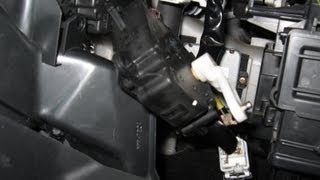
How to confirm: After removing the glove box, locate the servo motor. Change the passenger temperature from hot to cold and observe if the servo's arm moves. A lack of movement or erratic clicking points to a failed motor. 🎬 See how to install and test a new air mix motor. A diagnostic tool like Toyota Techstream can also show a discrepancy between the target pulse and actual pulse of the servo, or run a servo cleaning/initialization utility which will flag a non-responsive motor.
Typical fix: Replace the faulty servo motor sub-assembly. Some owners on forums have had temporary success by cleaning the internal contacts, but replacement is the permanent solution.
Est. part cost: $190-$260 - Damaged Wiring or Loose Connector ⚪ Low Probability
How to confirm: Visually inspect the wiring harness and the blue connector going to the servo motor for any signs of damage, corrosion, or a loose connection. Use a multimeter to check for proper power and ground at the connector pins as per the service manual.
Typical fix: Repair the damaged wire or re-secure the connector.
Est. part cost: $0-$20
Rare But Worth Checking
- Faulty A/C Amplifier (Climate Control ECU): This is the computer that controls the HVAC system. It should only be considered as a cause after the servo motor and its wiring have been thoroughly tested and confirmed to be working correctly. TSB L-SB-0001-21 also includes a potential software update for the A/C amplifier that should be performed before replacing parts.
- Mechanically Jammed Damper Door: A foreign object or broken piece of the HVAC case could physically block the damper door from moving. This is rare but can cause the servo motor to burn out or set a fault code.
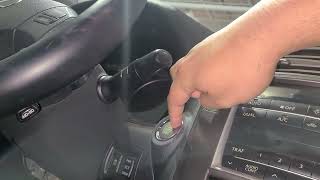
- Improper Cabin Air Filter Service: On related models, owners report that forcing the cabin air filter access door open without first setting the HVAC system to recirculation mode can damage the linkage or gears for the recirculation servo, which is located near the B1454 servo. While this typically causes a different code, it highlights the sensitivity of the components in this area. 🎬 Watch how to fix clicking noises when using fresh air mode.
Diagnosis Steps
- Confirm the symptom: Set the A/C to max cool and compare the air temperature from the driver and passenger side center vents.
- Scan the vehicle's Body Control Module for fault codes using a capable scanner like Toyota Techstream to confirm B1454 is present.
- Remove the passenger side lower dash panels and the glove box assembly to gain access to the HVAC servos. This typically involves removing a few Phillips screws and 10mm bolts.
- Locate the correct servo motor. Per TSB L-SB-0001-21, the B1454 code corresponds to the 'Cool A/M Servo (P)', which is often the middle servo on the passenger side, situated behind two aluminum heater pipes. It usually has a blue electrical connector.
- With the key on, change the passenger temperature setting from max hot to max cold. Watch and listen to the servo. If it doesn't move, clicks erratically, or struggles, it has likely failed. You can often feel the frantic clicking by touching the servo body.
- If the servo does not move, disconnect its electrical connector. Use a multimeter to test for power, ground, and signal wires according to the vehicle's service manual.
- If power and ground are present but the servo doesn't function, the servo motor is the faulty component.
- If power or ground is missing, trace the wiring back to the A/C amplifier to find the break in the circuit.
- After replacement, it is highly recommended to perform a 'Servo Motor Initialization' using a diagnostic tool like Techstream to ensure all dampers are properly calibrated.
Parts You'll Likely Need
- Damper Servo Sub Assembly
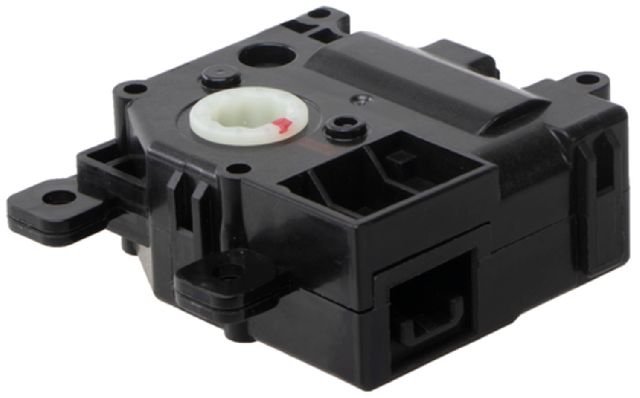
(OEM #87106-30480, superseded by 87106-30481)— This is the OEM part that fails, causing the B1454 code. It is the complete motor and position sensor unit.
Trusted brands: Genuine Lexus
OEM price range: $190-$265
Aftermarket price range: Not commonly available or recommended.
Related Codes That Often Appear With This One
- B1453 — This is the code for the 'Driver Side Air Outlet Damper COOL Control Servo Motor Circuit'. These servos are identical parts and can fail around the same time, leading to temperature issues on both sides.
- B1441 — This code relates to the 'Air Mix Damper Control Servo Motor Circuit (Front Passenger Side Lower Air Mix)'. Since multiple servos are located in the same area, a fault in one can sometimes be accompanied by faults in others. TSB L-SB-0001-21 lists a full range of servo codes (B1441-B1455) that are often seen together.
- B1449, B1455 — These codes for the Rear Air Outlet and Driver FOOT/DEF servos are also part of the common failure group. One owner on ClubLexus reported having B1449, B1453, B1454, and B1455 all at once, which were addressed by the dealer under the CSP.
Technical Service Bulletins (TSBs) & Recalls
- L-SB-0001-21 Rev: 'HVAC Servo Motor Malfunction' - Defines code B1454 and outlines diagnostic procedures for a range of Lexus sedans, including the 2014-2017 IS 350. It recommends checking for A/C amplifier software updates and running a servo cleaning utility before replacement.
- L-SB-0019-20: 'HVAC Servo Motor Malfunction' - A similar bulletin for later model years (2017-2019) that also lists B1454 as a potential DTC for HVAC issues and recommends a software update as a first step.
Platform-Specific Known Issues
- TSB L-SB-0001-21 Rev & Customer Support Program: Lexus issued Technical Service Bulletin L-SB-0001-21 Rev, covering 2014-2017 IS 350 models, for HVAC servo motor malfunctions. This TSB provides diagnostic steps, including a software update for the A/C amplifier and a servo cleaning procedure, before recommending replacement. This was tied to a Customer Support Program (CSP) that extended the warranty for this specific failure, though the primary coverage period has expired.
- Real-World Repair Story: The Stubby Screwdriver is a MUST: A detailed DIY on ClubLexus for a similar generation IS highlights the difficulty of accessing the passenger side servos. The author notes the B1454 servo is 'deeper behind the two aluminum heater pipes' and emphasizes that 'A STUBBY SCREWDRIVER IS A MUST!' to access the mounting screws in the tight space.
- Real-World Repair Story: Technician Shortcut: A technician on YouTube demonstrated a shortcut for replacing multiple passenger-side servos. Instead of the 8+ hour book time requiring full dash removal, he removes the blower motor housing assembly (held by a few 10mm nuts/bolts) to create a large access window to the servos, cutting the job down to 1-2 hours.
Mechanic-Grade Diagnostic Values
- Techstream Live Data: 'Cool A/M Servo Target Pulse (P)' vs 'Cool A/M Servo Actual Pulse (P)' at Max Cool — expected: Target and Actual pulse values should be identical (e.g., 258 pulses).. Failure: The Actual Pulse value will be significantly different from the Target Pulse value (e.g., Target 258, Actual 63), indicating the servo is not reaching its commanded position.
- Techstream Live Data: 'Cool A/M Servo Target Pulse (P)' vs 'Cool A/M Servo Actual Pulse (P)' at Max Hot — expected: Target and Actual pulse values should be identical (e.g., 152 pulses).. Failure: The Actual Pulse value will be stuck at a different reading and will not match the Target Pulse (e.g., Target 152, Actual 254).
Hidden / Shadow Codes Worth Checking
- 54: This is the two-digit code displayed on the climate control screen that corresponds to the full OBD-II code B1454. (see via With the ignition off, press and hold the 'RECIRCULATION' and 'AUTO' buttons on the climate control panel. Start the car while continuing to hold the buttons for a few seconds. The system will enter a diagnostic mode and display any two-digit codes on the temperature display.)
Scan Tool Commands That Help
- Toyota Techstream: Utility -> Servomotor Initialization — This function should be performed after replacing a servo motor, or after the battery has been disconnected, to force the A/C amplifier to relearn the position of all damper doors. It can sometimes resolve issues without parts replacement if a servo has simply lost its calibration.
- Toyota Techstream: AC damper servo operation check tool — This is a special utility, referenced in TSBs, that cycles the servos through their full range of motion to redistribute grease and potentially break them free. It's a dealer-level diagnostic step to be performed after a software update check and before recommending servo replacement. The tool will report which, if any, servos failed the test.
- Toyota Techstream: Data List -> Cool A/M Servo (P) — Used to view the live commanded (Target Pulse) and reported (Actual Pulse) position of the passenger cool air servo. This is the definitive way to confirm a mismatch and diagnose a faulty servo or circuit.
Wiring & Ground Locations
- A/C Amplifier Assembly — Located in the center of the dashboard, behind the radio and climate controls.. This is the ECU that controls all HVAC servo motors. A fault in the amplifier or its ground connection could theoretically cause this code, though it is a rare cause.
- Passenger Cool Air Servo Connector — On the servo motor body, located behind the glove box and behind two aluminum heater pipes.. This is the final connection point to the motor. It is typically a blue connector and should be checked for a secure connection and any signs of corrosion or damage.
Real Owner Repair Stories
- YouTube Technician Video (Lexus Sedan (appears to be IS/GS of the same era)) — Guest stated passenger center vent was blowing hot air when set to MAX COOL. The technician verified a temperature of 42°F on the driver's side and 54°F and rising on the passenger side.
❌ Tried (didn't work) The technician first followed the TSB procedure by running a 'Servomotor Initialization' using Techstream. The B1454 code immediately returned, indicating the initialization did not fix the underlying hardware fault.
✅ What actually fixed it The technician replaced the 'Cool A/M Servo (P)' motor (Part No. 87106-30480). After replacement, he verified in Techstream that the 'Target Pulse' and 'Actual Pulse' for the servo were now identical (258), confirming the repair was successful.
When the Usual Fixes Don't Work
- While B1454 is most commonly caused by a failed servo motor requiring replacement, there are documented cases where the issue is resolved purely through software. One owner fixed a two-year-long problem by running the 'Servomotor Initialization' in Techstream, with no parts replaced. Another owner found that repeatedly initializing the servos unstuck a problematic motor, providing a long-term fix without replacement. This suggests that before committing to the physical repair, a software-based recalibration with a tool like Techstream is a worthwhile, and potentially sufficient, diagnostic step.
OEM Part Supersession History
87106-30480→87106-30481— Standard part revision, likely for improved reliability or manufacturing process change.
Heads up: The TSBs advise using the vehicle's VIN in the Electronic Parts Catalog to find the correct part number for the specific vehicle being repaired, as multiple revisions may exist.
Model Year Variations Within This Range
- 2014-2017: These model years are primarily covered by TSB L-SB-0001-21 Rev. The diagnostic procedure involves checking for a software update, running a servo cleaning utility, and then replacing the servo if the code persists.
- 2017-2018: These later model years are covered by TSB L-SB-0019-20. While the code and component are the same, the existence of a separate TSB suggests there may be different A/C Amplifier software versions or diagnostic paths compared to the earlier models. The 2017 model year was a facelift year, and the engine changed in 2018.
Helpful Videos

We Have This Part in Stock

The information in this article is provided for general reference and educational purposes only. Vehicle specifications, procedures, and part compatibility can vary by production date, trim level, and region. Always consult your vehicle's factory service manual and verify part numbers before purchasing or performing repairs. Safety-critical components such as airbags, seat belts, and braking systems should be installed by a qualified professional.
- Lexus IS 350:
- 🎬 Helpful Videos
- 🛍️ Shop This Part
- What's Unique About the 2014-2018 Lexus IS 350
- Diagnostic Flowchart
- Symptoms You May Notice
- Most Likely Causes
- Rare But Worth Checking
- Diagnosis Steps
- Parts You'll Likely Need
- Related Codes That Often Appear With This One
- Technical Service Bulletins (TSBs) & Recalls
- Platform-Specific Known Issues
- Mechanic-Grade Diagnostic Values
- Hidden / Shadow Codes Worth Checking
- Scan Tool Commands That Help
- Wiring & Ground Locations
- Real Owner Repair Stories
- When the Usual Fixes Don't Work
- OEM Part Supersession History
- Model Year Variations Within This Range
- 🎟️ Get 5% Off