

B1454 on 2016-2017 Lexus GS 200T: Passenger HVAC Servo Motor Fixes
B1454 means the passenger-side cool air blend servo motor has failed. This is a very common issue, causing the passenger vents to blow warm air when the A/C is on, often with a clicking sound from the dash. The fix is to replace the servo motor (Part No. 87106-30620), a difficult DIY job due to tight access behind the glovebox. Lexus acknowledged this with a Customer Support Program (20LE01) that extended the warranty for this specific repair.
- B1454 almost always means the passenger-side cool air servo motor has failed, a very common problem on this car.
- Symptoms are specific: passenger vents blow warm when A/C is on, often with a clicking sound from the dash.
- Before paying for a repair, check with a Lexus dealer about TSB L-SB-0001-21 and Customer Support Program 20LE01, which may cover the cost.
- The fix is to replace the servo motor (OEM part 87106-30620). It is a difficult DIY due to tight access but can save significant money over dealer quotes.
- A scan tool that can perform 'Servo Motor Initialization' is required for proper calibration after replacement.
What's Unique About the 2016-2017 Lexus GS 200T
This isn't a random failure; it's a widely acknowledged weak point across many Lexus models from this era, including the GS, IS, and RC series. The servo motors are known to fail internally due to an electrical malfunction. The problem was so common that Lexus issued Technical Service Bulletin (TSB) L-SB-0001-21 and a Customer Support Program (20LE01) to address it. This program extended warranty coverage specifically for this repair, first with a primary coverage period and then a secondary coverage of 7 years or 125,000 miles from the vehicle's first use. While dealer quotes for the repair can be high, the community has found shortcuts to access the servo without removing the entire dash.
Diagnostic Flowchart
Tap your situation to follow the diagnostic path that matches what you're seeing on this vehicle.
Symptoms You May Notice
- Passenger side vents blow air at a different temperature than the driver's side (usually warm or hot when A/C is on).
- Inability to adjust the passenger side temperature; it may be stuck on full hot or full cold.
- Clicking, ticking, or grinding noises from behind the passenger side of the dashboard, especially when changing temperature settings or starting the car.
- Uneven temperature or airflow from vents.
- Recharging the A/C system. If the driver's side is blowing cold, the refrigerant level is likely not the problem.
- Replacing the wrong servo motor. The HVAC unit contains multiple servos; B1454 specifically points to the passenger-side COOL air mix servo, which has a blue connector.
Most Likely Causes
- Failed Passenger Cool Air Servo Motor 🔴 High Probability This is a known weak point across the 4th generation GS and related Lexus platforms. The internal electrical components of the servo motor fail. Lexus acknowledged this with TSB L-SB-0001-21 and Customer Support Program 20LE01.
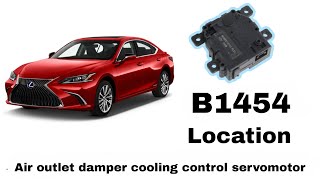
How to confirm: Use a diagnostic tool like Techstream to monitor the 'Cool A/M Servo (P)' target pulse vs. the actual pulse while changing the passenger temperature. A large difference indicates the motor is not responding to commands. An audible clicking or grinding from the passenger dash is also a strong indicator. The specific servo for B1454 has a blue wire connector and is located behind the glove box area.
Typical fix: Replace the faulty servo motor. After replacement, a 'Servo Motor Initialization' procedure must be performed with a capable scan tool for proper calibration. Some forum users report that initialization alone can temporarily fix the issue for weeks or months.
Est. part cost: $160-$250 - Jammed or Obstructed Blend Door Linkage ⚪ Low Probability This can happen if foreign objects enter the HVAC system or if work was done improperly (e.g., cabin filter replacement).
How to confirm: After removing the servo motor, attempt to move the blend door linkage by hand. It should move smoothly through its range of motion. If it is stuck or requires excessive force, the HVAC case has an internal obstruction.
Typical fix: This is a complex repair that may require removal and disassembly of the entire HVAC unit to clear the obstruction.
Est. part cost: $0 - Wiring or Connector Issue ⚪ Low Probability Rodent damage has been noted in some cases, where chewed wires can cause multiple, simultaneous servo codes.
How to confirm: Visually inspect the wiring harness and connector going to the servo motor for any signs of damage, corrosion, or loose pins. Use a multimeter to check for power, ground, and signal at the connector.
Typical fix: Repair the damaged section of the wiring harness or clean/replace the connector.
Est. part cost: $5-$50
Rare But Worth Checking
- Faulty A/C Amplifier (Control Module): This is uncommon. The diagnostic procedure in the service manual suggests replacing the A/C amplifier only after a new servo motor fails to resolve the issue. However, some forum discussions mention that a software re-flash of the A/C amplifier resolved issues for some owners, suggesting it can be a contributing factor. It's the last part to suspect, not the first.
Diagnosis Steps
- Connect a professional scan tool (like Toyota Techstream) capable of reading Body (B) codes to confirm B1454 is active.
- Check for any other HVAC-related codes (e.g., B1453, B1441) to see if other servos have also failed.
- As per TSB L-SB-0001-21, attempt a 'Servo Motor Initialization' using the scan tool's utility menu. If the code clears 🎬 Watch: How to perform a servo motor initialization via OBD and does not immediately return, the issue may be resolved temporarily. Some owners report this fix lasting for weeks or even months.
- If the code returns, navigate to the HVAC Live Data or Data List on the scan tool. Monitor the parameters for 'Cool A/M Servo (P) Target Pulse' and 'Cool A/M Servo (P) Actual Pulse'.
- Command the passenger temperature from full cold to full hot. The 'Actual Pulse' should track the 'Target Pulse'. If the 'Actual Pulse' does not change or is erratic, the servo motor has failed.
- Listen for clicking or grinding noises from the passenger side of the dashboard, which confirms a mechanical or electrical failure of the servo.
- If the servo appears unresponsive, gain access to it behind the glove box. On the GS, this involves removing the glove box and lower knee airbag panel. The target servo has a blue connector. 🎬 See this video to locate the B1454 cooling control servo
- Inspect the servo's electrical connector and wiring for visible damage. If wiring is intact, the servo is the confirmed faulty part.
- If the servo is confirmed to be faulty, it must be replaced.
Parts You'll Likely Need
- Damper Servo Sub Assembly, No.7
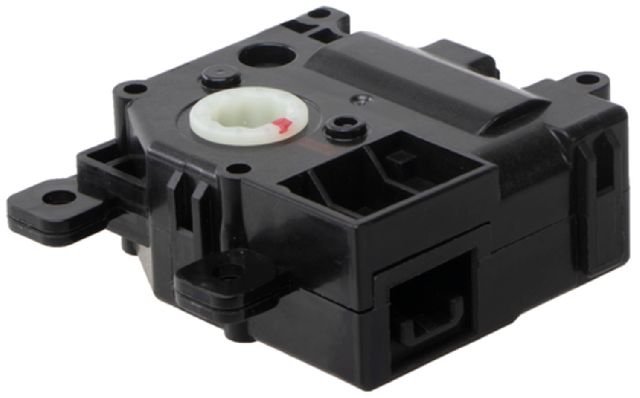
(OEM #87106-30620)— This is the specific servo motor that controls the passenger-side cool air blend door, and its internal failure is the direct cause of code B1454. Note: TSB L-SB-0001-21 may list 87106-30610 for this function on other models like the IS, but 87106-30620 is the correct part for the GS platform.
Trusted brands: Lexus (Genuine OEM), Aisin
OEM price range: $160-$220
Aftermarket price range: $90-$150
Related Codes That Often Appear With This One
- B1453 — This is the code for the driver's side cool air servo. These servos are of a similar design and often fail around the same time.
- B1441, B1443, B1455, etc. — Lexus TSB L-SB-0001-21 lists a large family of HVAC servo motor codes that are all related to this common component failure. It's not unusual to find multiple servo codes stored at once, sometimes pointing to a broader electrical issue or multiple failing servos.
Technical Service Bulletins (TSBs) & Recalls
- L-SB-0001-21 Rev: 'HVAC Servo Motor Malfunction' - Confirms the definition of B1454, lists it with a family of other common servo failures, and provides the official diagnostic and repair procedure.
Platform-Specific Known Issues
- Customer Support Program 20LE01: Lexus issued CSP 20LE01 to extend warranty coverage for this specific failure. Primary coverage ended Jan 12, 2022, but Secondary Coverage is applicable for 7 years or 125,000 miles from the date of first use, whichever comes first. This covers the repair free of charge at an authorized dealer. Owners have successfully received 'goodwill' repairs even outside this window, especially with an established dealer service history.
- Technical Service Bulletin L-SB-0001-21 Rev: This TSB, titled 'HVAC Servo Motor Malfunction', officially documents the issue, lists all related codes including B1454, and provides the diagnostic and replacement procedures for dealers. It applies to GS, IS, and RC models from the 2013-2017 model years.
Mechanic-Grade Diagnostic Values
- Techstream Live Data: 'Cool A/M Servo (P) Target Pulse' vs 'Cool A/M Servo (P) Actual Pulse' — expected: Values should be nearly identical. For example, at Max Cool, both Target and Actual should read around 258. At Max Hot, both should read around 152.. Failure: A significant difference between the Target and Actual pulse values (e.g., Target: 152, Actual: 254) confirms a fault in the servo or its circuit.
Scan Tool Commands That Help
- Toyota Techstream: Servomotor Initialization — This is the first diagnostic step to perform. It recalibrates all HVAC servo motors. It can temporarily fix the issue if the motor has lost its position, but if the code returns immediately, it indicates a hardware failure. The path is Body / Air Conditioner / Utility / Servomotor Initialization.
- Toyota Techstream: AC Damper Servo Operation Check Tool — This is a special dealer-level utility, referenced in TSBs, that must be downloaded to Techstream. It runs the servos through an 8-14 minute cleaning and grease redistribution cycle. It is intended to be used after an A/C amplifier software update and before replacing the servo motor to see if the issue can be resolved without part replacement.
Wiring & Ground Locations
- Passenger Side Cool Air Servo Connector — Behind the passenger side glove box. The specific servo for B1454 has a blue electrical connector.. This is the direct connection point for the faulty component. Visually inspecting this connector for damage or corrosion is a key diagnostic step before replacing the motor.
- Right Cowl Side J/B (Junction Block) — Located at the right end of the dash, accessible after removing the glove box and side panels.. The HVAC system wiring, including the A/C Amplifier and servo motor circuits, runs through this junction block. A fault here, though rare, could mimic a servo failure.
Real Owner Repair Stories
- ClubLexus user (2017 Lexus GS350, 51,758 miles) — Passenger side air was much warmer than the driver's side. Diagnostic scan showed DTC B1454.
❌ Tried (didn't work) A 'Servo Utility' (Initialization) was performed by the dealer, but the code returned, indicating a hardware fault.
✅ What actually fixed it The dealer replaced the '#6 PASSENGER SIDE COOL AIRMIX SERVO' under a goodwill claim from Lexus, even though the vehicle was 5.5 years old and out of standard warranty. - YouTube video by a technician (Lexus IS350 (similar platform and issue)) — Guest stated passenger center vent was blowing hot on MAX COOL setting. Technician measured 42°F on the driver's side and a much higher temperature on the passenger side.
❌ Tried (didn't work) Technician first followed the TSB and performed a 'Servomotor Initialization'. The B1454 code returned immediately., Reprogramming the A/C amplifier was the next step in the TSB, but the technician determined the servo itself had failed based on live data.
✅ What actually fixed it The technician replaced the 'Cool A/M Servo (P)' motor. After replacement, the Techstream scan tool confirmed the 'Target Pulse' and 'Actual Pulse' values were identical, resolving the fault.
Helpful Videos
We Have This Part in Stock

The information in this article is provided for general reference and educational purposes only. Vehicle specifications, procedures, and part compatibility can vary by production date, trim level, and region. Always consult your vehicle's factory service manual and verify part numbers before purchasing or performing repairs. Safety-critical components such as airbags, seat belts, and braking systems should be installed by a qualified professional.
- Lexus GS 200T:
- 🎬 Helpful Videos
- 🛍️ Shop This Part
- What's Unique About the 2016-2017 Lexus GS 200T
- Diagnostic Flowchart
- Symptoms You May Notice
- Most Likely Causes
- Rare But Worth Checking
- Diagnosis Steps
- Parts You'll Likely Need
- Related Codes That Often Appear With This One
- Technical Service Bulletins (TSBs) & Recalls
- Platform-Specific Known Issues
- Mechanic-Grade Diagnostic Values
- Scan Tool Commands That Help
- Wiring & Ground Locations
- Real Owner Repair Stories
- 🎟️ Get 5% Off