

OBD-II Code B1450: Wiper Wash/Delay Switch Circuit Failure
The Ultimate 2026 Guide to Diagnosing and Fixing B1450
- Code B1450 points directly to a failed multifunction wiper switch or its wiring in over 80% of cases.
- Never confuse body code B1450 with powertrain code P1450; the latter is a Ford-specific EVAP fuel system error requiring completely different diagnostics.
- Driving with code B1450 is a severe safety hazard; impaired visibility from non-functional wipers contributes to over 38,000 crashes annually.
- Test all wiper speeds and inspect the 10-30 amp wiper fuses before spending $150+ on a replacement multifunction switch.
- If code U0140 appears alongside B1450, diagnose the main wiring harness for shorts before replacing the $500+ Body Control Module.
What Does B1450 Mean?

Code B1450 indicates the Body Control Module (BCM) detects an electrical fault in the windshield wiper's delay (intermittent) or washer circuit. The BCM reads a voltage or resistance outside the expected range, confirming a switch or wiring failure.
Technical definition: The SAE/ISO definition for B1450 is "Wiper Wash/Delay Switch Circuit Failure". The Body Control Module (BCM) triggers this fault when it receives an invalid voltage signal from the multifunction switch, indicating an open circuit, short, or internal switch failure.
Can I Drive With B1450?
Yes, But With Caution. Yes, but it is a severe safety hazard. Driving without functional wipers dramatically increases crash risk in adverse weather. The Federal Highway Administration attributes over 38,000 crashes annually to impaired visibility. A non-functional wiper system renders your vehicle unsafe and illegal to operate in rain, snow, or fog.
Common Causes

- Defective Multifunction/Wiper Switch (Very Common) — The steering column stalk contains small electrical contacts and variable resistors that wear out or break over time, sending incorrect signals for the delay and wash settings. 🎬 Watch: Replace the multifunction switch without removing the steering wheel.
- Blown Fuse or Faulty Relay (Common) — A blown wiper/washer system fuse cuts power entirely, triggering the code. A failing main wiper relay provides intermittent power, confusing the control module.
- Failed Windshield Washer Pump (Common) — An internally shorted washer pump motor creates an abnormal electrical load or voltage drop in the circuit, triggering the code when the washer function is activated.
- Wiring Harness Damage (Common) — Wires leading to the multifunction switch, wiper motor, or washer pump fray or short out. This frequently occurs inside the steering column where wires rub during steering wheel adjustment.
- Corroded Connectors (Common) — Moisture intrusion corrodes electrical connectors at the multifunction switch, BCM, wiper motor, or washer pump. This increases resistance, causing voltage drops the BCM interprets as a fault.
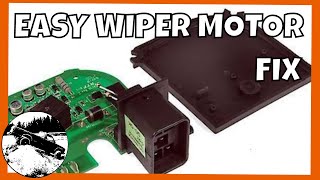
- Failed Wiper Integration Relay/Circuit Board (Less Common) — On specific vehicles (like 2003-2009 Toyota 4Runners), a small relay on the multifunction switch's internal circuit board burns out, causing a loss of delay functions and preventing wipers from parking.
- Failed Wiper Motor Park Switch (Rare) — An internal failure in the wiper motor's park switch mechanism sends incorrect electrical signals back to the control module, often triggering B1450 alongside code B1449.
- Faulty Body Control Module (BCM) (Rare) — The BCM's internal driver circuit that interprets the wiper switch signal burns out. Suspect this only after exhausting all switch and wiring diagnostics. 🎬 Watch this walkthrough for troubleshooting wiper motors and switches.
Symptoms

- Wipers only function on high speed; delay settings fail — The wipers work on the high-speed setting (which uses a direct circuit) but the intermittent/delay settings are completely dead.
- Windshield washer does not spray — Pulling or pushing the stalk to spray washer fluid yields no response, directly triggering the code.
- Wipers behave erratically or fail to park — The wipers refuse to turn off, stop in the middle of the windshield, or operate on the wrong speed setting.
- Dashboard warning light illuminated — A 'Check Engine' or dedicated body/chassis warning light illuminates to alert the driver of the stored BCM fault.
Diagnostic Flowchart
Tap your situation to follow the diagnostic path that matches what you're seeing on this code.
Common Fixes & Costs
- Replace Multifunction (Wiper) Switch
— Parts: $50-$350, Labor: $100-$200, ~1.5 hr book time
(Intermediate)
Ford F-150 (2004-2008): OEM 4L3Z-13K359-AAA (Alt: Standard Motor Products CBS-1332 ($153), Dorman 2330858 ($86))
Chevy/GMC Truck (2007-2013): OEM 15849313 (Alt: Duralast SW6300 ($55), ACDelco D6221E ($55)) - Replace Blown Fuse or Relay — Parts: $2-$20, Labor: $0-$50, ~0.2 hr book time (Beginner)
- Replace Windshield Washer Pump
— Parts: $25-$75, Labor: $60-$120, ~1.0 hr book time
(DIY)
Ford F-150 (2004-2014): OEM 8C3Z-17664-A (Alt: Trico 11-521 ($15), ACI 177123 ($26)) - Repair Damaged Wiring — Parts: $10-$30, Labor: $125-$400, ~2.5 hr book time (Professional)
- Replace Windshield Wiper Motor — Parts: $75-$400, Labor: $120-$250, ~1.2 hr book time (Intermediate)
- Replace Wiper Relay on Circuit Board (Toyota)
— Parts: $10-$30, Labor: $100-$200, ~1.5 hr book time
(Advanced)
Toyota 4Runner (2003-2009): OEM N/A (Alt: Denso 156700-1070)
Used vs. New Parts: Buying Guide
When a used part is worth it: For a common part like a multifunction switch on a vehicle over 10 years old, a used part from a reputable salvage yard is cost-effective if the budget is tight.
Donor-vehicle mileage cap: roughly under 100000 miles for the part to have meaningful remaining life.
Donor quality checklist:
- Verify the part number matches exactly; identical-looking switches have different internal wiring for specific vehicle options.
- Inspect electrical connector pins for corrosion or melting.
- Choose a donor vehicle with no signs of water damage or major front-end collisions.
Decision logic:
- If The vehicle is less than 8 years old or the part requires removing the airbag/steering wheel → Buy new (OEM or quality aftermarket). The labor is significant; do not risk doing it twice.
- If The vehicle is over 15 years old and the part is easily accessible without airbag removal → A used part is a reasonable gamble to save money.
- If The part is known for a high wear-out rate (like internal switch contacts) → New is strongly preferred, as a used part has limited remaining life.
Warranty tradeoff: Used parts typically have a 30-90 day exchange warranty. New aftermarket parts offer 1-year to limited lifetime warranties. New OEM parts carry 1-2 year warranties.
Worst-case if a used part fails: $200-$400 if a used part fails after the warranty period, requiring repurchasing the part and paying labor again.
What Happens If You Wait — Timeline
- 0-1 month: Code B1450 sets. Intermittent/delay or washer functions fail. High/low speed wipers usually still work. Dashboard warning light illuminates. (MPG impact: 0%% · Added cost: $0)
- 1-3 months: The immediate safety hazard of no wipers in adverse weather becomes the primary concern, risking traffic tickets or at-fault accidents. (MPG impact: 0%% · Added cost: $150-$1000+ (Cost of a ticket or insurance deductible))
- 3-12 months: Moisture wicks into other wires in a corroded harness, causing unrelated electrical problems. The vehicle fails state safety inspections. (MPG impact: 0%% · Added cost: $200-$500 (Diagnosing and repairing spreading corrosion))
- 12+ months: A persistent short circuit overloads and destroys the driver circuit within the Body Control Module (BCM), turning a minor repair into a major expense. (MPG impact: 0%% · Added cost: $700-$1500 (BCM replacement and programming))
Cost of Not Fixing It
- Immediate: Inability to clear the windshield in rain or snow creates a severe safety hazard, leading to traffic citations or at-fault accidents. (Added cost: $150-$1000+ (Ticket or insurance deductible))
- 1-6 months: A persistent short circuit in the switch or wiring overloads the driver circuit within the Body Control Module (BCM), destroying the module. (Added cost: $500-$1500 (BCM Replacement))
- 6+ months: Failure of state safety inspections. Continued moisture intrusion at a corroded connector damages adjacent circuits in the harness. (Added cost: $200-$600+ (Additional wiring diagnostics and repair))
Diagnosis Steps

- Check the Fuses
Locate the fuse(s) for the windshield wipers and washer pump in the owner's manual. Visually inspect for a broken filament and test with a multimeter for continuity (should read near 0 Ohms). Replace blown fuses with the exact same amperage.
Tools: Fuse puller or needle-nose pliers, Multimeter (Beginner) - Test All Wiper/Washer Functions
Systematically cycle the wiper switch through every setting (all delay speeds, low, high) and test the washer function. Documenting exactly which functions fail isolates the fault to specific circuits.
Tools: None (Beginner) - Test the Washer Pump
Have a helper activate the washer switch while you listen for a hum from the washer pump. If silent, use a multimeter to check for 12V power and ground at the pump's connector. No voltage indicates a wiring/switch issue; 12V present with no sound confirms a dead pump.
Tools: Multimeter, Helper (Intermediate) - Inspect the Wiring Harness
Perform a visual inspection of the wiring harness at the steering column multifunction switch, washer fluid pump, and wiper motor. Look for chafing, melting, corrosion, or loose pins.
Tools: Flashlight, Inspection mirror (Intermediate) - [PRO TIP] Test Multifunction Switch Resistance
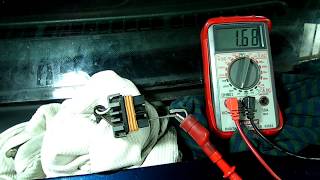
Access the switch's electrical connector. Using a wiring diagram, probe the pins for the delay and wash functions with a multimeter set to Ohms (Ω). Moving the switch through delay settings must show specific, stepped resistance changes (e.g., Delay 1 = 21.5 kΩ, Delay 2 = 10.2 kΩ). An open circuit (OL) confirms internal switch failure.
Tools: Multimeter, Basic hand tools, Vehicle-specific wiring diagram (Advanced) - [PRO TIP] Analyze Live Data with a Scan Tool
Connect a bi-directional scan tool and navigate to the BCM data stream. Monitor the 'Wiper Switch Position' parameter. As you operate the switch, the scan tool must display corresponding status changes. An 'Invalid' or 'Fault' reading confirms the BCM is receiving a bad signal.
Tools: Bi-directional scan tool (Advanced) - [ADVANCED] Voltage Drop & Load Test Circuits
A multimeter showing 12V doesn't guarantee the wire can carry a load. Connect an incandescent test light to a known good ground and probe the power wire at the washer pump. A dim light indicates high resistance. Confirm with a voltage drop test: >0.5V drop on the power side or >0.2V on the ground side requires wiring repair.
Tools: Incandescent test light (not LED), Multimeter (Advanced) - Check the Wiper Motor Park Switch Circuit
Identify the park switch signal wire at the wiper motor connector. With wipers on, verify voltage presence. When turned off, voltage must change as the motor runs to the 'park' position. Signal failure here confuses the BCM and triggers circuit codes.
Tools: Multimeter, Vehicle-specific wiring diagram (Advanced)
When This Code Triggers (Freeze-Frame Conditions)
- System Voltage: 11.5-14.5V (Normal operating voltage; code triggers when the BCM sees an invalid voltage/resistance from the switch circuit, not due to overall system voltage.)
- Wiper Switch Status: Invalid/Fault (Code sets the moment the BCM receives a signal that doesn't correspond to a valid switch position.)
- Vehicle Speed: 0-75 mph (The fault triggers at any speed whenever the driver attempts to use the wash or delay wiper functions.)
- Time Since Engine Start: Any (The fault is not dependent on engine temperature or runtime; it is an electrical circuit failure occurring at any time.)
Related Codes
- B1449 — Wiper Park/Unpark Switch Circuit Failure. Often appears with B1450. Suspect a B1449 fault if wipers fail to 'park' at the bottom of the windshield.
- B1464 — Wiper High/Low Speed Circuit Failure. If high/low speeds fail but delay works, B1464 triggers. Both codes present simultaneously confirm a comprehensive multifunction switch failure.
- B1845 — Wiper Front Control Circuit Failure. A general Ford code set alongside B1450, reinforcing that the fault lies within the switch or its wiring.
- U0140 — Lost Communication With Body Control Module. If B1450 appears with U0140, suspect network wiring shorts rather than a bad switch. Diagnose wiring thoroughly before condemning the BCM.
Climate & Environmental Factors
- High Humidity / Coastal Areas: Salt-laden air accelerates corrosion on electrical connectors and switch contacts, increasing circuit resistance and triggering BCM faults.
- Cold Climates / Road Salt: Corrosive de-icing brines splash onto undercarriage wiring harnesses, seeping past seals to destroy connectors. Cold temperatures also crack wire insulation, inviting moisture.
How to Talk to a Mechanic About This Code
Say this: "I have an OBD-II code B1450 indicating a wiper wash/delay switch circuit failure. My intermittent and washer functions are dead. I need a diagnostic to confirm if the fault is the multifunction switch, the wiring, or the washer pump."
This directs the technician to the specific failed system, preventing vague, open-ended diagnostics that lead to unnecessary work.
Avoid saying:
- 'My wipers are acting weird.'
- 'My check engine light is on, can you look at it?'
- 'Just fix whatever is wrong with the wipers.'
Questions to ask before authorizing the repair:
- Did you test the multifunction switch and see incorrect resistance readings?
- Did you check for 12V power at the washer pump connector when activated?
- Can you show me the damaged part or the corroded connector?
- What is the warranty on the replacement part and labor?
Where to Take It: Dealer vs Independent vs Chain
- Dealer:
Recommended only if under warranty or if initial diagnosis points to a complex module issue. Not cost-effective for straightforward switch faults.
Best for: Vehicles still under bumper-to-bumper warranty, Complex electrical issues involving multiple control modules (e.g., B1450 combined with U-codes), Repairs requiring brand-specific BCM software updates
Downsides: Significantly higher labor rates and parts costs., Tendency to replace entire assemblies rather than failing sub-components. (Typical cost: +50% vs. baseline) - Independent Shop:
Best fit. This is a standard electrical repair for competent independent shops, offering flexible and affordable repair options.
Best for: Out-of-warranty vehicles where cost is a factor., Diagnosing and repairing common electrical faults like switches, wiring, or pumps., Vehicles on the 'most_affected' list.
Downsides: Diagnostic skill varies; look for ASE certifications., May lack access to the latest BCM software updates. (Typical cost: +0% vs. baseline) - Chain Shop:
Use with caution. Acceptable for a pre-diagnosed washer pump replacement, but avoid for diagnosing the B1450 code itself.
Best for: Simple parts replacement like a washer pump if you have pre-diagnosed the issue.
Downsides: Electrical diagnostic skill is highly variable., High pressure to upsell unnecessary services., Not equipped for in-depth wiring repairs. (Typical cost: -10% vs. baseline)
When to Walk Away From the Repair
If the estimated repair cost for the B1450 fault and other known issues exceeds 50% of the car's private-party value, sell the car as-is.
- Car worth $4000, fix is $550: Fix it. The repair cost is well below the 50% threshold and restores a critical safety function.
- Car worth $3000, fix is $1600: Walk away. The cost exceeds 50% of the car's value, indicating the B1450 is part of a larger set of expensive electrical problems.
- Car worth $8000, fix is $4000: Borderline. A $4000 estimate for a wiper issue suggests catastrophic failure (fried BCM plus harness damage). Get a second opinion before authorizing.
What Scan Tool You Need for This Code

Minimum: A code reader that accesses Body Control Module (BCM) codes. Basic $20 powertrain readers will NOT see a 'B' code.
Standard OBD-II readers only check 'P' (Powertrain) codes and will report 'no codes found', masking the B1450 fault entirely.
Budget: Ancel BD310 (~$60) — Reads engine and body codes, including B1450. Displays live BCM data streams to verify if the scanner registers switch movement.
Mid-range: Innova 5610 or BlueDriver Pro (~$120-350) — Provides access to OEM-specific BCM codes and graphs live data, making it easier to spot intermittent glitches in the wiper switch signal.
Professional: Autel MaxiCOM MK808BT or Launch X431 series (~$500-1200) — Bi-directional tools command the BCM to activate components directly. Commanding the washer pump to run without touching the switch instantly proves the pump and wiring are good.
How to Clear the Code After You Fix It
- Reconnect battery if disconnected for repair.
- Use an OBD-II scan tool capable of reading B-codes to clear B1450 from the Body Control Module.
- Cycle the ignition off and on, then test all functions of the wiper/washer switch to verify the repair.
Drive cycle (~5 minutes): A specific drive cycle is not required. The repair is verified by component use. After clearing the code, operate the wiper switch through all delay, speed, and washer settings. If the code does not return, the fix is successful.
Readiness monitors affected: None
Watch out for:
- Body codes do not affect emissions readiness monitors, so no extended driving is needed for smog checks.
- Clearing the code without fixing the electrical fault results in immediate code return upon next switch use.
Will This Fail Emissions / State Inspection?
No — by itself this code doesn't fail OBD inspection (but it can keep readiness monitors from setting, which causes a separate fail).
- California: This code will NOT cause a failure of the OBD-II emissions (smog) test, as B-codes are excluded. However, inoperative wipers fail visual safety checks if performed.
- New York: NYS requires an annual safety inspection explicitly checking windshield wiper operation. A B1450 fault results in automatic safety inspection failure.
- Texas: Texas requires an annual safety inspection including functional windshield wipers. Vehicles with inoperative wipers fail this inspection.
Most Commonly Affected Vehicles
- Ford F-150 (1999-2008) — Extremely common issue caused by internal contact wear inside the multifunction switch for the wash and delay functions.
- Chevrolet/GMC Silverado, Sierra, Tahoe, Suburban (2000-2014) — Multifunction switches fail frequently. GM TSBs also highlight engine wiring harnesses chafing on brackets, causing intermittent shorts.
- Toyota 4Runner (2003-2009) — A small relay on the wiper switch's internal circuit board fails, knocking out intermittent functions and causing wipers to stop mid-swipe. Solder a $15 relay to fix.
- Jeep Grand Cherokee (1999-2010) — The multifunction switch is a documented failure point on WJ and WK models, leading to erratic wiper behavior and dead washer pumps.
- Dodge/Ram Ram 1500/2500/3500 (2002-2009) — Wiper motor failure is common, but the multifunction switch also triggers this code. Cleaning internal switch contacts sometimes provides a temporary fix.
- Ford Windstar (1998-2003) — Documented service manual issues with the wiper switch circuit triggering B1450.
- Ford F-250/F-350 Super Duty (1999-2007) — Similar to the F-150, these trucks experience frequent, initially intermittent failures in the multifunction switch.
- Chrysler/Dodge Town & Country, Grand Caravan (2008-2016) — The multifunction switch is a known failure point, causing loss of washer and delay functions.
Manufacturer-Specific Notes
- Ford: Ford vehicles have a common powertrain code P1450 for 'Unable to Bleed Up Fuel Tank Vacuum'. This EVAP issue is completely unrelated to the B1450 wiper code.
- Mitsubishi: On some Mitsubishi models, B1450 is defined as 'Tire Pressure Sensor 3 - Internal Component Failure'. Always verify the code definition for your specific model.
- General Motors (GM): GM TSBs warn technicians that intermittent wiring shorts cause U0140 codes, making the BCM appear offline. Do not replace the BCM without diagnosing wiring first.
- Toyota/Lexus: Code B1449 on these vehicles often refers to a 'Rear Air Outlet Damper Control Servo Motor Circuit' in the climate control system, unrelated to wipers.
Real Owner Stories
2004 Chevy Silverado 1500HD - Intermittent Wipers Fail, Only High Speed Works
Windshield wipers only functioned on high speed. Intermittent settings and washer pump were dead. Fuses were intact.
What they tried:
- Replaced the multifunction switch on the steering column, but the problem persisted.
Outcome: The owner found a TSB indicating the wiper control circuit board fails from moisture. Replacing this board with a Dorman aftermarket part restored all functions.
Lesson: On GM trucks, the fault is sometimes a separate wiper control module rather than the stalk switch. Always check TSBs before replacing parts.
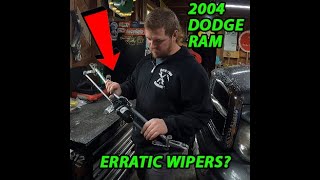
2004 Dodge Ram 1500 - Intermittent Wipers and Park Function Inoperative
Wipers failed on intermittent settings and would not 'park' correctly when turned off. Low and high speeds worked.
What they tried:
- Removed the wiper motor cover, cleaned old grease off internal contact points, sanded contacts, and reapplied dielectric grease.
Outcome: Cleaning the contacts inside the wiper motor's park switch assembly completely fixed the intermittent and park features.
Lesson: Symptoms including a failure to park point to the park switch mechanism inside the wiper motor. Cleaning contacts is a $0 fix before buying a new motor.
2003 Toyota 4Runner - Intermittent Wipers Stop Mid-Windshield
Intermittent wiper settings failed, and wipers stopped immediately mid-windshield when turned off.
What they tried:
- Identified a failed relay on the wiper switch's internal circuit board via forums.
- Purchased the specific Denso relay (part #156700-1070) for $15 instead of a $180 switch assembly.
Outcome: Desoldered the old relay and soldered the new one, restoring full functionality for a fraction of the cost.
Lesson: Specific component failures can be repaired with basic soldering skills for massive cost savings. Forum research is key for high-value fixes.
2018 Chevy Silverado - Single Wiper Swipe on Ignition
Wipers performed a single swipe every time the ignition turned 'on', even with the switch 'off'.
What they tried:
- Replaced the battery and wiper motor, which did not solve the problem.
- Traced the issue to non-serviceable internal relays in the under-hood fuse box.
Outcome: Replaced the entire under-hood fuse box assembly with a used OEM unit, resolving the phantom swipe.
Lesson: Erratic behavior not tied to switch inputs points to deeper control module issues. Modern trucks integrate critical relays into the fuse box circuit board.
How to Prevent This Code From Triggering
- Apply Dielectric Grease to Connectors (Anytime a connector is disconnected) — Dielectric grease is a waterproof sealant. Applying it to rubber seals and pins prevents moisture and road salt from causing circuit-destroying corrosion.
- Inspect and Secure Wiring Harnesses (Annually or during engine bay service) — Vibration causes wiring harnesses to rub against sharp brackets. Securing loose harnesses with zip ties prevents wires from chafing and shorting out.
- Clean Wiper Blades and Windshield (Monthly) — Using wipers on dry or dirty glass forces the motor and switch to work harder. Removing abrasive grit reduces friction and prolongs system life.
- Use Switches Gently and Avoid Liquid Spills (Daily habit) — Forcing the stalk lever or spilling drinks on the steering column causes physical damage or liquid intrusion, leading to premature switch failure.
- Keep Cowl Drains Clear (Every 6 months) — Clogged cowl drains allow water to pool and submerge the wiper motor and its electrical connector, leading to rapid corrosion and failure.
Frequently Asked Questions
Is code B1450 the same as P1450?
Absolutely not. B1450 is a 'Body' code related to the wiper system. P1450 is a 'Powertrain' code, most commonly seen on Fords, related to the fuel tank's evaporative emissions (EVAP) system. They require completely different diagnoses.
What are common misdiagnosis mistakes for a B1450 code?
The biggest mistake is confusing it with the Ford EVAP code P1450. Another major pitfall is rushing to replace the Body Control Module (BCM) when a U0140 code is present. Always diagnose the switch, wiring, and connectors thoroughly before condemning a $500+ module.
My wipers seem to work fine, but the B1450 code keeps coming back. What's wrong?
This points to an intermittent fault like chafed wiring or a failing internal switch contact. A professional bi-directional scan tool is required to view live BCM data and catch erratic voltage readings as they happen. Alternatively, it is a history code from a previous event requiring manual clearing.
Can I fix code B1450 myself?
Simple fixes like replacing a fuse or washer pump are highly DIY-friendly. Replacing the multifunction switch is an intermediate job requiring steering column disassembly and strict battery disconnection protocols to avoid airbag deployment. Soldering a new circuit board relay is an advanced repair requiring specialized electronics skills.
Why do my wipers work on HIGH but not on the delay settings?
This is a classic symptom of a failed multifunction switch. The high-speed setting uses a simple, robust electrical contact. The delay settings run through a delicate resistor network inside the switch, which is prone to early failure.
Will clearing the code fix the problem?
No. Clearing the code only erases the fault from the computer's memory. The code returns immediately upon the BCM's next self-test or when you use the faulty wiper function. You must repair the underlying electrical problem.
How much does it cost to fix code B1450?
Repair costs depend entirely on the failed component, ranging from a $5 fuse to a $195 washer pump replacement. The most common fix, replacing the multifunction switch, typically costs between $150 and $550 including parts and labor. Diagnostic fees generally add $120 to $180 to the final bill.
Can a bad battery cause a B1450 code?
While a failing battery causes bizarre electrical issues due to low voltage, it is not a direct cause of B1450. This code points to a specific circuit fault. However, if you have multiple unrelated electrical codes, testing the battery and alternator is a wise preliminary step.
Key Takeaways
- Code B1450 points directly to a failed multifunction wiper switch or its wiring in over 80% of cases.
- Never confuse body code B1450 with powertrain code P1450; the latter is a Ford-specific EVAP fuel system error requiring completely different diagnostics.
- Driving with code B1450 is a severe safety hazard; impaired visibility from non-functional wipers contributes to over 38,000 crashes annually.
- Test all wiper speeds and inspect the 10-30 amp wiper fuses before spending $150+ on a replacement multifunction switch.
- If code U0140 appears alongside B1450, diagnose the main wiring harness for shorts before replacing the $500+ Body Control Module.
Helpful Videos

The information in this article is provided for general reference and educational purposes only. Vehicle specifications, procedures, and part compatibility can vary by production date, trim level, and region. Always consult your vehicle's factory service manual and verify part numbers before purchasing or performing repairs. Safety-critical components such as airbags, seat belts, and braking systems should be installed by a qualified professional.
- 🎬 Helpful Videos
- What Does B1450 Mean?
- Can I Drive With B1450?
- Common Causes
- Symptoms
- Diagnostic Flowchart
- Common Fixes & Costs
- Used vs. New Parts: Buying Guide
- What Happens If You Wait — Timeline
- Cost of Not Fixing It
- Diagnosis Steps
- When This Code Triggers (Freeze-Frame Conditions)
- Related Codes
- Climate & Environmental Factors
- How to Talk to a Mechanic About This Code
- Where to Take It: Dealer vs Independent vs Chain
- When to Walk Away From the Repair
- What Scan Tool You Need for This Code
- How to Clear the Code After You Fix It
- Will This Fail Emissions / State Inspection?
- Most Commonly Affected Vehicles
- Manufacturer-Specific Notes
- Real Owner Stories
- 2004 Chevy Silverado 1500HD - Intermittent Wipers Fail, Only High Speed Works
- 2004 Dodge Ram 1500 - Intermittent Wipers and Park Function Inoperative
- 2003 Toyota 4Runner - Intermittent Wipers Stop Mid-Windshield
- 2018 Chevy Silverado - Single Wiper Swipe on Ignition
- How to Prevent This Code From Triggering
- Frequently Asked Questions
- Is code B1450 the same as P1450?
- What are common misdiagnosis mistakes for a B1450 code?
- My wipers seem to work fine, but the B1450 code keeps coming back. What's wrong?
- Can I fix code B1450 myself?
- Why do my wipers work on HIGH but not on the delay settings?
- Will clearing the code fix the problem?
- How much does it cost to fix code B1450?
- Can a bad battery cause a B1450 code?
- Key Takeaways
- 🎟️ Get 5% Off