

B1449 on 2015-2019 Lexus RC F: Rear Air Outlet Damper Servo Circuit Fault and Fix
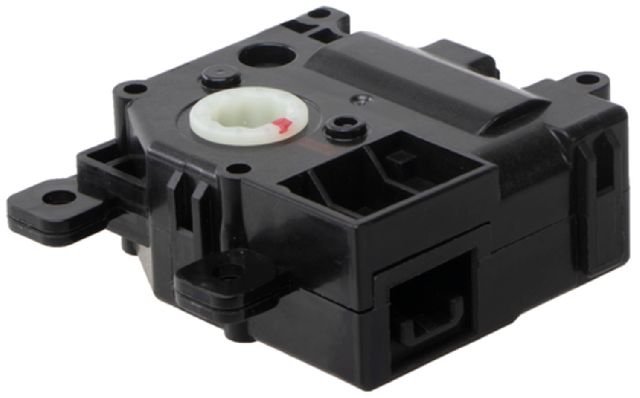
This code indicates a failure in the electric motor that directs airflow to the rear passenger vents. The most common fix is to replace the 'Rear Air Outlet Damper Control Servo Motor', part number 87106-30610, which is located deep within the center console. The part is moderately priced, but labor can be expensive due to the extensive disassembly required. This is a widely recognized issue covered by Lexus Customer Support Program 20LE01.
- B1449 on a Lexus RC F is a very specific code pointing to the rear vent servo motor, a known failure point on this platform.
- The failure is officially recognized by Lexus through multiple TSBs and a Customer Support Program (20LE01), so owners should check for extended warranty coverage before paying for repairs.
- The repair is labor-intensive due to the need to remove the center console, making DIY difficult and shop repairs expensive.
- Diagnosis with Toyota's Techstream software is highly recommended to perform active tests and initialization, which can sometimes fix the problem without part replacement.
What's Unique About the 2015-2019 Lexus RC F
The Lexus RC F, sharing its platform with the 3rd generation IS and GS series, uses a sophisticated HVAC system with numerous servo motors for precise climate control. This complexity, however, leads to a well-documented pattern of servo motor failures. Lexus has issued multiple Technical Service Bulletins (TSBs), including L-SB-0001-21 Rev and L-SB-0019-20, that address a whole family of servo motor circuit codes (B1441, B1443, B1449, etc.) across these models. This indicates that servo failure is a recognized issue on this platform, not just a random one-off problem. Lexus also initiated Customer Support Program 20LE01 to address this widespread issue.
Diagnostic Flowchart
Tap your situation to follow the diagnostic path that matches what you're seeing on this vehicle.
Symptoms You May Notice
- No air coming from the rear center console vents
- Airflow is stuck in one position for the rear vents (e.g., always on feet)
- A clicking or ticking sound coming from the center console area when changing A/C modes or on startup
- Uneven air distribution in the cabin
- Inconsistent temperature from vents (though less common for this specific servo)
- Replacing the main HVAC control panel on the dashboard. The issue is almost never with the user interface buttons, but rather the internal motors or the A/C amplifier module.
- Assuming the system needs a refrigerant recharge. While low refrigerant can cause cooling issues, it will not set a B1449 servo circuit code.
Most Likely Causes
- Failed Rear Air Outlet Damper Servo Motor 🔴 High Probability As acknowledged in Lexus TSBs (L-SB-0001-21 Rev, L-SB-0019-20) and Customer Support Program 20LE01, these Denso-made servo motors are a common failure point due to internal electrical faults or stripped plastic gears.
How to confirm: Listen for clicking noises from the center console when changing air modes. 🎬 Watch: Hear what a failing servo motor sounds like Use a diagnostic scan tool (like Toyota's Techstream) to command the servo to move ('Active Test') and watch its live data ('AIR OUTLET ACTUAL PLS[R]') for a response. If the servo does not respond to commands or the pulse count doesn't change, it has failed.
Typical fix: Replace the faulty servo motor. This requires significant disassembly of the center console to access the part, which is located on the main HVAC unit. 🎬 Watch: Step-by-step guide to replacing a Lexus AC servo motor
Est. part cost: $180-$250 - Damaged Wiring or Loose Connector ⚪ Low Probability
How to confirm: After accessing the servo motor, visually inspect the L18 connector for corrosion or damage and check the wiring for any signs of being pinched or broken. Use a multimeter to test for power, ground, and LIN signal at the connector when the A/C controls are operated. Check continuity between the servo connector and the G38 connector at the A/C Amplifier.
Typical fix: Repair the damaged section of the wiring harness or clean/replace the connector.
Est. part cost: $5-$50 - Failed A/C Amplifier (HVAC Control Module) ⚪ Low Probability While less common than a single servo failure, A/C amplifier issues are not unheard of on this platform. A Reddit user noted that a technician suggested an amplifier issue when multiple servos failed simultaneously.
How to confirm: This should only be considered after confirming the servo motor and wiring are good. If multiple, unrelated servo codes (e.g., B1441, B1443, B1449) appear at once, it could point to the amplifier. A professional diagnosis with advanced tools is recommended. Sometimes, a simple re-flash of the amplifier with updated calibration files can resolve the issue without replacement.
Typical fix: Replace the A/C Amplifier module and perform a servo initialization procedure with Techstream.
Est. part cost: $400-$800
Rare But Worth Checking
- Mechanically Jammed Damper Door: A foreign object could have fallen into the vents, or the damper door itself could be binding. The service manual suggests checking for mechanical lock-ups by hand-operating the damper linkage after removing the servo before replacing parts.
- Software/Calibration Issue: In some cases, particularly after a battery disconnect, the servo motors can lose their calibration. TSB L-SB-0019-20 mentions reprogramming the A/C amplifier as a potential step. A 'Servo Motor Initialization' function in Toyota's Techstream software can sometimes resolve the issue without replacing parts.
Diagnosis Steps
- Connect an OBD-II scanner capable of reading Body codes (like Toyota Techstream) to confirm B1449 is present and check for any other B14xx codes.
- Listen carefully inside the cabin. Cycle the HVAC mode and fan direction settings. A faint clicking or buzzing from the center console area can indicate a struggling or broken servo motor.
- Using Techstream, navigate to Body Electrical > Air Conditioner > Active Test. Command the 'Rear Air Outlet' servo to move and monitor the 'AIR OUTLET ACTUAL PLS[R]' value in the Data List. No change indicates a failure.
- If a scan tool is unavailable, proceed to physical inspection. Using plastic trim removal tools, carefully disassemble the center console to gain access to the HVAC unit and servo motors. Multiple YouTube videos and forum posts detail this process. 🎬 See this walkthrough on how to remove the center console
- Identify the Rear Air Outlet Damper Servo Motor (Part No. 87106-30610) on the main HVAC box deep within the console. Its connector is labeled L18.
- Visually inspect the servo's connector and wiring for any obvious damage.
- If power and ground are present at the connector when commands are given but the motor doesn't move, the servo motor is faulty and needs replacement.
- If power or ground is missing, trace the wiring back to the A/C Amplifier (located behind the glove box, connector G38) to check for a break in the circuit.
- Before installing a new servo, manually move the damper linkage by hand to ensure it is not mechanically jammed.
- After replacing the servo, perform the 'Initialize Servomotor' utility in Techstream to calibrate the new part.
Parts You'll Likely Need
- Rear Air Outlet Damper Control Servo Motor
(OEM #87106-30610)— This is the electric motor assembly that fails, causing the B1449 code. The internal plastic gears strip or the motor's internal circuit board fails, preventing it from reporting its position to the A/C amplifier.
Trusted brands: Lexus (Genuine OEM), Denso
OEM price range: $180-$250
Aftermarket price range: $100-$160
Related Codes That Often Appear With This One
- B1441 — This and other B14xx codes relate to other HVAC servo motors. It's common for multiple servos to fail around the same time, as they are of similar age and design. TSBs L-SB-0001-21 Rev and L-SB-0019-20 list a large family of these codes that often appear together.
- B1443 — Another common HVAC servo motor code. Seeing multiple codes together strongly points to the common servo failure issue rather than an isolated wiring problem.
- B1453 — Relates to the Driver Side Air Outlet Damper. A ClubLexus user reported seeing B1449, B1453, B1454, and B1455 all at once, which was resolved with a software update and grease redistribution by the dealer.
Technical Service Bulletins (TSBs) & Recalls
- L-SB-0001-21 Rev: Confirms the definition 'Rear Air Outlet Damper Control Servo Motor Circuit' and lists it among other common servo failures for 2015-2017 models, providing detailed diagnostic and replacement procedures.
- L-SB-0019-20: Confirms the same issue and code definition for 2017-2019 models, showing the problem is relevant to the entire 2015-2019 range. This TSB also mentions reprogramming the A/C amplifier as a repair step.
- Customer Support Program 20LE01: A formal program by Lexus to cover the cost of diagnosis and replacement of faulty A/C servo motors due to a known internal electrical malfunction.
Platform-Specific Known Issues
- Lexus has acknowledged issues with HVAC servo motors across many models and years, including the RC F. Technical Service Bulletin L-SB-0001-21 Rev directly lists B1449 and applies to 2015-2017 RC F models.
- A similar TSB, L-SB-0019-20, covers 2017-2019 RC F models for the same set of servo motor codes, indicating the issue persists across the entire specified year range.
- Lexus initiated Customer Support Program 20LE01 for this issue, extending warranty coverage for the servo motors. Primary coverage ended in January 2022, but secondary coverage for 7 years or 125,000 miles may still apply. Owners should contact a Lexus dealer with their VIN to check eligibility.
- A ClubLexus forum member with multiple servo codes (including B1449) on their GS reported the dealer was able to fix the issue with a software update and by redistributing grease, avoiding a costly parts replacement.
Mechanic-Grade Diagnostic Values
- Techstream Live Data: Air Outlet Actual Pulse (R) — expected: Value should be between 200 (FOOT) and 276 (FACE) pulses, and should match the 'Target Pulse' value when modes are changed.. Failure: The value is stuck, does not change when commanded, or is grossly different from the target pulse value.
- Wiring Harness Continuity (Servo to A/C Amp) — expected: Below 1 Ω.. Failure: A reading higher than 1 Ω indicates excessive resistance in the wire.
- Wiring Harness Short to Ground — expected: 10 kΩ or higher.. Failure: A reading below 10 kΩ indicates a short circuit to ground in the harness.
Hidden / Shadow Codes Worth Checking
- B1449/49: This is an alternate format for the same 'Rear Air Outlet Damper Control Servo Motor Circuit' fault. The '/49' is an older diagnostic identifier. (see via May be displayed on various professional scan tools, including some versions of Techstream, when viewing DTCs.)
Scan Tool Commands That Help
- Toyota Techstream: Servomotor Initialization — Crucial after replacing a servo motor, disconnecting the vehicle battery, or as a first step in diagnosis. It forces the A/C amplifier to relearn the end-stop positions of all damper doors and can sometimes resolve calibration glitches that set the code. The menu path is Body > Air Conditioner > Utility > Servomotor Initialization.
- Toyota Techstream: Active Test — Used to command a specific servo motor (e.g., 'Rear Air Outlet') to move to a set position. This allows a technician to verify if the motor is physically responding while simultaneously watching the 'Actual Pulse' value in the Data List to confirm electrical feedback.
- Toyota Techstream: Servo Cleaning Operation — This is a utility mentioned in some TSBs that cycles the servos to redistribute internal grease. It may be performed in conjunction with a software reflash before resorting to parts replacement.
Wiring & Ground Locations
- L18 — The electrical connector on the Rear Air Outlet Damper Servo Motor itself, located on the main HVAC unit deep in the center dash area.. This is the starting point for all circuit tests for B1449. Pin 2 (RBUG), Pin 3 (RBUS), and Pin 4 (RBBU) are the specific wires in the circuit.
- G38 — A main connector on the A/C Amplifier Assembly, which is located behind the glove box.. This is the endpoint for wiring continuity tests from the servo. The corresponding pins are G38-25, G38-1, and G38-27.
- Chassis Ground — The HVAC system grounds to the vehicle's chassis. Common factory ground points are bolted studs found on either side of the transmission tunnel (under the carpet) or behind the kick panels.. A poor ground connection can cause a variety of electrical issues, including erratic servo behavior. Verifying a clean, tight ground with low resistance (<1 ohm) to the battery negative terminal is a key diagnostic step.
Real Owner Repair Stories
- ClubLexus user 'bclexus' (Lexus GS (related platform)) — A/C vent mode would get stuck after using the front defrost button.
❌ Tried (didn't work) Initial diagnosis pointed to a bad servo motor.
✅ What actually fixed it Running the 'Servomotor Initialization' function in Techstream three times in a row. This unstuck the servo and the problem did not return, avoiding a hardware replacement. - Lexus Owners Club user 'Tom777' (2007 Lexus IS250 (related platform)) — No heat on one side of the car (a common symptom of a stuck blend door servo).
❌ Tried (didn't work) The owner was advised to consider heater core flush, bleeding the system, or replacing actuators.
✅ What actually fixed it The problem was resolved by running the 'INITIALIZE SERVOMOTOR' utility in Techstream. The user noted this fixed a calibration issue that occurred after a battery disconnect, which is a common cause of servo position loss.
OEM Part Supersession History
87106-30610→None found— According to at least one major OEM Lexus parts supplier, this part number has been discontinued.
Heads up: While many vendors still show stock, its discontinued status may mean that remaining inventory is the only source. Owners should verify availability before starting the repair. This part number is used for multiple servo positions on different Lexus models, so confirming it is for the 'Rear Air Outlet' position on an RC F via VIN is critical.
Model Year Variations Within This Range
- 2015-2017 vs 2018-2019: Lexus issued two separate TSBs for this issue with a dividing line at the 2017/2018 model year (L-SB-0001-21 Rev for earlier models, L-SB-0019-20 for later). While the servo part number appears to be the same, this split suggests there may be differences in the A/C Amplifier software or calibration files between the two ranges. The 2018 model year also introduced a larger infotainment screen and a redesigned HVAC control panel layout, though the underlying servo mechanics are believed to be the same.
Helpful Videos
We Have This Part in Stock

The information in this article is provided for general reference and educational purposes only. Vehicle specifications, procedures, and part compatibility can vary by production date, trim level, and region. Always consult your vehicle's factory service manual and verify part numbers before purchasing or performing repairs. Safety-critical components such as airbags, seat belts, and braking systems should be installed by a qualified professional.
- Lexus RC F:
- 🎬 Helpful Videos
- 🛍️ Shop This Part
- What's Unique About the 2015-2019 Lexus RC F
- Diagnostic Flowchart
- Symptoms You May Notice
- Most Likely Causes
- Rare But Worth Checking
- Diagnosis Steps
- Parts You'll Likely Need
- Related Codes That Often Appear With This One
- Technical Service Bulletins (TSBs) & Recalls
- Platform-Specific Known Issues
- Mechanic-Grade Diagnostic Values
- Hidden / Shadow Codes Worth Checking
- Scan Tool Commands That Help
- Wiring & Ground Locations
- Real Owner Repair Stories
- OEM Part Supersession History
- Model Year Variations Within This Range
- 🎟️ Get 5% Off