

B1449 on 2015-2019 Lexus RC 350: Rear Air Outlet Damper Fixes
This code indicates a failure in the 'Rear Air Outlet Damper Control Servo Motor Circuit'. The most common fix is to replace the faulty servo motor that controls airflow to the rear seats. The part itself is moderately priced, but the repair is labor-intensive and costly due to its location deep inside the dashboard. This is a very common failure on this platform and its sibling, the Lexus IS.
- B1449 means the small motor controlling the rear air vents has failed.
- This is a known common problem on 2015-2019 Lexus RC 350s and related IS/GS models.
- The vehicle is safe to drive, but you will not have airflow to the rear seats.
- Repair is very expensive ($950-$1900+) due to the high labor involved in removing the dashboard to access the part.
- A Customer Support Program (20LE01) existed that covered this repair, but its coverage period has now expired for all eligible vehicles.
What's Unique About the 2015-2019 Lexus RC 350
The first-generation Lexus RC, which shares its platform with the 3rd-gen IS and parts of the GS, has a well-documented pattern of HVAC servo motor failures. The issue is so prevalent that Lexus issued multiple Technical Service Bulletins (TSBs) and a Customer Support Program (20LE01) acknowledging this as a recurring issue due to internal electrical malfunctions in the servo motors. Owners on forums like ClubLexus frequently report these failures and the associated high repair costs, confirming this is a platform-specific weakness 🎬 Watch: A mechanic's walkthrough of the Lexus servo motor replacement. rather than a random part failure.
Diagnostic Flowchart
Tap your situation to follow the diagnostic path that matches what you're seeing on this vehicle.
Symptoms You May Notice
- No or very little air coming from the rear seat climate control vents (located on the back of the center console).
- Climate control system may not switch modes correctly. 🎬 See how to replace the mode switch motor on this platform.
- A faint clicking, buzzing, or grinding noise from behind the dashboard when changing climate settings, sometimes described as sounding like a CD changer cycling.
- A 'Check Climate Control' message may appear on the infotainment screen, though the Check Engine Light will not illuminate.
- Replacing the main blower motor. The blower motor creates the airflow, but the servo motors direct it. If you have air coming from other vents (like the front dash or defroster), the blower motor is working correctly.
Most Likely Causes
- Failed Rear Air Outlet Damper Servo Motor 🔴 High Probability This platform has a known history of premature servo motor failures due to internal electrical faults, as acknowledged by Lexus TSBs L-SB-0001-21 and Customer Support Program 20LE01.
How to confirm: Use a capable scan tool (like Toyota Techstream) to perform an active test on the servo motor or view its live data. Compare the 'target pulse' to the 'actual pulse'; a large discrepancy indicates a fault. Listen for motor operation. If there is no sound or a clicking/grinding noise, and the damper position does not change, the motor has likely failed.
Typical fix: First, attempt a servo motor initialization and A/C amplifier software update (reprogramming) as outlined in TSB L-SB-0001-21, as this can sometimes resolve the issue without parts replacement. If the code persists, replace the Rear Air Outlet Damper Control Servo Motor.
Est. part cost: $180-$250 - Wiring or Connector Issue 🟡 Medium Probability
How to confirm: Once the servo motor is accessed, inspect its connector (L18) for corrosion or loose pins. Use a multimeter to check for continuity on the wiring between the servo connector and the A/C Amplifier connector (G38), which is located behind the glove box.
Typical fix: Repair the damaged wiring or clean/replace the connector.
Est. part cost: $5-$50 - Mechanical Obstruction ⚪ Low Probability
How to confirm: Visually inspect the damper door and linkage connected to the servo motor. Check if anything is physically blocking its movement. This is difficult without significant dashboard disassembly.
Typical fix: Remove the obstruction. If the linkage is broken, it may need to be replaced along with the servo.
Est. part cost: $0-$100
Rare But Worth Checking
- Faulty A/C Amplifier (Climate Control Module): This is the least likely cause. The module itself can fail, but you should exhaust all other possibilities first. TSBs recommend reprogramming the amplifier before replacing it. This is typically diagnosed by confirming the servo and wiring are good, yet the problem persists.
Diagnosis Steps
- Connect a diagnostic scanner capable of reading Lexus Body (B) codes, such as Toyota Techstream, to confirm B1449 is present and current (not just history).
- As per TSB L-SB-0001-21, perform a 'Servo Motor Initialization' using the scanner's utility function. This resets all the motors and can sometimes clear the fault.
- If the code returns, check if an A/C Amplifier software update is available. A dealer may need to perform this 'flash reprogramming'.
- Using the scanner's live data or active test function, command the Rear Air Outlet Damper to open and close. Monitor the 'Target Pulse' and 'Actual Pulse' values. A mismatch confirms a fault in that circuit.
- Listen for sounds from the dashboard. A clicking or grinding sound indicates stripped internal gears in the motor. No sound suggests an electrical failure or lack of power.
- If software fixes fail, the next step is physical access. This typically requires removing the glove box, center console trim, and potentially other dash components to reach the servo.
- Once accessed, test for power and ground at the servo connector (L18) with a multimeter while commanding the motor via the scan tool.
- If power and ground are present, the servo motor is faulty and should be replaced.
- If power or ground is missing, trace the wiring back to the A/C amplifier (connector G38) to find the break in the circuit.
Parts You'll Likely Need
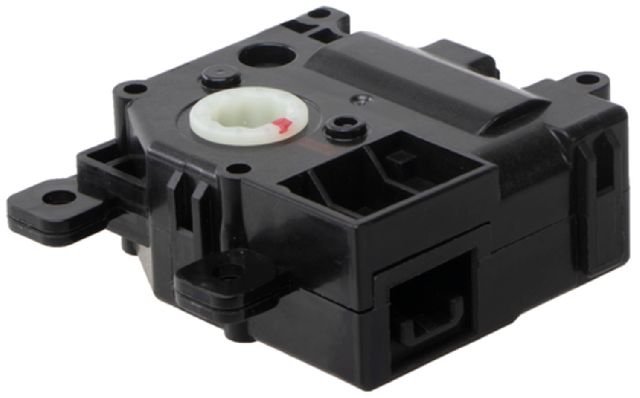
- Rear Air Outlet Damper Control Servo Motor
(OEM #87106-30610)— This is the electric motor assembly that fails, causing the B1449 code. Its internal electrical components are the primary failure point. While this part number is correct, some vendors note it has been discontinued, but it is still available through dealer networks and online part stores.
Trusted brands: Lexus (Genuine OEM), Denso
OEM price range: $185-$255
Aftermarket price range: $100-$160
Related Codes That Often Appear With This One
- B1441, B1442, B1443, B1448, B1453, B1454, B1455 — These are all codes for other HVAC servo motors in the same system. It is extremely common for multiple servos to fail around the same time due to shared design and age. TSBs and owner reports frequently mention multiple codes appearing at once.
Technical Service Bulletins (TSBs) & Recalls
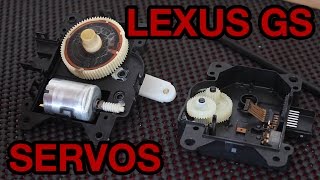
- L-SB-0001-21 Rev: 'HVAC Servo Motor Malfunction' - Confirms the definition for B1449 and lists it among other common servo motor codes for the 2015-2017 RC350. It provides a diagnostic flowchart that includes software reprogramming and cleaning before replacement. 🎬 Watch: How to clean and repair your existing servo motor.
- L-SB-0019-20: 'HVAC Servo Motor Malfunction' - Covers the same issue for later 2017-2019 models, indicating the problem persisted across the generation.
Platform-Specific Known Issues
- Customer Support Program 20LE01: Lexus issued a Customer Support Program (20LE01) for A/C servo motor malfunctions on 2015-2017 RC models, among others. Primary coverage ended on January 12, 2022. Secondary coverage was for 7 years or 125,000 miles from the date of first use. As of now, this program has expired for all affected vehicles. Owners on ClubLexus reported that dealers required a diagnostic fee, which would be waived only if the issue was confirmed to be the covered servo motors.
- High Labor Cost and Repair Stories: The repair is notoriously labor-intensive. A ClubLexus user with a 2015 RC F was quoted $3,100 for a passenger-side servo motor replacement, which involved 22 hours of labor. Another user with a 2016 GS350 was quoted $1,900 for the same part number. These high costs are due to the need for complete dashboard removal in many cases.
Mechanic-Grade Diagnostic Values
- Wiring Harness Continuity — expected: Below 1 Ω. Failure: A reading higher than 1 Ω indicates excessive resistance in the wire between the servo connector (L18) and the A/C amplifier connector (G38).
- Wiring Harness Short to Ground — expected: 10 kΩ or higher. Failure: A resistance reading below 10 kΩ from any of the three specified servo wires to body ground indicates a short circuit.
- Techstream Live Data: Air Outlet Servo Pulse (R) - Normal Range — expected: Displayed value should be between 200 (FOOT) and 276 (FACE) pulses.. Failure: A value that is stuck or falls outside this range indicates a malfunction in the servo or its circuit.
- Techstream Live Data: Target vs. Actual Pulse — expected: The 'Actual Pulse' value should change to match the 'Target Pulse' value when the climate control mode is changed.. Failure: If the 'Target Pulse' changes but the 'Actual Pulse' does not, the servo motor has failed or is mechanically jammed.
Hidden / Shadow Codes Worth Checking
- B1449/49: The '/49' is a detail code that corresponds directly to the B1449 fault. It is displayed by the Toyota Global Techstream (GTS) scanner and confirms the specific nature of the circuit malfunction. (see via Toyota Techstream (GTS) or a compatible high-end diagnostic scanner.)
Scan Tool Commands That Help
- Toyota Techstream: Active Test: A/O Servo Pulse(Rr D) — Use this to manually command the rear air outlet servo to move. While commanding movement, you can watch the 'Actual Pulse' in the Data List to see if the motor is responding, confirming if the fault is with the motor or the control signal.
- Toyota Techstream: Servo Motor Initialization — This function should be used after replacing a servo motor to calibrate its start and end points. It can also be used as a first diagnostic step, as it can sometimes un-stick a motor and temporarily clear the fault.
- Toyota Techstream: Servo Cleaning Operation — Mentioned in some TSBs, this is a diagnostic routine that cycles the servos to potentially clear internal contact resistance. It's a step to try before committing to a full replacement, particularly on pre-2017 models.
Wiring & Ground Locations
- L18 — The electrical connector on the Rear Air Outlet Damper Servo Motor itself, located deep in the center console/dash area.. This is the starting point for all circuit tests. Pin 2, 3, and 4 are the specific terminals for the circuit.
- G38 — A main connector on the A/C Amplifier Assembly, which is located behind the passenger side glove box.. This is the endpoint for testing wiring continuity from the servo. Pins 1, 25, and 27 on this connector correspond to the three wires from the L18 connector.
- Instrument Panel Grounds (e.g., IA, IB) — The instrument panel wiring harness has several dedicated ground points bolted to the metal support structure behind the dashboard.. While a bad ground is not a common cause for this specific code, a poor ground connection for the A/C amplifier could cause erratic behavior. The exact locations are detailed in the 'Ground Distribution' section of the official Lexus wiring diagrams.
Real Owner Repair Stories
- Reddit user on r/LexusRC (2015 Lexus RC 350 F Sport) — Intermittent failure where no air would blow from any cabin vents except the defrost, despite the fan being audible. HVAC diagnostic mode showed multiple servo codes (42, 43, 53, 54, 55).
❌ Tried (didn't work) Resetting the HVAC system via the diagnostic mode provided only a temporary fix.
✅ What actually fixed it A responding user with a platform-mate (Lexus IS300) confirmed they had a similar problem with the same symptoms, and the dealer replaced the servo motors under warranty, which permanently fixed the issue. This corroborates that servo failure is the root cause, even when multiple codes appear at once.
OEM Part Supersession History
87106-30530, 87106-30580→87106-30610— Manufacturer part revision/update. The HVAC system uses many similar servos, and 87106-30610 appears to be the latest, most common part number used for multiple functions across the RC, IS, and GS platforms.
Heads up: While older part numbers may be referenced in early TSBs, using the latest revision (87106-30610) is recommended for reliability. Always confirm the part number for the specific 'Rear Air Outlet' function with a dealer using your VIN.
Model Year Variations Within This Range
- 2015-2017: These years are primarily covered by TSB L-SB-0001-21 Rev. The diagnostic procedure in this bulletin includes a 'Servo Cleaning Process' as a potential fix before replacement, suggesting a focus on resolving issues with the original hardware.
- 2017-2019: These later models are covered by TSB L-SB-0019-20. This bulletin emphasizes checking for and performing an A/C Amplifier 'flash reprogramming' (software update) as a primary step, indicating some issues could be logic-related. This applies to vehicles produced after a specific production change.
Helpful Videos
We Have This Part in Stock

The information in this article is provided for general reference and educational purposes only. Vehicle specifications, procedures, and part compatibility can vary by production date, trim level, and region. Always consult your vehicle's factory service manual and verify part numbers before purchasing or performing repairs. Safety-critical components such as airbags, seat belts, and braking systems should be installed by a qualified professional.
- Lexus RC 350:
- 🎬 Helpful Videos
- 🛍️ Shop This Part
- What's Unique About the 2015-2019 Lexus RC 350
- Diagnostic Flowchart
- Symptoms You May Notice
- Most Likely Causes
- Rare But Worth Checking
- Diagnosis Steps
- Parts You'll Likely Need
- Related Codes That Often Appear With This One
- Technical Service Bulletins (TSBs) & Recalls
- Platform-Specific Known Issues
- Mechanic-Grade Diagnostic Values
- Hidden / Shadow Codes Worth Checking
- Scan Tool Commands That Help
- Wiring & Ground Locations
- Real Owner Repair Stories
- OEM Part Supersession History
- Model Year Variations Within This Range
- 🎟️ Get 5% Off