

B1449 on 2014-2018 Lexus IS 350: Rear Air Outlet Damper Fixes
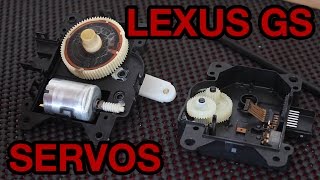
This code means the small electric motor that directs air to the rear passenger vents has failed. The most common fix is replacing the Rear Air Outlet Damper Servo Motor. The part costs around $180-$250, but shop repair costs can be high ($950-$1,900) due to the difficult-to-access location behind the dashboard. A ClubLexus member with a related model was quoted $1,900 for a similar servo replacement.
- B1449 is a very specific code for the rear vent servo motor circuit; it is not a general climate control failure.
- The failure of this servo motor is a known issue acknowledged by Lexus through multiple Technical Service Bulletins.
- While the part itself is moderately expensive, the repair cost is high due to the labor required to access the servo's location deep within the dashboard.
- A proper diagnosis with a scan tool like Techstream is recommended to confirm the failure and to perform re-initialization after the repair.
What's Unique About the 2014-2018 Lexus IS 350
The third-generation Lexus IS, along with its platform mates like the GS and RC series, has a well-documented history of HVAC servo motor issues. Lexus has issued Technical Service Bulletins (TSBs) like L-SB-0001-21 Rev that address a whole family of servo motor circuit codes, including B1449, across these models. This indicates that servo failure is a recognized pattern on this platform, not just a random one-off problem. Owners on forums frequently discuss the failure of these motors and the high cost of dealer repairs.
Diagnostic Flowchart
Tap your situation to follow the diagnostic path that matches what you're seeing on this vehicle.
Symptoms You May Notice
- No air coming from the rear climate control vents (located on the back of the center console).
- Airflow is stuck in one position for the rear vents (e.g., always on, always off).
- A faint clicking, buzzing, or whirring sound from behind the dashboard or center console area, sometimes described as sounding like a CD changer cycling. 🎬 Watch this video to identify and fix dashboard clicking sounds. This is the sound of the faulty servo motor repeatedly attempting to move.
- Uneven air distribution in the cabin.
- The check engine light will likely NOT be on, but a 'Check Climate Control' message may appear on the infotainment screen.
- Replacing the main climate control head unit on the dashboard. The logic for the servos is in the separate A/C Amplifier module, not the user interface.
- Assuming the system needs a refrigerant recharge. While low refrigerant can cause temperature issues, it will not cause a specific servo motor circuit code like B1449.
Most Likely Causes
- Failed Rear Air Outlet Damper Servo Motor 🔴 High Probability As documented in Lexus TSBs L-SB-0001-21 and L-SB-0019-20, these Denso-made servo motors are a common failure point across several Lexus models from this era due to internal electrical faults. Lexus even initiated a Customer Support Program for this issue.
How to confirm: Use a diagnostic scan tool (like Toyota's Techstream) to command the servo to move while monitoring its 'actual pulse' value against the 'target pulse' value. If the values show a large discrepancy or the actual value doesn't change, the motor is faulty. Alternatively, after gaining access, you can sometimes hear or feel if the motor is trying to work when climate settings are changed.
Typical fix: Replacement of the servo motor assembly.
Est. part cost: $180-$250 - Wiring or Connector Issue 🟡 Medium Probability
How to confirm: Once the servo motor is accessed, visually inspect the connector and wiring for any signs of damage, corrosion, or loose pins. Use a multimeter to check for power, ground, and signal continuity at the connector according to the wiring diagram. A service manual specifies checking for continuity (less than 1 Ω) between the servo connector (L18) and the A/C amplifier connector (G38), and checking for a short to ground (10 kΩ or higher).
Typical fix: Repair the damaged section of the wiring harness or clean/replace the connector.
Est. part cost: $5-$50 - Mechanically Jammed Damper Door ⚪ Low Probability
How to confirm: After removing the servo motor, try to move the damper door link by hand. It should move smoothly with minimal resistance. If it's stuck, a foreign object or broken plastic from the HVAC case may be the cause.
Typical fix: Remove the obstruction or replace the HVAC case component that is broken.
Est. part cost: $0-$500+ - Faulty A/C Amplifier (ECU) ⚪ Low Probability
How to confirm: This is diagnosed by exclusion. If the servo motor and wiring are confirmed to be good, but the servo still does not operate correctly, the A/C Amplifier may be at fault. This is the last part to suspect, especially if only a single servo code is present.
Typical fix: Replacement of the A/C Amplifier module.
Est. part cost: $400-$600
Rare But Worth Checking
- Need for Servo Re-initialization:
Diagnosis Steps
- Confirm the symptom: Turn on the A/C and check for airflow from the rear vents. Change modes and fan speeds to see if there is any response.
- Scan for codes: Use an OBD-II scanner capable of reading Body (B) codes to confirm B1449 is present. Note any other B14XX codes.
- Perform Servo Initialization: The most reliable first step is to use a bidirectional scan tool like Toyota Techstream to run the 'Servomotor Initialization' utility. This resets all the motors and can sometimes resolve the issue temporarily or permanently if it was a calibration glitch. As a simpler alternative, you can disconnect the car's 12V battery for at least 30 minutes to force the system to re-initialize, though this is less reliable.
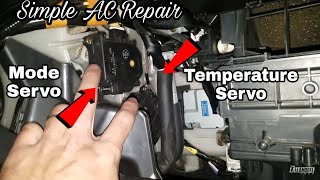
- Access the Servo Motor: This is the most difficult step. For a US-market (LHD) car, this typically involves removing the glove box, lower passenger-side dash panels, and potentially the A/C Amplifier to access the side of the main HVAC unit. The Rear Air Outlet servo (B1449) is located on the HVAC box in the center-dash area.
- Inspect and Test: Visually inspect the servo's connector and wiring. If possible, have a helper change climate settings while you listen or feel for activity from the motor.
- Replace the Servo: Disconnect the electrical connector and remove the screws holding the servo to the HVAC box. A YouTube video for a similar IS350 servo replacement shows two screws, one of which is difficult to see and must be removed 'blind'. Note the position of the output shaft. Install the new servo, ensuring its gear is correctly aligned with the damper linkage.
- Final Initialization and Test: After reassembly, perform the servo initialization again with a scan tool or the battery-disconnect method. Clear all DTCs and verify that airflow is restored to the rear vents and the code does not return.
Parts You'll Likely Need
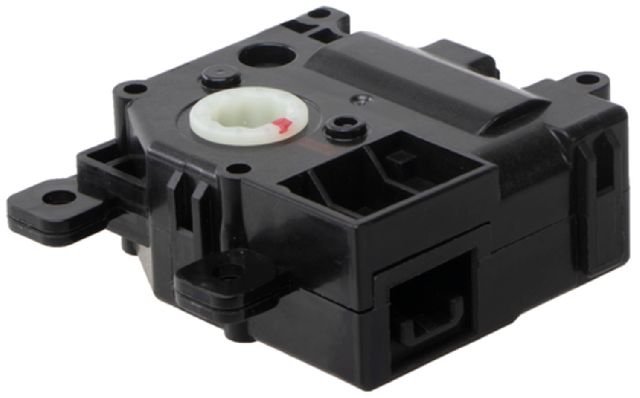
- Rear Air Outlet Damper Control Servo Motor
(OEM #87106-30610)— This is the electric motor assembly that fails, causing the B1449 code. Note: The HVAC system uses many similar servos; 87106-30610 is a common part number for this function, but it is also used for other positions on other models like the GS350. Always verify the exact part for the 'Rear Air Outlet' position with a dealer based on your VIN before ordering.
Trusted brands: Lexus (Genuine OEM), Denso
OEM price range: $180-$250
Aftermarket price range: $100-$160
Related Codes That Often Appear With This One
- B1441, B1442, B1443, B1447, B1448, B1453, etc. — These are all codes for other servo motor circuits in the same HVAC system. It is common for multiple servos to fail around the same time, or for a systemic electrical issue to cause faults in several circuits. The TSB for this issue lists over a dozen similar codes. A ClubLexus user reported getting B1449 along with B1453, B1454, and B1455 simultaneously.
Technical Service Bulletins (TSBs) & Recalls
- L-SB-0001-21 Rev: 'HVAC Servo Motor Malfunction' - Confirms the code definition and its applicability to the 2014-2018 IS 350, as well as GS and RC models. Provides full diagnostic and replacement procedures.
- L-SB-0019-20: 'HVAC Servo Motor Malfunction' - Covers similar issues on slightly later models (2017-2019), showing the persistence of this type of fault across the Lexus lineup.
- Customer Support Program 20LE01: An official Lexus program acknowledging the high failure rate and extending warranty coverage for the A/C servo motors.
Platform-Specific Known Issues
- Lexus issued Technical Service Bulletin L-SB-0001-21 Rev, which covers the 2014-2017 IS 350 for a range of HVAC servo malfunctions, including B1449. This bulletin provides diagnostic flowcharts, part numbers, and repair procedures for these common failures.
- Lexus also created Customer Support Program 20LE01 which extended the warranty coverage for these specific servo motor failures, though this program has likely expired for most vehicles.
Mechanic-Grade Diagnostic Values
- Wiring Harness Continuity — expected: Below 1 Ω. Failure: A reading higher than 1 Ω indicates excessive resistance in the wire between the servo connector (L18) and the A/C amplifier connector (G38).
- Wiring Harness Short to Ground — expected: 10 kΩ or higher. Failure: A resistance reading below 10 kΩ indicates a short circuit to ground in the harness.
- Techstream Live Data: Air Outlet Servo Pulse (R) - Target vs. Actual — expected: The 'Actual Pulse' value should closely match the 'Target Pulse' value as modes are changed.. Failure: A large, persistent discrepancy between the target and actual pulse values indicates a faulty servo motor or a mechanical jam.
- Techstream Live Data: Air Outlet Servo Pulse (R) - Normal Range — expected: Displayed value should be between 200 (FOOT) and 276 (FACE) pulses.. Failure: A value outside this range or that is stuck indicates a malfunction.
Hidden / Shadow Codes Worth Checking
- B1449/49: The '/49' is a two-digit detail code that corresponds to the B1449 fault. Some older or different scan tools may display the code in this format. (see via May be displayed on various professional scan tools, including Techstream, when viewing DTCs.)
Scan Tool Commands That Help
- Toyota Techstream: Servomotor Initialization — This utility should be run after replacing a servo motor or after the vehicle's battery has been disconnected to force the A/C amplifier to relearn the end-stop positions of all damper doors. It can sometimes fix a code if the issue is purely a calibration glitch.
- Toyota Techstream: Active Test — Found under the 'Body Electrical / Air Conditioner' menu, this allows a technician to command the servo motor to move to specific positions (e.g., FACE, FOOT) to check its operation while observing live data.
- Toyota Techstream: Data List — Used to monitor the 'Target Pulse' and 'Actual Pulse' of the servo motor in real-time. This is the primary method for confirming if the motor is responding correctly to commands from the A/C amplifier.
Wiring & Ground Locations
- A/C Amplifier Assembly — Located behind the glove box, on the passenger side of the central HVAC unit.. This is the control module for all HVAC servo motors. Its connector (G38) is a key testing point for wiring continuity back to the servo.
- L18 Connector — The electrical connector on the Rear Air Outlet Damper Servo Motor itself.. This is the starting point for any wiring tests related to the B1449 circuit.
- G38 Connector — A connector on the A/C Amplifier Assembly.. This is the endpoint for wiring tests from the L18 servo connector. Specific pins (1, 25, 27) on this connector correspond to the servo's circuit.
Real Owner Repair Stories
- Harbor Area Tech YouTube Channel (Lexus IS350 (year not specified, but 3rd Gen)) — Passenger center vent blowing significantly warmer air than the driver's side vent when set to max cool.
❌ Tried (didn't work) The diagnosis went straight to the correct cause.
✅ What actually fixed it The technician used Techstream to confirm a large discrepancy between the 'target pulse' and 'actual pulse' for the passenger side cool air mix servo (a related fault). The fix was replacing the faulty servo motor, which required removing the glove box and the A/C amplifier to gain access. The video highlights that one of the two mounting screws is 'blind' and difficult to reach. - IH8MUD.com Forum User (Lexus/Toyota vehicle) — Improper A/C temperature regulation and delayed fan operation after battery disconnections.
❌ Tried (didn't work) Living with the problem, assuming it was a sensor or actuator failure.
✅ What actually fixed it The owner ran the 'Climate servomotor initialization' procedure using Techstream. This completely resolved the erratic HVAC behavior by recalibrating all the blend door motors. This confirmed the issue was a software/calibration problem, not a hardware failure.
OEM Part Supersession History
87106-30610→Unknown/Varies— Part is listed as discontinued by some official sources.
Heads up: While many dealer sites still list 87106-30610, it may automatically redirect to a newer, superseding part number. Other similar servos exist (e.g., 87106-30550, 87106-30500). It is critical to confirm the correct, current part number with a Lexus dealer using the vehicle's VIN before ordering to ensure compatibility.
Model Year Variations Within This Range
- 2014-2016: These are pre-refresh models. They feature the original front/rear fascia, smaller standard infotainment screen, and the 2GR-FSE engine.
- 2017: This was the mid-cycle refresh year. It introduced updated front and rear bumpers/lights and a larger 10.3-inch navigation screen became available. The HVAC system and its potential for servo failure remained largely the same, as it is covered by TSBs L-SB-0001-21 and L-SB-0019-20.
- 2018: The 2018 model introduced the updated 2GR-FKS V6 engine, which offered a minor increase in horsepower and torque (311 hp/280 lb-ft vs 306 hp/277 lb-ft) and improved efficiency. This engine change did not affect the HVAC servo design or its propensity to fail.
Helpful Videos

We Have This Part in Stock

The information in this article is provided for general reference and educational purposes only. Vehicle specifications, procedures, and part compatibility can vary by production date, trim level, and region. Always consult your vehicle's factory service manual and verify part numbers before purchasing or performing repairs. Safety-critical components such as airbags, seat belts, and braking systems should be installed by a qualified professional.
- Lexus IS 350:
- 🎬 Helpful Videos
- 🛍️ Shop This Part
- What's Unique About the 2014-2018 Lexus IS 350
- Diagnostic Flowchart
- Symptoms You May Notice
- Most Likely Causes
- Rare But Worth Checking
- Diagnosis Steps
- Parts You'll Likely Need
- Related Codes That Often Appear With This One
- Technical Service Bulletins (TSBs) & Recalls
- Platform-Specific Known Issues
- Mechanic-Grade Diagnostic Values
- Hidden / Shadow Codes Worth Checking
- Scan Tool Commands That Help
- Wiring & Ground Locations
- Real Owner Repair Stories
- OEM Part Supersession History
- Model Year Variations Within This Range
- 🎟️ Get 5% Off