

OBD-II Code B1449: A Comprehensive Guide to HVAC and Airbag Faults
What B1449 means, why it triggers, and how to fix it on your vehicle
- Code B1449 indicates either a comfort-related HVAC actuator failure on Toyota and Lexus vehicles, or a safety-critical airbag sensor failure on Kia and Hyundai models.
- For Lexus and Toyota models, B1449 typically requires replacing the Rear Air Outlet Damper Control Servo, a labor-intensive repair costing between $800 and $2,000.
- On 2006-2011 Kia and Hyundai vehicles, B1449 disables the passenger airbag due to a faulty OCS sensor mat, but is often covered by a 15-year, unlimited-mile warranty extension.
- Never replace an HVAC actuator or OCS sensor without performing the mandatory post-repair scan tool calibration, or the B1449 code will immediately return.
What Does B1449 Mean?

B1449 is a body trouble code ('B-code') indicating a control module detected a circuit failure. The meaning is highly manufacturer-dependent. For Toyota and Lexus, it points to a failed electric motor (servo) within the HVAC system that directs airflow. The code sets when the module commands the motor to move but receives no position feedback. For Kia and Hyundai, B1449 is a critical airbag system code indicating the passenger seat weight sensor has failed.
Technical definition: The formal definition varies by manufacturer. For Toyota and Lexus, it is 'Rear Air Outlet Damper Control Servo Motor Circuit', meaning the A/C Amplifier requested airflow to the rear vents, but the motor's position sensor did not report the expected change within 30 seconds. For Kia and Hyundai, it means 'Occupant Classification System (OCS) ID Inconsistent' or 'Mat Defect', a safety-critical airbag fault. Always diagnose based on specific symptoms and the vehicle manufacturer.
Can I Drive With B1449?

Yes, But With Caution. For most vehicles (Toyota, Lexus, Ford), B1449 is an HVAC issue affecting cabin comfort, so you can safely drive. However, on Kia and Hyundai models, this code indicates a critical Occupant Classification System (OCS) fault that disables the front passenger airbag. Driving with a passenger in this condition is a severe safety risk because the airbag will not deploy in a crash. Repair this immediately.
Common Causes

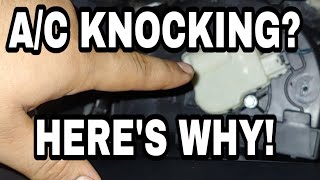
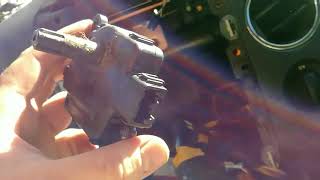
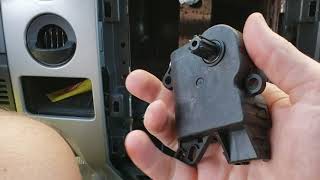
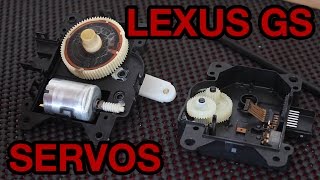
- Failed HVAC Actuator/Servo Motor (Very Common) — This is the most frequent cause for HVAC-related B1449 codes. The small electric motor burns out, its internal plastic gears strip, or the internal electronic contact points for the position sensor wear out. 🎬 Watch: How to clean and repair Lexus HVAC servo motors.
- Failed OCS Sensor Mat (Kia/Hyundai) (Very Common) — On specific Kia and Hyundai models, B1449 is triggered by the failure of the Occupant Classification System (OCS) sensor mat in the passenger seat cushion. The mat suffers from physical fatigue and cracks over time. 🎬 See this walkthrough for fixing Hyundai and Kia airbag light issues.
- Jammed or Broken Air Door/Linkage (Common) — The plastic door that the actuator moves physically breaks, or its linkage disconnects. Debris like leaves, paper, or a dislodged wiring harness falling into the HVAC case physically blocks the door's movement, triggering the code.
- Damaged Wiring or Poor Connection (Less Common) — The wires leading to the actuator or OCS sensor fray, pinch, or corrode at the connector. This prevents power and signals from transmitting properly.
- Software or Calibration Glitch (Less Common) — The climate control module's software contains errors and requires an update (re-flash) to fix communication issues with the actuator. This is a required step after replacing a servo on many Toyota/Lexus models.
- Failed Control Module (HVAC or OCS) (Rare) — The computer module commanding the actuator or reading the OCS sensor fails. Consider this only after ruling out the actuator, sensor, and wiring. Multiple unrelated actuator codes appearing simultaneously often point to a module issue.
- Low Battery Voltage (Rare) — A weak battery causes unpredictable behavior in electronic modules, leading them to set spurious trouble codes. Rule this out before replacing expensive components.
Symptoms

- Clicking, Ticking, or Grinding Noise From Dashboard — A repetitive clicking sound occurs when the vehicle starts or climate settings change. This is the sound of broken plastic gears inside an HVAC actuator repeatedly failing to move the air door.
- Airbag Warning & 'Passenger Airbag Off' Lights Illuminated — On Kia and Hyundai vehicles, B1449 illuminates the main airbag warning light and forces the 'Passenger Airbag Off' indicator to stay on, confirming the system disabled the passenger airbag.
- No Airflow From Specific Vents or Incorrect Temperature — On Lexus and Toyota vehicles, this code causes a complete lack of airflow from the rear passenger vents. On other vehicles, the system gets stuck on fresh/recirculated air or fails to change temperature.
- Windows Fog Up Easily — If the system is stuck in recirculation mode, it traps moisture inside the cabin. This humid air causes windows to fog up quickly and makes them difficult to clear with the defroster.
Diagnostic Flowchart
Tap your situation to follow the diagnostic path that matches what you're seeing on this code.
Common Fixes & Costs
- Replacing a Rear Outlet Damper Servo (Lexus/Toyota) — Parts: $180-$250, Labor: $800-$2000, ~8.0-12.0 hr book time (Professional)
- Replacing Passenger Seat OCS Sensor (Kia/Hyundai) — Parts: $200-$400, Labor: $300-$500, ~1.5-2.5 hr book time (Professional)
- Replacing a Recirculation or Blend Door Actuator — Parts: $25-$80, Labor: $150-$450, ~1.0-3.0 hr book time (Intermediate)
- Removing Debris Jamming an Air Door — Parts: $0, Labor: $50-$150, ~0.5-1.0 hr book time (DIY)
- Repairing Damaged Wiring or Connector — Parts: $10-$50, Labor: $100-$300, ~1.0-2.0 hr book time (Intermediate)
- A/C Amplifier Reprogramming (Toyota/Lexus) — Parts: $0, Labor: $100-$200, ~0.8-1.2 hr book time (Professional)
Used vs. New Parts: Buying Guide
When a used part is worth it: For a common HVAC blend door actuator, a used part is not recommended. The part is a known wear item, and the labor to replace it exceeds the part's cost. For a safety-critical OCS sensor, NEVER consider a used part.
Donor-vehicle mileage cap: roughly under 40000 miles for the part to have meaningful remaining life.
Donor quality checklist:
- Avoid used HVAC actuators unless they are from a very low-mileage vehicle and you are performing the labor yourself.
- Match part numbers exactly; aftermarket brands like Dorman offer improved internal gears over the original OEM design.
- Never purchase used airbag system components due to safety and liability risks.
Decision logic:
- If Part is an OCS sensor mat → Buy new OEM part only. Check for warranty extension coverage first.
- If Part is a difficult-to-access HVAC servo (e.g., Lexus rear servo) → Buy new OEM part only. The extreme labor cost makes it foolish to risk installing a used part.
- If Part is an easy-to-access HVAC actuator AND you are doing the labor yourself → A new aftermarket part is the best value. A used part is a high-risk gamble for minimal savings.
Warranty tradeoff: Used parts typically have a 30-90 day warranty. New aftermarket parts carry a 1-year to lifetime warranty. New OEM parts carry a 1-year warranty.
Worst-case if a used part fails: $500-$2000 if a used part fails after install, requiring a repeat of high-cost labor.
What Happens If You Wait — Timeline
- Immediate (HVAC Fault): A repetitive clicking noise begins from the dashboard. Airflow from a specific vent set or temperature control for one side stops working. (MPG impact: 0%% · Added cost: $0. The failure is isolated to the actuator and does not cause escalating damage.)
- Weeks to Months (HVAC Fault): The clicking noise stops as the plastic gears inside the actuator completely strip or the motor burns out. The functional problem remains. The issue is now a persistent comfort problem. (MPG impact: 0%% · Added cost: $0. The component has failed completely but does not affect other systems.)
- Immediate (Airbag Fault): The airbag warning light illuminates, and the 'Passenger Airbag Off' indicator lights up. The entire passenger frontal airbag system is disabled as a fail-safe. (MPG impact: 0%% · Added cost: $0 in direct costs, but an immeasurable safety risk is now present.)
- Until Repaired (Airbag Fault): The passenger airbag remains non-functional. In a frontal collision, the airbag will NOT deploy for the passenger, significantly increasing the risk of severe injury or death. (MPG impact: 0%% · Added cost: Potentially infinite. The cost is realized in the event of an accident through injury, liability, and potential legal consequences.)
Cost of Not Fixing It
- Immediate (HVAC Fault): Annoying clicking/grinding noises from the dash; inability to control airflow direction, temperature, or use defroster effectively. (Added cost: Negligible)
- Immediate (Airbag Fault): The front passenger airbag is disabled and will not deploy in a crash, drastically increasing the risk of serious injury or death to a passenger. (Added cost: Potentially infinite (liability and safety risk))
- Long-term: For an HVAC fault, there is no risk of escalating mechanical damage to other components. For an airbag fault, the severe safety risk remains constant until repaired.
Diagnosis Steps

- Confirm the Symptom and Scan for All Codes
Verify the specific problem. Operate all climate control functions and note what fails, or check for an airbag light. Use a high-quality OBD-II scanner capable of reading Body ('B') codes from all modules (SRS, BCM, HVAC) to confirm B1449 is present.
Tools: OBD-II Scanner (for B-codes) (Beginner) - Research Manufacturer-Specific Meaning & TSBs
Determine if B1449 points to an HVAC or airbag issue based on your vehicle's make and year. Search your vehicle and 'B1449 TSB' to find Technical Service Bulletins or warranty extensions providing a direct repair path.
Tools: Smartphone or Computer (Beginner) - Listen to Pinpoint a Failed HVAC Actuator
If symptoms are HVAC-related, turn the vehicle on in a quiet place. Cycle the climate settings that are not working. Listen closely to the dashboard, under the dash, and behind the glove box to pinpoint the location of the clicking noise.
Tools: Flashlight (Beginner) - Perform Scan Tool Active Test (Toyota/Lexus)
Navigate to the A/C module's 'Active Test' function using a professional scan tool. Command the suspect servo motor to move while watching its 'Actual Pulse' value. If the 'Target Pulse' changes but the 'Actual Pulse' remains static, the servo motor or circuit has failed.
Tools: Professional Scan Tool (e.g., Techstream) (Advanced) - Perform OCS Sensor Functional Test (Kia/Hyundai)
Access the SRS/OCS module's live data. With the passenger seat empty, the sensor must report 'Empty'. Have an adult sit in the seat; the status must change to 'Seat Occupied' within 10 seconds. If erratic, or if an OCS 'Zero Point Calibration' fails, the sensor mat is faulty.
Tools: Professional Scan Tool (e.g., GDS, KDS, Autel) (Advanced) - Check for Physical Obstructions
Remove the cabin air filter. Inspect the air intake area for leaves, paper, or debris jamming the door. Ensure no wiring harnesses have fallen into the path of the actuator's linkage.
Tools: Flashlight, Basic hand tools (Intermediate) - Perform Electrical Circuit Test (Toyota/Lexus)
Disconnect the servo motor and the A/C Amplifier. Use a multimeter to check the wiring harness between them. Test for continuity on each wire (resistance below 1 Ω). Test each wire for a short to ground (resistance to chassis 10 kΩ or higher).
Tools: Multimeter, Vehicle-specific wiring diagram (Advanced) - Perform 'Tap Test' on Actuator (Pro Tip)
If you can access the clicking actuator, have a helper cycle the climate controls. Lightly tap the body of the actuator with a screwdriver handle. If the motor moves briefly, the internal contacts are worn, confirming a faulty motor.
Tools: Screwdriver (Intermediate) - Remove and Replace the Faulty Component
For an actuator, remove the mounting screws and detach it from the blend door linkage. For an OCS sensor, remove the passenger seat and its upholstery to access the mat. Install the new part.
Tools: Screwdriver set, Socket set, Hog ring pliers (for OCS) (advanced to professional) - Perform System Initialization/Calibration
After replacing an actuator, use a scan tool to run a 'Servo Motor Initialization' function. After replacing an OCS sensor, perform a 'Zero Point Calibration'. Skipping this step guarantees the new part will not work and the code will return.
Tools: Professional Scan Tool (Advanced)
When This Code Triggers (Freeze-Frame Conditions)
- Ignition Status: ON (Code sets during startup self-test or when changing climate settings.)
- Battery Voltage: 11.5-14.5V (Normal operating voltage; low voltage causes spurious codes.)
- Control Module Command: Varies (Code sets when the module sends a command but receives no valid feedback signal.)
- Time Since Command: >5 seconds (The fault logs after the actuator/sensor fails to respond within a set time window.)
Related Codes
- B1441, B1443, B1446 — Codes for other servo motors in the same Toyota/Lexus HVAC system. Multiple servos of the same age often fail simultaneously. If multiple codes appear, replace the servo related to the primary symptom first.
- B1447, B1448, B1450 — On Kia and Hyundai models, these codes point to faults within the same passenger seat sensor mat assembly. Their presence alongside B1449 strongly confirms the OCS mat requires replacement.
- B1764 — Another Kia/Hyundai code for an OCS mat defect ('BodySense MAT Defect') stored along with B1449, further indicating the passenger seat sensor is the root cause.
- B1497 — A Toyota/Lexus LIN Bus communication error code. Seeing B1497 with B1449 points strongly toward a wiring issue between the actuator and the control module, or a failure of the module itself.
- B1081 — On Ford vehicles, this code specifically points to a temperature blend door actuator fault. If your symptom is an inability to control temperature with a clicking noise, B1081 is the likely cause.
Climate & Environmental Factors
- Cold Temperatures: Extreme cold makes the plastic gears inside HVAC actuators brittle and susceptible to stripping. It also thickens the grease used for lubrication, increasing the torque required for the motor to move the door, leading to motor burnout.
- High Humidity / Temperature Swings: Changes in temperature cause condensation to form inside an actuator. This moisture leads to corrosion on the internal circuit board and electrical contacts, causing intermittent or total failure.
How to Talk to a Mechanic About This Code
Avoid saying:
- 'My A/C is making a weird noise.' (Too vague, invites open-ended diagnostic time)
- 'My airbag light is on, just fix it.' (Gives the shop a blank check)
- 'A guy online said it was the B1449...' (Can sound confrontational; instead, state the symptom and your suspected cause calmly)
Where to Take It: Dealer vs Independent vs Chain
- Dealer:
Required for Kia/Hyundai airbag faults to check warranty. A good, but expensive, option for complex Lexus HVAC repairs.
Best for: Kia/Hyundai OCS/Airbag Fault: They are the ONLY ones who can check for and perform the free warranty extension repair. They have the required calibration tools., Complex Lexus/Toyota HVAC Repair: If the servo is deep in the dash, they have the most experience and access to specific TSBs and procedures.
Downsides: Highest labor rates, typically 1.5-2x more than independent shops., Less flexible on part-sourcing (OEM only). - Independent Shop:
The best choice for most out-of-warranty HVAC repairs. Not suitable for the Kia/Hyundai airbag issue until warranty status is confirmed at a dealer.
Best for: Out-of-warranty HVAC actuator repairs, especially easily accessible ones., As a more affordable alternative for the high-labor Lexus/Toyota rear servo replacement. Look for a shop specializing in Japanese brands.
Downsides: Quality and expertise vary widely. Vet shops based on reviews and ASE certifications., May not have the specific manufacturer scan tool required for post-repair calibrations. - Chain Shop:
AVOID. These shops are not equipped for the diagnostic or mechanical complexity of either the HVAC or airbag versions of code B1449.
Best for: Simple, unrelated maintenance like oil changes or tires.
Downsides: Technician skill varies dramatically., Unlikely to have the expertise for complex dashboard disassembly or the specific tools for SRS/OCS calibration., High pressure to upsell is common.
When to Walk Away From the Repair
If the estimated repair cost exceeds 50% of the car's private-party value, strongly consider selling or trading in the vehicle instead of repairing it.
- Car worth $12000, fix is $1800: Fix it. The repair cost is only 15% of the car's value and restores full functionality.
- Car worth $4000, fix is $1500: Borderline. This is a 38% cost-to-value ratio for a comfort feature. If the rest of the car is in great shape, it might be worth it. If not, consider living with no rear air or selling as-is with disclosure.
- Car worth $2500, fix is $800: Walk away ONLY IF the repair is NOT covered by warranty. An $800 repair on a $2500 car for a critical safety system is a tough call. The best option may be to sell it to a wholesaler or trade it in, fully disclosing the airbag issue.
What Scan Tool You Need for This Code
Minimum: A scanner that reads manufacturer-specific Body ('B') and SRS ('B' or dedicated module) codes. A basic $20 engine code reader will NOT see code B1449.
B1449 is not a standard engine code. A basic scanner reports 'no codes found' even if the airbag or HVAC light is on. You need a tool that accesses the specific computer module (SRS, BCM, or HVAC) where the fault is stored.
Professional: Autel MaxiCOM/MaxiSys or Launch X431 Series (~$500-1500) — Full OEM-level functionality, including all bidirectional tests, calibrations, initializations, and potential software reprogramming mentioned in TSBs.
Rent vs buy: Buy. Auto parts store 'free rental' scanners are almost always basic engine code readers that cannot diagnose B1449. You must own or borrow a scanner with SRS/Body capabilities.
How to Clear the Code After You Fix It
- For HVAC faults, perform the 'Servo Motor Initialization' with a scan tool or attempt a reset by disconnecting the battery for 30 minutes.
- For airbag (OCS) faults, use a manufacturer-specific scan tool to clear the SRS module codes and perform a 'Zero Point Calibration'.
- Cycle the ignition multiple times and test the repaired function to confirm the fix.
Drive cycle (~10 minutes): For an airbag system fault, after clearing the code with a proper scan tool, a short drive of 5-10 minutes allows the OCS sensor to re-initialize and confirm the repair. HVAC faults do not require a drive cycle.
Readiness monitors affected: None
Watch out for:
- Disconnecting the battery will NOT clear airbag fault codes; a capable scan tool is required.
- Failing to perform the mandatory initialization/calibration step after replacing a part causes the code to return immediately.
- Using a basic OBD-II code reader that cannot access Body ('B') or SRS modules fails to clear the code.
Will This Fail Emissions / State Inspection?
No — by itself this code doesn't fail OBD inspection (but it can keep readiness monitors from setting, which causes a separate fail).
- California: Will NOT fail. A B1449 code, even with an airbag light on, is not related to emissions and will not cause a failure of the California smog check.
- New York: Will NOT fail, but will be noted. An illuminated airbag light is an advisory item on the NYS safety inspection report but is not a cause for failure.
- Texas: Will NOT fail an emissions test. In counties requiring an OBD-II emissions test, only a Check Engine Light causes a failure.
Most Commonly Affected Vehicles
- Lexus GS, IS, RC, LX (2013-2019) — These models commonly set B1449 for a failed 'Rear Air Outlet Damper Control Servo Motor'. The repair is notoriously labor-intensive. Documented in TSBs L-SB-0001-21 Rev & L-SB-0019-20.
- Toyota Sienna, Sequoia, RAV4, Highlander (2010-2020) — These models set B1449 for a rear damper control motor circuit failure, requiring similar labor-intensive repairs as Lexus models.
- Kia Optima, Rio, Spectra (2006-2011) — B1449 indicates a failure of the passenger seat Occupant Classification System (OCS) sensor mat. Kia issued a 15-year/unlimited-mile warranty extension (TSBs BOD 135, BOD 140).
- Hyundai Accent (2006-2011) — Shares a platform with the Kia Rio and suffers from the same B1449 code for a failed passenger OCS sensor mat. Covered by a 15-year/unlimited-mile warranty extension (Campaign TXX6).
- Ford F-150, Expedition (2009-2020) — Famous for blend door and recirculation door actuator failures causing clicking noises. Owners search for B1449, but the actual code stored is often B1081.
- Lincoln Navigator (2009-2017) — Shares the climate control architecture with the Ford Expedition and suffers from identical blend door actuator failures.
- Jeep Wrangler (JK) (2011-2018) — Recirculation door actuator failure is a common issue causing clicking behind the glove box. Access for replacement is difficult.
- Chevrolet Suburban, Tahoe (2007-2014) — The B1449 code relates to an HVAC mode or temperature door actuator failure, causing clicking sounds from the dash.
- Nissan Altima, Sentra, Titan, LEAF (2013-2019) — Nissan has known issues with their OCS/ODS systems causing airbag light symptoms. TSB NTB19-071 addresses these issues, requiring a special dealer tool to diagnose and reset.
Manufacturer-Specific Notes
- Toyota/Lexus: B1449 almost exclusively means 'Rear Air Outlet Damper Control Servo Motor Circuit'. The repair is notoriously difficult and expensive due to the part's location deep in the dash. Diagnosis requires Techstream software to perform an active test.
- Kia/Hyundai: For 2006-2011 models, B1449 is a safety-critical airbag code for a sensor mat failure. Due to the high failure rate, both manufacturers issued 15-year/unlimited-mileage warranty extensions (Hyundai Campaign TXX6, Kia TSB BOD 135). Always check VIN coverage before paying for repairs.
- Ford/Lincoln: Owners experiencing a clicking dash often assume it's code B1449. However, the issue is almost always a failed recirculation or blend door actuator that sets code B1081, caused by weak plastic gears.
- Nissan: Nissan uses a similar OCS system (ODS). Faults illuminate the airbag light but may not set code B1449. Diagnosis and reset require a specific dealer procedure using an 'ODS Analysis Tool' (J-51594), per TSB NTB19-071.
Real Owner Stories
2013 Lexus IS 350 at 105K miles - The Expensive Click
Owner heard a persistent clicking noise from the center console area. There was no airflow from the rear seat vents, regardless of climate control settings.
What they tried:
- Used a scan tool to pull code B1449, confirming 'Rear Air Outlet Damper Control Servo Motor Circuit' failure.
- Received a dealer quote of over $2,000 for the repair due to the 10+ hours of labor required to remove the center console and dashboard.
- Found Lexus TSB L-SB-0001-21 and Customer Support Program 20LE01, but their vehicle was outside the extended warranty period.
Outcome: The owner opted for an independent specialty shop to perform the repair. The shop replaced the servo motor (Part No. 87106-30610) for a total cost of $1,800. The clicking is gone and rear air is restored.
Lesson: On a Lexus, B1449 is a known, expensive fix due to labor. Always check for TSBs and warranty extensions, but be prepared for a high repair bill if out of warranty. An independent specialist is often cheaper than the dealer.
2009 Hyundai Accent at 80K miles - The Airbag Light That Was 'OK'
The red airbag warning light came on and stayed on. The 'Passenger Airbag Off' light also remained illuminated even with an adult in the seat.
What they tried:
- Took the car to the dealership. A service advisor quoted $1,800 to fix it, claiming the airbags would still deploy.
- Skeptical, the owner researched online and found numerous complaints about B1448 and B1449 for OCS mat failure on their model.
Outcome: The owner discovered Hyundai issued a 15-year/unlimited mileage warranty extension (Campaign TXX6) for this exact issue. They returned to the dealer armed with this information, and the passenger seat bottom cushion containing the faulty OCS sensor was replaced for free.
Lesson: Never take a service advisor's verbal claim at face value for a safety system. An airbag light means the system is NOT working correctly. For Kia/Hyundai B1449, always call a dealer with your VIN to check for warranty extensions TXX6 or BOD 135 before paying for repairs.
2011 Toyota Sienna at 120K miles - Misdiagnosing the Click
A loud clicking noise came from the passenger side dashboard, and the temperature on that side was stuck on cold.
What they tried:
- The owner assumed it was the blend door actuator and spent a weekend replacing it.
- After replacing the part, the clicking noise and temperature problem remained. The new actuator was also clicking.
Outcome: A mechanic scanned for body codes and found B1449 (rear air outlet servo) and B1446 (passenger air mix servo). The mechanic found the linkage for the blend door had disconnected from the actuator arm. The mechanic reconnected the linkage and performed an HVAC system reset, solving the problem for 1 hour of labor ($120).
Lesson: A clicking noise is a symptom, not a diagnosis. Before replacing parts, verify the correct code with a capable scanner and visually inspect the component and its linkages for simple mechanical failures like a disconnected arm.
2013 Kia Optima at 82K miles - The Post-Repair Gremlin
Immediately after having a stuck shifter fixed, the airbag warning light turned on.
What they tried:
- Returned to the original mechanic, who scanned and found no codes with their basic tool.
- The owner checked connections under the seat themselves and found nothing loose.
Outcome: The initial mechanic's work likely caused the issue. In the process of diagnosing the shifter, the passenger seat wiring was disturbed, or a battery disconnect triggered a sensitive OCS module fault. A basic code reader cannot see SRS codes; a dealer-level scan tool is needed.
Lesson: If a new problem appears immediately after a repair, it is highly likely related. A basic code reader cannot see SRS codes. A dealer-level scan tool is required to trace intermittent faults or faults caused by voltage fluctuations.
How to Prevent This Code From Triggering
- Avoid placing heavy, sharp, or concentrated weight on the passenger seat (Daily habit) — The OCS sensor is a delicate mat that fails from physical fatigue. Kneeling on the seat or placing heavy toolboxes concentrates pressure, accelerating wear and leading to premature failure of the sensor grid.
- Regularly cycle HVAC settings through all modes (Monthly) — Regularly moving the blend doors through their full range of motion prevents the lubricant in the actuator gears from hardening and the plastic gears from seizing, extending their life.
- Keep the passenger seat and floor area dry (Ongoing) — Spilled liquids seep into the seat cushion or under-seat connectors for the OCS system. Moisture causes corrosion on the sensor mat and electrical pins, leading to communication errors like B1449.
- Replace the cabin air filter annually (Every 12-15k miles) — A clogged cabin air filter increases strain on the HVAC system. Debris builds up inside the HVAC case, physically obstructing the air doors and leading to stripped actuator gears or motor burnout.
- Avoid placing aftermarket electronic devices on or near the passenger seat (Daily habit) — Laptops or large cell phones interfere with the OCS sensor's ability to get an accurate reading, potentially causing faults or incorrect operation.
Frequently Asked Questions
Is code B1449 serious?
It depends entirely on your vehicle. For an HVAC issue on most Toyota and Lexus models, it is a low-severity comfort issue. For many Kia and Hyundai models, the code indicates a disabled passenger airbag, which is a high-severity safety concern requiring immediate repair.
Can I fix B1449 myself?
For an HVAC fault, DIY repair is possible only if the failed actuator is easily accessible behind the glove box. The notorious Lexus rear servo fault requires removing the entire dashboard, making it a professional-only job. Airbag system repairs are not recommended for DIY due to safety risks and mandatory scan tool calibrations.
What happens if I don't fix B1449?
For an HVAC fault, you will experience constant clicking noises or incorrect airflow, but it will not cause further mechanical damage. For an airbag fault, the passenger airbag remains disabled. This significantly increases the risk of severe injury or death for a passenger in a collision.
Is there a recall for code B1449?
There is no formal safety recall, but Kia and Hyundai issued a 15-year/unlimited-mile warranty extension for the OCS sensor issue. Lexus previously offered Customer Support Program 20LE01 for the HVAC servo, but it has likely expired for most vehicles. Always check with a dealer using your VIN.
What is an OCS sensor and why does it fail?
The Occupant Classification System (OCS) sensor is a weight-sensing mat inside the passenger seat cushion that determines if the airbag should deploy. It fails on certain Kia and Hyundai models due to physical fatigue and cracking of the sensor mat from years of use. Once cracked, it cannot accurately read weight and disables the system.
Can I use an OCS emulator to fix the airbag light?
Using an emulator to trick the system into thinking a passenger is always present is extremely dangerous and strongly discouraged. It permanently enables the passenger airbag, posing a lethal risk to children or small-statured passengers. It also creates severe legal liability in the event of an accident.
I replaced the actuator, but the code came back. What now?
Ensure you performed the mandatory HVAC system recalibration procedure using a bidirectional scan tool. If calibrated, the problem is likely a different failed actuator, a damaged wiring harness, or a faulty HVAC control module. Test the wiring for continuity under 1 Ω and ensure no shorts to ground.
How can I temporarily stop the clicking noise from the dashboard?
If you can access the faulty HVAC actuator, unplug its electrical connector to stop the motor from moving. This silences the clicking immediately. However, the air door it controls will remain stuck in its last position until properly repaired.
Key Takeaways
- Code B1449 indicates either a comfort-related HVAC actuator failure on Toyota and Lexus vehicles, or a safety-critical airbag sensor failure on Kia and Hyundai models.
- For Lexus and Toyota models, B1449 typically requires replacing the Rear Air Outlet Damper Control Servo, a labor-intensive repair costing between $800 and $2,000.
- On 2006-2011 Kia and Hyundai vehicles, B1449 disables the passenger airbag due to a faulty OCS sensor mat, but is often covered by a 15-year, unlimited-mile warranty extension.
- Never replace an HVAC actuator or OCS sensor without performing the mandatory post-repair scan tool calibration, or the B1449 code will immediately return.
Helpful Videos



The information in this article is provided for general reference and educational purposes only. Vehicle specifications, procedures, and part compatibility can vary by production date, trim level, and region. Always consult your vehicle's factory service manual and verify part numbers before purchasing or performing repairs. Safety-critical components such as airbags, seat belts, and braking systems should be installed by a qualified professional.
- 🎬 Helpful Videos
- What Does B1449 Mean?
- Can I Drive With B1449?
- Common Causes
- Symptoms
- Diagnostic Flowchart
- Common Fixes & Costs
- Used vs. New Parts: Buying Guide
- What Happens If You Wait — Timeline
- Cost of Not Fixing It
- Diagnosis Steps
- When This Code Triggers (Freeze-Frame Conditions)
- Related Codes
- Climate & Environmental Factors
- How to Talk to a Mechanic About This Code
- Where to Take It: Dealer vs Independent vs Chain
- When to Walk Away From the Repair
- What Scan Tool You Need for This Code
- How to Clear the Code After You Fix It
- Will This Fail Emissions / State Inspection?
- Most Commonly Affected Vehicles
- Manufacturer-Specific Notes
- Real Owner Stories
- 2013 Lexus IS 350 at 105K miles - The Expensive Click
- 2009 Hyundai Accent at 80K miles - The Airbag Light That Was 'OK'
- 2011 Toyota Sienna at 120K miles - Misdiagnosing the Click
- 2013 Kia Optima at 82K miles - The Post-Repair Gremlin
- How to Prevent This Code From Triggering
- Frequently Asked Questions
- Is code B1449 serious?
- Can I fix B1449 myself?
- What happens if I don't fix B1449?
- Is there a recall for code B1449?
- What is an OCS sensor and why does it fail?
- Can I use an OCS emulator to fix the airbag light?
- I replaced the actuator, but the code came back. What now?
- How can I temporarily stop the clicking noise from the dashboard?
- Key Takeaways
- 🎟️ Get 5% Off