

B1448 on 2015-2019 Lexus RC 350: Passenger Face Vent Servo Fixes
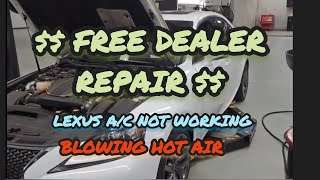
This code means the passenger-side face vent servo motor has failed. It's a very common issue on this platform, acknowledged by Lexus with a warranty extension. The part costs $150-$250, but replacement is labor-intensive, with shop costs ranging from $800 to over $1,900 due to complex dashboard disassembly.
- B1448 on a 2015-2019 RC 350 almost always means the passenger-side face vent servo motor has failed internally.
- This is a known issue acknowledged by Lexus through TSBs and a warranty extension program (CSP 20LE01); check with a dealer to see if your vehicle is covered.
- The vehicle is safe to drive, but comfort will be compromised.
- While the part itself is moderately priced (~$200), the repair is very expensive ($800-$1900) due to 4-8 hours of labor to disassemble the dashboard.
- Due to the extreme difficulty and need for special tools (like Techstream for initialization), this repair is not recommended for a novice DIYer.
What's Unique About the 2015-2019 Lexus RC 350
The Lexus RC 350, along with its platform mates like the IS and GS, is known for HVAC servo motor failures. The root cause is often an internal electrical malfunction within the servo motor assembly. Lexus has acknowledged this widespread issue by issuing multiple Technical Service Bulletins (TSBs) and a Customer Support Program (20LE01) that extends warranty coverage for these specific parts due to a high rate of failure. The problem is so common that when one servo fails, shops often recommend inspecting or replacing others that are difficult to access at the same time.
Diagnostic Flowchart
Tap your situation to follow the diagnostic path that matches what you're seeing on this vehicle.
Symptoms You May Notice
- No air or very little air coming from the passenger-side face-level dashboard vents.
- Air is stuck blowing from the passenger face vents and won't switch to other modes (like defrost or floor).
- Uneven air temperature between the driver and passenger sides (e.g., hot air on passenger side when A/C is on).
- A repeated clicking, grinding, or knocking sound coming from behind the passenger side of the dashboard when changing climate control modes or starting the car. 🎬 See how to identify and fix that clicking dash noise.
- A/C system automatically defaults to 25°C (77°F) on startup, a known symptom of servo failure on this platform.
- Low refrigerant. While low refrigerant can cause uneven cooling temperatures, it will not typically cause a specific servo motor circuit code like B1448 or a complete lack of airflow from one specific vent type.
Most Likely Causes
- Failed Passenger Side Face Servo Motor 🔴 High Probability These servo motors are a known weak point across this generation of Lexus vehicles, with a tendency for internal electrical components and contacts to wear out or fail. Lexus acknowledged this with TSBs and Customer Support Program 20LE01.
How to confirm: Use a diagnostic scan tool (like Toyota's Techstream) to perform an active test on the 'Passenger Side Face Servo Motor'. Monitor the live data for 'Air Outlet Servo Targ Pulse(P)' and 'Air Outlet Servo Actu[P]' (Actual Pulse). When commanding the mode to 'Face', the target and actual pulse value should be 254. A significant difference or a non-moving actual pulse indicates a faulty motor.
Typical fix: Replace the faulty servo motor. After replacement, a 'Servo Motor Initialization' must be performed with a scan tool. Due to the high labor involved, some owners or shops may choose to replace other adjacent, hard-to-reach servos at the same time as preventative maintenance.
Est. part cost: $150-$250 - Lost Servo Motor Calibration / Software Issue ⚪ Low Probability The A/C Amplifier can sometimes lose the stored end-point positions for the servo motors, causing them to function incorrectly. TSB L-SB-0019-20 and L-SB-0001-21 mention reprogramming the A/C amplifier as part of the diagnostic flow.
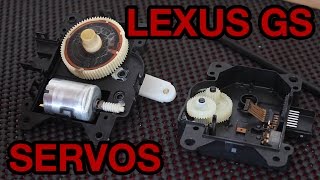
How to confirm: Before replacing parts, perform a 'Servo Motor Initialization' procedure using a compatible professional scan tool. Some owners report this temporarily restores function, which confirms the motor is failing intermittently and requires replacement. 🎬 Check out this guide on cleaning and repairing Lexus servos.
Typical fix: Run the re-initialization procedure. If this temporarily or permanently restores function, no parts are needed. If the problem returns quickly, the servo motor itself is failing and needs replacement.
Est. part cost: $0
Rare But Worth Checking
- Wiring Harness or Connector Damage: While less common than motor failure, a loose connector or damaged wire going to the servo can cause an identical 'circuit' fault. This should be checked with a multimeter before condemning the A/C Amplifier if a new motor doesn't solve the issue. The wiring originates at the A/C Amplifier, located behind the glove box.
- Failed A/C Amplifier (HVAC Control Module): In very rare cases, the control module that sends the signal to the servo can fail. This is unlikely and should only be considered after the servo motor and wiring have been definitively ruled out. A diagnostic scan showing a communication error with the A/C system could point to this module.
- Mechanically Jammed Damper Door or Linkage: It is possible for the damper door that the servo controls to become mechanically stuck or for its linkage to break. Service information suggests manually checking for free movement of the damper door linkage after the servo motor has been removed to rule this out.
Diagnosis Steps
- Confirm the symptoms, such as incorrect airflow from passenger face vents or clicking noises from the dash.
- Use a professional scan tool to read codes from the Air Conditioning (AC) module. Confirm B1448 is present and check if it is 'current' or 'history'.
- Using the scan tool, attempt a 'Servo Motor Initialization'. If the process completes and function is restored, the issue may be temporarily resolved. If it fails or the problem returns quickly, proceed with diagnosis.
- Access the scan tool's live data and monitor the 'Air Outlet Servo Targ Pulse(P)' and 'Air Outlet Servo Actu[P]' (Actual Pulse). Command the mode to 'Face' and observe if the actual pulse matches the target pulse (should be 254). A non-moving or incorrect value points to a failed servo.
- Listen for clicking or grinding from the passenger side of the dash while changing modes. This sound is a strong indicator of a servo with stripped or binding internal gears.
- If replacement is deemed necessary, check if the vehicle's VIN is covered by Lexus Customer Support Program 20LE01, which could make the repair free at a dealership.
- To replace, remove the passenger-side lower dash panel and the glove box assembly to gain access to the HVAC unit. The face servo is one of several motors in this area.
- Use a multimeter to check for power and ground signals at the servo motor connector when the mode is changed. If signals are present but the motor doesn't work, the motor is confirmed bad.
Parts You'll Likely Need
- Air Outlet Damper Servo Motor (Passenger Face)
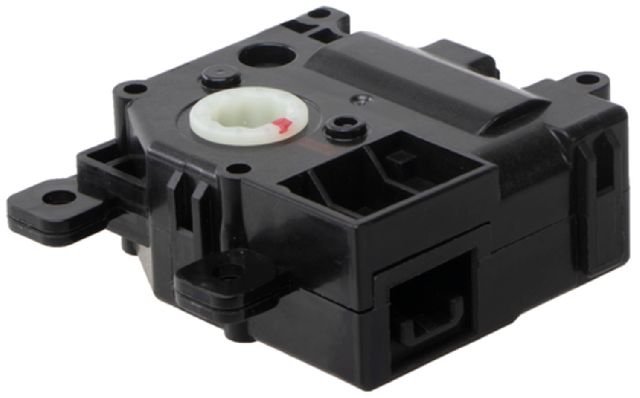
(OEM #87106-30610)— This is the specific servo motor that controls the passenger face vents and fails, causing code B1448. TSBs and repair data confirm this is the primary failure part. Multiple parts sites confirm this part number fits the RC, IS, and GS models.
Trusted brands: Lexus (Genuine OEM), Denso
OEM price range: $180-$250
Aftermarket price range: $120-$180
Related Codes That Often Appear With This One
- B1441 — Code for the passenger side lower air mix servo. These servos are of the same design and age, and often fail around the same time. Both codes are listed together in TSB L-SB-0001-21 Rev.
- B1446 — Code for the driver's side lower air mix servo. It's common for multiple HVAC servo codes to appear together, indicating a systemic issue rather than a single random failure.
- B1443 — Code for the driver's side air outlet servo. TSBs from Lexus group many of these servo codes together as part of the same common fault pattern.
- B1445 — Code for the Passenger Side Cool Air Bypass Damper. This is another servo on the passenger side that is prone to failure and listed in the same TSBs.
Technical Service Bulletins (TSBs) & Recalls
- L-SB-0001-21 Rev: HVAC Servo Motor Malfunction (covers 2015-2017 RC350).
- L-SB-0019-20: HVAC Servo Motor Malfunction (covers 2017-2019 RC350).
- Customer Support Program 20LE01: Extended warranty coverage for A/C servo motor malfunction.
Platform-Specific Known Issues
- Lexus issued Customer Support Program 20LE01 to extend the warranty coverage for failing HVAC servo motors due to internal electrical malfunctions. Primary coverage ended Jan 12, 2022, but secondary coverage lasts for 7 years or 125,000 miles from the vehicle's date of first use. Owners on forums note that a diagnostic fee may be charged if the issue is not a covered servo motor.
- Technical Service Bulletin L-SB-0001-21 Rev covers 2015-2017 RC350 models for this exact issue, providing diagnostic and repair procedures, including reprogramming the A/C amplifier.
- Technical Service Bulletin L-SB-0019-20 covers 2017-2019 RC350 models, indicating the problem persisted in later years of the generation and lists B1448 as a known fault code.
Mechanic-Grade Diagnostic Values
- Techstream Live Data: Air Outlet Servo Targ Pulse(P) / Actu[P] (LHD Vehicle) — expected: Target and Actual pulse values should match. For 'FACE' mode, the value is 254. For 'DEF' (defrost), the value is 143. For 'FOOT/DEF', the value is 155. For 'FOOT', the value is 178.. Failure: The 'Actual Pulse' value does not change or is significantly different from the 'Target Pulse' when changing modes.
Scan Tool Commands That Help
- Toyota Techstream: Utility: Servomotor Initialization — This is a mandatory calibration step after replacing a servo motor or disconnecting the battery. It forces the A/C amplifier to relearn the travel limits of all servos. It should also be used as a first diagnostic step, as it can sometimes temporarily fix the issue, confirming an intermittent servo failure.
- Toyota Techstream: Utility: AC damper servo operation check tool — This is a special function detailed in TSBs L-SB-0001-21 and L-SB-0019-20. It runs an 8-14 minute 'servo cleaning process' that cycles the motors through their full range to clean internal contacts and redistribute grease. If the DTC returns after this procedure, the servo must be replaced.
- Toyota Techstream: Active Test: Air Outlet Servo Pulse (P) — Allows a technician to manually command the servo motor to move to specific pulse values, directly verifying if the motor is physically capable of responding to commands from the A/C amplifier.
Wiring & Ground Locations
- A/C Amplifier (HVAC Control Module) — Located behind the glove box assembly on the passenger side of the dashboard.. This module is the source of the command signals and power for the B1448 servo motor. All wiring for the servo originates from this module, making it a central point for electrical testing.
- Instrument Panel Ground Point — There are multiple ground points connected to the metal frame of the dashboard. A common location is a bolt or stud behind removable side panels or near the glove box area.. A poor ground connection for the A/C Amplifier or the servo circuit can cause erratic behavior or a complete loss of function, mimicking a failed component. Verifying a clean, tight ground is a key electrical diagnostic step.
- Instrument Panel (Dash) Harness — This is the complex harness that runs behind the entire dashboard, connecting the A/C amplifier to all the servo motors.. In rare cases of damage (e.g., from a previous repair or rodent intrusion), a break or short in the section of this harness leading to the passenger face servo could cause code B1448.
Real Owner Repair Stories
- Reddit user on r/LexusIS (Lexus IS (platform mate)) — DTC B1453 (similar driver's side servo failure).
❌ Tried (didn't work) Initial diagnosis was difficult due to the extremely tight working space.
✅ What actually fixed it The user successfully performed a DIY replacement of the servo motor (part # 87106-30610). They noted that a small ratchet with a Phillips bit was essential for the job. A critical step was to manually align the flat part of the damper's shaft with a white mark on the A/C housing *before* installing the new servo, followed by a re-initialization procedure.
OEM Part Supersession History
87106-30610→87106-30610— No supersession found, but some vendors list the part as discontinued, suggesting supply may be limited to remaining stock or require sourcing from specific dealers.
Model Year Variations Within This Range
- 2015-2017 vs 2018-2019: Lexus issued separate TSBs for these year ranges (L-SB-0001-21 Rev for '15-'17 and L-SB-0019-20 for '17-'19), suggesting a potential change in the A/C amplifier software or hardware. The HVAC control unit itself also changed part numbers for the 2018 model year and is not interchangeable with earlier models.
Helpful Videos
We Have This Part in Stock

The information in this article is provided for general reference and educational purposes only. Vehicle specifications, procedures, and part compatibility can vary by production date, trim level, and region. Always consult your vehicle's factory service manual and verify part numbers before purchasing or performing repairs. Safety-critical components such as airbags, seat belts, and braking systems should be installed by a qualified professional.
- Lexus RC 350:
- 🎬 Helpful Videos
- 🛍️ Shop This Part
- What's Unique About the 2015-2019 Lexus RC 350
- Diagnostic Flowchart
- Symptoms You May Notice
- Most Likely Causes
- Rare But Worth Checking
- Diagnosis Steps
- Parts You'll Likely Need
- Related Codes That Often Appear With This One
- Technical Service Bulletins (TSBs) & Recalls
- Platform-Specific Known Issues
- Mechanic-Grade Diagnostic Values
- Scan Tool Commands That Help
- Wiring & Ground Locations
- Real Owner Repair Stories
- OEM Part Supersession History
- Model Year Variations Within This Range
- 🎟️ Get 5% Off