

B1448 on 2014-2018 Lexus IS 350: Passenger Face Vent Servo Motor Fixes
This code indicates a failure in the passenger-side face vent servo motor. The most common fix is replacing the servo motor located behind the glove box. Expect to pay around $150-$250 for an OEM part, but shop labor can be expensive ($800-$1900) due to difficult access. Before replacing, attempt a servo re-initialization with a scan tool, as this can sometimes resolve the issue.
- B1448 is a very specific code for the passenger face vent motor; it is not a major mechanical issue.
- The most likely cause is a failed or uncalibrated servo motor, a known issue for this Lexus generation and its platform mates (RC, GS).
- Before replacing any parts, perform a 'Servo Motor Initialization' with a capable scan tool, as this can often resolve the problem.
- Check if your vehicle is covered under Lexus Customer Support Program 20LE01, which could make the repair free at a dealership.
- While the part is moderately priced, the repair is difficult due to its location deep in the dashboard, leading to high labor quotes. Getting a quote from a trusted independent shop can save a significant amount of money.
What's Unique About the 2014-2018 Lexus IS 350
This is a well-documented issue on the third-generation Lexus IS and other contemporary Lexus models that share its platform, like the RC and GS. Lexus has issued multiple Technical Service Bulletins (TSBs) and even a Customer Support Program (20LE01) acknowledging that these HVAC servo motors can fail, causing a range of airflow and temperature problems. While the part itself isn't exceptionally expensive, its location deep within the dashboard makes replacement a labor-intensive job, leading many owners to experience high repair quotes from dealerships.
Diagnostic Flowchart
Tap your situation to follow the diagnostic path that matches what you're seeing on this vehicle.
Symptoms You May Notice
- No air or very weak airflow from the passenger-side face-level vents.
- Air from passenger face vents is stuck on hot or cold, and does not change with temperature settings.
- A clicking, grinding, or buzzing sound from behind the passenger side of the dashboard, especially when changing climate control modes.
- Uneven air distribution in the cabin.
- Airflow does not switch to the correct vents when a new mode (e.g., defrost, floor) is selected.
- Replacing the main climate control head unit on the dashboard. This unit is typically just an interface; the actual control logic is in the A/C amplifier module.
- Adding refrigerant to the A/C system. This code is unrelated to refrigerant levels and is purely an airflow control issue.
- Assuming the motor must be replaced without first attempting a re-initialization. A simple software reset can sometimes fix the problem, as noted by owners and technicians.
Most Likely Causes
- Failed Passenger Face Servo Motor 🔴 High Probability This is a known failure point acknowledged by Lexus in service bulletins and a customer support program for this vehicle generation. The internal electronic components or plastic gears of the motor wear out or the internal lubricant can cause binding over time. 🎬 See how to clean and repair a binding servo motor.
How to confirm: Using a diagnostic scan tool (like Toyota Techstream) that can read Lexus body codes, compare the 'Target Pulse' and 'Actual Pulse' for the passenger face servo. A significant difference or a static 'Actual Pulse' value indicates the motor is not reaching its commanded position, confirming its failure. A clicking sound from the motor is also a strong indicator. Before replacement, attempt a 'Servo Motor Initialization' utility; if this temporarily or permanently restores function, it points to a calibration or binding issue that may not require immediate replacement.
Typical fix: Replace the passenger side face servo motor. After replacement, an 'initialization' procedure must be performed with a compatible scan tool to calibrate the new motor.
Est. part cost: $150-$250 - Mechanical Obstruction ⚪ Low Probability
How to confirm: When the servo motor is removed, manually move the damper door linkage. It should move freely without binding. If it is stuck, the obstruction must be cleared. This is noted as a key check in diagnostic procedures.
Typical fix: Remove the foreign object or free the jammed damper door inside the HVAC unit. This can be very difficult and may require significant dashboard disassembly.
Est. part cost: $0 - Wiring Harness or Connector Issue ⚪ Low Probability
How to confirm: Visually inspect the wiring and connector at the servo motor for damage, corrosion, or loose pins. Use a multimeter to test for power, ground, and signal pulses at the connector when climate modes are changed.
Typical fix: Repair the damaged wire or clean/replace the connector.
Est. part cost: $5-$50
Rare But Worth Checking
- Faulty A/C Amplifier (HVAC Control Module): This is the computer that controls all the servos. It should only be considered after the servo motor and wiring have been definitively ruled out as the cause. Lexus TSBs sometimes call for reprogramming this module as a first step.
Diagnosis Steps
- Connect an advanced OBD-II scanner capable of reading Lexus-specific Body (B) codes to confirm B1448 is present. Note if it is current or in history.
- Using the scan tool's utility function, perform a 'Servo Motor Initialization'. After the procedure, clear the codes and re-test the HVAC system. If function returns, the motor may not need replacement. This is a critical first step mentioned in TSBs and forums.
- If the code returns, listen carefully to the passenger side of the dashboard while changing the HVAC mode from feet to face to defrost. Note any clicking or grinding sounds.
- Remove the passenger-side lower dash panel and the glove box assembly to gain access to the HVAC unit.
- Identify the Passenger Face Servo Motor. It will be one of several similar-looking motors attached to the HVAC case.
- With the ignition on, observe the servo while changing air modes to see if it attempts to move or makes noise.
- If you have a capable scan tool, monitor the live data for the 'Passenger Face Servo' target pulse and actual pulse values to confirm a mismatch.
- If the servo is confirmed to be faulty, disconnect its electrical connector and remove it. It is typically held by a few Phillips head screws, though one may be very difficult to access.
- Replace the servo motor with a new part. 🎬 Watch this step-by-step walkthrough of the IS 350 servo replacement.
- After installation, perform the 'Servo Motor Initialization' utility with your scan tool to calibrate the new motor and ensure proper system operation.
Parts You'll Likely Need
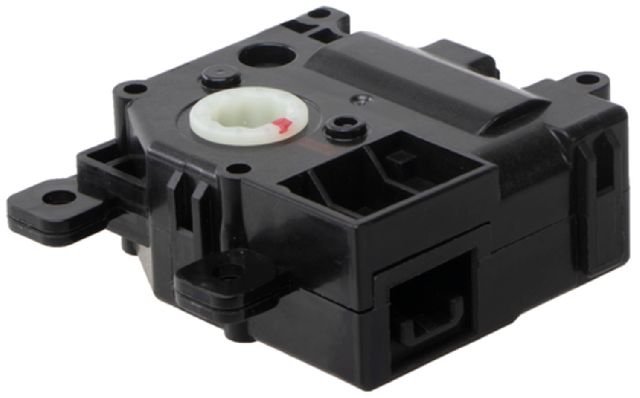
- Passenger Side Face Servo Motor
(OEM #87106-30480 (Verification by VIN in the official parts catalog is strongly recommended as multiple servos are used))— This is the component that fails in the vast majority of B1448 cases on this vehicle.
Trusted brands: Lexus (OEM), Aisin, Denso
OEM price range: $150-$260
Aftermarket price range: $80-$150
Related Codes That Often Appear With This One
- B1441, B1442, B1443, B1446, B1453, B1454, etc. — These are all codes for other servo motors in the same HVAC system. It is common for multiple servos to fail around the same time, as they are of the same age and design. Some shops recommend replacing multiple servos at once if the dashboard has to be removed. TSB L-SB-0001-21 lists over ten different servo codes that are part of this common issue.
Technical Service Bulletins (TSBs) & Recalls
- L-SB-0001-21 Rev1: HVAC Servo Motor Malfunction
- L-SB-0019-20: HVAC Servo Motor Malfunction
- Customer Support Program 20LE01: Coverage for Repairs for Air Conditioner (A/C) Servo Motor Malfunction
Platform-Specific Known Issues
- Lexus issued Technical Service Bulletin L-SB-0001-21 Rev1, which covers the 2014-2017 IS 350, for HVAC servo motor malfunctions that cause uneven temperature, improper airflow, and store codes including B1448.
- A similar TSB, L-SB-0019-20, also lists B1448 for 2017-2019 IS models, indicating the issue persists across the specified year range.
- Due to the high labor cost, Lexus initiated a Customer Support Program (CSP 20LE01) to cover repairs (reprogramming and/or replacement) for an extended period, acknowledging the widespread nature of the problem. Owners have reported being quoted over $3,000 for a repair that was ultimately fixed for free under this program.
- Real-world owner experiences confirm the high dealer repair costs. One ClubLexus member was quoted $1,900 for a single servo motor replacement on their IS. Another was quoted $1,800 for two servos.
Mechanic-Grade Diagnostic Values
- Air Outlet Servo Target/Actual Pulse (LHD Vehicle) — expected: When set to 'FACE' mode, the target and actual pulse value should be 254. When set to 'DEF' (defrost), the value should be 143.. Failure: The 'Actual Pulse' value does not match the 'Target Pulse' value or does not change when the mode is changed, indicating the servo is stuck or not responding.
Scan Tool Commands That Help
- Toyota Techstream: Servo Motor Initialization — This function, found under the 'Utility' menu for the Air Conditioner system, forces the A/C amplifier to relearn the end points of all servo motors. It should be used after replacing a servo or as a first diagnostic step, as it can sometimes resolve calibration issues that trigger code B1448 without requiring part replacement.
- Toyota Techstream: Active Test (Data List: Air Outlet Servo Targ[P] / Actu[P]) — This allows a technician to command the servo to specific positions (e.g., FACE, FOOT, DEF) and simultaneously watch the live data for the target and actual pulse counts to see if the motor is moving as commanded.
- Toyota Techstream: AC damper servo operation check tool — This is a special utility referenced in TSBs that runs the servos through a cleaning/exercise cycle. It is used after reprogramming the A/C amplifier to help free up servos that may be slightly binding, and it can take 8-14 minutes to complete.
Wiring & Ground Locations
- A/C Amplifier Assembly — Located in the center of the dash, attached to the main HVAC unit, often accessible after removing the glove box.. This is the control module that sends power and commands to the Passenger Face Servo Motor. All wiring for the servo originates from this module.
- Chassis Ground Points — There are multiple factory ground bolts and studs on the metal frame behind the removable panels on the driver and passenger sides of the vehicle, often near the kick panels or glove box area.. A poor ground for the A/C Amplifier can cause erratic behavior in all HVAC components, including the servo motors. While not a common cause for a single servo code, verifying a clean, tight ground connection is part of a thorough electrical diagnosis.
OEM Part Supersession History
87106-30480→87106-30481— Part revision or update by the manufacturer.
Heads up: The parts are listed as interchangeable. However, 87106-30480 is primarily associated with the 2006-2013 IS/GS generation, while the 2014+ models use different part numbers depending on the specific servo. Verifying the correct part number via VIN with a Lexus parts catalog is critical as there are over 10 different servos in the HVAC unit.
Model Year Variations Within This Range
- 2014-2017 vs 2017-2018: Lexus issued two separate TSBs for this issue with overlapping years. L-SB-0001-21 Rev1 covers 2014-2017 models, while L-SB-0019-20 covers 2017-2019 models. This may indicate a change in parts or software around the 2017 model year, making it crucial to reference the correct TSB and part number based on the vehicle's specific production date.
Helpful Videos

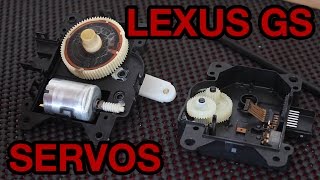
We Have This Part in Stock

The information in this article is provided for general reference and educational purposes only. Vehicle specifications, procedures, and part compatibility can vary by production date, trim level, and region. Always consult your vehicle's factory service manual and verify part numbers before purchasing or performing repairs. Safety-critical components such as airbags, seat belts, and braking systems should be installed by a qualified professional.
- Lexus IS 350:
- 🎬 Helpful Videos
- 🛍️ Shop This Part
- What's Unique About the 2014-2018 Lexus IS 350
- Diagnostic Flowchart
- Symptoms You May Notice
- Most Likely Causes
- Rare But Worth Checking
- Diagnosis Steps
- Parts You'll Likely Need
- Related Codes That Often Appear With This One
- Technical Service Bulletins (TSBs) & Recalls
- Platform-Specific Known Issues
- Mechanic-Grade Diagnostic Values
- Scan Tool Commands That Help
- Wiring & Ground Locations
- OEM Part Supersession History
- Model Year Variations Within This Range
- 🎟️ Get 5% Off