

B1448 on 2016-2017 Lexus GS 200T: Passenger Face Servo Motor Circuit Fault Guide
Code B1448 on a 2016-2017 Lexus GS 200T indicates a failure in the 'Passenger Side Face Servo Motor Circuit'. This is almost always a failed servo motor that directs air to the passenger's dashboard vents. The part is moderately priced, but replacement is labor-intensive and can be expensive at a shop, with some dealer quotes exceeding $1,900. Before replacement, check eligibility for Lexus Customer Support Program 20LE01, which extended the warranty for this known issue.
- B1448 means the passenger-side face vent actuator has failed, a very common problem on this car.
- The primary symptom will be no air coming from the passenger dashboard vents, often accompanied by a clicking noise from behind the glove box.
- Before paying for a repair, contact a Lexus dealer with your VIN to see if your vehicle is covered under the Customer Support Program 20LE01 for a free fix.
- While the part itself isn't extremely expensive, the repair is difficult due to its location deep in the dashboard, leading to high labor costs at a repair shop.
- A scan tool that can perform a 'Servo Motor Initialization' is a key diagnostic step to confirm the failure before starting any disassembly.
What's Unique About the 2016-2017 Lexus GS 200T
The fourth-generation Lexus GS, including the GS 200T, is known for issues with its HVAC servo motors. These motors, which control airflow direction and temperature, are prone to internal electrical failure over time. Lexus acknowledged this widespread problem by issuing Technical Service Bulletins (TSBs) and a Customer Support Program (20LE01) that extended warranty coverage for these specific components on many affected models, including the 2016-2017 GS 200T. Therefore, a B1448 code on this vehicle is very likely due to the known failure of the servo motor itself rather than a more obscure wiring or computer issue.
Diagnostic Flowchart
Tap your situation to follow the diagnostic path that matches what you're seeing on this vehicle.
Symptoms You May Notice
- No air or very weak airflow from the passenger-side upper dashboard (face) vents.
- Air is stuck coming from the passenger-side floor or defrost vents, regardless of the mode selected.
- A repetitive clicking, grinding, or buzzing sound from behind the passenger side of the dashboard, especially when changing HVAC modes or starting the car. One owner described it as sounding like a PC mouse clicking very fast.
- Uneven air distribution or temperature between the driver and passenger sides.
- An error message may appear on the climate control screen.
- Replacing the main HVAC control panel on the dashboard. The issue is almost never with the user interface buttons, but rather the actuator motor behind the dash.
- Adding refrigerant. Low refrigerant affects cooling performance but will not cause a specific servo motor circuit code like B1448.
Most Likely Causes
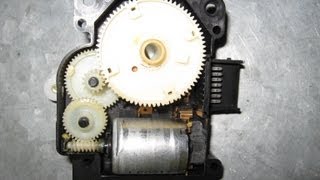
- Failed Passenger Face Servo Motor 🔴 High Probability This is a well-documented common failure part for this generation of Lexus vehicles due to wear and internal electrical faults, 🎬 See a teardown of a failed Lexus servo motor. as acknowledged by Lexus TSB L-SB-0001-21 and Customer Support Program 20LE01. The internal contacts and position sensor wear out, causing the motor to fail or 'hunt' for the correct position.
How to confirm: Listen for clicking or grinding noises from the passenger dash when changing modes. Use a diagnostic scan tool (like Toyota Techstream) to perform a 'Servo Motor Initialization' or 'AC damper servo operation check'; failure of these tests confirms a bad motor. Live data on the scan tool will show a mismatch between the 'target pulse' and 'actual pulse' for the passenger face servo.
Typical fix: Replace the Passenger Side Face Servo Motor. After replacement, a 'Servo Motor Initialization' must be performed with a scan tool to calibrate the new part.
Est. part cost: $170-$250 - Damaged Wiring or Loose Connector ⚪ Low Probability Less common than motor failure, but can occur due to vibration or previous repairs in the dash area.
How to confirm: Visually inspect the wiring harness and connector at the servo motor for any signs of damage, corrosion, or a loose connection. Use a multimeter to check for power, ground, and signal continuity at the connector, comparing readings to a service manual. The expected continuity should be less than 1 Ω, and resistance to ground should be 10 kΩ or higher.
Typical fix: Repair the damaged section of the wiring harness or clean and re-secure the connector.
Est. part cost: $5-$50
Rare But Worth Checking
- Faulty A/C Amplifier (HVAC Control Module): This is rare and should only be suspected if multiple, unrelated servo codes are present or if the servo and wiring have been tested and confirmed to be good. Some forum discussions mention that a software update for the A/C amplifier was a potential fix, but this is usually performed in conjunction with the TSB for failing motors.
- Mechanical Obstruction: It's possible for the damper door or its linkage to become physically jammed, preventing the servo from moving. This can sometimes be identified during visual inspection when accessing the servo motor. The door should move freely by hand when the servo is disconnected.
Diagnosis Steps
- Connect an advanced OBD-II scanner capable of reading Lexus-specific Body (B) codes to confirm B1448 is present and active.
- Using the scan tool's utility function, attempt to perform a 'Servo Motor Initialization'. This procedure cycles all the motors. A successful initialization may temporarily fix the issue, confirming an intermittent servo failure. A failed initialization points directly to a hardware problem.
- Listen carefully to the passenger side of the dashboard, near the glove box, while changing the HVAC mode from 'Floor' to 'Vent' (Face) to 'Defrost'. A repetitive clicking or grinding sound strongly indicates a failed servo with stripped internal gears.
- If no sound is heard, access the servo motor for testing. This requires removing the passenger-side lower dash panel and the glove box assembly.
- Visually inspect the servo motor's wiring connector for damage or corrosion. Ensure it is securely plugged in.
- With the connector unplugged, use a multimeter to test for power, ground, and signal being sent from the A/C amplifier when the mode is changed. This verifies the control module and wiring are likely functioning.
- If power is present but the motor doesn't work, or if initialization consistently fails, the servo motor is faulty and needs to be replaced.
- After replacing the servo, it is critical to run the 'Servo Motor Initialization' again to calibrate the new part.
Parts You'll Likely Need
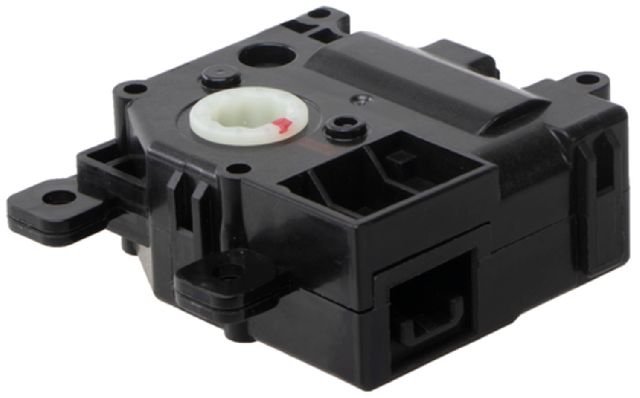
- Air Outlet Damper Servo (Passenger Face)
(OEM #87106-30610)— This is the specific motor that fails and causes the B1448 code. It controls the passenger-side face vents. TSB L-SB-0001-21 Rev1 also lists part number 87106-30580 for this fault, but 87106-30610 is often cited as the correct or superseding part for related applications. Always confirm with a VIN.
Trusted brands: Lexus (Genuine OEM), Aisin
OEM price range: $170-$250
Aftermarket price range: $90-$150
Related Codes That Often Appear With This One
- B1441 — This is the code for the Passenger Side Lower Air Mix servo. These servos are of the same design and age, and it's common for multiple units to fail around the same time, as noted in TSB L-SB-0001-21.
- B1443 — This code is for the Air Outlet Damper Control Servo Motor Circuit. Like other servo codes, its appearance with B1448 points to a systemic weakness in the HVAC servo motors.
- B1446 — This is the code for the Driver Side Lower Air Mix servo. Seeing multiple servo codes together reinforces the diagnosis of failing servo motors rather than an isolated issue. A ClubLexus user reported having B1446 and B1448 simultaneously on their Lexus.
Technical Service Bulletins (TSBs) & Recalls
- L-SB-0019-20: Lists B1448 as 'Passenger Side Face Servo Motor Circuit'.
- L-SB-0001-21 Rev: Provides detailed diagnostic and repair procedures for B1448 and other related servo motor faults on the 2016-2017 GS 200T, including part numbers and repair groupings.
- Customer Support Program 20LE01: An owner notification program extending warranty coverage for failing HVAC servo motors. It covered approximately 1,870 GS 200T models from 2016-2017.
Platform-Specific Known Issues
- Lexus issued Customer Support Program 20LE01 specifically for A/C servo motor malfunctions on a range of vehicles, including the 2016-2017 GS 200T. This program extended the warranty for this specific issue. The Primary Coverage ended in January 2022, but a Secondary Coverage for 7 years or 125,000 miles from the date of first use may still apply. Owners should check with a Lexus dealer with their VIN to see if they are eligible for a free repair.
- Technical Service Bulletin L-SB-0001-21 Rev details the diagnostic and repair procedures for a host of HVAC servo motor codes, including B1448, confirming it's a recognized issue by the manufacturer.
- The labor for this repair can be very high because, on the GS platform, replacing the passenger face servo is extremely difficult. Owners on forums have reported dealer quotes ranging from $1,800 to over $5,000 for servo-related repairs. TSB L-SB-0001-21 Rev1 classifies this as a 'Group A' repair, which is less intensive than a full dash removal ('Group C') but still requires significant disassembly.
Mechanic-Grade Diagnostic Values
- Scan Tool Live Data: Air Outlet Servo Actual Pulse (P) vs. Target Pulse (P) for LHD Vehicle — expected: When the HVAC mode is set to 'FACE', the 'Target Pulse' and 'Actual Pulse' values should both read 254. When set to 'DEF', the value should be 143. The actual value should always match the target value shortly after a mode change.. Failure: The 'Actual Pulse' value is stuck, does not change, or is significantly different from the 'Target Pulse' value commanded by the A/C amplifier.
Scan Tool Commands That Help
- Toyota Techstream: Utility: Servo Motor Initialization — This is a mandatory calibration procedure required after replacing any servo motor or after the battery has been disconnected. It forces the A/C amplifier to relearn the mechanical end points of all dampers. It can also be used as an initial diagnostic step, as a successful initialization may temporarily resolve the fault, confirming an intermittent motor failure.
- Toyota Techstream: Active Test: Air Outlet Servo Pulse (P) — This bidirectional control allows a technician to manually command the servo to specific positions (e.g., FACE, FOOT) while watching the 'Actual Pulse' live data. It directly confirms if the motor is physically responding to commands from the A/C amplifier, isolating the fault to the motor if it fails to move.
- Toyota Techstream: Utility: AC damper servo operation check tool — This is a special function detailed in TSB L-SB-0001-21. It is used to run the servos through a cleaning and exercise cycle. Per the TSB, this may be performed after reprogramming the A/C amplifier and before deciding to replace the servo motor hardware.
OEM Part Supersession History
87106-30580→87106-30610— Part revision or update by the manufacturer.
Heads up: TSB L-SB-0001-21 may reference the older part number, but dealer and OEM parts catalogs now point to 87106-30610 as the correct replacement for this application. Using the latest part number is recommended.
Helpful Videos
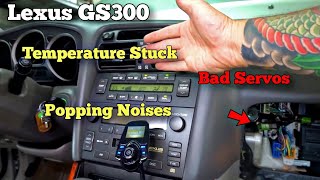
We Have This Part in Stock

The information in this article is provided for general reference and educational purposes only. Vehicle specifications, procedures, and part compatibility can vary by production date, trim level, and region. Always consult your vehicle's factory service manual and verify part numbers before purchasing or performing repairs. Safety-critical components such as airbags, seat belts, and braking systems should be installed by a qualified professional.
- Lexus GS 200T:
- 🎬 Helpful Videos
- 🛍️ Shop This Part
- What's Unique About the 2016-2017 Lexus GS 200T
- Diagnostic Flowchart
- Symptoms You May Notice
- Most Likely Causes
- Rare But Worth Checking
- Diagnosis Steps
- Parts You'll Likely Need
- Related Codes That Often Appear With This One
- Technical Service Bulletins (TSBs) & Recalls
- Platform-Specific Known Issues
- Mechanic-Grade Diagnostic Values
- Scan Tool Commands That Help
- OEM Part Supersession History
- 🎟️ Get 5% Off