

B1447 on 2016-2017 Lexus GS 200T: Rear Air Mix Servo Failure Causes and Fixes
Code B1447 on a 2016-2017 Lexus GS 200T means the rear climate control temperature servo has failed. Symptoms include a persistent clicking from the dash and incorrect temperature from the rear vents. The fix is replacing the servo motor, a very labor-intensive job ($1900-$3500+) that requires removing the entire dashboard, as confirmed by Lexus TSBs.
- B1447 means the motor that controls rear seat air temperature has failed.
- This is a known issue on 2016-2017 Lexus GS 200T models.
- Symptoms are incorrect rear air temperature and a distinct clicking/buzzing from the dashboard.
- The repair is extremely labor-intensive and expensive, as the entire dashboard must be removed to replace the small servo motor.
- Professional repair is strongly recommended; this is not a suitable DIY job for most people.
What's Unique About the 2016-2017 Lexus GS 200T
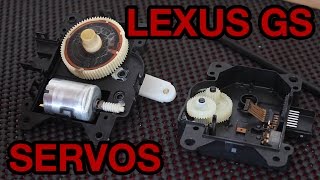
Failures of HVAC servo motors are a well-documented issue across many Lexus and Toyota models of this era, often due to wear on the internal components of the Denso-made motors. The 2016-2017 GS 200T is one of 1,870 vehicles specifically included in a warranty extension for this problem. What makes the B1447 code infamous on the GS platform is the location of this specific servo. Lexus TSB L-SB-0001-21 Rev classifies this as a 'Group C' repair, meaning the servo is buried deep within the main HVAC unit. This requires complete removal of the dashboard and instrument panel for replacement 🎬 See a full walkthrough of this intensive dashboard removal process., making it an exceptionally labor-intensive and expensive repair.
Diagnostic Flowchart
Tap your situation to follow the diagnostic path that matches what you're seeing on this vehicle.
Symptoms You May Notice
- Incorrect air temperature from the rear vents (e.g., stuck on full hot or full cold).
- A faint but persistent clicking, buzzing, or whirring sound from behind the center console or dashboard, often described as a 'fast mouse click' or 'CD changer noise'. This is the sound of the servo's internal gears slipping as it tries to find its position.
- Inability to adjust the rear passenger temperature using the climate controls.
- Uneven temperature distribution between the front and rear of the cabin.
- A 'Check Climate Control System' message may appear on the infotainment screen.
- The climate control system may reset itself to 75 degrees upon startup.
- Replacing the climate control head unit. The user interface is almost never the cause of a single servo motor circuit fault.
- Adding refrigerant. Refrigerant level has no connection to the electrical operation of the blend door servos.
Most Likely Causes
- Failed Rear Air Mix Damper Servo Motor 🔴 High Probability These Denso servo motors are a known common failure point on this Lexus platform due to wear of internal plastic gears and degradation of the conductive grease on the electrical contacts over time. The issue was so widespread Lexus initiated Customer Support Program 20LE01.
How to confirm: A professional scan tool (like Toyota Techstream) can monitor the servo's 'target' and 'actual' position values. A discrepancy while commanding temperature changes confirms the failure. A persistent clicking noise from the dash is also a very strong indicator.
Typical fix: The servo motor must be replaced. Per TSB L-SB-0001-21 Rev, this specific servo on the GS requires removing the entire dashboard and HVAC unit to access the part. The Rear Air Mix Servo (B1447) and Passenger Air Mix Servo (B1441) are mounted together and are often replaced as a set.
Est. part cost: $70-$150 - Air Conditioning Amplifier Software Issue 🟡 Medium Probability Lexus has identified that the control logic in the A/C Amplifier can become corrupted or outdated, leading to false or intermittent servo motor codes.
How to confirm: This is the first diagnostic step a dealership will take. They will use a Techstream scanner to check the current software calibration ID and update it if a newer version is available per TSB L-SB-0001-21 Rev or L-SB-0019-20.
Typical fix: Flash reprogram the A/C Amplifier with the latest software. If the code returns immediately or after a short time, the servo motor itself is mechanically faulty.
Est. part cost: $0 (if done under warranty/CSP) or 1-2 hours of labor at a dealer. - Wiring or Connector Fault ⚪ Low Probability
How to confirm: Once the HVAC unit is removed to access the servo, the wiring harness and connector can be visually inspected for damage and tested for proper voltage and ground with a multimeter.
Typical fix: Repair the damaged section of the wiring harness or replace the connector.
Est. part cost: $10-$50
Rare But Worth Checking
- Mechanically Jammed Damper Door: A foreign object could have fallen into the vents and jammed the blend door, or the door itself could have broken. This is unlikely but possible, and would be discovered during the servo replacement.
- Failed Air Conditioning Amplifier: It is rare for the control module itself to fail, but it's a possibility if reprogramming doesn't work and multiple, unrelated servo codes are present simultaneously. A dealership diagnosis with Techstream can help confirm an amplifier failure.
Diagnosis Steps
- Connect a professional scan tool capable of reading Lexus Body/HVAC codes (e.g., Toyota Techstream).
- Scan the 'Air Conditioner' module for DTCs and confirm B1447 is present.
- As a first step, check for any applicable software updates for the A/C Amplifier, as recommended by Lexus TSB L-SB-0001-21 Rev. Reprogram if an update is available.
- Listen for a clicking or buzzing noise from the center dash area while changing the rear temperature from hot to cold.
- Using the scan tool's live data function, command the 'Rear Air Mix Damper' to move and observe the 'target position' vs. 'actual position' data. If the actual position does not match the target, the servo or its circuit is faulty.
- If a software update does not resolve the code, the vehicle will require significant disassembly to physically access and test the servo motor and its wiring.
- After replacement, perform the 'Servomotor Initialization' procedure using the scan tool to calibrate the new part. This step is critical for proper operation.
Parts You'll Likely Need
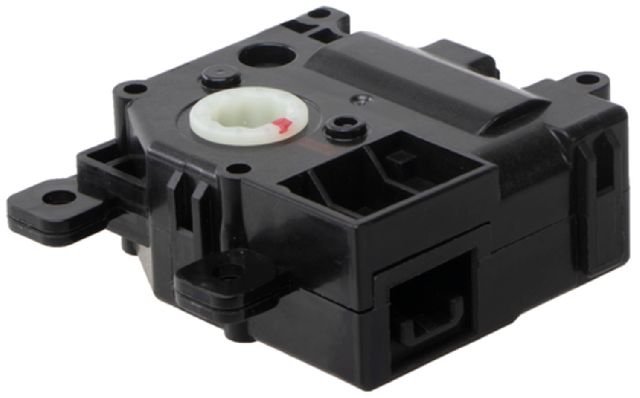
- Rear Air Mix Damper Servo Motor
(OEM #Varies by VIN. Use Lexus Electronic Parts Catalog.)— This is the component that fails, causing the B1447 code. Lexus TSBs advise using the vehicle's VIN to find the exact part number from the electronic parts catalog, as multiple different servos are used in the HVAC unit. The base part number family is typically 87106.
Trusted brands: Lexus (OEM), Denso
OEM price range: $100-$150
Aftermarket price range: $70-$120
Related Codes That Often Appear With This One
- B1441 — This code is for the Front Passenger Side Air Mix Servo. It is extremely common to see multiple servo codes together as they are identical parts of the same age and design. On the GS, the B1441 and B1447 servos are mounted together and replaced as a set.
- B1446 — This code is for the Driver Side Lower Air Mix Servo. Its appearance with B1447 suggests a systemic weakness in the HVAC servo motors, and owners often elect to replace multiple servos at once given the high labor cost of disassembly.
- B1449 — This code is for the Rear Air Outlet Damper, which controls where the rear air flows. Since it's also part of the rear HVAC system, a fault here can occur alongside a B1447.
Technical Service Bulletins (TSBs) & Recalls
- L-SB-0001-21 Rev: The primary TSB covering HVAC servo motor malfunctions for 2013-2017 models, including the GS 200T. It provides the full diagnostic and repair flowchart, explicitly stating the need for A/C unit removal for a B1447 code on a GS.
- L-SB-0019-20: Also addresses HVAC servo motor malfunctions and lists B1447 for the 2017 GS 200T, primarily recommending a software flash for the A/C amplifier as a potential fix.
Platform-Specific Known Issues
- TSB L-SB-0001-21 Rev: Lexus issued this Technical Service Bulletin, which is the definitive guide for this issue. It confirms that for the GS model, replacement of the rear air mix servo (B1447) is a 'Group C' repair requiring removal of the entire A/C unit assembly.
- Customer Support Program 20LE01: Lexus ran this program extending warranty coverage for these failing A/C servo motors. The Primary Coverage (unlimited mileage) expired on January 12, 2022. The Secondary Coverage is for 7 years or 125,000 miles from the vehicle's in-service date, whichever comes first. For a 2016-2017 vehicle, this secondary coverage may have also expired or is near expiration. Owners should check with a Lexus dealer with their VIN to confirm eligibility.
Mechanic-Grade Diagnostic Values
- Techstream Live Data: 'Air Mix Servo Targ Pulse(R)' — expected: Target pulse value changes as rear temperature is adjusted. Normal range is 128 to 383. MAX COLD is ~254 pulses, MAX HOT is ~299 pulses.. Failure: The 'Actual Pulse' value does not match the 'Target Pulse' value when commanded to change.
- Techstream Live Data: 'Air Mix Servo Actual Pulse(R)' — expected: Actual pulse value should closely follow the target pulse value. Normal range is 128 to 383.. Failure: Value is stuck or does not change correctly in response to temperature commands, indicating a faulty servo or mechanical jam.
- Wiring Harness Resistance (Servo to A/C Amplifier) — expected: Below 1 Ω between the corresponding pins of the disconnected R58 and J48 connectors.. Failure: Resistance is higher than 1 Ω, indicating a break or high resistance in the harness.
- Wiring Harness Resistance to Ground — expected: 10 kΩ or higher between any of the servo harness pins and body ground.. Failure: Resistance is less than 10 kΩ, indicating a short to ground in the harness.
Hidden / Shadow Codes Worth Checking
- 47: This is a two-digit sub-code equivalent to B1447 that may be displayed by older diagnostic methods or on the climate control display itself during a self-test. (see via Can be seen using Toyota Techstream or by initiating the onboard HVAC diagnostic mode (typically by holding 'AUTO' and 'Recirc' buttons while turning the ignition on).)
Scan Tool Commands That Help
- Toyota Techstream: Servomotor Initialization — This utility forces all HVAC servos to cycle through their full range of motion to relearn their end-points. It is required after replacing a servo or the A/C amplifier, or after disconnecting the battery. It can also be used as a diagnostic step; if initialization temporarily fixes the issue, it strongly suggests a failing servo motor.
- Toyota Techstream: Data List > 'Air Mix Servo Targ Pulse(R)' & 'Air Mix Servo Actual Pulse(R)' — Used to actively monitor the commanded position versus the actual reported position of the rear air mix servo. This is the primary method for confirming a servo motor failure without disassembly.
- Toyota Techstream: Active Test > 'Control the Rear Air Mix Damper' — This function allows a technician to directly command the servo to specific positions (e.g., full hot, full cold) to verify its range of motion and responsiveness, isolating the fault to the motor or its linkage.
- Toyota Techstream: AC damper servo operation check tool — Mentioned in TSB L-SB-0001-21, this is a special utility that automatically cycles the servos. It's referred to as a 'servo cleaning process' and is intended to be run after a software update to help restore function before resorting to replacement.
Wiring & Ground Locations
- R58 — The electrical connector on the Rear Air Mix Damper Servo Motor itself, located deep inside the HVAC unit.. This is the connector where a technician would perform final checks for power, ground, and signal before replacing the motor. Access requires full dashboard removal.
- J48 — The electrical connector at the Air Conditioning Amplifier (control module). The A/C Amplifier is typically located behind the dashboard, often on the passenger side.. This is the source of the command signals for the servo. Technicians test continuity between this connector and the R58 connector to rule out a wiring harness failure.
Real Owner Repair Stories
- ClubLexus user 'EAST' (2016 Lexus GS350) — A mode door servo (not the B1447 servo, but same system) would get stuck and go 'out of bounds' when using the front defrost button.
❌ Tried (didn't work) Simply changing vent positions would not unstick the servo.
✅ What actually fixed it Running the 'Servomotor Initialization' function in Techstream 2-3 times in a row successfully unstuck the motor and the problem did not return. The user theorized this helped redistribute the internal grease. - Techstream-Solutions.com user (Lexus (model not specified, but same system)) — No heat on the passenger side for 2 years.
❌ Tried (didn't work) Bleeding air from cooling system, Heater core flush, Replacing actuators/servomotors, Replacing sensors
✅ What actually fixed it The problem was resolved by running the 'INITIALIZE SERVOMOTOR' utility in the Toyota Techstream software. The user emphasizes that this calibration was the only thing that worked after many failed attempts at parts replacement.
Helpful Videos

We Have This Part in Stock

The information in this article is provided for general reference and educational purposes only. Vehicle specifications, procedures, and part compatibility can vary by production date, trim level, and region. Always consult your vehicle's factory service manual and verify part numbers before purchasing or performing repairs. Safety-critical components such as airbags, seat belts, and braking systems should be installed by a qualified professional.
- Lexus GS 200T:
- 🎬 Helpful Videos
- 🛍️ Shop This Part
- What's Unique About the 2016-2017 Lexus GS 200T
- Diagnostic Flowchart
- Symptoms You May Notice
- Most Likely Causes
- Rare But Worth Checking
- Diagnosis Steps
- Parts You'll Likely Need
- Related Codes That Often Appear With This One
- Technical Service Bulletins (TSBs) & Recalls
- Platform-Specific Known Issues
- Mechanic-Grade Diagnostic Values
- Hidden / Shadow Codes Worth Checking
- Scan Tool Commands That Help
- Wiring & Ground Locations
- Real Owner Repair Stories
- 🎟️ Get 5% Off