

B1442 on 2016-2017 Lexus GS 200T: Air Inlet Damper Servo Causes and Fixes
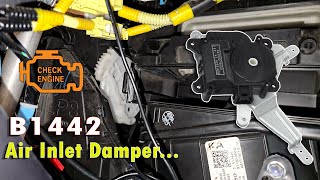
This code indicates a failure in the Air Inlet Damper Servo, the motor that controls fresh vs. recirculated air. It's a very common issue on this platform, often causing a clicking noise from the dash. Lexus acknowledged this widespread problem with a Customer Support Program (20LE01). The part is relatively inexpensive, but replacement is a highly labor-intensive job requiring dashboard removal, with shop costs often exceeding $1,000 and dealer quotes reaching over $3,000.
- B1442 on your GS 200T means the motor controlling the fresh/recirculated air flap has failed.
- The most common symptom is a persistent clicking or grinding noise from behind the glove box area.
- This is a known issue for this Lexus platform, and the servo motor itself is almost always the cause.
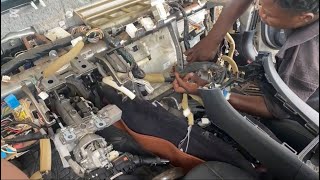
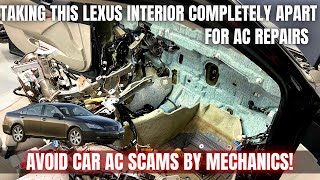
- While the part is not overly expensive, the repair is one of the most labor-intensive jobs on the vehicle, requiring complete dashboard removal.
- Because of the high labor cost, consider replacing other HVAC servos at the same time as a preventative measure.
What's Unique About the 2016-2017 Lexus GS 200T
The fourth-generation Lexus GS, along with its platform-mates like the IS and RC, is known for premature HVAC servo motor failures. Lexus acknowledged this pattern by issuing multiple Technical Service Bulletins (TSBs) and a specific Customer Support Program (20LE01) that extended warranty coverage for this exact issue due to a high rate of internal electrical malfunctions in the servos. The issue is so common that it's a frequent topic in owner forums, with many reporting that the servo motors fail due to internal electrical faults or worn-out components, rather than an external cause.
Diagnostic Flowchart
Tap your situation to follow the diagnostic path that matches what you're seeing on this vehicle.
Symptoms You May Notice
- Audible clicking, grinding, or 'gerbil-like' noises from behind the passenger side of the dashboard, especially when starting the car or changing HVAC settings.
- Inability to switch between fresh air and recirculated air modes.
- The recirculation button light may blink or not respond when pressed.
- Outside odors easily enter the cabin, even when recirculation is selected.
- Windows fog up easily and are difficult to clear (if stuck in recirculation mode).
- Incorrect or reduced airflow from vents.
- The 'Auto' A/C light turns on by itself at startup, stays on for about 30 seconds, and then turns off.
- Replacing the HVAC control panel/buttons on the dash. The user interface is rarely the cause of this specific code.
- Replacing the cabin air filter, assuming it will fix the air source issue. While important for maintenance, it is unrelated to this fault unless the replacement procedure was done incorrectly and dislodged a linkage.
- Adding refrigerant to the A/C system. This code is purely electrical/mechanical and is not related to refrigerant levels.
Most Likely Causes
- Failed Air Inlet Damper Servo Motor 🔴 High Probability These servo motors are a known weak point on this generation of Lexus vehicles, as acknowledged by multiple TSBs (L-SB-0019-20, L-SB-0001-21) and a specific Customer Support Program (20LE01) for this failure. [TSB L-SB-0019-20, TSB L-SB-0001-21, 15] The internal components, including the position sensor contacts, can wear out or fail, leading to a circuit fault.
How to confirm: Use a diagnostic scan tool (like Toyota's Techstream) to command the air inlet servo to move while monitoring its 'Target Pulse' and 'Actual Pulse' data. If the 'Actual Pulse' value does not change or does not match the 'Target Pulse', it has failed. Alternatively, listen for distinct clicking from the passenger side dash area when pressing the recirculation button.
Typical fix: The servo motor must be replaced. This is a highly labor-intensive job that requires removing the entire dashboard and HVAC unit assembly to gain access.
Est. part cost: $60-$175 - Damaged Wiring or Loose Connection ⚪ Low Probability
How to confirm: If the servo motor is accessible, inspect the connector for a secure fit and check the wiring for any signs of damage. Test for power and ground at the connector with a multimeter when the system is commanded to operate.
Typical fix: Repair the damaged section of the wiring harness or clean and re-secure the connector.
Est. part cost: $5-$20 - Faulty A/C Amplifier (HVAC Control Module) ⚪ Low Probability While less common than servo failure, TSB L-SB-0001-21 Rev does include a procedure for flash reprogramming the A/C amplifier, suggesting software issues can contribute to or mimic servo faults.
How to confirm: This is diagnosed by exclusion. If the servo motor and wiring have both been tested and confirmed to be good, the A/C amplifier is the likely culprit.
Typical fix: Flash reprogram the A/C amplifier with updated software or replace the A/C amplifier assembly if reprogramming fails.
Est. part cost: $200-$500
Rare But Worth Checking
- Mechanical Obstruction / Dislodged Linkage: It's possible for the damper linkage arm to pop off its track, preventing movement. This has been documented to occur after a cabin air filter replacement was performed incorrectly without first putting the HVAC system into recirculate mode, which moves the door out of the way. Forcing the filter access door can dislodge the linkage, causing a B1442 code even though the motor itself is fine.
Diagnosis Steps
- Confirm the symptoms. Press the recirculation button and listen for a change in airflow sound. Note any clicking or grinding noises from the passenger side of the dashboard.
- Connect a professional scan tool (like Toyota Techstream) capable of reading Body codes. Confirm that B1442 is present and active.
- Using the scan tool's bidirectional controls (Active Test), command the Air Inlet Damper Servo to switch between 'Fresh' and 'Recirculate'.
- Monitor the live data for the servo's 'Target Pulse' and 'Actual Pulse'. If the 'Actual Pulse' does not change or does not match the 'Target Pulse', the servo or its circuit is faulty.
- If a scan tool is not available, listen carefully behind the glove box area while an assistant presses the recirculation button. A repetitive clicking sound with no change in airflow strongly suggests a failed servo.
- Consider the possibility of a dislodged linkage, especially if a cabin air filter was recently changed. This is a rare but possible alternative to a failed motor.
- Due to the extreme difficulty in accessing the part, further diagnosis (like testing wiring) is typically only performed after the dashboard has been removed for replacement.
- If the servo is replaced and the code persists, the wiring harness and the A/C amplifier would be the next components to test.
Parts You'll Likely Need
- Air Inlet Damper Servo Motor
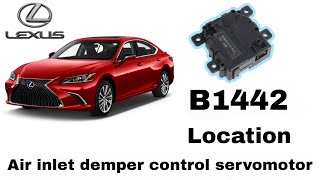
(OEM #87106-30480, 87106-30481 (updated))— This is the component that fails in the vast majority of B1442 cases on this vehicle due to a known design weakness. Part number 87106-30481 is a newer, interchangeable part.
Trusted brands: Lexus (Genuine), Aisin
OEM price range: $150-$200
Aftermarket price range: $60-$120
Related Codes That Often Appear With This One
- B1441 — This code is for the passenger-side air mix servo. Like B1442, it's a common failure on the same HVAC unit. It's often recommended to replace multiple servos at once if the dashboard is removed. [TSB L-SB-0019-20, TSB L-SB-0001-21]
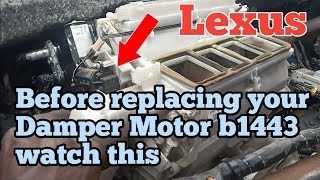
- B1443 — This code is for the air outlet damper servo. It is part of the same family of servos that are prone to failure. [TSB L-SB-0019-20, TSB L-SB-0001-21]
- B1446 — This code is for the driver-side air mix servo. Its presence alongside B1442 indicates multiple servo failures within the HVAC unit. [TSB L-SB-0001-21]
Technical Service Bulletins (TSBs) & Recalls
- L-SB-0019-20: Mentions B1442 as a common HVAC servo motor DTC. [TSB L-SB-0019-20]
- L-SB-0001-21 (and Rev): Provides detailed procedures for diagnosing and replacing various HVAC servos, confirming the complexity of the job for the GS model. [TSB L-SB-0001-21, TSB L-SB-0001-21 Rev, 15]
- Customer Support Program 20LE01: Not a TSB, but a Lexus program extending warranty coverage for this specific failure, referencing TSB L-SB-0001-21 for the repair instructions.
Platform-Specific Known Issues
- Customer Support Program 20LE01: Lexus issued a Customer Support Program specifically for A/C servo motor malfunctions. This program extended the warranty coverage for this repair, offering it free of charge for a primary period, and then secondary coverage for up to 7 years or 125,000 miles. This acknowledges the high failure rate of the part.
- Complex Repair Procedure: The repair procedure for the GS platform is particularly involved, with TSBs confirming that the entire A/C unit must be removed from the vehicle to access this specific servo, necessitating full dashboard and center console removal.
- Preventative Replacement Recommended: Due to the high labor cost and the fact that all servos are of the same age and design, many repair shops and even dealers will recommend replacing other accessible HVAC servos at the same time to prevent a repeat repair in the near future.
Mechanic-Grade Diagnostic Values
- Techstream Live Data: Air Inlet Damper Target vs. Actual Pulse — expected: The 'Actual Pulse' value should closely match the 'Target Pulse' value. Common values are approximately 220 for FRESH and 256 for RECIRCULATION.. Failure: The 'Actual Pulse' value does not change or is stuck at a high number (e.g., 254 or 255) when the 'Target Pulse' is commanded to change.
- Servo Motor Position Sensor Resistance (Bench Test) — expected: Between terminals PT (3) and GND (2), resistance should be 0.6 to 1.1 kΩ when the lever is in the FRESH position.. Failure: Resistance is outside the specified range, indicating a faulty position sensor inside the servo motor.
Scan Tool Commands That Help
- Toyota Techstream: Active Test: Air Inlet Damper Targ Pulse — This is the primary diagnostic command. It allows the technician to manually command the servo to a specific pulse value (position) and observe if the 'Actual Pulse' in the Data List follows, confirming if the motor is physically responding.
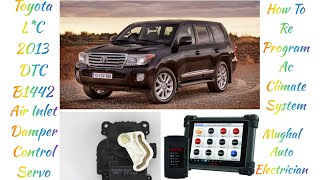
- Toyota Techstream: Utility: Servomotor Initialization — This function should be performed after replacing a servo motor or after the battery has been disconnected for an extended period. It forces the A/C amplifier to relearn the end-stop positions of all servos. In rare cases, if the code was caused by a calibration glitch, running this may resolve the issue.
Wiring & Ground Locations
- Air Inlet Damper Servo Connector — On the HVAC unit assembly, deep behind the passenger side of the dashboard. TSB L-SB-0001-21 Rev confirms this servo is in 'Replacement Group C', meaning the entire A/C unit must be removed from the vehicle to access it.. This connector provides power, ground, and communication lines to the servo. While wiring failure is rare, checking for power at this connector is the final step to condemn the motor itself, but it's only feasible after the dashboard is already removed.
Real Owner Repair Stories
- YouTube video by 'Fixing it cheap and easy!' (Toyota RAV4 (similar HVAC design)) — B1442 code present, recirculation door not moving when commanded.
❌ Tried (didn't work) Initially assumed the servo motor itself had failed.
✅ What actually fixed it The plastic linkage arm from the servo motor had popped off the pin on the damper door. The motor was still working, but it was not connected to anything. The user was able to remove the blower motor assembly, access the linkage, and snap it back into place, resolving the code without replacing any parts.
OEM Part Supersession History
87106-30480→87106-30481— Standard part revision, likely for improved reliability or a manufacturing process change.
Heads up: The new part number 87106-30481 is a direct, interchangeable replacement for the older 87106-30480.
Helpful Videos
We Have This Part in Stock
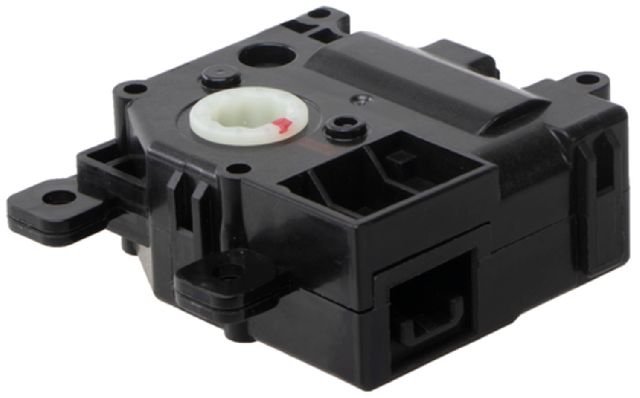

The information in this article is provided for general reference and educational purposes only. Vehicle specifications, procedures, and part compatibility can vary by production date, trim level, and region. Always consult your vehicle's factory service manual and verify part numbers before purchasing or performing repairs. Safety-critical components such as airbags, seat belts, and braking systems should be installed by a qualified professional.
- Lexus GS 200T:
- 🎬 Helpful Videos
- 🛍️ Shop This Part
- What's Unique About the 2016-2017 Lexus GS 200T
- Diagnostic Flowchart
- Symptoms You May Notice
- Most Likely Causes
- Rare But Worth Checking
- Diagnosis Steps
- Parts You'll Likely Need
- Related Codes That Often Appear With This One
- Technical Service Bulletins (TSBs) & Recalls
- Platform-Specific Known Issues
- Mechanic-Grade Diagnostic Values
- Scan Tool Commands That Help
- Wiring & Ground Locations
- Real Owner Repair Stories
- OEM Part Supersession History
- 🎟️ Get 5% Off